

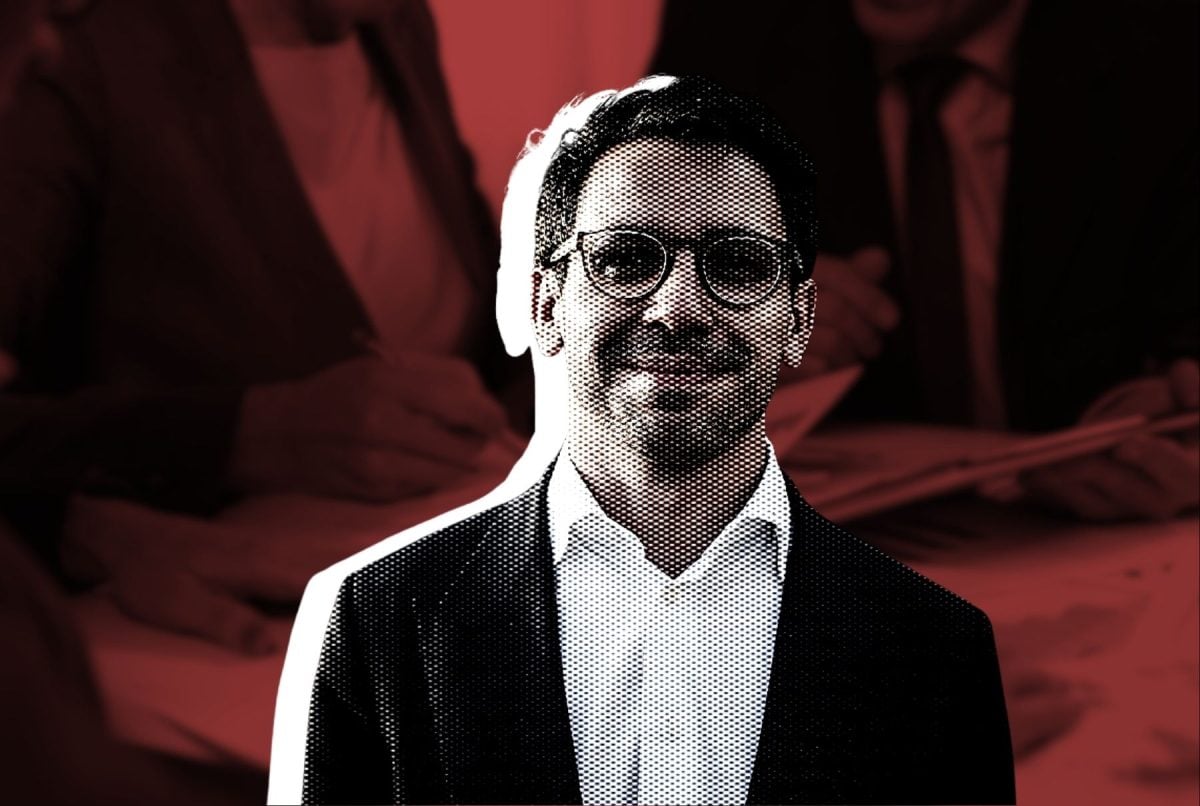
James Fishback spent his entire campaign for Florida governor promising to take half of Sophie Rain’s money. Tuesday night, Florida voters said no thanks. The anti-OnlyFans candidate finished a distant third in the Republican primary with just 10.5% of the vote, crushed by Trump-endorsed Rep. Byron Donalds, who cruised to the nomination with 47.8%.
Fishback’s signature policy was a proposed 50% “sin tax” on OnlyFans creators’ Florida earnings, unveiled back in January on a conservative podcast where he called the platform an “online degeneracy platform” and estimated the tax could raise $200 million for education, crisis pregnancy centers, and a new “mental-health czar” focused on men. He named Sophie Rain specifically, claiming the Tampa-based creator (who says she’s earned more than $100 million on OnlyFans since 2023) would personally owe the state $42 million under his plan. He didn’t stop at creators, either, saying he’d be open to taxing subscribers too: “Let me be very clear, both the creators and the consumers of that content are in the wrong.”
Rain wasn’t shy about celebrating his loss. “I never believed voters were going to support singling out women and punishing them for doing completely legal work, so yes, I’m very happy to be keeping my money,” she said Wednesday. She’s never disputed owing taxes generally, insisting she already pays millions monthly and has “never had a problem with paying my fair share.” Her objection was narrower and, evidently, more persuasive to Florida voters than Fishback’s framing: “What I had a problem with was a politician deciding that people like me deserved a special ‘sin tax’ because he personally disapproved of our careers.” She added that if the goal was actually funding teacher pay or school lunches, she’d support real policy, but preferably not one built on singling out women in a legal profession as a punching bag.
Fishback’s concession speech leaned into martyrdom rather than reflection, framing his 10.5% as a moral victory against a well-funded establishment, claiming “our opposition had over $100 million, we had one percent of that” and insisting the movement behind his campaign would outlast the loss. That framing conveniently sidesteps a campaign that generated headlines for reasons that had nothing to do with policy: a federal judgment that he owed his former hedge fund employer $1.3 million for misappropriating confidential information, a lawsuit over an unpaid $8,000 scholarship, a residency challenge that nearly got him thrown off the ballot entirely, a running mate deemed “permanently unfit for duty” by his former police department, and a debunked accusation that Donalds was under federal sex-trafficking investigation (the DOJ confirmed the next day it wasn’t). Far-right activist Nick Fuentes, notably, praised Fishback’s campaign as a model for what he called “a proto-groyper president.”
Fishback wasn’t operating in a total vacuum, though. Florida’s proposal was the loudest version of an idea quietly circulating elsewhere. Utah’s SB 73 has been floated this legislative session as a content-taxation framework that, if it passes, industry watchers say could become “a proven model other states will replicate quickly.” That’s the more useful lens for reading Fishback’s loss: not that taxing adult content income is a fringe idea confined to one failed candidate, but that voters in a deep-red state specifically rejected the most theatrical, punitive version of it.
There’s a real lesson in that distinction for anyone assuming “tax the OnlyFans girls” is an automatic applause line in conservative politics. It isn’t, at least not at 50% and not from a candidate this openly moralizing about it. Rain’s rebuttal of “pay my fair share, just don’t single me out for a career you personally find distasteful” apparently landed with more voters than Fishback’s culture-war pitch did.