

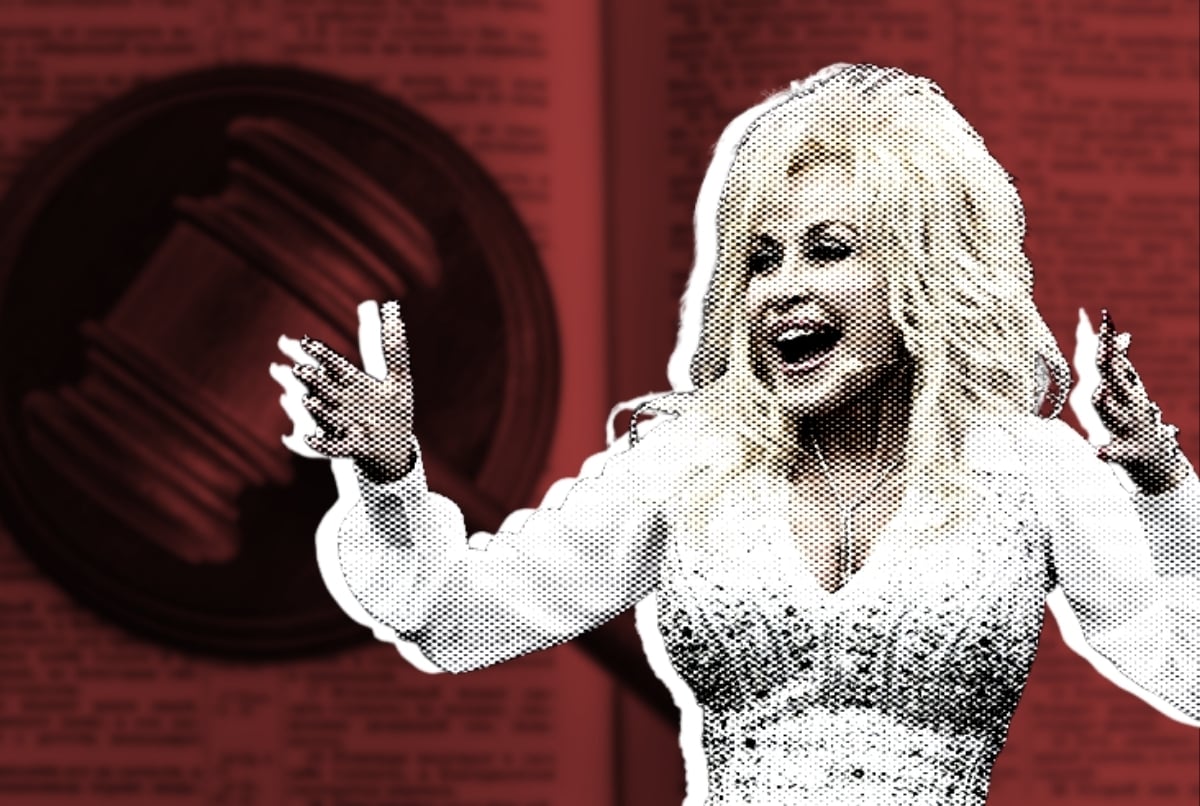
Texas federal Judge David Hittner has now struck down the state’s drag performance law twice, and the second ruling landed on a day the entire country was already grieving. On Tuesday, the same day Dolly Parton died at 80 after a brief battle with cancer, Hittner issued supplemental findings blocking S.B. 12 again, reaching for Parton as his central example of exactly how broad and unworkable the law actually is. “Big hair, flamboyant clothes and breast exposure,” he wrote, describing the kind of performance style that made Parton an icon, “might run afoul of the measure.”
S.B. 12 bans any performance that could be perceived as “sexual” anywhere minors might be present, and it’s been in court since LGBTQ rights groups, entertainment companies, and Austin drag performer Brigitte Bandit sued to block it back in August 2023. Hittner struck the law down completely that September, finding it swept up far too much constitutionally protected expression. Texas appealed to the Fifth Circuit, which sent the case back down with instructions to reevaluate under the framework the Supreme Court laid out in its 2024 Moody v. NetChoice decision, a more structured way of weighing a law’s constitutional and unconstitutional applications side by side. Hittner did as ordered, but his conclusion didn’t change.
If anything, running S.B. 12 through that more rigorous framework only sharpened how badly it fails. The law never specifies who gets to decide whether a performance “appeals to the prurient interest,” and it doesn’t require judging a work as a whole, meaning, as Hittner put it, “a single moment of eroticism could condemn an entire performance to criminal or civil penalties.” His list of hypothetical casualties reads like a greatest-hits of mainstream American performance: a gymnast whose leotard rides up mid-routine, a ballet dancer suffering a wardrobe malfunction, an abstract art exhibit whose shapes read as suggestive to the wrong viewer. None of that is drag specifically. All of it, under this law’s language, could theoretically trigger the same penalties of up to $10,000 for venues, and up to a year in jail and a $4,000 fine for performers.
The Parton reference wasn’t just a rhetorical flourish, either. It did real legal work, tying the law’s absurd overreach to a performer everyone already recognizes as culturally sacred rather than obscene. Hittner reached for a lineage of exactly this kind of moral panic: Elvis’s hip gyrations, Parton’s own “voluptuous sex symbol” image, Miley Cyrus getting torched in the press over twerking at the 2013 VMAs. His point was simply that a huge swath of mainstream American performance history contains “erotic” elements by someone’s definition, and a law this vague doesn’t actually target drag specifically. It targets anything anyone finds titillating, applied unevenly and unpredictably. “The unconstitutional applications… far outweigh any constitutional applications, which are virtually non-existent,” Hittner wrote, adding a line of genuinely blunt common sense for anyone who still finds any of this offensive: “just don’t go.”
Bandit, the lead plaintiff, called the ruling vindication for drag as legitimate art and community. “We use our performances to assert liberation, power, and joy with our community,” she said, adding a pointed jab at lawmakers: she wishes they’d focus on protecting kids from real dangers instead of using drag performers as a wedge issue. ACLU of Texas attorney Brian Klosterboer framed the win in terms of the law’s actual chilling effect of making people genuinely afraid to attend or perform in drag shows because of a statute this broad.
It may just be a coincidence that a federal judge spent a court filing defending Dolly Parton’s right to be flamboyant, sequined, and unapologetically herself on the same day America lost her for real, but it’s still poignant. Parton spent six decades building a public persona entirely out of embracing exactly the kind of exaggerated, glittery self-expression a law like S.B. 12 was written to police, and somehow, even in death, she ended up as the legal argument that got a censorship law struck down. As someone who went out of her way to include everyone and show support for all communities, we think Dolly would have been happy to be a part of this decision.