

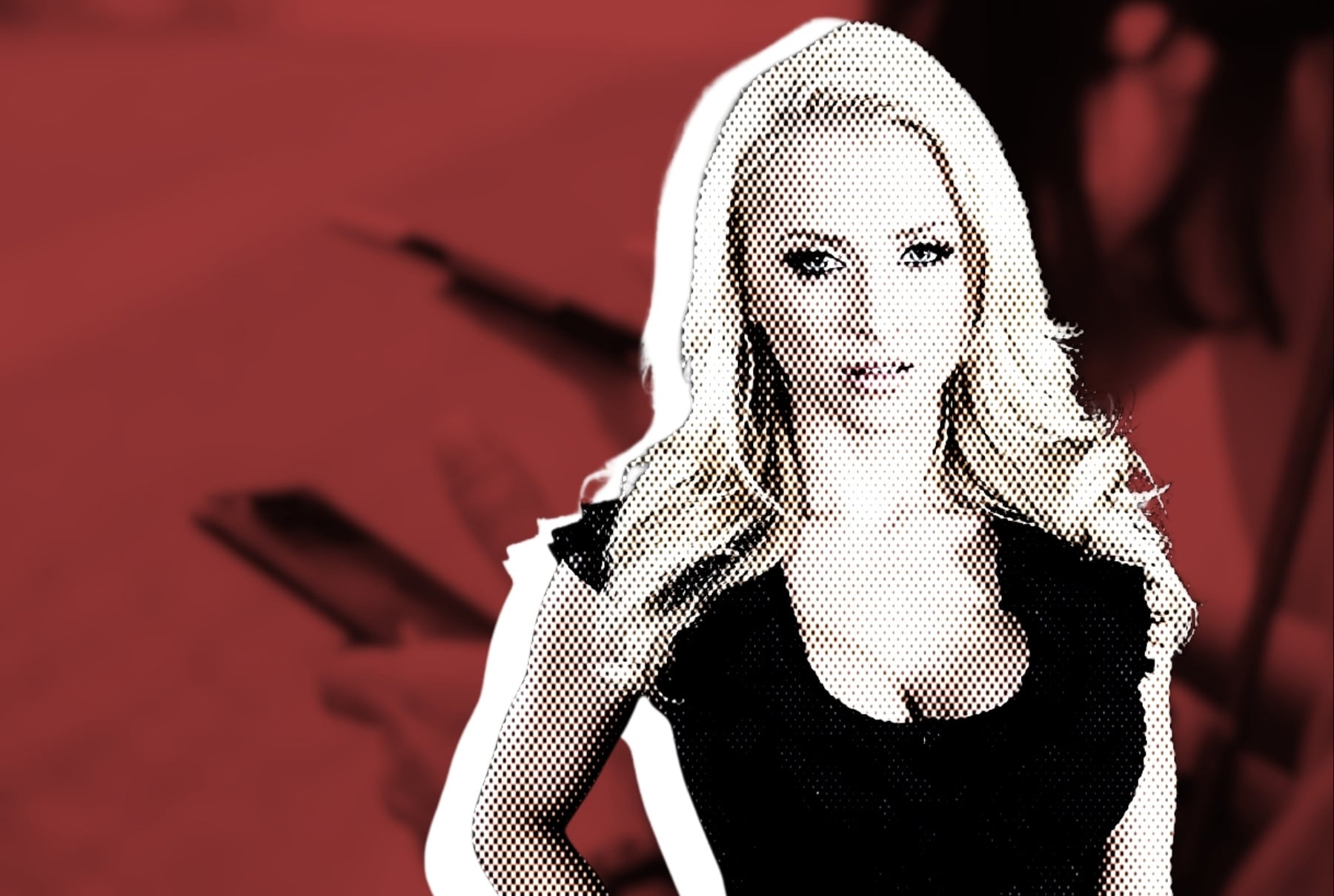
The adult entertainment industry is not known for its career longevity. Studios cycle through performers. Algorithms change. Trends shift, and the content that was viral on Tuesday is irrelevant by Friday. Most careers in this space burn bright and brief. But not for Alix Lynx.
For fourteen years, she’s been consistently showing up day in and day out. From webcam rooms in 2012 to OnlyFans in 2026, she’s built a subscriber base that has followed her through every iteration of both the industry and the internet.
“I get told all the time, ‘I’ve grown up with you. You were one of the first performers I ever watched,'” Lynx said. “It’s surreal because, in a way, we’ve grown up together.”
The through line of Lynx’s career is not a particular aesthetic or niche. Nor does she buy into any of the outrageous stunts that some creators pull. Instead, she believes in loyalty and building an audience that she can maintain without a third party. Even when studio work was still the primary path to visibility in adult entertainment, Lynx focused on her relationships.
“A studio gives you one pay cheque and introduces you to new audiences,” she said, “but it’s your own relationship with fans that gives you a long-term career.”
That distinction between exposure and relationship is what Lynx identified before most creators had the vocabulary to articulate it. Studio work is a top-of-the-funnel tool. It puts you in front of people who haven’t heard of you. But the audience it delivers belongs to the studio, not the performer. The moment the contract ends, so does the pipeline. What you’re left with is whatever you built for yourself in the meantim.
Lynx built plenty. Fans who first discovered her through webcam work or early studio scenes in 2012 are still subscribed ot her today. Not because they are chasing the same content they found initially, but because they’ve been following a person across more than a decade of her life.
“They don’t follow me for my content,” she said. “They follow me for me.”
OnlyFans, she claims, deepens that dynamic in ways that studio work structurally could not. The platform allows a kind of access that produced content doesn’t. She can share a post-gym selfie or a make-up-free pic, sharing a mundane glimpse into life between shoots. It’s the parasocial intimacy that every creator economy platform promises and most fail to deliver, because delivering it requires actually showing up as a person rather than as a content machine.
“People still enjoy the polished content,” Lynx said, “but they also get to see the real me — whether that’s fresh from the gym, with no makeup on, or just going about my day. That creates a much more genuine connection.”
Her approach to platform strategy reflects the same long-game thinking. She uses trending social media content, the kind the algorithm loves, but she doesn’t stop there. “I’ll post the generic sort of reels because they get views,” she said, “but I never stop there. I’m always creating content that’s authentic to me and reflects who I really am. That’s what makes people stick around.”
This is a meaningful distinction in an industry increasingly dominated by creators chasing whatever format the algorithm is currently rewarding. Viral content drives discovery. It doesn’t drive retention. The people who find you through a trending sound are not the people who subscribe for years and come back after going dark for a while. Those people are built through consistency and authenticity, which are less exciting concepts than virality but considerably more durable.
“I’ve had fans disappear for years and then suddenly come back,” Lynx said. “As long as I stay true to myself and keep showing up consistently, I know there will always be people discovering my work.”
The AVN Award she won is mentioned almost as an afterthought. “Winning was amazing,” she said, “but what mattered more to me was whether my fans enjoyed being part of my community.” Industry recognition is a credential. Fan loyalty is a career. The difference matters when the industry changes around you, as it has repeatedly in fourteen years of online content creation.
The lesson Lynx draws from her career is not specific to adult entertainment. It’s applicable to anyone trying ot build an audience in an attention economy that rewards novelty and punishes consistency: be the person who shows up, not the person who chases trends.
“If you want to build a loyal audience, be consistent and be authentic,” she said. “Create content that genuinely excites you instead of chasing every trend. I’ve been showing up online for 14 years. I haven’t disappeared, I haven’t pretended to be someone I’m not, and I think people appreciate that.”
Fourteen years is a long time to be anything on the internet. It’s an eternity to be an adult content creator. The secret, according to Lynx, is almost aggressively simple. Show up as yourself, day in and day out, and let the audience find you on their own timeline.
Some of them will come back after years away. Some will have grown alongside you. But all of them have chosen to be there, not because of the algorithm, but because you gave them a reason to.