

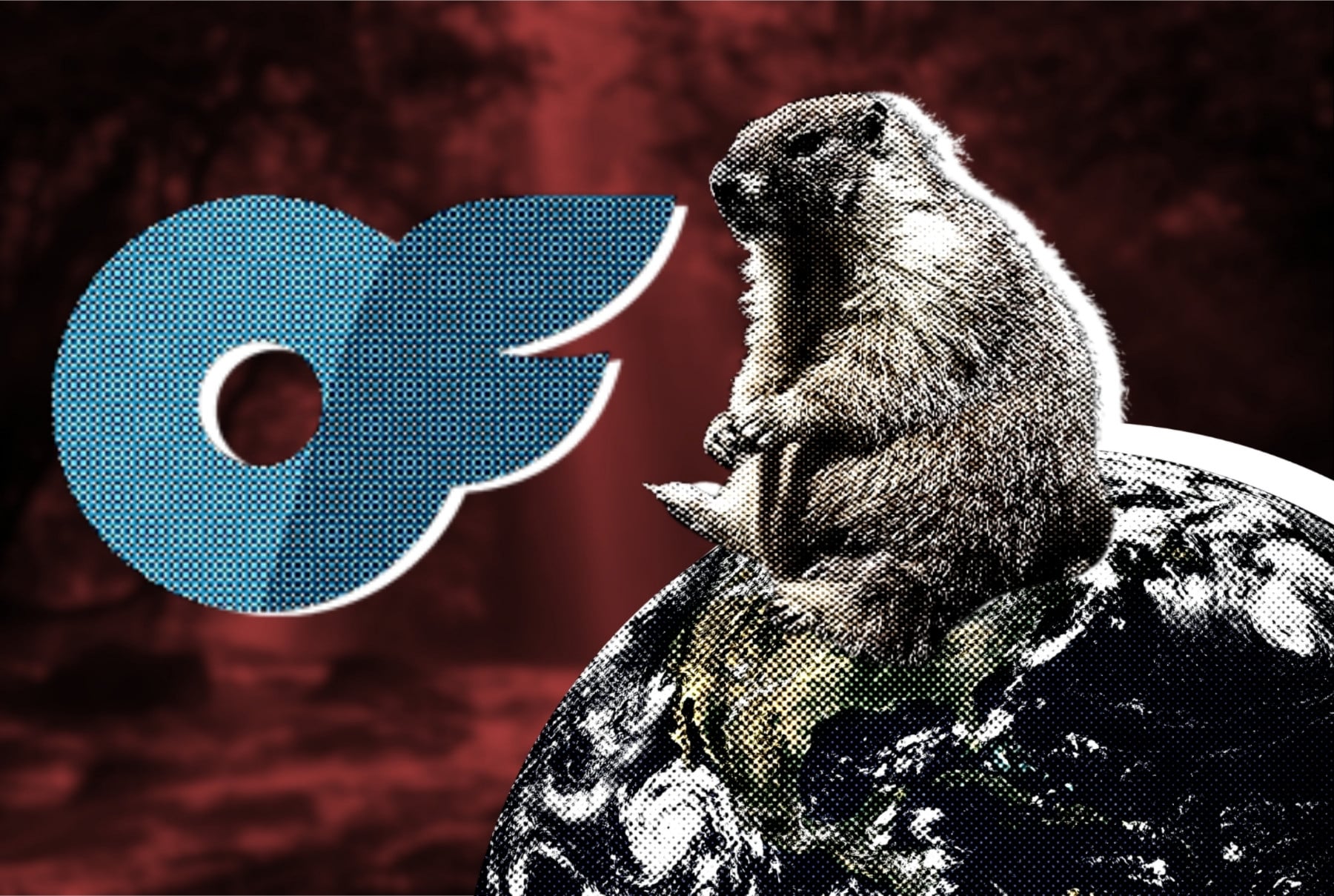
The Rocky Mountain Biological Laboratory in Gothic, Colorado, is home to the world’s second-longest continuous study of individually marked mammals. It is a serious scientific institution conducting serious scientific work since 1962. And it has an OnlyFans account posting unfiltered marmot content. The grad student who runs the account would very much like you to know that it shouldn’t have come to this.
“We should not have to make an OnlyFans account for our marmots in order to get funding,” said Emily Renkey, one of the researchers on the project. “But I think that’s where we’re at. We have to find creative ways to fund this project.”
The Marmoteers (that’s what they call themselves) arrived at the lab this spring to find a crisis. Colorado’s record-low snowpack had done exactly what it was supposed to prevent: the ground went uninsulated, and the hibernating marmots froze. More than 100 animals died over the winter, the second largest die-off in the study’s history. Of roughly 160 marmots the team had been following at the end of last year, only about 60 survived into spring.
“It was a pretty brutal winter,” said grad student Katie Adler. “Mainly, we think it’s because the snowpack was so low that the insulation wasn’t there, so they all froze.”
Snow functions as a blanket for hibernating marmots, keeping the ground temperature stable. Without it, the animals have no buffer against the cold. Combined with a summer of drought and low water levels, which affect the plants marmots depend on for hydration, the team is watching a climate change story play out in real time, mammal by mammal.
The research matters beyond the marmots themselves. “The water here is the same water we’re getting in L.A.,” Renkey said. “It’s impacting everyone.” The marmots function as an early-warning system for the broader effects of warming on shared water resources across the American West. It’s the kind of long-term ecological data that takes decades to accumulate and cannot be recreated once a study is interrupted.
That’s what the Marmoteers are trying to avoid. The study is under intense financial pressure, and they responded with a level of creative desperation that is both admirable and slightly absurd. They brewed a beer with Crested Butte’s Irwin Brewing Company called Marmot Tears. They run a marmot-focused Instagram account. They launched Fat Marmot Week, a public contest inviting people to vote on which marmot bulked up most impressively ahead of hibernation. This year’s presumed front-runner is marmot Dawn, described by researchers as the “cover boy” of the contest, noted for his golden coat and harem of five female mates.
And then there’s the OnlyFans. The account posts videos of marmot mothers with their babies and other behind-the-scenes footage that doesn’t make it into scientific literature. Unfiltered marmot content, in their own words. It is one of the more wholesome things currently on the platform, but it’s not alone.
There’s a pattern beginning to emerge because the Marmoteers are not alone.
Recently, the Hill Potters Guild in Canada launched their own OnlyFans channel for “Ceramics are Sexy,” a campaign built around suggestive pottery tutorials designed to attract a younger audience to a craft they associate with retirement homes. The tutorials are filmed in the visual language of adult content with strategically centered pieces and suggestive clay forms while actually teaching technique and communicating the wellness benefits of working with your hands. The goal is the same as the Marmoteers’. They both want to reach an audience that mainstream platforms aren’t delivering.
And it just might work. OnlyFans offers something mainstream platforms don’t. There’s no worrying about an algorithm or shadowbanning. No concerns that a topic is too niche. You post, people subscribe, and they see it. For organizations whose content mainstream recommendation systems simply ignore, whether that’s hibernating rodents or Canadian ceramics, that directness is valuable.
We should not have to make an OnlyFans account for our marmots,” Renkey said again, and she’s right. The federal funding landscape for scientific research is the actual problem, and a marmot subscription service is not a substitute for stable institutional support. Dan Blumstein, the UCLA professor who leads the research, was direct about the stakes. “Nationally funded research has been around since World War II and has led to an incredible increase of knowledge globally,” he said. “But that’s what’s under threat right now. I’ve never seen anything like this.”
Which is why the Marmoteers are on a platform with a reputation for unfiltered content, is increasingly hosting every other kind too, and just might save a sixty-year scientific record from disappearing into a warming Colorado winter.