
And showrunner Sam Levinson is doubling down.
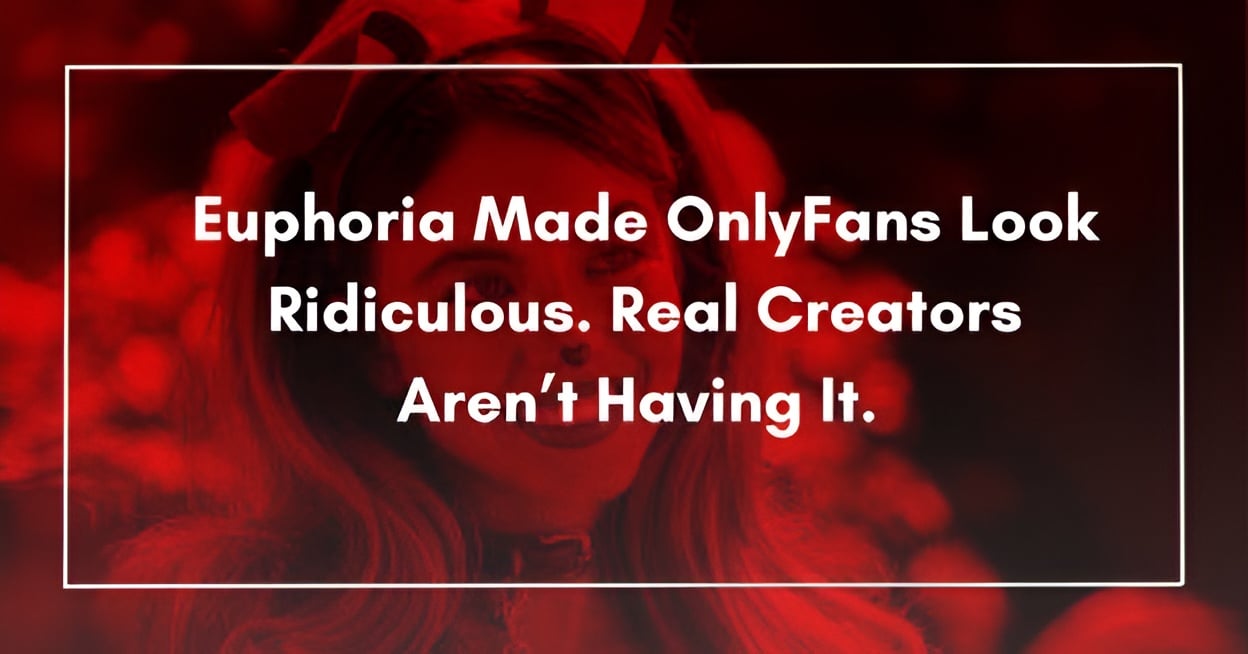
Euphoria has been a magnet for pearl-clutching outrage since creator Sam Levinson brought the show to HBO (adapting it from the Israeli series), but the final season that recently wrapped up outraged a whole different kind of viewer: real OnlyFans creators.
The third and final season of the show leaned hard into the platform as a plot device. Cassie, the show’s designated disaster girl, played by Sydney Sweeney decides to become a creator, with former best friend Maddy sliding into the role of talent manager for what Maddy correctly identifies as a “booming industry.” She’s not wrong, but the way Levinson handled the storyline sure was.
To start, Levinson put Sweeney in a diaper with a pacifier. The scene went viral so much that even OnlyFans megastar Sophie Rain commented on it, saying it “should almost be illegal.” And if a real creator tried it, it actually would be. OnlyFans explicitly prohibits age-related roleplay content. The scene depicted something the platform bans while presenting it as just another Tuesday in the creator economy.
That’s the core problem, and what real creators noticed immediately.
Social media influencer and teen OnlyFans creator Alina Rose quickly came out and claimed the show makes creators look “like something we’re not.” She went on to explain that she’s never personally seen creators behave the way Cassie does on screen and that Hollywood keeps reaching for the most sensationalized version of the story because nuance doesn’t create views. After all, a scene of someone doing keyword research and scheduling posts doesn’t exactly pop on a prestige drama.
Perhaps that’s why Levinson leaned into the more taboo sides of OnlyFans on this season, but it doesn’t explain why he has such a pattern of misrepresenting the sex-work industry. In an earlier season, there is a storyline in which Kat (a minor) explores online dominatrix work. While it was framed as edgy empowerment, OnlyFans model and mainstream porn star Naomi Noel saw it more as a depiction of fictional child sex trafficking dressed up as a coming-of-age arc. Her theory is that Levinson’s shows don’t destigmatize sex work as much as they offer a voyeuristic and often unrealistic look into the industry. Noel believes that he gets close enough to feel provocative and make headlines without doing the actual work of humanizing anyone involved.
And Noel does admit that while Levinson gave porn actress Chloe Cherry “her break, I don’t believe Euphoria is positive for sex work or women in general. The show is very male gaze-y at this point, even though it started out great.”
Taylor Vixxen, former financial exec turned OnlyFans model, doesn’t place the blame solely on Levinson. She believes it’s a broader failure in media as a whole: “Mainstream media often frames [OnlyFans] as either a quick-money fantasy or a cautionary tale.” Euphoria landed firmly in cautionary tale territory, and Levinson made sure you knew it.
That’s not speculation. Levinson recently appeared on Real Time with Bill Maher and defended the Cassie storyline as a meditation on the “long-term consequences” of the creator economy, describing the platform as something that “hollows out the individual”. Levinson wanted to explore young people being told they’re “the product, the brand” as they chase fast cash.
Meanwhile, Bill Maher called Maddy “the moral center” for a line about not being a hooker. Levinson pushed back, calling Maddy’s management role “sort of light pimping.” The two seemingly had a great time mocking the livelihood of thousands of women, but Levinson did take the time to wonder if they’d have faced the same backlash if they’d “affirmed this life” instead of critiquing it. I guess the world will never know.
But here’s what real creators do know, and are happy to share if anyone in Hollywood would bother to ask: OnlyFans is a business. A real one, with content calendars and SEO and analytics and brand strategy and the kind of relentless admin work that is definitely not cinematic. Comedian and creator Gracie Canaan described it as requiring “grit, strategy, and consistency.” Sure, there is tons of money to be made. But it’s not exactly the easy money fantasy that’s shown on these shows, with only 1% of users earning 33% of all revenue on the platform.
Another show that heavily featured OnlyFans this year was Margo’s Got Money Troubles on AppleTV. While the show does hit on the quick-money fantasy vs cautionary tale theory that Vixxen put forth (Margo manages to make money fairly quickly while also dealing with fallout from her decision to join the platform that concludes in a dramatic courtroom custody battle), it at least stays closer to reality according to real OnlyFans creators. Sure, it’s not perfect but at least they showed Margo doing market research and much of the behind-the-scenes work that is left out of other shows.
In 2026, OnlyFans isn’t going to stop being a plot point. It’s too culturally loaded and too often misunderstood, making it perfect fodder for viral articles that will get the publicity that networks love. Maybe one day we’ll see a show that can handle the real side of OnlyFans. But it probably won’t be found on HBO.