

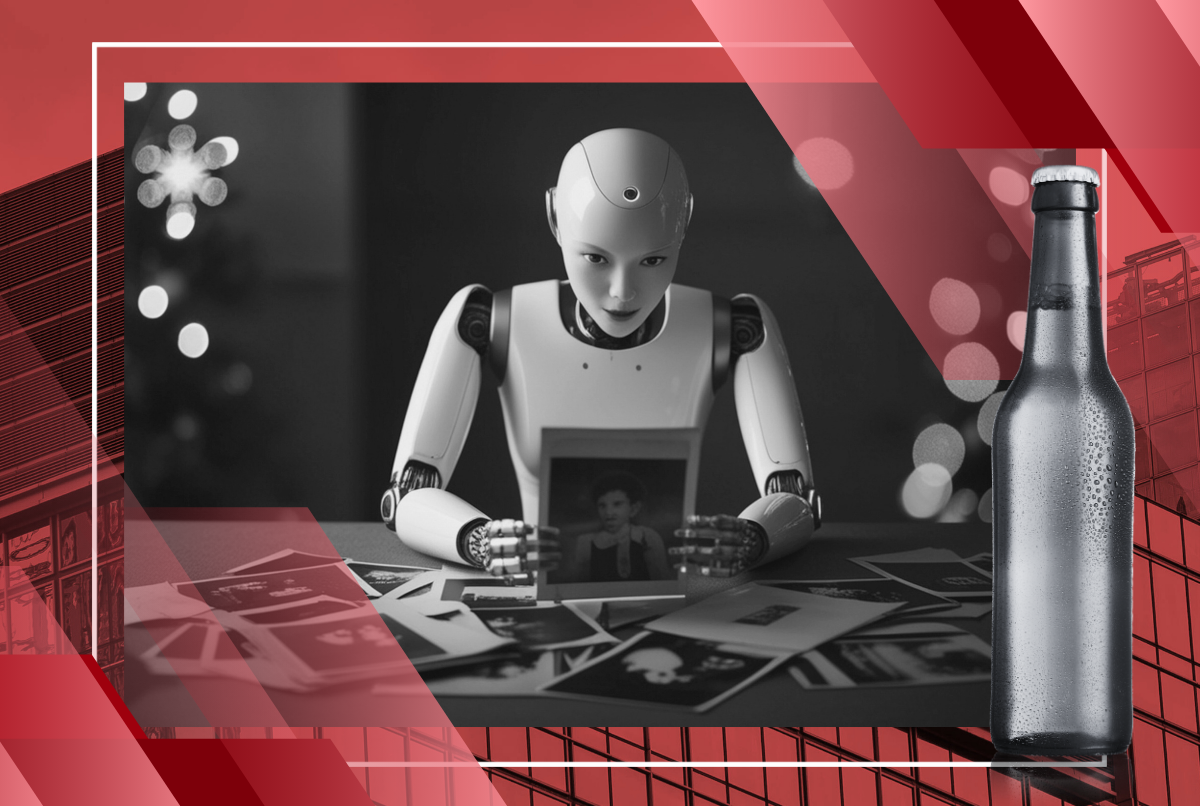
A federal appeals court ruled Tuesday that artificial intelligence systems cannot hold copyright. This decision has real consequences for anyone trying to protect machine-assisted work from being leaked, copied or redistributed without permission.
The U.S. Court of Appeals for the District of Columbia Circuit affirmed that human authorship is a “bedrock requirement” for copyright protection. Works produced autonomously by software don’t qualify for registration under the Copyright Act of 1976.
At the center of the case is Dr. Stephen Thaler, a computer scientist who tried to register a copyright for an image called “A Recent Entrance to Paradise,” listing his “Creativity Machine” software as the sole author. Keyword: sole. The court rejected it.
Under federal law, authors must be human, and therefore capable of holding property, forming intent, and living out a measurable lifespan that determines how long a copyright lasts.
The ruling doesn’t shut the door entirely on AI-assisted work. The court clarified that the Copyright Office does allow registration when a human uses AI as an “assisting instrument.” But the extent of human creative input is what determines whether protection applies.
So…how does the court define human creative input?
This threshold will affect how creators resolve intellectual property disputes with AI-assisted content — and potentially deepfakes. Under the Copyright Act, domestic authors generally have to register a work before they can sue for infringement. If a machine generated the content autonomously, there’s no registration to file. And without a valid copyright, there’s no exclusive right to reproduction or distribution. Copyright is the main legal lever creators use to stop unauthorized material from spreading.
“The current Copyright Act’s text, taken as a whole, is best read as making humanity a necessary condition for authorship,” Circuit Judge Patricia Millett wrote for the panel.
The court was clear that AI is a tool, like a camera or a typewriter. Had Dr. Thaler created, operated or directed Creativity Machine to produce something, he may have qualified as the author. But if Creativity Machine acted randomly or automatically without direction or input from a human, “A Recent Entrance to Paradise” would no protection. It couldn’t be defended against duplication.
The court also rejected Thaler’s fallback argument: That he owned the work under the “work-made-for-hire” doctrine. The panel found that doctrine only transfers rights that already exist. And since a machine can’t create an “original work of authorship” in the first place, there are no rights to transfer.
Any expansion of copyright to cover non-human creators, the court said, is a question for Congress.
