
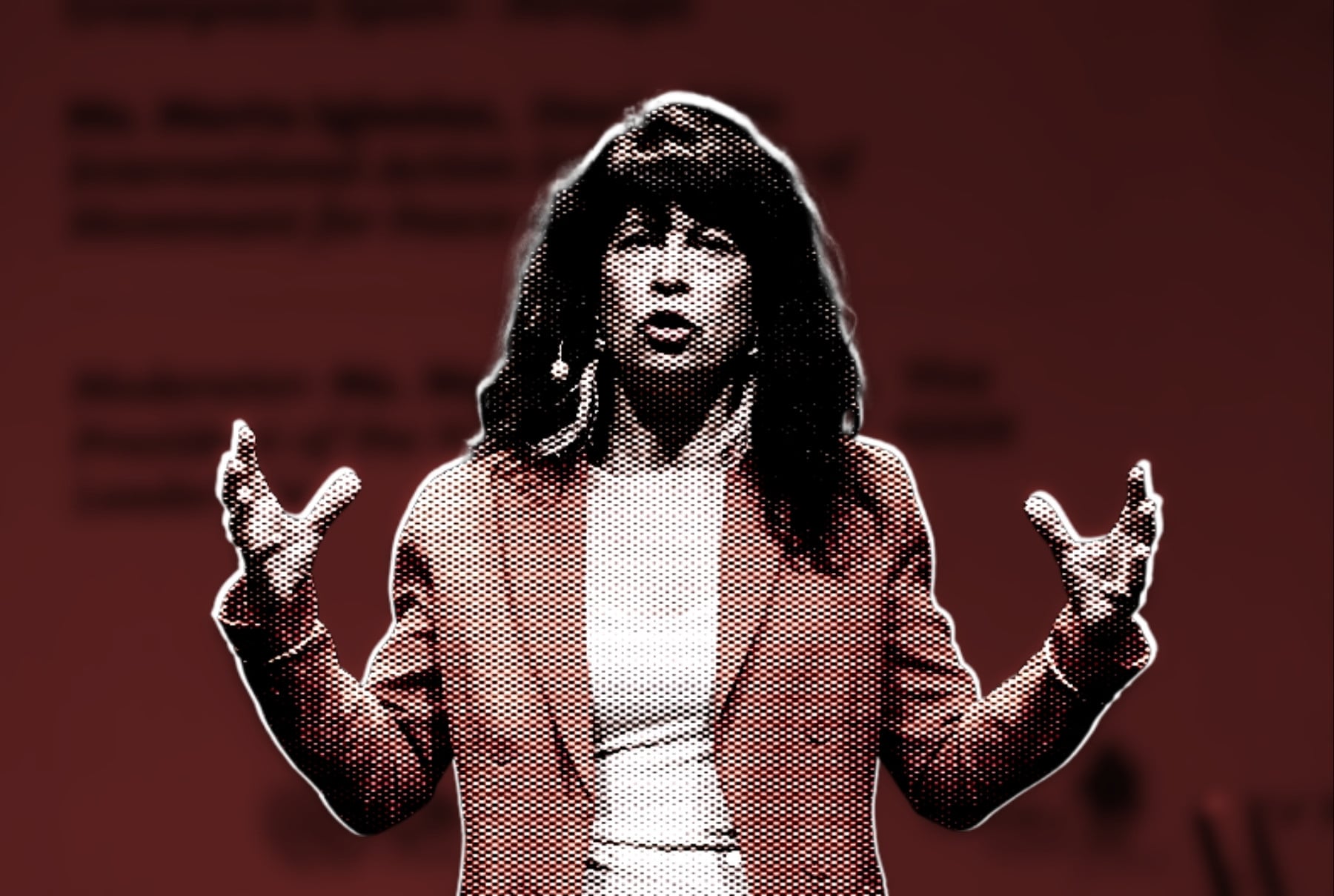
Spain’s Minister of Equality, Ana Redondo, stood before a summer course on digital violence at Complutense University last week and named OnlyFans as a recruitment pipeline for sexual exploitation. In her framing, platforms where people pay for adult content act as a first door that ends with women in street-based sex work. “The Government will not stop until it abolishes prostitution, the slavery of the 21st century,” she said.
She also named sugar daddy arrangements in the same breath, describing both as tools that “recruit women to feed the pornography business and end up with them in traditional prostitution.”
The speech drew on a government study estimating that 114,576 women were in criminalized sex work in Spain in 2023, with around 92,000 assessed to be at some level of trafficking risk. Those numbers are real, and the exploitation they describe is real. Nobody reasonable is arguing that trafficking doesn’t exist or that digital platforms haven’t created new vectors for coercion and abuse.
But Redondo’s framing does something specific that has consequences beyond the speech itself: it collapses the distinction between a creator running a business and a person being trafficked. In her telling, OnlyFans is not a platform where some people are exploited, and others operate with full agency. To her, it’s a recruitment mechanism or a funnel for traffickers. The individual creator’s consent and economic decision-making don’t appear in that analysis. The category of victim is applied wholesale.
This is the abolitionist framework in practice, and it doesn’t stay in speeches. It becomes payment processing policy, platform regulation, and law. When a minister frames every adult creator as a potential trafficking victim who cannot meaningfully consent to her own work, the legislation that follows tends to treat her that way too. And even if they are well-meaning, those methods often end up removing legal protections that could help if something goes wrong.
For example, the Nordic model of sex work legislation works to criminalize buyers, not sellers. The theory is that no woman truly consents to commercial sex, so the state must protect her from her own choices by eliminating the market. Countries that have adopted versions of this model have had mixed results at best, with many sex workers reporting that criminalizing their clients simply drove their work underground. That made client screening harder and made their exposure to violence much greater, the opposite of what the policy intended.
Spain has been debating a comprehensive law on prostitution of their own recently, though it hasn’t made much parliamentary progress. Redondo’s ministry is also working on anti-trafficking legislation. And while those are legitimate policy goals, you have to wonder if the regulatory approach that follows will draw the distinction she conspicuously avoided in her speech: is this work exploitation that requires intervention or is it work that requires protection?
For creators or subscribers in Spain, this speech is a signal of regulatory thinking, not immediate policy change. But the direction matters. Redondo described OnlyFans not as a neutral platform with good and bad actors but as an institution that by its nature pulls women toward exploitation. If that framing shapes the legislation her ministry produces, the practical consequences could be serious.
She also addressed pornography more broadly, citing a study claiming close to 30 percent of people under 30 have an addictive relationship with explicit content, and describing much of what young people consume as “violent pornography that degrades women and distorts the perception of sexual relationships.” She recalled a young man who told her he could no longer conceive of sex without violence. These are serious concerns about media influence on young people and shouldn’t be ignored. But they also shouldn’t be used to justify a policy framework that treats every adult content creator as a victim of the system she participates in.
The minister’s argument contains a real observation wrapped in a framework that strips agency from the people it claims to protect. Exploitation does exist on platforms like OnlyFans. Coercion and trafficking are real. But that doesn’t mean all content creators are exploited, coerced, or trafficked. Many are choosing this work based on their independent economic decisions. If a policy can only see people in the first category and not the second, it will consistently harm those in the second category while claiming to protect everyone.