

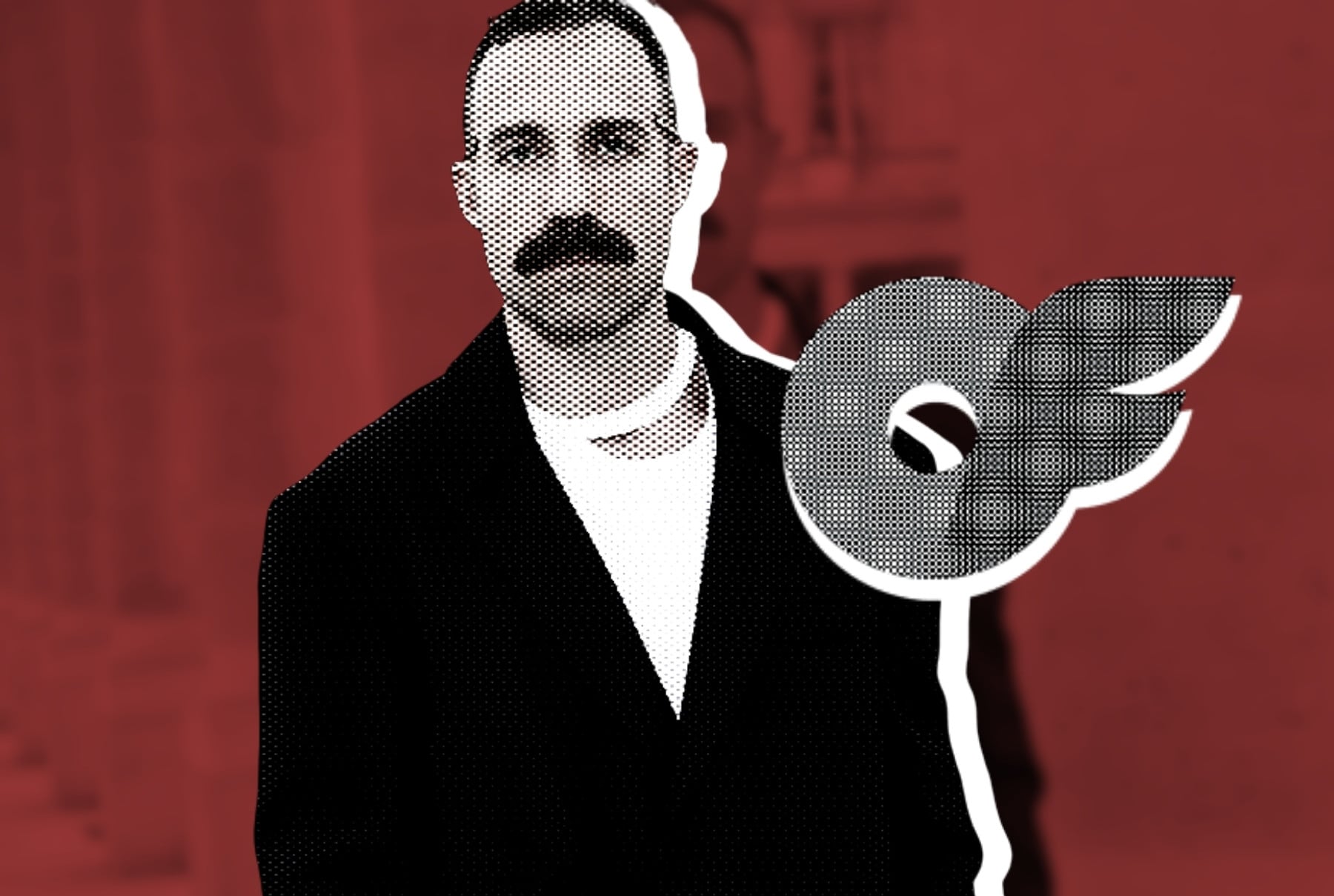
OnlyFans has spent years fighting the assumption that it exists solely for adult content. The platform has made its case through press releases, brand partnerships, and carefully worded CEO statements. But what may be the most effective is their latest update: fashion designers are using it as a legitimate creative platform.
French menswear designer Louis-Gabriel Nouchi, whose label LGN dresses men like Pedro Pascal, Alexander Skarsgård, and Connor Storrie. Nouchi launched a partnership with OnlyFans earlier this year at Paris Men’s Fashion Week, and the collaboration has now expanded into a full capsule collection available through the platform’s official merch store. The campaign, shot in London by photographer Tré Koch, stars American bodybuilder Shamu Azizam performing calisthenics and bodybuilding poses while wearing briefs with “ONLYFANS” across the backside, a cigarette in hand. It is inspired by the stripped-down simplicity of 1990s fashion campaigns and is, objectively, a great piece of visual work.
There is no explicit content. That point Nouchi keeps emphasizing in interviews. “I don’t see the point of doing sexual content, because there are people specialized in doing that,” he told Out. “I’m in fashion, so I prefer to work on other archetypes for the brand. Sexuality and sensuality are very much part of the designs. For me, it’s even more sexy if you don’t see directly.”
For Nouchi, OnlyFans isn’t a platform pivot. It’s a creative space operating without the compression that kills nuance everywhere else. “It’s a creative space where I can experiment with different formats, collaborate with artists, and develop the LGN universe without reducing everything to a single image or a few seconds of content,” he said. Anyone who has watched a decade of fashion communication collapse into a four-second Reel knows exactly what he’s describing.
But Nouchi isn’t alone. Controversial fashion designer Rick Owens joined OnlyFans to sell feet pictures for charity last year. And Hillary Taymour, the designer behind cult label Collina Strada, uses her page to document the actual chaos of making clothes: spilled dye, fittings interrupted by dogs, the unglamourous process that runway presentations are specifically designed to hide.
“I liked the idea of showing the raw, unfiltered side of design,” Taymour said. “The chaos, the joy, the breakdowns, the breakthroughs. Fashion can feel very polished and gatekept, and OnlyFans felt like a place where I could actually let people in on the weird little experiments that make Collina Strada, Collina Strada.”
The business logic here is more interesting than it first appears. Fashion has an access problem dressed up as an exclusivity feature. The industry gatekeeping that looks like mystique from the outside is, for small designers, expensive. Studio rent, fabric costs, the entire infrastructure of existing in fashion is designed at a scale that punishes independent voices, which is precisely where most of the culture actually comes from. A subscription platform with no algorithm and direct creator-to-fan messaging is, structurally, a pretty good answer to that problem.
“The biggest hurdle for small designers is literally the cost of existing,” Taymour said. “It’s all designed to push small voices out, and those small voices are where the culture comes from.”
OnlyFans CEO Keily Blair called the Nouchi collaboration “unapologetically sexy” and described it as “a bold but elevated step in the evolution of our fashion offering.” The platform even has a dedicated fashion program on OFTV called The Fashion Files, which covers major industry events. It’s part of OnlyFans deliberate attempt to build a fashion vertical, and it’s working because they’re offering solutions to real problems that fashion has never addressed.
What’s actually happening here is less surprising than it looks. OnlyFans was built for creators who wanted to own their relationship with their audience without handing that relationship to an algorithm or a gatekeeper. That didn’t just mean content creators. Fashion designers, musicians, comedians, writers, and other independent creatives can benefit from that kind of relationship with their audience.
As the demand for building that relationship grows, expect to see many other creatives make the leap to the platform. We’ll be waiting.