Tag: Digital Issue

  • OnlyFans Star Crosses A Line: You’re Not Going To Believe What Bonnie Blue Did This Time

    OnlyFans Star Crosses A Line: You’re Not Going To Believe What Bonnie Blue Did This Time

    Bonnie Blue’s back in the headlines, and this time she may have pushed the envelope a little too far. Known for testing the limits of what society considers decent, she’s done it again in a now-viral TikTok video featuring an uncomfortable interaction with a Five Guys employee. Given her usual insistence on iron-clad consent conditions, this incident took many by surprise.It makes sense that Five Guys Burgers and Fries would be Bonnie Blue’s fast food of choice, but what doesn’t make sense is the way she imposed on the employee trying to take her order. While at the counter, Bonnie made suggestive comments to the cashier, asking about the “five guys” and then pressing him on whether he was “on the menu.” Oh, and she filmed the interaction and shared it on TikTok. The employee, visibly flustered, was clearly just trying to do his job and later expressed shock at seeing himself featured in her video. The online backlash was swift—as it usually is with Bonnie’s scandals—but this time, it’s not hard to see why the court of public opinion isn’t siding with her. Several commenters even suggested the employee sue for sexual harassment, though he jokingly responded that he’s “too broke” to take her to court.

    Bonnie Blue is no stranger to controversy; a cloud of chaos tends to follow in her wake. The OnlyFans star recently had her travel visas for Australia and Fiji revoked after planning to film encounters with barely legal men en masse for her channel. While not technically illegal, her blatant preference for newly minted adults treads the fine line of what is ethical—or predatory—behavior. Blue’s career thrives on tabloid fame and perceived misdeeds, so it’s understandable that she might try to generate a little organic scandal by hitting on someone and sharing the footage.

    However.

    Where Bonnie took things a bridge too far was in failing to get informed consent before filming herself sexually harassing a young man at work—a situation from which he couldn’t walk away. The irony? When it comes to consent, Bonnie is usually the queen. Her process for sexual partners involves multiple steps, contracts, and even breathalyzer tests, ensuring no one can accuse her of misconduct. Yet, it seems casual harassment of fast-food workers who can’t escape is perfectly fine in her book. Maybe she left her consent form in the car?

    For someone so meticulous about crossing t’s and dotting i’s in the bedroom, Bonnie’s latest TikTok scandal reveals a glaring inconsistency in how she respects strangers. Perhaps this latest drag through the mud will prompt her to reevaluate her actions—seeing people as humans before potential content. Or at the very least, she might remember that making the person handling your food uncomfortable is never a good idea.

  • OnlyFans Rival Fansly Sponsors 2025 XBIZ Show

    OnlyFans Rival Fansly Sponsors 2025 XBIZ Show

    This year, the XBIZ Awards have a brand new sugar daddy. Fansly is the official sponsor for the 2025 XBIZ Awards. With hosts Vanna Bardot and Ryan Reid, the evening promises to be one of glitz, glamour, and at least a touch of cheeky chaos.You have to hand it to Fansly—they know how to seize an opportunity when they see one! Nabbing the official sponsor spot for the 2025 XBIZ Awards is seen by many as a power move to compete with other creator platforms—OnlyFans comes to mind. Fansly first emerged on the adults-only content platform scene in 2017 and has worked to carve out its niche in creator-first content ever since. They grew suddenly in popularity in 2021 when OnlyFans enacted—and then repealed—a ban on explicit content, and they’ve been steadily growing their audience ever since. Now that they’re footing the bill for what is essentially the Oscars for the adult entertainment industry, their name is getting another turn in the spotlight. With them bankrolling this year’s awards show, it’s fair to assume the evening might be a little extra spicy.

    Hosting this year’s show are Vanna Bardot and Ryan Reid. Both women run active channels on OnlyFans, which is ironic considering this year’s official sponsor is a direct rival to the platform. Both Bardot and Reid boast their own collection of industry accolades, in addition to the charismatic personas we can expect to see onstage at the show. That charisma? It’s a direct result of their success on OnlyFans, so the pair is more than prepared to dazzle their live audience during this year’s awards.

    The hosts for this year’s XBIZ show are an apt metaphor for the relationship between Fansly and OnlyFans. They’re on OnlyFans, and the show is sponsored by Fansly. Both platforms have empowered performers like Bardot and Reid to take control of their careers, and both put their money where their mouth is when they say they prioritize content creators. When OnlyFans announced its (short-lived) decision to ban adult content, creators flocked to Fansly, searching for a platform where their work wouldn’t risk being banned. OnlyFans quickly reversed that decision due to user backlash, but that one poor business move in 2021 gave Fansly a leg up. Fansly leveraged that surge in popularity into a user base that continues to grow rapidly.

    So, what can we expect from the 2025 XBIZ Awards with Fansly bankrolling this year’s show? We can probably count on a few surprises, glamour, and performances that push boundaries. With star power like Bardot and Reid guiding the evening, the audience is sure to be in for quite a ride. With Fansly not only on the stage but setting it, this year’s show will be one you won’t want to miss.

    From Fansly to the Palladium, this year’s XBIZ Awards will dazzle as they blur the lines between streaming success and IRL star power. There’s also the anticipation of seeing whether there’s tension between Team OnlyFans and Team Fansly. Regardless of why you’re tuning in, with Fansly sponsoring the event, you know the party’s only just getting started.

  • A Failed Robot Invasion: Meta’s AI Profile Experiment A (Racist) Flop

    A Failed Robot Invasion: Meta’s AI Profile Experiment A (Racist) Flop

    Whelp. Meta’s latest AI project managed to alienate users within seconds of launch. Meta recently announced that they would be introducing profiles for people who don’t actually exist—AI-generated personas. That loud CLUNK you just heard? That was the profile for “Liv, the proud queer Black momma of two & truth-teller” crashing through the Metaverse like a lead balloon.Meta has been gradually integrating AI into Instagram and Facebook with the intention of increasing engagement, personalizing the user experience, and revolutionizing content creation. That all sounds great on paper, but their latest attempt with AI-generated profiles was met with criticism at best—and outright backlash at worst—for its tone-deaf execution.

    To understand just how tone-deaf this was, look no further than Liv. The AI-generated queer Black truth-teller and mother of two nonexistent Black children was created without any input from Black individuals. Under the guise of diversity, Meta used technology that many users already distrust to double down on some pretty blatant stereotyping. Imagine, if you will, a group of dogs tasked with designing a sanctuary for cats. That’s essentially what happened here, but on a much larger—and much more harmful—scale.

    Within seconds of Liv’s profile going live, the anger on the timeline was palpable. Users ridiculed the AI profiles, expressed frustration at their very existence, and posed pointed questions about Meta’s cultural competency. Many were disgusted, not just by the profiles themselves, but by the fact that Meta wouldn’t even let users block them. Memes and social media commentary quickly showcased the enormous disconnect between Meta’s decision-makers and the people who actually use their products. On top of that, users raised legitimate concerns about the potential for AI profiles to spread misinformation and drown out actual human voices—those same voices that flock to social media to be heard in the first place.

    Meta hastily pulled the AI profiles and claimed that the inability to block them was due to a “glitch” that would be fixed before any future rollouts. Future rollouts, by the way, that are wildly unpopular based on user feedback. And let’s not forget—not one single Black developer was consulted in the creation of Robot Liv. This botched rollout reflects a broader issue within Meta regarding representation and ethics in AI. It’s part of a recurring theme where Silicon Valley giants fail to understand the communities they claim to innovate for, and continue to barrel on full-steam ahead until the public outcry is too loud to be drowned out by Spotify’s AI DJ.

    Meta decided to fuck around by trying to code human connection into existence, and they found out that connection is a little more complicated than a line of code generating a fake profile. The secret sauce that has kept Meta profitable for over two decades is the connection between the flesh-and-blood people behind the keyboards. And those same flesh-and-blood people just dragged Meta for its corporate misstep, forcing the bots to retreat from the newsfeed and back into the workshop.

  • OnlyFans: It’s More Than Just Explicit Content And Scandal— It’s Empowering

    OnlyFans: It’s More Than Just Explicit Content And Scandal— It’s Empowering

    If there’s one thing society doesn’t like, it’s female empowerment that doesn’t involve a pantsuit. Granted, society doesn’t seem to love that either, so you might as well go about it in a way that suits you. Empowerment looks different for every woman, and for some women? Selling access to themselves via OnlyFans is the ultimate power grab, or so says OnlyFans CEO Keily Blair.OnlyFans is an adults-only platform that has gained a reputation for being everyone’s favorite naughty corner of the internet. Looking for explicit content? You’ll find it there. On the other hand, if you’re after cooking tutorials without wading through ads or being pushed to buy whatever cookware influencers are hawking these days, you’ll find those too. OnlyFans is constantly making headlines—partly because many of the content creators on the platform make quite a pretty penny, but mostly because creators of explicit content have a tendency to let certain details of their shenanigans slip on main. Do a quick Google search for Lily Phillips, and you’ll see what we mean. Regardless of the reason, OnlyFans has exploded in popularity over the past four years, offering countless women the opportunity to foster financial independence while setting their own working terms and boundaries.

    Ultimately, empowerment is about being able to choose what you want for yourself. The power of choice is beautiful because not everyone is going to choose the same thing. On the flip side, what one woman finds empowering, another might find distasteful—but both women should be free to make their own choices. Society isn’t always going to nod its collective head and say, “Yes, good. Good for you choosing what you want,” especially when the choice involves stripping down for a camera to collect $15 a month from subscribers. But you’d hardly be the first content creator to ignore naysayers while cashing in. Numerous creators on OnlyFans do exactly that. And let’s face it, ignoring criticism is a lot easier when you’re bringing in six figures a month doing what you love.

    Critics of OnlyFans often accuse the platform of exploitation and drag debates about human sexuality back to the Puritan age. However, content creators on OnlyFans set their own terms: when they work, what kind of content they produce, and whether they produce explicit content at all. Every creator on the platform is there consensually—there’s no exploitation in that. Plus, they’re not waiting for production teams to take their cut before they get paid. OnlyFans skims a measly 20% off the top, and the rest goes straight to the creators. And when it comes to human sexuality? As long as everyone involved is a consenting adult, what business is it of yours if another woman finds it empowering to sell explicit images of herself? Empowerment doesn’t come in a one-size-fits-all model, and only celebrating women’s choices when they align with socially acceptable norms is downright hypocritical.

    It’s about more than just money—though, let’s not lie, the money is important. OnlyFans gives creators control over their brand, content, interactions, work schedule, and earnings. That level of autonomy circles back to the power of choice, which is the real empowerment here. Less than 50 years ago, women couldn’t even open their own credit card accounts. Today, being fully in control of their earnings and having financial autonomy is a powerful thing.

    The financial and personal freedoms OnlyFans offers come at a price. Society isn’t yet comfortable with women profiting from their sexuality, compared to the leniency men are often afforded. Many women on OnlyFans flip the script on societal expectations: instead of clutching their pearls at objectification, they say, “Fine, but you have to pay me first.” If women are going to be objectified regardless of their consent, why is it so wrong for them to profit from it?

    Empowerment and the power of choice come with the uncomfortable truth that not everyone will agree with the choices you make. It’s up to each woman to decide whether she’s okay with that. No one woman can make decisions that align with the personal values of everyone she encounters—and that’s okay. It’s her life, not theirs, and she owes it to herself to make sure it’s one she enjoys living.

    Embracing empowerment means accepting a variety of choices, even those that don’t align with what you’d choose for yourself. At the end of the day, many women find OnlyFans to be a fierce source of empowerment, even if it doesn’t always appear that way to others.

  • OnlyFans Creators, Rejoice! Tennessee’s Attempt To Roadblock Access To Adult-Entertainment Online Falls Short

    OnlyFans Creators, Rejoice! Tennessee’s Attempt To Roadblock Access To Adult-Entertainment Online Falls Short

    OnlyFans content creators and consumers in Tennessee can breathe a sigh of relief. The State of Tennessee was gearing up to make accessing explicit material online harder than it has to be, but that process has hit a major roadblock. The Protect Tennessee Minors Act has been blocked by a federal court, protecting creators’ right to share content and consumers’ right to access that content.If you read the above and were like, “Wait, what?”, here’s a general overview of what was going on. The Protect Tennessee Minors Act was aimed at enforcing strict age-verification requirements for adults-only content sites. The powers that be behind the proposed law claimed that it would protect minors from harmful online content, but when you looked closer at the fine print, there was reason to be concerned. The vague language made some pretty broad sweeps that could go so far as to criminalize content creators and website operators for minor infractions. There was also language in the bill that threatened the livelihoods of content creators who make adults-only content, especially those who create on platforms like OnlyFans.

    Lucky for all involved (except for maybe advocates for the problematic law—they’re probably not having a good time right now), Chief U.S. District Judge Sheryl H. Lipman sided with free speech advocates and has blocked the law from going into effect. Judge Lipman stated that while the state’s goal to protect minors online has merit, the bill utterly failed to respect First Amendment rights as a whole, and that the law would suppress lawful adult expression. This is huge for multiple reasons, but the biggies are:

    1. Content platforms that cater to adults—like OnlyFans—can continue to operate in the state of Tennessee.
    2. This ruling sets a precedent for other states that have been working to tee up similar laws.

    Laws like the Protect Tennessee Minors Act look like a good idea on the surface, but when you get into the text, you realize that the intent isn’t actually to keep underage eyeballs from accessing content that isn’t meant for them so much as it’s meant to attempt to criminalize the content itself. Content creators on sites like OnlyFans are creating their content with the intent that it will only be seen by adult eyes. They don’t want minors seeing their content any more than the pearl clutchers do. Adults-only content creators rely on platforms like OnlyFans for financial independence and full creative control—creative control that allows them to be fully in charge of the content they create and the conditions in which they work. The Protect Tennessee Minors Act and similar laws disproportionately affect small, independent creators who are fully at the mercy of what they are and aren’t allowed to create in the state in which they work. Criminalizing that work is a direct violation of their First Amendment rights.

    Consumers’ rights would be violated by the law as well, as adult consumers of explicit content have the right to access such content. As long as the material they are consuming was made and shared consensually, they are well within their rights to access whatever adults-only content makes their heart sing. There’s really no need to invite the government into their own personal spank candy time.

    The Free Speech Coalition had their work cut out for them this time, and they aren’t done yet. The FSC was established in 1991, and its primary mission is to protect the rights and freedoms of individuals and businesses involved in producing, distributing, and consuming adult content. In this particular case, they worked with multiple co-plaintiffs, including MelRose Michaels and even platforms like JustFor.Fans. Tennessee is just one victory in a much larger battle. The FSC is gearing up to go to the mat for a similar case out of Texas that is set to be heard by the Supreme Court.

    It’s easy to read all of this and think, “Cool, so we’re done with this?” but we’re not. Age-verification laws seem like they’re a reasonable idea, but it’s a slippery slope that leads to censorship and overregulation. Where you have censorship and overregulation, you have adult content that is illegal being done on the sly. When adult content is done on the sly, you have content creators—and sex workers—being put at risk. When sex workers are at risk, the danger of exploitation goes up for the very children you were trying to protect in the first place. Platforms like OnlyFans democratize content creation and provide autonomy for content creators. When content creators are given the freedom to create in protected circumstances, everyone is safer, and the content creators wind up being fairly compensated for their time. Restrictive laws disproportionately harm marginalized groups, independent content creators, and yes—the very same children you thought you were advocating for.

    The ruling in Tennessee is a victory for free speech advocates everywhere. Online creators and those who consume adults-only content in Tennessee can breathe easily for a minute, but there is still a battle ahead for those trying to protect the production of and access to adults-only content. If you want to follow along, make sure to keep an eye on organizations like the FSC that are actively working to protect digital freedom. Next time you log into OnlyFans, remember—it’s not just about supporting your favorite content creators. It’s about defending free speech, one monthly subscription at a time.

  • OnlyFans: It’s Not Easy Money

    OnlyFans: It’s Not Easy Money

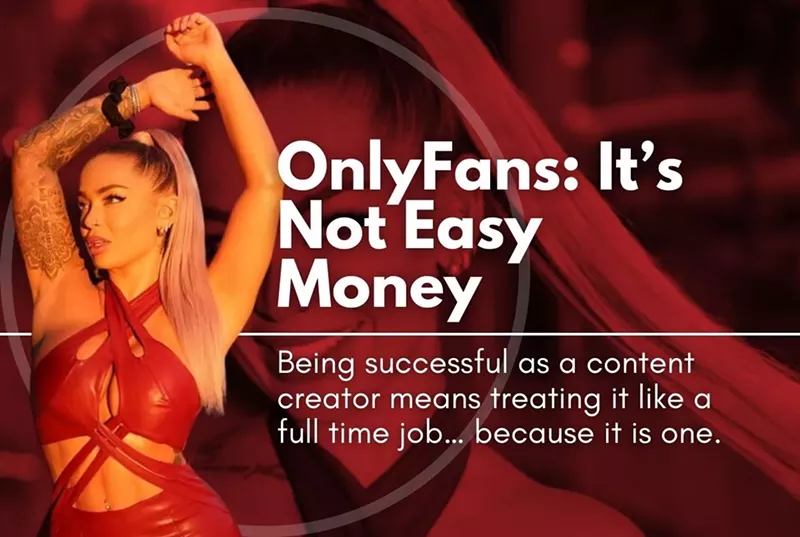
    If you’ve been thinking of OnlyFans as an easy backup in case your career goals go belly up, we’ve got bad news for you: running a financially profitable OnlyFans channel takes actual work. There’s a common misconception that OnlyFans models “just film themselves” and earn millions overnight, but quite a bit of effort goes on behind the scenes for successful content creators.Need proof that OnlyFans isn’t easy money? Meet Hayley Davies, a top creator on OnlyFans. Hayley works a minimum of 100 hours per week to maintain her channel and keep it turning a profit. Her daily tasks include creating content, editing footage, messaging subscribers, promoting her channel across platforms, managing collaborations, troubleshooting technical issues, and checking her security—because stolen content doesn’t pay, and sex workers face alarming rates of stalking. All these daily tasks require a significant time investment, not to mention the entrepreneurial skills necessary to keep the wheels turning. If that sounds like she’s running a small business, it’s because she is.

    More than just a hub for explicit content, OnlyFans is home to creators who thrive by offering exclusive fitness programs, cooking tutorials, and a wide variety of niche content protected by a paywall. Numerous Olympians have joined OnlyFans, sharing exclusive looks at their workout and meal prep routines. Artists provide small-session courses, and culinary experts share their expertise with paid subscribers, allowing them to pursue their passions without being at the mercy of a commercial kitchen. These creators thrive alongside those who share explicit content, proving that making money on OnlyFans requires a commitment to creating content that justifies the time invested.

    While creators invest so much time and energy into their work, it’s not just a time investment—it’s a heart investment. The secret sauce to OnlyFans success is forming and maintaining emotional connections with subscribers, which takes significant emotional energy to do authentically. Maintaining positive parasocial relationships with a viewership is tricky. Add in the mental load of staying relevant, managing negativity, and handling societal judgment that comes with being successful on OnlyFans, and… well, it’s heavy. On top of that, the internet is always open, and fans frequently expect 24/7 engagement. This leaves creators with very little personal time, despite running channels that were supposed to give them control over their schedules.

    OnlyFans success isn’t about luck. It takes hard work to build successful channels with engaged audiences. While many people still believe content creation isn’t a “real job,” OnlyFans creators earning a living frequently put in more than double the hours of a traditional 9-to-5 job. Maybe now we can respect creators for their dedication to their audience and their ability to adapt to the ever-changing preferences of the viewers who pay their bills. Regardless of whether their content is spicy or “vanilla,” content creators work hard and deserve respect. So, the next time you’re judging an OnlyFans creator? Remember that they’re juggling a full-time business, endless DMs, and making sacrifices to the algorithm gods to market their content. After all that? Working 9-to-5 would probably be a breeze.

  • OnlyFans Star Bhad Bhabie And Alabama Barker Bury The Hatchet After Bhad Bhabie And Le Vaughn Reconcile

    OnlyFans Star Bhad Bhabie And Alabama Barker Bury The Hatchet After Bhad Bhabie And Le Vaughn Reconcile

    Everyone relax, Bhad Bhabie and Le Vaugh are back together.Everything I know about Bhad Bhabie’s relationship with her baby daddy I’ve learned against my will, so I’m taking you all down with me. Here we go.

    OnlyFans star Bhad Bhabie and Alabama Barker have been beefing because Bhad Bhabie alleged that Barker decided to go after her man, Le Vaughn. Barker, however, claims she was misled by Bhabie’s boo, and now everyone seems to be gravy, as far as this overly dramatic love triangle goes. Here’s what I don’t get: Bhad Bhabie makes big bucks on OnlyFans, and Alabama Barker has star power in her own right—famous parents will do that to you. So why on earth were these two high-profile women duking it out over… that guy?

    Let’s back up and set the scene a bit, shall we? Bhad Bhabie and Le Vaughn began dating in 2020 when Bhad Bhabie was 17 years old, and Le Vaughn was 22. In early 2024, Le Vaughn began attempting to woo Alabama Barker, who is 19. That timeline and those age gaps should make you raise your eyebrows, because a grown-ass 22-year-old dating a minor is… icky, never mind the legality around such practices. Anyhow, Bhad Bhabie gave birth to the pair’s first child in March 2024—a daughter named Kali. She has since accused Barker of trying to “steal her man” while she was pregnant with his child. Barker has stated that while Le Vaughn pursued her romantically, he deliberately misled her into believing he was single, so she wasn’t duped into being “the other woman.” The fact that both women have accused Le Vaughn of behaving badly would make you think Bhad Bhabie would be happy to be rid of the scoundrel, but alas.

    Because nothing says “dad of the year” quite like wooing another woman while your partner is growing your child in her body, Bhad Bhabie and Le Vaughn are back together. Again. This isn’t the first time the pair has been in the “on-again” phase after a very messy and public split, but this time they have a kid to raise. What could possibly go wrong?

    The fact that both Bhad Bhabie and Alabama Barker have accused Le Vaughn of physical abuse might cause most people to stop and really think about whether or not getting back together with him romantically was a good idea. Not Bhad Bhabie, though. Apparently, despite cheating and physical abuse, Le Vaughn is just that good of a catch. There must be something to this Prince Charming that I’m missing, because I don’t get it—but Bhad Bhabie’s declared that Le Vaughn is her “forever baby.” Whatever secret sauce has her granting that guy multiple second chances, the world may never know.

    After reading all of that, remember that Alabama Barker was under the impression that Le Vaughn—whose partner was very pregnant at the time—deliberately misled her and made her believe he was single so she’d be involved with him romantically. Barker is the adult child of Travis Barker of Blink-182 and Shanna Moakler, a model and actress. She rose to fame during the reality show Meet the Barkers, has been successful as a social media influencer, and is utilizing her father’s connections to pursue her own career in music. Basically, she’s got a lot going for her and could have dated anyone—and even she wound up with that guy long enough to be able to credibly accuse him of physical assault.

    Reminder that Barker is only 19 years old, Le Vaughn is 26, and he lied about being single.

    Just… men like Le Vaughn are out here being accused of assault while cheating on their pregnant partners, and those partners are still letting them stick around. Maybe this time will be the time that Le Vaughn finally gets his act together, stops chasing after teenagers—again: gross—and focuses on being a good dad to his baby daughter. But in general, if someone with that track record is pursuing you and they’re single? Let them stay that way. You deserve better.

  • The Robots Take On OnlyFans: An AI Adults-Only Platform Seeks To Compete With OnlyFans

    The Robots Take On OnlyFans: An AI Adults-Only Platform Seeks To Compete With OnlyFans

    The AI revolution has been making waves in the adult-entertainment industry for a minute now, but AI-generated images are gearing up to compete with very real content creators—and their very real bills. AI-powered adults-only platforms like OhChat are already raking in millions with digital doubles of Carmen Electra and other celebrity hotties, but is this really innovation, or is it exploitation?OhChat, founded by Nic Young and Felix Henderson, bills itself as an “ethical” alternative to OnlyFans. Hard to exploit women when none of them are real, right?

    Wrong.

    These digital models may be cashing in, but they’re doing so by siphoning income away from actual models on platforms like OnlyFans. OhChat is currently valued at £16 million and has amassed 75,000 eager users in just a few weeks, all ready to put their AI porn bots to the test. Why pay full price for an OnlyFans model’s attention when you can chat with her off-brand AI knockoff, which will do whatever you tell it to without charging extra for its computer-generated butthole?

    But here’s the other skeevy side of AI-generated porn: the images are based on real people and are often created without their consent. OnlyFans stars like Sophie Rain have spoken out about being imitated by people trying to cash in on their image, and not one of them finds it flattering. The consensus? It’s creepy as hell to have your likeness used without your knowledge or permission.

    Where OnlyFans models once worried about lookalikes swiping images of their faces for fake profiles, they now have to compete with AI that can generate their image and voice in a systemized fashion, thanks to platforms like OhChat.

    Is it legal to use the likenesses of popular OnlyFans models if the image is AI-generated? Eh, maybe. AI is here to stay, but the laws surrounding its use are still being written. Is it ethical? Absolutely not. Even if the concern isn’t about swiping money from hardworking creators, using someone’s likeness without permission is far beyond “morally grey” territory.

    Whatever your stance on sex work, the industry has existed for millennia, and society keeps finding new ways to avoid paying the people—women and men—who meet a demand they didn’t create. Big Brother isn’t just watching you anymore; he’s making his AI girlfriend study you so she can steal your gig.

    OhChat can call itself “ethical” all it wants, but generating fake content from real faces without compensating those faces is sketchy AF. AI-generated models might seem like a harmless way to have fun, but they come at a very real cost to women’s livelihoods and privacy. If you’re paying a chatbot that can’t consent—because it’s a computer—it might be time to rethink your fantasy. Support real creators, and while you’re at it, advocate for stricter consent and privacy laws.

  • Breaking News: Steve Harvey Isn’t Dead, But Your Phone Might Have A Virus

    Breaking News: Steve Harvey Isn’t Dead, But Your Phone Might Have A Virus

    If we had a nickel for every time false news of Steve Harvey’s death circulated, we’d have three nickels—which isn’t a lot, but it’s strange that it’s happened thrice. Early this morning, scrollers were shocked and saddened to see a NewsBreak article announcing that the comedian had passed away… except it isn’t true. Not only that, but people who clicked on the link reported it was actually a spam or virus link. Oops!The headline, “Steve Harvey Passed Away Today: Remembering The Legacy Of A Comedy Legend,” quickly made the rounds on social media, causing an online meltdown as fans succumbed to the knee-jerk reaction of clicking the share button without verifying the news first. The article also claimed Harvey died at age 56, even though he’s actually 67 (and still living, obviously). This isn’t the first time the rumor mill has falsely “killed off” Harvey. It’s not even the second time. This is false death number three for the comedian.

    Not only did this—let us emphasize, FALSE—news spread like wildfire, but it might have triggered the spread of something more nefarious. Many users reported that after clicking the bogus link, their devices displayed what seemed to be spam at best or malware (and viruses) at worst. Apparently, the only real death here was the virus protection on a large number of smartphones.

    Scammers are notorious for using sensational headlines to elicit that “instant-click” reaction. They know that if users take a second to think about what they’re seeing, they’ll navigate away from the shady link and verify the information elsewhere. That moment of thinking twice before clicking is the difference between having your device infected (and possibly your information stolen) and carrying on like it’s just another normal Wednesday.

    Quick refresher on protecting yourself from similar schemes:

    1. Don’t click on suspicious links. No matter how much the headline tugs at your emotions, just don’t do it.
    2. Verify news through reputable outlets. If you don’t recognize the name of the news source linked to the article, navigate away and do a quick Google search to confirm the story.
    3. Keep antivirus software up to date. Yes, running system updates can be a pain, but dealing with a virus—or worse, replacing your device—is much worse.

    Steve Harvey is a comedian. If he’s going to break the internet, it’ll probably be with another epic Family Feud moment or a perfectly timed joke—not a bogus obituary. Next time news of Harvey’s “death” starts circulating, double-check before you start mourning. History tells us he’s probably still standing, likely rolling his eyes at how gullible we all are.

    We’re sure Steve Harvey appreciates the love he was shown this morning when the internet believed he was gone, but let’s let the man live—and learn to verify a story before clicking on a sketchy link.

  • Impending TikTok Ban Will Lose The United States $24 Billion In GDP And Will Devastate The Creator Economy

    Impending TikTok Ban Will Lose The United States $24 Billion In GDP And Will Devastate The Creator Economy

    TikTok is set to be on the chopping block on January 19th, and that day is racing closer. The ban appears to be moving forward not only full steam ahead but with extra fuel being thrown on the fire courtesy of politicians eager to see the app gone. TikTok had one last shot at possibly being saved in the United States by taking its case to the Supreme Court, but the Court said “nah” to even hearing it. The politicians pushing hardest for the ban don’t even seem to have a presence on the app, which means they have no real understanding of what their actions are about to do to the creator economy. Hint: it’s not great. Like, “$24 billion in GDP lost because we just don’t like the clock app” levels of not great.The app is set to be banned in the United States on January 19th, with letters already sent to Apple and Google informing the tech companies that TikTok must be removed from their app marketplaces on that day. The ban is being expedited, with politicians rushing to ensure that TikTok’s plug gets pulled without allowing it a fair judicial review. Politically, the claim is that TikTok threatens U.S. national security, even though the app’s Chinese parent company has ensured that U.S. user data stays within the United States. Supporters of the app had been holding out hope for a final chance: an appeal to the Supreme Court. But the Court’s refusal to hear the case denied TikTok that opportunity to defend itself. The precedent this sets for digital platforms moving forward is… dangerous. Politicians disliking one social media platform or another now have a precedent for banning it as quickly as possible, without giving it a chance to fight for its existence—all in the name of “national security.”

    What’s perhaps most frustrating for content creators who rely on TikTok for their income is that many of the politicians leading the charge to ban the app have never even used it. Their statements about the necessity of the ban are out of touch at best and willfully ignorant of their constituents’ needs at worst. TikTok has become the primary platform where younger audiences communicate and organize. With the average age of Congress being 64, the discussion around the TikTok ban highlights the glaring generational and cultural gap between lawmakers and the app’s audience. Simply put, the politicians pushing hardest to ban TikTok don’t understand it, and rather than make an effort to learn, they’re ensuring its disappearance.

    Banning TikTok is likely to backfire on the politicians advocating for it. A $24 billion GDP loss isn’t something the economy will magically recover from overnight. Losing TikTok will devastate the creator economy, including small businesses that use it for marketing and full-time creators who have built audiences of millions and rely on the platform for their income. When content creators and small business owners lose their income, the ripple effects are swift. Advertising and e-commerce will likely be hit first, and as more people lose income, they’ll tighten their spending, further straining the economy. Few industries will escape the sting of this blow to creators’ bottom lines.

    For creators, the future feels uncertain and unnecessary. Thousands are about to lose their livelihoods, while many more will lose supplemental income they rely on to make ends meet. This comes at a time when underemployment and stagnant wages make survival in the U.S. increasingly difficult. Beyond the economic impact, concerns are growing about what this ban means for First Amendment rights and free speech in the digital age. TikTok has created unique opportunities for independent journalists to reach audiences where traditional media has fallen short. Creators are scrambling to establish presences on other platforms, but options are limited: YouTube isn’t creator-friendly for short-form content, and Meta’s “pay-to-play” model often buries content that doesn’t align with its interests.

    Out-of-touch legislators rushing the TikTok ban will harm creators who built their brands on the app and leave a devastating economic impact unlikely to be forgotten at the polls. TikTok isn’t just a place for dancing videos—it’s a whole ecosystem. And historically speaking, disrupting ecosystems doesn’t usually end well. Without a miracle, on January 19th, the TikTok ecosystem will breathe its last in the United States.

  • You’ll never guess what Candace Owens has in common with OnlyFans star Bonnie Blue

    You’ll never guess what Candace Owens has in common with OnlyFans star Bonnie Blue

    It’s hard to be a content creator in the midst of a PR crisis. According to a video by attorney Aaron Parnas, New Zealand has followed Australia’s suit and barred Owens from entering. She had planned to enter the country on an Entertainers Work Visa.

    It appears that the political commentator wanted to bring the good word to New Zealand, but the letter of the law had other ideas. Section 15(1)(f) of the Immigration Act bars individuals from getting a visa to enter New Zealand if they’ve been banned from entering another country. The same section explains that New Zealand performs character checks on potential entrants, and may deny them entry.

    In other words: New Zealand has a vibe check law. And Australia Candace Owens didn’t pass, so New Zealand also noped out. The Spice Girls said it best: If you wannabe my lover, you gotta get with my friends.

    If you’re one of our regulars, you know that controversial blonde OnlyFans model Bonnie Blue got her Australian work visa revoked, too. We’re not sure if Candace Owens had similarly planned to bed a bunch of her fans during her stay (that’s her choice; we don’t judge).

    So why did Australia bar Candace Owens from entering?

    If you thought it had something to do with the words that come out of her mouth, you’d be correct. The conservative commentator has built a YouTube following of over 3 million subscribers. Previously, she had separated from the Daily Wire amid a clash of creative differences with the owner over anti-Semitic remarks.

    Australia’s Immigration Minister Tony Burke told reporters that Owens’ remarks about everything from the Holocaust to Muslims could “incite discord in almost every direction.” Ordinarily, we can appreciate a woman with range. But when a country whose decision-makers are chill with giant spiders, birds attacking citizens during “swooping season,” and the general antics of Neil the Seal says its “national interest is best served when Candace Owens is somewhere else,” maybe it’s time for a rebrand.

    At this time, tickets to her speaking tour are still for sale in both countries, and there’s no mention on the promoter’s website that she’s been barred from entering either New Zealand or Australia. It’s giving pre-pandemic Millennial scam of the Fyre Festival or Caroline Calloway variety. This particular online grift is too late to be on trend and too early to be vintage. Very cringe, very cheugy.

    What Candace Owens has here is a failure to read the room. Some of us remember a viral video of an Australian Member of Parliament passing a motion to declare Donald Trump a revolting slug. Obviously, this was a symbolic gesture. Policymakers around the world have ways of letting us know how they feel just shy of passing a law about it. American politicians file amicus briefs. Australian ones have the parliamentary resolution. And best of all, New Zealand’s members of parliament recently performed a haka as an act of protest. Honestly, since the 2024 Olympics ended, I’d been hankering for a haka.

    So, where does Candace Owens go from here? Canceling a tour ain’t cheap. Maybe she’ll start an OnlyFans to recoup the cost. She wouldn’t be the first woman to start an OnlyFans to fund a tour.

  • Butterball Employees Implicated In Allegations of Inappropriate Sexual Acts With Turkeys

    Butterball Employees Implicated In Allegations of Inappropriate Sexual Acts With Turkeys

    Avoiding uncomfortable topics at Thanksgiving dinner this week just got a little more difficult. Allegations against Butterball—the most popular commercial producer of turkeys in a country that has an annual, nationwide turkey feast later this week—have come to light, implicating several employees in acts of animal cruelty. One of the cruel acts? Sexual assault of the turkeys, both living and already slaughtered for the grocery store. To quote What We Do in the Shadows, “You’d enjoy it a lot more if you didn’t know it’d been f_cked.”So, here’s what happened in a nutshell. PETA did what PETA does: when they heard whisperings of inappropriate things happening at the Butterball factory, they went sniffing around. Apparently, they found quite a bit of shocking and inappropriate behavior, not the least of which was turkeys being hit and stomped on while they were still alive. There was also evidence of sexual assault happening between men who worked in the factory and the turkeys while the birds were restrained. Unfortunately, this is not the first time Butterball has faced legal trouble for mistreating animals at their facilities. In 2012, Butterball was hit with legal action after an undercover investigation by Mercy For Animals exposed cruelty against animals.

    The timing of releasing this information to the public so soon before the national “let’s eat turkey” day—Thanksgiving—was possibly intentional. With so much national attention already on turkeys, it’s no surprise that this story was met with widespread outrage. Holiday-specific controversies have a way of stirring up a media storm, and those storms are frequently linked to activists who have been carefully stoking the flames of controversy behind the scenes to draw attention to their cause.

    This most recent—and disgusting—controversy raises the issue of media literacy. In a nation where the average reading comprehension level hovers around that of a sixth grader, it’s important to take a moment and remember a few key rules for processing shocking news. Whenever you see a headline that instantly raises your blood pressure, remember that this is exactly what the headline was designed to do. Then, run through the following list of questions.

    Who benefits from this information being out in the world? Is there a company that stands to profit from the information you’re reading? Is there a rival to the entity being implicated in the story? Take a moment to see if there’s a clear benefit for someone who might profit from your outrage.

    How reliable is the source? Is the news outlet owned by a major corporation that thrives on keeping you angry? Do they have partnerships with organizations that benefit from your attention being focused on this topic? A quick Google search can help you learn about the outlet and where it falls on the media bias scale.

    What biases might be at play? After checking the source’s biases, think critically: what’s the benefit of trusting the information you’re reading in this case? If the answer isn’t “you” as the reader, it might be time to find a new source.

    Verifying your sources is critical, especially when stories repeatedly make you angry. Chances are, you’re not the only one, and it’s a good idea to ensure you aren’t being manipulated to sway public opinion.

    The controversy surrounding the mistreatment of turkeys—animals being prepared to grace our holiday tables with love in the form of food—is horrible, no doubt about that. But it does raise questions about the need to examine how all our food is produced. If turkeys are treated this way, they’re likely not the only animals suffering up to the point of slaughter. Acknowledging this is hard, especially before holiday gatherings centered around eating. But if we don’t confront the uncomfortable truths, we’ll never make it better. Ignorance might be Aunt Pam’s favorite seasoning, but it leaves a bitter aftertaste.

    Will these allegations affect your Thanksgiving meal? Well, that’s up to you. Butterball turkeys are still for sale, though there’s no guarantee certain cavities were treated with the dignity they deserve. If you have strong feelings about giving your money to a company that fostered such a terrible environment, maybe it’s time to explore those feelings and consider how your spending can make a difference. After all, you’ll enjoy your food a lot more if you know it wasn’t f_cked.