Tag: Long Form

  • 20 Ways to Meet New People in St. Louis

    20 Ways to Meet New People in St. Louis

    During her travels through China during World War II, war correspondent and St. Louis native Martha Gellhorn bet her then-husband, Ernest Hemingway, that a foreigner she’d spotted on a train hailed from her hometown. “I think it’s a law,” Gellhorn wrote in Travels With Myself and Another. “When you get to the worst farthest places, the stranger has come from St. Louis.”

    Being a stranger need not be such an ominous condition, and certainly not in present-day St. Louis. Maybe you’re a new transplant. A tourist. A recovering hermit. Perhaps you’re feeling the sudden need to get off your couch, turn off Netflix and interact with other humans. And that’s OK! Don’t let anyone try to convince you that St. Louis can’t be friendly, or doesn’t have a place for the outsider. It just takes that first step.

    And we’ve got nineteen steps for you — suggestions for venues, events, clubs and activities that bring people together. You might find a diversion for a couple weekends, a story to tell at a bar or friends for life. What do you have to lose? You can always just head back to the couch and unpause Netflix.

    1. Raise a Stein, and Your Voice, with the Beer Hall Choir
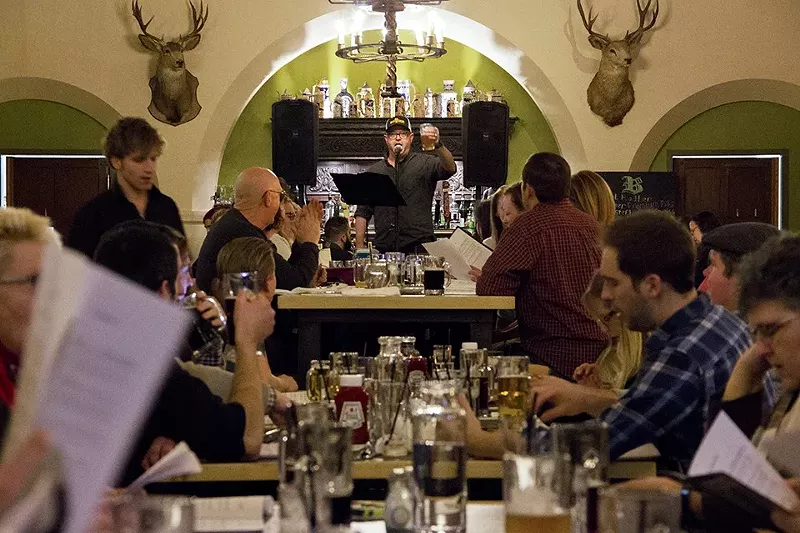
    With the opening of Das Bevo, the Beer Hall Choir (www.beerchoir.com) found its perfect home beneath the soaring ceiling of the recently renovated Bevo Mill. It’s not a formal choir, per se, but a monthly “social drinking experience.” Just grab a beer, a songbook and a seat at one of the long communal tables; then follow along with maestro Michael Engelhardt, drinking accordingly along the way. To Engelhardt, it’s not the beer, or even the music, that makes the “secret sauce” of the Beer Hall Choir so special. “It’s social connection,” he says. “There’s just something that happens inside when you hear everybody singing together. You’re part of that.”

    2. Get Cultured
    It might not always seem that way, but St. Louis history has much more to it than Germans brewing. Starting the first Saturday in April, the St. Louis Landmark Association (www.landmarks-stl.org) operates walking tours that explore downtown’s significant buildings and neighborhoods, covering not only mainstays like the Arch and Union Station, but also the little-known histories behind the Grand Center arts district and Washington Avenue — it wasn’t always a street of trendy bars and restaurants, you know. If a bus tour is more your style, hop on one of the quirky tours offered by Renegade STL (renegadestl.com) and learn about the city’s unexplored corners and underappreciated personalities. Rather not walk outside, ride a bus or spend any money? Then take advantage of free admission to the world-class Saint Louis Art Museum (www.slam.org) and attend a group tour or gallery talk; you’ll be surprised at how much depth the institution contains — and how much you’ll enjoy delving into it.

    3. Read a Book (Communally)
    St. Louis is positively bursting with book clubs, and if you can’t network into one by asking around, you’ll find your local book store is often more than happy to make the connection. (See our complete guide to local bookstores within this very issue.) Your local branch of the public library also likely offers a club. And if you haven’t yet downloaded NextDoor (nextdoor.com), the neighborhood app is a good starting point as well — beyond the ongoing is-that-fireworks-or-gunshots conversation in most city neighborhoods, you can often network in with book clubs that have been going strong for years.

    4. Get Involved in Politics
    Whether you’re red or blue, it’s hard not to look at America’s current political climate as anything but a dripping garbage fire. But you — yes, you! — can do something about it (and sometimes even get paid for it). You don’t have to harbor presidential aspirations to get involved with canvassing or collecting signatures for a petition or candidate, and the upcoming midterm election season is a great place to start. Research your alderman, state reps and congressmen. Want to support them? Oppose them? You’re not alone. Contact the state campaigns or, if you’re in the city, shoot a friendly email to your representatives on the Democratic Central Committee (www.stlcitydems.com). The next time an election comes around, you won’t be a bystander.


    Drink, and sing, with the St. Louis Beer Choir. - DANNY WICENTOWSKI

    DANNY WICENTOWSKI

    Drink, and sing, with the St. Louis Beer Choir.

    5. Get Jacked
    If improving the body politic isn’t your speed, take a shot at improving your actual body at group workout sessions. Local gyms and community centers like the JCC and YMCA offer hundreds of options, but lower-cost and free sessions are at your fingertips through Meetup groups like the St. Louis Adventure Group (www.meetup.com/StLAdventurers/). Looking for something contemplative that will also stretch your limbs at interesting angles? Yoga Buzz (www.yogabuzz.org) hosts “Yoga plus” events at locations all over the city, combining the shared anguish of a workout with a twist of culture, food or beer.

    6. Go For the Glory
    No force in the world can suppress a competitive spirit, and there’s no reason you can’t let that spirit fly in St. Louis. Multiple groups offer mainstays like softball, hockey, co-ed kickball and cornhole — and if you’re adventurous, the St. Louis Curling Club (www.stlouiscurlingclub.org) is always looking for members. Take care, as particular leagues tend to come and go, and therefore it’s worth some googling around in the winter to gauge your options as the weather warms. Thankfully, many leagues include the option to join as a “free agent,” so you won’t have to assemble your own collection of castoffs to vie for a trophy. See www.stlouis.sportsmonster.net for a large listing of options.

    7. Roll the Dice Over a Board Game
    Stretch and sweat all you want, but a sedentary pastime is nothing to scoff at either. Head over to Pieces STL (www.stlpieces.com), a board-game cafe in Soulard that has quickly become the epicenter of St. Louis’ dice-rolling and card-playing crowd — a crowd that easily has room for one more. Co-owner Laura Leister notes that groups have the option to signal their openness to unattached players, while those coming in alone can alert others that they’re willing to join any group that needs them. Flying solo on a weekday? That doesn’t mean you can’t play. “Some people just come to sit at our bar to have a beer by themselves,” she says, “and they end up playing a game with their bartender.”


    The Central West End offers both chess and potential mates. - MICAH USHER

    MICAH USHER

    The Central West End offers both chess and potential mates.

    8. Master Chess
    There are games, and then there’s chess. St. Louis is arguably America’s chess capital, and if you’re keen to hone your skills or to start your journey to becoming a grandmaster, the Chess Club and Scholastic Center of St. Louis (www.saintlouischessclub.org) could be your new home. The Chess Club hosts daily classes and lectures, and the group’s Central West End headquarters functions as a cerebral community center that bustles with students of every age and experience level. Whether you’re interested in casual games or tournament prep, or just taking chess instruction, the Chess Club is a sound opening move.

    9. Chase Karaoke Stardom
    There’s a reason karaoke persists, immune to the passage of time and the fickle tastes of youth. For those two or three minutes — or six minutes, if you’re one of those marvelous lunatics attempting Queen’s “Bohemian Rhapsody” — you are the undisputed headliner, the belle of the barroom ball. And even if you walk into a karaoke bar knowing not a soul, the aura of communal performance anxiety makes for a fantastic ice breaker. Plus, the venues usually attract their own cadre of regular singers to befriend. St. Louis’ karaoke palaces range from the violet-hued disco heaven of Mike Talayna’s Juke Box Restaurant, which carries karaoke every night of the week, to neighborhood bars like Carson’s (www.carsonssportsbar.com), which offers options from Wednesday to Sunday. And don’t miss Karaoke BOOM, which travels between the Monocle, Foam and Sophie’s Artist Lounge & Cocktail Club (see each bar’s Facebook page for more details). Time to start practicing those high notes.

    10. Make a Dive Bar Your Own
    By definition, you can’t be a stranger in a place where everybody knows your name. Maybe that’s the underlying magic hidden inside neighborhood dive bars, the sort of places you might pass without a second thought during your morning commute, establishments with names like the Heavy Anchor or Rhonda’s Place (pro tip: Google “the Real Drinker’s Guide to St. Louis’ Best Dive Bars,” and you’ll find this publication’s finest work). Just pick one, and go there a few times. Bring a friend. Drink a beer after work. If they have a TV, watch a game. Tip the bartender. Talk to the bartender. Get really good at pinball. Talk to someone older and better-traveled than you, and maybe realize how little you know about motorcycles and proper car repair. Listen to the craziest stories you’ve ever heard. Start learning people’s names before you drink so much you forget them — and that’s the dive-bar magic starting once again.


    How better to be a fan than to cheer on STL FC? - JASON PATRYLO​

    JASON PATRYLO​

    How better to be a fan than to cheer on STL FC?

    11. Become a Soccer Louligan
    The story of soccer in St. Louis didn’t begin with the effort to put an MLS stadium downtown, and it certainly didn’t end when that effort failed to sway city voters in 2017. The city’s ties to the sport go back a century, and our present-day soccer culture is in the midst of a revival that’s ravenous for more fans — a fan like you, perhaps. The St. Louligans (www.stlouligans.com), the largest club of soccer supporters in the metro area, consistently populates a raucous fan section at STL FC matches, and they bring an exuberant abandon that should make the Cardinals jealous. And once the World Cup rolls around this summer, bars like the Amsterdam Tavern, Barrister’s and Tigín will be packed with fans of the beautiful game. To mix metaphors: Jump on the soccer bandwagon, the water is fine.

    12. Relive Animal House with the Harriers

    Like the platypus, the concept behind the Big Hump Hash House Harriers (www.big-hump.com) sounds like it shouldn’t be possible. For nearly two decades, the group — which touts itself as “St. Louis’ Original Drinking Club with a Running Problem” — gathers weekly to engage in “hashing,” a non-competitive “hare and hounds” running game that’s practiced by clubs all over the world. The “hares” leave chalk symbols on the ground, which direct the trailing “hounds” to the route, which includes some false trails and dead ends; that route, in turn, features stops for beer. St. Louis’ iteration hosts weekly runs open to any athletic level, with most routes including a walking option. For newbies, the instructions are simple: Contact the organizers, grab $7 and just “show up and be 21, since there is drinking,” advises veteran hasher Angela O’Hanlon, the group’s president. If you’re not into nicknames, though, be forewarned: You’re going to get one. “Lazy Ass” and “Slips in Shit” are already taken. “Come with an open attitude,” O’Hanlon laughs. “It’s all about making fun of yourself.”

    13. Be of Service
    When MLK said “Everybody can be great … because anybody can serve,” he wasn’t talking about selling trucks. Nothing so easily shatters a feeling of being “other” than reaching out to people who are spinning on the margins of survival, homelessness and poverty. For a start, consider your skills and talents. Where could they be applied? Can you help out a classroom, mentor a high school student or help build a house? Click around the United Way‘s searchable database of local positions (www.stlvolunteer.org). Considering St. Louis is particularly strapped for resources to support its homeless population, you may find the greatest impact with groups like the St. Patrick Center (www.stpatrickcenter.org) and Peter & Paul Community Services (www.ppcsinc.org).


    Make new friends of the feline variety at Mauhaus. - KELLY GLUECK

    KELLY GLUECK

    Make new friends of the feline variety at Mauhaus.

    14. Join St. Louis’ Pet People
    Fido probably loves going outside no matter what, but it’s time to show him the world beyond the immediate blocks around your place. Get to know the region by its parks and pet-friendly bar patios, and you’ll find that many, many other dogs are dragging their humans to the same places. If you’re in Midtown near Saint Louis University, you’ll find your fellow dog folks arrayed around the abstract art in the Ellen Park Sculpture Park. Or head to the far western rim of St. Charles, to Broemmelsiek Park, where the admission is free, the acreage is plentiful and the lakes are perfect for doggy-paddling. And if you’d prefer a more passive experience, the Mauhaus Cat Café (www.mauhauscafe.com) is a temple to the endearing-but-also-sometimes-disinterested affections of a creature who doesn’t care if you’re a stranger, as long as you provide good petting. Find lots more options at bringfido.com.

    15. Become a Superfan
    It’s easy to get caught up in huge musical acts coming through St. Louis — but it’s the ones right here that are way more fun to follow, from small bar to bigger bar to maybe even a particular alt-weekly’s annual music showcase. Try seeing what all the fuss is about by catching the ultra-polished Sleepy Kitty, the cataclysmic rock of Bug Chaser or the joyful Bruiser Queen — and then realize you can’t get the opener’s third song out of your head, and before you know it you’re at the opener’s show, and then suddenly you’re three bands down the line and shouting lyrics in a mosh pit in a basement and you are alive as fuck. Don’t worry about being pretentious or worry that actually liking something makes you weird. Try liking a band and then being around other people who like that band too, and see where it goes. It’s as simple as a three-note chord, and poses the same infinite potential. Check out the RFT‘s local music listings, which run in the paper every week, to see who’s playing where.

    16. Till the Earth
    Gardening isn’t just something to do in your window box or, uh, in a locked shed containing a hydroponic weed empire. Instead, join the agricultural revolution at EarthDance Farms (www.earthdancefarms.org) in Ferguson. Each season, the fourteen-acre organic farm accepts around two dozen apprentices who work the land, plant the seeds and see the effort through to harvest — the result of which finds its way to the patrons of the Ferguson Farmers Market. The apprenticeship is more than just labor; it’s a hands-on education with experienced farmers who will run you through a curriculum that’s 12,000 years or so in the making. By the end you’ll learn the ropes of sustainable farming, and from there you can join one of the more than 200 gardens in the Gateway Greening Community Garden network (www.gatewaygreening.org) — or even start one of your own. Be part of a community that grows together. You might like it, and at the very least your salads will improve.


    Perennial’s classes let you make new friends even as you reuse old items. - COURTESY OF PERENNIAL

    COURTESY OF PERENNIAL

    Perennial’s classes let you make new friends even as you reuse old items.

    17. Make Art
    Bob Ross spent a career softly shading clouds and adjusting the mood of his trees, and the guy had it right about art: “Talent is a pursued interest,” he once said. “Anything that you’re willing to practice, you can do.” If it’s practice you’re looking for, and fellow practicers to practice with, Craft Alliance (www.craftalliance.org) offers one-day workshops or longer classes to suit your creative itch, from pottery to quilting to glass-blowing and pretty much everything in between. Feeling more like an upcycling Martha Stewart? Check out Perennial (www.perennialstl.org). The nonprofit offers classes that will make you take another look at the “creative reusability” of objects around you. If you’ve found some wooden pallets in an alley, turn them into something cool and useful at one of the regular community workshop days, with staff on hand to lend DIY guidance. And even if your art is useful and sustainable and all that, there’s nothing wrong with adding a splash of decoration to that new bookshelf. We suggest some happy little trees.

    18. Become a Trivia Champion
    Grab some clever colleagues, or at the least some colleagues who’ve watched a few episodes of The Simpsons, and take advantage of the fact that virtually any day in St. Louis is a good day for challenging yourself to remember pop culture trivia while drinking. For instance, you’ve got Geeks Who Drink (www.geekswhodrink.com) at Handlebar, Layla and Blueberry Hill, and Tenacious Trivia (www.facebook.com/TenaciousTriv) covering a host of south-city bars, including Ryder’s and Tower Pub. Will you win? Probably not. But you can still delight in nailing a thorny question about ’90s boy bands, military history or anime — and everyone knows the best part of trivia is picking a train wreck of a pun for your team name.

    19. Get Spiritual, or Not
    If Abraham could hack it as a stranger in a strange land, so can you, though you probably don’t need all the desert wandering that went with it. St. Louis is overflowing with churches, mosques and synagogues, and you’ve got your pick of traditional congregations. (Boy, are you in luck if you like giant Catholic churches.) And if you’re not totally convinced the world is only 6,000 years old and would rather talk about cool science stuff, the Skeptical Society of St. Louis (www.skepticalstl.com) would be happy to have you at its talks and pub meetups. And don’t overlook the Ethical Society of St. Louis (www.ethicalstl.org). A humanist congregation, the Ethical Society hosts Sunday services in a breathtaking temple of its own in Ladue, and with a full slate of sermons, mindfulness rituals and community services that prove you don’t necessarily need God to deal with the big questions of life and still have hope for the future.


    Improv Shop student Livie Hall gives stand-up a whirl at open mic night. - KELLY GLUECK

    KELLY GLUECK

    Improv Shop student Livie Hall gives stand-up a whirl at open mic night.

    20. Be Funny
    The last bastions of scoundrels are the improv stage and the open mic — but if you’ve got your heart in the right place, a knack for comic timing and a desire to not be the creepy guy who only knows ethnic jokes, then check out St. Louis’ comedy scene. The Improv Shop (www.theimprovshop.com) hosts some of the city’s most talented and transgressive comics, and you too can your hone your comic timing, build confidence or find a partner to help polish those skit ideas you’ve been squirreling away for years. Granted, improv isn’t for everyone — thank God — but there’s something elemental about the open-mic experience that everyone should try at least once. You may not know it, but the crowd at the monthly 90-Minute Mic at Gezellig (www.facebook.com/pg/gezelligstl/events/) is dying to hear your favorite bar story. Don’t leave them hanging.

  • St. Louis’ Best Bookstores: A Complete Guide

    St. Louis’ Best Bookstores: A Complete Guide

    Whether you’re seeking an obscure eighteenth-century novel or just want to browse, there’s an independent bookstore in St. Louis that has just what you need. Our researchers visited shops from Edwardsville to St. Charles to south city to report back on which bookstore is right for you. Read along and then plan to visit one (or four).

    DUNAWAY BOOKS
    3111 South Grand Boulevard, 314-771-7150
    The story: A community-driven space with stacks and stacks of rare treasures.
    The backstory: Founded in 1965 by Reginald “Pat” Dunaway, the bookstore has changed hands several times over the years. Current owners Kevin Twellman and Claudia Brodie have been running things since 2017, and manager Vernon Bain is a fixture during the week.
    Perfect for: Bibliophiles who love the hunt. The 80,000 second-hand books in Dunaway are spread among a maze of stacks on the store’s three levels, with especially large psychology, poetry and foreign history sections. The mezzanine, which overlooks the store and its 88-year-old fully functional piano, concentrates on black and Jewish history and modern fiction, while the basement features 1970s sci-fi, the sciences and literary criticism. For a little lighter reading, find mystery novels and classic children’s literature on the ground floor. Don’t miss the local connections throughout the store, such as Tim Bolt’s framed art along the mezzanine stairs and works by St. Louis authors and poets near the front window; local writers and musicians regularly are welcomed to the store for readings and performances.
    Bring your wallet: You’ll rarely leave this store empty-handed. Along with used books at all price points, the treasures behind glass — such as a thick Napoleon tome from the 1800s or a signed letter from Albert Einstein on behalf of the Emergency Committee of Atomic Scientists — may set you back as much as a few thousand dollars.

    LEFT BANK BOOKS
    399 North Euclid Avenue, 314-367-6731
    The story: Located in the heart of the Central West End, the city’s oldest and largest independent bookstore hosts not only an expertly curated collection but an astonishing 300 events each year.
    The backstory: Founded in 1969 by a group of Wash U grad students, Left Bank is now owned by Kris Kleindienst and Jarek Steele, who have helped the shop weather any number of seismic events, from the rise and fall of Barnes & Noble to Amazon to an attempted expansion downtown.
    Perfect for: Anyone looking for something old or something new — Left Bank has a sizable used collection in the basement and all the latest releases in a host of categories upstairs. Smartly chosen staff picks and a big display of book-club selections mean that those browsing will never be short on inspiration. The kids’ room is also big and friendly, unless there’s an author in town (in this well-stocked shop, space is always at a premium).
    Maybe think twice: If you’re desperately allergic to cats. Spike is the king of the roost, and while we’ve seen him show neighborhood dogs a thing or two (yes, the store is pet-friendly, so long as Spike doesn’t object), he’s not budging unless he wants to.

    Subterranean Books is a true destination in the Loop.

    SUBTERRANEAN BOOKS
    6275 Delmar Boulevard, University City; 314-862-6100
    The story: The Loop’s best browsing spot manages to make room for an excellent collection of literature, art books, biographies and books about pop culture. There’s a sizable children’s section as well.
    The backstory: Kelly von Plonski’s bookstore has lasted eighteen years on a street with near-constant turnover by cultivating loyal customers and connecting them to its collection.
    Perfect for: Big readers. Subterranean has one of the most generous frequent-buyer programs in town. For every ten purchases, the shop kicks back a store credit worth the average of your last ten. Or sign up for the Book of the Month, where the staff hand-picks something every month to fit your interests — and even has it delivered to your doorstep.
    Be skeptical: Despite what you may read online, there are no used books here.
    Ready to wear: Since Subterranean is a small storefront, space is at a premium (that loft may remind you of your college dorm room, though it contains a surprisingly big upstairs area). But the one gift option von Plonski has found room to display is our favorite thing to buy the bibliophiles on our list: T-shirts screenprinted with classic book jackets.

    THE BOOK RACK
    14560 Manchester Road, Ballwin; 636-394-1233
    The story: A warm, comfortable store with popular reads at low prices.
    The backstory: The shop, in business for more than 35 years, has changed locations a number of times, including doubling its space by moving just a few hundred feet down within its current Ballwin plaza. Owner Cindy Antonacci took over the store about seven years ago, and longtime bookseller Lauren Gockley helps customers find their prizes.
    Perfect for: Anyone dying to read popular bestsellers from two years ago. While the store does acquire a few new books, it’s a legitimate gold mine of pre-loved modern romances, thrillers and young-adult titles, especially in paperback (don’t forget to bring in your own used books for cash or store credit). Check out the expansive children’s section, which features the Baby-Sitters Club and the Chronicles of Narnia books alongside vintage toys and decor. Throughout the store, signs offer tips for readers, such as the reading order for authors’ ongoing series and marquee works in certain categories. If you find something good, you can start reading immediately — each section has fluffy seating that invites readers to enjoy their finds.
    Local-author alert: Near the check-out station, look for shelves of works by St. Louis authors.
    Don’t miss: The back room, which is filled with classic literature in both paperback and hardback. While you’re there, make a cup of coffee, curl up on the church-pew bench and note the chalkboards with reading recommendations from employees.

    Mark Gould works the front desk at the Book House.

THE BOOK HOUSE
7352 Manchester Road, Maplewood; 314-968-4491
The story: New, used, rare — you should be able to find what you’re looking for among the 300,000 titles here.
The backstory: A no-frills shop where the prices are written in pencil on the inside cover of many of the books, the Book House has been a presence on the St. Louis book scene since 1986. The shop moved from Rock Hill to Maplewood a few years ago and carries a wide range of adult and children’s books, with new and used books displayed side-by-side on its shelves. It also has a large online store at www.bookhousestl.com.
Claim to fame: George R.R. Martin, author of the Song of Ice and Fire series that inspired HBO’s Game of Thrones, stopped by in the 1990s.
True vintage: As of press time, the oldest title on the shelf is from 1590.

HAMMOND’S ANTIQUES & BOOKS
1939 Cherokee Street, 314-323-6389
The story: A bookstore full of old-world charm on Cherokee’s Antique Row.
The backstory: Housed in a brick beauty that was built in 1892, Hammond’s has been in business for more than 35 years. The store is run by Jovanka Hammond, who had lived above the shop in its early days, and her brother Knez Jakovac, a musician who has toured the world.
Perfect for: Those who want to experience the bookstore of their dreams — complete with shelving ladders. With its mysterious nooks, twinkling lights and shelves stretching to the ceiling, Hammond’s is a bibliophile’s heaven. The shop specializes in rare and out-of-print books. Moving from room to room and floor to floor, readers encounter everything from a vintage Peter Pan pop-up book to a 1953 world atlas to mod parlor games, with a huge selection of culture, culinary and history tomes. Don’t miss the fantastically vast collection of sparkly antique costume jewelry from the Gypsy Ltd., a notable Cherokee Street shop that Hammond and Jakovac’s mother had owned for twenty years before her death in 2000.
Spend a full day: It’s easy to spend hours browsing in Hammond’s, so plan to grab a meal afterwards at one of the restaurants along Cherokee Street or pop into one of the other quaint shops nearby. Check dates and times, though, because Hammond’s only is open Thursday through Saturday and some Sundays.

Afterwords Books hosts Family Fun Nights, among many other events.

AFTERWORDS BOOKS
441 East Vandalia Street, Edwardsville, Illinois; 618-655-0355
The story: This downtown Edwardsville shop packs a lot of adventure into a quaint space. It also regularly hosts storytime, local author events and fun get-togethers, like knitting and documentary film clubs.
The backstory: Owner LuAnn Locke took a chance on running Afterwords seven years ago and has never looked back, turning the corner book shop into a hub of the Metro East community. Afterwords has received the James Patterson Bookseller Award and been named one of the top 25 independent small businesses nationwide by Independent We Stand.
Perfect for: Families with kids who are looking for a more intimate bookseller setting. Treat yourself to complimentary cocoa, find a cozy nook with a comfy chair and you’ll feel right at home. Or check out the shop’s Saturday morning storytime at 222 Artisan Bakery.
Deal alert: Afterwords allows readers to trade in gently loved books for credit towards different titles.
Plan ahead: Edwardsville is off the beaten path for most, but don’t let the hike dissuade you — make it a day trip. Grab something you’ve really been wanting to read at Afterwords before hitting up Recess Brewing for some serious craft beer and Cleveland-Heath for a gourmet lunch.

THE NOVEL NEIGHBOR
7905 Big Bend Boulevard, Webster Groves; 314-738-9384
The story: This Webster Groves shop offers a carefully curated selection of books, art, jewelry and more from local artists.
The backstory: Open for three years, the Novel Neighbor is more than just a bookstore — it sells goods made by more than 30 local artists and has recently expanded into an event space next door, where you can take classes or rent it out to host a baby shower (with a registry at the Novel Neighbor for children’s books, of course). The staff is knowledgeable about book selections and gift ideas for everyone who’s hard to buy for.
Claim to fame: Owner Holland Saltsman has appeared on Anne Bogel’s “What Should I Read Next?” podcast.
For the kiddos: There’s a regular children’s storytime Tuesdays and Saturdays at 10:30 a.m., as well as a tween book club, which meets monthly.

Main Street Books has been in St. Charles since 1993, thought it’s moved locations and changed owners in that time.

MAIN STREET BOOKS
307 South Main Street, St. Charles; 636-949-0105
The story: A longtime mainstay of St. Charles proper, Main Street Books has been developing relationships with new readers for 25 years.
The backstory: Emily Hall may be one of the youngest bookshop owners in the nation. When the original owner put the business on the market in 2014, Hall, just three years out of college and with little business experience, jumped at the chance to peddle tomes to the masses, turning the family business into a full-time career.
Perfect for: Passionate bibliophiles who want to chat and get book recommendations from like-minded enthusiasts. Want to know what’s the next big reading trend on the horizon? The staff are living “related book” algorithms — they’re knowledgeable, super-friendly and eager to find out what you’ve been reading lately. Expect to find a little bit of everything on the shelves, but if you’re in the mood to browse history, women’s studies or a wonderfully diverse YA section, you’re in the right place.
Bookstores of the future: Independent sellers have their work cut out for them trying to compete with online retailers, but Main Street Books is fighting back. The shop recently started selling books through its website and will soon partner with Libra.FM, a subscription service for digital audiobooks.

EYESEEME
7827 Olive Boulevard, 314-349-1122
The story: An African American children’s bookstore that has gained a national following.
The backstory: During their search for homeschooling materials, EyeSeeMe owners Pamela and Jeffrey Blair didn’t find much that reflected black history or culture. After developing their own materials that excited their children and being prompted by teachers and community members, the Blairs opened EyeSeeMe in 2015.
Perfect for: Anyone who wants children to see themselves reflected in a variety of reading materials. With books on every academic subject, EyeSeeMe brings the contributions of black Americans to the forefront, stocking literature published by Random House, Scholastic, Just Us Books and more for all ages through high school.
Media moment: While EyeSeeMe focuses on academics, the shop doesn’t leave out the fun. Readers will also find novels, comic books, educational card games and posters featuring African American protagonists, and the store hosts reading clubs and activities. One young reader was so excited about EyeSeeMe’s stock that he arranged his own book club, Books N Bros, which caught the attention of national news outlets and catapulted EyeSeeMe into the spotlight.
A community resource: Fielding questions from parents and teachers nationwide, the Blairs are viewed as creating a model for education for black and multicultural children. EyeSeeMe’s founders now consult on book fairs and education initiatives and are developing opportunities for mentoring, literacy and culture presentations, and in-store classes. The store’s nonprofit arm, the EyeSeeMe Foundation, provides books and programs to low-income children.

Bill Clinton paid the AIA Bookstore an unannounced visit in November.

AIA ST. LOUIS BOOKSTORE
911 Washington Avenue, Suite 100, 314-621-3484
The story: A design-focused shop that celebrates St. Louis’ built environment.
The backstory: The bookstore for the St. Louis chapter of the American Institute of Architects is part of a global network of architecture professionals. Currently housed in the Lammert Building, a city landmark, the local AIA chapter previously spent decades in the historic Wainwright Building, which is listed on the National Register of Historic Places.
Perfect for: Those looking for St. Louis items without the touristy kitsch. The AIA bookstore is a small space but features a mighty selection of carefully curated books and gifts revolving around St. Louis architecture and design. Here, shoppers can find books about the architecture in the Central West End, rides from the old Forest Park Highlands amusement park and Missouri hauntings alongside smaller gifts such as laser-cut pop-up cards showcasing major St. Louis landmarks or children’s books about the Gateway Arch. The shop also carries replicas and prints of works by globally known architects like Frank Lloyd Wright. Look for new items in the store’s ever-changing window display.
Claim to fame: President Bill Clinton asked his driver to pull over when he spotted the AIA St. Louis bookstore during a city visit in late 2017. The former U.S. president and design enthusiast picked up a variety of books and gifts, including Hero Decks, a collection of playing cards starring the Cardinals’ best players past and present.

—Allison Babka, Kevin Korinek, Lauren Milford and Sarah Fenske

  • For Pizza and Insults, Kevin’s Place Has Cherokee Street Covered

    For Pizza and Insults, Kevin’s Place Has Cherokee Street Covered

    When Kevin McGinn insults customers, it’s primarily through the phone. They call Kevin’s Place, his pizzeria on Cherokee Street’s Antique Row, and he greets them with a blast of anxiety: “Hellothisiskevinspeaking.” McGinn himself always answers. After all, he’s the sole employee: the order-taker, cook and the driver.

    (Yes, that means he sometimes hustles out on deliveries while pizzas are baking; yes, while his front door is propped open; yes, while guests are dining in and unsure of his whereabouts. He just leaves. Then he comes back.)

    Although McGinn is calm and witty during most transactions, he expects customers to be ready with their exact order during a rush. If they dither on the phone, he may grow impatient, curse, and hang up. Below is a sampling of things he has uttered at such moments, according to various customers and McGinn’s own memory:

    “Look, I can’t help you right now, I’m busy!” [Click.]

    “If you say ‘um’ one more time, my head is going to explode.”

    “I run this business, not the city.” [Click.]

    “Dumb bitch, go back to school and get an education.”

    “My customers are geniuses.”

    One disgruntled reviewer complained on Zomato, an online restaurant-review site, that McGinn lost his temper and labeled all city residents “tattooed drug addicts.” (The restaurateur denies this, insisting his actual words were “tattooed dog-loving freaks.”)

    It is a miracle of American commerce that Kevin’s Place is still open — and in fact, just celebrated its tenth anniversary last month. For one thing, fewer than half of all restaurants make it that far, a 2014 study suggested. For another thing, the radical honesty of Kevin McGinn defies every norm of customer service. Yet somehow, it’s working.

    McGinn, 60, is by no means the first restaurant owner to vent frustration at customers. Recall Ali Yeganeh, the authoritarian soup vendor in Manhattan who inspired “the Soup Nazi” character on Seinfeld. Consider, too, the national restaurant chain Dick’s Last Resort, which boasts of its “outrageous, surly” servers. Here in the Midwest, Chicago is home to both Ed Debevic’s, an old-school diner offering a “side order of sass,” and the Wieners Circle, a hot dog stand where the staff berates the late-night crowd.

    Yet in most of these cases, the whole thing is schtick and spectacle. It’s a gleeful trampling over the maxim that The Customer Is Always Right. And everybody’s in on the joke.

    Not so at Kevin’s Place. If McGinn sounds hot-tempered, that’s because he is. He doesn’t filter his feelings. He knows that it costs him some revenue, and occasionally he apologizes. But he’s always himself.

    “All I’m doing is saying the things you’d like to say but aren’t allowed to,” he explains. “My customers either love me or hate me, and I don’t care which it is. I do the best I can.”

    His rawness sets him apart from the artists and creatives who dwell on Cherokee Street. Practically everyone in the neighborhood would qualify as eccentric by the standards of mainstream culture. The younger crowd tends to be self-consciously so; they value expression, originality and weirdness. McGinn isn’t aiming for weird. That’s just a label he earned accidentally by delivering pizzas on a giant tricycle, talking to his adopted cat and hanging out shirtless in a dining room that’s adorned with multiple portraits of Marilyn Monroe.

    Nearby merchant Cherri Elder, co-owner of Elder’s Antiques, suggests that his quirks don’t even matter.

    “It’s Cuckooville down here, honey,” she says, “and he’s the full cuckoo package. It’s never a normal experience. Good pizza, though.”

    And that’s objectively, scientifically true: His pizza is a treasure. It’s done St. Louis-style: thin crust, tangy provel mix, baked in a brick oven, then sliced square-wise. Its fragrance fills the entire block. He takes pride in it. But to get a taste, you need to be prepared for all kinds of emotional weather.

    “He’s temperamental, like a cat with rabies, but lovable,” says Jennifer Smith, a candlemaker who sells her wares across the street at the Heirloom Room. While McGinn does get embroiled in shouting matches with neighbors, she says, he can also be quite charming. She recalls his demeanor during the solar eclipse last August when many Antique Row merchants spilled onto the street to peer up at the sky.

    “He was like a different person that day,” recalls Smith. “He was joking, he was smiling. He was wearing shoes.”

    These days, McGinn has his sights set on a whole new neighborhood: He has rented a commercial space in Northampton, adjacent to a building where he lived briefly as a kid. His plan is to open a second Kevin’s Place there. But he’s reluctant to hire another employee, so he vows to work 90 hours a week and run both restaurants himself.

    Can he pull it off? Various friends, neighbors and customers believe he can.

    As one Yelp reviewer wrote: “Kevin is like Superman, if Superman was kind of awkward and drove a Corolla.”


    The decor in Kevin's Place includes Antique Row merch and portraits of Marilyn Monroe (who reminds him of an ex-girlfriend). - PHOTO BY SARA BANNOURA

    PHOTO BY SARA BANNOURA

    The decor in Kevin’s Place includes Antique Row merch and portraits of Marilyn Monroe (who reminds him of an ex-girlfriend).

    Over the summer, McGinn appeared in a major motion picture that played in cinemas across the country.

    His cameo comes exactly an hour into Kidnap, starring Halle Berry. Berry’s character has a young son who gets abducted into a car by a shady couple. The couple speeds away, but Berry the mother-heroine chases them, all the way out to their remote home. Berry creeps into the house and glances at some framed photographs atop the mantel. McGinn is in one of those photos.

    How? The actress who played the shady female kidnapper is Chris McGinn, Kevin’s sister. The production staff asked the St. Louis-born thespian to bring in her old family pictures to use for that scene, so she dug up a shot from years ago of her and her brother.

    (When Kevin found out, he pleaded to be introduced to Berry; Chris laughed and said, “Sure.” The meeting is still pending.)

    Chris remembers all the injuries her brother suffered while they were growing up in St. Mary Magdalen parish in south city: That time he broke his shoulder playing hockey. The time his buddy stabbed him in the neck with a knife (which may not have been an accident). Or the time the siblings got into a skirmish and Chris poked him in the eye with a pencil. (Its graphite tip is still lodged in his eyelid, and still visible, to this day.)

    Most vividly, though, she recalls his entrepreneurial fire: By age nine, he was hawking copies of the St. Louis Post-Dispatch on South Kingshighway at Chippewa. A few years later and two and a half miles north, he got a job at Pagliacci’s pizzeria by lying about his age. (When they discovered he was twelve, not fourteen, they fired him.)

    He later found work at Rugerri’s on the Hill, where the legendary Stan Kann was still playing the organ, and then at Steak ‘n’ Shake. Once he earned his driver’s license, he delivered for Imo’s. He was so focused on his cash income, he would even wash and iron the bills.

    “He was always very ambitious, very driven, just trying to be self-sufficient,” says Chris.

    In 1979, when Kevin McGinn was 22, he and a friend launched their first brick-and-mortar venture, Bugsy’s Pizza, at 2810 Chippewa. They did well enough to add a second location, but the partners had a falling out and split up the business. McGinn renamed his wing of it Circus Pizza, which grew to four locations.

    But he swore he’d be out of the pizza racket by his 30th birthday, and made good on that promise: In 1987, he sold Circus Pizza and became a cab driver. (McGinn credits his stint as a cabbie with enough knowledge of city streets to obviate any need for a map or GPS while on deliveries.) He started buying cars and leasing them out to other cab drivers. Then he moved full time into car rental.

    But his destiny smelled like pizza. One summer Sunday in 2007, he ate brunch at the Mud House cafe on Antique Row, the eastern half of Cherokee Street. He was scheduled to start a new job the next day as a sales rep for a construction firm.

    After brunch, he strolled west up the block and noticed an empty storefront. A century before it had been a cigar shop. He wondered if he could rent the space for cheap. While standing there, he called the owner to inquire and learned the rent was even lower than expected. He reserved the space, without even stepping inside, and opened Kevin’s Place in October 2007.

    “My friends said, ‘You’re doing a really good job avoiding getting a real job,’” he recalls.

    McGinn threw himself back into the pizza world. A lifelong bachelor, he says, “I don’t have kids; my business is my kids.” He furnished the dining room with various wood pieces from Antique Row. He also hung up pictures of Marilyn Monroe, who reminded him of a sweetheart he had while at Bugsy’s in his early twenties.

    “I thought it’d be a good karma thing,” he says. “And Marilyn’s not so bad-looking.”

    Online reviews soon trickled in. Customers raved about his pizza, which explains in large part why he’s still in business: He’s good at it.

    McGinn mixes his own sauce and tops his pies with your choice of either mozzarella or a blend of provel and five other cheeses that he grinds himself. (He declines to divulge his trade secrets by getting more specific.) He bakes everything in his brick oven by feel; he refuses to set timers. Then he cuts the pizzas in squares, as all self-respecting St. Louisans do.

    Of course, he wasn’t pleasing everyone at first.

    “If you like provel, check it out,” wrote one customer on Zomato in May 2009. “Otherwise, I would go somewhere else. Plus, it didn’t help my confidence in the place when I walked in on a Friday night and found the owner/cook laying down on a couch watching TV.”

  • The Final Flight of Martin McNally

    The Final Flight of Martin McNally

    Finally alone after eleven hours of feverish demands, threats and hostage exchanges, the hijacker pulled off his shaggy brown wig and began to disrobe. He shrugged out of a burgundy sport coat, white dress shirt and yellow trousers — it was, after all, 1972 — revealing a second outfit: a set of dark-colored slacks and a collared blue t-shirt. Upon surveying the rows of empty seats running the length of the Boeing 727, he checked his wristwatch. Only a few hours remained until sunrise.

    It was after 3 a.m. on June 24, and the purloined aircraft was hurtling through a cloudy night sky, heading for the Canadian border.

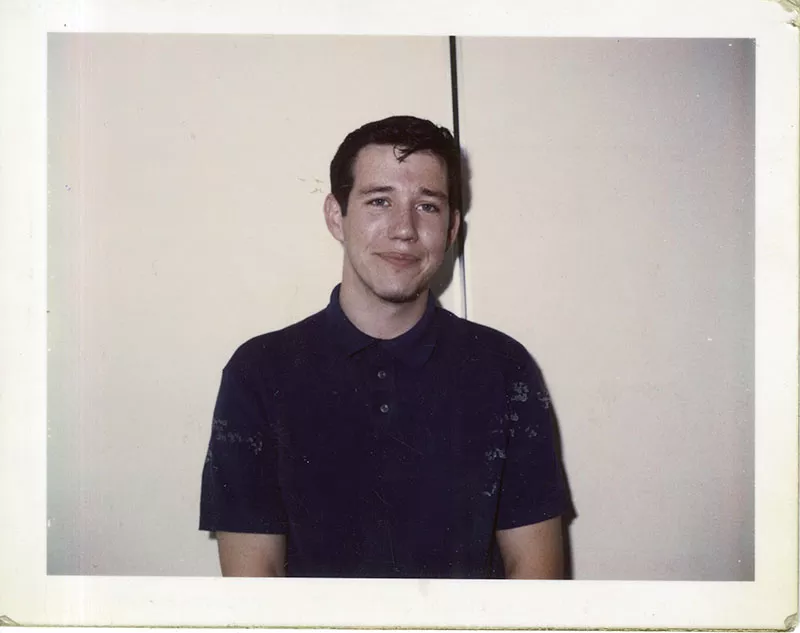
    The hijacker, Martin McNally, was 28 years old, but with his boyish face and near-smirk, could pass for a teenager. He scooped up the discarded clothing and walked to the very rear of the plane, arriving at the open hatch and extended stairwell. He stared into the murky darkness below.

    There was still time to call it off, McNally thought. He could turn around, walk back to the cockpit and hand his rifle to the pilot. He could return the bag stuffed with $500,000 cash and then, somehow, talk his way out of the mess he’d left back in St. Louis. He could tell the FBI agents that there was never any bomb on the plane, that it was all joke.

    McNally tossed the wig through the hatch, followed by the clothing, several smoke bombs and the rifle with its two loaded cartridges. The items whipped into the air and disappeared. This was no time for second thoughts.

    Aside from a single hostage, McNally was now the only non-crew member left on the flight. Hours before, on the tarmac at Lambert International Airport, he’d negotiated to release more than 90 passengers in exchange for a fresh crew to fly him to Toronto — a city McNally had no intention of visiting. Soon after takeoff, he’d ordered the sole remaining American Airlines stewardess (through whom he had relayed all of his demands) to join the hostage and flight crew in the cockpit.

    Now, McNally’s only companion was the thrilling weight of a cash-heavy mailbag tied to his left belt loop.

    After strapping on a pair of flight goggles, McNally donned a reserve parachute, tightening the straps around his legs and chest, just as he’d been instructed by an FBI agent during an on-the-spot lesson earlier that evening. McNally had never touched a parachute before. This would be his first jump.

    Slipping a handgun into his pocket, he descended the stairs haltingly, on his butt, scooting down step-by-step into the roar of the wind. He turned onto his stomach, catching one last look at the rear hatch leading into the passenger cabin; he imagined how easy it would be for someone on the plane to walk back here and shoot him in the head.

    McNally’s hands were the only things keeping him connected to the plane. His body, suspended from the stairwell at 300 miles per hour, felt like a daisy caught in a hurricane.

    In the cockpit, the remaining crew felt their ears pop as the cabin pressure fluctuated.

    One thousand feet above the Boeing 727, from the vantage point of a military surveillance plane, an FBI agent observed a small, dark object falling rapidly from the rear hatch.

    McNally dropped like a bullet, feet-first, and the first thing he perceived was the wind punching his flight goggles into his eye sockets. In seconds, the goggles were violently ripped from his head. McNally threw out his arms, bringing his body parallel to the ground as he began counting down from twenty in his mind. Basing his calculations on the formula for terminal velocity — which he’d learned in a library physics textbook — McNally figured that this would be enough time to slow his fall to a safe speed. If he pulled the chute too early, he knew, the air would shred the canopy like tissue paper.

    The time came to test his math. McNally fumbled for the ripcord with his right hand, but he made the mistake of leaving his left arm outstretched. Instead of producing the serene, deliberate movements of an experienced skydiver, the wind took hold of his arm and slammed the hijacker into a furious spin.

    In the midst of the chaos, the parachute exploded out of the chest harness and ejected its spring-loaded contents directly into McNally’s face. Blinded and hurting, he managed to grab hold of the shroud lines above him. He tugged hard, and was rewarded with resistance as the canopy filled with air.

    McNally was going to live after all. His hand strayed down to his left thigh, hoping to be reassured by its half-million dollars.

    He could only look down in horror. The mailbag was twenty feet below him, and getting smaller and smaller by the second. As if in a dream, McNally watched the fortune tumble in slow-motion, end-over-end, until it slipped below the clouds and vanished.

    The hijacker considered his options.

    Forty-four years later, on a sweltering afternoon in August 2016, Martin McNally enters the Thomas Eagleton U.S. Courthouse in downtown St. Louis. He rides an elevator to the second floor and checks in at the front desk of the federal probation office.

    Clean-shaven, his white hair combed and slicked back from his forehead, the 72-year-old ex-con is anticipating good things from a scheduled meeting with a federal parole supervisor. Five years out of prison, McNally is now permitted to apply for release from his permanent parole, a status that saddles him with travel restrictions and random checkups. The meeting could set the wheels of true freedom in motion.

    By the time McNally had been released from a California prison in 2010, he had already spent more than half his life behind bars. He then settled into an apartment in south St. Louis, where he subsisted on disability benefits linked to an old Navy injury.

    McNally’s first decade as inmate had been marked by violence and multiple failed escapes. He was involved in numerous scraps with prisoners, and, although never convicted, he was twice brought up on charges for assaulting guards in the U.S. Penitentiary in Leavenworth, Kansas. In one instance, he was accused of wielding two sharpened pencils as shanks.

    “My first ten years, those were turbulent, no question,” McNally says, making conversation in the parole office waiting room. “The guards at the U.S. Penitentiary in Leavenworth were brutal. They beat up and assaulted prisoners; they killed prisoners. So yes, there were assaults on guards, there were indictments.”

    By the early 1980s, the inmate had calmed down a good deal. McNally dedicated much of the next three decades to appealing his conviction for air piracy. He became a proficient jailhouse lawyer, ran for president and accrued more than $10,000 by illicitly trading Wall Street stocks.

    At the courthouse, McNally waits an hour before he and his local parole officer are beckoned into the conference room to meet the supervisor.

    The meeting lasts under 30 minutes, and it doesn’t look good. During the meeting, the local officer testifies that it would be best to keep the septuagenarian hijacker on parole indefinitely.

    On the drive back to his apartment, McNally unleashes a stream of curses, mostly directed at the parole officer.

    “I would recommend retaining him on parole,” McNally quotes, sneering his impression of the testimony, “because of the nature of this crime.”

    Fuming, he says, “Yeah, no question, I’ll be on parole until I’m dead.”


    A FBI photo of Martin McNally in 1972. - NATIONAL ARCHIVES AT KANSAS CITY

    NATIONAL ARCHIVES AT KANSAS CITY

    A FBI photo of Martin McNally in 1972.

    Beginning in the mid-1960s, the“Golden Age” of airline hijacking was an era when any passenger could walk through an airport terminal unmolested, breeze onto the tarmac and board a plane — all that with their shoes on, no less. In some cases, you could even pay for your ticket on board.

    This casual freedom — a relic of a more civilized time — persisted in the face of an unprecedented wave of hijackings. Early interventions proved laughably inadequate, flabbergasting airline companies. Ticket agents were instructed to subjectively screen passengers based on a cooked-up checklist of psychological and physical traits believed to be particular to hijackers, and although sky marshals were deployed in 1970, their limited ranks couldn’t hope to make a dent in the vast number of flights taking off each day in American airports.

    The virtually non-existent security led to a frenzy of hijackings. According to Brendan Koerner’s 2013 book chronicling the period, The Skies Belong to Us, more than 130 hijackings were committed in American skies between 1968 and 1972.

    Many of the culprits were straight nutjobs, driven by religious or political yearnings that required (for some reason or another) immediate passage to Cuba. But even as the capers escalated in audacity and potential violence, airlines companies balked at beefing up their own security. Instead, they sought to avoid the possibility of violence at all cost. Crews were instructed to comply with hijackers’ demands rather than risk an altercation. Pilots on domestic flights were provided with charts outlining passage to Havana, just in case.

    But there was a second, altogether different species of hijacker: not a nutjob, but rather a certain kind of foolhardy opportunist. In other words, a common crook.

    Driving through Detroit in January 1972, Martin McNally listened with growing interest to a radio news report of a two-month-old hijacking in the Pacific Northwest. Shortly before Thanksgiving, an unidentified man had commandeered a Boeing 727 after taking off from Portland International Airport.

    According to the report, the hijacker had ordered the plane to land and subsequently demanded a parachute and $200,000. Upon receipt, the hostages were released, but the hijacker kept the crew and ordered the plane to take off once again. Forty-five minutes into flight, the man jumped from the lowered stairwell at the rear of plane. Both hijacker and cash had seemingly disappeared without a trace.

    In the coming months, McNally would spend hours poring through library books on parachutes and skydiving. An idea took root in his mind. The hijacker on the radio — soon mythologized as “D.B. Cooper” — had demonstrated an effective strategy for air piracy, and it seemed a much easier task than knocking over an armored truck or a bank.

    McNally was a product of a large family, and had lived most of his life in his hometown of Wyandotte, a suburb in the southern shadow of Detroit. McNally’s father, a shoe store owner and respected figure about town, had put eight children through Catholic school. But young Marty McNally spurned his studies. Instead of completing eleventh grade, he enlisted in the Navy, where he labored as an airplane electrician. It was no harbinger of destiny: His flight time was restricted to servicing the cramped patrol craft sweeping for Soviet submarines off the coast of Alaska.

    Given a general discharge from the Navy in 1964, McNally had no interest in joining his father at the family shoe store. He wound up scrambling through a series of odd jobs and minor scams, including a plan to embezzle gas sales from a service station and a short-lived counterfeiting operation, which ended when he was busted feeding fake quarters to a laundromat change-machine. By 1972, he was exhausted with the paltry returns on minor scams.

    One big score, that’s what he needed. All he required was a weapon, some phony documents and a passable disguise. D.B. Cooper had shown him the rest.

    Getting the gun was easy. A local pool hall hustler, Walter Petlikowski, provided a .45 rifle, and McNally cut ten inches off the barrel. The weapon fit comfortably inside a black attaché case with a wig and smoke bombs. Petlikowski, in turn, signed on as an accomplice in exchange for $50,000.

    In the fall and winter of 1972, McNally charted a tour of Midwest cities, hitting Indianapolis, Chicago, St. Louis and Kansas City. He settled on St. Louis’ Lambert Airport — it had the worst security, McNally says — and made two more trips to the airport with Petlikowski to prepare for the one-way flight.

    On the morning of June 23, a Friday, Petlikowski dropped McNally at the main terminal. Petlikowski had changed his mind about participating in the hijacking directly, but he’d still agreed to act as chauffeur for half his original fee. McNally, briefcase in hand, bid his accomplice farewell and boarded Flight 119 destined for Tulsa, Oklahoma.

    McNally encountered no metal detectors on his way to the flight. His ticket, purchased with forged Navy discharge papers, identified him as “Robert Wilson.”

    Less than 30 minutes before landing in Tulsa, McNally excused himself from his seat three rows from the rear of the plane and walked to the lavatory. When he emerged, he was wearing a shaggy brown wig and sunglasses and wielding a rifle. He handed a note to a startled stewardess.

    A few minutes later, the captain’s voice came over the intercom:

    “Ladies and gentleman. We have a passenger who needs to return to St. Louis.”

    McNally followed D.B. Cooper’s example to the letter, though he added a key embellishment: McNally demanded more than twice Cooper’s ransom, asking for $500,000. He also requested another $2,000 in small bills, most of which he gifted to the stewardesses as a tip for their compliance.

    Around 4 p.m., Flight 119 returned to St. Louis and came to a stop on a runway on the far edge of the airfield. McNally made his demands known. He claimed to control the detonator to a bomb somewhere on the plane, and that any attempts at resistance would be met with gunfire.

    Over the next hour, a flurry of negotiations and counter-negotiations played out between the hijacker — who relayed all messages to the cockpit via stewardesses — and FBI agents on the scene. Eventually, McNally permitted 80 hostages to leave the plane by way of the plane’s inflatable emergency slide.

    But raising a half-million dollars on a Friday evening was no easy task. It could take hours. So, after refueling, McNally directed Flight 119’s crew and the fourteen remaining hostages to ready themselves for takeoff. Back in the air, the plane traced circles above St. Louis. At one point, McNally allowed the pilot to redirect the plane to Fort Worth, Texas, based on reports that the money could be collected there much faster. That report turned out to be premature, and the plane instead turned back to St. Louis, where bank and airline officials were still scrambling to put together the ransom.

    It was after 9 p.m. when their efforts succeeded. Flight 119 made its second landing on a Lambert runway. Now, McNally relayed three additional demands: He needed a shovel, flight goggles, five parachutes and two harnesses.

    The money was delivered in two packages: a heavy airmail bag and a small wrapped parcel. However, despite his preparations, McNally struggled to figure out how to buckle the parachute harness. So he added an additional request: for someone to show him how to put the thing on.

    When the “instructor” (actually an undercover FBI agent) came aboard, McNally watched from a distance of several feet, rifle at the ready in case of ambush. The instructor/FBI agent made no move to disarm McNally, and after his quick lesson, left the aircraft unharmed.

    It was just after midnight, and the plan seemed to be chugging along perfectly. McNally released thirteen more hostages, leaving under his control one hostage, two stewardesses and the flight crew.

    TV and radio stations were already broadcasting the unfolding drama across the country. From behind the rectangular glass facade of the main Lambert terminal, throngs of passengers watched as a tanker truck refueled Flight 119, readying the plane for its fourth St. Louis takeoff in the past eight hours.

    But nothing could have prepared McNally for the interference of a young Florissant businessman, David Hanley, who was among the bystanders ogling the drama from the terminal.

    Hanley did not remain a bystander for long. As the jet taxied down the runway, its massive engines revving in preparation for takeoff, Hanley’s 1971 Cadillac Eldorado crashed through the runway’s perimeter, battering through a fence at 80 miles per hour on a collision course with Flight 119.

    The plane, heavy with fuel, was essentially a bomb with wings. Over the intercom, the captain’s voice crackled with panic. “Oh my god, there’s a vehicle on the runway!”

    Hanley steered the Cadillac into the nose of the plane. Inside, the impact knocked McNally forward in his seat, and the heavy vehicle careened through the nosewheel, coming to a smoldering halt against the landing gear beneath the portside wing. The damage was superficial — the jet fuel did not ignite — but the plane was crippled.

    (Interviewed by the Associated Press one year later, Hanley claimed that the crash had wiped all memory of that night, and that he was as mystified by his actions as everybody else: “My mind is a blank from 6 o’clock that night to two weeks later.” As for “reports” that he’d left a cocktail lounge near the airport, telling friends he “would shock the world,” Hanley denied it. “If I was there then any friends who were with me were a bunch of slucks,” he told the AP. “No one has come to me and said, ‘David, I was with you that night and this is what you said.’”)

    An ambulance arrived to take Hanley to a hospital. He’d suffered two broken jaws, broken ribs, a fractured skull and a crushed left arm and ankle — but the only damage McNally cared about had been inflicted on his getaway ride. The aircraft was useless now. McNally relayed an urgent message to the cockpit: “Get me another plane.”

    It took 90 minutes to bring a second Boeing 727 alongside the disabled airliner. Fearful of FBI snipers, McNally pressed himself between two stewardesses and covered his head with his briefcase until he safely entered the new plane’s lowered rear stairs.

    The second plane was fueled and ready for takeoff. Along with his civilian hostage, McNally presided over the jet’s three-man replacement crew as well as the one remaining stewardesses he’d kept from Flight 119. There was no need for more leverage than that. McNally ordered the plane to leave St. Louis and set a course to Toronto.

    Tracing a straight line, the flight path would take the plane over the vicinity of Detroit. In the preceding months, McNally had tried to work out the precise timing of his jump based on the plane’s airspeed, but he now worried that the delays had disrupted his calculations. He had originally planned to make his jump shortly after midnight. It was now nearly 4 a.m.

    Still, it was time to leave. He stripped off his disguise and buckled the parachute’s harness around his arms and legs.

    McNally didn’t know where he was. From 10,000 feet, the undisturbed whiteness of the clouds below had obliterated any landmark or geographic feature. He wondered if the pilot had betrayed him, and whether he was seeing not clouds but the deep waters of Lake Michigan.

    In reality, McNally chose to make his jump too early. The plane was passing above central Indiana, about 150 miles southwest of Detroit.

    Having already hijacked two planes that day, getting to the ground should have been the easy part of McNally’s plan. He intended to bury the money immediately, leave the area and lay low for a few weeks or months. Then he would return with a shovel.

    McNally dropped from the rear stairwell. Without firing a shot, he’d just made more money than he’d ever earn in a lifetime of shoe sales or petty crime.

    But riches were not in McNally’s future. Gravity saw to that.


    The Final Flight of Martin McNally

    NATIONAL ARCHIVES AT KANSAS CITY

    McNally landed hard in a barren field, narrowly missing a grove of trees. He had made a mistake, panicked on approach, thrusting his heels into the soil and causing his body to whip backwards into the ground. His head bounced on the soil, leaving him concussed. His vision danced with stars that were not really there.

    The money was gone. It had disappeared, eaten by a blanket of clouds in a moment that imprinted itself in McNally’s mind like a nightmare. There was nothing he could do. He didn’t even know where he was; the lack of discernible landmarks on the ground made triangulation useless. Of the $502,000 he’d had in his hands, all he had now was $300 that he’d pocketed before the jump.

    McNally peeled himself off the ground. Around him, the sound of dogs barking echoed through the night. He gathered the parachute and clambered over a barbed wire fence surrounding a thicket of trees. Finding a suitably covered spot, he laid out the parachute and collapsed for two hours.

    At dawn, woozy and shivering, he dragged the chute deeper into the woods, where he covered the canvas with leaves and shrubs. He climbed into the parachute’s folds as if it was a cocoon and slept until noon.

    McNally awoke to helicopter blades thumping overhead. The search parties were already on the move, hoping to sniff out the skyjacker and the loot.

    He decided to wait for dusk before moving from the forest’s tall canopy. In the meantime, he napped, buried the parachute and cleaned his clothes and shoes as best he could.

    Again crossing the barbed-wire fence, McNally walked 500 feet before coming to a gravel two-lane road. In one direction, he perceived a white glow against on the horizon, possibly a city or town. He began trudging in that direction, the monotony broken only by a few cars with Indiana license plates passing by.

    An hour and a half later, one car stopped short about a quarter-mile down the road. In the driver’s seat was Richard Blair, the police chief of Peru, Indiana. Chief Blair had been driving back to Peru with his wife, and the sight of a lone pedestrian on the road so late at night tugged his interest.

    McNally introduced himself as Patrick McNally (his older brother’s name) and displayed a Michigan driver’s license (a forgery) that corroborated the ID. Though McNally’s two credit cards were issued to a “J. McNally,” he explained to the chief that he had borrowed the cards — with permission — from his brother.

    The chief asked McNally what he was doing out on a country road after 9 p.m.

    McNally claimed he had recently traveled to Peru from Detroit on a mission to retrieve his brother from a nearby farm. Alas, McNally continued, his brother had gotten drunk earlier that night and beaten the snot out of him, leaving McNally in this sorry state.

    McNally’s eyes and cheeks were heavily bruised, his chin was gashed open and he sported several cuts on his forehead. He really did look like he’d taken a beating. Chief Blair offered a lift to Peru, and McNally gladly took him up on it.

    Before climbing into the car, McNally quickly slid the handgun from his pocket and tossed it to the side of the road.

    (“He did not frisk me,” McNally would later recall. “If the chief had said anything about patting me down, I would have pulled out this pistol from my right pocket, cocked it and said, ‘You’ll search nothing.’ He and his wife would probably have been killed at that point.”)

    On the drive to town, Blair warned McNally that it was a bad time to be alone on the road, what with so much traffic speeding back and forth. Hadn’t he seen the news? Search parties were scouring the area for a hijacker and a bag of money. McNally answered vaguely in the affirmative, and thanked the chief for saving him the long walk and potential hassle. Blair dropped McNally off at the Peru Motor Lodge, across the street from police headquarters.

    It was late, and McNally hadn’t tasted food in more than 24 hours. He also hadn’t had a chance to look in a mirror. Sitting down for a burger in a nearby bar, he felt the eyes of the other patrons evaluating him from all angles. He wasn’t losing his mind to paranoia. In the bar’s bathroom, McNally stared in shock at his bruised and puffy reflection. No wonder he was getting weird looks.

    McNally returned to the motor lodge and bought a room for the night. The elderly desk clerk accepted his explanation about the mismatched driver’s license and credit cards, but she couldn’t help but notice the condition of his face.

    “You aren’t that skyjacker, are you?” she asked.


  • In Missouri, Pit Bulls Are Banned in 86 Municipalities. Dog Lovers Are Fighting Back

    In Missouri, Pit Bulls Are Banned in 86 Municipalities. Dog Lovers Are Fighting Back

    In 2011, Nicole Bray thought she had found a treatment that might help her five-year-old son with his ADHD — a therapy dog. Her family adopted a boxer/mastiff mix named Gotti, and the two bonded immediately. He quickly became, Bray says, her son’s best friend.

    But despite Bray’s hopes, Gotti would only stay with the family for about two weeks. That’s because Bray lives in Florissant, which is one of many cities in Missouri with a total ban on pit bulls.

    Bray’s dog wasn’t even a pit bull. But someone had reported to Animal Control that he looked like one, and three Animal Control officers showed up at Bray’s home to to inform her that if she couldn’t find a new home for him in seven days, he would be seized by the city and euthanized. Bray says they were “complete bullies,” uninterested in her argument about Gotti’s lineage.

    “They said that I had the choice if I wanted to get a DNA test, but it would cost $500,” Bray says.

    She found a new home for the dog instead. Her son, she says, was heartbroken.

    “It traumatized him,” Bray says. “He ended up going back into therapy because of it.”

    While Bray’s dog drew the city’s attention after just two weeks, Mandi Kay Sullivan lived in Florissant for a year before authorities noticed her dog. Dexter is an American bulldog mix, also often considered a “pit bull type.” Sullivan, a former dog trainer whose husband is a veterinary technician, thought Florissant’s laws, like many other cities, merely required that her dog be licensed and microchipped.

    “I didn’t think anything of it, until one day we got the letter,” Sullivan says.

    Animal Control informed her that Dexter fell under the pit bull ban. He, too, was threatened with euthanasia.

    Rather than have him killed, Sullivan found a home for him with her 75-year-old grandmother. The city’s heavy-handed tactics still rankle her.

    “He doesn’t roam, he’s never bit anyone, no one knows he’s even there unless they see me walking him,” Sullivan says. “I feel that it’s incredibly unfair to punish him and to punish our family.”

    Florissant’s ordinance has been in effect since 2010. It formally applies to three breeds of dogs generally considered “pit bulls” — the American Staffordshire terrier, the Staffordshire bull terrier or the American pit bull terrier — as well as any mixed breed dog with any of the three as “an element of its breeding.” It also applies to any dog with “the appearance and characteristics” of a pit bull — and unless the owner pays for a DNA test, Florissant Animal Control generally relies on the opinion of whoever reports a dog as problematic.

    Not all of those owners who’ve found themselves on the city’s radar can find a new home for their dogs in a week. While Florissant recently started allowing shelters to pick up the dogs they confiscate, the city has euthanized 201 dogs since its ban went into law.

    Bray and Sullivan’s experiences led both of them to get involved with the Florissant Bully Alliance, the local group that hopes to end Florissant’s pit bull ban and the dozens of others like it in Missouri. The local ordinances are collectively known as “breed specific legislation.”

    While there have been a handful of successes — Buckner, Missouri, repealed its ordinance last year — activists have been met with defeat both at the local and state level. Even as a phalanx of heavy hitters has come out in opposition to pit bull bans, including the American Society for the Prevention of Cruelty to Animals (ASPCA) and the American Veterinary Medical Association, the laws have stayed on the books. Last year, a bill that would have repealed all breed-specific laws in Missouri was shot down in the Senate. And in Florissant, a deadlocked city council has refused for years to put a repeal of its ordinance to a vote.

    Residents like Sullivan say they still have hope.

    “They’re supposed to listen to the constituents,” Sullivan says, “and we hope they’ll listen to the people.”

  • Officer Steven Blakeney Terrorized the St. Louis Area. Why Did No One Stop This Very Bad Cop?

    Officer Steven Blakeney Terrorized the St. Louis Area. Why Did No One Stop This Very Bad Cop?

    As a police officer himself, Detective Sergeant John “Vito” Parisi wasn’t big on arresting cops — but the guy from north county St. Louis was pushing right to the edge of what they could accept in Sauget.

    “He was teetering on it,” says Parisi, sitting behind his desk in the blond brick building that is home to the tiny town’s police department, village hall and fire station. “You know, you want to extend every courtesy.”

    Parisi has been policing Sauget, Illinois, for nearly 30 years. It’s always had an outlaw reputation. Originally called Monsanto, the village was incorporated in 1926 as a place where the chemical giant could operate within sight of the Arch but without the burdensome environmental oversight of St. Louis regulations. Even today it enjoys a legacy of minimal governmental interference. The smokestacks of a gauntlet of industrial plants cut across the low horizon. Where other towns have schools and grocery stores, Sauget has long, windowless strip clubs, 24-hour bars and acres of parking lot to accommodate the after-hours crowds that flow across the Mississippi River in the early morning dark.

    Parisi is one of about 160 people who live in the village. He’s dealt with plenty of knuckleheads who like to treat his town like St. Louis’ own little sin city.

    He can’t remember anyone like Steven Blakeney.

    “No,” he says, “just because it was so bizarre.”

    A beefy six-footer with a military buzz cut, Blakeney was then a police sergeant in the pocket-sized north St. Louis County suburb of Pine Lawn. Known around north county St. Louis as a vindictive brute, he’d somehow managed to rocket through the ranks of his troubled department despite allegations of rape, cocaine abuse and the kind of hyperaggressive policing tactics condemned by the Justice Department after the Ferguson protests.

    Eventually, he’d be fired from Pine Lawn — accused of using a police escort to take women home after he’d met them at a bar and, allegedly, drugged them. He has never been charged in the incident, although this year Blakeney was finally convicted in federal court of framing a mayoral candidate. The federal judge handling his case described him as a “disgrace.” Assistant U.S. Attorney Reginald Harris opined, “This is a person who should never have been a police officer in the first place.”

    For years, though, he seemed untouchable. In Pine Lawn, he was thought to serve as the hammer for the city’s corrupt mayor, and that gave him a certain amount of freedom.

    He was a frequent visitor to Sauget, even during the night shift, when his fellow Pine Lawn cops say he was on duty. Sauget Officer Brian Phillips says he’d see Blakeney’s police-issued Dodge Charger in the employee lot at the Penthouse Club five or six nights a week.

    His problems in Sauget started as your garden-variety nuisance. Blakeney seemed like he wanted to play the tough guy at Pop’s, a metal-sided concert hall and dance club that never closes. Security guards there told police they were busy throwing somebody out one night in January 2014 when Blakeney tried to join them.

    When the bouncers tried to get Blakeney to back off, he told them he could intervene anywhere he wished. An assistant manager had to physically force Blakeney and a buddy out the door. Blakeney and his friend later slipped back inside through an employee entrance, fooling no one. Security eventually called Sauget police to get him to leave — and told him not to come back.

    When Blakeney returned less than two weeks later, security ushered him away. The next night, he and a partner cruised past the front door in an unmarked police car.

    They circled, returned and paused at the front entrance. One of the bouncers walked out of the club and toward the car, assuming the occupants were part of an auto-theft task force that sometimes patrolled the area. He soon realized it was Blakeney — in full tactical gear, Parisi says.

    Now armed, Blakeney told the bouncer he was working on an investigation that required him to stake out the lot. He asked which Sauget police officers were working that night and fished for information about Pop’s head of security. When the bouncer told him to beat it, Blakeney drove slowly away.

    Blakeney was eventually banned from at least three clubs on the East Side, but he continued to show up. Parisi decided it was time that Pine Lawn kept Blakeney at home.

    He called over to the department.

    “Hey, this guy is nothing but trouble for us,” he recalls saying. “If you would, let him know to stay out of our venue.”

    Not long after, a Pine Lawn officer in a police van hand-delivered an envelope to the Sauget station. Inside was a letter referencing Parisi’s phone conversation, claiming, “It has been determined that the investigator(s) were found to be operating within the scope of this Department’s standard operating procedures, and of course, within the scope of the statutory authority while on duty, conducting a lawful investigation(s).”

    What kind of investigation would require a cop from Pine Lawn, a town of less than a square mile, to stake out a bar’s parking lot twelve miles away in Illinois was never explained. “This matter is considered to be closed,” the letter concluded.

    It was supposedly signed by Pine Lawn Detective Lawrence Fleming, who happens to be Blakeney’s longtime friend. Parisi thought the signature looked like it had been copied and pasted. He faxed a copy to Pine Lawn’s new chief with a one-line message: “Please advise if this is a forgery.”

    He never heard back, but Blakeney stopped showing up at the clubs shortly after. Parisi says it was one of the weirdest episodes of his career.

    “Just a strange, strange character,” he says of Blakeney.

  • A Tiny Town, a (Possibly) Haunted Church and a ‘Priest’ Fleeing His Past. Welcome to Armstrong, Missouri

    A Tiny Town, a (Possibly) Haunted Church and a ‘Priest’ Fleeing His Past. Welcome to Armstrong, Missouri

    The fake priest came to town in April 2014, presenting himself as a Benedictine abbot — black robes, clerical collar and all. He put up a small sign in front of an edifice with crimson doors, advertising morning services at the old Methodist church he now called Holy Rosary Abbey.

    In the age of Google, though, no one with a long public history of cons can stay under the radar for long — and certainly not a man trying to shake things up in a tiny Missouri town, population 284. Soon there were rumors of lawsuits and bankruptcies. Web searches brought up allegations stretching back decades.

    And if the man who calls himself Father Ryan thought moving to rural Missouri would free him from the controversies in his past, he made a terrible error in judgment. He should have known that it was only a matter of time. When a disciple made a desperate phone call, law enforcement pounced.

    The church has since been bought and sold and bought again. Its steeple looms over the street where the neighbors’ kids run and play. And the people here still talk about the robed man and his nuns. Some are convinced the church is haunted, that the evil spirits it unleashed proved to be his unraveling. There are whispers of demonic possession, of sexual scandal.

    But for Armstrong, Missouri, the real question might be who corrupted who?

    Did the pretend priest let loose the trouble that became the talk of the town? Or did something behind those crimson doors — some malevolent spirit, some remnant of the building’s past — cause Father Ryan’s downfall?


    One of Father Ryan's sets of mugshots, from a 2016 arrest stemming from a parole violation.

    One of Father Ryan’s sets of mugshots, from a 2016 arrest stemming from a parole violation.

    Father Ryan has lived under many names.

    He was born Randell Dean Stocks in Richland Center, Wisconsin in 1953 (although another source puts his birth year as 1950). Little is known about his early years, but he later told the Chicago Tribune that he fathered a child out of wedlock in his twenties. He married and divorced; the child was put up for adoption.

    He eventually moved west, to California and then Hawaii. When he returned to Wisconsin in the late 1980s, he arrived as Ryan Patrich Scott — though he soon began introducing himself as “Damien St. Anne.” He claimed to be a Franciscan brother associated with an order based in Canada.

    But in a 1989 letter responding to an inquiry from a woman in Wisconsin, the director of the Franciscan order advised in the strongest terms that Damien St. Anne was a fraud: His stay in the monastery had lasted less than four months, he had never taken his vows and instead disappeared without permission with another novice. Not only that, but his abrupt exit was shadowed with additional suspicion: The order had received word from a bishop in Ontario and a priest in Wisconsin that the wayward monk was presenting himself, fraudulently, as a full-fledged brother of the order. (Through his attorney, Ryan declined to comment for this story.)

    And so Father Ryan kept moving, trying to outrun his past. But he took too many risks.

    In 1992, he was hired as the city finance director in Edgerton, Wisconsin. A private investigator would later find his resume riddled with degrees from institutions that had no record of his admission. His career in public service ended one year later. He was accused of helping himself to $300.97 of city money by modifying what should have been a $30.97 check. In 1994, he was convicted of felony misconduct in public office and sentenced to three years probation.

    He went back to being a fake priest. This time, in California, he fell in with the Reformed Catholic Church of America, an offshoot of the traditionalist Catholic movement that does not recognize the late 1960s reforms that modernized the faith.

    Even that fringe group excommunicated Father Ryan almost immediately.

    In a scathing letter dated 1995, an archbishop chastised him for his “self-centered attitude and un-priestly conduct,” and noted his failure to properly operate a monastery, “causing problems in the local community by allowing drugs, alcohol and other misuse.”

    Father Ryan returned to Wisconsin, but found no respite there. He found himself hounded.

    In La Crosse, Bishop Raymond Burke (the future archbishop of St. Louis) sent letters sounding the alarm to every diocese in the country: Be wary of this “Father Ryan St. Anne Scott” and his “Holy Rosary Abbey,” Burke warned. Do not attend his mass or take his sacraments.

    “He is not a priest of the Roman Catholic Church,” wrote Burke.

    Still, Father Ryan attracted a flock that was willing to embrace him as shepherd. His followers didn’t care that he’d been previously married or fathered a child.

    The believers were mostly older women, widows and aspiring nuns who yearned for a traditional Catholicism. They sought the majesty of the old ways, the Latin Mass, the robed priest kneeling at the foot of an altar intoning in nomine Patris, et Filii, et Spiritus Sancti.

    Over the next two decades, Father Ryan would pass through America like a holy apparition. City to city, diocese to diocese, all it took was one or two believers here, a few more there. It was enough to sustain him and his traveling abbey.

    He appeared and departed with equal abruptness. He trafficked heavily in the Midwest, setting up his abbey in Wisconsin, Iowa and Illinois, but he also turned up in North Dakota, Louisiana, Alabama, Arizona and New Mexico.

    But wherever he fled, both the Church and the law gave chase. Warnings were sounded in Catholic dioceses across the country, including St. Louis. A trail of legal disputes include bankruptcies in Illinois and Iowa. He was sued by a former nun over unpaid loans, resulting in a civil judgment to pay her $161,000.

    In 2012, he was evicted from his abbey in Buchanan County, Iowa. He left behind thousands of dollars’ worth of religious accoutrements. He also abandoned a herd of nineteen llamas. He had intended to sell the animals and their wool as part of a venture called Monastic Fleece. Like everything else Father Ryan touched, the llama-based business failed.

    In 2013, he regrouped in St. Louis while looking for the next location for his abbey. It is unclear what precisely drew him to Armstrong, a small town about 40 miles north of Columbia, but he was known to trawl through online property listings that featured cheap real estate.

    So it came to pass that in April 2014, with two elderly nuns in tow, Father Ryan made the 166-mile drive to his new home in Armstrong.

  • The Real Drinker’s Guide to St. Louis’ Best Dive Bars

    The Real Drinker’s Guide to St. Louis’ Best Dive Bars

    PHOTO BY JOSEPH HESS

    Hey you! Every tried Weber’s Bar? “A pure and unadulterated drinker’s oasis,” it’ll cure what ails.

    Let other cities have their flashy clubs and mixology meccas. Here in St. Louis, we’re happy with a bar stool, good company and a stiff drink. In short: Give us a dive bar and we’re as happy as a pig in a bathtub of gin.

    Now, in lesser cities, the “dive” label might connote something dirty or depressing. Not so St. Louis. In this hard-drinking metropolis, a dive bar is simply a place where the booze comes first. The patrons may be professionals or derelicts, but they’re there to drink — no gimmicks, no games.

    We had a great time exploring the myriad bars across the metro area that fit this description, from Carondelet to St. Charles, from the north Riverfront to Lemay Ferry. Use our comprehensive guide to plan your next day of drinking — or just get a good reminder to visit an old favorite.

    South City Dive Bars (South of 40)


    Silverleaf Lounge: a hidden treasure in North Hampton. - PHOTO BY DOYLE MURPHY

    PHOTO BY DOYLE MURPHY

    Silverleaf Lounge: a hidden treasure in North Hampton.

    Silverleaf Lounge
    You should probably just make the Silverleaf Lounge (3442 Hereford Street, 314-481-4080) your regular bar. The company is good, the confines cozy and the beer cheap and cold. Nearly hidden mid-block on a one-way street in the North Hampton neighborhood, the Silverleaf has been a destination for generations of St. Louis drinkers. The bar outmaneuvered the tyranny of Prohibition with a brief run as an ice cream parlor in the 1930s — the wooden coolers remain — but its true nature as a great neighborhood tavern is unmistakable. No less than Esquire wrote it up in 2015. Even with the national media attention, though, the location out of sight of Kingshighway commuters has kept the clientele to neighbors within walking distance and first responders, who are welcomed by owner Ron Damery, himself a retired firefighter. The entire place is the size of a living room with nine bar stools and four pub tables. Allegiances include America, the St. Louis Cardinals and Elvis Presley. Fortify yourself with a Ziploc bag of mild or spicy beef jerky for $2. Wash it down with a $1.50 Natural Light draft.


    Barney’s Sports Pub
    Say what you will about strip mall bars, but they can be damned convenient. Sandwiched between a vape shop and a bank across the street from Target, Barney’s Sport Pub (6027 Chippewa Street, 314-457-0240) is a rest stop halfway between being a responsible adult and saying “Screw it. Let’s get plastered at lunch.” You’ll meet people of both persuasions in the sprawling Clifton Heights bar and grill. On a recent afternoon, patrons debated whether it was possible to drink yourself sober. (General consensus is yes, on day two.) Low, dark-wood ceilings run the long expanse of the bar and give it a heavy feeling, like a converted horse stable. You’ll find pool tables, skeeball, video games and a half-dozen cork dart boards along a back wall. Plenty of televisions and literally dozens of drink specials support its sports bar claim. The food is passable pub fare, and there’s a patio. Basically, it’s got everything you need to disappear for an hour or twelve. Bonus: This one doesn’t close until 3 a.m.


    The Cat's Meow has a cat theme, but also a Mardi Gras one. - PHOTO BY SARAH FENSKE

    PHOTO BY SARAH FENSKE

    The Cat’s Meow has a cat theme, but also a Mardi Gras one.

    The Cat’s Meow
    It may have a cutesy name, but the Cat’s Meow (2600 S. 11th Street, 314-776-8617) is a place for some serious drinking. Tucked at the far end of Soulard, far from the frat-tastic action and party buses full of county revelers, it’s a surprisingly big space with plenty of friendly regulars and a few cheap eats to soak up the booze (a package of crackers is a quarter; pistachios will set you back $1.25). There’s a vague cat theme going on here — you can learn about “A Cat’s Wisdom” from one piece of wall art — and an even more pronounced Mardi Gras one. Six-foot boas are on sale for $10, while five-foot ones are $5. That extra foot of feathers would easily buy you a strong drink here, with enough left over for a tip; spend wisely.


    Colorado Bob's Ship of Fools: You'll know it by the ship wrecked in the front yard. - PHOTO BY KELLY GLUECK

    PHOTO BY KELLY GLUECK

    Colorado Bob’s Ship of Fools: You’ll know it by the ship wrecked in the front yard.


    Colorado Bob’s Ship of Fools

    Ahoy, matey! When you’re crawling your way down Morgan Ford Road’s row of low-key neighborhood bars, don’t forget to dive into Colorado Bob’s Ship of Fools (3457 Morgan Ford Road, 314-772-7564). You probably know this nautical-themed bar by that ship jettisoned out front. But what you may not know is that there actually is a Bob, a remarkable captain with wonderful stories and a kind heart. Bob’s bar is full of familiar faces — and a crew that’s among the best in town. Friendly banter and cheap drink specials ($10 buckets, $2.50 wells and $2.75 shot specials) both go well with the local food favorites on offer here, which include Imo’s, TJ’s, homemade jerky and, on a good night, some smoked chicken with Bob’s award-winning BBQ rub.


    Muser’s Pub
    Some days, you just need a bar. No crazy themes. No curated “identity.” Just a place to sit on a stool and drink a cold beer. That’s Muser’s Pub (6594 Scanlan Avenue, 314-647-0804). The barroom is a big rectangle with a handful of tables scattered across thin blue carpet. Watch a game on TV, or don’t. Throw some darts or play shuffleboard if you’re feeling motivated. There are no taps. Regulars pour Stag and Natty Light into glasses, delivered without irony by perfectly pleasant bartenders. A frozen pizza is $8. Southern Comfort shots are $2. If you’re looking for a bar in Lindenwood Park, Muser’s will do the job.


    CBGB's: Have you tried the gin buckets? - PHOTO BY KELLY GLUECK

    PHOTO BY KELLY GLUECK

    CBGB’s: Have you tried the gin buckets?

    CBGB
    Looking to get some teenage kicks? CBGB (3163 S. Grand Boulevard, no phone number) will take punk rockers back to the time when all they cared about was how dirty their Chucks looked and where to find the cheapest beer — and give younger drinkers a taste of the down and dirty fun they missed. Known for its loud and grungy local shows and cheap booze ($1.50 stags and massive $9 “gin buckets”), CBGBs gets patrons ready to jam and slam. It’s dark as hell, though the shadows are concealing a decent game area (darts, shuffleboard, arcade games, pinball) to keep you occupied on the slower nights. Heads up to female patrons: the ladies bathroom has no dividers. But what could be more punk than pissing in front of a stranger?


    Black Thorn Pub
    Dark and nearly entirely covered by graffiti, Black Thorn Pub and Pizza (3735 Wyoming Street, 314-776-0534) is a true hidden gem. Tucked away on a quiet residential street in the heart of Tower Grove South, Black Thorn boasts drink prices on the steep side of dive scene, ranging from $1.75 PBR bottles to $4.75 tallboys. But it’s not really about the booze. The alcohol is just here to keep patrons happy while they play games during the long wait for the best pizza in St. Louis. Black Thorn’s Chicago-style pies may take up to an hour to procure, but they’ll ruin Chicago for you. This deep-dish pizza has a savory, spicy sauce and a full inch of cheesy deliciousness. It’s totally, and always, worth the wait.


    Stella Blues
    If you love the idea of Fast Eddie’s, but hate the crowds and that drive east, Stella Blues (3269 Morgan Ford Road, 314-762-0144) is a rockin’ alternative. Adorned with neon signs and eclectic memorabilia, Stella’s also features a fun patio and a gritty pool room in the back. The cash-only bar is stocked with an array of bottled beers, and while there aren’t any fancy cocktails, the bartenders can accommodate staple orders such as gin and tonics and whiskey sours. But though the drinks are less than $5, the real draw here is the kitchen, which is unusually good for such a low-key spot. The Korean pork kabobs ($1 each or four for $3) and beef kabobs ($4) can’t be beat.


    Super’s Bungalow
    Look, we know change can be scary, and the south city staple Super’s Bungalow (5623 Leona Street) has gone through more than just a few nips and tucks this summer. The recent acquisition by former Adam’s Smokehouse pitmaster Alex Cupp brings BBQ to the space via a new food component called the Stellar Hog. But rest assured, the new menu is meant to add to the dive bar ambiance, not take away from its down-low, neighborly feel. The fenced-in corner at Leona and Bates hides the no-frills biergarten, which remains clean and well-kept, while the renovations so far feature a full restoration of the bar to its 1940s glory and brand new hardwood floors. Beer and shots, however, still flow for a low, low rate. Some things never change, even after nearly 90 years.


    Frank's 1st Alarm has a firefighter theme. - PHOTO BY JOSEPH HESS

    PHOTO BY JOSEPH HESS

    Frank’s 1st Alarm has a firefighter theme.

    Frank’s 1st Alarm
    The huge banner for Fireball Cinnamon Whisky is on the nose at a fireman’s bar like Frank’s 1st Alarm (7800 Virginia Avenue, 314-282-0193). After all, without fires (and fireballs) to fight, we wouldn’t need firefighters. There are no man buns or skinny jeans to be seen here, although the hipster set would be as welcome as any other sort of drinker — just expect a sideways look if you order outside the divey standards. This snob-free fireman’s haunt is especially old-school, offering karaoke, pool and a well-lit backroom for darts and video-gaming. The wheels may sound a little squeaky and the paint may have started to fade, but Frank’s serves its function as a vehicle for cold beer, booze and good company


    The Haunt is a horror-themed dive. - PHOTO BY JOSEPH HESS

    PHOTO BY JOSEPH HESS

    The Haunt is a horror-themed dive.

    The Haunt
    Most dives aim to be anti-kitsch, which would be the polar opposite of the Haunt (5000 Alaska Avenue, 314-481-5003), a horror-themed bar where punk rock is king and gory B-movies fill the screen. The bartender is happy to accommodate those who want to see the game, but how could anyone trade buckets of fake blood for bats and balls? Despite its tiny footprint, the Haunt packs in ear-busting rock bands, with a modest stage in the back of the room. The Busch beer special provides the best bang for a day-drinker’s buck: Starting at 11 a.m., buckets begin at $5 and go up one dollar per hour, topping off at $11. Pre-gaming here likely means you’ll be too drunk to leave around dinner time, but luckily the Haunt’s frozen pizzas from Gallagher Bros are a cut above the rest. And while most patios are rendered pointless once the temp drops, the fire pit in back here provides a spot to have your fresh air and breathe it too.


    Jimmy Mack’s
    In a neighborhood full of bars, Jimmy Mack’s (5838 Southwest Avenue, 314-645-5777) is a solid choice for a beer and a ballgame. The wedge-shaped tavern in Southwest Garden is manned by friendly bartenders who pour stiff cocktails and serve frosted mugs alongside canned beers. (Cans are $1.50 on Thursdays.) You’ll be immediately recognized as a newcomer, but mind your manners and they’ll welcome you back. Help yourself to a mint or step out onto the patio where you’ll be surprised to find a functioning fish pond behind a handful of tables. This bar is a bit off the beaten path, but it’s easy to spot — a brightly colored mural on an exterior wall depicts a quintet of Missouri athletes raising their glasses. Pour one out for the Rams player on the end.


    Pop’s Blue Moon
    Pop’s Blue Moon (5249 Pattison Avenue, 314-776-4200) is about as hard to describe as it is to find. Open since 1908 and largely unchanged since the 1940s, the family-owned gin mill sits in a forgotten north sliver of the Hill, severed from the rest of the neighborhood by Highway 44. That hasn’t stopped an endless parade of musicians from finding their way to its doorstep. Inside, the main barroom is lit by pink neons and a collection of lava lamps. It feels a little like a New Orleans blues bar and a little like the inside of curio cabinet, with knick knacks in every corner. A Christmas tree and glowing snowman centaur light up one end of the bar, and you’ll pass a quarter-ton bombshell on the way to the bathroom. Pop’s is all wonderfully weird and well-worth the effort to find it. Pro tip: Use Pop’s location to your advantage during the next big Forest Park event. Leave your car here and walk about fifteen minutes each way. You’ll make it back in time to sip a beer while everyone else is stuck in traffic hell.


    Tin Cup: the quintessential south city dive bar. - PHOTO BY JOSEPH HESS

    PHOTO BY JOSEPH HESS

    Tin Cup: the quintessential south city dive bar.

    Tin Cup
    In many ways, Tin Cup (518 Bates Street) is the quintessential south city dive, neither markedly grimy nor remotely fancy — and also completely unaffected by current trends or fads. The bar itself remains relatively unchanged, looking very much as it did the day the Anheuser-Busch Company built it. But while many St. Louis haunts look similar on the outside, few are this well-kept. There’s a golf theme going on here, but it’s very loose; expect anything from the ballgame to UFC on the big screens. There’s more variety than the typical pizza fare here too, which works well to absorb all those cheap and boozy drinks.


    Hummel’s Pub
    For old-school bar fare without club-bumpin’ bangers or the glitz and glamour of modern drag, Hummel’s Pub (7101 S. Broadway, 314-353-5080) stands as a homey gay dive where cold beer is king (and queen). Straight patrons won’t get the side-eye even when walking through the backyard, which serves as a well-kept and roomy haunt for the regulars to do what they will. With windows mostly covered, the inside feels safe-guarded from the hum of South Broadway’s industrial court. While old-school drag night might be its biggest monthly attraction, Hummel’s keeps things affordable with a double dose of karaoke every week, $2 Miller Lites and, on occasion, free food in the form of BBQ and burgers in that spacious, gated backyard.

    Turn the page for more south city dives, or skip ahead to your stomping grounds:
    City Dive Bars North of 40
    North County Dive Bars
    South County Dive Bars
    West County Dive Bars
    St. Charles Dive Bars

    See also: 25 St. Louis Bars to Suit Every Mood


    What a name. - PHOTO BY DOYLE MURPHY

    PHOTO BY DOYLE MURPHY

    What a name.

    One Nite Stand Dance Club
    The One Nite Stand Dance Club (2800 Ohio Avenue, 314-776-0996) has the best name in the business. Located just off Gravois Avenue on the border of Benton Park West and Fox Park, it has attracted more than few first-timers out of sheer curiosity. The other main draw is karaoke on Friday and Sa

  • This Place Is Hell’: An Undercover Trip Inside St. Louis’ Workhouse

    This Place Is Hell’: An Undercover Trip Inside St. Louis’ Workhouse

    Photo by Danny Wicentowski

    By reputation, the St. Louis Workhouse is a mold-infested pit whose 700-plus detainees — nearly all of whom are merely awaiting trial — are drawn from the ranks of the poor, addicted, homeless and mentally ill. Inmates, lawyers and anti-incarceration activists have alleged that medical care is withheld for months and that guards dole out beatings and pit prisoners against each other in “gladiator-style combat.” In the summer, the cells broil with triple-digit heat, although temporary air-conditioning units installed last month may finally address that problem.

    On Friday, RFT accompanied 15th Ward alderwoman Megan Green on an unannounced visit to the Workhouse. Green also invited a reporter from the St. Louis American and two activists from Decarcerate STL. We did not disclose our identities as media. Green introduced us as graduate students in social work studying the effects of mass incarceration.

    The tour lasted nearly three hours, and while the physical conditions appeared better than the sweating hellhole described by activists earlier this month, some horror stories appeared all too real. Among dirt and grime, detainees attempted again and again to get our attention. In some cases, they wanted to detail the bad conditions they face.

    In others, they simply wanted to remind us who they are, and why they are being held — in many cases, for the smallest of offenses, and simply because they don’t have money for bail, condemning them to city custody while they’re waiting for their day in court.

    The letters above the brick and glass entrance spell out “Medium Security Institution,” but everyone knows the squat, barbed-wire compound sprawled on the north riverfront as the City Workhouse.

    There is irony in the nickname — it comes from an 1848 city ordinance that stipulated that prisoners who could not pay their fines would be committed to the “Work House” to pay off their debts, and then released. These days, many men and women in the Workhouse find themselves imprisoned because they cannot pay their bonds or traffic tickets. (Those accused of more serious crimes are typically held in the Justice Center downtown.) Although prisoners work in the jail kitchen or on cleanup crews, their meager pay cannot be used to satisfy their debts to the criminal justice system. And so they remain in the Workhouse, for months or even years, waiting for the wheels of justice to turn.

    After introducing ourselves as social work students, we leave our phones with the security station and pass through a heavy metal door into the visitation area. A lieutenant leads us through a wide hallway that smells of bleach, and a sign directs us to the “Resident Visiting Cages.” Here, prisoners in yellow uniforms speak to their families using telephone receivers and interact behind thick panes of glass.

    Our tour guide is a supervisor who started patrolling the Workhouse more than two decades ago, and despite her soft-spoken delivery and diminutive stature, she seems to command immediate respect from the inmates and guards we pass along the way. She notes that previous overcrowding had forced jail staff to place inmates on bunk beds in the gym. “We had a lot of prisoners here because they couldn’t afford their $100 traffic tickets,” she says. These days, several dorm and dayroom areas are empty and undergoing renovation.

    We come to a security office. Here, a flat-screen TV monitor on the wall shows sixteen camera views of various dorm rooms and sleeping quarters.

    Inevitably, talk turns to air conditioning. Last month, as a heat wave baked the city with temperatures as high as 107, protesters staged demonstrations at the Workhouse’s front gates, facing pepper spray and arrest as they demanded relief for the people inside the jail. In response to the outcry, Mayor Lyda Krewson arranged for temporary A/C units to be installed. Soon after, older sections of the jail, including the men’s daytime living quarters, were outfitted with what our tour guide refers to as “worms” — heavy white tubes running from outdoor cooling units and attached to windows.


    Air-conditioning tubes installed last month run into the windows of the Workhouse, providing relief for overheated prisoners. - Photo by Danny Wicentowski

    Photo by Danny Wicentowski

    Air-conditioning tubes installed last month run into the windows of the Workhouse, providing relief for overheated prisoners.

    It wasn’t just the prisoners who were relieved by the newly cooled-down areas. Guards and jail staff were just as happy. Yet it only took days for the jail to experience the flip side. As another supervisor tells us, some areas of the jail “were like icicles.” Staffers started showing up to work with jackets. Inmates complained as well; one tried to use a broom handle to damage a vent to stop the flow of cold air.

    Green inquires about the number of inmates serving time on possession charges, and she presses for information about those who cannot afford to pay bonds. Gesturing at the “social work students,” she says we’re studying how the bail system effectively fills prisons with poor people.

    It’s true, responds the second supervisor. It’s not just drug possession. Some inmates are locked up for failing to pay child support — Missouri law considers it a felony to fall behind on payments by $5,000 — and Green stops her short.

    “For child support?” repeats the alderwoman, incredulous. “How does that help? If you can’t pay child support, you certainly can’t pay your child support when you’re locked up.”

    But while the logic is baffling, the law is clear-cut. As our tour guide leads us away from the security office, Green notes, with resignation, that changing the criminal statute would take action in the state legislature.

    The next two hours find us walking into various pods, dormitories and living spaces. It quickly becomes clear that detainees are desperate to get our attention, to share their complaints. They try both shouting and murmured messages. One woman hisses for attention, then whispers, “This place is hell.” As we depart the women’s pod to make way for dinnertime — the menu tonight is grilled cheese, beans, corn bread and chips — a female prisoner motions at the showers and tells us to watch out for fleas.

    We’re led to a pod labeled “close observation,” one of three special pods reserved for male detainees who can’t be housed with the general population. The inmates here might suffer from mental illness or depression or require protective custody. A different pod houses those on suicide watch.

    The “pods” don’t look like a normal cell block. The two-tiered rooms are ringed with heavy metal doors with small windows. Faces are pressed against the glass.

    Our tour guide takes us to one such cell, on the first floor, and chats with the man inside. He’s left a note stuck to the window, reading, “No rec for 3 days, want to talk to supervisor.”

    The men on the second floor begin raising bedlam, shouting about mold and roaches and rat bites. One yells, “Don’t listen to the shit they slinging! Shit’s fucked up here!”

    “Gentlemen, behave,” retorts a nearby guard.

    Our tour guide estimates that around fifteen percent of inmates require some form of observation or special care. She’s seen suicidal prisoners run up the pod stairwell and leap from the second floor. Working as a correctional officer, she says, takes a sense of duty to impart “care, custody and control” of those in custody.

    Dinner is not being served in the cafeteria today (too few staff, apparently), and so we are led to the “dayroom” area, where prisoners might be watching TV or just passing the time. Our presence sends dozens of inmates to the windows to gawk at the visitors.

    Turning a corner, we come face to face with a guard dangling a grilled cheese sandwich in a gloved hand. On a bench sits a detainee with long braids. He’s scowling up at the guard and the sandwich.

    The guard, a well-built middle-aged man, grins at our tour guide. “He took this off a tray — shoplifting!” he says. The guard repeats the charge several times in a singsong, mocking voice. “Shoplifting! Shoplifting!”

    As we head to a flight of stairs to the second floor, a prisoner shouts at us, “This isn’t a place for human beings.”

    On the second-floor dorm rooms, we pass through one of the living quarters that’s been upgraded with A/C. Newspaper lines the bed frames beneath mattresses, and prisoners keep what few personal belongings they have — a Bible, a Koran, a bottle of soda, a small radio, a sheaf of hand-written notes — piled on the bed or beneath the small cots.

    Back on the first floor, we stop in a room full of kitchen workers wearing white uniforms, gloves and head coverings. One man has been here two months on a weapons charge, another ten months. Neither can pay his bond. They’re relative newcomers, and they say that inmates have been known to live here – uncharged and awaiting trial – for more than two years.

    Amid the crosstalk of inmates’ tales of mold and asbestos, a man with short braids and a clear, impassioned voice quiets the others. He declares that the living conditions will change “when we change ourselves.” He’s jeered and laughed at. “Come on, man,” his peers tell him. He laughs along with them and doesn’t bring it up again. I ask the man about the black mold. “It’s where we live, it’s in our dorm,” he says.

    As we leave the kitchen workers and make our way back to the entrance, prisoners again crowd the bars and windows separating them from the hallway. Some shout out their sentences. “I’ve been here sixteen months on marijuana,” one says. Another: “I’ve got two kids and a cousin at home.”

    Despite the repeated claims about black mold and rats, I spot only a few cockroaches in the hallway, though the building, which was built in 1966, is clearly showing its age. Waste and dirt are everywhere. At one point, I see a half-dozen black trash bags lean against a wall, right beneath a paper sign stating: “Please do not pile trash bags in the hallway.”


    'This Place Is Hell': An Undercover Trip Inside St. Louis' Workhouse

    Photo by Danny Wicentowski

    Outside the Workhouse, I ask Green what she took away from the tour. She’d last visited the Workhouse in October 2016. Aside from the newly-installed A/C, she remarks that conditions seem largely unchanged.

    “When we’re talking about people who are picked up on substance abuse charges, possession charges, and then assigned a $10,000 bond and have to put up ten percent to get out, that’s an extraordinary amount of money,” she says. “It’s an extraordinary amount of strain on our system.”

    It’s difficult to convey a broken system that most people never get to see up close. The Workhouse rarely grants tours to media. Green says that recent news coverage of the facility during the heat wave convinced her to arrange the undercover trip.

    “I think it’s important that people who are writing about it, experience it as well,” she says. “So you’re writing from a place of knowledge and not from a place of assumption.” Green concedes that “some people in political power are not going to be happy with me” for sneaking reporters into the jail.

    But Green also believes that city leaders, particularly the Circuit Attorney’s Office, need to look at reducing bail amounts and reducing the inmate population — a goal also shared by St. Louis mayor Lyda Krewson. People with addictions or mental health issues would be better served by treatment, not jail, Green says. If the city or state deployed resources to provide that treatment, we might not even need places like the Workhouse anymore.

    “The cycle just keeps going,” Green says, noting that addicts and the mentally ill are frequently re-arrested, shuffled to emergency rooms and then placed back in the Workhouse. “At some point in time we have to say that it’s not working.”

    At the same time, Green offers praise for the jail staff, especially the supervisors she encountered during the Friday tour.

    “Their budgets are continually getting cut, both from the city and the state level, and services that were there ten or fifteen years ago just aren’t available anymore,” Green says. “They’re having to get creative in how they’re able to address the mental health issues and substance abuse issues in there.”

    Green shares a similar goal with anti-incarceration activists and St. Louis Treasurer Tisharua Jones: What the Workhouse really needs, she argues, isn’t expensive upgrades or renovation. It needs to be shut down.

    Green later explains that she’s planning to float a counter-proposal to the bill already proposed in the Board of Aldermen that would place a half-cent sales-tax hike on the November ballot. Green says her proposal would also create a tax hike, but this one would hit business owners with a payroll tax instead of residents. She claims it would raise $10 million more than the current bill.

    “These funds will transition the Workhouse into a rehabilitation center that helps to end the cycles of mental illness, addition and poverty that keep people coming back to the criminal justice system,” Green writes in an email.

    Transforming the Workhouse from its current position as a jail (and a mental hospital of last resort) would take sweeping cooperation between city agencies, and likely the state as well. But if it works, suggests Green, the Workhouse would become unnecessary. On that day, with the population of inmates decreased, the Workhouses’ services would “no longer be needed.”

    And then, Green writes, “the aging facility can be closed for good.”

    Follow Danny Wicentowski on Twitter at @D_Towski. E-mail the author at [email protected]

  • A Killing in the Hills

    A Killing in the Hills

    Part one in a two-part series.

    At midday on March 11, 1982, two brothers steered their truck off Route 32 about eight miles southwest of Salem in the Missouri Ozarks to go feed their cows. Gerald and James Nickles trundled through some woods and parked at a gate. They stepped into a clearing around the one-room Bethlehem School.

    The building stood vacant, unused for decades. Its yard was littered with Busch cans — a common nuisance, since local teens favored this spot for boozing and necking.

    While tidying up, though, the brothers glanced at the yard’s edge. A pair of white panties dangled in the brush just over the barbed wire fence.

    “I smelt the perfume off the clothes,” James would later testify.

    They approached and saw more items: Levi’s jeans, a sock and brushed-suede shoes — one missing a shoelace. Proceeding to the rear of the school, they noticed twin drag marks in the dirt. The brothers followed the marks to a waistdeep outhouse foundation about 50 yards away. Now they were vexed. They suspected someone had ground-butchered one of their calves and dumped the carcass.

    The pit was heaped with logs and leaves. Peering in, they spied a human leg.

    James rushed to a nearby home and phoned the Dent County Sheriff’s Department. The dispatcher there radioed Missouri State Highway Patrol Trooper Gary Dunlap, who arrived around 1:40 p.m.

    When Dunlap climbed out of his patrol car, James pointed at the hole. The trooper walked over to it. He moved some debris and discerned a female body. Kneeling, he pressed his fingers to her neck for a pulse. It was chilled and stiff.

    She was a brunette, five foot three, 115 pounds. She lay nude, save a bra and velour top hitched up to her armpits. She had been strangled with her own shoelace, then blasted in the neck with a shotgun.

    At that time, 14,500 people lived in Dent County, a rolling plateau of pasture, oak and cedar. St. Louisans knew it as float-trip country, two hours southwest by car, a place where you could canoe along the bluffs of the Current River. The area was still absorbing years of flux: Many folks had left the fields to toil in the factories and shops of Salem, the only town, while a few thousand newcomers had moved in. The old clans still knew each other, but on that afternoon, a dozen men converged on the scene — troopers, the sheriff, the coroner — and no one recognized the girl.

    “She’s laying there crumpled up in a dirty hole with us standing over it,” Dunlap recalls. “It didn’t seem real.”

    The trooper left the crime scene by heading east on 32 back toward Salem, then abruptly pulled over. His colleagues had halted at an iron bridge. Acting on a hunch, one of them searched the dry creek bed below and picked up a leather purse. The driver’s license photo inside matched the victim. It was 21-year-old Judy Spencer.

    The Spencers were a well-respected family with a plot of land south of Montauk State Park, down in the valley carved out by the Ashley Creek. Kenneth Spencer, Judy’s dad, raised beef cattle and co-owned a lumber mill there. Kenneth and his wife Mildred were founding members of the Montauk Baptist Church. They were strict parents who led their children to services thrice weekly.

    Judy was the baby daughter — the fourth of the five Spencer kids. A feisty extrovert, she had made cheerleader at Houston High School in adjacent Texas County. She loved to go sledding with her nieces and nephews, to water-ski on Table Rock Lake and to sail her Oldsmobile down the back roads at night, windows down, singing along to eight-track tapes of the Eagles and REO Speedwagon.

    Fresh out of business college, she had returned home to work the switchboard at Salem Memorial Hospital. She rented a house on the east side of town and trimmed the long caramel hair of her youth to a short bob. She was a young woman, striking out on her own. Then this.

    “The entire county still is in shock this week over the horrible murder of the Spencer girl,” the Salem News opined. “This heinous crime has caused considerable fear.”

    Senior circuit judge and former Dent County Prosecutor J. Max Price recalls the impact as “tremendous,” adding, “You couldn’t go into a restaurant without hearing about it.”

    What stunned locals wasn’t just how the young woman died; it was who she was. In dozens of interviews with Riverfront Times, they utter the same phrase again and again: Crimes like this just didn’t happen here. Not to families like the Spencers.

    And the Spencers proved extraordinarily driven to get justice for Judy. For 27 years they prodded law enforcement to solve the case, with no results.

    Finally, in 2008, the state tested Judy’s old fingernail clippings and detected a trace amount of DNA belonging to Donald “Doc” Nash, her boyfriend at the time of her death. The Spencers had long eyed Nash with suspicion. When a jury convicted him of the murder in 2009, they felt their prayers and persistence had paid off, at last.

    But not everyone is convinced. Three attorneys at Bryan Cave, a prominent St. Louis-based law firm, believe Nash, now 73, is innocent. They are so sure, they’ve agreed to represent him pro bono. When they last took on such a case, they won, and the exoneration sparked national headlines and a multi-million- dollar settlement.

    Yet this one is different. DNA discovered decades late often remedies a wrongful conviction, but here the Bryan Cave team argues that it caused one. They believe that the jury misinterpreted the fingernail DNA — a largely unexplored corner of forensic science — and never got to hear about other likely suspects.

    The campaign to free Nash is only the latest twist in a case that has altered dozens of lives, in several states, for 33 years and counting.

    “A lot of cases, I never hear about again,” says former highway patrol sergeant Henry “Jamie” Folsom, one of the investigators. “This case never goes away. It just keeps resurfacing.”

  • Beatles Sister Louise Harrison Departs the Midwest After 50 Odd and Entertaining Years

    Beatles Sister Louise Harrison Departs the Midwest After 50 Odd and Entertaining Years

    Courtesy Acclaim Press

    Brothers George and Peter Harrison visit their sister Louise in Benton, Illinois, in 1963.

    If it weren’t for coal, you would not be reading this. If it weren’t for coal, a British wife, her Scottish husband and their two young children never would have left their home in Inverness, Scotland, in 1956 and taken a journey that led them to Canada, Peru and finally to Benton, Illinois, where they landed in September 1963.

    The husband was an engineer in the mining business. The wife was George Harrison’s sister.

    Louise Harrison — the only Beatle sister — stayed in the Midwest for much of the last five decades, primarily in Illinois and Missouri. In that time her life was not marked by anything out of the ordinary. Divorce, various jobs, moves to small towns and big cities, birth, death, good moments and bad moments. Yet there was and always will be that one thing that makes her anything but ordinary, that blood link to a man who is revered throughout the world, a brother whose fame transcends fame itself.

    It’s hard to imagine being in her shoes. Do you take advantage of the name, or try and disassociate from it? Eldest sibling Louise, 83, and family baby George bookend the four Harrison offspring; in between were Harry and the late Peter Harrison, who died of cancer in 2007. The brothers — who both worked for George as groundskeepers after he purchased a massive, Downton Abbey-like estate in England in 1974 — shunned the spotlight completely.

    Louise, not so much.

    Back in ’63 she promoted the Beatles to any media outlet in the Benton area that would listen; bear in mind the group was unknown in the United States at the time. She petitioned radio and TV stations, sent letters, made calls, wrote Beatles manager Brian Epstein lengthy letters advising how to break the band into America. (Epstein refused to make Louise an official band rep). In ’64 and ’65 she wrote and broadcast “daily Beatle reports nationwide.”

    Since those heady days, she has given countless interviews, spoken to “her global family of Beatle people” at numerous functions around the world, and, for the past ten years, managed Liverpool Legends, a Branson-based Beatles tribute band.

    Now after spending most of 50 years in the Midwest, Harrison set off this past December for California, leaving behind two properties she still owns in Missouri and enough memories to fill a 354-page book. Louise Harrison’s autobiography, My Kid Brother’s Band a.k.a. The Beatles!, came out last year from Acclaim Press and tells the story of her early life in Liverpool, her subsequent move to America, and ups and downs as a mother with two alcoholic husbands. All of it centers on how her life has been intertwined with her brother George’s.

    “It was the guy who plays my brother in Liverpool Legends who urged me to do it,” Harrison says of the memoir. “I was not at all interested, but he said, ‘All that stuff you did in 1963, helping Brian to know what to do to get the Beatles started over here, that’s all kind of important, and nobody knows about it.’ I said I wasn’t doing it for publicity, I was doing it to help my kid brother.”

    The guy who plays her kid brother — a surreal idea at that — is Marty Scott, a man Harrison says has “filled the space that George left in my life in many, many ways.”

    “I think she was grieving a bit when I met her,” says Scott of their 2001 introduction shortly after George died. “It might have given her something to hold onto a bit, but we’ve gone so far past that. I’ve probably spent more time with her than George did.”

    That’s no exaggeration, given two facts: Harrison has worked with Scott for fifteen years, and she left Liverpool when her brother was twelve. The next time she saw George, he was twenty and she 32, living in a 1930s bungalow at 113 McCann Street in Benton, behind Benton Consolidated High School, just off Main Street.

  • The 100 Greatest St. Louis Songs

    The 100 Greatest St. Louis Songs

    Illustration by Fred Harper

    This is the story of St. Louis, as told by the musicians and artists who have glimpsed its complicated beauty.

    By Roy Kasten, Christian Schaeffer and RFT Music

    St. Louis isn’t just a city. It’s a song. Or rather songs, hundreds, thousands and more. Don’t bother counting. We tried.

    In back rooms and basements, on stages and streets, musicians have paid tribute to St. Louis again and again. Place matters. St. Louis doesn’t define artists like Chuck Berry or Scott Joplin or Nelly. On the contrary, those performers helped define the city by producing music that reflects its depth and variety. Their songs, and those of countless other musicians, tell the city’s story and represent it to the world.

    This is a list of 100 of the greatest songs about, for and of St. Louis. It’s not a roundup of our greatest musicians (though many are here), nor is it a catalog of influential tunes (though they’re here, too), or a compendium of songs that namedrop St. Louis. Rather, this is a list about what it means to invoke St. Louis in song.

    Many of the artists on this list (and we limited ourselves to one song per artist) are St. Louisans. Some never lived here but were inspired by this town. Just ask 1920s chanteuse Bessie Smith (“St. Louis Blues”) or R&B crooner Lloyd Price (“Stagger Lee”): Summon St. Louis, and you scratch a touchstone. The city is home to the father of rock & roll; it’s also a homeland for anyone who loves music.

    Some songs use St. Louis to evoke a feeling — be it the gritty blues of the city’s 20th-century industrialism or the earthy twang of its frontier heritage. Others look unflinchingly at the region’s fault lines of race, class and opportunity. One proclaims pride for the Lou; the next wonders what the hell happened. Every song, however, is rooted in a love for St. Louis.

    Can a city enriched by the confluence of major rivers and complex cultures be reduced to a playlist? Not likely. These 100 songs, spanning three centuries, are not a reduction. In words and music, they expand the story of a St. Louis both real and imagined. Nearly every style of American music has emerged from or passed through this place and come out changed. When musicians pay tribute to St. Louis, they are joining our deep musical streams.

    We’d like to acknowledge some very kind music lovers who made valuable suggestions for this list: Ed Becker, Michael Bishop, Art Dwyer, Ron Edwards, Bil Gelb, Matt Harnish, Chris King, Mark Mason, Dean Minderman, Jim Nelson, Jack Petracek, Tom Ray, René Spencer Saller, Dennis Stegmann, Josh Weinstein and Toby Weiss. Thanks also to Nick Lucchesi and Kiernan Maletsky, who first suggested this project years ago. Extra special thanks to Dennis Owsley, whose book City of Gabriels: The History of Jazz in St. Louis, 1895-1973 was beyond helpful, and Kevin Belford, who offered generous advice and insight. Belford’s book (and blog) Devil at the Confluence is an inspiration.


    100. Emmett Miller – “The Ghost of the St. Louis Blues” (1929)

    This countdown of 100 songs begins where it ends (or vice versa, if you prefer), with “The St. Louis Blues,” or rather with the ghost of that song — and the specter of the trickster to end all musical tricksters, Emmett Miller. So much more than just a minstrel performer, Miller is like the missing link between blues, jazz, country and even rock & roll. On this parody, he and his band the Georgia Crackers have a comedic ball with W. C. Handy’s immortal song, turning it into a politically incorrect séance, with his piercing yodel all but mocking the sound of Louis Armstrong’s coronet, as recorded four years earlier. Miller (and composers Billy Curtis and J. Russell Robinson) had one thing right: You can’t escape an earworm like “The St. Louis Blues.” But you’d have to be as insane as Miller sounds to even try. -Roy Kasten

    99. Bottoms Up Blues Gang – “South Broadway Blues” (2002)

    A good blues song needn’t have flashy solos or hellhounds on its trail; sometimes it can be simple celebration of where you come from and where you’ll always return. The acoustic-blues minimalists (at least when performing as a trio or even as the core duo of Kari Liston and Jeremy Segel-Moss) of Bottoms Up Blues Gang know that all roads lead back to the Arch and the stomping grounds of Benton Park and Soulard, where the legends before them — Tommy Bankhead and Oliver Sain, to mention just two named in this song — set the tone for sharing life-affirming music in small clubs you wouldn’t want to live without. -RK

    98. Oliver Cobb & His Rhythm Kings – “The Duck’s Yas Yas Yas” (1929)

    The original version of this party tune was recorded by piano player James “Stump” Johnson in early 1929, though fellow St. Louisan Oliver Cobb gave it a hot big-band arrangement that surely widened its appeal into the ’30s, and remains the one you gotta hear (though don’t miss Johnson’s original, with expanded lyrics and bonus local color). When he scats, Cobb isn’t shy about letting his Satchmo influences show, and he’s also not shy about giving every musician (down to the banjo and doghouse bass) a few seconds in the spotlight as they all march down to Market Street “where the women all meet.” “Yas yas,” of course, is slang for hind parts, and we’re not talking about a duck’s tail feathers. -RK

    97. Bessie Mae Smith and Wesley Wallace – “St. Louis Daddy” (1929)

    We know all about the St. Louis women, with their diamond rings, apron strings, makeup and “store-bought hair.” In 1929, Bessie Mae Smith (who recorded under various names, including Mae Belle Miller) sounds like she has just about had enough. She pleads with accompanist Wesley Wallace to cut the crap, and over some easy-striding piano he keeps dishing it out. Smith’s voice has a creaky, sexy, smoky quality to it that must have driven Wallace (not to mention husband Big Joe Williams) crazy; it would have done the same for pre-Depression barrelhouses all over town. -RK

    96. Erin Bode – “St. Louis Song” (2006)

    As a singer comfortable moving between the jazz and folk worlds, Erin Bode has often been hailed as St. Louis’ answer to Norah Jones. Her talent has taken her far and wide, but on “St. Louis Song” she plants her feet in her hometown. The track, from Bode’s 2006 release Over and Over from the Webster Groves-based MAXJAZZ label, could be set in any city where two lovers part ways, but something about Bode’s lyrics fits our city like a glove. Her man wants to leave St. Louis, but she wants to stay, though she sounds confident that he’ll return home someday. Any outsider who has ever fallen in love with a Mound City native probably knows the feeling, and as Bode glides through the delicate guitar figure and sonorous bass runs, she tells of a love for her city that, at least this time, trumps romance. -Christian Schaeffer

    95. Johnny Paycheck – “The Spirits of St. Louis” (1977)

    Leave it to Johnny Paycheck to record one of the all-time great drinking songs (written by Roger Bowling and R.J. Jones) for a town that loves a good drinking song. Paycheck sings the hell out of the chorus — “I’ve sipped Tennessee’s best whiskey / Drank every bar dry in this old city / But all the spirits in St. Louis can’t get you off my mind” — and the band (flush with dobro, harmonica and a rhythm section that ticks steady as a clock hand headed to closing time) matches him phrase for set-’em-up-knock-’em-down phrase. If this song isn’t on the jukebox, you’re in the wrong honky-tonk. -RK

    94. Dave Van Ronk – “Duncan and Brady” (1959)

    When it comes to the rabbit holes of American murder ballads, few are as deep and labyrinthine as “Duncan and Brady.” Based on a murder in St. Louis (Eleventh Street and Lucas Avenue, to be exact) on October 6, 1890, the song has traveled under various names (the first recording, by the string band Wilmer Watts & the Lonely Eagles, bore the title “Been on the Job Too Long”) and accrued details that don’t match up to history. Go figure. What we do know is James Brady was the police officer slain at the rowdy tavern, and Harry Duncan, a black man and local singer, was the accused. Despite numerous appeals, Duncan would hang for the crime, though the saloon’s owner, Charles Starkes, ultimately copped to the murder in a deathbed confession. Just about everybody who’s anybody in folk music (Lead Belly, Judy Henske, Bob Dylan) has recorded this bad-man ballad. Dave Van Ronk’s interpretation from 1959 deserves special notice for its crisp, growling soul. -RK

    93. Signifying Mary Johnson – “Delmar Avenue” (1936)

    The disparity between rich and poor, and often between black and white, in the city of St. Louis has often been typified by what is called “the Delmar Divide”: great wealth, infrastructure and opportunity on the south side of Delmar Boulevard, great poverty on the north. Listen to enough blues music, and you’ll find that the street was the setting for a different kind of pain. In this 1936 recording, slide guitarist James “Kokomo” Arnold and singer Mary Johnson tell of empty streets, rain clouds and “ragged daddies.” It’s desolate and dark, and while Johnson sings of wanting to cry, Arnold’s bottleneck runs feel one step ahead of her. -CS

    92. DJ Quik – “Jus Lyke Compton” (1992)

    It’s one thing to rap about street life but quite another to witness the consequences. On tour to promote his first album, rapper/producer DJ Quik was surprised to see LA-style gang culture spread across America. He recounted some of his experiences in “Jus Lyke Compton.” In St. Louis, “where they country as fuck,” Quik and his entourage rolled in on a typical hot summer day. They met some friendly locals who showed them some local spots, including the Smith Center and Gus’s Fashions. After the show, however, there was a shootout between local gangs who had adopted the Blood and Crip symbols they’d seen in movies and heard in records. Quik was left shaking his head: “In Missouri?” he raps. “Damn, how could this happen?” -Mike Appelstein

    91. Henry Brown – “Deep Morgan Blues” (1929)

    The area known as Deep Morgan appears elsewhere on this list of songs, either in spirit or in location. Located on Biddle Street in what was known as north St. Louis’ “Bloody 3rd Ward” at the turn of the century, Deep Morgan was where “Stack” Lee Shelton shot William Lyons, but it was also a red-light district that was home to the city’s music clubs. As such, the neighborhood offered fertile ground for the evolution of ragtime, blues and jazz, and it’s that history that piano player Henry Brown channels in “Deep Morgan Blues.” The Tennessee-born Brown moved to St. Louis at age twelve and came to be known as a barrelhouse piano player with few peers; you can hear him exemplify the form on this track, with its stately walking bass line keeping time for Brown’s more emphatic right hand. Listen closely and you can hear elements of Deep Morgan’s musical contributions to American music in this three-minute rag. -CS