Tag: St. Louis Metro News

  • The Best Auto-Repair Shops in St. Louis, According To Our Readers

    The Best Auto-Repair Shops in St. Louis, According To Our Readers

    Whether you need an oil change, or it’s time to get that emissions test done, a reliable auto repair place is as essential to keeping your vehicle ready to roll as your primary care physician is for keeping you feeling good. When your car needs a visit to the auto repair shop, you want to know that the mechanic who’s working on your vehicle is going to get the job done, and get you back on the road ASAP. Because nobody enjoys wading through lists of auto repair shops and local mechanics when they need their car repaired and back on the road, we’ve rounded up a list of the top 10 auto repair shops in or near St. Louis.

    Hopefully you won’t need to send your car to the mechanic for repair anytime soon, but if you do? You’ll be ready with this list of reliable auto repair shops that’s been curated by RFT readers.


    The Best Auto-Repair Shops in St. Louis, According To Our Readers

      1. Discount Tire
        (7900 N Lindbergh Blvd Hazelwood, MO 63042 – discounttire.com)
        “Long story short. New tires were installed at another location. Went in for an alignment. The work was completed. I left, but it was still pulling to the right. I returned, and they made an adjustment, only for the pulling to continue. I went back a 3rd time, and the manager was getting ready to rotate all tires to ensure it wasn’t the tires. One of the techs noticed that one tire seemed to look off. They checked the tire pressure to find out it was overinflated by 30psi. No amount of adjustments would have corrected the pulling. They deflated the tire to the correct psi, and I was set. Everyone there was helpful and calm despite me being frustrated. The over inflation was NOT caused by them, but they caught it and adjusted it. I will definitely use this location from now on. Thank you to everyone who helped out.” – Ruthie B. on Yelp


    The Best Auto-Repair Shops in St. Louis, According To Our Readers

      1. Big Bend Automotive
        (2804 S Big Bend Blvd Maplewood, MO 63143 – bigbendautomotive.com)
        “This is hands down the best auto shop I’ve ever used. Just moved here from Milwaukee and needed to comply with MO safety check and emissions – quick and easy. The guys here were friendly, professional and super helpful with all that needed to be done in order to pass MO laws.” – Nel H. on Yelp


    The Best Auto-Repair Shops in St. Louis, According To Our Readers

      1. Zisser Tire & Auto Service
        (9990 W Florissant Ave Saint Louis, MO 63136 – zissertire.com)
        “Recently had my girlfriend’s car here for repairs. Was very pleased with the pricing compared to dealer pricing. Top-notch people working here. Dennis Ferguson is absolutely an asset to your operation. Will return whenever I need more service and soon for tires.” – Bob D. on Yelp


    The Best Auto-Repair Shops in St. Louis, According To Our Readers

      1. Greg’s Auto Service And Repair
        (11264 Midland Blvd Saint Louis, MO 63114 – gregsautoservicestl.com)
        “This is the most honest mechanic you will ever meet. They will not do work unless you need it. I had my brakes checked. He came back and said that I had at least 1500 more miles on my brakes. I waited, came back 1500 miles later, and received a fair price. However, two days later my car started making a horrible noise. They had me bring it back immediately. Found it was a failed part and replaced it again under warranty at no charge. I had no way of knowing if this was a different problem but fortunately, I had an honest mechanic who takes care of his customers.” – Roberta H. on Yelp


    The Best Auto-Repair Shops in St. Louis, According To Our Readers

      1. Russ’ Auto Service Station
        (2800 Sidney St Saint Louis, MO 63104)
        “Had an oil leak on a car I had recently bought for my granddaughter. The dealer I bought from, Auffenburg in Belleville, ghosted me. I dropped it at Russ’s, and he called me later to say it was just a loose oil filter. He begrudgingly charged me $20! Have had cars inspected there as well, always fast service. Thanks!” – Scott P. on Yelp


    The Best Auto-Repair Shops in St. Louis, According To Our Readers

      1. Fred’s South County Auto Repair
        (9201 Gravois Rd Saint Louis, MO 63123 – fredssouthcounty.com)
        “I’ve known Todd of Fred’s South County my whole life and always recommend friends and family to him. We’ve heard nothing but positive things about the quality and cost of his work. We’ve sent plenty of challenges his way, and we always get back a like-new vehicle. Very strongly recommend!” – Andrew B. on Yelp


    The Best Auto-Repair Shops in St. Louis, According To Our Readers

      1. Bob’s 66 Service and U-Haul
        (11496 Dorsett Rd Maryland Heights, MO 63043 – bobs66autorepair.com)
        “Great place to get your car worked on!! Brian is very courteous and knowledgeable!! Great pricing also!” – Ramon M. on Yelp


    The Best Auto-Repair Shops in St. Louis, According To Our Readers

      1. D’Luxe Details
        (5231 Manchester Ave Saint Louis, MO 63110)
        “I brought my car in to get my carpet shampooed and it came back spotless! Highly recommend! I’m coming back to get more done! Also reasonably priced too!” – Trent L. on Yelp


    The Best Auto-Repair Shops in St. Louis, According To Our Readers

      1. Miller Brothers Auto Service
        (7170 Vernon Ave Saint Louis, MO 63130 – millerbrothersautoservice.com)
        “I have been using them for over 20 years and found them highly competent, helpful and scrupulously honest.” – Wylie W. on Yelp


    The Best Auto-Repair Shops in St. Louis, According To Our Readers

    1. Muggle Automotive
      (1862 Scherer Pkwy Saint Charles, MO 63303 – muggleautomotive.com)
      “My family has been going to Muggle and Jerry for the past 12 years. He’s handled my parents’ two cars and all of my five siblings’ cars, as well. The customer service is impeccable, the quality and value is always top-notch, and they are just truly lovely human beings to work with. It’s always a “yes,” and if it can’t be a “yes,” it’s a “let me find that out for you.” I can’t say enough good things about this business and these humans. I trust them with anything and everything and never have to second guess their expertise, pricing, or suggestions. Highly, highly recommend.” – Madeleine Q. on Yelp
  • Monica Sykes Was Out with a Berkeley Cop Just Before Her Disappearance

    Monica Sykes Was Out with a Berkeley Cop Just Before Her Disappearance

    Monica Sykes.

    Early on the morning of October 28, Monica Sykes told her nephews she was running out and would be back soon with some candy. And then she vanished.

    When she didn’t return later that day, her family knew immediately that something was wrong — Sykes lived with her sister, who was also her best friend. And she hadn’t even taken her wallet.

    In the three months that have passed since Sykes, 25, went missing, her family has frantically pleaded for clues — and they’ve been joined in that request by Captain Art Jackson, the interim police chief in Berkeley, Missouri, where Sykes lived with her sister and her three nephews.

    But as the Sykes family has retraced Monica’s steps, they say, the trail has taken them to one of Berkeley’s own. In fact, the last adult that they can confirm saw Monica before her disappearance was a Berkeley police officer.

    The two apparently spent the night together — the officer dropped Monica off just fifteen minutes before she left her sister’s home, never to be seen from again. At the time of the drop-off, it was 6:48 a.m., according to a time stamp on the home’s security system. She left again at 7:01 a.m. after having only a brief chat with her nephews. (Monica’s sister, who was in the basement, heard her enter the house but didn’t see her or speak to her.)

    Robert Howard, the Berkeley police officer, is married, although an application his wife made for an order of protection in September 2016 states that they separated that May.

    In the request, filed with the St. Louis city circuit court, Howard’s wife wrote that she is afraid of her husband. She alleges that he showed up to her parents’ home at all hours, hacked into her phone and harassed her friends and family. “I fear for my life and my children’s,” she wrote.

    Reached by phone, Howard denies that his wife got an order of protection against him. “That’s not true,” he says. While a temporary order appears to have been granted, records on the victims’ notification site VINELink show that Howard was never served with it. The order expired on October 13, records show, two weeks before Monica went missing.


    Monica Sykes Was Out with a Berkeley Cop Just Before Her Disappearance


    The Sykes family is now questioning the nature of their daughter’s relationship with Howard, 39. Monica’s mother, Regina Sykes, says that Monica told her sister everything — which makes it odd she never mentioned the police officer she was hanging out with. Phone records show that Monica and Howard were in “constant contact,” Regina Sykes says, in the month before Monica’s disappearance.

    Howard declines to state what he and Monica were doing that night until 6:48 a.m. or where they were. He says they were not romantically involved.

    Howard says he met Monica because he frequented the restaurant where she was a waitress (the restaurant has previously been identified as Ol Henry, on Airport Road). “We were not even close,” he says.

    He adds, “I have absolutely nothing to do with it, and the police department already knows who does. … She was dropped off at home, and what she did after that was her business.”

    Indeed, Howard and Captain Jackson say that police believe they know who picked Monica up at 7:01 a.m. Her six-year-old nephew has said he saw a white car. And the man Monica had been seeing — a different guy, one whom her sister had met — drove a white car.

    That young man is “a person of interest” in the case, says Captain Jackson. The interim chief says that Berkeley Police picked him up on an outstanding warrant for a probation violation; he remains in custody.

    But Regina Sykes says she’s talked to the young man in jail, and he denies picking up Monica that morning. He says they’d discussed meeting up, and that he tried to call her that morning, but her phone went straight to voice mail.

    The Sykes family isn’t sure whether to believe him — but they believe strongly that all leads need to be investigated. And in light of Monica’s connection to the Berkeley officer, they wonder if they should have been more assertive in the initial stages of the investigation. “If we knew what we know now, it would have made more sense to get our own private investigator,” Regina Sykes says.

    Interim Chief Jackson, however, defends his department.

    “I don’t feel that’s a conflict of interest,” he says. “We can investigate anybody. Even one of our own officers — they would be treated just like anyone else.”

    And while the Sykes family feels that Howard was the last adult to see Monica before her disappearance, Jackson says that’s not true: “There’s the person she got in the car with.” He believes that is the man they have in custody.

    Asked about Howard, Jackson says he’s only been with the department “a few months.” Last October, a video of Howard interacting in a friendly way with residents went viral, praised as a model for a new kind of community policing. At the time, the media reported that Howard had been with the department for three months.

    A recent episode of Crime Watch Daily delved into Monica’s disappearance. The true crime show notes that the white car driven by the man Monica was seeing was later found “engulfed in flames,” in the words of Jackson. (You can watch the whole episode online here.) Jackson says the burned car was discovered in unincorporated St. Louis County a few weeks after Monica went missing.

    And Howard, for his part, says media stories should focus on the car’s driver, not him. “I am not a person of interest, and not a suspect,” he says. “If people are going to continue to call me that, I will have to do something about that.”

    We welcome tips and feedback. Email the author at [email protected]

  • Teen Charged With Murder After Drug Robbery Leaves One Dead, Another Paralyzed: Police

    Teen Charged With Murder After Drug Robbery Leaves One Dead, Another Paralyzed: Police

    SLMPD

    Samuel Vazquez-Gonzales, eighteen.

    Gunmen shot at two men and killed a nineteen-year-old in a vacant house in the Carondelet neighborhood last week as a drug deal turned into a robbery, according to St. Louis police.

    On Friday the Circuit Attorney’s Office filed a string of charges against Samuel Vazquez-Gonzales, eighteen, of the 5500 block of Pennsylvania Avenue. He faces warrants for first-degree murder, first-degree assault, second-degree assault, first-degree attempted robbery, two counts of first-degree robbery and six counts of armed criminal action. He is being held without bond.

    Police say Vazquez-Gonzales fatally shot Brandon Gonzalez, nineteen, of the 1900 block of Donnell Drive in Arnold, in the chest and neck around 1:45 a.m. in a vacant house in the 7300 block of Vermont Avenue. He was pronounced dead at the hospital.

    See also: Homicide No. 66: Jolice Trice Gunned Down By Ex-Boyfriend for Leaving Abusive Relationship

    Vazquez-Gonzales and four other unknown suspects also shot a 21-year-old man in the chest and neck. Police tell the St. Louis Post-Dispatch the victim may be paralyzed.

    A third victim, nineteen, was not injured and told police the suspects fired at the victims as a drug deal devolved into a robbery. The robbers took car keys, cash and a cell phone, according to the P-D.

    Here is the report from police:

    Incident: Homicide

    Location: 7300 block of Vermont

    Date/Time: 7/24/14 @ 01:45

    Victim #1: Brandon Gonzalez, 19-year old white male of the 1900 block of Donnell Dr., Arnold, MO

    Victim #2: 21-year old white male (serious/stable)

    Victim #3: 19-year old white male

    Suspect(s): Five unknown males (3 white males, 1 black male & 1 unknown male)

    Officers responded to a “shooting” at a vacant house in the above area and upon arrival, located the victims. Victim #1 was suffering from gunshot wounds to the chest and neck and was conveyed to a hospital where he was pronounced deceased. Victim #2 was suffering from gunshot wounds to the chest and neck and was conveyed to a hospital where he listed in serious/stable condition. Victim #3, who was not injured, reported the victims had responded to the vacant house and became involved in a narcotics transaction, which developed into a robbery, when the suspects began firing shots at the victims. The investigation is ongoing.

    Follow Lindsay Toler on Twitter at @StLouisLindsay. E-mail the author at [email protected].

  • Maurnice DeClue, Accused of Beating Kaylee Gain, Will Stay in Custody

    Maurnice DeClue, Accused of Beating Kaylee Gain, Will Stay in Custody

    Dozens of loved ones, community members and faith leaders held their breath as the judge presiding over Maurnice DeClue’s certification hearing weighed whether to release the St. Louis County teenager from its juvenile detention center while she awaits trial.

    Nearly two months after DeClue was captured on video delivering a brutal beating that left another teen hospitalized, the 15-year-old sat next to her attorney in the small courtroom and held her hands before her face, forehead resting against her fingertips as if in prayer.

    “The motion is denied,” St. Louis County Circuit Court Judge Jason Dodson ruled. She wouldn’t be going home today.

    Some in the overflow room watching the scene unfold began crying, while others spoke up, outraged. DeClue had been in the top tier, “mastery” for good behavior in the juvenile detention center and had no negative notes in her file.

    The reason the motion was denied? Judge Dodson referred to the numerous death threats the teen has received since rightwing media first picked up the video of her fight with Kaylee Gain near Hazelwood East High School back in March.

    On March 10, right wing propaganda machine Libs of TikTok posted a video of the fight to X, saying: “GRAPHIC: A student in @HazelwoodSD is in the hospital in critical condition after being brutally beaten with her head smashed against the pavement by a mob of students. Multiple people watch and do nothing. You won’t hear about this story on the MSM” [mainstream media].

    The video shows DeClue brutally beating Gain and repeatedly smashing her head into the pavement.


    The video that shows Maurnice DeClue beating a student now identified as Kaylee Gain quickly went viral. - SCREENSHOT VIA X

    SCREENSHOT VIA X

    The video that shows Maurnice DeClue beating a student now identified as Kaylee Gain quickly went viral.

    Gain suffered traumatic brain injuries in the beating and was in critical condition for more than a week. DeClue has been charged with assault in the first degree.

    The main reason for Friday’s hearing was to hear arguments as to whether DeClue would be tried as a juvenile or an adult given the severity of the assault.

    It was the recommendation of the Juvenile Office that she remain in the juvenile court system. The office of St. Louis County Prosecuting Attorney Wesley Bell did not object and instead deferred to the judge.

    The juvenile officer responsible for the case said she has spoken with DeClue every week since her detention and also spoken numerous times with her mother. She cited DeClue’s stellar track record at the detention center, saying she has had no negative encounters and has only received positive feedback. She said DeClue had a 3.2 GPA at Hazelwood East, followed all her parents’ rules and had never been in trouble before.

    DeClue’s sophistication and maturity matched that of an average 15-year-old, the officer testified, saying that she believes DeClue lives in a stable home and could benefit from the programs the juvenile system offers.

    The juvenile officer acknowledged via questioning by DeClue’s defense attorney that, according to the police report of the assault, Gain threw the first punch. Gain had also been suspended the day prior to the fight for fighting.

    When asked if the crime involved viciousness, force, and/or violence, the officer answered “yes.”

    After the officer gave her testimony and recommendation, DeClue’s defense attorney called her Spanish teacher at Hazelwood East, Richard Bly, as a witness. The teacher glowed with praise for DeClue and said she was a model student who actively participated and excelled in his class.

    DeClue’s mother, Consuella, described her daughter as a “dynamic learner,” who skipped seventh grade. Her lawyer mentioned she has dreams of attending a historically Black college or university after high school.

    Consuella DeClue said she uses the family location app Life 360 on her daughter’s phone and that DeClue completes chores around the house and follows all of their rules. Her dad drives her to school every day and she enjoys reading with her mother, she added.

    As for DeClue’s victim, Gain, her stepmother read a statement on behalf of the family, largely detailing the serious injuries Gain suffers from.

    The stepmother, who was allowed not to use her name in open court, spoke of pacing the hospital for hours after the attack, wondering if Gain would live or die. She says they learned that if the paramedics were even a few minutes late,Gain would have died. Now, Gain has to relearn how to walk, speak and brush her teeth and is going through intense therapies to regain her health. Her siblings require therapy because of the attack.

    “A terrible choice made by two teen girls to solve their issues through violence caused one to go too far with her bare hands and a concrete road,” she said.

    When Consuella DeClue spoke at the end of the hearing, it was through tears.

    “My family, my church, we all prayed for KG [Kaylee Gain],” she said. “I think she was just defending herself, I don’t think she had any intent or thought this would happen to KG and we are very sorry.”

    The judge will make his decision as to whether to try DeClue as an adult at a later date.

    Subscribe to Riverfront Times newsletters.

    Follow us: Apple NewsGoogle News | NewsBreak | Reddit | Instagram | Facebook | Twitter | Or sign up for our RSS Feed

  • St. Louis’ Eliot School Will See New Life, 2 Decades After Its Closure

    St. Louis’ Eliot School Will See New Life, 2 Decades After Its Closure

    On the border of the Fairground and Hyde Park neighborhoods, a mammoth has lain dormant for 20 years. Since its closure in 2004, the three-story, 51,380-square- foot Eliot School has not seen much life — but for the occasional wind or graffitist.

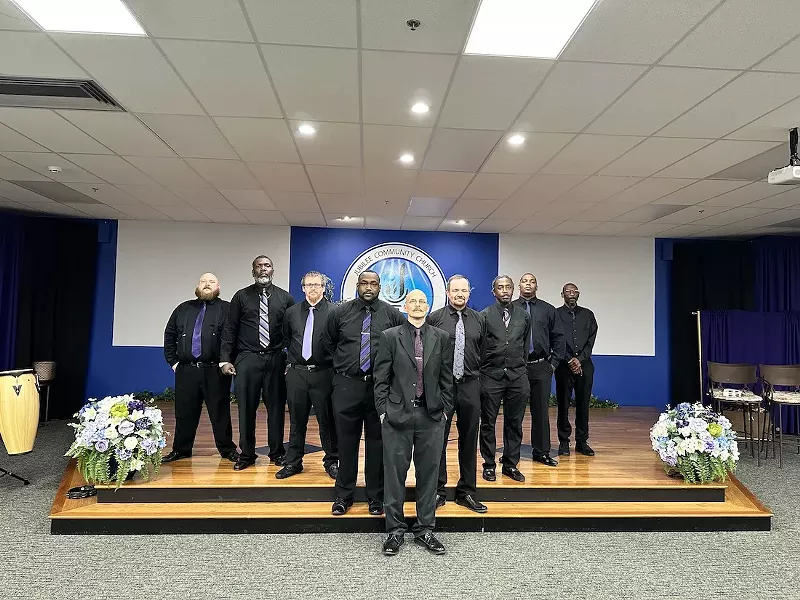
    Opposite North Grand from the schoolhouse, Jubilee Community Church works tirelessly to bring community members back to life. They hope to do the same for the Eliot School, creating an anchor of hope for the neighborhood. In the largest private project north of Delmar in 75 years, Jubilee Community Development Corporation, a subset of Jubilee Community Church, has partnered with Trivers architecture firm to redevelop the Eliot School into the Jubilee Community Wellness Center. The center will provide recovery and support services to community members suffering from addiction, mental illness and homelessness.

    “If we listened to every siren that would go by here during the day, I guarantee you’d hear 75 to 100,” Jubilee Administrative Pastor Andy Krumsieg reveals of North Grand. Krumsieg and his family have lived in north city since the 1990s. Both he and Dr. Bryan Moore, senior pastor at Jubilee, have witnessed addiction, mental illness and homelessness plague community members over the past 30 years. They ring an alarm bell for the fentanyl epidemic, which is particularly rampant up and down North Grand, and want to use the Eliot School as a space for community care.

    Moore says the idea sprung from a dire necessity for treatment beds, saying there’s only 16 in the St. Louis area. “We just knew we had to do something.”


    Members of the Jubilee Community Church's Home support each other in recovery. - LAUREN HARPOLD

    LAUREN HARPOLD

    Members of the Jubilee Community Church’s Home support each other in recovery.

    Currently, Jubilee operates a six-to-nine month rehabilitation program they call “Home.” Through a partnership with Assisted Recovery Centers of America, a behavioral health organization also known as ARCA that offers “a full continuum of integrated medical and behavioral treatment services to adult patients with substance use and other behavioral disorders,” the ministry has been able to provide more than 1,000 people with treatment. Home welcomes anyone in the community who has a substance abuse problem to come through its doors — whether simply to ask questions or to access long-term care. (Jubilee’s recovery housing is for men, but they are connected to women’s housing which they are able to refer women to.) Once people have recovered, Jubilee asks them to become stakeholders in the community, so that they may touch others facing addiction in the community and bring them into care. Moore calls it a “revolving circuit of healers.”

    The structure of Home unites people on common ground. Addiction lasts a lifetime, requiring a support system willing and able to share strength through possible relapses. Jubilee fosters a growing network of people seeking care, who then support each other during and after healing.

    “It’s called sober living. Not sober existing. In sober living, you need a community. You need a thing called ‘collective,’” Moore emphasizes. “They gather together because they need each other’s strength, not just strength. They need somebody who is understanding, common ground about the struggle.”

    He continues with a reminder: “Life is still happening all the time. One of the things about addiction is after you get the body under control, whatever made you an addict is still inside your brain, all of the trauma is still there, all of the drama is still there. So where you were able to get out of your mind, you can’t anymore because this is sober. The problem is everything is sobering. Everything.”

    The pastors mention 2:35 in the morning, when intrusive thoughts attack. Home gives those in recovery the skills to manage all of the things that will come against them after sobering up through continuous education and continuous care.

    Krumsieg adds that the goal is to foster not independence or dependence, but interdependence. When the recovery program first began, they lost eight out of ten men who came through the door. Now, after years of gained knowledge, which Moore points out has been acquired at the better price of someone’s life, they keep eight out of ten. He says they take them from just surviving, to thriving, to reconnecting with their families and now, a brotherhood.

    The only thing holding them back? Overcrowding.

    Just over two years ago, Dr. Moore wrote a letter to the St. Louis Public School board, inquiring about the Eliot School. Dr. Kelvin Adams, then SLPS superintendent, personally attended a meeting to see firsthand the ministry’s vision. Moore says Dr. Adams was “a big help in the whole process,” adding, “the board came through for us.” In July 2022, Jubilee closed on the school’s purchase.

    The pastors knew they needed help from the best to tackle the monumental project. In a leap of faith, they contacted Trivers architecture firm, known for their stupendous pedigree of projects across the city. Dr. Moore remembers the day an “angel,” in the form of Joel Fuoss, principal at Trivers, came walking through the door.

    Since the partnership’s inception, the Trivers team has sat down with both patients and community members to truly understand their needs in an expansion.

    “We like to be part of catalytic projects and mission-driven work,” Fuoss says. “It’s just a part of the DNA of who we are and what we want to do. We’ve always felt that St. Louis has so much to offer. And whatever little bit we can do to help further that along is something that we feel is a part of what our firm does.”

    Trivers has completed hundreds of large-scale projects, ranging from the museum at the Gateway Arch to the restoration of Tower Grove Park pavilions. Fuoss believes the Jubilee Community Wellness Center fulfills their mission “perhaps more so than any other project that we’ve been a part of.”

    He speaks to the project’s clear vision, concrete model and momentum. It simply needs room to grow.


    Anita Monroe laughs on her front porch. Monroe lives a few blocks from the Eliot School and is positive about the plans for the site. - ZACHARY LINHARES

    ZACHARY LINHARES

    Anita Monroe laughs on her front porch. Monroe lives a few blocks from the Eliot School and is positive about the plans for the site.

    A project of this size requires a sizable amount of funding: over $23 million. The team has turned to the Community Development Association to secure some of the funding for the project. In compliance with regulations from the U.S. Department of Housing and Urban Development, CDA administers federal funds for city development and economic justice projects. Jubilee hopes to supplement city funds with historic and new market tax credits, as well as a capital fundraising campaign. The city has allocated $2.7 million so far, but Jubilee has applied for additional city funds, hoping to secure $5-7 million total.

    Obtaining the money hasn’t been easy. Says Krumsieg, “The labyrinth of protocol and regulations that need to happen are virtually impossible.” After over a year of jumping through hoops to account for each requirement and request from CDA, ready with plans and necessary investors, the project’s financial status lies in a stalemate of back-and-forth emails.

    Moore expresses his frustration. “Limbo. That’s where we are. They come with a request, we fulfill that request. And then another request comes, and then another. Each time we thought we’ve reached the point where, OK, this is final, we’ve done everything, except for told them how many times we flush the toilet, we’ve done everything, all of a sudden, here comes something else.”

    Fuoss agrees. “I think that’s probably the most frustrating, is that you hear a lot of talk about revitalization on the north side …. And here you have a project that’s ready to go. You’ve got everybody who’s willing to jump in, a team that’s ready and architectural heritage that’s being revitalized. What other boxes need to be checked?”

    Emailed on Monday morning to ask for its perspective, CDA had not provided a statement by press time. We’ll update this story if we hear back.

    Trivers, Jubilee, their real estate firm and their lawyers cannot understand why they have not been able to secure the additional funds from CDA.

    Dr. Moore stresses, “the cost of it is literally people’s lives… Every time that you delay us. We’re losing lives here. Literally, losing lives.”

    He mentions people that walk through their doors seeking help. They receive help from the ARCA clinic inside the church, but due to limited space, the church has had to send people back to the street.

    “It has been heartbreaking to, seemingly so, keep moving the goalpost on us, while our motive is literally saving lives.”

    In the meantime and in good faith, Trivers has begun work, filing for historic tax credits and finalizing blueprints.

    The architectural heritage and history of the Eliot School cannot be overstated. Listed on the National Register of Historic Places, the schoolhouse marked the first school design by renowned St. Louis architect William B. Ittner. Ittner would go on to design more than 430 school buildings in Missouri. Aside from peeling paint, weathering and a colony of dust bunnies, the 1898 building boasts an incredibly sound structure, airy rooms with high ceilings and a facade of gorgeous paneled windows.

    Across the street, neighbors Anita Monroe and Tim Ray relax on Ray’s front porch. Monroe, from Mississippi, moved to St. Louis as a child. She lived in the Pruitt–Igoe housing projects until the pipes froze, and from there moved around the northside, eventually landing in Fairground.

    The two friends agree the wellness center is a good idea. Ray, however, feels skeptical about the location and safety, saying, “It would have been nice if Jubilee would have come by and asked the community about it.”

    Monroe rebuts. “It’s gonna be alright,” she assures him. “Cause God says we’ll be alright. Everybody needs a little help every now and then.”


    Diane, who chose not to give her last name, lives a few doors down from Eliot School. “It’d be a great thing,” she says of plans for the site. “Cause there is so many of them around, on drugs, so many of them need the help and some of them can’t get out the community cause they stuck.” - ZACHARY LINHARES

    ZACHARY LINHARES

    Diane, who chose not to give her last name, lives a few doors down from Eliot School. “It’d be a great thing,” she says of plans for the site. “Cause there is so many of them around, on drugs, so many of them need the help and some of them can’t get out the community cause they stuck.”

    Two doors down, Diane, who’s lived across the street from the Eliot School for over 20 years, says she hadn’t heard about the upcoming plans, but it would be a great thing. “So many around here are on drugs, and so many need to heal.” She carries Narcan with her — a decision she made after she found a man who had overdosed in her alley. She does her best to help where she can, washing clothes, making peanut butter and jelly sandwiches, and providing baths for a few people who have knocked on her door. But she looks forward to a place that can provide showers, a place to change clothes and long-term treatment for people in need.

    The completed development aims to address the fentanyl epidemic via multiple avenues. In-house will be a crisis clinic with out-patient and counseling services, as well as a dramatic increase from 16 to at least 75 beds in the new facility. ARCA support will expand into the new building, including an independently run on-site pharmacy and lab. Parts of the schoolhouse will transform into community and welcome spaces, as well as a commercial kitchen. There will also be space for training and fellowship.

    Dr. Leslie Moore, executive assistant to the senior pastor, sheds light on yet another impact of the project. “As a woman, I am always thinking about safety.” She points out that having resources to help a person get back on their feet in one gargantuan and beautiful building will help anchor the neighborhood. “When you are safe and secure, then you can become a community.”

    Fuoss echoes her point.“My vision for this is that that building is that first light that starts to radiate out.” He refers to its ability to transform both the people and buildings in the area. “I think a project of this consequence, and this special component that it is, has that power…because you have this group of people here that are committed and invested.”

    Subscribe to Riverfront Times newsletters.

    Follow us: Apple NewsGoogle News | NewsBreak | Reddit | Instagram | Facebook | Twitter | Or sign up for our RSS Feed

  • St. Louis’ Juvenile Justice System Is Failing Youth and Families

    St. Louis’ Juvenile Justice System Is Failing Youth and Families

    This story was commissioned by the River City Journalism Fund

    Ta’janette Sconyers, a psychologist hired to work with youth at the St. Louis Juvenile Detention Center, found herself grappling with her own anxiety and despair over conditions inside the facility. It got so bad that she took a leave to protect her mental health.

    Finally, in 2019, she simply resigned, becoming part of the turnover at the detention center, which seemed to do so little to provide youth with treatment, rehabilitation or even sunshine and fresh air.

    “They said it was a revolving door. But I always asked, did anyone ever take the time to figure out why the door kept revolving,” says Sconyers.

    Sconyers specializes in treating the effects of anxiety, trauma and OCD, and those were also some of the issues she diagnosed and treated while working at the St. Louis Juvenile Detention Center on Enright Avenue. It’s one of 18 juvenile detention centers in Missouri operated by the circuit courts that hold minors accused of crimes and deemed threats to public safety. Administrators say rehabilitation and treatment are the goals for the approximately 2,000 youth in the state who funnel in and out of the detention centers annually.

    If a youth is found guilty of a crime, the courts can commit them to a more permanent secure facility operated by the state’s Division of Youth Services, which has about 20 residential facilities and housed more than 1,200 youth last year. Youth can also end up at state facilities if they are repeatedly caught committing crimes. While legal terminology refrains from referring to these institutions as youth jails and prisons, they are still forms of incarceration, Sconyers points out.

    Many of the youth never spoke to her, although some would check to make sure she was around every day. Others would open up to her about why they made the decision they did — money and a dissociation from their actions, she says.

    But Sconyers ultimately concluded that her attempts to make a difference were futile.

    “I felt I had more of a chance of helping them by not being a part of the system,” says Sconyers, who resigned from the facility in 2019 and is now in private practice. “If people’s basic needs aren’t being met, how do you think I’m going to be able to sufficiently address their trauma?”

    A series of escapes in recent years has changed the policies at St. Louis area detention centers. It’s one reason why St. Louis area facilities, most which have outside recreational areas, have stopped allowing detained youth to use them. Amanda Sodomka, who led the city’s juvenile detention center as chief juvenile officer for the 22nd Circuit Court until a recent promotion, says the city’s juvenile facility is working on upgrades to the doors and a higher fence in order to consider allowing youth outside again.

    “We have very smart youth,” says Sodomka. “It poses enough risk, we just can’t have them outside right now.”

    Yet Sconyers says the lack of fresh air was one of many things that disturbed her. Some youth were only there for days, but others for months or years as their cases played out. She and other staffers attempted multiple times to organize letting youth go out for even a few minutes each day, but those efforts were always shot down.

    And that was even before her facility saw an unprecedented number of escapes, as did many other St. Louis area detention facilities. Juvenile administrators and staff point to the recent “Raise the Age” state law that requires 17-year-olds not to be tried as adults, which went into effect in 2021. Data from the Missouri Supreme Court confirms most of the escapes from the juvenile detention facilities were from youth just a year shy of being legal adults.

    News reports about the system’s failures, like escapes, can spark outrage and prompt reactive policies, says Gina Vincent, a juvenile justice expert who also co-directs the law and psychiatry program as a professor at the University of Massachusetts Chan Medical School.

    “Judges aren’t paying attention to what works to rehabilitate juveniles, they’re paying attention to public perception,” says Vincent, who sees a concerning national trend. Lack of activities and more time in cells mean, she says, “You’re going to see an increase in aggression in facilities.”

    For a system designed to provide rehabilitation, the juvenile justice framework has left many of the people who interact with it frustrated. Parents say they are left in limbo and often feel hopeless once their child is in the system. Some juvenile officers feel neglected by administrators and also say youth are given few resources to help them deal with their trauma.

    For one youth who escaped and was recaptured, his accountability and rehabilitation process started once he received help outside of the system. Sconyers says those stories don’t have to be rare.

    “It’s a powerful thing. It didn’t always happen for a lot of different reasons, but it’s possible,” says Sconyers. “People benefit from trauma work when it’s something they choose to do — when it’s something they have the capacity to do, when they are able to moderately engage with it, when it’s controllable for them, when it’s on their terms.”


    Karmahn Leach of Shine Bright Like a Diamond Youth Organization gives a presentation at New Spring Church. Leach hopes to mobilize parents to advocate for youth in juvenile detention — and themselves. - THEO WELLING

    THEO WELLING

    Karmahn Leach of Shine Bright Like a Diamond Youth Organization gives a presentation at New Spring Church. Leach hopes to mobilize parents to advocate for youth in juvenile detention — and themselves.

    Inside the Juvenile System

    The majority of youth who find themselves in the juvenile system are accused of misdemeanor offenses. That’s true both in Missouri and nationwide.

    It’s the minority — those charged with felony offenses — who are typically brought to the court’s juvenile detention center. Their intake process mirrors jail, with a full strip search, shower and change of clothes. The brown, green or orange jumpsuits they are assigned are based on factors such as high risk or trauma.

    Each new detainee then waits in a small room with a sliver of light beaming from a small rectangular prism. A metal frame, board, sheet and sink are all they have during the hours they are processed in.

    After they are processed, the regimen begins. Calls are limited. Lunches are isolated: one youth to a table. While school is mandated, Sconyers says it often seemed to consist of students watching movies, a claim echoed by other officers.

    But that’s not always the climate, says Amanda Williams, who runs day-to-day operations at the St. Louis Juvenile Detention Center as its superintendent. Youth have limited time out of their cells but are incentivized to earn more. The center has received multiple grants for arts and recreational activities, even if volunteers are sparse. Still, every day isn’t a crisis, she insists.

    “Majority of the kids who come in here, they don’t give us a problem,” says Williams.

    But some of the same juveniles cycle in and out of the detention center throughout their youth, says an officer at the St. Louis County Juvenile Detention Center who spoke under the condition of anonymity. “Simply because the detention center has never done anything to help these kids out,” the officer says.

    Last fall, a group of parents whose children were incarcerated at the juvenile detention facility in Clayton banded together to demand better treatment of their children, transparency and an investigation into the facility. They said youth were forced to urinate and defecate on themselves or in containers they ate from because no one let them out of their cells in a timely way. They said fights were common and staff members turned to physical restraints to control the youth.

    Other officers confirm some of the allegations, saying the safety and well-being of juveniles, as well as staff, are at risk.

    The unnamed officer doesn’t sugarcoat the situation. He says officers are sometimes attacked by the youth detainees. “We’re not dealing with model citizens,” he says.

    He says he remembers every youth who comes through the doors in Clayton. He tries to give them a realistic view of the situation they’re in.

    But he says the system can’t help delinquent youth if it’s complacent with problems such as low morale in staff, bullying by administration and a lack of services, programs and activities for youth awaiting decisions on their criminal cases.

    The people running the county’s juvenile system declined several requests for an interview. In an email, a spokesperson said, “Juvenile records are generally closed records, meaning they cannot be shared or discussed outside of court proceedings. … And for security purposes, St. Louis County Courts cannot comment on internal detention center policies and Human Resource matters.”

    In the city, volunteers have come to talk to youth or help them write, play or teach yoga. But, the county officer says, the majority of the time the youth are just sitting.

    “Playing cards and Uno is not going to do anything here,” he says.

    While juvenile detention centers in Missouri are under the jurisdiction of the courts, putting them under the purview of the state, they are funded locally. Last fall, the St. Louis County Council leveled some of its only power over the courts and called for juvenile officials to attend a budgetary meeting. Juvenile administrators took the opportunity to request additional funding to address problems related to short staffing.

    St. Louis County Councilman Ernie Trakas questioned county juvenile administrators about allegations of physical, verbal and sexual assault on youth by staff. But they denied knowing of any wrongdoing. He then wrote a letter asking Missouri Attorney General Andrew Bailey to investigate.

    Bailey has not responded publicly to the request, and the St. Louis County Council has not addressed the issue since.

    Officers at the county detention center have received new walkie-talkies and emergency buttons. But workers still face attacks by their young charges, and the administration often forces staff to work 16-hour shifts and tries to boost morale with gift cards, the officer says.

    Even so, it’s hard to get staffers to speak up about systemic issues, the officer says. “You are talking about people that need to eat. They’re not going to push the envelope.”

    Catch and Release

    When a youth is arrested or detained by law enforcement in Missouri, a juvenile officer submits a referral to the court, similar to the warrant process for adults.

    Referrals can result in a formal decision, which comes with either detention or intense supervision, such as GPS monitoring from the courts. The decision can also be informal, which might mean diversion-related alternatives, community service, referrals to treatment services or voluntary recommendations by the court. More than 90 percent of decisions for referrals in the St. Louis area are informal.

    Until last year, the overall number of law referrals to the court had decreased dramatically, with about a 71 percent drop from 2011 to 2021.

    But data shows St. Louis County and city police together referred almost twice as many youth to the courts in 2023 as 2022. Last year saw the highest number of juvenile referrals in the county since 2016 and in the city since 2015.

    The most common charge for youth in the state, as well as the St. Louis area, is property damage, followed by assault. The number of youth accused of homicide has more than tripled in the past 10 years, but still comprises less than 1 percent of all juvenile charges.

    Despite the decline in juvenile referrals in the past decade, and the uptick in the past year, the pattern holds steady: More than 60 percent of the time when youth are referred to the court, their charges are rejected or no action is taken on the referral. The only involvement with the system is the initial contact with police.

    In 2012, about 184 youth in the St. Louis area were incarcerated on a daily basis. These days, that’s dropped to about 136 youth on a given day, according to the most recent data from state and court-run facilities.

    Experts say that’s a good thing. “When you incarcerate kids, it slows their development and progress of their maturity, their ability to regulate their own behavior and their sense of responsibility,” says Vincent.

    Yet advocates and experts say the practice of taking no action after a referral — sometimes called “catch and release” — does nothing to rehabilitate the youth or address their needs, essentially the purpose of the juvenile system. Without good interventions, some youth escalate.

    And the next time, they may well end up in a detention center. Prior referrals are considered a risk factor by the courts and can increase the chances of a juvenile official ordering a youth to be detained.

    “We factor in history. If we have a youth who has multiple referrals to the court, we would treat or recommend a different course than someone’s first referral,” says Sodomka.

    Sometimes parents aren’t even aware their children have been given referrals. Qunshea Jennings’ son was fighting charges at the juvenile facility but he was certified as an adult, transferred to the county jail on his 18th birthday. During the certification hearing, she heard about referrals from incidents when he was 12 that contributed to his sentence.

    “This is affecting my son’s life and I never even knew about it,” says Jennings. “All these officers had interacted with my son and wrote him up.”

    Some officers say they use juvenile interactions to get through to youth before it’s too late. Northwoods Police Chief Dennis Shireff says he feels the area is in a state of emergency when it comes to juvenile crime but doesn’t support constantly detaining youth. Instead, he tries to work with parents in situations that could result in tickets, summons and arrests.

    “Nobody’s watching them, giving them guidance. Instead of giving them guidance, most people think that it’s easy to just lock them up. But when they’re done doing whatever little time they do, they become more of a criminal,” he says.

    For many youth, being incarcerated is the only type of structure they’ve received, says Jeff Esparza, the attorney who leads the public defender’s office for youth in the St. Louis area. However, considering the harm from the system, Esparza says, the intervention needs to happen before it’s too late.

    “I don’t know why it has to be the threat of a cage over your head before we can intervene with a kid who has a mental health or substance abuse problem,” says Esparza. “Jail is a horrible place, and I don’t want my clients there.”


    Karmahn Leach was embarrassed when her son started getting in trouble. - THEO WELLING

    THEO WELLING

    Karmahn Leach was embarrassed when her son started getting in trouble.

    Navigation Difficulties

    Embarrassed. That’s what Karmahn Leach and many other parents said they felt when their children started getting in trouble. That’s how many parents say they felt when trying to navigate the juvenile system to support their child as best as they could.

    “Not knowing my rights. His rights. What was supposed to happen. What’s next for my child? I know I’m going to be judged for it, but I need someone to talk to,” says Leach.

    One day when Leach’s son was about 15, he was picked up in a stolen car and brought home, a classic catch-and-release.

    “He’d get picked up or brought home and say, ‘They let me go,’” says Leach.

    Soon he ended up in the St. Louis County Juvenile Detention Center, where he was held for months and never let outside. One thing Leach noticed: His skin got lighter.

    In his younger years, his mom says teachers described him as bright and an old soul. But after being diagnosed with ADHD and other learning disorders, things took a turn.

    “On medication he was an A/B student. Off medication it was Ds and Fs,” says Leach.

    Over time it got worse. He became too active in class, and he was cited time and again for wandering around the hallways. Citations turned into suspensions. Somehow, Leach says her son found refuge at the Vinita Park Police Department, where he’d help with chores.

    After she moved out of Vinita Park, her son’s interactions with the police turned negative. Leach now has one son incarcerated and one whose charges are pending. She started a nonprofit, Shine Bright Like a Diamond Youth & Young Adults, so that other parents wouldn’t end up in her situation.

    One way she helps is by connecting parents to the services they need by working with advocates like Janis Mensah, a former member of the city’s civilian jail oversight board and juvenile volunteer with Metropolitan Congregations United.

    “A lot of parents come to us not knowing even how to parent and address their youth’s issues. They come to the system thinking it will help in some type of way, not knowing the system just makes things worse,” Mensah says.

    One parent, Mensah recalls, called the police when her daughter took her car for a joy ride. Her daughter ended up being detained in a youth facility. “We want a system that allows everyone to have a better quality of life and we know this system does not,” Mensah says. “It harms youth. It harms guards. The workers who have turnover cycling through that position.”

    Exactly 99.5 percent of youth in Missouri and nationwide are not “offenders” or cited for breaking the law. Vincent says while that may seem obvious, it’s important to note in light of the rhetoric around youth crime. Even in Missouri, nearly 80 percent of youth who are cited for a law violation don’t reoffend.

    Data shows more than 90 percent of juvenile referrals in St. Louis and the county stem from municipal police departments. Among such referrals, Black youth in the city are six times more likely to be committed to detention facilities than white ones. In the county the rate for Black youth is four times higher than white ones.

    Black youth comprise only about 15 percent of Missouri’s population, but they experience a disproportionate rate of referrals, diversion, detention center sentences and certifications. Black youth also have a longer average and median stay in juvenile detention facilities than white youth.

    In Missouri, administrators assess youth looking at risk factors that include parental incarceration, attitude, behavioral issues, school attendance, age at first referral and the nature of the referrals themselves. Black youth are assessed at a higher risk level than their white counterparts, state data shows.

    Nearly every state uses risk assessments to determine the outcomes of juvenile referrals, says Vincent. While “risk assessments” can have a negative connotation, Vincent says they can be helpful and that judges who follow risk assessments have a lesser chance of racial bias. It comes down to the factors that are used. They shouldn’t rely heavily on factors like their parents’ incarceration or previous referrals, she says.

    Often, a complete risk assessment for a youth is done only after a judge or juvenile administrator has already made a decision on their case.

    “Low-risk kids end up on probation, and judges are setting conditions about the services kids should get without any information about the risk factors, which tells you what services they need,” says Vincent. “The accountability level needs to be in line with the level of risk for reoffending. Most of those kids, you’re never going to see those kids again.”

    In St. Louis, one way Mensah and Leach started to combat this practice was by creating social biographies for youth in the system for judges. These bios tell a judge about a youth’s background, family support and needs — an idea Vincent applauds.

    Leach says that though she’s just getting started, the people affected by the system have to come together. She’s talked to incarcerated youth who are ready to help serve when they are released.

    “They just want someone they can trust,” she says. “Other people like me. No one’s going to make me feel ashamed of what I’ve been through.”


    Janis Mensah, a former member of the city's jail oversight board, is dismayed by what they've witnessed in the juvenile system. “We want a system that allows everyone to have a better quality of life and we know this system does not. It harms youth." - PROVIDED

    PROVIDED

    Janis Mensah, a former member of the city’s jail oversight board, is dismayed by what they’ve witnessed in the juvenile system. “We want a system that allows everyone to have a better quality of life and we know this system does not. It harms youth.”

    Escaping From It All

    One teen injured his spine trying to jump out of the St. Louis detention center in 2021. Months before, a youth who escaped from the city’s juvenile detention facility was killed while running away from police on Interstate 70.

    Statewide, the number of escapes from Missouri juvenile detention centers are difficult to decipher, as some statistics include runaway data and juvenile detention facilities are not required to report escapes or attempted escapes.

    Data released by the Missouri Supreme Court shows 12 escapes from the St. Louis city facility since 2021, but media reports total 15 (the detention center confirms the number at 15). St. Louis County did not report any, but media reports say two escaped. Officers at the county facility say those have been the only escapes in recent times. The Missouri Hills facility on the Bellefontaine campus in North St. Louis County operated by the state’s Division of Youth Services has also had nine escapes since 2021.

    “They don’t take responsibility for how often that happens,” says Mensah. “That’s not acceptable.”

    All Christian Lett could think about was getting away. That’s why he fled the police and crashed a stolen car that police spiked during the chase. He learned to steal cars after being taught by someone a few years older than him. After losing his brother through violence, he turned to anyone who could be a mentor, friend or teach him how to provide.

    Transitioning from roaming the streets to being incarcerated at the Hogan Street facility was a big adjustment, he says. Phone calls were never more than about 15 minutes, and time with family was restricted.

    “You’re not seeing the rotation of the sun and moon,” says Lett. “All we know is what time breakfast comes and if breakfast comes it must be another day.” He spent both his 17th and 18th birthdays incarcerated at St. Louis juvenile facilities.

    At 17, Lett escaped the facility, but his recapture happened just months later. His second attempt was thwarted, and he assaulted a guard trying to escape. The guard ended up hospitalized.

    This time, Lett landed in “adult jail” at the City Justice Center. It wasn’t until he started working with the Freedom Community Center that he thought he could turn his life around. (Full disclosure: The author has done some consulting work for the Freedom Community Center.)

    The nonprofit provides a number of wrap-around services to justice-involved people, including therapy, court management, transportation, housing and job assistance. After FCC staff advocated for his release, a judge allowed the organization to serve as Lett’s sponsor, ensuring to the courts he’ll be law-abiding while his case plays out. Lett completed FCC’s six-week program centered in restorative and transformative justice techniques, and remained involved with the organization’s advocacy. He now works in the restaurant industry, and one day, hopes to be a chef.

    He often speaks in third-person when addressing his past — remorseful but accountable, he says. His friends, hangout spots and, most importantly, his mentality all changed, he says.

    That’s the dissociation Sconyers, the psychologist, worked to address with youth.

    “We isolate the behaviors and we don’t look at whether the context and conditions these kids live in are appropriate for their survival,” says Sconyers.

    This month Lett turned 20. No longer a teenager, he’s aware his young family members and friends look up to him.

    “Instead of showing them the wrong way, having them watch me do stupid and lame things, I have choices and I’m choosing to do better. Not to do those things,” says Lett.

    Now on probation, Lett says an intervention was necessary and speaks candidly about his transformation. By no means was it

  • Missouri Woman Sues Block After Being Fired Over Her Tweets

    Missouri Woman Sues Block After Being Fired Over Her Tweets

    A Missouri woman’s lawsuit against one tech company worth billions of dollars is being bankrolled by another tech company worth billions of dollars. As it so happens, both firms were founded by the same St. Louis native.

    Chloe Happe, a resident of Lincoln County, Missouri, says in her lawsuit filed in federal court last week that she was wrongfully terminated from her job at payments processing company Block (formerly Square) because of “constitutionally protected speech” she made on X (formerly Twitter).

    Happe, who worked as a customer support representative then a project manager for Block, is suing to be rehired by the company as well as for damages and a ruling that her termination was in violation of Missouri law.

    According to the suit, Happe uses the pseudonymous handle @samsarashawty to make satirical posts in the persona of “a young, married Kurdistani woman who takes care of sheep and goats in the Zagros Mountains, cares for her child, occasionally hunts falcons, and posts on X while waiting for her husband to return from working his 18-hour days caring for their sheep.”

    Two of these posts, both since deleted, found the attention of Block HR and cost Happe her job, the suit says.

    One of the posts, its exact content unclear, was made in early October, presumably in the wake of the October 7 attacks on Israel. That tweet involved Happe commenting on refugees leaving Gaza and coming to the area of the Middle East, where her falcon-hunting alter-ego lives.

    The other post, made later in October, didn’t have an obvious connection to the Twitter persona. It read: “Looking fear in the eyes today as I am using the ADA gender neutral restroom in the office and a retarded tranny in a wheelchair knocks on the door.”

    On October 30, 2023, Happe had a meeting with Block HR during which the HR rep showed Happe the two offending posts. She initially denied making the posts, saying she was being impersonated by an ex-boyfriend. Block never said how the posts came to their attention or how they had connected them to Happe. She was fired the following month.

    Naturally, since then, Elon Musk has gotten involved.

    In August of last year, Musk, who owns X, said that the social media company would fund employment lawsuits brought by people fired for their posts to the platform. Suits the company has backed include one brought by actress and mixed martial artist Gina Carano, who was written off the TV series The Mandalorian after making a post in which she seemed to compare being a Republican in the U.S. in modern times to being Jewish in Germany during the Holocaust.

    X has funded other, lower-profile suits. Happe’s among them.

    When she filed her initial suit in Lincoln County Cirrcuit Court in late March, X put out a statement announcing their financial backing of it. In their words, Happe was fired because her posts “did not conform to the prevailing political orthodoxy.” Musk tweeted his approval.

    Both Twitter and Block were co-founded by Jack Dorsey, the former in 2006 and the latter with fellow St. Louis native Jim McKelvey in 2009. Block maintains offices in St. Louis, though their primary place of business is California.

    Because Happe is suing an entity with its primary place of operations in a state other than the one she lives in, the suit was moved to federal court last week.

    Subscribe to Riverfront Times newsletters.

    Follow us: Apple NewsGoogle News | NewsBreak | Reddit | Instagram | Facebook | Twitter | Or sign up for our RSS Feed

  • Dara Daugherty Faces Angry Neighbors in Court as City Seeks Injunction

    Dara Daugherty Faces Angry Neighbors in Court as City Seeks Injunction

    For the first time since the City of St. Louis accused her of masterminding a massive illegal rooming house scheme, Dara Daugherty took the stand in court yesterday, telling a judge that she no longer owns one of her portfolio’s most squalid holdings.

    Daugherty testified she recently sold the home with the Dutch gambrel roof on Virginia Avenue, a nuisance property that was the bane of its neighbors and where the city claims Daugherty housed an ad-hoc, unpaid labor force that worked on her slum empire’s “fixer-upper” properties.

    Yesterday’s hearing came as part of the city’s ongoing civil lawsuit against Daugherty and five of her family members and associates who are accused of running an illegal rooming house scheme that spanned 39 properties across nine south city neighborhoods. At issue yesterday was the city’s request that Circuit Court Judge Judge Jason Sengheiser order Daugherty to cease operations at the Virginia Avenue property and clean it up.

    Sengheiser was still weighing the request as of press time.

    In court, Daugherty’s attorney Elkin Kistner argued that an injunction was totally unnecessary given that his client no longer owns the house and the new owner has begun cleaning it up. He alluded to the fact that this wasn’t the only one of her properties she’s sold, as she’d come to the conclusion in recent months it might be a good idea to let a few holdings go.

    Daugherty testified that in the past few weeks she sold the Virginia Avenue house to Patrick Timmerman for $75,000. Timmerman appears to be the same man who was arrested for credit card fraud in 2009.


    The house on Virginia Avenue owned by Daugherty, condemned by the city.

    RYAN KRULL

    The house on Virginia Avenue owned by Daugherty was condemned by the city. She has now sold the property.

    Daugherty testified that she did not know Timmerman prior to the sale, an assertion Assistant City Counselor Toni Mullenix seemed dubious of. In her cross-examination of Daugherty, Mullenix asked repeatedly about Daugherty’s use of LLCs, which the city has argued in the past were used to obfuscate many of the true owners of properties involved in the scheme.

    Prior to taking the stand, Daugherty spent the better part of the afternoon listening in the courtroom as Virginia Avenue neighbors, police officers with the city’s Problem Properties Division, and even one of her former tenants took the stand against her.

    Daugherty, wearing a gray short-sleeved shirt, occasionally wrote notes on a pad of paper but largely showed no emotion, even as she was accused of overseeing a situation akin to “modern-day slavery” at the Virginia Avenue house. On the table in front of her, there was what appeared to be a Louis Vuitton purse and wallet — the latter of which sported what looked a lot like a rubber-banded stack of cash peeking through the open zipper.

    The neighbors’ testimony mirrored what has been reported publicly and what the city has included in their various court filings. The city has accused Daugherty of renting rooms in condemned houses to members of the city’s most vulnerable populations, in many cases forcing those tenants to work for her to earn the roof over their heads, even as in some instances Daugherty pilfered their government aid.

    “It seemed like modern-day slavery to me. They were working for her and not getting paid,” said neighbor Joseph Goodman when he took the stand yesterday. “It was hard to see people living in that condition.”

    Testified neighbor Patricia Vaught, “It’s hard for me to believe someone was comfortable renting and taking money from people living in those conditions.”

    In her testimony, Brittany Marquardt described the Virginia Avenue house right next door to her as being in “a state of disrepair.” Tenants there collected metal for scrapping and stored a lot of that metal in the backyard. At one point, a tenant threw a concrete birdbath into the street and sex toys into a neighboring yard.

    Marquardt described the house’s basement having seven inches of standing water in it, creating the odor of “a musty cave” that, as temperatures have warmed, has morphed into an odor “more moldy and menacing.” (At one point, according to Goodman’s testimony, Daugherty’s father-in-law lived in that basement.)

    Also taking the stand was Valenda Spurlin, one of Daugherty’s former tenants who lived at a different property but who indicated that in the past three months Daugherty tried to get her to move into the Virginia Avenue house.

    Spurlin gave her testimony by raising either a green or red hand to indicate yes or no to questions put to her. She had her voice box removed five years ago due to cancer and cannot speak.

    Spurlin indicated that Daugherty had aided her and her fiancé in applying for state rental reimbursement and that Daugherty even drove them to the proper place to do so. Daughtery promised that the couple would get more than $2,000, but that money never came to Spurlin or her fiancé. The checks from the state were mailed to Daugherty’s address in Brentwood.

    Asked about this by Mullenix, Daugherty said they had to be mailed to her house because Spurlin was homeless at the time — this, despite the checks being for rental assistance.

    At one point, Mullenix showed Spurlin what appeared to be a mugshot for Patrick Timmerman — the man Daugherty sold the Virginia Avenue house to, whom Daugherty claimed she had never previously met. Mullenix asked Spurlin if she’d ever seen this man before. Spurlin indicated she had, though she did not know his name.

    Officers Louis Naes and Erin Hein, both with the department’s Problem Properties Division, testified as well. Naes said he was familiar with numerous properties belonging to Daugherty, saying they are “all in disarray.” Hein called the conditions of Daugherty’s property on Virginia “deplorable.”

    Neighbors of the Virginia Avenue property said on the stand that there had been some superficial improvements as of late, primarily that some of the debris that once cluttered the backyard had been removed. However, all seemed to agree there was much work left to be done.

    For instance, Goodman noted that a wooden pallet was now being used as a makeshift fence on the property. The foul odor still lingers and is only getting worse as the weather warms.

    At one point, Kistner showed Marquardt a recent photo of the property, which he hoped would demonstrate it had recently gotten some much-needed TLC.

    She replied, “The smell is not coming through in your photo.”

    Subscribe to Riverfront Times newsletters.

    Follow us: Apple NewsGoogle News | NewsBreak | Reddit | Instagram | Facebook | Twitter | Or sign up for our RSS Feed

  • Peter & Paul Will Open Expanded Shelter in North St. Louis

    Peter & Paul Will Open Expanded Shelter in North St. Louis

    After years of struggle and community backlash, Peter & Paul Community Services closed on a building it says will serve as a new and expanded shelter in north St. Louis. The Little Sisters of the Poor site (3225 North Florissant Avenue) will replace the organization’s 60-bed shelter in Soulard as well as plans to open in a more industrial site nearby.

    “The biz owners around Sidney Street were dead set against welcoming us there,” an agency spokeswoman explains of the site just east of Soulard where they had won city approval to move. “They didn’t change their minds after we won the zoning variance. This location is 188,000 square feet as opposed to the 44,000 square feet on Sidney Street, so way more opportunity to expand services.”

    The organization closed on the new north city location on April 15. The site will now be known as the Peter & Paul Community Campus. Previously, the site belonged to the Little Sisters of the Poor until the order closed its home for St. Louis’ elderly poor in 2018. The sisters had a presence in St. Louis for more than a century, according to the St. Louis Review.

    The property is roughly 4.5 acres and fills a block in the St. Louis Place neighborhood near Crown Candy Kitchen and the forthcoming campus for the National Geospatial-Intelligence Agency, according to Peter & Paul. The new campus includes an eight-story tower, a commercial kitchen and dining room, a 15-unit apartment building, a 26-room convent, a large chapel, multiple secure parking lots and ample private green space.

    “This purchase means more than doubling our service footprint over the next few years from helping 116 people each night to more than 300,” Board Chair Mike Banahan said in the release.

    The organization’s plans include the relocation and expansion of the agency’s Soulard Shelter, the oldest continually operating shelter in St. Louis. (It opened in 1981.) They plan to add another 40 beds and also plan the possible relocation of other programs, per the announcement.

    “The purchase comes after more than two years of searching and often contentious public debate about proposed sites for the new homeless services facility. Central to the debate was the larger question of how much power the surrounding community should have to stop the opening of a low-barrier homeless shelter when there is such a great regional need,” the organization said.

    It is notoriously difficult to receive approval for a shelter in the city of St. Louis, and a new shelter hasn’t been built in the city in 15 years, according to 7th Ward Alderwoman Alisha Sonnier. During the last legislative session with the St. Louis Board of Aldermen, Sonnier introduced Board Bill 227 to make it easier to open shelters, changing the current system that relies on a burdensome plat and petition process.

    This bill died in session, but Sonnier has promised to keep trying to pass the reform this session.

    Peter & Paul spent $3 million to purchase the facility, using funding from the City of St. Louis and State ARPA awards, it says.

    “Renovations and rehabilitation will be needed, and the nonprofit plans to fund $20 million, with $7 million already committed, $3 million of that spent on the purchase,” the organization says. “The project will be completed in phases with final construction expected in 2026 or early 2027.”


    Subscribe to Riverfront Times newsletters.

    Follow us: Apple NewsGoogle News | NewsBreak | Reddit | Instagram | Facebook | Twitter | Or sign up for our RSS Feed

  • Prosecutors Up Charges Against Man Who Attacked McDonald’s Worker

    Prosecutors Up Charges Against Man Who Attacked McDonald’s Worker

    Prosecutors have elevated the charges against a 25-year-old man accused of assaulting a teenage McDonald’s employee outside the restaurant.

    Johnny Ricks, from north St. Louis County, now faces a first-degree felony assault charge, the closest charge to attempted murder permitted under Missouri law.

    An updated complaint filed yesterday by prosecutors in St. Louis County contains the amended allegations. Previously, Ricks had been accused of “recklessly” causing serious physical injury to Aryiah Lynch by striking her. Now he is charged with “knowingly” causing her injury “by punching and stomping the victim in the head.”

    Those few words could make a significant difference for Ricks.

    The maximum punishment for the previous charge was seven years behind bars. Under this new charge, which is a class A felony, he could face 30 years in prison.

    The charges stem from a melee that occurred on April 7 outside a McDonald’s in north St. Louis County just east of Black Jack. (Initial media reports wrongly placed the McDonald’s in nearby Florissant, but the area is instead unincorporated.)


    Aryiah Lynch had to be hospitalized after a brutal beating at a Florissant McDonalds on Sunday, April 7.

    IMAGE VIA GOFUNDME

    Aryiah Lynch had to be hospitalized after a brutal beating at the McDonalds she worked at on Sunday, April 7.

    According to a GoFundMe set up by Lynch’s family to help cover the teen’s medical bills, a group of adults came into the fast food spot and harassed and even spat on employees.

    A police probable cause statement says that after Ricks threw a tray into an electronic menu, employees escorted him outside, where things apparently escalated. A man believed to be Ricks was captured on video allegedly pulling Lynch to the ground by her long braids and then stomping on her head twice.

    The GoFundMe, which has raised more than $30,000, says that Lynch was treated at a hospital for a skull fracture, a broken nose and frontal lobe damage.

    She is no longer in the hospital but does require doctor visits to treat her injuries. According to an update posted by the teen’s mother, Lynch still has swelling in her face and cannot breathe out of her nose.

    Ricks has a bond reduction hearing on Thursday.


    Subscribe to Riverfront Times newsletters.

    Follow us: Apple NewsGoogle News | NewsBreak | Reddit | Instagram | Facebook | Twitter | Or sign up for our RSS Feed

  • Paintball Scammer Is Ineligible to Run for Missouri Office, Lawsuit Claims

    Paintball Scammer Is Ineligible to Run for Missouri Office, Lawsuit Claims

    A race for the Missouri House of Representatives is now splattered in controversy as one candidate in St. Charles County is accusing the other of having operated a “paintball gun trading scam” — one that he claims resulted in seven felonies against him.

    Missouri law prohibits people running for office if they have “been found guilty of or pled guilty to a felony.”

    The lawsuit filed Monday by Max Calfo asks a judge to find Michael Costlow ineligible both to run for statewide office and to hold his current position in local government because of the past felony charges against him.

    Costlow is currently an alderman in Dardenne Prairie. Calfo is a former substitute teacher for the Wentzville and Fort Zumwalt districts and also used to work for Trump-loving Representative Jim Jordan (R-Ohio). Both men hope to win the August Republican primary and be elected to represent District 108 in the Missouri statehouse come this November.

    Calfo argues in his lawsuit that Costlow is ineligible for office under state law due to what happened a decade ago in Georgia. Costlow disagrees with the assertion, though he won’t get into specifics.

    “I am confident that I am eligible to hold my current position and a state position,” he says.

    He says the suit is a distraction and, “knowing what Max’s reputation is, this isn’t surprising.” He adds that he can’t comment on the allegations in the suit more specifically than that, given that the matter is currently under litigation.

    Calfo writes that a clerk at the Superior Court of Lowndes County confirmed “the existence of” a criminal case record against Costlow from 2007. However, when the RFT called that same county office, we were told they have no record of any conviction. It’s unclear if any felony Costlow may have received 15 years ago could have been suspended upon him serving his sentence, or, if there was a conviction, if it has since been expunged — much less how either scenario could play out under Missouri law.

    The specifics of Costlow’s alleged misdeeds is unclear, though Calfo refers to them as “a crime spree” in his legal filings and says his opponent “stole thousands of dollars worth of property from children and adults.”

    According to the lawsuit, Costlow previously operated under the online pseudonyms Spydrplus, I Pwn Joo 382 and Mike Lane. It appears from posts made to a paintball enthusiast message board that people shipped their paintball guns to addresses associated with those user names under false pretenses. Multiple people posted to the message board around 2006 claiming to have been ripped off.

    “I and another guy got ripped off by I Pwn Joo. the guy said his name was MIKE LANE,” wrote lilbill303 in October 2016. “if you know this guy tell him he can either send our guns back or get the sheriff dept. after him.”

    A person using the name 2Pac replied three minutes later: “F the sheriffs i will go down from Chicago and pay him a visit and then take my gun back. this guy got me too. I will stop at nothing until I get my stuff back. Mike lane just messed with the wrong Mexican! If you know tell this person 2pac wants his stuff back.”

    Calfo’s lawsuit references a post made to that message board by a person claiming to have fallen victim to Costlow’s scheme who says that they got a letter from the Lowndes County district attorney informing them that Costlow had been indicted with seven felonies of theft by deception. 

    However, Calfo’s lawsuit doesn’t explicitly say that Costlow pled or was found guilty of the crimes. The outcome of the case will likely be a matter of contention as the suit, which Calfo has asked to be expedited, makes its way through the courts.

    Calfo does reference a message board post which he claims was made by Costlow in which Costlow offers his apologies to the paintball community and says he “will plead guilty.” However, it is unclear from the material in Calfo’s lawsuit if that actually occurred.

    “There is a FOIA request pending with Lowndes County state court in Georgia that should be providing further documentation before the end of this week,” Calfo tells the RFT via text.

    If Costlow was convicted, and failed to disclose it, he could be in trouble. Former Maplewood Councilwoman Shana Jones was recently charged with a felony for failing to disclose her past felony convictions when she filed to run for office, as the Post-Dispatch reported.

    For Costello’s part, he says his campaign is all about “returning civility to politics,” adding that this effort to remove him from the ballot “does nothing to help the state. It just makes headlines… People in St. Charles County really want to see their politicians work for them. Not just screaming at one another.”

    On his campaign website, Calfo also previously attacked the incumbent state representative for the district, Justin Hicks. He claimed that Hicks exaggerated his military record and as a teenager had an order of protection taken out against him, allegations picked up by the Post-Dispatch. Last month, Hicks announced his bid to be the U.S. representative for Missouri’s Third Congressional District, replacing the retiring Blaine Luetkemeyer.

    We welcome tips and feedback. Email the author at [email protected]
    or follow on Twitter at @RyanWKrull.

    Subscribe to Riverfront Times newsletters.

    Follow us: Apple NewsGoogle News | NewsBreak | Reddit | Instagram | Facebook | Twitter | Or sign up for our RSS Feed

  • Wife of St. Charles Kidnapping Ringleader Arrested for Stealing VA Funds

    Wife of St. Charles Kidnapping Ringleader Arrested for Stealing VA Funds

    The three St. Charles County men accused in state court late last year of keeping a 20-year-old Indian man in slave-like conditions at a home in Defiance, Missouri, now face federal charges for those crimes. The wife of the alleged ringleader of the plot has also been indicted along with her husband as part of a scheme to defraud the federal government.

    Nitya Sattaru, who had not previously been charged with a crime, was arrested yesterday by federal authorities.

    Nitya and her husband, Venkatesh Sattaru, are facing 47 counts of theft of government funds.

    For Venkatesh, this comes on top of the slew of state charges he is already facing in St. Charles County Circuit Court.

    Venkatesh – along with Sravan Penumetcha and Nikhil Penmasta – were charged in December with kidnapping, assault and other crimes for allegedly holding a 20-year-old against his will in a Defiance home and forcing him to work essentially as a slave. St. Charles County Prosecuting Attorney Joseph McCulloch referred to Sattaru as the “main target” of the investigation that led to the charges.

    The 20-year-old came to Missouri in late 2022 under the impression he’d be going to college on a student visa sponsored by Sattaru. However, he soon found himself sleeping on a concrete floor in Sattaru’s home for as little as three hours a night, forced into a type of peonage where he worked for his alleged captor’s IT business and served at his beck and call. After about a year under those conditions, a neighbor called police asking for a wellness check at the home in Defiance. Authorities found the 20-year-old with bruises and open wounds on much of his body. The initial charges were filed against his alleged captors shortly thereafter.

    The federal charges, filed April 10, appear to mirror those filed in state court, accusing the three men each of one count of forced labor.

    The indictment also includes conspiracy and theft of government funds charges against both Sattaru and his wife, Nitya.

    Federal prosecutors accuse the couple of defrauding the Department of Veterans Affairs by claiming that Sattaru, who served in the military for approximately one year starting in 2013, had significant disabilities, to the extent that he needed assistance to “independently accomplish activities of daily living.”

    Based on those allegedly fabricated disabilities, Sattaru enrolled in the VA’s Caregiver Support Program, which provides financial support to family members and other caregivers of wounded and disabled veterans.

    Sattaru enrolled in the program in January 2020, claiming he needed assistance with the basics of daily life, including using the bathroom, walking, bathing and dressing himself. Federal prosecutors say for approximately three years, Nitya collected benefits as his caregiver. Sattaru later told the VA that his disability was so great he needed his wife’s help to do “small things such as getting up and sitting down.”

    The indictment filed against the couple states they received more than $80,000 in ill-gotten assistance, doled out in monthly payments ranging from around $1,400 to $4,700.

    Sattaru, Penumetcha and Penmasta remain in jail on the original charges related to assault, kidnapping and forced labor, among others. They have been denied bond.

    After being taken into custody today, a judge allowed Nitya Sattaru to be released on her own recognizance as her case works its way along with her husband’s through federal court.


    We welcome tips and feedback. Email the author at [email protected]
    or follow on Twitter at @RyanWKrull.

    Subscribe to Riverfront Times newsletters.

    Follow us: Apple NewsGoogle News | NewsBreak | Reddit | Instagram | Facebook | Twitter | Or sign up for our RSS Feed