

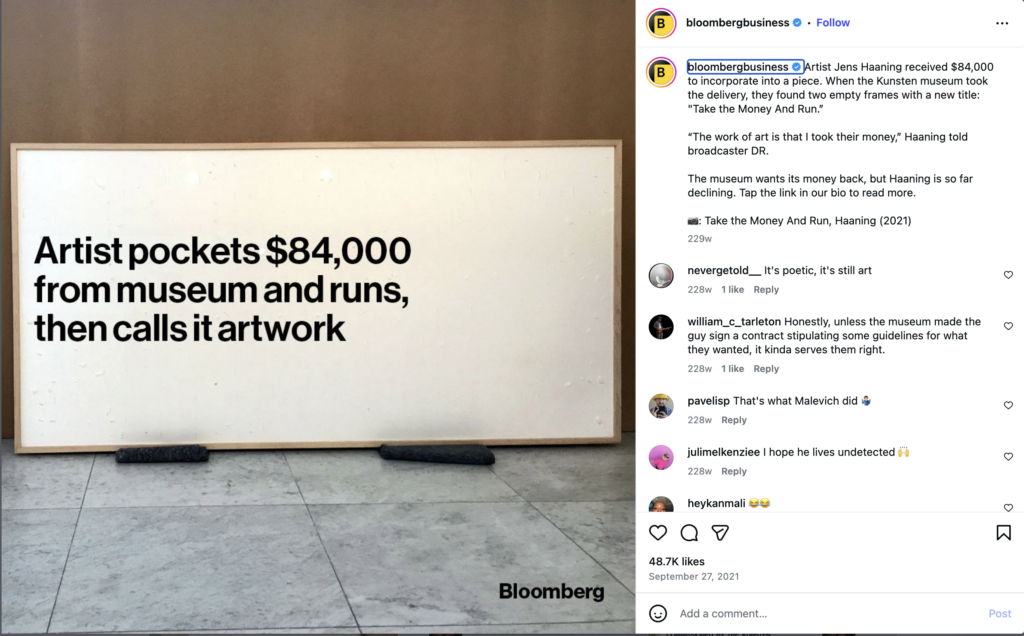
A Danish artist got a commission from a pretty impressive museum, was loaned €77k in cold hard cash to make it happen, then gave the museum two blank canvases titled— you’re not ready for this— Take the Money and Run. The museum wanted a piece that reflected the average working person’s wage, and I guess you could say that Jens Haaning delivered, in a manner of speaking. But like… is this really artistic genius, or just fraud with a pretentious bow tie?
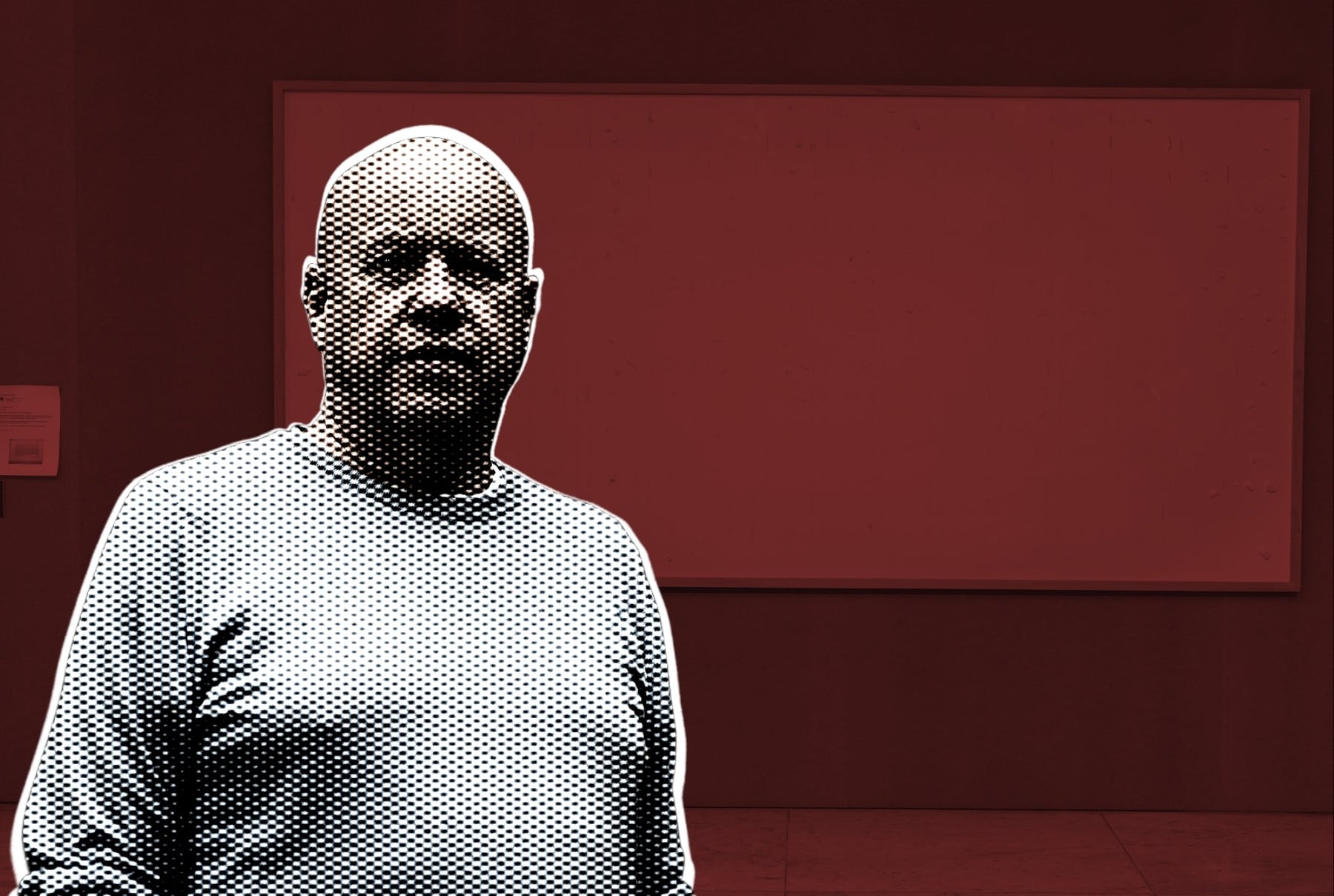
So who exactly is Jens Haaning? This dude’s a Danish conceptual artist who is most well-known for creating art that feels like the kind of math test you don’t want, and can’t study for: art centered around financial reality. He’s famous for using actual money— as in cash— as a medium. His previous pieces showcased the annual incomes of Austria and Denmark using stacks of actual cash, because artists are well known for having plenty of the stuff just laying around. To be honest, he seems to me to be the kind of artist that people mention casually at dinner parties when they want to sound cultured without having to do any actual work.
Which segues nicely to the part of this article where I tell you about why he’s making headlines! The Kunsten Museum of Modern Art in Denmark decided to commission Haaning to recreate some of his money-based works representing average incomes. They loaned him the physical cash to make it possible, roughly 500,000 DKK ( think in the ballpark of $76,500 USD). When it was time for Jens Haaning to deliver the goods? He brought two blank canvases titled Take the Money and Run. The museum said “um, excuse you? Where’s the artwork?” Jens Haaning said “That IS the artwork.” The things I would do for just a skosh of his audacity.
The museum insisted that a contract was signed that stated Haaning would be making specific pieces, not to abscond with the money like some sort of B movie bank robber. Haaning claimed that taking the money and skipping out on the actual work was his artwork, as it was supposedly a commentary on labor and value. Conceptual art… well. It’s in the eye of the beholder, but signed agreements are signed agreements, and contract lawyers make bank for a reason.
The museum took Haaning to court, and after two long years in Danish legal limbo, the court said that he had to pay back the cash. Haaning is only allowed to keep his agreed upon fee and expenses, which is essentially the art world version of splitting the bill, so you would think that he’d take the win and scuttle back to his studio. You’d be wrong, however, because he tried to argue that his stunt benefitted the museum due to the press coverage. In the end, the signed contract was louder than his arguments, and he had to pay back the money.
Look, if you’re going to make provocative artistic statements, you have to at least make it worth the audience’s time and money. Should Haaning need an example, might I humbly suggest that he look to Danish OnlyFans creators? With the models creating content for that particular artistic outlet, you know what you’re paying for, and they deliver actual content. That content is typically pretty explicit in nature, and definitely wouldn’t qualify as a blank canvas, and the buyer walks away satisfied with their investment, generally speaking. Is it a completely different kind of artistic expression? Yeah, maybe. But at least no one is trying to bounce with your cash while insisting that the air you were breathing while entering your credit card info was the product.
So where is the line between art, provocation, and fraud? Well, here’s how I see it. Is using art as provocation ok? Yes. Is using art as contractual insurance ok? Not so much. Blank canvas? Overdone. Blank check? Those are strings, little puppet. Note to museums and galleries: when commissioning art, maybe make sure that the only “blank” thing is the canvas, and not the corporate bank account. And for artists… maybe the “real” art was in the contract we signed along the way.