

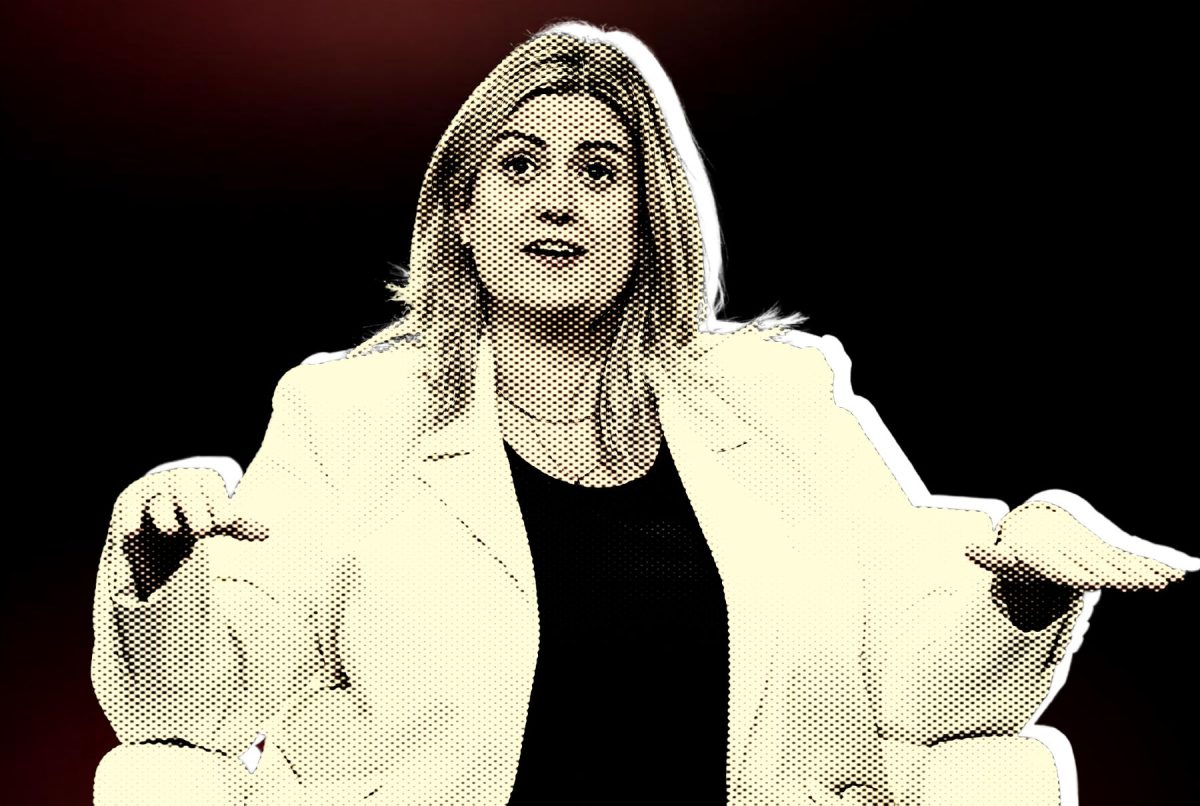
Keily Blair is used to explaining what she does for a living to people who clearly weren’t expecting this answer. “It’s definitely a job when you tell someone at a dinner party what you do, they often go, ‘Oh, okay,'” the OnlyFans CEO said onstage at the Fast Company Innovation Festival. A former privacy lawyer, mother of two, and self-described “massive book nerd” who keeps bees as a hobby, Blair doesn’t fit most people’s mental image of who runs the company best known for explicit content. She’s leaning into that misconception rather than fighting it. “OnlyFans has always been about challenging perceptions,” she said, including perceptions of who the platform is actually for.
Blair has been laying out her core pitch in recent interviews, reframing OnlyFans as something closer to infrastructure than a niche adult platform. She describes it as a tool that lets creators, entrepreneurs, and experts build a direct relationship with an audience and get paid for it, rather than building someone else’s engagement metrics on a platform that owns the relationship. Her argument extends further than you’d think. She’s openly raised the question of whether professionals well outside the traditional creator mold, executives included, should consider building an OnlyFans presence of their own. It may seem like a counterintuitive pitch if you don’t understand the platform’s mechanics: a direct-to-audience payment relationship, with 80 percent of revenue going to the creator, that isn’t inherently tied to any specific content category.
The receipts for that broader pitch are already piling up, and some of them are delightful. Take OnlyMarms. After federal funding cuts threatened a 60-year research project studying yellow-bellied marmots, the scientists behind it started an OnlyFans account posting entirely G-rated wildlife footage and raised more than $150,000 since July, enough to keep the research alive for another year. Blair’s own comparison for what the platform is becoming is a “Shopify for content.” In other words, an infrastructure anyone can plug into, regardless of what they’re actually selling. OnlyFans’ own creator blog has been actively promoting exactly that diversification, spotlighting names like stand-up comic Olivia Stadler, a 2025 “Just for Laughs New Face” who’s also written for “Letterkenny” and “Shoresy,” and actor-comedian Matt Richards, whose credits span Showtime, HBO Max, Starz, and A&E. Blair has also pointed to the platform’s growth from primarily sex workers toward Grammy-nominated musicians, comedians, actors, and athletes as evidence the roster is truly beginning to shift.
It’s simply the latest chapter in a rebrand OnlyFans has been working on for years, including a memorable 2021 reversal when the company briefly announced and then walked back a ban on explicit content within days, after backlash from creators who said the change would gut their income. Founder Tim Stokely admitted at the time the original decision came from banking-partner pressure (something that hasn’t changed in the last five years). OnlyFans has since built out OFTV, a fully safe-for-work streaming arm, and allegedly has plans to expand further into financial services for its creator community.
While Blair thinks OnlyFans can be a great platform for most, she admits it’s not for everyone. “You do have to have, I would say, a certain boldness to be able to be on OnlyFans, whether it’s in a business context or whether it’s in a creator context or in a media context,” she said, “because you have to be able to step into that and own why you’re on the platform.”