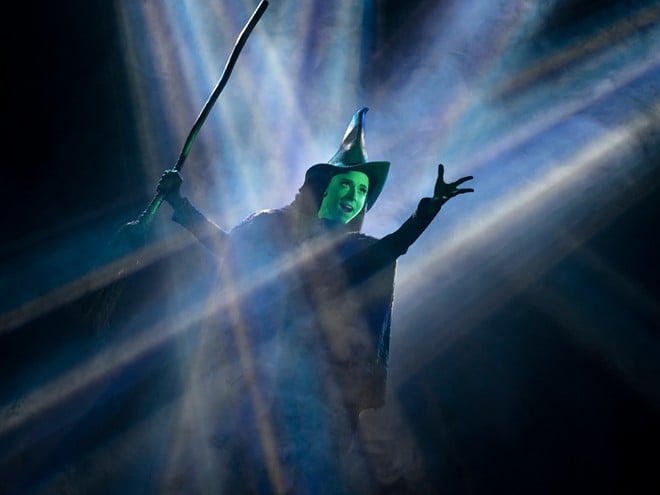
On Tuesday, April 11, Wicked passed another audience favorite, Cats , to become the fourth longest-running musical in Broadway history. On Thursday, an exceptional touring production of the show opened at the Fabulous Fox (527 North Grand Boulevard, 314-534-1111, fabulousfox.com ) giving St. Louis audiences the opportunity to celebrate the inventive, thoroughly entertaining musical.
For those not familiar, the fanciful reimagining of Oz without Dorothy as the main character by Stephen Schwartz and Winnie Holzman provides the origin story of Glinda the Good Witch and Elphaba, the Wicked Witch of the West. The two young women meet at a prestigious high school run by Madame Morrible, a secret consort to the Wizard himself. Familiar plot twists are expertly woven into the new exploration, creating a captivating story arc.
Glinda is popular, wealthy and accustomed to getting her way. Elphaba is green, and accustomed to helping her younger sister Nessarose and enduring the rejection and teasing of others. The two do not instantly hit it off, in fact the dislike is palpable, and the evolution of their friendship is the heart of the story. The handsome bad boy Fiyero, who appears more shallow and less smart than he actually is, complicates their friendship while teaching each witch important lessons.
Jennafer Newberry, as Glinda, and Lissa deGuzman, as Elphaba, fill their characters with distinct personalities without missing a note in the cleverly constructed but often vocally challenging score. Newberry shows Glinda’s heart while making the most of every ditzy, goofy moment, and her misuse of oddly combined words gets laughs without ever demeaning the character. DeGuzman gives us an Elphaba, who occasionally reveals her pain and vulnerability in ways that are compelling and relatable. The performers give us fully formed characters to embrace, and their exceptional vocals were textured, emotional and powerful in every part of their ranges. It is so satisfying to hear rich, pure alto tones that perfectly complement the soprano notes.
Among the supporting cast, Christian Thompson is spot on as the dashing Fiyero, Natalie Venetia Belcon meddles with delightful duplicity as Madame Morrible, and Timothy Shew gives the Wonderful Wizard of Oz a friendly older Midwestern dad vibe that works. Tara Kostmayer, Kyle McArthur and Boise Holmes are also notably crisp, connected to their characters and present. The dancing is sharp and lightly humorous at times, the set and costumes infused with a steampunk aesthetic that works fabulously with the story and period of the original book.
In addition to Glinda and Elphaba, we learn the origins of the Scarecrow, Tin Man and Cowardly Lion. Multiple references create a more fully realized Oz without diluting the original. Everything ties together in a musical that’s suitable for most family members and well deserving of its continuously extended run. The story of Wicked is filled with humor, life lessons and abundant references to the beloved movie and story franchise. The current production at the Fox is quite excellent in every respect — it is, frankly, the best I’ve seen. If you’re a fan of musicals, The Wizard of Oz or Wicked itself, this production should be on your must-see list.
Written by Stephen Schwartz and Winnie Holzman and adapted from the novel by Gregory Maguire. Directed by Joe Mantello. Presented by the Fabulous Fox Theater through Sunday, May 7. Showtimes vary, and tickets are $55 to $249.
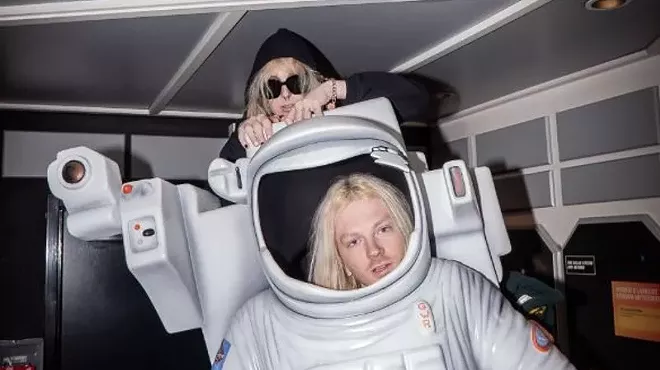
Dylan Brady and Laura Les of 100 gecs got their start in St. Louis.
The first time I heard 100 gecs, I thought it was a joke.
The duo’s music first pummeled my eardrums when I was a junior at Webster University. A staffer at our student newspaper (picture your best liberal arts student stereotype, Dr. Martens boots and all), played me one of 100 gecs’ most popular songs, “money machine.” It began with what sounded like the twangs of a deep-fried banjo, followed by an autotuned voice wailing, “Hey lil piss baby / You think you’re so fucking cool, huh? / You think you’re so fucking tough? / You talk a lot of big game for someone with such a small truck.”
If someone recorded Avril Lavigne on speed after inhaling a helium balloon, that’d be a reasonable approximation of what 100 gecs sounds like. But only if pockmarked by random bleeps and bloops. And dog barks.
I remember nodding politely as the song blared on my friend’s cracked iPhone. She braced for my reaction as I looked at her with furrowed brows; she knew how unhinged it sounded.
The music was cool, I told her, but I wasn’t high enough to enjoy it. I told her anything to politely dismiss the introduction to a band that would eventually change the way I listened to music — just so I could put my earbuds back in and return to listening to Philip Glass, or whatever music I thought I had to like at the time to feel original.
Four years later, that memory reminds me to never be so quick to judge art. The gecs continued to invade various friends’ music libraries. The story of how a gecs concert instantly wiped away one of my best friends’ depressive episodes is a legend among our mutual friends. My vision of 100 gecs changed as time went on. The music transformed from an over-glorified meme to pure genius art. I’m now one of nearly three million monthly gecs listeners on Spotify.
More than the mind-warping music, what baffled me the most about 100 gecs is how the duo became the eccentric pop stars they are now. Dylan Brady and Laura Les, who make up 100 gecs, grew up in the suburbs of St. Louis. Some fellow gecheads don’t believe me when I tell them Les and Brady are from St. Louis and lived in Webster Groves and Kirkwood, respectively — just a few miles away from where I grew up in Crestwood. The inner-ring suburb is one of the sleepiest municipalities in south St. Louis County and is known most for what it used to have: a bustling mall and a drive-in theater along old Route 66.
On the surface, there’s nothing remarkable about these suburbs. Most who grow up there dream of leaving. Young parents move in for the comforting quiet. Strip malls abound. Subdivisions of ranch homes wind through south county like veins. Webster Groves, with its century homes and quaint remnants of the railroad town it once was, has an atmosphere that’s more Mayberry than St. Louis. Less than a 10-minute drive away, Kirkwood isn’t much different.
This sprawling suburbia could not have been a more boring place to grow up. At least, that’s how I felt as a kid raised at the border of west and south St. Louis County. But when I compare county notes with 100 gecs, my description is quickly rebuffed.
“You don’t have to put it down like that!” Les, the band’s lead singer, tells me. “Yeah, St. Louis is great,” says Les’ counterpart, producer Brady.
It was not the response I expected from a duo so wonderfully and wildly weird.
Les and Brady are nothing like the areas in which they were raised. Brady, a Kirkwood High School alumnus, and Les, a graduate of Webster Groves High School, are eccentric and exciting. Their music is erratic and irreverent — a frenzied collage of genres that encompasses everything from nightcore and dubstep to punk and ska. The sound of 100 gecs has been described by Complex as “an anarchic assault on the ears” and “like throwing digital glass into a blender” by Pitchfork.
It takes a lot to describe 100 gecs’s sound, because there’s never been anything like it. After the release of their first album, 1,000 gecs, Brady and Les unwittingly established themselves as the frontrunners of hyperpop. The new, genre-mashing scene is distinguished by a countercultural sound characterized by auto-tuned vocals, quick beats and excessive distortion. But even that description only scratches the surface of a genre that defies norms practically by definition.
It’s the sound of the internet. It’s audio adrenaline that electroshocks the depressed neurons of Gen Z. It’s simultaneously nostalgic for early 2000s pop yet futuristic. It’s glitchy. It’s fun. It’s … not for everyone, that’s for sure.
So how could Kirkwood and Webster Groves, two of the most normie places, cultivate the creative geniuses behind one of the country’s most up-and-coming acts?
It started with dog food, bloodstains, 25 bands and a geccco.
MICHAEL WORFUL
100 gecs music is erratic and irreverent — a frenzied collage of genres that encompasses everything from nightcore and dubstep to punk and ska.
We’re speaking over Zoom from different sides of the country. Les, 28, and Brady, 29, chat from their homes in Los Angeles. I’m in my south St. Louis apartment. Brady says, “Fuck yeah!” when I tell him where I am.
About an hour into our interview, a conversation about St. Louis snowballs into a tangent on local sports teams and former Cardinals first baseman Mark McGwire.
Brady: “They should have let him juice.”
Les: “Me and Dylan have the distinct belief that you should be able to juice in any sport you do. Push your body to the test.”
Brady: “Why not?”
Les: “We’re not the first people to say this.”
Brady: “Won’t be the last.”
Les: “I’ll watch sports again when there’s, like, no holds barred. Let people juice. Make the field twice as big.”
Brady: “Baseball should be scoring as much as basketball.”
Les: “Their game would be over within 30 minutes, and it’d be great. The pitchers just throw balls as fast as they can, and the people batting have to hit and run, and then the next person comes up and tries to hit. There’s no time outs. You don’t have to wait for anything. It’s just …” She claps her hands together in a quick 1, 2, 3.
It’s irreverent sibling-like banter such as this that 100 gecs fans love. It matches their music: quick, uninhibited, fun and all over the place. It’s far from the formulaic predictability of most pop music.
Even so, the gecs never sought to create something so anarchic. Music for Les and Brady began out of curiosity.
Les’ interest in music began in her early teens. Her dad had a huge collection of rock CDs, she says. She listened to Van Halen and Black Sabbath and started experimenting with creating music on her computer in her bedroom. Daft Punk’s second live album, Alive 2007, inspired her to download the free version of Ableton, a music-making software. It was the first time she switched from guitar to keyboard.
The Guitar Center off Watson Road was about three miles away from each of her parent’s houses, and she used to walk there everyday to try different guitars and effects pedals. She went there so often that the store’s employees pooled money and bought her a Line 6 amp.
Music didn’t seem a possibility for Brady until his sophomore year of high school, when a music teacher at Kirkwood High School, David Cannon, urged him to join the choir. Brady shot photos for his school newspaper and wanted to make films, but choir opened up a whole new world.
“I didn’t really feel like I had access to make music or the skills to do it,” Brady says. “I didn’t even want to do it until I took that class.”
Cannon taught thousands of students over three decades (including pop singer Slayyyter) before he retired last year. But even so, when reached by phone one afternoon, Cannon remembers Brady vividly.
He was “quirky, obsessive and funny,” Cannon recalls. After choir, he also convinced Brady to take a class on music theory, which was where Brady’s creativity “really shined.” Despite Brady’s clear talent, Cannon didn’t expect Brady to become as big as he is now.
“I’m hopeful for my students,” Cannon says. “I always told them that if they make it in the music business, great, but that was never my goal for them. I wanted them to be music consumers, to be the ones who might try out an avant garde concert or go to the symphony.”
Whatever fire Cannon’s classes ignited in Brady, it never went out. Brady started producing music for numerous local artists in his late teens. He’d later go on to produce for Charli XCX, Rico Nasty, the Neighbourhood and so many more.
How Les and Brady actually met is something of a debate among gecs fans. They give various answers in different interviews, so the truth is unknown. Did they meet at a rodeo — or a house party?
Les tells me the latter. “Dylan was playing tracks, and I was like, ‘Wow, that dude is super duper good at music,’” she says. “‘I have to go home and be better at music.’”
Even more ambiguous is the origin of 100 gecs’ name. In an interview with Rolling Stone, Les said she accidentally ordered 100 geckos online, when she meant to order one. In other interviews, the duo said they saw “100 gecs” spray-painted on a wall outside of Les’ dorm room in Chicago.
The name actually derives from Les’ social security number, she tells me, and she’s surprised fans haven’t figured it out already.
“It’s actually huge for me to be admitting this,” Les says. “You’re getting the exclusive on that one.”
The quick delivery of her answer makes me think she’s only half joking. Then she does my job for me and comes up with a fake headline: “‘Riverfront Times Exclusive: Leaking Laura’s Fucking Social Security Number.’”
“That’s an epic cover,” Brady responds.
“Let the hunt begin,” Les says.
MICHAEL WORFUL
Laura Les of 100 gecs says the band name derives from her social security number.
By the time 100 gecs formed in 2015, Brady and Les were in different places musically. Les was producing high-pitched electronic music under the moniker osno1 on Soundcloud and Bandcamp. Brady was more known as hip-hop producer Lil Bando at the time. That year, he released his debut solo album, All I Ever Wanted, to critical acclaim. The album featured a moody mix of slow and syrupy tracks that a former RFT music critic praised while describing Brady’s generous use of autotune as “a crutch.” (Autotune would later become a 100 gecs staple.)
Les moved to Chicago for college while Brady stayed in St. Louis, but the two kept in touch. They grew closer as they texted each other what they were working on and what they were listening to.
Gecs’ first EP, the eponymously titled 100 gecs, was a product of what they were listening to on a drive from St. Louis to Chicago — Skrillex and Diplo’s collab album, Jack Ü, and DJ S3RL. They recorded the EP in Les’ dorm room in a week.
Released in 2016, 100 gecs embodies the band’s sound even seven years later, and demonstrates how Brady and Les have made a career out of turning seemingly banal topics into headbangable anthems. Take “dog food,” and “bloodstains.” The tracks’ lyrics seem completely random, making it impossible to decipher their meaning, if there is any. But the pace of both songs, the over-processed vocals, the random noises infused in each, are quintessential 100 gecs.
The song “25 bands and a geccco” has lyrics that include: “I’ve got 25 cans of the pesto / And I’ve got 25 mans but they’re dead though,” along with 12 seconds of dog barks, each bark pitched to a different note to compose a melody.
Brady and Les didn’t blow up until two years later with the release of their first album, 1,000 gecs. By then, Brady had moved to Los Angeles. Les was working in a coffee shop to make rent. She quit soon after the album was released.
“I definitely didn’t think that anything I did would break,” Les says. “[I was] just trying to have fun.”
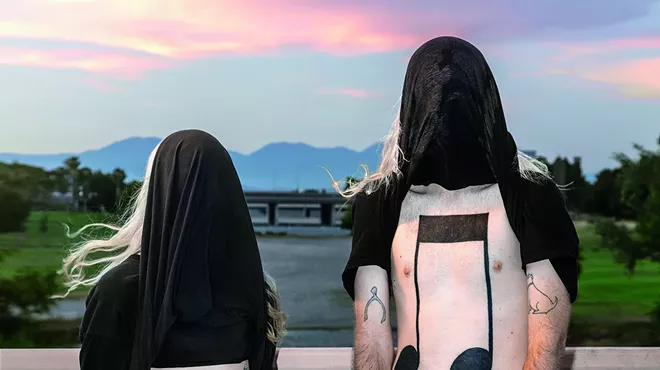
The album catapulted them from Soundcloud to the mainstream. New York Times critics Jon Caramanica and Jon Pareles ranked 1,000 gecs in each of their Top 10 albums of 2019. The album’s cover featured a photograph of Les and Brady facing a pine tree at dusk with their backs to the camera. The gecs’ cult-like following of fans started traveling to that tree, designating it as a “place of worship” on Google maps open from 7:45 a.m. to 4:20 p.m. As a result of these “pilgrimages to gecca,” this random tree in an office park in Des Plaines, Illinois, has been adorned with Yu-Gi-Oh! cards, pregnancy tests, a plunger, a hula hoop and naked dolls hung by their necks on the trees’ branches.
Critics kept trying to figure the gecs out. Where did they come from? What were they? What about their music works? But trying to explain 100 gecs or reduce them to a succinct and accurate description is fruitless — and beside the point.
“We want people to have a good time,” Les says. “We’re pop musicians. We’re not trying to make you break your brain trying to pick apart everything. We just ultimately want everybody to enjoy the listen, whether it’s at a show or listening to the album.”
It’s not like they are trying to be one thing, either. Last month, Les and Brady released a new album, 10,000 gecs, an alt-rock follow-up to their freshman effort.
Skeptics question how much of what 100 gecs does is intentional. Are they geniuses or wayward anarchists? Surely anyone who thinks to rhyme “mosquitos” with “Danny DeVito” has put some thought into their music. There’s also the matter of their perfectionism. 10,000 gecs comprises only 10 tracks selected from more than 4,000 demos (“none of them good enough,” according to Brady) after four years of production.
When I interview 100 gecs, I ask all the wrong questions. I wanted to figure out a way to box them into a succinct and accurate description. Hyperloop? Nightcore? Audio jet fuel? So I ask them what genre they’d ascribe to themselves. It doesn’t result in a real answer.
Brady responds with “alternative pop … whatever Apple Music says.”
“Two friends, having fun, throwing spaghetti on the wall,” Les says.
It wasn’t until weeks later, after talking to the gecs’ old friends and scrubbing through old Soundcloud pages and Reddit threads, that I truly started to understand 100 gecs.
MICHAEL WORFUL
100 gecs’ first EP was inspired by the Skrillex and Diplo colab Jack Ü and DJ S3RL.
Around 2014 in St. Louis, a ragtag group of young hip-hop, jazz, rap and pop artists started their own community, the Hella 314 Collective. Their performances were scantily attended. Their audience was not much more than a few hundred listeners on Soundcloud.
They didn’t care about notoriety, though. That wasn’t what they were there for. It wasn’t really about the music, either. It was about spending time with one another.
“We were hanging out together every single day,” rapper Robel Ketema says. “Shows on shows on shows, nonstop work.”
Each member of the group had a connection to some other member. For the most part, they all went to south county schools: Kirkwood, Lindbergh, Webster Groves.
How the group formed depends on who you ask. But all the artists’ stories lead to Brady, who produced some, if not most, of each artist’s music throughout the years.
Brady and Ketema made their first song together in Brady’s family’s basement in 2010. Ketema couldn’t remember what they called it. The experience was what he took away.
“After the first song we made together, I just knew it,” Ketema says of Brady’s musical promise. “There was no doubt in my mind at any point.”
Several of the artists in the Hella 314 Collective still make music together. They make up the experimental pop band Cake Pop. The group formed in 2015 and made an entire self-titled EP in one night, according to Ketema. They did close to the same thing for Cake Pop 2, the band’s first album, released in 2021 (though this album was created at the relatively leisurely pace of two days).
Creating music wasn’t a task for them, Ketema says. It was pure creative expression; something fun for them to do during the long and empty days of summer.
“You see that type of freedom and fun with 100 gecs now,” Ketema says. “It’s never stopped being fun for them. I feel like that’s what people love most about them.”
Back in its St. Louis days, the Hella 314 Collective all hung out in Brady and rapper Cali Cartier’s dorm rooms at Webster University (Brady studied audio engineering until he got “kicked out of the major” for having bad grades, he says). They’d freestyle and record whatever sounded best.
“It was a very creative and competitive environment that helped all of us become better artists,” says Kevin Bedford, a rapper now based in Los Angeles.
They all used to fantasize about the future, according to Lewis Grant, a long-time Brady collaborator and friend since the seventh grade.
“I kind of always knew that some, if not all, of us were going to make it to the main stage,” Grant says.
He wasn’t wrong. Brady and Les have made it larger than they ever would have thought. Other members — Ravenna Golden, Tonina Saputo, Pritty — have all paved music careers in their own right.
Back then, the possibility was palpable, Grant says. They were just messing around, taking themselves seriously while not at the same time. They were late teens and early 20-somethings having fun and working on themselves as much as they were discovering music during those freestyle jam sessions in dorm rooms. Still, it wasn’t all accidental. Something pulled them forward like an invisible rope. And while they laughed and pounded down energy drinks and cigs, listening to nightcore and experimental pop, a desire to be heard outside the dorm room walls and small concert venues sped their momentum forward.
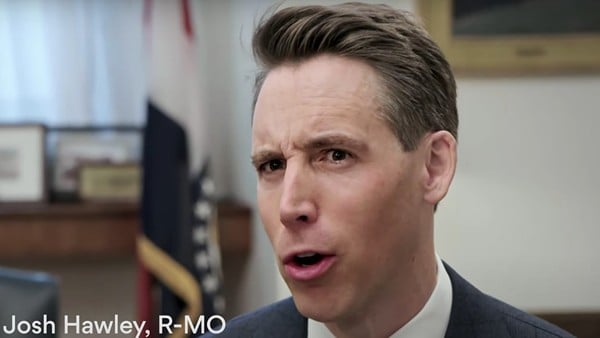
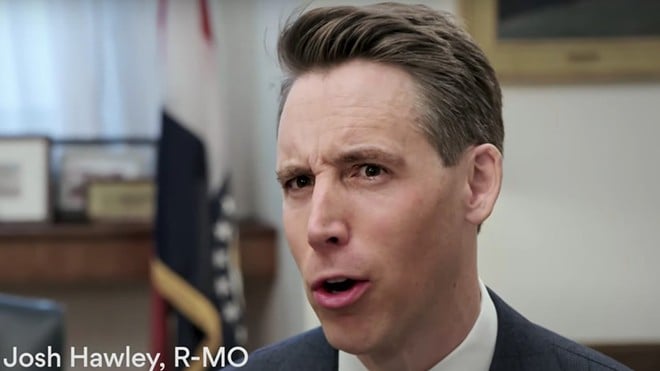
Missourians are pretty evenly split on their opinions of Senator Josh Hawley. Just as many, if not more, voters view him unfavorably as favorably, according to a copy of a memo from Change Research obtained by the RFT .
The San Francisco-based polling firm compiled data from 1,267 Missouri voters, 43 percent of whom said they viewed the Republican senator unfavorably. Forty-two percent said they viewed him favorably.
That’s even with the poll being weighted to account for 2020 presidential votes. (Its stated margin of error is 3 percent.) In other words, measuring the same Missouri voters who gave then-President Trump 56.8 percent of the vote, just 42 percent like Hawley.
“Intensely negative sentiment is building towards the Senator as 39 percent hold strongly unfavorable views of him compared to just 26 percent who are strongly favorable,” the memo reads.
Not surprisingly, only 1 percent of Democrats in the poll rated Hawley favorably. However, the poll also found that 54 percent of Independents and 24 percent of Republicans do not view him favorably either.
“Hawley is particularly unpopular with women overall, college graduates, in the St. Louis and Kansas City metro areas, young voters, Independents, and non white voters,” the memo says.
St. Louis City is the strongest base of Hawley disdain in the state, where he is viewed favorably by only 29 percent of respondents. In St. Louis County, that number rises to 42 percent. In the Kansas City metropolitan area, 31 percent of respondents view the senator favorably.
According to the poll, Hawley’s strongest support is in southeast Missouri, where 56 percent of respondents gave Hawley a favorable rating, as opposed to 24 percent who said they viewed him unfavorably.
The poll was conducted online from January 26-31. According to the memo, the results from the 1,267 sample size were adjusted for “age, gender, education, ethnicity, region, and 2020 presidential vote to reflect the distribution of voters statewide.”
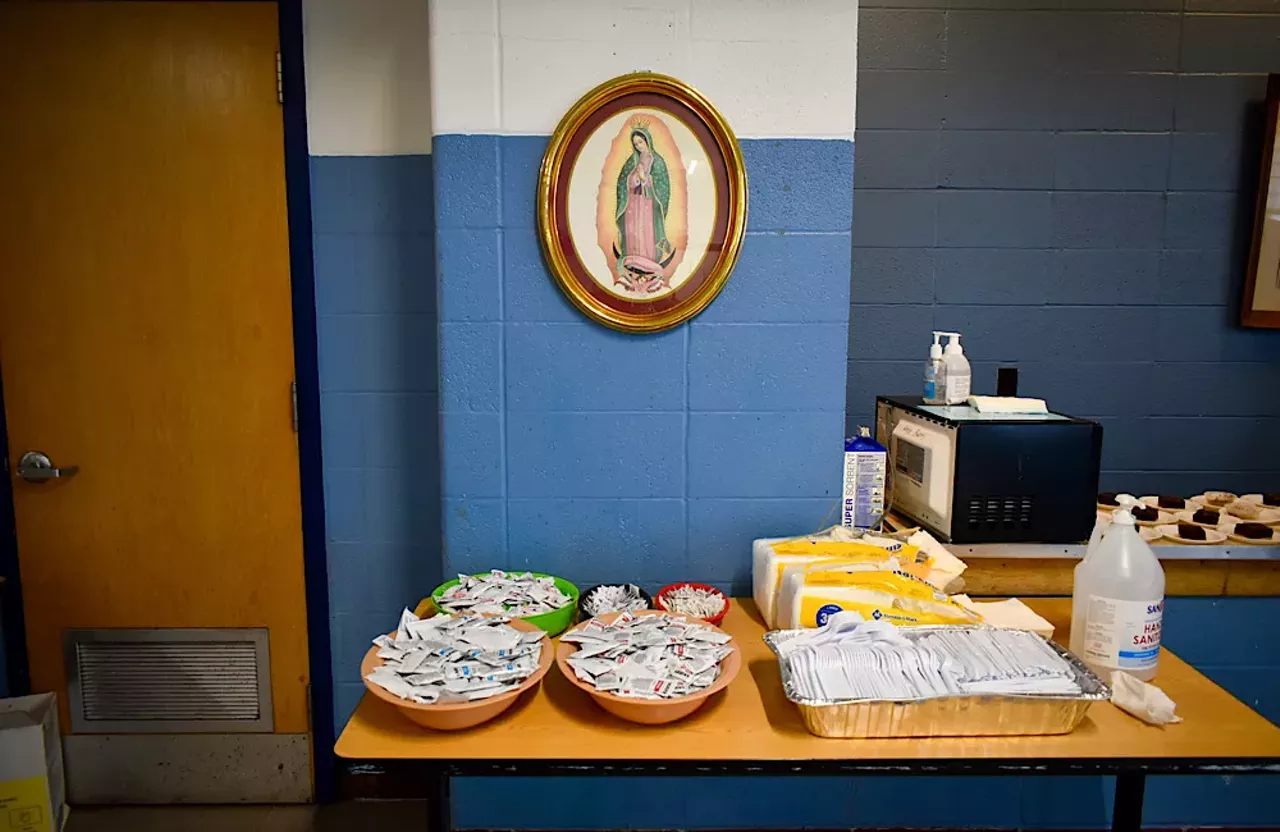
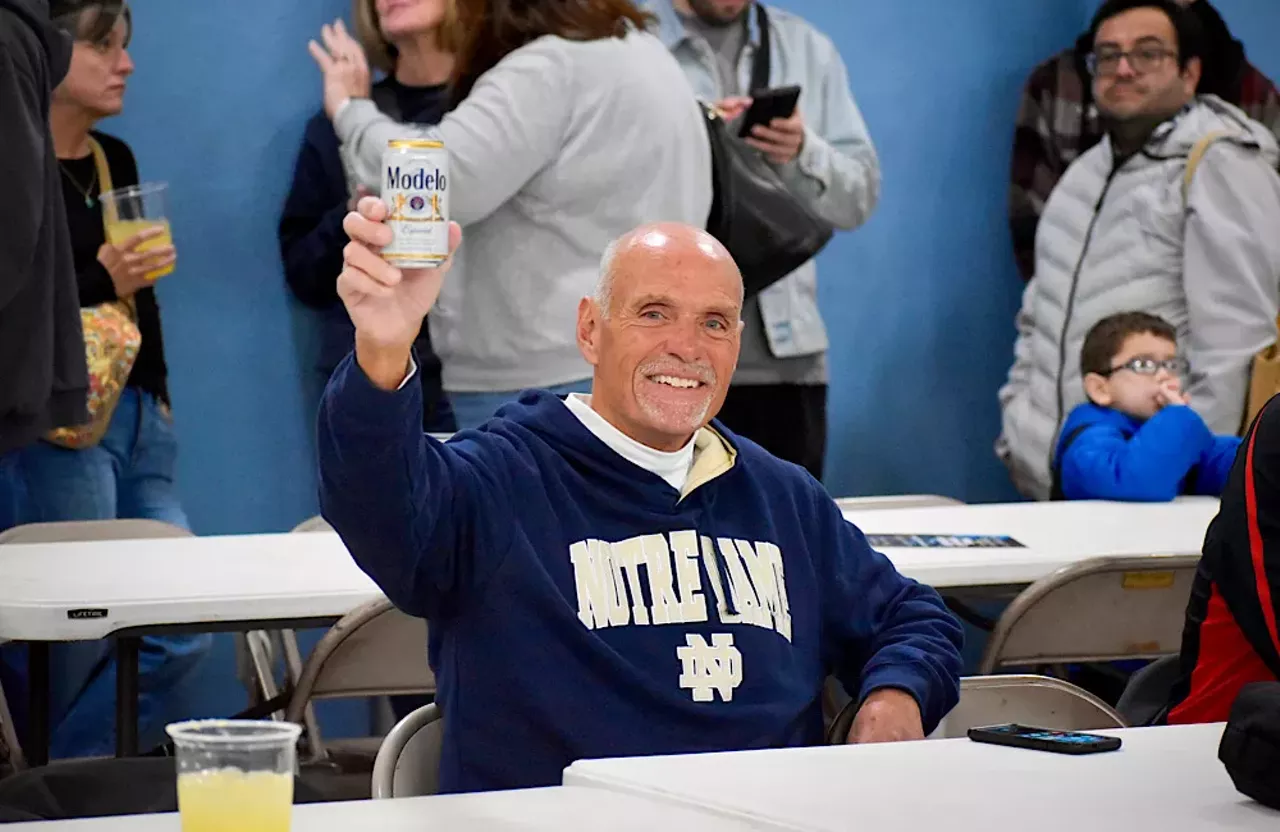
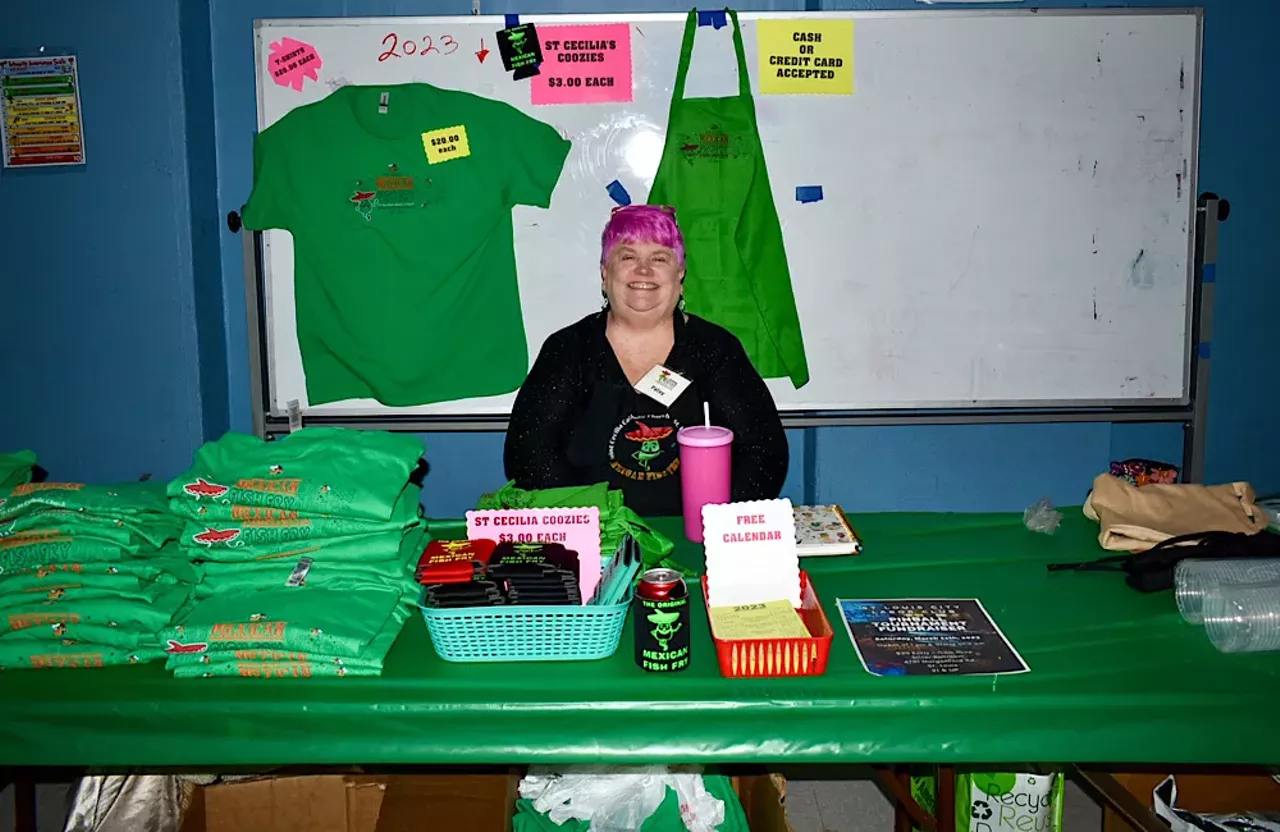
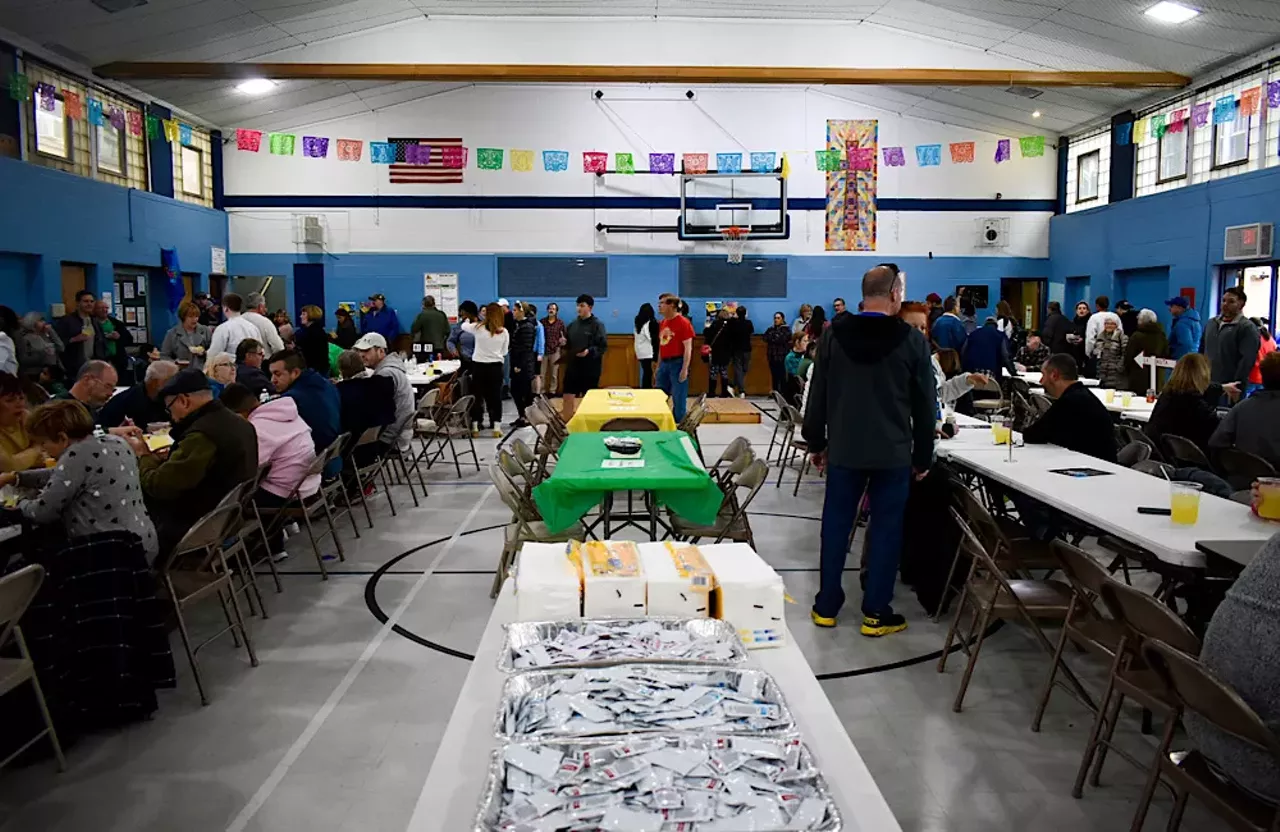
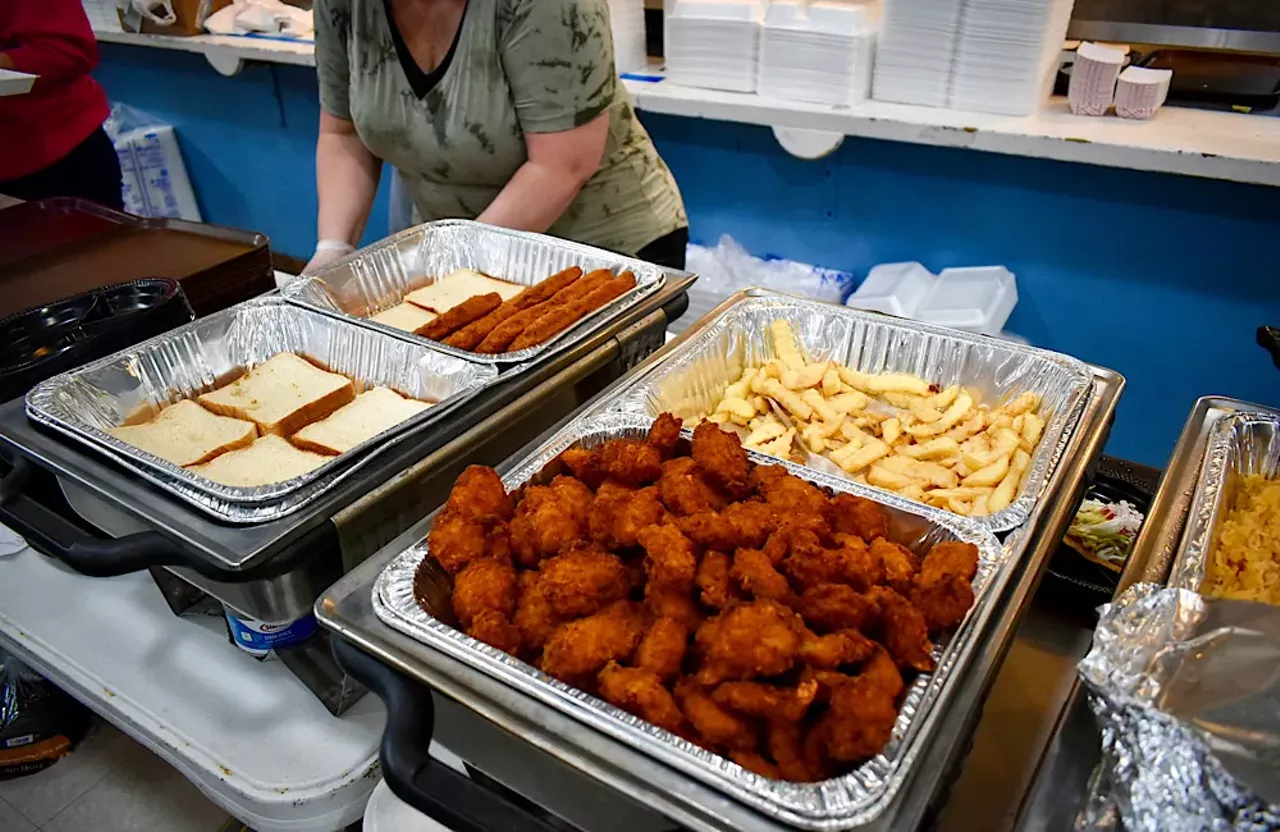
St. Louis has no shortage of incredible fish fry options, but one of the most unique places to enjoy this Lenten tradition is at the school at St. Cecilia’s Catholic Church (906 Eichelberger Street).
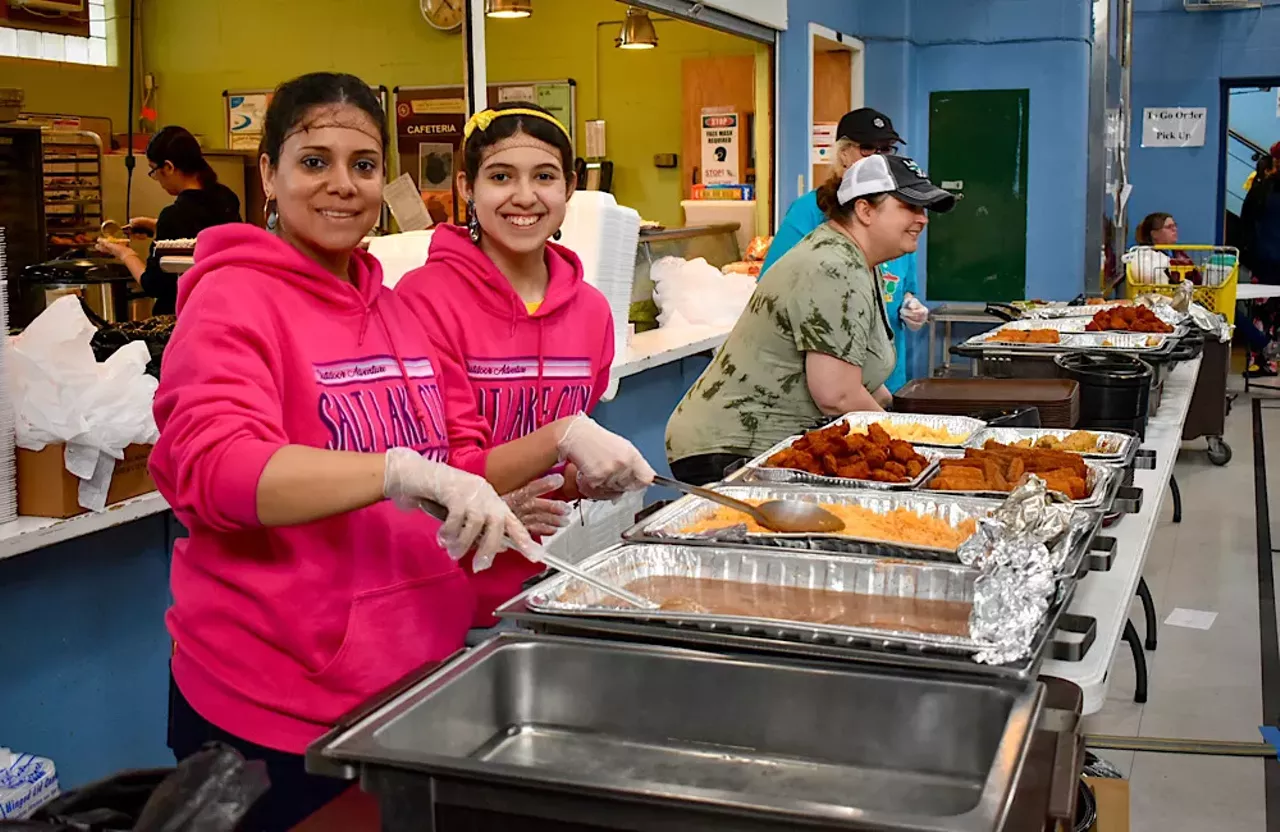
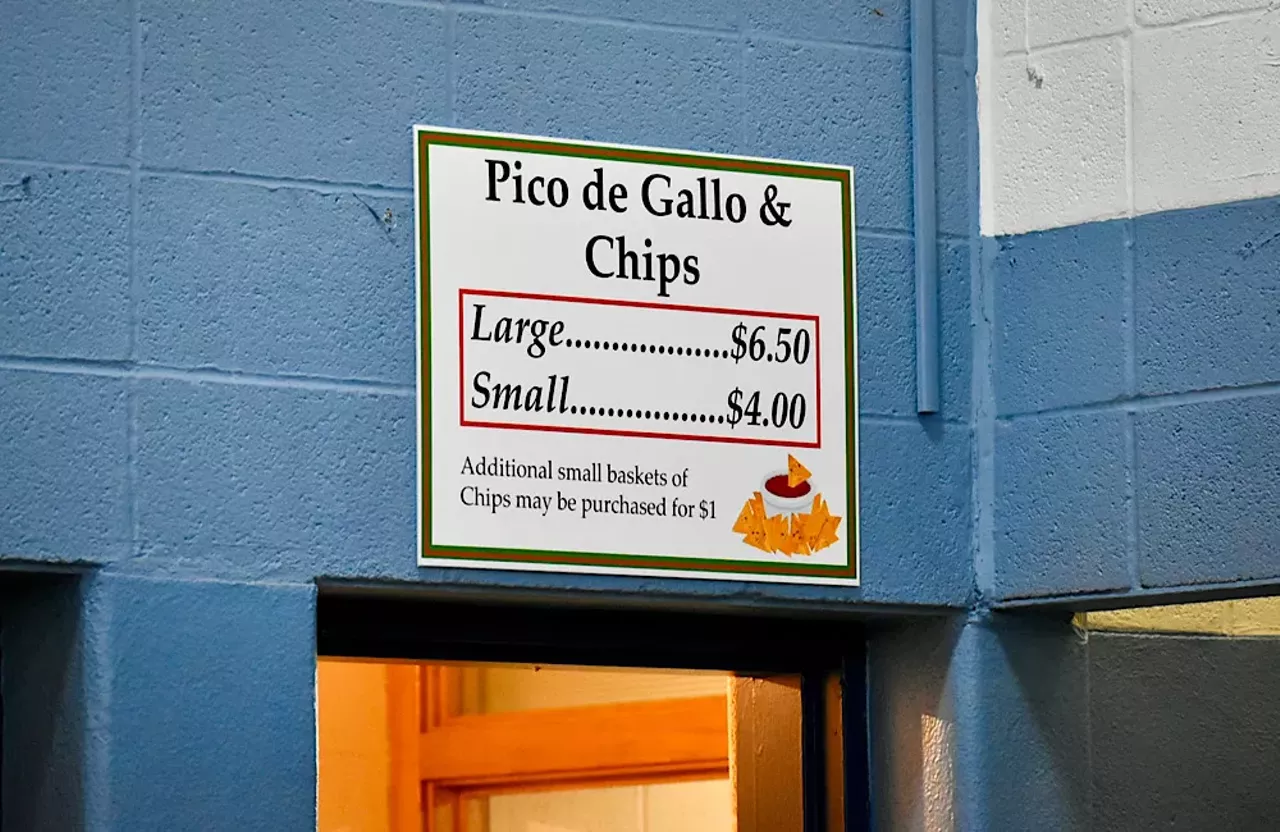
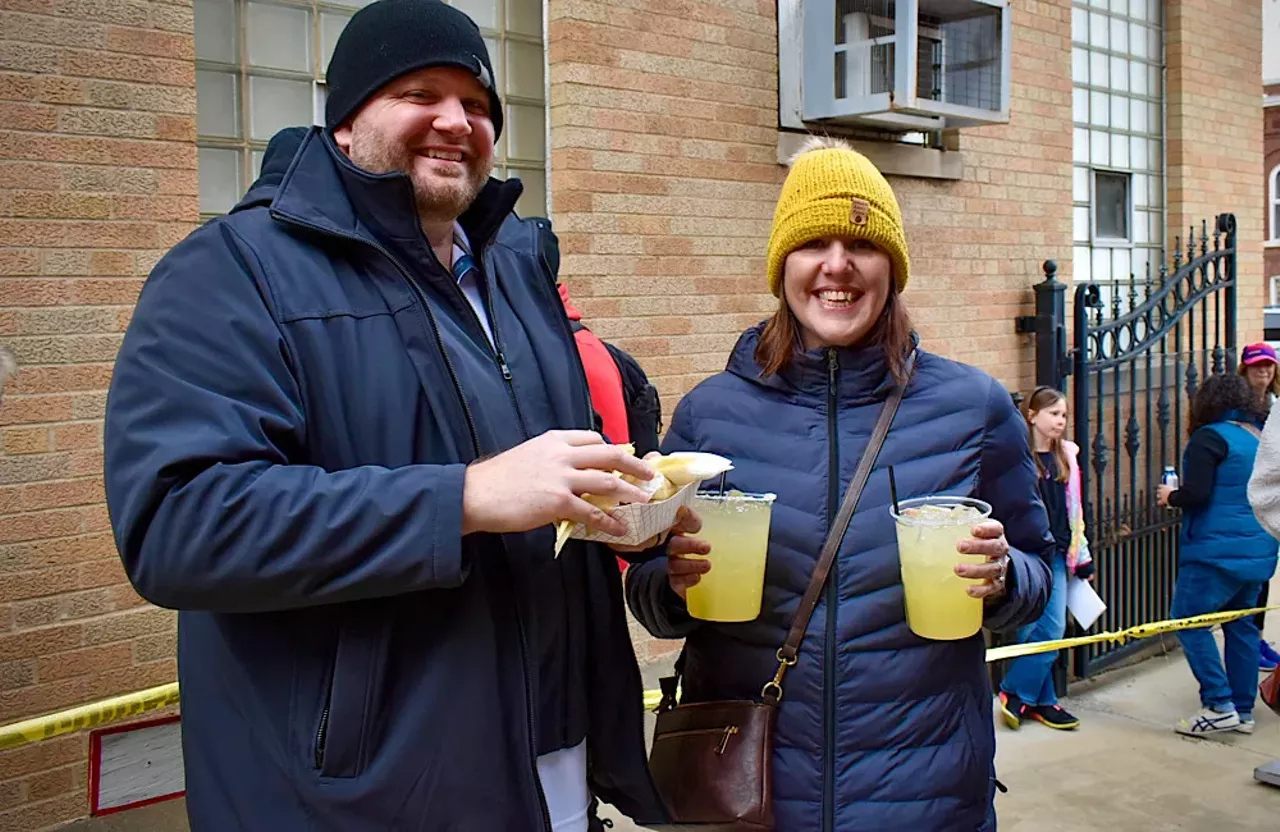
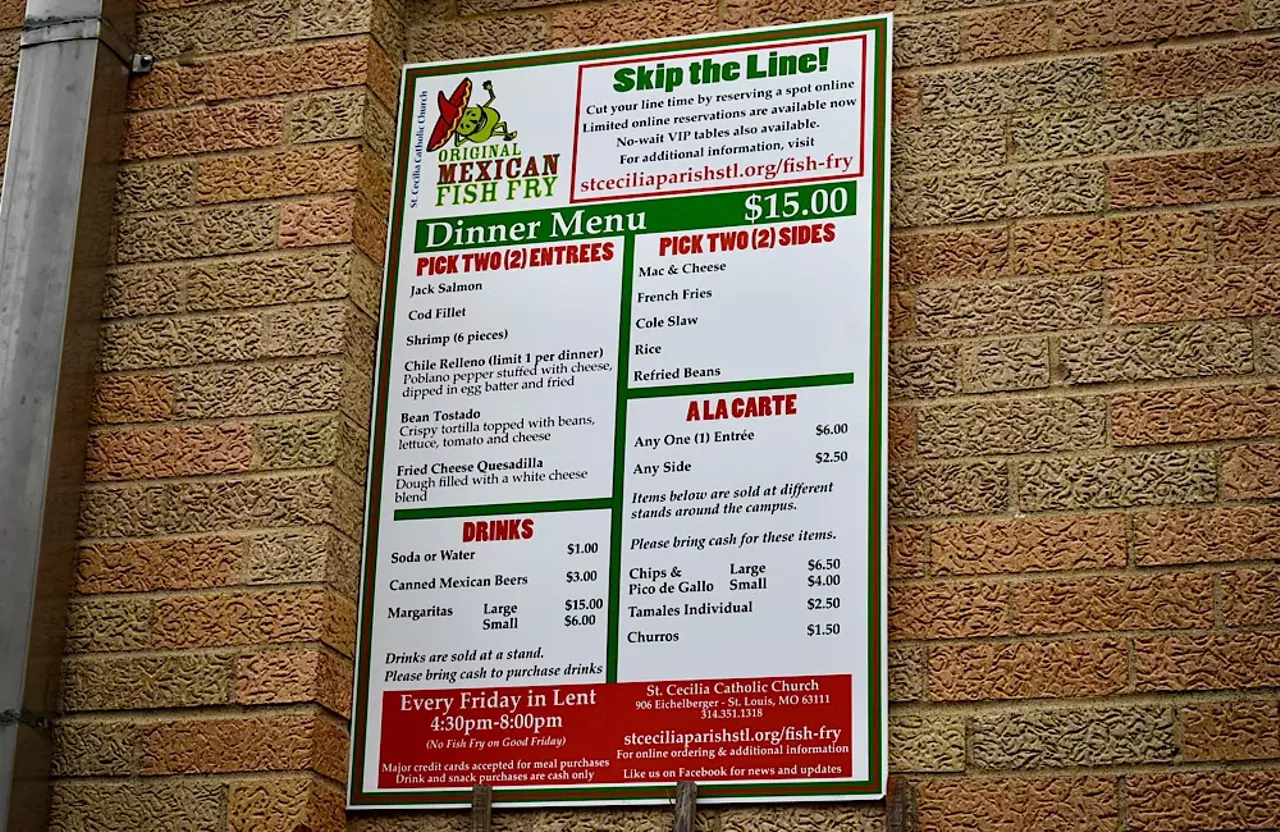
Back after a three year hiatus, this “Original Mexican Fish Fry” offers delicious meals inspired by Mexican recipes including chile relleno, fried cheese quesadillas, pastries and flavorful fried fish.
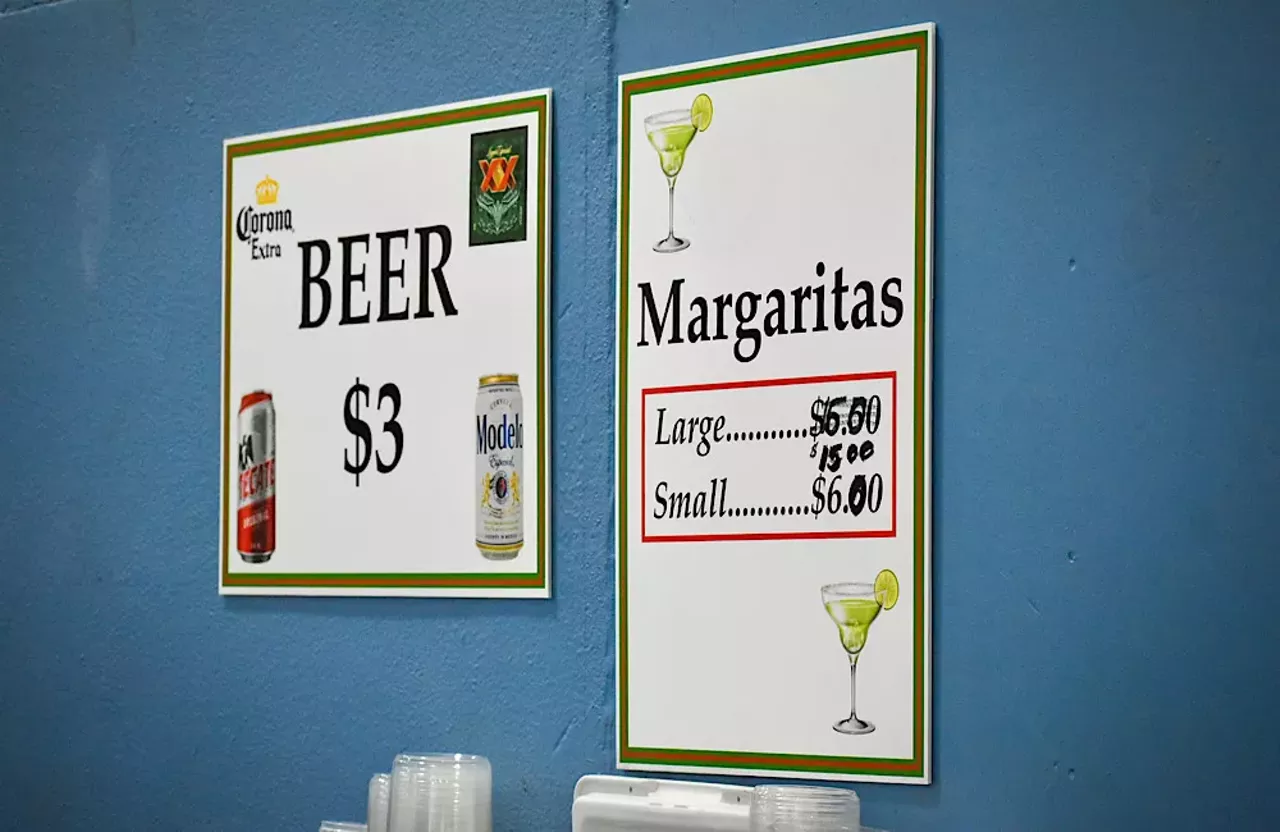
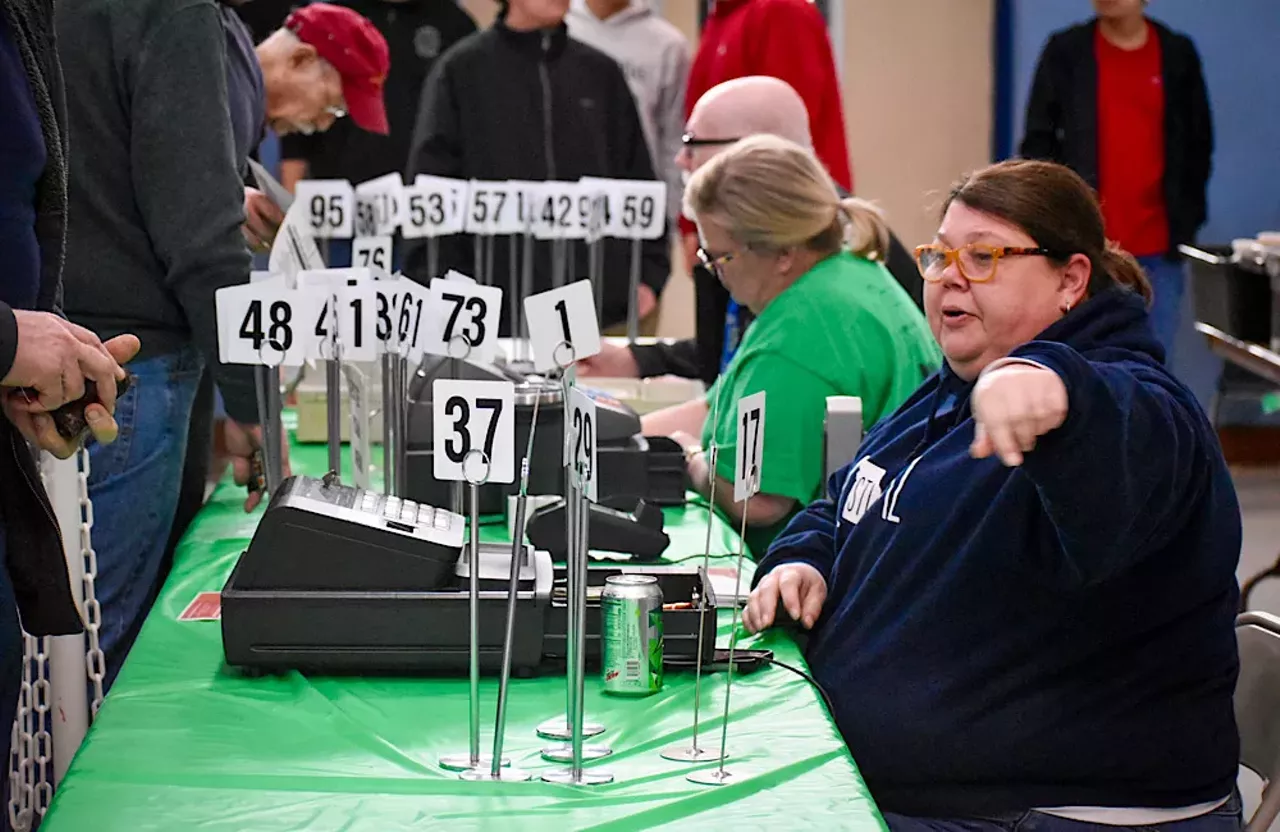
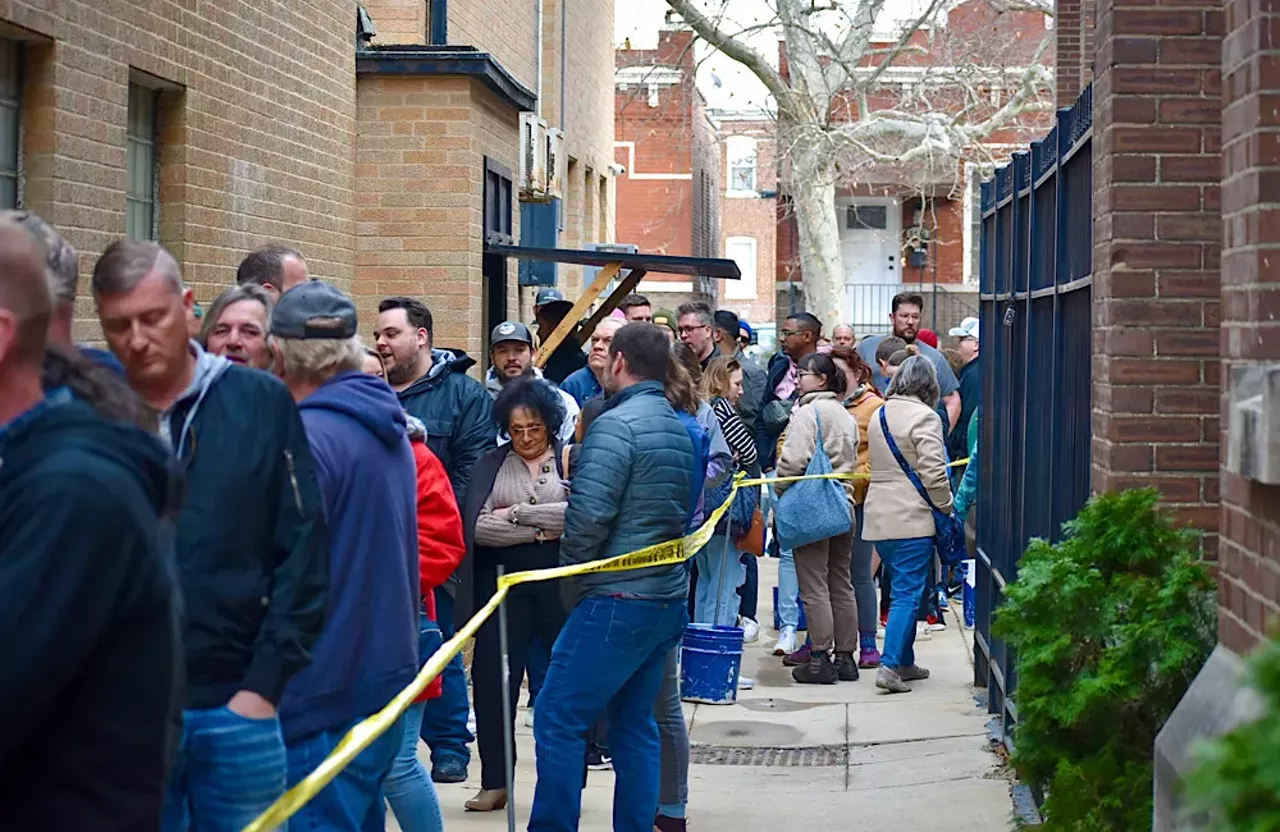
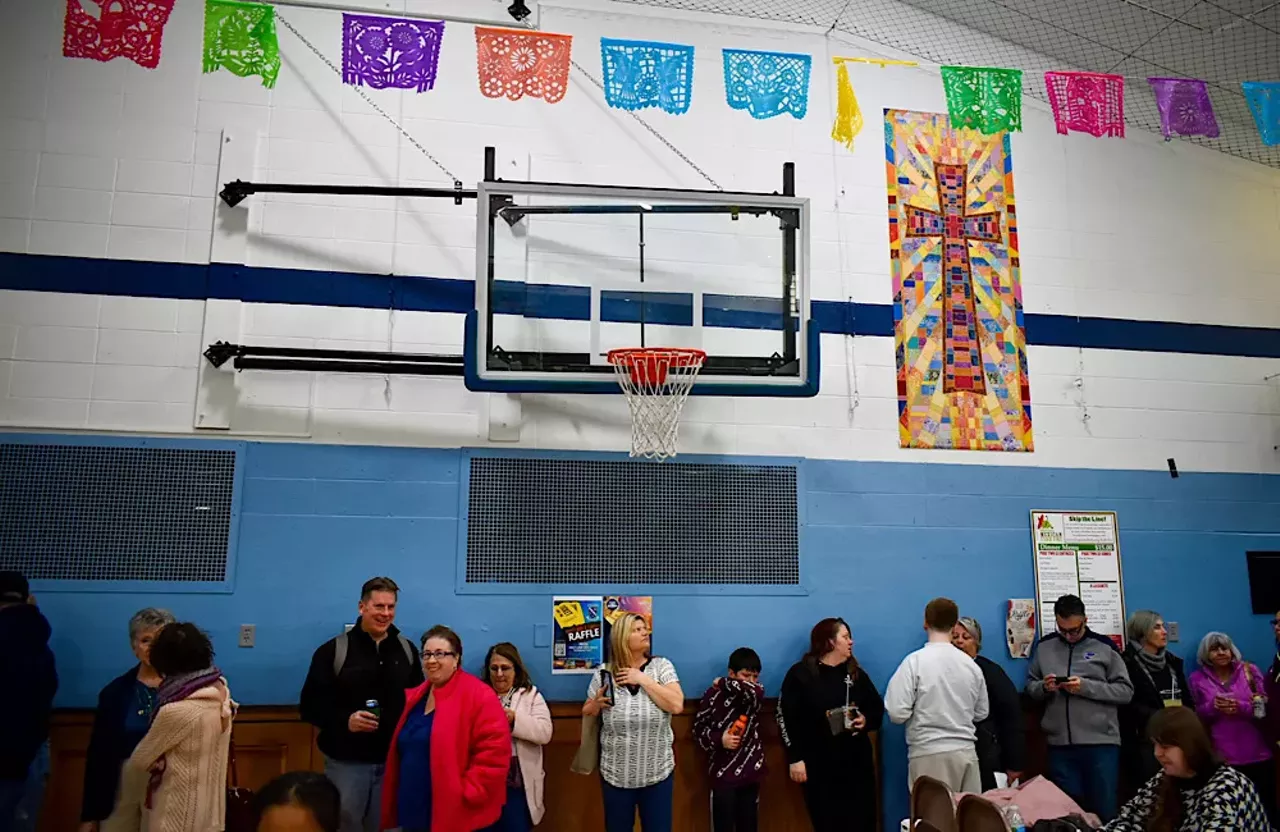
The line for food is almost always a two hour wait — but that is part of the experience at St. Cecilia’s. Margarita and tamale vendors walk the line to make sure guests are well supplied, and live entertainment is provided. Traditional dancers twirl colorful dresses, and machetes slice through the air, offering one of the best dinnertime shows in the area.
St. Cecilia’s fish fry is open every Friday in Lent, except for Good Friday, from 4:30 p.m. to 8 p.m. They also offer online ordering options.





![St. Cecilia’s Fish Fry Offers Dinner and a Show [PHOTOS]](https://www.riverfronttimes.com/wp-content/uploads/2025/04/img-2901.webp)