Search results for: “/"”

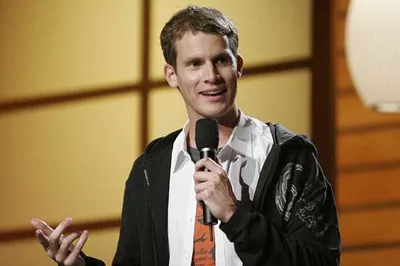
  • Last Night: Stand-Up Comic Daniel Tosh at the Pageant

    Last Night: Stand-Up Comic Daniel Tosh at the Pageant

    The line for Daniel Tosh’s show Saturday at the Pageant snaked around the building, dangerously close to the back parking lot, so it was no surprise that virtually every seat was filled for the comic’s show.

    A diverse crowd encompassing teens to 40-somethings packed the house Saturday night. Opening act Matt Fulchiron warmed up the crowd. Fulchiron’s dry one-liners felt more about hype (“I should write this joke on a deposit slip, because it’s money!”) than much else. It’s not that he was bad, his jokes just seemed like appetizers to the main course — a course he never delivered. You don’t give a fuck, we get it.

    Read an interview with Daniel Tosh

    After an opener that seemed way too long, Daniel Tosh came out. He slowly walked to center stage and adjusted everything the way an OCD person might have. An awkward ten minutes followed in which he bashfully seemed to tell jokes off the top of his head. One joke being, “I’m really not that good live, sorry.”

    A few nervous chuckles followed from audience members hoping that it really was a joke. He then announced, “Don’t worry we’ll start in a second.” He then went full swing into his act making that first ten minutes a distant memory. Daniel Tosh can be summed up in one word: brutallyhonest.


    Last Night: Stand-Up Comic Daniel Tosh at the Pageant

    Tosh promotional photo

    More than once he donned a huge smile and defended himself against the shocked laughter that followed a joke. “What? I’m just telling the truth,” could make for a fitting T-shirt slogan for him.

    His brand of humor was delivered with the precision of an heart surgeon. At certain instances even stopping to explain jokes that might’ve gone over the head of people oblivious to his obscure references. This only made the jokes funnier.

    Nothing is sacred to Daniel Tosh. Jokes about conservatives were followed with liberals getting equal lampooning. If there was a joke at your neighbor’s expense you could only imagine that it was your turn next.

    Tosh’s repertoire features such taboo subjects as child death, abortion, and rape (yes, rape) and he makes light of them in a way that only he could pull off. Audible groans were quickly drowned out or converted to laughter. His animated delivery, visual style only added more laughter.

    Addressing the death of Heath Ledger, Tosh said, “He will be missed forever…until the sequel! It will be called Weekend with Batman.”

    Tosh displayed his sharp wit when an audience member yelled out, “I love you, Daniel!” during a brief silence. Tosh replied without missing a beat, “I have little-to-no feelings for you” and later when the same woman yelled out again, he quickly replied, “Stop talking forever!” and went on a tangent about people who feel the need to yell during awkward silences that made the audience roar with laughter.

    Tosh injected a little bit of regional humor in his act when he said, “Is everything in this town arched?” referring to the Pageant’s stage set-up behind him. He also wondered aloud if the Clydesdales were going to be taught how to goose step since Anheuser-Busch was going to be owned by a European company.

    Perhaps the most shocking thing Tosh said all evening was that he actually spent some of his childhood in St. Louis attending Crestwood Elementary and Sperring Middle School in Sappington.

    Tosh ended the evening with some older material and with some new jokes that he had written down in notes. Although he received a standing ovation, Tosh didn’t go out for an encore. He had already made sure to tell people beforehand that his allotted time had ended and he was going to keep telling jokes. Before he left the stage he announced he would be outside for pictures and to talk, a gesture more common after shows at smaller comedy clubs.

    Rob Ruzicka

  • The Unsolved Murder of Ernie Brasier: A Clayton attorney’s death nearly two years ago continues to mystify police and colleagues

    Just after 10 p.m. on December 19, 2006, the pot-bellied corpse of Ernest F. Brasier arrived at the St. Louis County morgue. Brasier had been working late at his office in Clayton, and police said he appeared to have suffered a heart attack. Surveying the body, a coroner’s investigator noticed a wound above the 57-year-old lawyer’s left ear.

    Obscured by Brasier’s gray hair, the wound turned out to be a tiny hole, just three millimeters wide. Investigator Joe Lebb ordered an X-ray, which revealed a bullet lodged in Brasier’s brain.

    “It was not until the body came here that it was evident it was a gunshot wound,” says St. Louis County Chief Medical Examiner Mary Case. She declined to say what caliber of bullet was found, as that information remains part of the Clayton Police Department’s ongoing investigation into Brasier’s murder.

    That same Tuesday night in December, police noted a small amount of blood on the desk and the office floor. Case says they presumed that Brasier struck his head as he collapsed. “The officer at the scene did not see anything suspicious.”

    A janitor found Brasier’s body shortly before 7 p.m. Two minutes later, Clayton police received a “man down” call and quickly converged on the Guild Building at 7912 Bonhomme Avenue, a block south of police headquarters.

    Police told Brasier’s law partners that he’d had a heart attack, but Lebb soon informed Brasier’s coworkers of the police’s mistake. In a sparse, routine incident report at 10:21 that night, police listed the death a homicide.

    Dr. Case issued a full autopsy report on Brasier the following afternoon. By then, two dozen detectives with the county’s Major Case Squad had descended on the firm, Boggs, Boggs & Bates, and fanned out to interview friends and family.

    “They were interested to know if he had any skeletons in his closet,” recalls Martin Hadican, Brasier’s longtime golf buddy. Detectives visited Hadican, a criminal-defense lawyer in Clayton, on two occasions.

    Skeletons? Not Ernie, Hadican told police. “He was just a good person.”

    To this day, the murder remains unsolved and police will not say whether they have a suspect or motive. Captain Kevin Murphy, who heads the investigation, keeps a prayer card from Brasier’s funeral Mass on his desk. It is a daily reminder of his duty to solve the case.

    Brasier was a civil litigator representing insurance companies. “I never worried about Ernie getting hurt – not in insurance defense,” his widow, Pat Holtmeier, says. “How much more boring can you get?”

    On the evening Brasier was killed, Holtmeier didn’t notice that it was past 7 p.m. and her husband had not yet come home. She remembers standing in her kitchen, chatting with her 26-year-old daughter and a friend about making Christmas cookies.

    The two young women had just left to shop for ingredients when Holtmeier, who uses her maiden name, heard a knock at the door. Beth Boggs, the managing partner at Brasier’s firm, was standing on the front porch, along with her husband, Darin Boggs, and two uniformed police officers.

    “He’s dead, Pat, he’s dead.” Holtmeier recalls Beth Boggs telling her. “She said he had a heart attack.”

    Relatives and friends rushed to the house in Town & Country where Holtmeier and her three children grieved. Later in the night, a longtime neighbor, Cheryl Cova, offered to help Holtmeier make arrangements to retrieve the body of the man she’d been married to just ten days shy of 30 years.

    Slipping into the master bedroom, Cova placed what she figured would be a routine call to the coroner – that is, until the man who answered the phone told her, “There’s a problem. I found a bullet in his head.” Then, Cova remembers the man asking her, “Would you tell his wife?”


    The portraits that line Pat Holtmeier’s dining room walls and snapshots covering the refrigerator tell the story of her life with Ernie Brasier. In one black-and-white picture, a young, dark-haired Brasier sits at a barroom table with his arm around his tall, blond wife. In almost every frame, Brasier grins and looks at the camera with dark brown, puppy-like eyes.

    Brasier’s mother-in-law used to say that he was cut out for the priesthood. “He was just good as gold, very patient,” Holtmeier says.

    Brasier grew up in Robertsville, Missouri, and graduated from the University of Missouri’s law school in 1974. After finishing Army Reserve duty at Fort Sam Houston, Texas, he started his practice in San Antonio, concentrating for the most part on immigration law.

    Much to his new bride’s frustration, Brasier wasn’t terribly diligent about billing clients. Holtmeier recalls him saying, “Oh Pat, they just don’t have the money.”

     In San Antonio, Brasier was trying to learn Spanish and would spend time with nuns who were serving a poor Mexican-American community. Holtmeier remembers: “He was very fond of this one particular nun, who said to him: ‘Ernie, before you can take care of anybody else, you have to take care of yourself.’”

     Eventually, Brasier’s law career helped put his daughter and two sons through Catholic prep schools. But, explains Holtmeier, “Anyone who knew Ernie knew he wasn’t motivated by money. If it were up to him, we’d live in a tent.”

    Holtmeier, 59, found success as a part-owner of a nurses’ staffing agency. She says Brasier encouraged her career. “He was the most unchauvinistic man I ever met.” Keeping her maiden name, she adds, “seemed to bother everybody but Ernie.”

     The couple moved to St. Louis in the 1980s, and Brasier devoted himself to his growing family. His life revolved around St. Clement of Rome, where his children went to school.

    Brasier volunteered for all the kids’ school activities – Indian Princess with Kelly, Boy Scouts with Jeff and Zach. He coached soccer on the tiny field next to the church parking lot.

     Brasier’s professional life moved along smoothly, until he was abruptly fired from a national insurance company, The Hartford, in 2003. He’d worked in the company’s downtown St. Louis office as in-house counsel for about two years. “He just couldn’t believe it,” Holtmeier says.

    Holtmeier speculates that Brasier’s boss didn’t appreciate his unhurried manner. “Ernie is slow and deliberate in what he says,” she explains. One coworker, Holtmeier remembers Brasier telling her, complained that he took too long to get his point across.

    The termination shattered Brasier’s ego. “He was so beaten down,” Holtmeier says. “He was destroyed.” Brasier reached out to colleagues, who pointed him toward Beth Boggs, who hired him right away. “He just took something quickly.”

    Working at Boggs, Boggs & Bates was a more high-pressure environment than he’d experienced before. After the firm named Brasier as a partner, Holtmeier says her husband was told he would have to increase his billing to 50 hours a week or take a pay cut.

    Brasier strained to keep up. Many of his cases were based in southern Illinois. Holtmeier would sometimes ride along in his blue BMW convertible to keep him company. “He’d be dictating and driving, and trying to get all this stuff done,” she says. “That billing consumed him.”

     The week before he was killed, Brasier brought his wife a dozen long-stemmed roses. It was to celebrate the news that the firm was putting him in charge of a new client, the Fireman’s Fund. He wouldn’t have to sweat the 50 hours of billable work each week, Holtmeier says. “What it really translated to was that Ernie wasn’t going to have to work so hard.”


    Gretta Treiber reported for work shortly after 8 a.m. the day after the murder. Walking through the front doors of the Guild Building, the young secretary was surprised to find one of the law partners, Mark Bates, standing sentry.

    Bates told her that Brasier was dead and that Beth Boggs wanted everyone to stop in at the first-floor conference room. “I go in there, and there are like a half a dozen cops,” Treiber recalls.

    Treiber sat at a desk right outside the third-floor office where Brasier was killed. “My alibi was rock-solid,” she says. She was working at her second job, a Hollywood Video store.

    The Guild Building in downtown Clayton is a utilitarian-looking, four-story structure, adorned with relief elements of muscled laborers. Inside, dingy tan carpet covers the narrow hallways that lead to various law offices, located behind windowless doors.

    Listing 23 partners and associates, the Boggs firm takes up the fourth floor, as well as two-thirds of the third floor, where Braiser’s office overlooked Bonhomme Avenue. The firm’s name – now Boggs, Avellino, Lach & Boggs – is spelled out in tall letters over double doors that lead to the office suites.

    “Usually, Ernie and I were the last two to leave at night,” says Jeffry Thomsen, a senior attorney who retired in 2007. Thomsen left at 5:30 that December evening. It was raining when he stepped out the back door and onto the parking lot. “If someone specifically wanted to kill Ernie,” he still wonders, “why wouldn’t they just wait until he went out to his car, and hide in the lot, instead of taking the chance of being seen in the building?”

    Frank Anzalone, a criminal defender on the second floor, was visiting with a client in his office at around 6:30 p.m. the night of the murder. “We didn’t hear anything,” he remembers.

    Then, shortly before 7 p.m., the janitor, an older man whom Anzalone calls “the reverend,” came in to his office. He looked worried. He said a lawyer was laying on the floor upstairs. An attorney who worked in Anzalone’s office grabbed his cell phone and went with the janitor to take a closer look.

    Brasier lay on his belly. His head and shoulders were under the desk, and his legs stuck out in full view. He didn’t breathe or move. “It was pretty silent,” says the lawyer, who assumed Brasier suffered a heart attack. He immediately called 911. The lawyer asked that his name not be used for fear of drawing the killer’s attention. “There’s a weirdo out there.”

    At the Boggs firm, a fearful and suspicious atmosphere lingered for months, Thomsen says. “Everybody still thought, ‘Maybe the murderer is sitting next to me, or maybe they’re going to come back.’”

    Brasier wasn’t shot in his own office. He was one door down, using a computer in the office his colleague Dan Bennett left vacant after taking a leave of absence that September. Thomsen remembers Bennett saying he felt burned out. “He was going to go down to Central America with his son and open a bar.”

    Bennett spent less than a year at the Boggs firm, and in that time his personal problems became obvious. Fellow attorney say he would pace around the parking lot and scream into his cell phone. Bennett’s wife, Sharon Cliffe, filed for a legal separation in October 2006, while he was in Costa Rica.

    Bennett was due back at work in mid-December, but didn’t return. Some lawyers gossiped that he had gambling debts and speculated that a professional hit man was looking for him. Cliffe vigorously denies the allegation. “There was no gambling debt,” she says. “I don’t even know who started that.”

    Bennett, who died in September 2007, didn’t fit the buttoned-down lawyer mold. He started law school in his late 30s, after an eighteen-year military career. He hung out in blue-collar bars. Tattoos covered his forearms.

     Clayton detectives interviewed Bennett as soon as he returned to St. Louis, early in 2007, Cliffe says. They asked Bennett whether the killer might have been looking for him, she says. Bennett told them no.

    Bennett remained separated from his wife. Never returning to the Boggs firm, he took by-the-case work from a lawyer downtown. He spent his evenings at Wagner’s Sports Bar, a smoke-filled watering hole in the gritty southern tip of St. Louis.

    Then in September 2007, Bennett didn’t show up at Wagner’s for a few days. The Post-Dispatch reported that a drinking buddy found him dead in his apartment on West Courtois Street.

    Cliffe says she’s aware that many people wonder whether her husband’s death was somehow connected to Brasier’s. An autopsy showed that Bennett died of heart disease at the age of 48. “Life brought some changes for us,” says Cliffe, a 52-year-old schoolteacher. “Unfortunately, it ended with him dying. It’s just that simple.”


    The noise of her barking dogs rousedNancy Quackenbush out of a deep sleep in the wee hours of December 20, 2006. Two detectives with the county’s Major Case Squad were at her door. They wasted no time in finding the lawyer who’d been fired from Boggs, Boggs & Bates that October.

    Quackenbush has cropped brown hair and fingernails bitten to the quick. Chain-smoking over a lunch of Chinese food, she recalls standing outside her home in Maryland Heights in sweats, and shivering in the cold as detectives told her that Brasier was dead from a gunshot wound. “I started shaking and crying,” she says.

    Brasier had been her confidant at the firm, and they would take long walks together at lunchtime. Quackenbush says she told the detectives, “I loved that man!”

    Detectives thought Quackenbush might be a jilted lover. But she told them, “If you knew Ernie, you’d know how stupid that was.” She let police search her car for the receipts that would show she’d been out running errands the evening of the murder.

    Later that same day, Quackenbush recalls getting a phone call from yet another detective. “Did I know anything about an anonymous memo accusing the firm of billing fraud?” After Quackenbush departed in mid-October, Beth Boggs became the target of anonymous complaints about her billing. First, some of the firm’s insurance-company clients received a letter that claimed, according to people familiar with the matter, that Boggs logged as many as 400 hours in a single month.

    Then in December 2006, after Brasier died, the Office of Chief Disciplinary Counsel in Jefferson City notified Boggs that it had received a similar letter.

    Quackenbush denies that she’s the source of the letters.

    Brasier’s widow, though, says she’s often wondered whether they came from her husband. “If he saw something dishonest,” Pat Holtmeier says, “I will tell you, he’d turn me in.”

    Treiber, the former secretary, says, “I know he didn’t agree with Beth’s billing practices.” Boggs had a policy of reviewing all attorneys’ correspondence before secretaries sent it out on letterhead. Brasier would type quick, routine letters himself, Treiber says. “He would hand-write at the bottom, ‘You were not billed for this letter.’”

    Beth Boggs declined Riverfront Times‘ request for an interview. Instead, her media representative, Geri Dreiling, coordinated the firm’s response via e-mail. The firm flatly denies that Boggs overcharged clients, stating, “There was no finding of overbilling.”

    The ethics complaint resulted in a “letter of admonition” to Beth Boggs on March 17, 2008. Signed by Cheryl Walker, a St. Louis attorney appointed to the local disciplinary committee, the letter says there was “reasonable cause” to believe that Boggs violated Supreme Court Rule 4-8.4(c), which prohibits “conduct involving dishonesty, fraud, deceit, or misrepresentation.” Specifically, the letter says, the infraction was “a result of your billing clients under your name for work done by other attorneys in your office.”

    “The matter was fully investigated with Beth’s complete cooperation,” states an e-mail sent through Dreiling. The firm’s e-mail adds that an “issue” related to “an antiquated billing system” has been fixed, and reiterates, “There was no finding of overbilling.”

     Lawyers know Beth Boggs as an aggressive marketer who keeps a tight rein on day-to-day business. At one point, ex-employees say, attorneys weren’t allowed to have individual e-mail accounts. John Cooney, a Clayton lawyer who also does insurance work, says he hears stories from Boggs’ alumni. “She runs that place with an iron fist.”

    In the wake of Brasier’s murder, Boggs hired Scott Rosenblum, a prominent criminal defense lawyer. The firm explains, again via e-mail, that the purpose of hiring outside counsel was to “coordinate all requests for information” from police. The firm stressed that it retained Rosenblum only after the Major Case Squad had finished its work.

    Thomsen says he wanted no part of the plan. “I wanted to cooperate freely with the police,” he says. “I think it made it more difficult for the police to do it on Beth’s schedule, rather than theirs. It might have slowed things up for them.”

    Brasier’s killing, meanwhile, took an emotional toll on Boggs’ employees. Treiber went to work the day after the murder planning to have lunch with Brasier, attorney Jamie McCune and Brasier’s secretary, Mary Dalton. She’d even brought Brasier a Christmas gift, a DVD of Good Night, and Good Luck., the movie about broadcast journalist Edward R. Murrow. “Ernie was so cool,” she says.

    When she learned that Brasier had been shot in the head, Treiber says, “I lost my mind. I was crying. I couldn’t handle it.”

    She returned to work the next day, but started crying again at the sight of fingerprint dust on the door frame to Bennett’s office. “Beth yelled at me in front of three or four other people,” she recalls. “If I couldn’t pull myself together, I should just go home.”

    The Boggs firm submits, via e-mail, that it was not at all insensitive. In fact, the firm allowed workers to stay home as long as necessary. They also hired a grief counselor and security guards who would escort people to their cars. Computers were purchased for attorneys who didn’t already have them at home, so they could spend less time in the office after hours. “The firm,” states the e-mail, “attempted to deal with employees’ needs as comprehensively as possible.”

    Treiber left the firm in April 2007 and says she doesn’t hold a grudge against her former boss. “Beth is a good person. She’s just extremely difficult to have a professional relationship with. She gets carried away.”


    Vince Venker, another of Brasier’s associates, did not answer his cell phone on Saturday, August 9, 2008. The next day, his friend Iggy Yuan says, a cousin found him in bed at his apartment.

    Yuan and others close to the 51-year-old lawyer assume he died of natural causes. But Brasier’s widow wondered publicly how two of her husband’s colleagues could turn up dead in a year’s time. In a widely disseminated Post-Dispatch article, Holtmeier said, “There’s something crazy going on at that law firm. It’s almost like a John Grisham novel.”

    Thomsen, the retired Boggs attorney, says he too found Venker’s death troubling. “It’s too much coincidence, I think.”

    Venker came from a big Catholic family, which has run St. Louis-based Barnard Stamp for four generations. The line at his wake extended out the door of Assumption Catholic Church. “That was a good tribute to Vince,” says Yuan, a friend since law school at Saint Louis University.

    Venker’s friends say he was smart – he finished college in three years – and sociable. It was his drinking, they say, that finally pushed his wife to file for divorce, finalized in June 2007.


    At his son’s high school graduation party this year, Venker seemed to be his usual self, Yuan says. He was rail-thin and had a cigarette in his hand. For that, Yuan reminisces, “I was giving him grief, always.”

    Yuan is one of the Kirkwood City Council members who escaped troubled resident Cookie Thornton’s shooting rampage in February. After the Kirkwood ordeal, Yuan and Venker talked again about the senseless nature of Brasier’s murder. “There was no motive,” Yuan says. “People do crazy things for money. There was no money involved. Why would he do it?”

    At first, police leaned hard on Venker. He was the last to leave the third floor that night, and he owned a .22-caliber gun. “I think they even took him into custody for a bit,” Thomsen says. “He was real shaken up by that.”

    Captain Murphy will say nothing about what significance, if any, Venker had in the case. The Monday following Venker’s death, Murphy visited Holtmeier at the Kumon Math and Reading center that she owns in west St. Louis County.

    The police captain has visited Brasier’s widow several times since the murder. “He just came to tell me about it, which was a very nice courtesy once again, so that I wouldn’t read about it in the paper,” Holtmeier says.

    Venker’s death stirred up Holtmeier’s anxiety. She began to worry that the investigation was stalled, and police were giving up. Frantic, she called Murphy the next day and told him, “You cannot let the death of this wonderful man just drop. You cannot!”

    Murphy maintained his usual professional silence. Still agitated, Holtmeier drove to Clayton, and demanded that Boggs let her see the office where her husband was killed. She wanted to know: “Ernie, did you see the person? Or did they come behind you?”

    Holtmeier saw that the office was being used to store shoes, which the firm collects for needy children. Reality settled in. “I asked a couple of questions. Then I left,” she says. “Sometimes I just blow my gasket.”

    Dark circles surround Holtmeier’s bright blue eyes. She now avoids Mass because it carries too many reminders of Ernie. “It sends me to tears,” she says. Instead, she sits on the memorial bench that some of his friends bought and placed outside St. Clement’s prayer chapel. “I ask God, Why? Why? Why?”

    Answers are not forthcoming. “I’ve been telling myself to be patient,” Holtmeier says. “There’s this part of you that just has to know.”

  • Cheesesteak Quest: Can Ian find a decent Philly cheesesteak in St. Louis? Yes, he can!

    Could I find a reasonably authentic Philly cheesesteak in St. Louis? The task, inspired last summer by a reader, didn’t seem impossible. For all its many, messy virtues, a Philly cheesesteak isn’t beef Wellington. Its two main components are meat, about which we here in the Midwest know a little something, and cheese of questionable provenance, about which we here in St. Louis know a helluva lot.

    The reader — one Aaron Proctor — was seeking true Philadelphia soul: “Who is the STL champion of cheesesteaks? I’m talking a place that may have other Philly goodies like Herr’s Potato Chips & Tastykakes. A place where I can order ‘wit’ out onions’ and ‘wit’ wiz’ and they’ll know what I’m sayin’.”

    I grew up in Baltimore, a three-hour drive from Philadelphia, and have fond memories of Herr’s potato chips, Tastykakes and grease-bomb cheesesteaks from Larry’s, “Home of the Belly Filler,” a joint just outside the campus of St. Joe’s University. I haven’t been to Philly in years, though. So while I empathized with Aaron Proctor’s wishes, I knew I couldn’t set the bar that high. A reasonably authentic cheesesteak — with Cheez Whiz or even provolone, wrapped in or served atop paper rapidly turning translucent with golden grease — would do.

    Thus, on Gut Check, Riverfront Times‘ food blog (blogs.riverfronttimes.com/gutcheck), Cheesesteak Quest began.

    There were a few close calls. Penn Station East Coast Subs, a Cincinnati-based chain, turns out a pretty good cheesesteak: thinly sliced steak, provolone, a freshly baked roll. The cheesesteak at the Natural Fact Deli in Webster Groves strays far from orthodoxy — pepperjack cheese, the steak cut very thick — but on its own merits it’s a tasty sandwich.

    There was one unmitigated disaster: Sonic’s “Extra-Long Bacon Cheddar Cheesesteak” compounded the sin of using cheddar cheese by adding mayo — mayo! — and wasted perfectly acceptable strips of bacon on a sandwich that otherwise resembled a dessicated turd.

    I grew discouraged. There must be something intrinsically Philadelphian about a Philly cheesesteak that can’t be captured elsewhere. Maybe it was something in the air. (Let’s hope not.) Maybe it was all those decades of pent-up Phillies-Eagles-Flyers-76ers rage channeled into the chopping and blending of meat and cheese and onion on a hot flattop. Whatever the reason, after the Sonic debacle, I retired Cheesesteak Quest.

    A few years ago Mike Risk, a twelve-year veteran of Trattoria Marcella, visited Philadelphia for a soccer game featuring Manchester United. (For the non-soccer fans: Man. U. is the rest of the world’s New York Yankees.) While in the city, Risk ate cheesesteaks. A lot of cheesesteaks. He tried Philly’s most famous cheesesteak joints, like Pat’s and Geno’s. He liked Geno’s the best and thought he could make something similar. Risk offered his own Philly cheesesteaks to friends at fantasy-baseball drafts and other informal get-togethers, and the response was overwhelmingly positive.

    Risk continued to work at Trattoria Marcella, but he also did consulting work for his old friend Brian Tracy at the Mack Bar & Grill on Macklind Avenue. Risk also consulted with Tracy on 9th Street Deli, which opened last year at Ninth and Shenandoah Avenue on the southeast corner of Pontiac Park in Soulard.

    “I really liked the whole concept [of the deli],” Risk told me over the phone. “I really fell in love with it.”

    A few months ago, wanting a change of pace from his work at Trattoria Marcella and to have more time with his family, Risk made 9th Street Deli his full-time occupation. (He, Tracy and John Been Jr. are the owners.)

    9th Street Deli is a single room, small but with high ceilings and large windows that give it a pleasant, open feel. There is seating for about two dozen, including a few tables along the sidewalk. The location’s greatest advantage is the park, a lovely, peaceful little space. Risk envisions offering customers picnic-basket lunches.

    Sandwiches dominate the brief menu, with six oven-baked and seven cold offerings. I would study these later. On my first visit I had the “Just Like Philly” cheesesteak. I had planned to do so even before I arrived. You see, Risk had learned of Cheesesteak Quest and e-mailed me to say he thought he had what I was seeking. I admired Risk for taking on the challenge and, after waiting a few weeks so he might think I’d forgotten his offer and not be expecting me, I pounced.

    The first thing you notice about 9th Street Deli’s cheesesteak is the cheese. It’s a nuclear shade of orange, a color that sticks a knife in the heart of cheesemongers and Slow Food acolytes, but that yours truly — who is paid to be a snob about such things, after all — still finds irresistible. The cheese is not merely melting but a luscious liquid ooze.

    “Is that Cheez Whiz?” I asked Risk later.

    “It is.”

    Glorious Cheez Whiz! Is the rest of the cheesesteak “reasonably” authentic? Yes. The steak is shredded and tender, the roll soft but not dissolving, the onions sliced thin and perfectly caramelized; roasted red peppers are a fine, though not strictly necessary, addition. My only complaint is the amount of meat: It isn’t quite a grease bomb, and I didn’t need an entire day to recover from eating it. That aside (for which my heart, at least, is thankful), it’s the best cheesesteak I’ve had yet in St. Louis.

    While the menu does offer a few “standard” sandwiches — a meatball sub with Provel and marinara sauce, the “St. Louisan” (mortadella, capicola, salami, ham and Provel) — most are a step above basic deli fare. The “Cajun B.L.T.” distinguishes itself with thick, spicy bacon; that bacon, along with avocado and a silky balsamic aioli, elevates the mesquite-turkey sandwich above cold-cut cliché.

    Not every combination is an unqualified success. I liked but didn’t love a croissant stuffed with thinly sliced prosciutto and a tomato-mascarpone spread and then drizzled with white-truffle oil. The prosciutto and white-truffle oil masked much of the spread’s flavor, and the prosciutto was packed so tightly into the croissant that the ham’s fattier portions were tough to chew.

    I ordered the oven-baked mortadella sandwich warily. I love mortadella and capicola, but here the meats are topped with, yes, Provel. Also atop the meats are a roasted red-pepper aioli and a wonderfully piquant relish of artichoke, tomato and black olive. Not only did these provide an excellent contrast to the flavors of the mortadella and capicola, they also worked well with the creamy Provel.

    A sandwich with Provel that I didn’t simply tolerate but heartily recommend? It’s almost as miraculous as a decent Philly cheesesteak west of the Mississippi.

  • Farmer Wants a Wife Matt Neustadt Interview

    Farmer Wants a Wife Matt Neustadt Interview

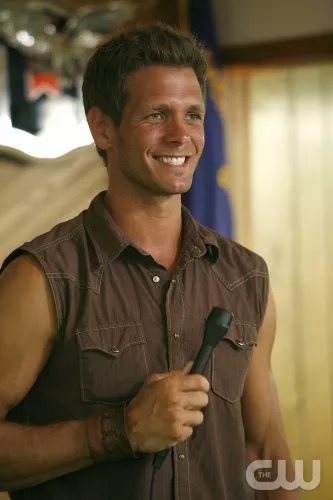
    Matt Neustadt, the star of the CW reality dating show Farmer Wants a Wife, is a farmer. No really, he is. Not an actor, or even an aspiring actor (waiter). Despite the debates going on among the Farmer fans on the CW network’s online message boards, the Portage des Sioux-based farmer plants and harvests crops like corn, wheat and soy beans.

    Tiny Portage, a name shortened by most of the town’s little more than 300 residents, is just across the Mississippi River from Alton, Illinois in St. Charles County. It’s the setting of the reality TV dating show, which originally was launched in England.

    Courtesy the CW


    The contestants really try to figure out this tractor. - Courtesy the CW

    Courtesy the CW

    The contestants really try to figure out this tractor.
    Neustadt
  • Crunk and Disorderly

    It’s 1:30 a.m., and Saturday night has slid into Sunday morning on Broadway in East St. Louis, late 2002. Just off the Fourth Street exit ramp from the Poplar Street Bridge, three police cars, lights cascading a red-blue-red-blue strobe across the grassy brown nothingness to the right, guide exiting traffic. Neon cones narrow the ramp to one skinny lane; checkpoints are set to the left. Three cops draw orange circles with their glowing batons, inviting cars, many headed to Club Monastery, into the gantlet.

    A few seconds earlier on the radio, Tossin’ Ted, a DJ and on-air personality for 100.3 FM The Beat, issued a cop-stop advisory even as he beckoned listeners to the club, where he’s an MC: “So if you’re coming,” he warned, “you best be straight.”

    You can see the Monastery from the exit ramp. A six-foot wrought-iron fence surrounds it, and cars line the parking lot. Those not headed there are cruising late-night to the swank Club Illusion, across the street; the Casino Queen, due left about a mile; or to Faces, a popular gay club just around the corner.

    It’s a slow crawl. Because of the traffic, it takes more time to get from the ramp to the club — 300 yards — than it does to get from the Arch to East St. Louis. And the people keep coming, itching to dance — to do the Mono, to do a little bangin’ to “Left Right.”

    The Monastery is a single-story expanse of brick that was originally part of a Holiday Inn, long since gone. On Saturday nights and into the wee hours of Sunday morning, the nightclub is the most exhilarating in the St. Louis area — some say the country. At its peak, between 2 and 5 a.m., around 1,500 people will be bouncing simultaneously, slow but steady, dirty as hell and letting it loose, up and down with the bass and the hi-hat. Two o’clock is the time, the magical moment when the lights go down, the bass digs its claws into the concrete and the people lose control.

    At 2 a.m. here, Saturday night is just getting started.

    “The buzz of the Monastery is everywhere,” says Big Sexy Kooool DJ Kaos, the club’s Friday- and Saturday-night DJ (as well as evening DJ on The Beat and one-half of the duo Da Hol’ 9). “Some of the rowdiest artists out today that represent the streets, they love the Monastery. That’s their home. When they come here, they gotta go to the Monastery. That’s for the real thugs.”

    But the real thugs make it all crazy. Testosterone is thick inside — even if there are as many ladies here as men. On the dance floor, shirtless guys, all muscle and adrenaline, slam and bounce and roll and wrestle. At times, the vibe teeters on the edge of trouble; at any moment, a wash of chaos can swell from within the mass and the good times can flip on their ass with the scuff of a shoe.

    “They had big-time problems at first,” says Jim Gates, a veteran St. Louis DJ and radio personality and weekend DJ at Club Illusion. “There were shootings, and the police were getting ready to close them up.”

    And the Monastery did get shut down a few years back. East St. Louis Mayor Debra Powell came in a couple of times to witness the goings-on, and she didn’t like what she saw. It was overcrowded, dangerously so. Ostensibly sober eighteen-year-olds were mingling with 21-year-old drinkers. Raw wires were exposed. The atmosphere was loose, the crowd raucous. And with the Casino Queen in the club’s shadow — and a vast chunk of the city’s revenue tied to the riverboat’s success — the Monastery had to be cleaned up or get shut down.

    Casino Queen? Crunk? No contest, and everyone knew it.

    “You can’t do that,” says Gates emphatically. “You got the Casino Queen, with millions of dollars down there, and you got these idiots out in the street every night going down and interrupting that flow? You ain’t going to interrupt the Casino Queen’s flow, believe me, not in this town. It’s got two-thirds of the damn money that we need for a tax base.”

    So the challenge was to create a club that encouraged chaos without relinquishing control, a place where you could party without having to look over your shoulder.

    At 2:30 a.m., things are rolling; to an outsider, the party couldn’t get any rowdier. But a moment later — kaboom! Big Sexy Kooool DJ Kaos kicks out the first four notes of “Left Right,” by Drama, and the people rise up, bellow from deep within and start bouncing — all of them. It’s as if they’re dancing on a rolling floor that moves in waves, up, down, left, right. You ain’t seen nothing yet.

    Quickly, the front third of the big room — the eighteen-and-over space — clears, then fills with Left Righters. Mississippi — MC, bouncer, ringleader, jack-of-all-trades, also known as Missippi (“Who needs that extra iss? It’s useless,” he says, laughing), also known as Sipp, also known as Sipp Dog — steps down from the stage and pushes through the crowd, cordless mic in his fist. Three-hundred-eighty-pound Debo, a security mainstay, heads into the middle of the pack, water bottle in hand. He’s supposed to ride this beast, and you can’t do it from the sidelines.

    A tap on the shoulder is followed by a friendly but stern warning: “You best step aside. They’re coming this way.”


    For the past 30-plus years, entertainment has been the East Side’s most bankable — and very nearly only — commodity, be it in the form of gambling, sex or music. If you want to get dirty in St. Louis, if you want to lose control for a while, if you want to take a chance, head to the area’s debauched zone, St. Vegas.

    These days, the sex industry gets the most attention, but the music has created the myths. Chuck Berry played his first gigs with Johnnie Johnson here; Miles Davis unveiled his horn; Ike rode his horse, Tina, into the history books. In the ’70s, downtown East St. Louis was still hopping; in their heyday, George Clinton and Bootsy Collins of Parliament used to fly in to party on weekends — even as the city’s finances were collapsing. Radio station WESL-AM, the voice of the East Side, was the first in the country to play the Sugarhill Gang’s seminal jam “Rapper’s Delight.”

    And now, nearly a quarter-century later, East St. Louis is once again a musical center, this time for crunk, the lowdown Southern-flavored brand of rap that’s moving the crowd tonight — and every Friday and Saturday night — down here. Crunk is slow but the hi-hat’s fast, which gets the dancers going hard.

    Crunk is a rough-and-ready subgenre of rap, and it rules the East Side. It’s party music, made for dancing, designed not so much for profound lyrical expression as for barking and hollering. Since its rise as a distinct subgenre in the late ’90s, it has been dismissed as second-class by rap snobs, who claim it conveys a bleak, aggressive message. The lyrics are filled with “bitches,” “niggas,” “motherfuckers” and “hoes” — so many epithets that the words end up losing at least some of their literal meaning. But, says bouncer Debo, “That’s the true nature of crunk: getting wild and taking your shirt off and running around screaming, acting crazy, spitting water.” Over the course of an evening, Debo will be seen engaging in each of these activities, living it up, working.

    “When we talk crunk music,” says Kaos, “it’s usually a slow beat. But with the hi-hat speed played the way that it is over a track, it makes it seem faster than it really is.” Because of this rhythmic tension, crunk seems simultaneously slow and syrupy, manic and relentless; the sibilant hi-hat adds a freneticism to the music, and the bass rumbles the rump. Add a bunch of dudes chanting, barking orders in harmony, calling and responding, marching to a very deep drum, and you’ve got some hard, solid dance music that, though created for partying, is also pretty pissed off. It’s music made by men, and the guys here respond to it with all of their energy.

    The ladies here dance — and they can dance. The men here dance — and wrestle and push and shove and fall. And then get helped up by the dudes who just pushed them down.

    From his DJ booth, Kaos can see them all, a restless ocean of thugs and honeys; arms are up in the air, fingers are signing: North Side! South Side! East Side! (You won’t see many “West Side” signs; Ladue’s not too well represented at the Monastery.) Within this sea, a tiny pocket emerges, a little hole in the humans, and then another. Inside, guys — shirtless and tight — start pushing one another, but they’re still bouncing to the song, Lil Jon and the East Side Boyz’s “I Don’t Give a Fuck,” the song that rules this club right now.

    It’s what they’re screaming that adds tension to the party. It’s late. You’re in East St. Louis at a crowded, drunken club, and everyone is chanting, “I don’t give a fuck.” When Kaos kicks it, the crowd goes nuts:

    I got that North Side wit me, I don’t give a fuck!

    I got that South Side wit me, I don’t give a fuck!

    We rollin’ deep in this bitch so fuck y’all niggas,

    We rollin’ deep in this bitch so fuck y’all niggas,

    I got that dirty South wit me, I don’t give a fuck!

    I got that Midwest wit me, I don’t give a fuck!

    If security step up we’ll crush dem niggas

    If security step up we’ll crush dem niggas

    Say you’re a bouncer at the Monastery. Patrons outnumber you at least 75-1, and you’re responsible for maintaining control. OK, fine. That’s your job. You’ve accepted it. But then Lil Jon’s voice erupts from the sound system, preaching to his people: “If security step up we’ll crush dem niggas!” And they’re screaming it in your club.

    Good luck. Welcome to the party. Now get to work and control this motherfucker.


    Terrence walks through a Wednesday-afternoon version of the Monastery, one that more closely resembles a monk’s home. It’s quiet here, and dark, and what sunlight there is shines through plate-glass front doors. Three or four people lounge on couches and comfy chairs around a pool table. Four televisions dangle from the ceiling, broadcasting some daytime nonsense. As he tours the club, Terrence points out improvements he’s made, walls he’s constructed, layout changes.

    The Monastery building has housed dance clubs for close to 30 years. One of its first incarnations was a place called Coleman’s Plaza, recalls Jim Gates, who, along with the legendary Dr. Jockenstein, used to broadcast live on WESL from the joint in the mid-’70s. (Gates is also the father of one of the best hip-hop DJs in the city, Q95.5’s DJ Nappy Needles, and one of the best break-dancers in the city, Nicholas Gates.) “There’d be people there until 10, 11 a.m.” he says. “They’d go and eat breakfast — and then come back and dance some more.”

    And, unlike today, the club wasn’t alone. A scene centered on downtown East St. Louis, on Collinsville Avenue. “Up and down the streets and around the city, there were just so many nice clubs,” says Gates, “but after 3 o’clock, people were generally intoxicated, and the fools started running things. All the good people left, and you’re left with all the fools, and boy, you’re talking about police, shootings — they’d actually be chasing each other down the street in cars, shooting. It was nerve-wracking.”

    Dilapidated signs are the only remnants of the clubs; wig shops, wing joints and clothing stores now occupy the strip. The centerpiece of the area, the glorious Murphy Building, with its carved gray marble façade, is slowly collapsing. Weeds grow on its roof.

    Terrence started working at the Monastery as the manager when the club opened on April Fool’s Day 1997 and eventually bought out the owners. Within a few years, he had a solid crew in place: Mississippi, Debo, Tossin’ Ted, Dave, Big Sexy Kooool DJ Kaos, Ed Lover, Decarlo, Pretty Boy and a few others. Some members of this crew have alienated and infuriated clubgoers in their time; as a result, all refuse to provide last names, citing concerns for their safety.

    As with any upstart enterprise, the first six months were up-and-down. Then, in the summer of ’98, everything changed with a single event — a car show in the club’s parking lot, organized by an outside promoter. Terrence wasn’t expecting that many people, but by the time the show got going, cars were backed up onto the highway and blocking the MetroLink tracks 100 yards north of the club. Trains ground to a standstill. Four Bi-State buses were trapped in the jam, which lasted all afternoon. The police, who weren’t given advance warning, had to abandon their cars and walk to the scene. When they arrived, they shut the car show down. “They told us we couldn’t even open that night,” says Terrence. “I understood that, and I left it alone.”

    Even though the event was shuttered, it put the Monastery on the map. But the next week, continues Terrence, “the mayor comes in. She didn’t like what she saw, so she decides, OK, you gotta close until I see some changes.”

    The most pressing concern was the lack of physical separation between drinkers and minors. The Monastery was an eighteen-and-over club serving booze to the elders with no barrier between them and the minors. And that, as anyone who’s ever been young knows, is a recipe for stealth swigging. So Terrence built a club within the club: On one side, 21 and over. On the other, no booze permitted.

    “With that other wall there now,” says Kaos, “it’s kind of hard to tell, but when it wasn’t there, [the room] would go all the way across, and it was crazy back then. So being understaffed, security-wise, and us playing the music we were playing, violence was all the time. We had a lot of fighting going on, people getting high, intoxicated, drinking liquor, whatever, and that affects you. When you’re in the club and somebody steps on your new tennis shoes, you didn’t mean to see it the way you did, but you did. The smallest thing would trigger something terribly big.”

    Terrence explains it more concisely: “You know what the wild, wild West used to be like? OK.”


    Dances emerge from music, a tiny miracle of sorts: They seep from an ephemeral, abstract plane and enter the physical one.

    A dimension leap: In the head of a producer, a stirring of synapses. A muscle murmur.

    A receptor twitch that somehow creates an internal sound — a specific beat, a sample, a melody, a song — that works its way from the bean by way of electrical current through the fingers that tap the buttons that zips the current onto the hard drive that processes all of that mess into some sort of logic — glues it together and locks it in place. Once locked, the song’s burned onto a disc that is sent to the pressing plant that presses the twelve-inch that makes its way to Big Sexy Kooool DJ Kaos, who places the needle on the record, which amplifies that same electrical inspiration from the brain back into a beat, melody, a rhythm — song — that enters the world by way of big booming speakers and into the heads of those amazing dancers over there, who feel it, who work it, who understand it instinctively and who move their muscles accordingly.

    A pop, a sway, a sway and a pop, and now a little robot and a funky arm-flap.

    Specific patterns, of course, move the body in specific ways. At the Monastery, these patterns, coupled with the buzz of adrenaline that comes with the sneaking suspicion that this is special, a once-in-a-lifetime experience that all will recall fondly to their grandkids, have created a few specific dances. One, the Left Right, is celebrated at the same time every week, 2:30 a.m., and is song-specific: When Big Sexy Kooool DJ Kaos drops Drama’s “Left Right,” the crowd gets organized and does the dance, which consumes much of the space and entails massive shifts to the left and right.

    The other, the Mono (a.k.a. the Monastery, a.k.a. the Nina Pop, a.k.a. the Back-Back, a.k.a. the Chickenhead), started here and has evolved into a dance that’s swept the club and hit the radio as lyrics to songs and is gradually moving its way from the heart of East St. Louis into clubs all over the country.

    Ali of the St. Lunatics sings its praises in his hit “Breathe In, Breath Out,” as do Da Hol’ 9 in their new single, “Nina Pop” (and their regional smash “Urbody N Da Club Up” was a Mono anthem). Like the Twist, the Hustle and the Electric Slide before it, the Mono has exploded into bona fide dance craze.

    The Mono started back in 1998 with a couple of guys. Others say it was a couple of girls. Mississippi is the final authority, though, because he was there: “The rumor is that a couple of girls started the dance, but for me and my experience, it was a couple of guys. It was, like, two or three guys that was doing that dance, but they knew the girls, so the girls would always do it with them.”

    One was Kevin Henderson, who, after five years, still goes to the Monastery every Saturday night. (“It’s live, man,” he says, “I love going there.”)

    “My cousin came to me one day,” he says. “We were at the club, and he just started doing this little crazy thing — it looked crazy to me — and I noticed all the people were watching, watching how we started doing it. We had girls watching us — we were called the ‘little hot boys’ of the club at that time — and the girls started picking up on how to do the dance, like, ‘Oooh, show me how you do it!’ And they started doing it. As the dance evolved, people started different little moves and steps, but it was basically the same thing. We started that the summer of ’98.”

    At this point, the dance is so ubiquitous at the club that it’s sort of hard for an outsider to spot; everybody’s adding his or her own accent. To describe it is nearly impossible, but it’s a pop, and it’s a sway, with a funny little arm thing going on, and it’s goddamn sexy.

    “It’s a bunch of popping,” explains Kaos. “It’s like you’re stomping your feet together, and then you’re stomping away. You stomp in, you stomp out with your right foot, you stomp in, stomp out with your left foot, all in different motions to the beat. At the same time, you’re working your back forward and backward, and you’re pushing your arms. It’s nothing but what we used to call in the ’80s the Fag Pop.”

    Henderson has another comparison: “You know what? You remember the Funky Chicken? It’s not much different than that.”

    The girls, he continues, sparked the Mono’s evolution at the Monastery. “They twist their little behinds, and the men don’t really do it like that.”

    When Henderson speaks about the Mono, there’s a tone of wonder in his voice. He and his cousins — Jason Brownlee and Wendell, Keith and Shawn Leachman — were just doing their thing, just letting loose on the dance floor, just playing. And then a little echo over there. A few others sneaking peeks from across the way. Another girl spying from behind, trying to learn a funny little dance move to show her friends. A few months later, more copycats, more inspiration and variation. As in a game of telephone, in each translation a little variation.

    And now, says Kaos, the dance is spreading farther. He travels a lot, he says, “and I also see what everybody else is on, and being from St. Louis, it’s the first thing they say: ‘Hey, show me how to Nina Pop. I’ve been at different people’s video shoots, and they say, ‘Man, we gotta have somebody in the video Nina Pop.’”

    The first time it hit Henderson that the Mono was turning into a craze was about a year later. He started noticing it at other clubs, and it was evolving even more. “I was like, what in the world have we started? I used to talk to my cousins before they got locked up — they’re all incarcerated now — ‘Man, we got everybody doing this dance.’ We used to say, ‘If we could get a dollar for everybody we’ve seen doing our dance, we’d be rich.’


    Eventually Terrence and his crew started to figure out how to sheriff their wild, wild West. They had no choice; it was as much survival instinct as business decision. “I’ve been shot at more than once,” says Terrence. “We’ve all been shot at. Some of the incidents over nothing, some people had too much alcohol in their system, some people just say, ‘Fuck security, fuck the Monastery.’ They might not like the way they were treated, and they get to shooting.”

    The decision to create two rooms, to physically separate the drinkers from the nondrinkers, made the situation easier to control. The bigger of the two rooms is for the youngsters; those over the legal age are welcome to go where the main action is but can’t carry their drinks. The smaller room contains a bar (where the lovely Yodi serves up drinks), a pool table and a big dance floor that holds maybe 500 people.

    As Terrence hired more security, he began to understand the psychology of his crowd. One of the first things he learned was how to spot the ringleaders. “You have to be able to stand back,” he says, “before a fight even starts, and observe. Let’s say it’s twenty people. Observe the group leader and the group agitator. You get one of those people, and, guess what? You just controlled twenty people with one person. And you don’t need to put airs on — just say, ‘Excuse me, let me talk to you for a second,’ and you’ll notice, everybody will start to follow you. The first thing you do is say, ‘Stop. One second. All we are going to do is talk. I’m not going to do anything to him. I’ll bring him right back.’

    If that doesn’t work, the staff relies on a solution that’s worked well throughout the history of man and his booze: Grab ’em, pick ’em up and throw ’em out.

    Terrence also started cracking down on parking-lot loitering and figured out specific strategies for dealing with trouble, one of which is an alarm system involving panic lights: “We see the red lights going on,” says Terrence, “that means that we’ve got a situation that’s about to get out of hand — we need everybody here.”

    In addition to increasing the number of bouncers, he created a plan for protecting them: “If you got four out there, you gotta have four watching. You got four on the floor, four behind them, because you don’t have eyes in the back of your head, and you will, every now and again, have that one individual that’s not feeling what’s going on. It’s no different than anywhere else. That person is over 21 and has alcohol in his system, so they don’t understand. They’re not comprehending as they would if they were sober, so you have to go to that next level, and you have to have patience.”


    The first time you visit the Monastery — if this isn’t your particular scene — chances are you’ll get a jolt of new. The emotion and energy roar into your reality, a heavenly sensory overload: the fury of the dancing, the vision of passion and celebration — the sheer happiness you’re witnessing on the dance floor.

    This is the biggest weekly party in St. Louis. “Hands down,” says Staci Static, on-air personality for The Beat and a club MC, “the biggest party, where you see people sweating their hair out dancing. They don’t care about hair, they don’t care about outfits. You get some people that come there who try and wear stiletto boots or whatever, but for the most part everybody’s dressed comfortably, they’re laid-back and they are strictly coming to party.”

    Before 2 a.m., there’s as much standing around as there is dancing, at least in the big room, where the party is simulcast on The Beat every Saturday. People nod their heads with the rhythms, do a little shuffle-shake to get the juices flowing, to get the knees, knuckles and neck rubbery enough to move the way they need to move.

    Before 2, people are hooking up, flirting, gossiping, arguing, getting their pictures taken in one of two makeshift photo studios at opposite ends of the club. Backdrops hang, and for a fee, you and your lady or your posse can mug for a portraitist.

    On one backdrop, a huge golden cross is airbrushed on a blue background — a medallion, a shining royal beacon. Above it, in blue, Old English script reads, “Monastery.” Stretching down one side of the cross is the word “Thug”; down the other, “Style.”

    Thug Style.

    A guy in his mid-twenties, clad in a deep-blue velour sweatsuit, glares at the camera, tough and cool and sexy, his arm around his girl. She doesn’t smile, either, but her expression is much softer and her eyes twinkle more brightly than her diamond necklace.

    As you walk into the packed 21-and-over room, the joy is evident, but the vibe is nothing compared to that of the big room. It’s no fault of DJ Voodoo’s, who plays some killer bounce — E-40, Petey Pablo (who’s got a growl to rival Howlin’ Wolf’s), Goodie Mob, 8-Ball and MJG, the great Three-6 Mafia out of Memphis.

    There’s a constant back-and-forth between the main room and where the drinks are served, a human tributary that floods the space. Follow the current, and it’ll send you straight into the ocean, the eighteen-and-over room. It’s 2 a.m., and the lights have come up a bit during a break. You can see what the club looks like.

    “There’s not really much you could fuck up in that place,” says Wes Allmond (a.k.a. DJ Solo), who runs the St. Louis office of Ch’rewd Marketing, a promotions company that pushes rap and R&B. “Everything’s made out of steel or brick or plywood. And I think it’s the griminess — it’s like you’re going to a house party when you go to the Mono. There’s this rawness, not a lot of fancy stuff. You’re in the club, there’s a concrete floor…. If you drop a crunk record in a nice club and you start getting crunk at a nice club, someone’s going to come and tell you, ‘Hey, you can’t be doing that in here. You might break the lights or fuck the carpet up.’ But at a crunk club, you can get as crazy as you want to and jump around, and nothing’s going to get fucked up. With that feeling, you can just let it all out.”

    When Kaos plays “Left Right,” the transformation takes place. It’s as though the first bell has rung in a championship bout: The crowd pushes out of the front third of the room — about 50 yards of emptiness where, moments before, were a few hundred people — and fills with dancers.

    Voodoo’s onstage, his shoulder-length dreadlocks waving every which way. He hunches over, stomps one foot and then the other, and draws the mic to his mouth. “Ahh,” he breaths, then pauses. He then stands straight up, his eyes staring into space. He looks at the crowd and screams, “Here we go!” just as the chorus kicks in, a military march barked by what sounds like the angriest drill sergeant in the army: “Left, left, left, left, left, right, left. Get on up, get on up, get on up, right, left. Left, left, left, left, left, right, left. Get on up, get on up, get on up.”

    And when that chorus arrives, the crowd moves all the way to the left of the club — not a few steps, but all the way, and it’s as though the Monastery is a ship listing in a ferocious storm, throwing the crew all the way right, then left, then right, then left for the duration of the chorus. People push; a few people fall to the floor as they trip over their neighbor — they’re quickly helped to their feet by whomever’s closest — and the whole group is bouncing as they’re slamming. A big guy — orange hoodie, orange knit cap, a little Band-Aid on his cheek, Nelly-style — is stomping the floor like Yosemite Sam. Then the chorus ends, and everybody stops and does a little touchdown move, a stationary wobble-crouch that lasts the entire verse. Sipp’s in the middle with the mic. He’s wearing a Duke Blue Devils jersey — number one, of course — and he, too, is going low, chanting and chatting while the rhymes flow:

    1 up and 2 my troops listen

    3 grenade my .45 still a bustin’

    6 rounds cause I’m trill with this

    7 more for the busta in the blue suit

    Sipp’s screaming into the mic: “To the girls’ bathroom! We’re going to the girls’ bathroom!” and immediately anyone near the bathroom scurries for cover. The rhyming continues:

    8 choppers in the field with troops

    9 seconds before you lose ya life

    10 automatic firing weapons

    Now get on up get on up get on up!

    And then, once again, the chorus, and Sipp screams, “To the girls’ bathroom!” and the dancers bounce their way to the bathroom door — everybody’s laughing; a few people hop on one foot while moving left. Then the room tips to the right, and everyone bounces back into the center. The people are going crazy, and the room is on fire.

    “We had to stop doing the Left Right for a while because people were getting hurt,” says Mississippi. “We had one of our own security guys slip and fall and hurt his leg from getting crunk. One time, some girls wanted to get involved, and a girl got a gash across her eye. But she still kept on jumping; no harm done.” He laughs: “Get some ice and some napkins and keep the party going — and to me, that’s what crunk is, just nonstop, keep on jumping until you can’t jump no more.”

    Kaos — red skull cap on his head, which, unlike everyone else’s, is motionless with concentration — is clearly in control. To his left, a section of chain-link fence separates him from an elevated dance floor. This is every DJ’s dream: He’s surrounded by 1,500. A few fans stand on the other side of the fence, their fingers weaving through its wire diamonds. They’re getting schooled by St. Louis’ king of crunk. In front, huge pockets of the crowd explode like a crazy Roman candle, popping off in beat — jumping to the left, bouncing to the right, an organism that morphs into something new with every track he plays.

    When he drops “Do That,” by Baby (a.k.a. the Birdman), on Cash Money Records out of New Orleans, everybody starts chirping like birds along with the chorus. These pitched coos and warbles erupt from the mouths of dancers throughout the night.

    “I took a Haitian-voodoo class at Webster [University],” says Staci Static, “and we were watching tapes of the ceremonies — and it reminds me of a ceremony, a ritual, because they really get into it, and it’s really emotional. I love it, for real.”

    In the back, a hole opens in the crowd. Shirts fly off backs and, from afar, you can swear you just saw a pair of legs sprout where heads are supposed to be.

    You did.


    At most clubs, the bouncers are easy to spot. They’re the guys standing on the periphery, big and bold, arms crossed, glaring, eyes scanning, at the edge of the action, looking like lifeguards at a swimming pool.

    But at the Monastery, Terrence has learned to protect his crowd by putting his crew in the thick of it. They’re in there bouncing, dancing, patrolling, mediating.

    “That’s what I like about us being involved,” says Debo. “When everybody else sees us relaxing and having a good time, they’re, like, ‘Ah, these guys are cool. They ain’t here to beat us up or throw us out.’ So they party with us, and it helps us keep a basic grasp on what’s going on in this side of the club. If we standing all the way up here

  • What Is Suadero? (Besides Tasty, That Is)

    What Is Suadero? (Besides Tasty, That Is)

    Photo: Ian Froeb
    Photo: Ian Froeb

    While waiting for lunch at La Vallesana a few days ago, I noticed a meat on the taqueria’s menu that I’d never seen before: suadero. I don’t speak Spanish, but sometimes I can figure out unfamiliar words through the other languages I’ve studied or English cognates or just sheer dumb luck. In this case, though, I was stumped.

    Turns out, I’m not alone. It took me a fair amount of sleuthing to figure out what suadero is — and even now I’m not 100% sure.

    There is a brief entry on Wikipedia:


    Suadero, in Mexican cuisine, is a thin cut of beef from the meat that hangs from the breast bone on a cow. Suadero is noted for having a smooth texture rather than a muscle grain. Typically, suadero is grilled and used as a taco filling. When cooked right, it’s really, really good.

    I had trouble making much sense of this description. And that last sentence doesn’t really add much to the entry’s authority. I found other mentions of suadero on various sites and message boards, none of which cleared up the confusion. Some claimed it was rib meat, others that it came from the front of the cow. Some compared its texture to carne asada; others said it was smooth.

    Finally, a Google Image search turned up this Mexican butcher’s chart:


    What Is Suadero? (Besides Tasty, That Is)

    www.lasrecetasdelaabuela.com

    The Web site on which I found this chart describes suadero as “the intermediate part between the belly and the leg.” (It’s the part immediately above the udder on the chart above.)

    With this (only slightly) better idea of what, exactly, suadero is, I returned to La Vallesana and ordered three suadero tacos. As per usual, these came topped with diced onion and cilantro on two corn tortillas. (They are pictured at the top of this entry.)

    The meat looked like chopped steak. Several of the small pieces had some kind of sinew or connective tissue visible, but this wasn’t unpleasant to eat. Overall, the texture struck me as chewy, though not overwhelmingly so. Like hanger steak, I guess. The most notable aspect of the texture was how the surface of many pieces had browned and crisped. Very similar to carnitas.

    The flavor was, well, beefy. Nothing especially new or remarkable. Just tasty. Suadero won’t replace al pastor as my preferred taco filling, but for a change of pace they were quite good.

    Ian Froeb

  • Kitchen Nightmares: Dillons Revisited

    Kitchen Nightmares: Dillons Revisited

    Alas, FOX left us hanging once again this week. If you watched Kitchen Nightmares last night, you saw a repeat of the disaster at Dillons. According to Reuters, it appears Martin “dunderhead” Hyde tried to sue our favorite expletive-spewing chef over that episode:

    Ramsey [sic] filmed “Kitchen Nightmares” at Dillons in April and Hyde, who was fired on the show at Ramsey’s [sic] behest, says the chef lied about finding rotten meat, hired actors to patronize the restaurant so it would appear Dillons had grown more popular since Ramsay’s intervention and unfairly targeted Hyde to capture a confrontation on tape.

    Oh, give it up! Martin’s just pissed that his own reputation has become just as tarnished as the restaurant’s kitchen was when he managed it. The silence of Dillons’ owner tells a much different story.

    Dillons’ owner, Muhammad Islam, declined to comment on the lawsuit but said the restaurant had improved since Ramsay’s visit.

    On October 3, the Gothamist reported that “a judge dismissed the case, sent it to arbitration and allowed it to air.” And I’m glad he did, because it might be my favorite episode yet. Entertainment Weekly sent a reporter to Dillons a week after the show first aired and said the restaurant appeared spotless and busy. Unfortunately, they didn’t archive the snippet on EW‘s website.

    After reading about the inspection, I’ve reconsidered my rash decision to never eat at Dillons. I’d at least try a few items off its menu — but if there were any signs of flies or roaches, I’d be outta there faster than you can say: “Gordon Ramsay rules!”

    I hope someone from St. Louis applies to be on next season’s show. Does anyone have any suggestions of restaurants in town that need some Ramsay-style love?

    Jeanette Kozlowski

  • Kitchen Nightmares: Dillons

    Kitchen Nightmares: Dillons

    RFT editorial intern Jeanette Kozlowski is a big fan of bad-boy British chef Gordon Ramsay. Each week she’ll recap the latest episode of Ramsay’s new FOX series Kitchen Nightmares.

    If you’ve ever been nervous about eating at an empty restaurant, this second installment of Kitchen Nightmares will certainly reinforce the natural instinct to flee when the only patrons are giant flies.

    From past episodes of Kitchen Nightmares on BBC, you’ll remember nauseating kitchen scenes like this one (NSFW due to Ramsay’s uncensored rant):

    But tonight Dillons takes the cake (and leaves it out for a month to feed the cockroaches and rats). Seriously, it’s shocking that this unsanitary fly-infested haven wasn’t shut down long before it made it on this show.

    The Indian restaurant, located in Manhattan on West 54th Street, is a mere two blocks away from Gordon Ramsay’s own. With three different managers (a floor manager, an operations manager and a general manager) and two head chefs for two separate menus (American and Indian), mass confusion is a constant theme of the night. Guests are baffled by the amount of choices, while Ramsay is in awe of the sheer disorganization of it all.

    The first major disaster is Ramsay’s meal. In a silent lunch-hour dining room with the walls blanketed in what he calls “hospital linens,” he mutters to himself, “God, I’m lonely.” His vegetarian appetizer is a “dehydrated turd” with lamb inside, the tomato roses served are rotten, and his beef turns out to be not only lamb but old lamb. His main course of salmon “looks like a doormat.” Of course, he refuses to eat it. Instead, he makes the chef (who also happens to be the operations manager) eat it. All this occurs while flies buzz around Ramsay’s head. Oh man, he has to know he’s in for it.

    The British general manger Martin is a complete dunderhead. Although not as intolerable as last week’s Peter, Martin certainly comes close with his total obliviousness. It’s not that he was spending money on designer suits or fast cars, he just wasn’t spending time doing his job. Instead, he lies in a booth while one of the waitresses lovingly tousles his hair. That scene alone made it obvious he and Ramsay were not going to be friends.


    www.fox.com

    www.fox.com
    www.fox.com

    Because of Martin’s incompetence, the kitchen has become a breeding ground for lawsuits and a possible return of the Plague. Cooks stirring food in Tupperware containers on the floor; moldy hamburgers and putrid potatoes line the refrigerators. Most horrifying of all, mountains of rat droppings, boxes filled with cockroach parties and salad bags serving as homes to vagrant flies are unearthed just one story below dining level. Ramsay pulls back the plastic on a freezer lining to reveal at least five to ten creepy crawlies wandering about. It’s like an episode of Fear Factor when busty blonds chew up insects — except the only people eating here were the brave customers of Dillons, and they’re paying to do so. Ramsay simply can’t handle this. He explodes: “This will kill someone! Where are your standards?!” And all Martin can mutter is: “Things are looking pretty glum.”

    By now Ramsay is in such disgust he shuts down the kitchen for the night, and he shouts to patrons that it’s their “lucky day” because they won’t get food poisoning or die.

    During the next segment, Ramsay returns to the restaurant in better spirits — mostly because he’s dressed in a white hazmat suit with a team of professional cleaners in tow. Ramsay then brings the Dillons team to his restaurant at the London hotel to show them how spotless and elegant his kitchen is kept — and that the refrigerators are cleaned twice, daily. But we mustn’t forget the reality of Ramsay’s own situation:

    It was in New York that Ramsay had his first real taste of failure, when his much-hyped eponymous restaurant at the London hotel was given a lukewarm reception by US critics. Frank Bruni from the New York Times said the venture lacked excitement and relied on “familiar French ideas and techniques that have been executed with more flair, more consistency and better judgment in restaurants with less vaunted pedigrees”.

    (Read the full article from the Guardian on the chef here.)

    Still, Ramsay helps everyone at Dillons get back on their feet (with the exception of Martin). Ramsay brings in a crew to give the exterior and dining room a new look, rewrites the menu with the chef and also helps the owner decide on a new name — Purnima. This new restaurant serves modern Indian food in a simple yet elegant environment. It sure looks pretty, but I still don’t know if I’d ever eat there after what I saw. Would you?

    Overall, the re-launch is successful, with a few hiccups caused by Martin — who quits by the end of the show. This FOX series definitely feels more scripted than the BBC edition, though it’s exciting to see a restaurant make such a dramatic change. Then again, anything is possible with a big budget.

    Lesson learned: If the general manager lets food rot and cockroaches dance near any place where people dining, interrogate him about his standards until he quits in a guilt-ridden fury.

    Next week: I’ll admit to not paying attention during the previews, so all I remember is some chick who sounds like Fran Drescher. Great.

    And if you have yet to catch an episode of Kitchen Nightmares, FOX now has a full-length version of this week’s episode here on its Web site, and someone else has uploaded parts of last week’s on YouTube.

    Jeanette Kozlowski

  • Peter Hook No Longer with New Order — So Why Does the Band Play On?

    So, it appears that bassist Peter Hook has decided to leave New Order. (That, apparently, was news to the rest of the band.) Drummer Stephen Morris and vocalist Bernard Sumner are (ostensibly) carrying on under the New Order name.

    My question is: Why? Look, I love New Order as much as the next person. I’ve been rocking “Regret” all weekend. But I have zero — no, make that less than zero — desire to hear a New Order album without Hook’s liquid bass. I mean, does anyone?

    Since Joy Division, for pete’s sake, Hook has been the anchor of the group, the person that made New Order distinctive. Sure, Sumner’s vocals are completely distinctive too — but as Electronic proved, his voice is fluid enough to work in different contexts. In fact, if I want to listen to Sumner sing without Hook, I’d listen to Electronic. (“Getting Away With It,” yo.) But Hook’s bass — which he uses as much for melody and texture, as rhythm — made New Order great.

    I beg the band, retire the New Order name. At this point, any future albums will have an asterisk. Or the qualification: “Well, it’s post-Hook New Order.” How can they not? Countless bands insist on tarnishing their legacy by releasing sub-par albums with replacements (cough, Echo and the Bunnymen). Continue recording together, Sumner and Morris; just find another name for yourselves.

    Maybe Hook will reform Monaco, which was basically New Order lite; according to Wikipedia, its two albums should be reissued soon. And “What Do You Want From Me?” was one of the best singles of 1997.

    Whatever, here’s a video for “Regret.” Which the band is bizarrely playing on the beach. With the cast of Baywatch. (The Peach Pit must have already been booked.) David Hasselhoff swoops in at 2:30 in a most hilarious way. God, I miss the 1990s.

    Annie Zaleski

  • It’s Spartan hotties versus Persian trannies in Zack Snyder’s far-too-faithful Frank Miller adaptation.

    Long ago there reigned a clan of Speedo-wearing militaristic psychopaths called the Spartans. They lived beneath a copper-colored sky, on a copper-colored land, amidst copper-colored fields, in copper-colored homes made from copper-colored stone. Legend has it they would outline their copper-colored pecs and abs with ash to enhance their manly buffness, and yet these were men of action and honor, not “philosophers and boy lovers” like their namby-pamby rivals the Athenians.

    Lunatic machismo was cultivated early. From the age of seven, Spartan boys were trained in the art of humorlessness, and made to beat each other into submission. Little is known of the Spartan women, but scholars assume they were fierce.

    Spartans were men of few words. They spoke in a language composed almost entirely of monosyllabic stupidities. In that strange time, among those strange people, a voice rang out perpetually from the heavens. No one knows who spoke it, but historians agree that this holy text was silly and repetitive and devoted by and large to what they now term “the totally butch awesomeness” of Spartan deed. History remembers their ethos: “Only the hard and strong may call himself Spartan. Only the hard. The strong.” It remembers their war cry: “For honor’s sake, for duty’s sake, for glory’s sake, we march. We march.” And the immortal words of their fateful end: “We are undone! Undone, I tell you!”

    Such magnificent verbiage was memorialized by Frank Miller, and incorporated into the text of 300, his graphic novel retelling of the Battle of Thermopylae, in which the titular quantity of Spartan studs fended off a billion gazillion Persian invaders. Marshalling the full resources of high-end computer imaging and the full capacities of hardcore fanboy nerditude, writer-director Zack Snyder (he of the unexpectedly decent Dawn of the Dead remake) has now brought Miller’s book to “life.”

    Slathering pancake makeup on its actors then pasting them into digital backgrounds, 300 takes the synthetic blockbuster one step closer to total animation; its bland, weightless monochromatics make Sin City look like the grungiest neo-realism. It’s a ponderous, plodding, visually dull picture, but the blame shouldn’t be put on Snyder’s skills per se, and have nothing to do with his ambition to blur the distinction between CGI and photography. Frankly, it’s the slavish, frame-by-frame devotion to Miller’s source material that’s the problem. That explains both the risible screenplay and why the movie, for all its liberation from the real world, never takes full-winged flight into its own peculiar universe. Bogged down by respect for Miller’s medium — he’s almost as faithful to 300 as Gus Van Sant was to Psycho — Snyder seems to have forgotten that where comic-book panels indicate movement, movies can actually move.

    The exception to the rule of inertia comes fitfully in certain action scenes, of which there are enough to satisfy the action-buff bloodlust the film seeks to aggravate and sate. Here and there, Snyder makes good use of the lesson of The Matrix, slowing the slices, dices and decapitations to a digitally-calibrated crawl the better to relish all 360 degrees of their stupendous ass-kickery. Tolerate the lobotomized dialogue and some half-assed political intrigues and you’ll find a good ten minutes of 300 worth posting on YouTube. You can never go wrong with rampaging battle elephants. Throw in a war-rhino, some silver-masked ninja magicians, and an eight-foot-tall god-king who looks like RuPaul beyond the Thunderdome (Rodrigo Santoro as Xerxes) and 300 is not without its treats.

    Delicacies of dismemberment aside, 300 is notable for its outrageous sexual confusion. Here stands the Spartan king Leonidas (Gerard Butler) and his 299 buddies in nothing but leather man-panties and oiled torsos, clutching a variety of phalluses they seek to thrust in the bodies of their foes by trapping them in a small, rectum-like mountain passage called the “gates of hell(o!)” Yonder rises the Persian menace, led by the slinky, mascara’d Xerxes. When he’s not flaring his nostrils at Leonidas and demanding he kneel down before his, uh, majesty, this flamboyantly pierced crypto-transsexual lounges on chinchilla throw pillows amidst a rump-shaking orgy of disfigured lesbians.

    On first glance, the terms couldn’t be clearer: macho white guys vs. effeminate Orientals. Yet aside from the fact that Spartans come across as pinched, pinheaded gym bunnies, it’s their flesh the movie worships. Not since Beau Travail has a phalanx of meatheads received such insistent ogling. As for the threat to peace, freedom and democracy, that filthy Persian orgy looks way more fun than sitting around watching Spartans mope while their angry children slap each other around. At once homophobic and homoerotic, 300 is finally, and hilariously, just hysterical.

  • Monster Next Door?

    With a six-foot-four-inch frame straining under roughly 300 pounds, much of it earned during nearly a quarter-century’s labor at a pizza shop, it’s hard to imagine that Michael J. Devlin did not stand out. Then again, people who knew the bookish loner say that although he kept to himself, he lived in plain view — not like a man with secrets.

    To the contrary, Devlin was a fixture behind the counter at the Imo’s pizzeria on South Kirkwood Road, chatting up regulars while he took their orders. Be it sports, religion, politics or current events, Devlin seemed like he could talk about anything — and, according to those who knew him, he often did.

    “He was very articulate when it came to news. There wasn’t a subject he wouldn’t chime in on. He was very intelligent,” says Mike Prosperi, the Imo’s owner who employed Devlin for roughly 25 years — right up until his arrest on kidnapping charges on Friday, January 12. “I was just talking to a regular [customer], and he says, ‘You know, last week we were talking something about religion.’”

    Devlin, who worked as the shop’s day manager and also worked nights answering phones at Bopp Chapel, was known to personally carry out orders to waiting customers. He’d shake customers’ hands and crack jokes. Although he smoked menthol cigarettes and didn’t play sports, he’d occasionally tell co-workers that he’d spent his day off painting rooms at his mother’s house, or that he’d gone out Rollerblading.

    “He was the same throughout his whole life. He was always kind of a heavier, dorky-type guy. He was never one of the ‘cool kids,’ and he took a good amount of abuse just because of his physical proportions, but he’d hang out. He just kind of lived his life,” says Thom Williams, who grew up across the street from Devlin and worked with him at Imo’s during the 1980s and ’90s. “He played video games, he was an avid card player — we’d play poker at his house all the time, but mainly it was employees from Imo’s.”

    Then sometime in 2002, Devlin was diagnosed with Type II diabetes. That was when he quit smoking and gave up inline skating. He also became more withdrawn at work.

    “He used to Rollerblade, but then he got diabetes and he couldn’t afford another problem with his feet, so he stopped,” says Prosperi, adding that Devlin had to have a toe amputated around the time of his diagnosis.

    “He was a complete dick,” says Dan Schwabe, who used hang out at the Imo’s in middle school before getting a job at the pizzeria in 1995.

    “All the other guys who worked there were cool with us except for Devo,” says Schwabe, referring to Devlin by his nickname. “Me and a couple of my friends just steered clear of him.”

    Owner Prosperi says Devlin did not drink or take drugs. After the diabetes diagnosis, his only vice was Mountain Dew, which he drank in prodigious quantities.

    “He drank Mountain Dew like it was water. He had the tap, so could take it straight from the [soda] fountain,” says Prosperi, adding, “It’s not like he was in a corner holed up or anything. He seemed normal, just like the rest of the guys.”

    So normal, in fact, that after thirteen-year-old William “Ben” Ownby disappeared near his family’s home in Beaufort, co-workers joked behind the counter that the aging white Nissan pickup authorities were looking for fit the description of Devlin’s own rusted-out jalopy.

    “Oh yeah, people joked about it,” recalls Prosperi, noting that Devlin had no criminal record. “But nobody really thought it was him. He never had any problems with anyone.”

    The joke didn’t last long.

    On Monday — the day Ben Ownby was abducted after stepping off a school bus in rural Franklin County — Prosperi sent Devlin home early after the pizzeria manager complained he felt ill.

    “I could see that he was feeling sick. So I said, ‘Mike, why don’t you get everything set up, and as soon as the lunch rush is done go on home.’ He left here about 12:50,” Prosperi says.

    Devlin missed work on Tuesday but arrived on Wednesday, Thursday and Friday for his regular 10-a.m.-to-5-p.m. shift.

    Prosperi says Devlin seemed normal after he returned from his sick days, taking his co-workers’ ribbing with what appeared to be good cheer and bantering with regulars — until Friday morning, when Devlin arrived at work complaining that two Kirkwood police officers had been snooping around his apartment building on South Holmes Avenue, just north of Interstate 44.

    Meanwhile law enforcement officials were about to comb through Devlin’s two-bedroom unit, where they would find not only Ben Ownby, but also fifteen-year-old Shawn Hornbeck, who’d been missing for more than four years: the “Missouri Miracle.”

    Agents from the Federal Bureau of Investigation took Devlin into custody after questioning him in the Imo’s parking lot about Ben Ownby’s disappearance.

    Now accused of kidnapping both Shawn and Ben, it appears that Devlin — who co-workers describe as “normal” and “nice” — was in fact harboring a secret so sinister that its very improbability appears to have been its best defense against detection.

    “It’s so surreal; when you start looking at it, I guess he does fit a lot of the stereotypes that you think about when you hear about people who do this kind of thing, but it never occurred to me or anyone who knew him,” says Devlin’s former workmate Thom Williams, who now lives in Baltimore. “He was just a dorky, chubby guy who worked at a pizza place his whole life.”


    Chances are that if you were a visitor to Washington County on the morning of Monday, October 7, 2002, you had come to help search for eleven-year-old Shawn Hornbeck.

    Last seen riding a lime-green mountain bike at around 4:30 p.m. the previous day, Shawn had been wearing an orange T-shirt that bore the logo of his Little League team, the Astros. He lived with his parents, Pam and Craig Akers, in Richwoods, a former mining community of modest homes that sits deep in a heavily wooded notch of rural land about 60 miles southwest of St. Louis.

    The hilly terrain makes for rough going, and people worried that the boy may have fallen into one of the area’s many sinkholes or abandoned mine shafts. But that didn’t stop more than 200 would-be rescuers from setting out on foot, horseback, car and ATV in search of the 90-pound boy. Hoping to find at least a clue — a piece of clothing, perhaps, or Shawn’s bicycle — the crew searched well into the night.

    But their efforts were fruitless. Shawn had vanished, and what began as a search-and-rescue mission morphed into a criminal investigation.

    Perched between two sets of railroad tracks, the apartment complex on South Holmes Avenue in Kirkwood is a far cry from the leafy neighborhoods that characterize the rest of the affluent west-county suburb.

    Neighbors say that units rent for roughly $475 a month in the cluster of red-brick apartment buildings. Set in rows perpendicular to South Holmes Avenue, the buildings face one another, sharing a small patch of grass that serves as a courtyard. Children’s bikes litter many of the complex’s walkways. Dying house plants sit neglected near the pitted parking lot, and the communal Dumpster overflows with household trash. Many of the units have screen doors with broken handles, and the residents keep their white Levolor-style blinds drawn.

    “It’s a little lower-income than the rest of Kirkwood. It’s a transient complex; people are moving in and out,” says Mike Bales, a detective with the Kirkwood Police Department. “We may go down there once or twice a month.”

    One resident, though, was no transient. A member of the Webster Groves High School graduating class of 1984, Michael Devlin had lived in Apartment D on the ground floor since roughly 2002.

    But unlike the amiable pizza guy who was ready to chime in on any old conversation, Devlin’s neighbors knew him as an aloof loner who ignored his neighbors — so long as they gave him a wide berth.

    “He was the only neighbor we didn’t have contact with,” says Yinara Emanuel, who lives across the grass courtyard from Devlin’s unit. “He looked like a strange guy. He wouldn’t look at you when he went from his apartment to his car.”

    Like many of Devlin’s neighbors, Emanuel and her family have lived at the South Holmes complex for less than a year. Still, they say they had plenty of time to see Devlin’s churlish side.

    “We warned our children not to play in front of his door because he was so rude,” says Krista Jones, who also lives across from Devlin’s apartment. “He jumped all over one of our kids for running into his door with a bike. He said, ‘Don’t play around the door.’ They never played over there again.”

    But that wasn’t the only problem neighbors had with Devlin. According to an account published in this week’s Newsweek, neighbor Laura Aguilar said that before Shawn began living with Devlin, she happened to peer into Devlin’s bathroom window. There she saw what appeared to be sex toys.

    Other neighbors say Devlin was a stickler for the rules, and if someone happened to park in his assigned parking spot, he was apt to fly into a rage.

    “One night he was out there honking in the parking lot at like two o’clock in the morning because somebody was in his space,” Jones says. “My husband almost beat him up. He was so mad at him, he told him he was going to kick his ass. [Devlin] took off and left.”

    Recalling a separate incident that occurred roughly three months ago, Yinara Emanuel’s brother Mario (who lives in a separate apartment) says Devlin became irate when he arrived at the parking lot one evening and found that someone had taken his parking space.

    Mario Emanuel says Devlin called the police to settle the matter.

    “When the police came, they talked to Devlin and the son — who turned out not to be the son,” says Emanuel, referring to the boy he now knows is Shawn Hornbeck. “They talked to the police. If the cops would have investigated across the board, they would have had him.”

    Kirkwood police officer Tom Ballman confirms that Devlin had summoned the police to the apartment complex.

    The parking-spot incident wasn’t the first contact between Kirkwood police officers and Shawn Hornbeck. On August 15, 2003, Shawn contacted the department to report that his bike had been stolen. Introducing himself as “Shawn Devlin,” the boy apparently gave officers no indication that he was in fact Shawn Hornbeck and had been abducted ten months earlier.

    Shawn encountered police once again on September 29 of last year. This time a Glendale officer stopped the boy as he rode his bike just before midnight. According to the police report, Shawn again gave his name as “Shawn Devlin.”

    To the officers who encountered him and the neighbors who saw him daily, Shawn was merely the sullen son of a single dad. Shawn’s friend Tony Douglas told Newsweek that Shawn had told him that his mother had died in a drunk-driving accident. Tony added that his friend began spending holidays with the Douglas family, explaining that he did not like his father’s (Devlin’s) family.

    “Shawn never smiled,” says neighbor Krista Jones. “When I’d walk by, he’d be in there playing Nintendo or whatever. He seemed normal, but when I’d smile just to be friendly, he’d just get a mean look on his face. He kind of kept to himself, like he didn’t want anyone to talk to him. It makes me think that the guy [Michael Devlin] brainwashed him.”

    Speaking for the first time publicly on The Oprah Winfrey Show last week, Shawn told the talk-show host that he spent most of his days in captivity sleeping, watching television and playing video games. He said that when people asked if he was in school, he told them he was home-schooled.

    “We just made a story and kept the story the same,” he told Winfrey. “It was always ‘home-schooled.’”

    “You were home-schooled?” Winfrey asked.

    “No,” replied Shawn. “That was the story.”

    Shawn’s grandmother, Anna Quinn of St. Louis, later told the Associated Press that Shawn told his family his captor would at times wake him every 45 minutes.

    “Think to yourself when you don’t get enough sleep,” Quinn said. “He had to do something to get his cooperation.”

    During a segment of her show when she spoke with Shawn’s parents, Craig and Pam Akers, without their son present, Winfrey said: “OK, I’m going to ‘go there’ and ask you what do you think happened: Do you think that he was sexually abused?”

    Seated on a couch across from Winfrey, the Akerses both nodded yes.

    “Do you think that he was tortured?” Winfrey continued.

    “That I do not know yet,” Pam Akers replied.

    “There is more than one kind of torture. There’s mental torture, there’s physical torture,” Craig Akers put in. “I have no doubt that mentally he’s not the same boy he was.”

    Still, by all accounts, Shawn was afforded certain freedoms during his four years of alleged captivity. He was permitted to ride his bicycle around the neighborhood. Neighbors report that they saw him driving Devlin’s truck on occasion. He had access to a cell phone, television, video games and the Internet.

    He went so far as to post a message on the Web site his parents created to help find him. “How long are you going to look for your son?” he posted, signing his name “Shawn Devlin.”

    Neighbors say Shawn had a friend who slept over occasionally. In recent months they’d seen him holding hands with a girlfriend — a freshman at Visitation Academy, a Catholic high school for girls in west St. Louis County. On December 6, Shawn is said to have accompanied her to a school dance. (School officials say they’re uncertain whether Shawn attended the dance.)

    Still, Shawn told Winfrey he “prayed that one day my parents would find me and I’d be united.”

    Winfrey told viewers during the show that Shawn had told her off-camera that he had been too “terrified” to attempt an escape.

    “There has to be something held over his head,” Craig Akers told Winfrey. “There’s no way in the world that if he was able to do whatever he wanted to do, and could’ve walked away at any moment — there’s no doubt in my mind that he would have [come home].”

    Experts have cited the so-called Stockholm Syndrome, in which a captive comes to identify with his captor, and hypothesized that Shawn was paralyzed by fear.

    Washington County Sheriff Kevin Schroeder puts it in plainer terms:

    “This is something that is so bizarre that the normal individual cannot grasp what this then-eleven-year-old boy went through,” Schroeder says. “There is no way that anybody can project onto Shawn what he should have, could have or would have done. Nobody knows. Nobody was in that situation.”


    Shawn Hornbeck’s strange behavior might have continued for years had not Ben Ownby disappeared on January 8. Returning home from school, Ben got off a school bus and ran down the gravel road toward his house, about 500 feet away.

    It was the last anyone would see of Ben for nearly a week.

    Investigators learned that Ben was a Boy Scout, a straight-A student and a member of his school’s Science Olympiad. Though he played plenty of video games, he didn’t seem to have been in contact with strangers on the Internet. Nor did he appear to be a runaway. Investigators quickly eliminated domestic tribulations as a potential avenue of inquiry, and as the first waves of conflicting leads poured in, authorities struggled to develop a coherent focus.

    All that changed when fifteen-year-old Mitchell Hults stepped forward with a detailed description of a truck. Mitchell had stepped off the school bus soon after Ben. The high school freshman told investigators that as he got into the Chevy pickup he’d parked near the bus stop that morning, he spotted an aging white Nissan pickup with a camper shell in the middle of the road, as if it were turning around. But as Mitchell approached, the truck aborted the maneuver and headed down the street, he said. Mitchell told investigators that as he pulled into his family’s driveway, he saw the truck reverse direction and speed away.

    Even as volunteers continued to post fliers and set out on foot, ATV and horseback in search of Ben, Mitchell’s tip became investigators’ main focus.

    Says Franklin County Sheriff Gary Toelke: “Basically, that’s all we had.”


    During media interviews that week, Sheriff Toelke drove home the importance of the white pickup.

    It paid off. On the evening of Friday, January 12, 60 miles away, Kirkwood police officers Gary Wagster and Chris Nelson arrived at Devlin’s apartment complex on an unrelated matter. As the officers were leaving, they spotted a white pickup.

    “Are you seeing what I’m seeing?” Wagster would later say he asked Nelson.

    There it was: A dirty white Nissan truck with a camper shell and plenty of rust.

    A neighbor approached the two officers and said he’d been suspicious about the truck’s owner, a burly man who lived in Apartment D. Minutes later the burnt-umber door to D opened, and Michael Devlin appeared.

    The officers immediately recognized the bearded man with wire-rimmed glasses as the laid-back day manager at the Kirkwood Imo’s Pizza, 500 feet south of the city’s police headquarters. They intercepted him on his way to the Dumpster.

    “They started a conversation with him. That’s when they started seeing some red flags — his body language, his attitude shifted,” says Kirkwood detective Mike Bales. “It was enough to make them think that something wasn’t right.”

    More specifically, Wagster and Nelson say Devlin was friendly at first but became defensive, clenching his fists and averting his eyes, when they asked him about Ownby’s disappearance.

    “He got all squirrely on me,” Wagster said during the Oprah broadcast. “I was like, something ain’t right.”

    Added Nelson: “For a guy that’s laid back, he got real defensive, started clenching his fists and darting his eyes — evasive. When I was asking him questions, it’s like, I’ve never seen this guy before.”

    Devlin refused to admit the officers into his apartment that night. But through the window Wagster and Nelson spied a teenage boy at a table playing video games.

    The boy had shock of dark hair and did not otherwise fit the description of thirteen-year-old Ben.

    Stymied at Devlin’s front door, the officers called in to Kirkwood police headquarters. Officials there contacted authorities in Franklin County.

    “This all happened within 35 to 40 minutes,” Detective Bales recounts. “A short time later, officers from the highway patrol and FBI arrived on the scene.”

    Bales says that when state and federal agents arrived that evening, Devlin denied them access to the apartment.

    The authorities countered with an all-night stakeout.

    As Devlin left for work the next morning, law enforcement agents followed him.

    The authorities say Devlin was cooperative when they questioned him in the Imo’s parking lot. In a statement of probable cause filed in Franklin County court, law enforcement officials say Devlin confessed to them that he had kidnapped Ben Ownby.

    When investigators later searched Devlin’s apartment, they found Ben — and, to their astonishment, Shawn Hornbeck.

    Sheriff Toelke says Shawn immediately identified himself to officers as the boy who’d been missing for four-and-a-half years.

    According to FBI agent Roland Corvington, Ben Ownby had one question for the law enforcement agents: “Are you going to take me home?”


    Michael J. Devlin is being held in the Franklin County Jail in lieu of a $1 million cash bond. He was charged late last week with two separate counts of kidnapping, one in Franklin County, the other in Washington County. In the latter case, authorities allege that he used a gun to abduct Shawn and have also entered a charge of one count of armed criminal action. Washington County has set Devlin’s bond at $3 million.

    The cases are being litigated separately. Authorities from both jurisdictions say more charges are possible, and federal authorities and St. Louis County Prosecuting Attorney Robert McCulloch say they are looking into pressing charges against Devlin.

    Officials from rural Lincoln County now say that Devlin is their most “viable” lead in the case of Charles Arlin Henderson, who disappeared in 1991 while riding his bike near his home in Moscow Mills. He was eleven years old at the time.

    “There are some similarities between the circumstances of Arlin Henderson’s disappearance and Ben and Shawn,” says Lieutenant Rick Harrell of the Lincoln County Sheriff’s Department. “Arlin was riding his bike in a rural area just like Shawn was, the time of day [late afternoon], the boys’ ages, and also as far as the distance from Devlin’s home — it’s similar.”

    Adds Franklin County Sheriff Toelke: “It’s unlikely for people to wake up and become kidnappers or sexual offenders. There’s always the possibility that there may be other kids involved, and we’re looking at that.”

    The renewed interest in Arlin’s disappearance is welcomed by his mother, Debra Henderson-Griffith. She says Lincoln County authorities told her they were going to interview Devlin after investigators from other jurisdictions had interrogated him.

    “I’ve had so little hope for so long, but now these young boys are back — it’s really given me hope,” says Henderson-Griffith, whose son disappeared while she was cooking dinner. Then again, she adds, “I’m never really going to give up hope until someone brings me a body.”

    At an arraignment in Franklin County last week, Devlin showed little emotion as he pleaded not guilty to one count of kidnapping in the Ownby case.

    His attorneys, Michael Kielty and Ethan Corlija, declined to comment on their client’s purported confession. The attorneys also declined to comment on Shawn’s parents’ charge that they believed their son was sexually abused.

    “The only thing I have is an allegation,” Kielty says. “I think it would make it next to impossible to have a fair jury in this county.”

    Judge David Tobben set Devlin’s preliminary hearing for March 15. He is expected to be arraigned later this week in Washington County on charges of kidnapping and armed criminal action. Kielty says his client plans to plead not guilty.

    A single kidnapping conviction could carry a sentence of life in prison.

    “We’re going to take the first crack at him,” says Franklin County Prosecuting Attorney Robert Parks. “It’s my hope that this guy never sees the outside of a jail cell in his natural life.”

    Contact the author [email protected]

  • Twist of Fate

    Balls the Size of Cantaloupes


    The summer of 1999 was a tough one for St. Louis Blues enforcer Tony Twist. As popular with the howling Keil Center crowds as he was feared by opposing players, Twist asked Blues management for a bump in salary, from $725,000 to nearly a million. Not only was the raise request summarily rejected, but general manager Larry Pleau let Twist go.

    The crowd-pleasing hockey player — known as “the Twister” for his hell-on-ice exploits — was 31 at the time and in the prime of his career. He’d spent six years with the club. But Pleau decided Twist was expendable and brought in a younger, more affordable mauler named Reed Low. “I was upset about it,” Twist says of his release. “I was kind of depressed. I thought I had something to add to St. Louis. I still thought I was a marketable product, that there wasn’t a better person for the job.”

    Later on that same August day, Twist walked out of his Creve Coeur home, mounted his self-built chopper and, hoping to clear his head, motored west on Olive Boulevard toward St. Charles county. While riding, he spoke for a time on his cell phone with April Nickles, the bar manager at the now-shuttered Soulard pub Mike & Min’s.

    Then, without warning, a car pulled out of a parking lot directly in front of him. “I flipped in the air, traveled about 50 feet and landed on my feet like Fred Flintstone,” Twist recalls. “When I landed, I ripped through my boots, my pelvis broke, and I was completely naked. My pants, my belt, and everything else was gone.”

    The bike smashed into the side door of the car. Its wheels were still turning when an ambulance arrived minutes later to rush Twist to the emergency room at St. John’s Mercy Medical Center. Massive internal bleeding forced doctors to wait days before operating on his pelvis.

    Remembers Twist: “The doctor[s] told me that they couldn’t put the blood in as quick as it was leaving, so if my blood count didn’t improve they’d have to operate, and there was a very good chance I wouldn’t make it.”

    He spent a week in the hospital, monitored around the clock, until his condition stabilized.

    “My dick was this wide,” gestures Twist. “But it was only this tall, because it had a tube coming out of it. I had every nurse on the floor coming in to check on my catheter. And I know they were laughing, because my balls had bounced off the gas tank. They were the size of cantaloupes, resting on top of my legs. I couldn’t let them fall because of the weight. It hurt.”

    Twist left the hospital and spent the next month tethered to a wheelchair before returning for reconstructive surgery on his left knee. The painful realization dawned on him: He’d never play professional hockey again. “I was pretty damn sad,” he says. “You never want to give up the game.”

    “It was very scary,” says Jocelyn Twist, to whom Tony was married for nine years. “He’d been a big, strong, capable guy his whole life, and now he could hardly walk. When they told him his knee was destroyed and his career was over, it broke my heart — even though I knew what I knew at the time.”

    What Jocelyn knew was that her husband was having an affair. While in intensive care, she checked Twist’s cell phone’s voicemail, expecting to hear from his parents, who were en route from Kamloops, British Columbia.

    Instead, she heard another’s woman’s voice. It was April Nickles, the woman who, three years later, would become April Twist.

    The Twists today reside on the outskirts of Defiance with Tony and Jocelyn’s two teenage children. Their custom-designed home overlooks a vast swath of wilderness. Financially well-off, they own four bars in suburban St. Louis. When he’s not managing his saloons, Twist spends his days coaching his son’s hockey team, hosting benefits for the physically disabled and co-hosting the cable TV shows Chalk Talk and Gateway Restaurant Guide. Every summer he plays in Jerry Bruckheimer’s celebrity hockey tournament in Las Vegas.

    It seems that Twist has carved out a fresh new beginning for himself, as if a Zamboni had come along and smoothed away the rough ice of his past. But Twist’s run-ins in the rink have been replaced by anguished fights with his ex-wife, legal wrangling with a bar patron and three individuals who filed — and subsequently dropped — restraining orders against him.

    Twist’s most public spat, though, involves Todd McFarlane, the comic-book artist who Twist sued in 1997 for misappropriation of his name. Though awarded a total of $39.5 million by two separate juries, Twist has yet to see a dime, and the case remains unresolved.

    “It’s exactly like what I did on the ice — a war, a battle,” Twist says. He’s referring to the McFarlane case, but he could be describing numerous aspects of his post-hockey life. “It hasn’t been a drain on me. If it’s an emotional drain to go to battle, don’t do it, because you’re probably not cut out for the job.”


    Blow Up Some Llamas


    A first encounter with Tony Twist can be intimidating — at least, perhaps, for those who still remember his savagery in the hockey arena. Aware of the nervous awe he stirs, he’ll quickly lighten the mood with a roguish comment.

    “I don’t want any dick-sucking in this interview,” he says. “Go ahead and write it the way it is. I really don’t care. I got nothing to hide. Well, I have a few things.”

    It is Friday before the Memorial Day holiday, and Twist and his fourteen-year-old son, Christian, are sealing the cut concrete that surrounds the family pool. As Twist applies solvent with an industrial sprayer, Christian spreads it with a roller. Both working shirtless, Christian lovingly refers to Dad as a “cracka,” while Tony, with equal endearment, calls his son a “rat-fucker.”

    The 38-year-old Twist is tan, unshaven and, at 280 pounds, 20 pounds over his playing weight. His radiant smile is framed by scars on either side of his upper lip. As muscular as ever, he wears a sweat-soaked Bud bandana and gray shorts, which barely hide dozens of bruises, inflicted upon him by Christian’s hockey team on a recent trip to Chicago. To create a “team-bonding experience,” Twist permitted them to shoot a thousand paintballs at him, using only a hockey glove to protect the family jewels.

    A handlebar-mustachioed man who identifies himself as “Buster Hymen” is also by the pool, shooting the breeze with Twist. Surveying the landscape beyond the property, Twist notes the fenced-in patch of grass where llamas from a neighbor’s farm graze.

    “You ever seen llamas mate?” Twist asks. “It’s disgusting. It’s incredible. They stick the female out there and they gang-bang her. I’m serious. I got up one morning and she’s trying to run, and she’s getting hit by every damn one.”

    “Let’s blow up some llamas,” suggests Hymen.

    “We can. We have the technology,” jokes Twist.

    Located off a gravel road in the Defiance hills, the Twists’ modern ranch-style house sits on five-and-a-half acres of land, with vistas of oak, hickory and evergreen trees as far as the eye can see. The family designed and built the house themselves, hauling in, says Twist, more than two million pounds of rock for the landscaping. The property is under constant construction. Next on the agenda is a controlled burn of the backyard grass to promote the growth of native wildflowers.

    The home’s main floor features a baby grand piano, a four-post bed with Roman pillars and a Kiel-style urinal in the bathroom. A full-size weight room and pool table are located downstairs and, in the garage, Twist parks his motorcycles and Kawasaki dirt bikes.

    Twist says it’s obvious why this pad is superior to the family’s previous home in Holly Hills. “Would you rather live in the city, or would you rather overlook a valley with a bunch of trees, with no neighbors, where you can shoot your guns and beat your wife? I’m kidding.”

    In addition to the bruises and scars, Twist’s body is decorated with tattoos. There’s a white wolf, a Siberian tiger and a Native American tramp stamp, the same one he got for Don Schunk a few years back. Schunk, who recently sold his Bridgeton car dealerships, met Twist in the mid-’90s when his daughter and Christian played hockey together. A friendship — and a veritable apprenticeship — would emerge.

    “I spent hundreds of hours sitting down at his car dealership,” Twist says. “That guy is one of the most intelligent businessmen I’ve ever met.”

    “I come from a service-oriented background,” says Schunk. “The environment he came from, it was kind of like, shoot first, and ask questions later. I would say I stirred a side of him that hadn’t been stirred. He realized that if he was going to be in the business sector he was going to have to listen to other people involved — whether he agreed with what they said or not — and make sure that all parties were served in a fair way.”

    After his hockey career ended, Twist used his new-found business acumen to establish a mini-saloon empire. Not long after April opened the Havana Cigar Room in 2001, the couple debuted Twister’s Iron Bar Saloon in Imperial, which Twist calls “a real testosterone fix,” and Twister’s Merchant Street Grill in Ste. Genevieve, which he describes as “softer, more local.”

    The Twists’ business partner, Doug Walker, manages the Imperial and Ste. Genevieve joints, permitting Tony and April to focus on their latest undertaking: Twister’s Pub and Grill, located at the intersection of Highway 94 and Wolfrum Road in Weldon Spring. The grill specializes in 16-ounce rib-eye steaks and pound-and-a-half pork steaks, grilled on a giant Southern Pride smoker.

    Twist says his transition from hockey tough to saloon proprietor has been a cakewalk. “I always knew I’d be successful doing something [after I retired]. I just didn’t know what that something was.”

    Says April Twist: “The challenge for him is not being out on the ice and hearing people chant, ‘Twister.’ Because he was an amazing athlete, and whenever you have however many thousands of people chanting your name, anyone would miss that.”


    “I Wanted to Kill ‘Em”


    The legendary Wayne Gretzky amassed 2,857 points in his storied 20-year career. Tony Twist racked up about one one-hundredth as many, but he does best The Great One on one score: He spent twice as much time in the penalty box — and in a career half as long. Those statistics are just fine with Twist. As an NHL enforcer, the job wasn’t to score, but to ensure by force and the threat of force that the other team didn’t rough up his team’s star players.

    “If you want to make sure your best player plays great every night, how do you make sure he’s not hurt?” Twist posits. “You stick me on the ice and make sure that, if you fuck with him, I take your best player out. I took it very serious, and I became the best at what I did.”

    In a 1998 profile of Twist that appeared in Sports Illustrated, Austin Murphy wrote: “Although the nicest thing one can say about Twist’s stick-handling is that he does not break the puck, it would be inaccurate to describe him as unskilled. It takes a special talent to stand on skates and beat someone senseless, and no one does it better than the St. Louis Blues left wing.”

    On eBay, one can still find tapes of Twist wailing on opposing skaters. Watch these snuff-style greatest-hits clips — many of which feature spirited French-Canadian play-calling — and you’ll see a style evolution. Twist loses his mullet for a goatee, and trades his light-blue Quebec Nordiques jersey for the ‘Notes’ bright yellows and blues.

    But his jackhammer of a right hand remains constant. Centrifugal force spinning the opponents like figure skaters, Twist tears off his jersey so his opponent has nothing to hold onto, grabs the other guy and smashes away. In 1995 Twist fractured Buffalo Sabres’ enforcer Rob Ray’s orbital bone.

    “We didn’t hold any punches back,” Twist says. “I wanted to kill ’em. We had dinner the night before, but I still wanted to kill them. You got 20,000 people watching, another half-million watching on TV, and you have a job to do. This ain’t the WWF here, boy.”

    Twist was drafted by the Blues in 1988. After serving a year with the squad’s top farm team, the Peoria Rivermen, he made a name for himself at training camp by baiting established ruffian Todd Ewen. When Ewen refused to fight him, Twist flapped his arms like a chicken.

    “The night previous, at the hotel,” recalls Twist, “Coach Brian Sutter told us, ‘You’re here to do a job, boys. If you’re here to score goals — then score goals. If you’re here to play goal — play goal. If you’re here to fight, you damn well better fight.’”

    Briefly demoted back to Peoria in 1990, Twist knocked Milwaukee Admirals goalie Steve McKichan unconscious with a rough check. McKichan suffered a neck injury that shortened his career.

    “He went up to play the puck, and I hit him with a body check chest-to-chest,” remembers Twist. “I didn’t hit him from behind or with a high stick. It was payback from his interceding in a fight the period before, when he smoked me in the head and cut me open. I went and visited him in the hospital in Peoria. I said, ‘I’m sorry, man, I didn’t mean to hurt you like that.’ He goes, ‘I knew it was coming.’”

    McKichan took Twist to court anyway, winning a jury award of $175,000 for compensatory damages from the Blues in 1996. An Illinois state appeals court overturned the decision in 1998, however, citing hockey’s “violent nature.”

    The incident, though, was cited by the Blues organization as justification to trade Twist to the Quebec Nordiques, as part of a four-man deal for Darin Kimble. In Quebec, Twist became known as a prize ice-fighter. After resigning from the Blues as a free agent before the 1994-’95 season, his star reached its zenith. In the mid- to late ’90s, the Blues were one of the NHL’s elite teams, and Twist’s brutal poundings became staples of highlight reels. At the Kiel Center, Twist’s jerseys were almost as popular as star player Brett Hull’s.

    “St. Louis is a blue-collar town, and they like somebody who goes to work every day and puts in a night’s work,” offers Twist as explanation for his popularity. “They enjoy the fighting. I didn’t cheat anybody. They knew what I was going to do.

    “People say, ‘Did you like playing hockey?’ What an asinine question that is. You get to take a charter flight to a great city — all the National Hockey League cities are great cities, except for Hartford, which was terrible — and then they pay you to eat the best food at the best restaurants. You stay at the best hotels, and you play the fastest and, in my mind, one of the best games to ever be invented. The first and fifteenth of every month, they give you a paycheck. You think to yourself, ‘Could this get any better?’”


    220 Pounds of Mountain


    Tony Twist may have learned his killer instincts from his grandmother, Ethel Twist, honored at the Canadian Lacrosse Hall of Fame in Vancouver. Or maybe he learned from his grandfather, Harry Twist, the former welterweight champion of Western Canada.

    Harry Twist turned pro as an eighteen-year-old shortly after moving from England to Moose Jaw, Saskatchewan. He quit the sport altogether about five years later, after killing a man in the ring on two separate occasions.

    “In those days, they didn’t have the proper matting under the ring,” says Stan Twist, Tony’s father and Harry’s son, who chose a career in the Royal Canadian Mounted Police. “One guy, he hit the mat too hard, and another guy [fell] out of the ring and hit his head on a theatrical prop, for God’s sake.”

    Tony Twist was born in Saskatoon and spent most of his childhood in Prince George, British Columbia. “It was simple living, I can tell you that,” he says. “We had hockey night at someone’s house every day of the week. All the dads would try to outdo themselves, of course. Tie the lights up, and the next thing you know one of them is shoveling a friggin’ penalty box out of a snow bank. We’d have the national anthem before every game.”

    Twist says he fought regularly as a young student. “If you didn’t fight when you were in Catholic school, you weren’t doing well.” He says he was no bully, however, but an athlete and a standout student. His father notes that his son one year won a junior hockey team scholastic achievement award.

    “I say this about Twister a lot: He’s the type of guy that’s smart enough to run a bank, but lot of times I think he’d rather rob it,” says Kelly Chase, Twist’s former teammate both on the Blues and on their Saskatoon junior-league team.

    Chase calls Twist a “rugged” and “hard-to-handle” young man, prone to missing curfews. One time, when Twist was eighteen, he waited in the garage of Jocelyn’s ex-boyfriend, a man Twist believed was harassing her.

    “The guy popped the garage door open, closed it, got out of his car, and then, ‘Uh-oh,’” remembers Chase. “Two-hundred and twenty pounds of mountain standing there. [Twist] didn’t beat him up. He just grabbed hold of him and scared the shit out of him, and that’s where it ended.”

    The NHL allowed Twist to harness his aggression constructively. But almost immediately after his hockey career ended, he started whaling on civilians — according to his accusers, anyway.

    In December 1999 Soulard residents Christopher O’Neal and his girlfriend, Christina Beffa, each filed orders of protection against Twist. He “struck me in the face [and] threatened my life” during a Christmas day incident, claimed Beffa, according to court records. O’Neal said Twist “[p]hysically attacked me on four separate occasions in one night [….] He knows where I live and said he would find me and kill me.”

    “It was a very aggressive verbal altercation, but there were no punches, no anything,” counters Twist. “Why would you threaten to kill someone? If you’re going to kill somebody, you don’t threaten them.”

    O’Neal and Beffa dropped the charges in January 2000.

    In 2003 Imperial’s Vincent Ventimiglia accused Twist of beating him up at the Havana Cigar Room in Arnold. According to court records, Ventimiglia fingered Twist for “knocking me down,” “mauling me” and “pulling my shirt over my head and punching like he does in the hockey ring.” After the city of Arnold threw out his criminal case, Ventimiglia sought $1.5 million from Arnold and Twist in a civil case, which was also dismissed.

    Twist denies punching Ventimiglia in the face and says the incident occurred after Ventimiglia called April and her mother “cunts.”

    “If I would have beaten him like I did in hockey, he would have marks on his face and would have never gotten up.”

    In February former Twister’s Bar and Grill manager Steven Blakeney also sought an order of protection against Twist, claiming Twist threatened to kill him after he quit the saloon in January. Twist refuses to discuss the incident. April says her husband never threatened Blakeney and, further, that Blakeney was fired for inappropriate contact with female waitresses.

    None of the three people who filed orders of protection against Twist could be reached for comment for this story. Blakeney, however, denied April’s allegations to a St. Louis Post-Dispatch reporter. In March he dropped his order of protection request without explanation.

    Twist laughs at the idea that an anger-management class might do him some good. “Just because you’re accused of something,” he says, “doesn’t mean you did it. If there was any merit to any of it, I would have been punished.”

    “He’s a big, intimidating guy, and I think when he growls a little bit, people get scared,” speculates Kelly Chase. “Plus, he’s not the type of guy to massage the situation. Maybe he doesn’t always handle things in the right way, but a lot of times people overreact. Smart people don’t go and get in his face for no reason, unless they’re looking for trouble.”


    Exurban Chic


    With its steel tread-plate walls, tables made out of giant Red Bull cans, and signed Goodfellas, Sopranos and Casino posters, Twister’s Bar and Grill is designed very much in its namesake’s image and tries, with mixed success, to appeal both to a beer-chugging college crowd and the fine-diners from distant St. Louis suburbs.

    Besides the giant slabs of smoked meats, chef Jimmy Bommarito’s menu includes calamari “steak” — pieces cut into strips rather than rings — and deep-fried artichoke hearts, both appetizers big enough to serve as main courses.

    On a recent Wednesday evening, Twist’s trademark tornado logo and a Z107-7 [107.7 FM] van greet visitors to the St. Charles County strip-mall location. By 10 p.m. the grill has stopped serving food and the speakers blast ridiculously loud Top 40. With hordes of young women blitzed on free booze, Ladies Night’s popularity is rivaled only by “NASCAR Sundays,” when racing action dominates the joint’s ten screens and patrons who purchase a 120-ounce “vessel” of beer get a free pizza.

    The eatery-cum-nightclub is sandwiched between a Mexican restaurant called Tequila and the future home of the Monkey Bar & Restaurant, a “dance club/martini bar/restaurant/sports bar.” Its proprietors include Chris Brockmeyer, who also co-owns the Vault, a Central West End nightclub that gained notoriety last year when it hosted a “Girls Gone Wild” party.

    In February Twist tried to sink the Monkey Bar, arguing before Weldon Spring’s board of aldermen that its owners would bring a lecherous element to the mall. The board thought otherwise and the club is scheduled to open later this year. Somewhat surprisingly, Brockmeyer holds no ill will. “Tony’s been very helpful,” he says.

    On the dance floor at Twister’s, frat guys in ball caps pursue blondes in tube tops and denim capris, while the green-eyed, full-figured April Twist does the books in the back office. “Since my [waitresses] dress promiscuous, I also do the same, because I couldn’t ask them to dress one way, and me to dress any different,” she says. A calm but firm manager, dressed tonight in an aqua micro skirt and black heels, she works Tuesdays at the Havana Cigar Room but otherwise spends the most of her waking hours at Twister’s Bar & Grill, bartending, waitressing — even scrubbing toilets.

    “Most bars that open up have many investors, and if they lose it’s not that big of a deal,” she says. “So that’s why Tony and I work so hard to make this successful, because if we lose, we lose huge. Half of what Tony had was taken from him by his ex-wife. We’re trying to rebuild what he lost, which was a lot.”

    Like April, Jocelyn is blond and striking. She works as an account manager with a local public-relations firm, currently promoting a new, Chesterfield-based junior hockey team called the St. Louis Bandits, which is owned in part by Kelly Chase and Brett Hull.

    Jocelyn says that being married to a professional athlete was difficult and, like many athletes’ wives, she often worried about being cheated on. She sometimes resented being stuck at home with the kids while Twist lived it up on the road. Still, she describes her ex-husband as a romantic partner and a good father and says their marriage, by and large, was a happy one.

    I just think we just got married way too young,” says the 41-year-old Jocelyn Twist. “Tony was a father of two by the time he was 22 years old. I never thought the marriage was bad, but its dissolution was probably best for everyone, except the kids.”

    Without offering specifics, Twist counters that their union was miserable for much of its nine years. He claims his ex-wife has not been a responsible parent since the divorce. “We don’t get along,” he says. “She’s not good people. She’s fucking up with my children. She never sees the kids.”

    “I see them as often as I can,” responds Jocelyn. “Being in PR, I work a lot at night, and he moved them out to Defiance.”

    The kids live with April and Tony, Jocelyn says, in part because she is a Canadian citizen, here on a short-term visa. If she can’t get it renewed, she may have to return to Canada in a year.

    Twist became a U.S. citizen after marrying April, whom he met a few months before his motorcycle accident. At the time, she was a 22-year-old manager at Mike & Min’s and didn’t care a lick about sports. She didn’t even recognize the Blues enforcer when he came in. Whatever the case, they clicked.

    “He just caught my eye and I caught his eye,” she remembers. “It was really bizarre, sort of like a fairy tale, because most pro athletes don’t leave their wives for a bartender.”

    Jocelyn doesn’t blame April for breaking up her marriage: “If it wasn’t April, it would have been someone else. We were growing apart.”


    The Twistelli Tempest


    Had Tony Twist and Todd McFarlane gotten to know each under different circumstances, they might have become fast friends. They’re both former professional athletes who once called Kamloops home. McFarlane played center field there, for the Seattle Mariners’ farm club, in the early ’80s.

    An über-sports fan famous for paying $3 million for Mark McGwire’s 70th home-run ball, McFarlane amassed a fortune creating comic books and action figures (including ones for Napoleon Dynamite and members of the rock group KISS). A hotshot illustrator at Marvel Comics for eight years, McFarlane left in 1992 to start his own company, Image Comics. McFarlane’s departure was widely publicized and caused quite a stir in the comic-book industry. McFarlane took with him a handful of other talented Marvel illustrators, and the company lost $137.6 million in market value overnight.

    The trouble started in 1993, when McFarlane wrote the character of Antonio Twistelli into Spawn, once the number-one selling comic book in the nation. The character’s nickname was Tony Twist. McFarlane, a self-avowed “arrogant psycho,” later admitted Twistelli was named after the real Twist. A minor player in the series, Twistelli was depicted as an obese mob boss, a brutal and arrogant figure who orders the torture and death of the comics’ main protagonist, a former CIA assassin named Al Simmons.

    Twist says he first became aware of the Twistelli character after receiving a tearful call from his mother. “She was really upset, crying, asking me why I was a part of it. I said, ‘Mom, I have no idea what you’re talking about.’”

    McFarlane named a number of his Spawn characters after NHL players, including Twist’s all-star Quebec Nordiques teammate, Joe Sakic. (Al Simmons played second base for the Kamploops ball club.) Only Twist pursued legal action, though, suing McFarlane in 1997 for misappropriation of his name and defamation of character. The latter charge was soon dropped. He also sued HBO — which had televised an animated version of Spawn that featured the Twistelli character — and the two parties settled out of court in 2001 for an undisclosed amount.

    At the first McFarlane-Twist trial in 2000, Twist’s lawyers argued that McFarlane used Twist’s “persona” without permission, and that the Twistelli character caused him to lose endorsements, as well as public-speaking and broadcasting gigs.

    McFarlane’s lawyers argued that the character was insignificant and that Twist himself was not famous enough to suffer financially from the comics. The Twist team benefited from the vice president of a nutrition-supplement company in Colorado, who testified that the firm reneged on a deal to make Twist their pitch man after learning about the way his namesake character was portrayed.

    The jury awarded Twist $24.5 million dollars, the sum of the past, present and future damages they believed had been inflicted. When the trial ended, a jubilant Twist signed autographs for the jurors.

    The Missouri Supreme Court, however, determined that the jury had been given incorrect instructions and ordered a new trial, where Twist would prevail in 2004, receiving a judgment of $15 million.

    The 2004 decision was upheld by the court of appeals this year. McFarlane’s defense team has since petitioned the Missouri Supreme Court to review the case. If it won’t, they vow to take it to the U.S. Supreme Court.

    “This thing is like the Energizer bunny,” says Twist. “It keeps going and going and going.”

    Twist’s Clayton attorney, Robert Blitz, is confident that the court will reject McFarlane’s petition, and says the next six months could well bring final judgment — $15 million, plus 9 percent interest accrued since the second jury returned the verdict in 2004. Jocelyn would be entitled to half of the award.

    Blitz gives Twist much of the credit for the legal victory.

    “Tony is obviously an imposing figure, but he’s a very gregarious guy, and he’s one of the most naturally bright people you’ll meet,” says Blitz. “And because of that combination, he made a wonderful witness in this case. I would think the jurors were immediately attracted to Tony. He understood the material, understood the case. No lawyer came close to even laying a glove on him.”

    In 2005 Todd McFarlane Productions, the comic-book arm of McFarlane Companies, filed for Chapter 11 bankruptcy. Efforts to reach McFarlane at his office in Phoenix were unsuccessful.

    Though Twist says the suit has “always been about principle” and not money, many Spawn fans and armchair legal critics were astonished to learn that a player who garnered modest-paying endorsements in his playing days actually won $15 million.

    “Twist should be honored that anyone chose to loosely name a character after a nothing hockey player like himself,” wrote one furious blogger. “And, secondly, even if he was defamed, is this 2nd-rate goon’s character worth $15-mil?”

    McFarlane’s lawyer, Michael Kahn, says the case has “triggered a surprising amount of First Amendment alarms from legal experts around the country.”

    “That’s the ‘Chicken Little’ defense,” replies Blitz, adding that “right of publicity” — the ability to market one’s own name and image — is at issue in the case, not the First Amendment.

    Should the big check finally arrive, Twist has no plans to retire. “The devil finds work for idle hands, and I don’t need the idle.”


    Lover-Boy Tony


    On a recent evening, Tony Twist decides to take in some Soulard action. And that can spell trouble. Whenever he’s out on the town, men try to fight him and women try to sleep with him. Says April Twist: “Some drunk punk comes up to him and says, ‘Oh, I’ll take your bar, Twister, hit me.’ I’m like, ‘Tony, remember where we’re at.’ And Tony just looks at them and laughs.”

    As to the women vying for Twist’s attention, she adds, “