
Search results for: “/"”

  • Inside the Missouri Tribe That Has Made White People Millions

    Inside the Missouri Tribe That Has Made White People Millions

    Before the $300 million national scandal, the civil rights lawsuit and the accusations of fraud, the Northern Cherokee Nation meant something in St. Louis. It used to mean money.

    Instead, it is March 14, and some 200 miles west of the city, just outside the rural town of Clinton, the blue roof of the Northern Cherokee Nation’s headquarters appears on the horizon like a colorful aberration amid the green farmland. A sign proclaims the tribe’s purported founding date: March, 1755.

    Cars and trucks pull into the gravel parking lot at the tribal complex. Some of these tribal citizens have driven hundreds of miles to attend the council meeting. They arrive in regalia, dressed in ribbon shirts, feathers, beads and bone; their hair is braided, their wrists decorated with wampum.

    Kenn “Grey Elk” Descombes, the tribe’s chief, greets each arrival in a booming voice as they sign the guest book. His ribbon shirt is a rich and dense pattern of purple, and he wears multiple necklaces of bone and dangled ornaments.

    Descombes is a large man with a large presence. Surrounded by his citizens, the chief conjures a seemingly endless stream of tribal stories, tangents and legends about his people’s travails in Missouri.

    As the small crowd mingles, Descombes leads me toward a back office that’s almost as large as the main meeting hall. We come to a wall lined with file cabinets.

    Inside each drawer, he says, are “hundreds of pounds” of documents, themselves only a portion of the “thousands of pounds” of secret genealogical records scattered across vaults. He says files prove — despite denouncements from federally recognized Cherokee tribes and genealogy experts — that the citizens of Northern Cherokee Nation descend from groups which had once covered what is now the southeastern states, the same bands that were forcibly removed from their land, marched through the Trail of Tears and resettled in Oklahoma.

    Only, according to the Northern Cherokee Nation, not all the Cherokee went to Oklahoma. These “lost” Cherokee chose to stay in Missouri, where they hid from government census-takers and refused to sign the registries created by later commissions.

    As Descombes narrates, a tribal member comes into the office to tell him that the council meeting is nearly ready to start. She clips a long feather to the braid of graying hair that hangs to the center of his back.

    “Now, your civilized people, they don’t believe in this kind of thing anymore,” he says. “They assimilate. They want to be quiet.”

    Despite the circumstances, there are some aspects of civilization that Descombes and the Northern Cherokee have embraced. He acknowledges as much with a laugh.

    “We’re going to have a modern government thing going on here,” he says as we exit the office. “Now, let’s go play white.”
     

    Based in Clinton, the Northern Cherokee Nation claims that it is officially recognized in Missouri as a Native American tribe. It isn't. - DANNY WICENTOWSKI

    DANNY WICENTOWSKI

    Based in Clinton, the Northern Cherokee Nation claims that it is officially recognized in Missouri as a Native American tribe. It isn’t.

    What are the circumstances of the Northern Cherokee Nation?

    To hear Descombes explain it, the tribe has maintained “an unbroken line of chiefs” since the 1820s. He claims his own ancestry derives from Chickamauga Cherokee, a warrior clan which settled in Missouri and Arkansas and sided with the British during the American Revolutionary War.

    But in the world of government contracts, the Northern Cherokee’s history isn’t nearly as important as its potential dollar value — one not derived from Northern Cherokee’s assets, or tradition, or historical authenticity, but from the access it supplies to companies seeking certification for lucrative “set aside” contracts reserved for minority-owned companies.

    The potential earnings are enormous. Like a vault key, a Native American certification opens the door to local and state contracts. On the federal level, 5 percent of the government’s multibillion-dollar contractor budget is reserved for businesses owned by eligible minorities.

    For years, that category included tribes such as the Northern Cherokee. Millions of dollars flowed to companies whose owners had merely supplied their tribal ID cards and claimed they’d encountered discrimination because of their minority status.

    The web of money stretched coast to coast. In its unraveling, the first tug came from a pair of investigative reporters from the Los Angeles Times chasing a possible political scandal: In late 2018, they reported that William Wages, the brother-in-law of then-House Majority Leader Kevin McCarthy, had received more than $7 million in no-bid federal contracts for his California-based construction company — contracts he’d been awarded because the U.S. Small Business Administration certified his company as a minority-owned enterprise, or MBE, through his citizenship in the Northern Cherokee Nation.

    But Wages is white. As reporters Paul Pringle and Adam Elmahrek detailed, “[an] examination of census, birth, death, marriage and other available public records show Wages’ ancestors were identified as white. He is listed as white on his birth certificate.”

    The reporters went further, even hiring a Cherokee genealogist from the Cherokee Nation of Oklahoma, the largest of the three federally recognized Cherokee tribes. Going back to the early 1800s, Wages’ ancestors didn’t show up on any membership rolls for the recognized Cherokee bands. All evidence showed his ancestry as white.

    This first case — involving a company that had made millions on minority contracts, certification through a non-federally recognized tribe, and an owner whose ancestry lacked any documented Cherokee ancestors — led the reporters to chase the story across the country.

    It led them to Missouri, where three self-professed Cherokee tribes — including the Northern Cherokee Nation — had accounted for more than $300 million in minority contracts awarded by the federal government and seventeen states.

    The door had been opened in Missouri as well. Four companies were located in the greater St. Louis area, the fifth in Union. All had been certified as minority-owned in St. Louis through their memberships in the Northern Cherokee Nation.

    There was Premier Demolition, owned by Bill Buell. He had been awarded a $311,000 contract in 2017 for clearing space for the National Geospatial-Intelligence Agency in north city. Replaying the tactic from their first story, the L.A. Times investigative team hired a genealogist through the Cherokee Nation of Oklahoma to look at Buell: The search showed his ancestors identified as white in census records.

    There was also Global Environmental Inc., whose minority status led to more than $4 million in federal construction contracts. Census and death records showed company owner Vicky Dunn identified as white. Again, a genealogist with the Cherokee Heritage Center found no Cherokee ancestry.

    Thanks to the inquiries from the L.A. Times, St. Louis officials saw the scandal coming. On June 6, 2019, the city board that regulates certifications for minority-owned businesses voted unanimously to decertify the five companies certified through the Northern Cherokee. They were CCI Environmental Inc., Global Environmental Inc., Premier Demolition Inc., D.W. Mertzke Excavating & Trucking, Inc. and Union-based Taylor Electrical Service.

    Three weeks later, the L.A. Times dropped its bombshell report online. The story’s headline, “Claiming to be Cherokee, contractors with white ancestry got $300 million,” alleged widespread fraud and government incompetence. The story described an abandoned regulation and a system hijacked by minority contractors with white ancestry. The result was “a major failure in the nation’s efforts to help disadvantaged Americans.”

    The lead photo of the story showed a man in a ribbon shirt, his neck draped with feathers and beads, and the blue and red crescent of the Northern Cherokee Nation in the background.

    That was how Chief Kenn “Grey Elk” Descombes became the face of a fake tribe scandal.
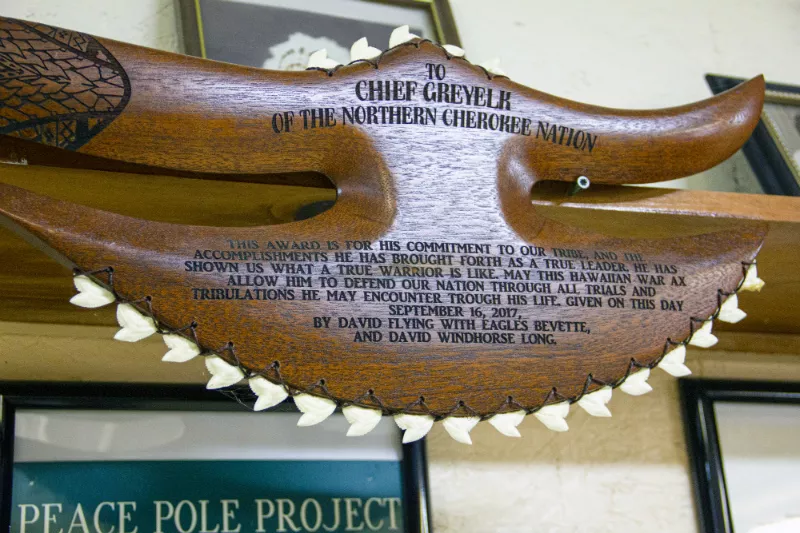
     

    The Northern Cherokee Nation's headquarters are filled with artifacts (like this "Hawaiian War Ax") and other items that ostensibly support its identity as a Native American tribe. - DANNY WICENTOWSKI

    DANNY WICENTOWSKI

    The Northern Cherokee Nation’s headquarters are filled with artifacts (like this “Hawaiian War Ax”) and other items that ostensibly support its identity as a Native American tribe.

    While the L.A. Times had unraveled a nationwide failure in government oversight, what remained unexplored was a seemingly straightforward question: What did it actually mean to be part of the Northern Cherokee Nation?

    Whether its citizens are sincere believers or accomplices to an elaborate fraud, the fact that the answers are tied up in a web of money and alleged tribal identity theft demanded further inquiry.

    In a January 2020 phone call, the 68-year-old Descombes — a long-haul trucker by trade — dispenses scorn on the L.A. Times and dismisses the seriousness of the recent news coverage, which he calls “less than a little flattering.”

    Despite the chief’s recent impression of “disparaging” reporters, he invites me to attend the next tribal council meeting.

    And there I am, a couple months later, as Descombes and the six other members of the tribal council assemble before a crowd of seventeen citizens. (Less than a week has passed since Missouri confirmed its first coronavirus case, and I’m told that much of the usual crowd has stayed home amid the burgeoning pandemic.)

    Just as Descombes suggested in the back office, the council meeting is a “modern government” sort of operation. It begins with the chief explaining the procedures of swearing in a new council speaker. Motions are made and seconded. Minutes are read.

    Then, the attendees are asked to stand and remove their hats.

    Descombes is a self-professed expert in the Cherokee language. (During the earlier tour in the office, he described growing up in a Cherokee-speaking home and said he’s spent 40 years translating traditional tribal prayers and rituals. As proof he produced a thick binder, stuffed with pages, which he identified as “the world’s biggest Cherokee dictionary.”)

    Descombes addresses the citizenry. “I’ve translated a prayer here into English,” he says. Unfolding a sheet of paper, he begins to read: “My grandfather is a fire, the earth is my mother, the great spirit is my father.”

    “The world stopped at my birth and lay itself at my feet.”

    “I shall swallow the earth whole when I die.”

    The prayer continues, moving through various objects of reverence. It hails the earth and fire, earth and wind, parents and grandparents, and finally the great spirit:

    “Oh, great spirit, giver of my life,” Descombes intones, “please accept this humble offering of prayer, this offering of praise, this honest reverence of my love for you.”

    The prayer concludes, and the meeting turns back to the tasks of modern government: There’s an update about the remaining payments left on the tribal complex, details of an upcoming visit by a Boy Scout troop and plans for the annual powwow scheduled for October, the centerpiece of the tribe’s calendar. There’s a call for donations to buy a Missouri state flag and solar lights. Mostly, it feels like a small-town city council meeting.

    Weeks later, I type the words “My grandfather is a fire, the earth is my mother” into Google, and hit enter. I find the entire prayer, verbatim, in Facebook and Pinterest posts, as well as the first chapter of a 2014 romance novel titled Apache Moon available for purchase on Amazon. The same text appears on spirituality websites under the title “An Indian Prayer” as far back as 2001.


  • Sweetie Pie’s Tim Norman, Exotic Dancer Charged in Murder-For-Hire Plot

    Sweetie Pie’s Tim Norman, Exotic Dancer Charged in Murder-For-Hire Plot

    MADISON COUNTY, MISSISSIPPI DETENTION CENTER — James Timothy Norman was charged in a murder-for-hire plot.

    James Timothy Norman of Sweetie Pie’s fame is facing federal charges alleging he conspired with an exotic dancer in the murder of his twenty-year-old nephew Andre Montgomery.

    The 41-year-old son of the legendary restaurant owner Robbie Montgomery was arrested this morning at his home in Jackson, Mississippi, according to a statement from the U.S. Attorney.

    Norman, who starred with his family in the show Welcome to Sweetie Pie’s , had feuded with his mother over money in recent years after she sued him for opening restaurants under the Sweetie Pie’s brand without her permission, according to court records.

    It was a messy, public spat, but federal authorities say Norman executed a far more sinister conspiracy to have his nephew killed in 2016. According to the criminal complaint unsealed today, Norman had taken out $450,000 in life insurance policies on Andre Montgomery in 2014, and he was the sole beneficiary.

    In 2016, Norman was living in Los Angeles. Phone records obtained by investigators showed that leading up to Andre Montgomery’s murder, Norman and a Memphis-based dancer named Terica Ellis headed to St. Louis and communicated over burner phones. Ellis, 36, also started contacting Montgomery, sending him her Instagram account handle, Alexusdagreat, and texting that she would be visiting St. Louis.

    “I’m on my way in town,” she wrote him in an email on March 10, 2016, according to court records.

    Three days later, Norman flew into St. Louis and booked a room at the Chase Park Plaza hotel. The next day, March 14, Ellis contacted Montgomery to figure out where he was, according to the complaint. Cell phone records showed that he texted her the address of a house: 3964 Natural Bridge Ave. in the city. Ellis then called Norman.

    That night, at 8:02 p.m., Montgomery was shot to death at the house on Natural Bridge. And investigators believe Ellis was there. Location data from her burner phone put her at the scene, and in one of Montgomery’s final phone calls, he spoke to his girlfriend, who later told investigators she could hear a woman’s voice in the background.

    One minute after the twenty-year-old was shot, Ellis made another call — to Norman.

    “Despite being at the scene of Montgomery’s murder at 8:02pm, ELLIS’s first phone call was not to the police, but rather to [NORMAN] at 8:03 p.m., at which time her phone location data showed she was driving in a direction consistent with her returning home in Memphis, Tennessee,” the criminal complaint says.

    Phone records would then show the phone moving south along Interstate 55. Norman’s phone showed him flying back to Los Angeles, arriving early the morning after the killing. That same day, March 15, 2016, both the burner phones went dark, authorities say.

    Back in Memphis, Ellis began depositing money — $3,020 in a checking account that previously had a negative balance and another $4,340 in a savings account opened the same day. On March 17, 2016, she deposited another $1,900.

    On March 22, 2016, she and her mother and daughter flew to Los Angeles. There’s not much information in the court records about what they did there, but authorities say location data for her mom’s phone showed that on at least one occasion they were with Norman.

    At the end of April 2016, Norman wired Ellis $700.

    Norman waited a week to try to collect on his murdered nephew’s life insurance police, authorities say. On March 21, 2016, he called the bank, but he never provided all the documentation required and still hasn’t gotten the money, according to court records.

    He’s now being held without bond at a jail in Madison County, Mississippi. He and Ellis have been charged with conspiracy to use interstate commerce facilities in commission of murder-for-hire, resulting in death.

    The case is being investigated by St. Louis police and the FBI.

    Correction: The original version of this story incorrectly reported Andre Montgomery’s age at the time of his death. We regret the error.

  • There Are Nine Jail Cells Inside This Missouri House… Kinky [PHOTOS]

    There Are Nine Jail Cells Inside This Missouri House… Kinky [PHOTOS]

    If you’re into some heavy BDSM fantasy role-playing (or horror movies), this historic Missouri house with a nine-cell jail attached is your freaky dream castle.
    Built in 1875, this property is known as the Howard County Sheriff’s House and Jail and it dates back to the days when law enforcement in small towns kept a close eye on their prisoners by keeping them basically at their own house.
    Located near Columbia, MO, the house has two bedrooms and three levels of living space. It underwent an extensive (and expensive) renovation in 2005, but this gorgeous house still isn’t nearly as interesting as what is attached.

    The door in the kitchen opens up to another world. The bi-level 2,500 square foot attached prison area includes nine cells and a booking room. There are bars on the windows and with all of the metal and bland industrial paint, this place doesn’t look vintage at all — it looks like it’s ready to be used right now.
    So if you like history or a little (sexual) mystery, the Howard County Sheriff’s House might fulfill all of your desires.

    For more information on this $350,000 property, visit the listing page or contact Jeff Radel with House of Brokers Realty, Inc. at 855-750-0262.
    Photos by Realtor.com https://www.realtor.com/realestateandhomes-detail/203-E-Morrison-St_Fayette_MO_65248_M73436-07096#photo0

    Scroll down to view images
    Page 1 of 4
    Image: There Are Nine Jail Cells Inside This Missouri House... Kinky [PHOTOS]

    1 of 70
    Image: There Are Nine Jail Cells Inside This Missouri House... Kinky [PHOTOS]

    2 of 70
    Image: There Are Nine Jail Cells Inside This Missouri House... Kinky [PHOTOS]

    3 of 70
    Image: There Are Nine Jail Cells Inside This Missouri House... Kinky [PHOTOS]

    4 of 70
    Image: There Are Nine Jail Cells Inside This Missouri House... Kinky [PHOTOS]

    5 of 70
    Image: There Are Nine Jail Cells Inside This Missouri House... Kinky [PHOTOS]

    6 of 70
    Image: There Are Nine Jail Cells Inside This Missouri House... Kinky [PHOTOS]

    7 of 70
    Image: There Are Nine Jail Cells Inside This Missouri House... Kinky [PHOTOS]

    8 of 70
    Image: There Are Nine Jail Cells Inside This Missouri House... Kinky [PHOTOS]

    9 of 70
    Image: There Are Nine Jail Cells Inside This Missouri House... Kinky [PHOTOS]

    10 of 70
    Image: There Are Nine Jail Cells Inside This Missouri House... Kinky [PHOTOS]

    11 of 70
    Image: There Are Nine Jail Cells Inside This Missouri House... Kinky [PHOTOS]

    12 of 70
    Image: There Are Nine Jail Cells Inside This Missouri House... Kinky [PHOTOS]

    13 of 70
    Image: There Are Nine Jail Cells Inside This Missouri House... Kinky [PHOTOS]

    14 of 70
    Image: There Are Nine Jail Cells Inside This Missouri House... Kinky [PHOTOS]

    15 of 70
    Image: There Are Nine Jail Cells Inside This Missouri House... Kinky [PHOTOS]

    16 of 70
    Image: There Are Nine Jail Cells Inside This Missouri House... Kinky [PHOTOS]

    17 of 70
    Image: There Are Nine Jail Cells Inside This Missouri House... Kinky [PHOTOS]

    18 of 70
    Image: There Are Nine Jail Cells Inside This Missouri House... Kinky [PHOTOS]

    19 of 70
  • St. Louis Re-Elects Kim Gardner in Landslide

    St. Louis Re-Elects Kim Gardner in Landslide

    DANNY WICENTOWSKI — St. Louis Circuit Attorney Kim Gardner.

    On Tuesday, in a Democratic primary that effectively decides the race for St. Louis Circuit Attorney, Kim Gardner won a landslide victory that all but cements her spot as the city’s top prosecutor for a second four-year term.

    First elected to the position in 2016, Gardner, the city’s first Black circuit attorney, arrived on a crest of post-Ferguson energy for criminal justice reform. In that race, Gardner defeated a crowded field of candidates, including Mary Pat Carl, the city’s lead homicide prosecutor.

    The two prosecutors faced each other again in Tuesday’s primary. According to unofficial results published by the city’s election board, Gardner took more than 60 percent, topping Carl by more than 15,000 votes.

    In remarks at an election watch party, Gardner told supporters she was “humbled” and that she saw her victory as a rebuke from voters against the forces of assorted criticism — amplified by President Donald Trump and Missouri Governor Mike Parson — surrounding her decision to charge of the McCloskeys for confronting protesters with guns outside their Central West End mansion on J ————————StartFragment———————— une 28.

    Addressing supporters at a watch party, Gardner thanked them and told the masked crowd that the victory “was against all odds,” according to a video of the speech taken by Real STL News .

    “This was against all odds, against all odds of criticism, [against] people putting out misinformation,” Gardner said. “When you have the President of the United States in a local election, then you have to understand, that the people overwhelming have said ‘Enough is enough.’”

    Gardner called the election a “resounding message” from voters: “They want St. Louis to have a reform-minded prosecutor.”

    In a tweet , Carl, who had campaigned on her trial experience and criticized Gardner for the office’s low conviction rate, wrote that she was proud of what her campaign had accomplished “under unprecedented circumstances.”

    “I wish Ms. Gardner a successful term,” Carl’s tweet continued. “I urge her to be transparent with the public, and build working relationships for a safer St. Louis.”

    Gardner will face the Republican nominee Daniel Zdrodowski in the November election.

    Follow Danny Wicentowski on Twitter at @D_Towski . E-mail the author at [email protected] —————EndFragment—————

  • Gun-Swinging Lawyers Confront Protesters in Central West End

    Gun-Swinging Lawyers Confront Protesters in Central West End

    THEO WELLING — Patricia and Mark McCloskey confront protesters.

    THEO WELLING — Patricia and Mark McCloskey in front of their home in the Central West End.

    As hundreds of protesters marched toward Mayor Lyda Krewson’s house this evening they were met by a surprising sight — a gun-swinging couple on the lawn of their Central West End mansion.

    The couple, personal injury attorneys Mark and Patricia McCloskey, shouted at marchers who seemed to be just passing through the gated community.

    A video recorded by freelance photographer Theo Welling for the Riverfront Times shows Mark, dressed in a pastel pink polo shirt and khakis, brandishing a rifle while Patricia, wearing black-and-white-striped top with capri pants, casually holds a small handgun.

    The protesters were walking to Krewson’s house for a demonstration, part of the backlash the mayor is facing for broadcasting on Facebook Live the names and addresses of advocates for defunding the police department.

    Multiple people marching tonight filmed the scene in front of the McCloskeys, and various angles show the couple sweeping their weapons in the direction of protesters who were standing on the sidewalk or walking past.

    At one point, a barefoot Patricia, whose law firm bio says she is a member of the Missouri Bar Association ethical review panel, crosses the lawn and stumbles briefly while she has her gun aimed at protesters. It’s not clear if the guns were loaded.

    The McCloskeys are apparently very proud of their house, welcoming St. Louis Magazine in 2018 for a tour of the Renaissance-style palazzo that was originally built by a Busch heiress and her husband, but it’s unclear what prompted them to grab their guns and pop out front, shoeless but armed, to confront nonviolent protesters.

    We called the after-hours number for the couple’s law firm, and a woman answering the phone said the McCloskeys couldn’t be reached until morning.

    After the brief, but intense encounter, marchers continued down the street. Some in the crowd shouted, “Let’s go! Let’s go!” at stragglers.

    The procession continued to Krewson’s house, where hundreds of people filled the street, extending into her yard and front porch. Activists have called for her resignation for doxxing her constituents on Friday. After initially declining to say she was sorry, the mayor issued an apology through social media and news outlets on Friday night.

    Correction: We misidentified the magazine of Mark McCloskey’s rifle as a clip in the original story. Sorry about that.

  • A Massive Dust Cloud Is Headed to the St. Louis Area

    A Massive Dust Cloud Is Headed to the St. Louis Area

    Well, the nightmare that is 2020 rolls on and now instead of dealing with only a dangerous pandemic and a massive economic crisis and a complete moron in the White House, we also might have to worry about getting taken out by a cloud of dust.

    The Sahara Desert is 6,470 miles away but it’s still coming for us. A massive plume of Saharan dust has hitched a ride on some trade winds across the Atlantic Ocean and it is now headed our way.

    Expected to reach the St. Louis area this weekend, prediction maps show the plume swooping up from the south through the middle of the country and swirling around the southern states.

    Experts are reporting that it “could be the biggest and most intense Saharan plume in 50 years.” In addition to potentially causing problems for those with asthma and other respiratory issues, the dust could also be bad news for a country currently battling the coronavirus pandemic, which is known to cause potentially deadly respiratory distress.

    KMOV meteorologist Steve Templeton says it’s expected to arrive in the area on Saturday or Sunday and that Missouri will likely see a lighter dust concentration than in states to the south.

    It seems like this is just one more reason to wear your mask, everybody. Keep those precious lungs protected.

    Email the author at [email protected]

  • Missouri Man in Prison for Growing Marijuana Dies in Less Than a Year

    Missouri Man in Prison for Growing Marijuana Dies in Less Than a Year

    MDOC — Growing marijuana put Steven Sutherland in prison for ten years. He survived less than one.

    Franklin County put Steven Sutherland behind bars for growing marijuana. This weekend, just under eleven months into his ten-year prison sentence, the 59-year-old passed away.

    Sutherland had been recently diagnosed with lung cancer, his son tells Riverfront Times. But even before that, Sutherland had entered prison with an array of health problems: The June 2019 mugshot that guards snapped of him showed the convicted drug offender — who had been charged in 2015 for possessing all of 110 grams of marijuana and 21 plants — wearing an oxygen tube under his nose.

    As RFT reported last summer, the case against Sutherland spent years winding its way through the court system. By the time it came to trial in 2019, Sutherland’s public defender argued for leniency , noting that the state had legalized medical marijuana in the intervening years and that it stood little to gain from imprisoning a seriously sick man.

    Among other things, Sutherland suffered from chronic seizures that resisted medication. The seizures had been treated by Mercy Hospital neurologist, who, in a letter to the court wrote, “I believe medical use of marijuana may help.”

    Despite Sutherland’s failing health, and his insistence that he was merely growing the cannabis for his own medical use, the case ended in a lengthy prison sentence. His own past came into play. A previous drug felony in 1997 meant Sutherland was a “prior offender,” which enhanced his possible punishment.

    In May 2019, a judge sentenced him to ten years behind bars. On Saturday, May 9, one month shy of his 60th birthday, Sutherland died while in hospice at the at Tipton Correctional Center.

    In an email, Karen Pojmann, director of communications for the Missouri Department of Corrections said Sutherland died of “natural causes not related to COVID-19.”

    Sutherland’s son, Dakota Sutherland, said that his father had suffered a high fever in his last days and had been given antibiotics. Dakota claimed the case was under consideration for medical parole, “but he passed before the parole board released a decision.”

    Dakota added that his father “wasn’t able to get up to use the phone. They did bring it to him the last time we heard from him.”

    The family has started a GoFundMe campaign to pay for Sutherland’s memorial and funeral expenses in South Dakota.

    See also: Missouri is Imprisoning a Sick Man for 10 Years for Growing Weed

  • The Abandoned Forest Park Hospital

    The Abandoned Forest Park Hospital

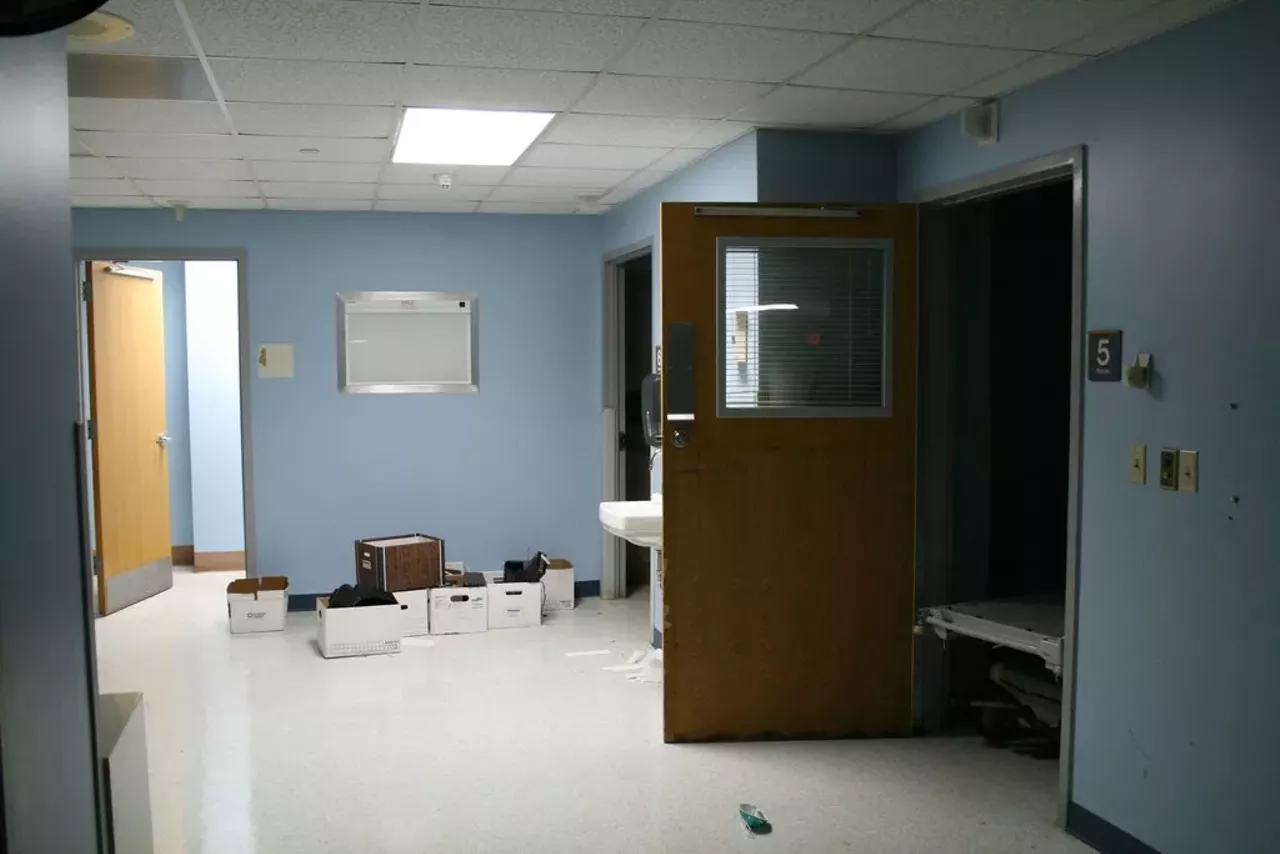
    When Nick Zulauf arrived at Forest Park Hospital, 6150 Oakland Avenue — and closed since May 2011 — he says he saw a lone police officer at the entrance, seemingly there to keep out the riffraff.

    Zulauf says he asked if it would be alright to take some pictures of the otherwise abandoned 567,000-square-foot building, and the cop said that was fine. Zulauf may have failed to mention that he meant pictures of the inside of the massive hospital.

    Continue reading “Post-Apocalyptic Portraits of the Abandoned Forest Park Hospital” by Jessica Lussenhop. Photos by Nick Zulauf.

    Scroll down to view images
    Page 1 of 2
    Image: The Abandoned Forest Park Hospital

    1 of 40
    Image: The Abandoned Forest Park Hospital

    2 of 40
    Image: The Abandoned Forest Park Hospital

    3 of 40
    Image: The Abandoned Forest Park Hospital

    4 of 40
    Image: The Abandoned Forest Park Hospital

    5 of 40
    Image: The Abandoned Forest Park Hospital

    6 of 40
    Image: The Abandoned Forest Park Hospital

    7 of 40
    Image: The Abandoned Forest Park Hospital

    8 of 40
    Image: The Abandoned Forest Park Hospital

    9 of 40
    Image: The Abandoned Forest Park Hospital

    10 of 40
    Image: The Abandoned Forest Park Hospital

    11 of 40
    Image: The Abandoned Forest Park Hospital

    12 of 40
    Image: The Abandoned Forest Park Hospital

    13 of 40
    Image: The Abandoned Forest Park Hospital

    14 of 40
    Image: The Abandoned Forest Park Hospital

    15 of 40
    Image: The Abandoned Forest Park Hospital

    16 of 40
    Image: The Abandoned Forest Park Hospital

    17 of 40
    Image: The Abandoned Forest Park Hospital

    18 of 40
    Image: The Abandoned Forest Park Hospital

    19 of 40
    Image: The Abandoned Forest Park Hospital

    20 of 40
    Page 1 of 2

    Next Page


  • 20 Album Covers to Stare at on Flag Day

    20 Album Covers to Stare at on Flag Day

    Putting the American flag on an album cover is sure to get your album or single more than a passing glance from most people. It’s a powerful symbol. So in honor of flag day (June 14), here are ten albums that display Old Glory front-and-center on the cover, which could make you think a little differently about the country in which you live. Curated by Nick Lucchesi and Thorin Klosowski.

    Scroll down to view images
    Bruce Springsteen - Born in the U.S.A. (1984) Arguably the most famous album cover on this list, Born in the U.S.A. by Bruce Springsteen also displays the Boss' backside in addition to the stars-and-stripes. Reagan's campaign famously used the title track in his re-election campaign, not knowing Springsteen's political leanings went the other way.

    Bruce Springsteen – Born in the U.S.A. (1984)

    Arguably the most famous album cover on this list, Born in the U.S.A. by Bruce Springsteen also displays the Boss’ backside in addition to the stars-and-stripes. Reagan’s campaign famously used the title track in his re-election campaign, not knowing Springsteen’s political leanings went the other way.

    1 of 20
    Anti-Flag - Die for the Government (1996) The first and, ahem, the best record by Pennsylvania punk band Anti-Flag, Die for the Government has the upside-down American flag (a common theme on this list) behind the band members. Anti-Flag went on to distance itself from the overtly-anti-American theme of this record. Always sad to see a band move from its roots to accommodate a larger audience.

    Anti-Flag – Die for the Government (1996)

    The first and, ahem, the best record by Pennsylvania punk band Anti-Flag, Die for the Government has the upside-down American flag (a common theme on this list) behind the band members. Anti-Flag went on to distance itself from the overtly-anti-American theme of this record. Always sad to see a band move from its roots to accommodate a larger audience.

    2 of 20
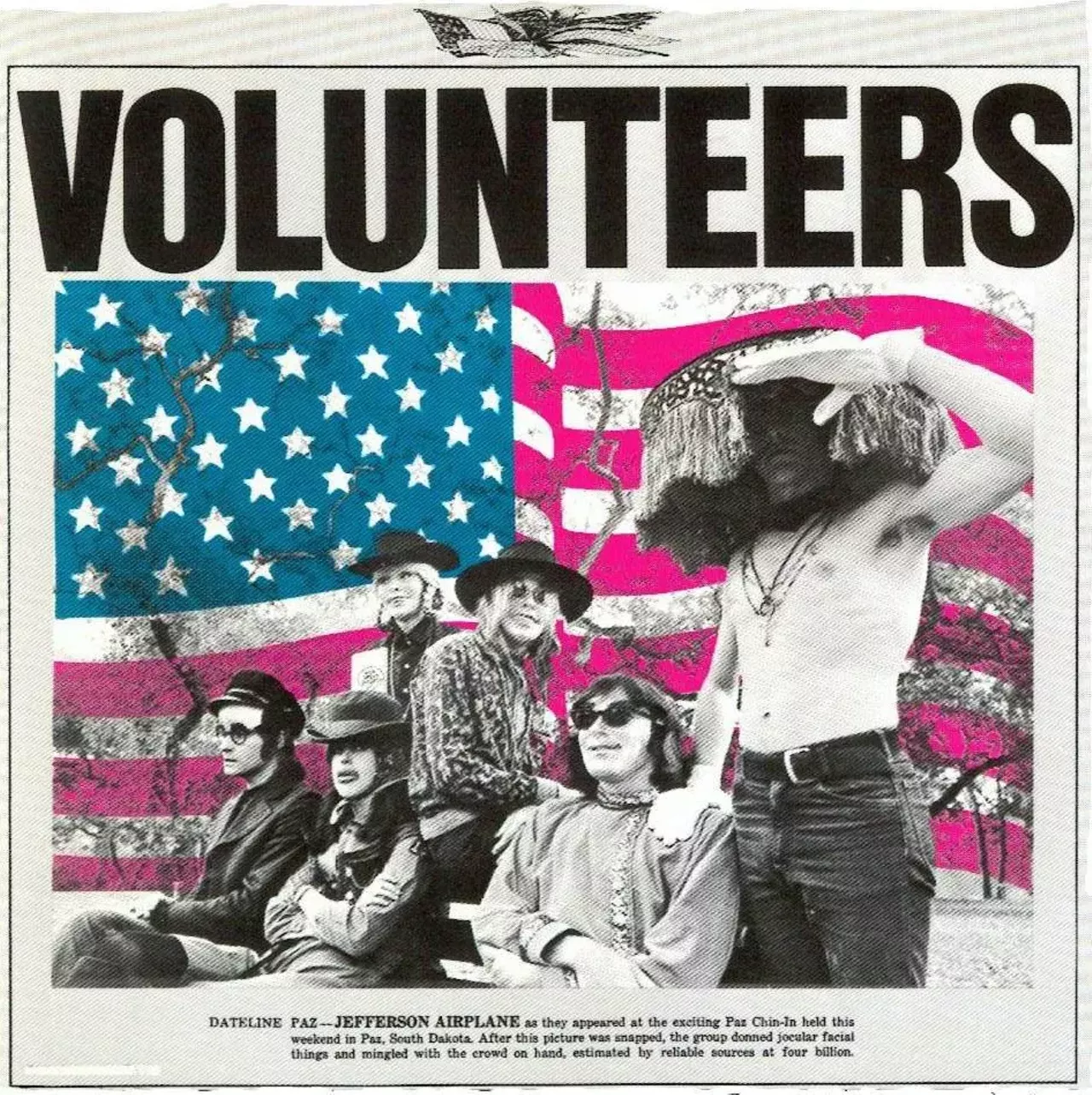
    Jefferson Airplane - Volunteers (1969) Back in the late '60s all you needed to do to create a controversial album was to throw the American flag on the cover of a decidedly anti-war album and toss in the word "motherfucker" somewhere in a song. Add a few pro-anarchism lyrics, a photo of the band wearing disguises to hide their identity and some pro-Black Panther lines and you have a hit.

    Jefferson Airplane – Volunteers (1969)

    Back in the late ’60s all you needed to do to create a controversial album was to throw the American flag on the cover of a decidedly anti-war album and toss in the word “motherfucker” somewhere in a song. Add a few pro-anarchism lyrics, a photo of the band wearing disguises to hide their identity and some pro-Black Panther lines and you have a hit.

    3 of 20
    The Black Crowes - Amorica Ah yes, pubes. Amorica by the Black Crowes was released in 1994, but an alternative cover was also issued to help boost album sales among people who didn't want album-cover pubes in their collection. If you didn't know, it's a take off the 1976 Bicentennial issue of Hustler, Larry Flynt's free speech vehicle disguised as a magazine for people who love porn.

    The Black Crowes – Amorica

    Ah yes, pubes. Amorica by the Black Crowes was released in 1994, but an alternative cover was also issued to help boost album sales among people who didn’t want album-cover pubes in their collection. If you didn’t know, it’s a take off the 1976 Bicentennial issue of Hustler, Larry Flynt’s free speech vehicle disguised as a magazine for people who love porn.

    4 of 20
    Garth Brooks - The Hits (1994) 1994's The Hits has Garth Brooks' face covered in the colors of the American flag and honestly, it's a little creepy. He looks a little like an alien, with those wide-open unblinking eyes. Conversely, the songs on this record -- "Friends in Low Places" -- have become downright iconic in country bars and un-air-conditioned gas stations across the South.

    Garth Brooks – The Hits (1994)

    1994’s The Hits has Garth Brooks’ face covered in the colors of the American flag and honestly, it’s a little creepy. He looks a little like an alien, with those wide-open unblinking eyes. Conversely, the songs on this record — “Friends in Low Places” — have become downright iconic in country bars and un-air-conditioned gas stations across the South.

    5 of 20
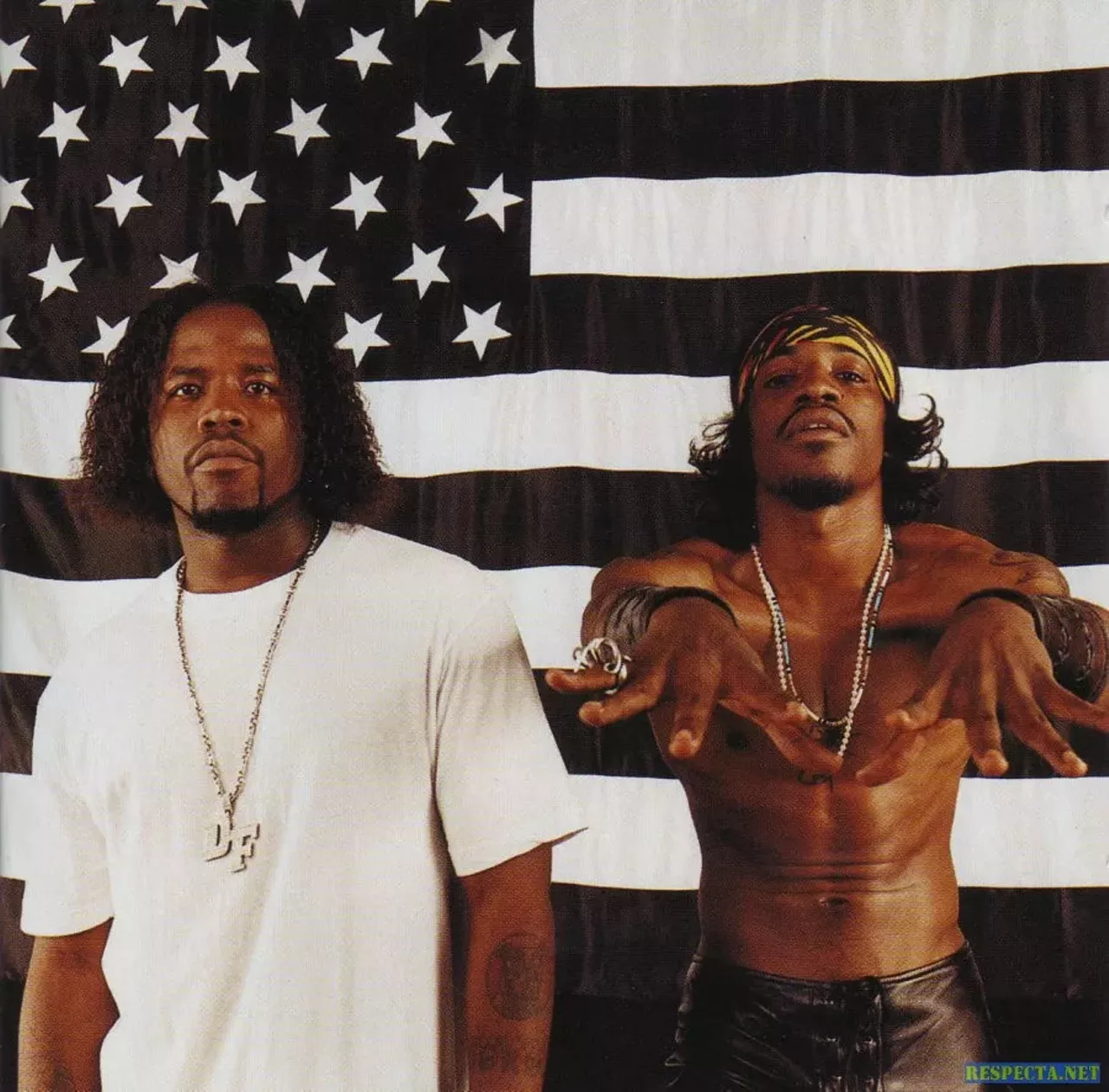
    Outkast - Stankonia (2000) The fourth album by Atlanta's Outkast, released in 2000. By 2011, Andre 3000 and Big Boi might be more famous for their solo work, but this record should take America back to a time and place. This album is full of hits like "So Fresh, So Clean," "Ms. Jackson" and "B.O.B."

    Outkast – Stankonia (2000)

    The fourth album by Atlanta’s Outkast, released in 2000. By 2011, Andre 3000 and Big Boi might be more famous for their solo work, but this record should take America back to a time and place. This album is full of hits like “So Fresh, So Clean,” “Ms. Jackson” and “B.O.B.”

    6 of 20
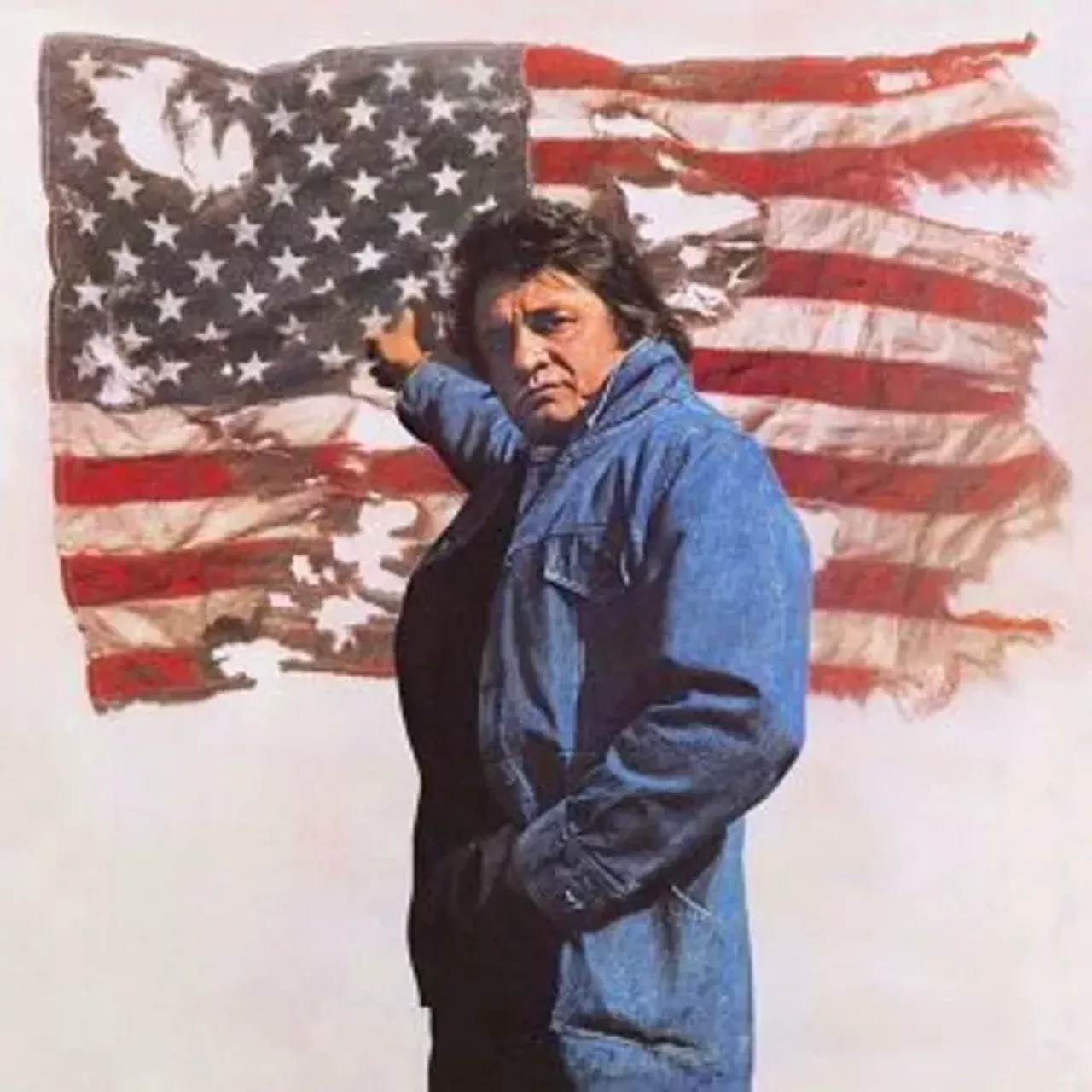
    Johnny Cash - Ragged Old Flag (1974) Ragged Old Flag is one of Johnny Cash's only super-political albums. While much of his work dealt with ethical, social and political issues, Ragged Old Flag lays it on pretty thick. Even the title track and album opener was a spoken word tribute to America, not a traditional song.

    Johnny Cash – Ragged Old Flag (1974)

    Ragged Old Flag is one of Johnny Cash’s only super-political albums. While much of his work dealt with ethical, social and political issues, Ragged Old Flag lays it on pretty thick. Even the title track and album opener was a spoken word tribute to America, not a traditional song.

    7 of 20
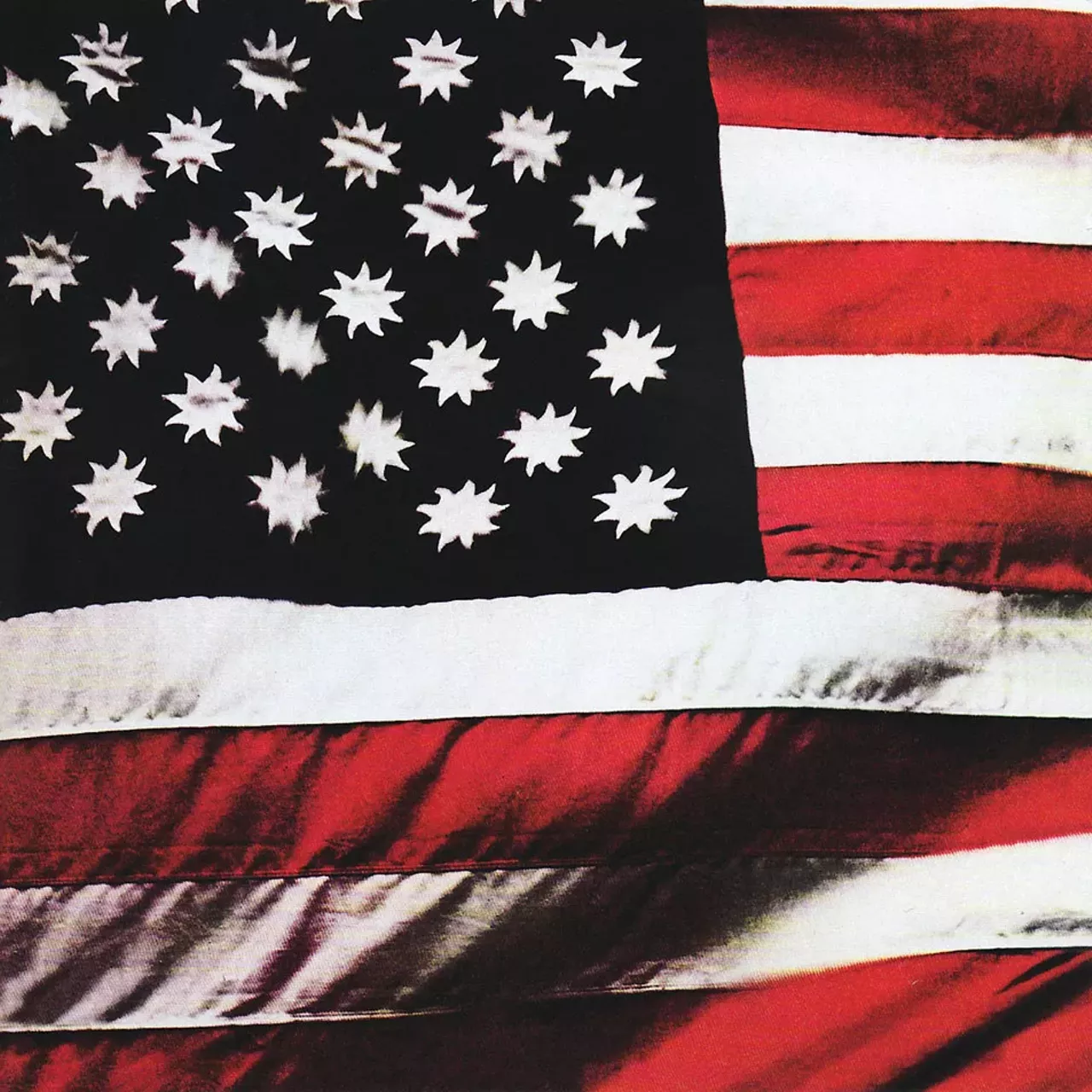
    Sly and the Family Stone - There's a Riot Goin' On (1971) There's a Riot Goin' On by Sly and the Family Stone, released in 1971. The original art had a red, white and black flag with suns instead of stars. Sly told a fan website, "Betsy Ross did the best she could with what she had. I thought I could do better."

    Sly and the Family Stone – There’s a Riot Goin’ On (1971)

    There’s a Riot Goin’ On by Sly and the Family Stone, released in 1971. The original art had a red, white and black flag with suns instead of stars. Sly told a fan website, “Betsy Ross did the best she could with what she had. I thought I could do better.”

    8 of 20
    Jello Biafra - Become the Media (2001) If there's an image that can sum up Jello Biafra quickly, it's this one. The American flag strung out as a roll of toilet paper should give you a pretty good idea of what to expect from Biafra's spoken word work, much of which was recorded in Seattle, Denver and Boulder prior to his bid for President in 2000.

    Jello Biafra – Become the Media (2001)

    If there’s an image that can sum up Jello Biafra quickly, it’s this one. The American flag strung out as a roll of toilet paper should give you a pretty good idea of what to expect from Biafra’s spoken word work, much of which was recorded in Seattle, Denver and Boulder prior to his bid for President in 2000.

    9 of 20
    Ice Cube - Death Certificate (1991) Ice Cube's 1991 album, with more piss-and-vinegar than the rest of the artists on this list combined. Just watch the video for "Steady Mobbin" to get a feel for the entire record.

    Ice Cube – Death Certificate (1991)

    Ice Cube’s 1991 album, with more piss-and-vinegar than the rest of the artists on this list combined. Just watch the video for “Steady Mobbin” to get a feel for the entire record.

    10 of 20
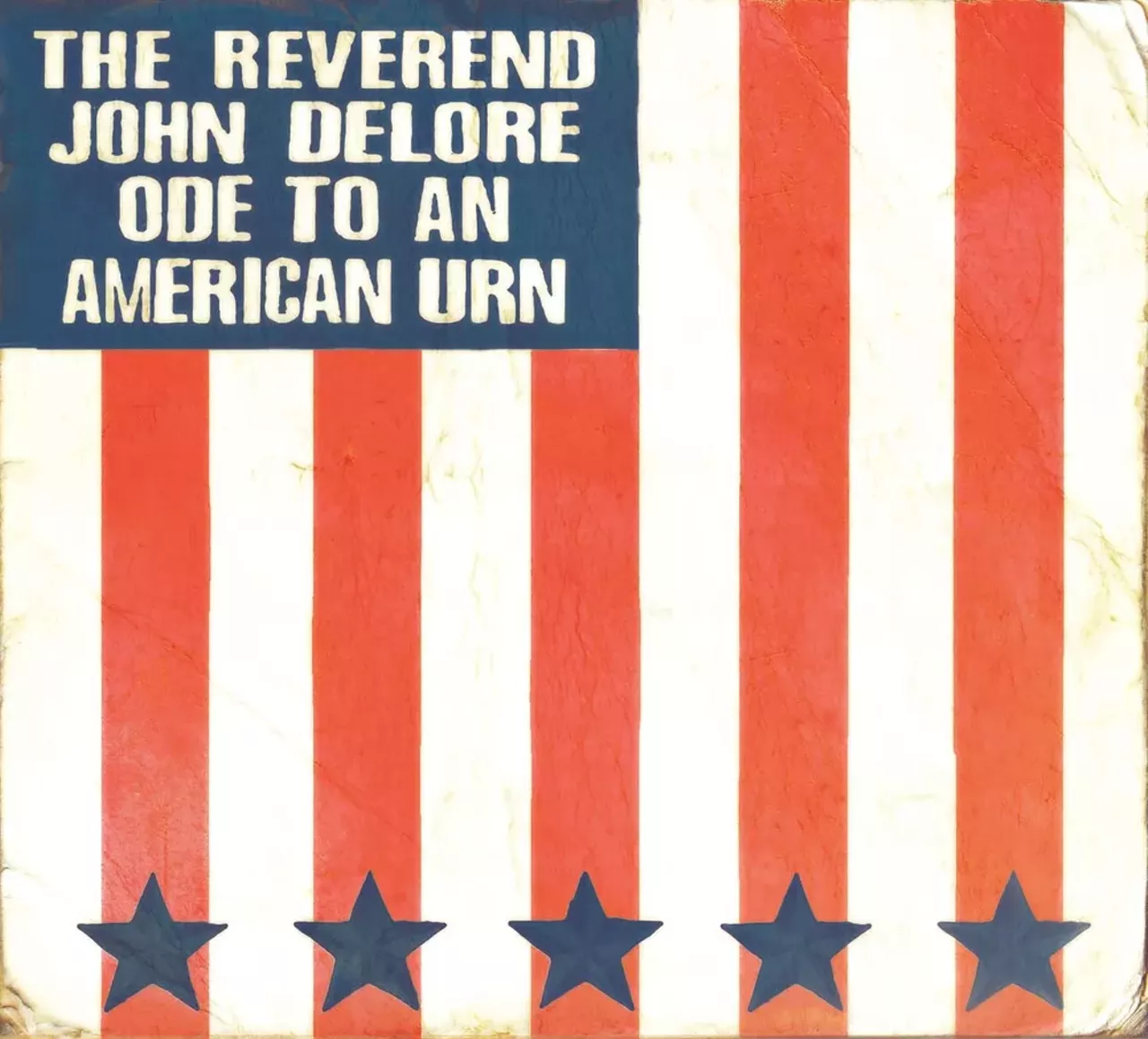
    The Reverend John Delore - Ode to an American Urn (2009) The Reverend John Delore's 2009 debut album is really, really Americana. Listen to Ode to an American Urn here. With lines like "I been up and down the country with a suitcase in my hand / Through the fields and factories, but my baby doesn’t understand," how can it not be more American?

    The Reverend John Delore – Ode to an American Urn (2009)

    The Reverend John Delore’s 2009 debut album is really, really Americana. Listen to Ode to an American Urn here. With lines like “I been up and down the country with a suitcase in my hand / Through the fields and factories, but my baby doesn’t understand,” how can it not be more American?

    11 of 20
    Akron/Family - Set 'Em Wild, Set 'Em Free (2009) What better album cover for a modern psych-folk band than a tie-dyed American flag? It manages to convey both sides of the band, the roots Americana and the psychedelic, in one simple image. Slightly weird, a bit experimental but mostly American -- Set 'Em Wild, Set 'Em Free uses the stars and stripes to a surprisingly solid effect.

    Akron/Family – Set ‘Em Wild, Set ‘Em Free (2009)

    What better album cover for a modern psych-folk band than a tie-dyed American flag? It manages to convey both sides of the band, the roots Americana and the psychedelic, in one simple image. Slightly weird, a bit experimental but mostly American — Set ‘Em Wild, Set ‘Em Free uses the stars and stripes to a surprisingly solid effect.

    12 of 20
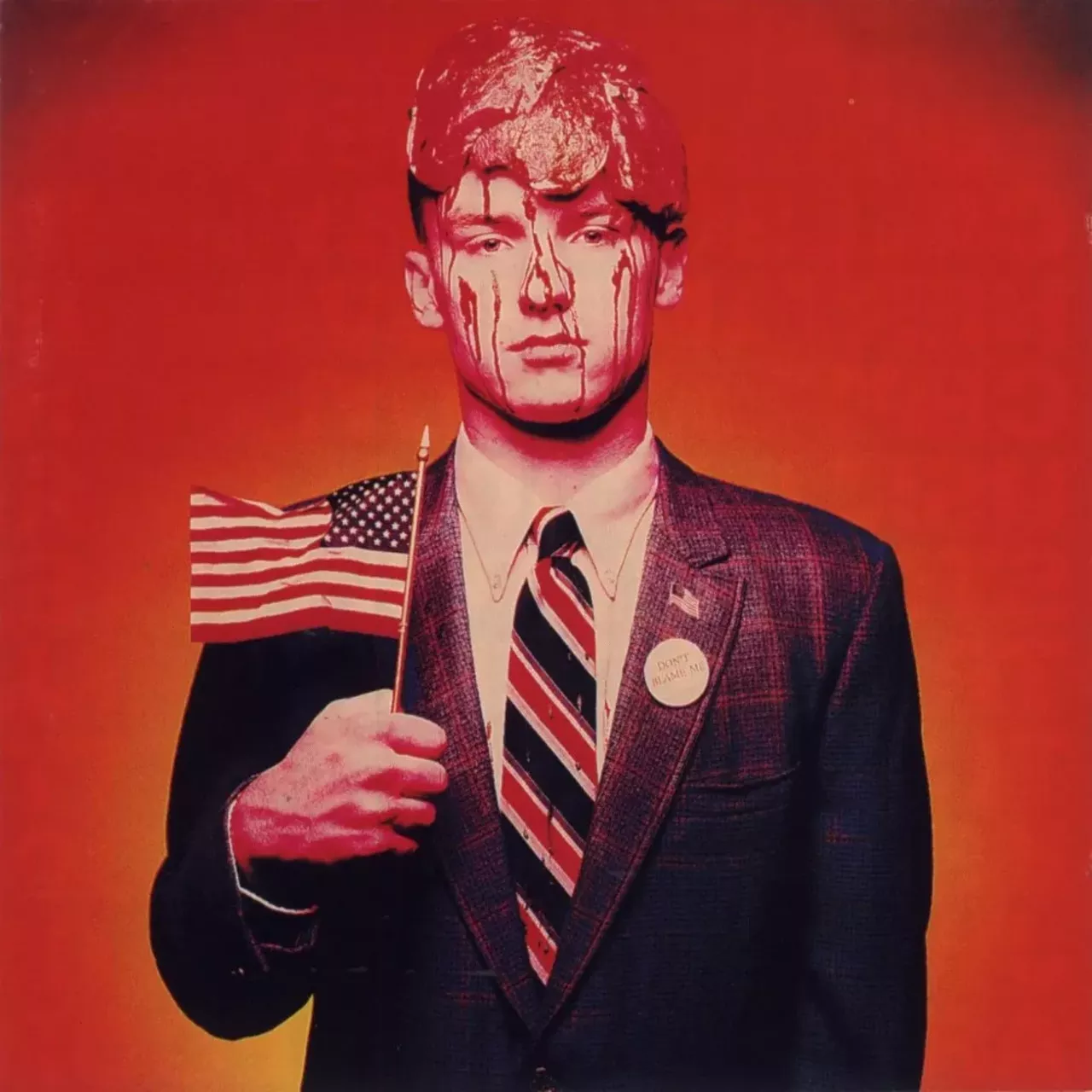
    NOFX - War on Errorism (2003) A quick glance at this album cover is enough to reveal NOFX's opinion of George Bush. Decked out in clown paint with a flag background, it's pretty unmistakable the band wasn't into the former president. Amazingly, the record still picked up a some radio play with its single, "Franco Un-American," and was even featured on an episode of One Tree Hill when one of the characters read aloud lines from "Re-gaining Unconsciousness."

    NOFX – War on Errorism (2003)

    A quick glance at this album cover is enough to reveal NOFX’s opinion of George Bush. Decked out in clown paint with a flag background, it’s pretty unmistakable the band wasn’t into the former president. Amazingly, the record still picked up a some radio play with its single, “Franco Un-American,” and was even featured on an episode of One Tree Hill when one of the characters read aloud lines from “Re-gaining Unconsciousness.”

    13 of 20
    Canned Heat - Future Blues (1970) The cover for Future Blues, released by LA boogie-rockers Canned Heat, in 1970. They covered "Let's Work Together" by Wilbert Harrison, originally released in 1962, and became a hit again on Future Blues.

    Canned Heat – Future Blues (1970)

    The cover for Future Blues, released by LA boogie-rockers Canned Heat, in 1970. They covered “Let’s Work Together” by Wilbert Harrison, originally released in 1962, and became a hit again on Future Blues.

    14 of 20
    Dope - American Apathy (2005) Aging nu-metal purveyors Dope released American Apathy almost six years ago. Perfect for your rebellious teenager. You can catch Dope at the one and only Gathering of the Juggalos later this year.

    Dope – American Apathy (2005)

    Aging nu-metal purveyors Dope released American Apathy almost six years ago. Perfect for your rebellious teenager. You can catch Dope at the one and only Gathering of the Juggalos later this year.

    15 of 20
    Mötley Crüe - Generation Swine (1997) Generation Swine's most notable quality was probably the return of Vince Neil as the band's frontman, but despite the reunion of classic Mötley Crüe, the record wasn't well-received by fans or critics. While the cover might lead one to believe it's a political record, the songs stood true to Mötley Crüe pedigree, concentrating mostly on drugs, love and prostitution.

    Mötley Crüe – Generation Swine (1997)

    Generation Swine’s most notable quality was probably the return of Vince Neil as the band’s frontman, but despite the reunion of classic Mötley Crüe, the record wasn’t well-received by fans or critics. While the cover might lead one to believe it’s a political record, the songs stood true to Mötley Crüe pedigree, concentrating mostly on drugs, love and prostitution.

    16 of 20

  • St. Louis County Restaurant Faces Fierce Backlash Over Racist Piñata

    St. Louis County Restaurant Faces Fierce Backlash Over Racist Piñata

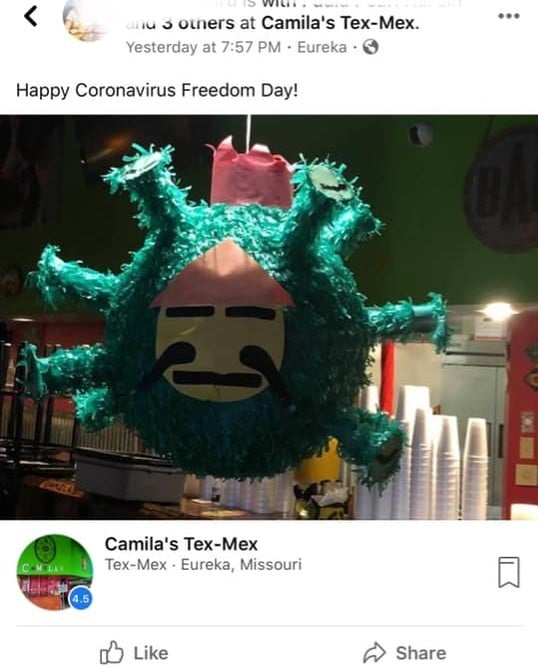
    SCREENSHOT VIA FACEBOOK — The owners of Camila’s Tex-Mex have deleted its Facebook page following a wave of backlash after photos surfaced of a racist piñata hanging in its dining room.

    SCREENSHOT VIA FACEBOOK

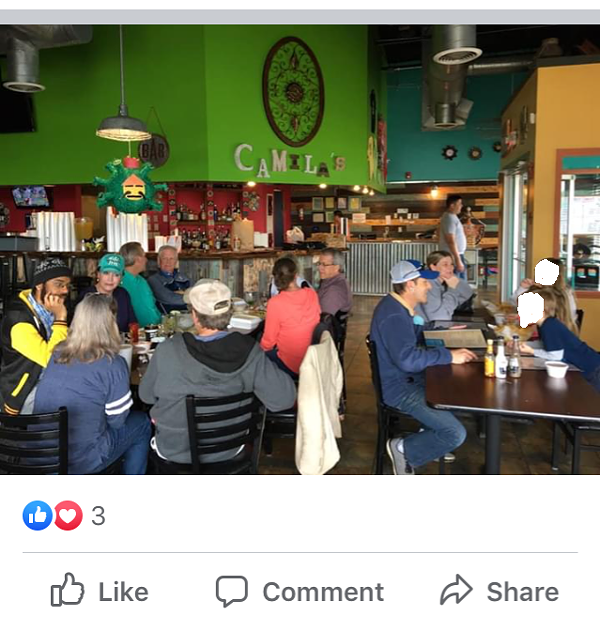
    A restaurant in St. Louis county is facing a wave of criticism after photos surfaced on social media depicting a racist piñata hanging in its crowded dining room on May 4. The owners of Camila’s Tex-Mex, located in Eureka, have removed the restaurant’s Facebook page from social media following the intense backlash.

    According to the customer who originally posted the photos to Facebook, employees allowed people into the restaurant Monday night due to poor weather conditions, despite the fact it is located in St. Louis County and therefore remains under lockdown orders that prohibit dining in. The photos show a complete lack of social distancing, with at least fifteen people, some of them children, crowded around two tables in close proximity to one another.

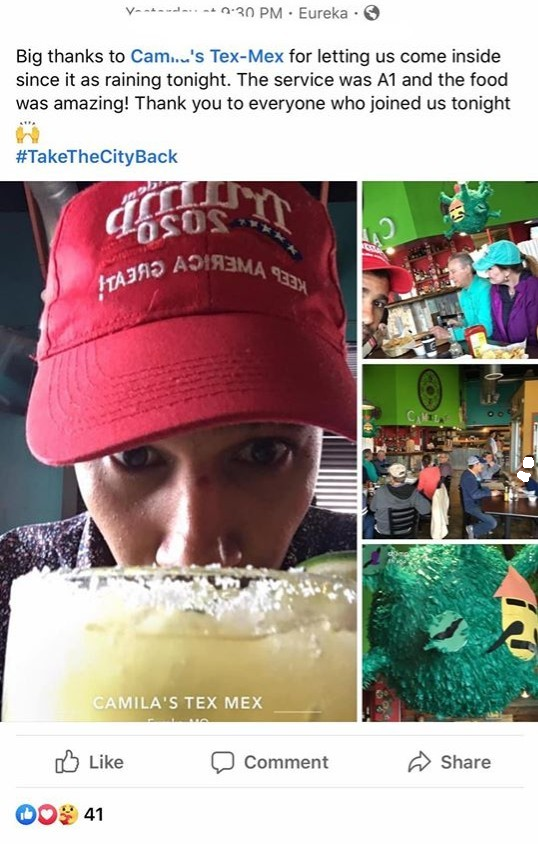
    The photos show something else as well: a piñata, shaped like coronavirus, featuring an Asian caricature sporting a conical rice-paddy hat and Fu Manchu mustache. A Google image search shows that such piñatas have apparently become somewhat popular in recent weeks.

    “Big thanks to Camila’s Tex-Mex for letting us come inside since it was raining tonight,” the customer wrote. “The service was A1 and the food was amazing! Thank you to everyone who joined us tonight🙌 #TakeTheCityBack.”

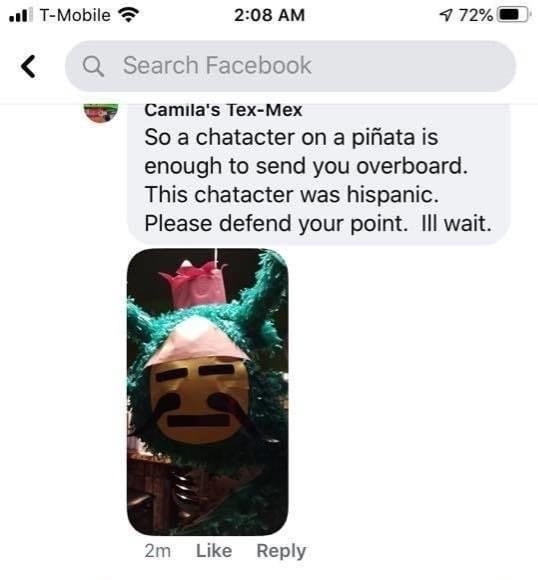
    Since the photos surfaced, the backlash has been fierce. The owners of the restaurant pulled their Facebook page on Wednesday afternoon after getting a slew of angry comments and negative reviews — but not before defending the piñata in a private conversation that was also screen-grabbed and disseminated across social media.

    The restaurant’s Yelp page has also seen an onslaught, with many posting one-star reviews and decrying its actions.

    “Xenophobia doesn’t have to be accepted. Do not support,” writes James B. from St. Louis. “There’s no way to explain this away. It’s a pandemic, not a joke. Respect the guidelines. Supporting this restaurant is being complicit in their actions.”

    “What type of management (or lack there-of) would approve of this? In what world would this piñata depicting Asian stereotypes be acceptable? Complete lack of professionalism,” writes Kathy U. of St. Louis. “This is pretty tone death considering everything going on in society right now. Insensitive and ignorant.”

    “I am always up for supporting local restaurants. I will however, never ever support a kind of establishment that allows racial discrimination to be a part of humor and decor,” writes Bonnie L. of Affton. “Come on, a virus piñata with depicting Asian caricature? The owners of this place should be ashamed of themselves. I will never feel comfortable bringing my family here. Support local but not this place.”

    According to the Anti-Defamation League , assaults and harassment of Asian-Americans have increased in the months since COVID-19 hit the United States, with those of Asian descent being told to “go back to China” and being blamed for the virus. The ADL says further that Asian-Americans have been spat on, berated with racial slurs and even physically assaulted since the crisis came to our shores.

    On Wednesday afternoon, St. Louis County Executive Sam Page released a video blasting coronavirus-related racism. In the video, he says members of the county’s Asian-American community have reported being targeted for abuse since the virus’ outbreak.

    “Hate is a direct attack on the whole community’s health,” Page said.

    An employee at Camila’s Tex-Mex who answered the phone on Wednesday afternoon said that there was no manager on duty at the time, and to try back after 5 p.m. Multiple calls by RFT after 5 p.m. were not answered, and the restaurant’s voicemail was full. An email sent to the address listed on the restaurant’s website on Wednesday afternoon did not receive a response by press time.

    We will update this post if that changes.

    [Correction: An earlier version of this story claimed that the photos were taken in the restaurant on Tuesday night. They are actually from Monday night. We regret the error.]

  • Washington University Residential Advisors Fight For Compensation After Dorms Close

    Washington University Residential Advisors Fight For Compensation After Dorms Close

    COURTESY JOEL ANDERSON — Washington University’s residential advisors found themselves with jobs when the college’s dorms closed.

    Joel Anderson and Jade Gardner loved their jobs. As residential advisors at Washington University, they were student employees, helping to manage operations and daily life in the university’s dormitories in exchange for housing and meals. The two say they spent nearly all their time taking care of their residents. Whether planning events or helping a student through a crisis, they were there for the people living in their halls.

    Until COVID-19.

    Washington University was one of the first colleges in greater St. Louis to close its campus and move classes online. The closure included dormitories and cost residential advisors their jobs. The student employees received an email on March 11, informing them they were terminated immediately, they should stop contact with their residents and they were no longer eligible for any further compensation.

    Residential advisors, or RAs, are paid through non-taxable living allowances, leaving them unable to apply for unemployment. In response to their sudden termination, Gardner and another RA started a petition requesting compensation. So far, it has reached nearly 1,600 signatures.

    “[Being an RA] was one of the most rewarding parts of my semester, which is really good ’cause RAs at Wash U don’t get a stipend or any benefits beyond housing and food,” Gardner says. “That connection and love with our residents is really what keeps us there. But it does sting a little bit to have been so suddenly cut off from the one benefit that we do get, which is housing and meals, and to not be getting any sort of compensation to help with that.”

    In a written statement (scroll down to see it in full), the university says the RAs are not paid an hourly wage, so there are no paychecks to replace. However, the school says, it has tried to take care of the RAs by offering to allow them to continue living on campus for free and refunding payments for unused meal plans — or forgiving unpaid bills for meal plans. The RAs are also eligible to apply for help from the school’s Crisis Response Fund that is open to the student body for essentials, such as medicine, food and housing.

    “One of our highest priorities throughout this time has been and continues to be to support our highest financial need students as much as possible through this unprecedented situation,” the university says in the statement. “Our Residential Advisors are incredibly valuable members of our community and we have taken steps to ensure that, like all students, those with financial need have access to assistance.”

    But the RAs say the steps the university has taken are insufficient or have been rolled out clumsily with information from the college arriving slowly, if at all. They’ve had a large Zoom call, but not smaller meetings, as the student employees requested, the RAs say. And RAs weren’t allowed to just remain on campus, they say. They could apply and make a case that they needed stay due to “extenuating circumstances,” according to the group.

    “We are aware of multiple RAs who had their petitions denied (which led to homelessness for at least one RA),” the residential advisors group says in an email.

    Anderson says there are a number of RAs who really need the financial benefits, such as free housing and reduced-cost meals, that come with the position. He and the group of RAs leading the fight for compensation conducted a survey in which the RA community was able to anonymously share their experiences.

    Fifty RAs responded, and several recounted financial struggles such as high prices for flights home, family bills skyrocketing with an extra mouth to feed and having to buy new clothes after being forced to leave them behind.

    Gardner has lost her therapy appointments, and Anderson says many of his belongings are still in his dorm room at the university, waiting to be shipped to his family home in Tacoma, Washington.

    “For certainly a notable amount of RAs, it’s been a pretty difficult last month,” Anderson says. “When it comes down to it, we’re still expected to be students, which is understandable, but to make additional sacrifices like dealing with homelessness, food insecurity, mental health problems, emotional abuse at home from difficult family situations. I firmly believe that these are sacrifices that we shouldn’t be asking students to make right now.”

    The RAs have had little luck with their employers. Anderson says communication with the Office of Residential Life has been frustratingly limited. The office reached out to set up a group meeting but has not set a date or time. Anderson, a senior, is trying to make sure he leaves his colleagues in a better place than what they are currently in. “It would be really great and really comforting for me to know that people in the RA community who I hold very near and dear to my heart will be well taken care of next year or in years in the future if this situation is replicated,” he says.

    The RAs are asking the school to compensate them with a one-time grant. Schools like Saint Louis University paid their RAs and student employees $750 in order to help with expenses. The RAs say the application for the university’s Crisis Response Fund was not made available until a week after the students had left campus. Few have actually been accepted or received the amount they needed, according to the group.

    Another round of applications has begun and Anderson says the process this time is much quicker. They still don’t know the acceptance rate. Gardner says she understands it’s a difficult job to go through these applications at a quick rate and doesn’t blame the administration for having difficulty with the crisis fund.

    “I get why that would be a really hard thing to put a timeline on because, unfortunately, the losses that a lot of students have faced during this time are not very easy to quantify,” Gardner says. “It’s very hard to read from this application, like, ‘Who are the students who are most in need, who are the students we can support?’ But, it just goes to show, I think we have to be honest about the fact that frankly, it’s just not enough.”

    Some of the RAs are hopeful the situation will lead to better communication with the Office of Residential Life, the department that oversees the residence halls.

    “We want this to be a starting point in creating more discussion around better RA-Res Life relationships and better accountability and a better system through which RAs can actually voice concerns without any sort of fear of, like, institutional retaliation,” says one RA, who asked that her name not be published because she is concerned about backlash from the university for speaking out. “We just want to ask for better transparency, better communication and a better system. If this were to happen again, which it might, would they continue to kind of leave RAs out of the conversation and leave RAs in the dust? That’s the concern.”

    She says this was her first year as an RA and she loved it. However, she fears that this will prevent future students from joining the staff.

    “I know a lot of people have kind of an apprehension about working with Res Life as an administration, and I think there’s just kind of, like, really kind of sealed that for a lot of people,” she says. “It’s really disappointing to put all of our hearts into this job and to go above and beyond supporting our residents and doing what we can for our community, despite, in my opinion, not being paid well enough. It’s just been really disappointing.”

    Anderson says there was support from the administration after the university’s Student Union proposed a resolution to help the RAs with financial needs. Anderson says the administration encouraged the advocacy, but the Office of Residential Life rejected their demands as financially untenable.

    Gardner says this situation has weighed on her mental health. She recounts having a heart-to-heart with her fellow RAs and how heartbroken they were.

    “I truly just started crying hearing about the position that people were in and realizing that we just weren’t getting enough assistance and we weren’t getting enough help,” Gardner says. “Wash U is a school that really emphasizes us getting to know people by name and by story. It sounds cheesy, but it does mean that I’ve gotten to know a lot of my coworkers really well, and it makes me really sad to see them in this vulnerable place. It makes me really sad that we are currently not being offered the support that we need.”

    Here’s Washington University’s full statement:

    One of our highest priorities throughout this time has been and continues to be to support our highest financial need students as much as possible through this unprecedented situation. Our Residential Advisors are incredibly valuable members of our community and we have taken steps to ensure that, like all students, those with financial need have access to assistance. Since RAs are compensated with free housing and free or reduced-cost dining, they are not paid an hourly wage or salary; therefore, they do not receive a paycheck that could be replaced. We have allowed RAs who wish to stay in the residence halls during the remainder of the spring semester to do so at no cost, even though they are no longer working as RAs, and we have given dining refunds to those who had unused meal points or forgiven balances due for those who owed for meal plan overages. We also have provided grants to RAs who held other part-time hourly jobs on campus, to make up for lost earnings from those sources. In addition, RAs, like all students, are eligible to apply for financial assistance through the WashU Student Crisis Response fund, which the university established to help students pay for housing, food, medicine and other essential needs during this time. We all are disappointed that the spring semester is ending this way, and we are grateful for the leadership and role that our RAs fulfilled this year. We will continue to provide support to all of our students during this difficult time.

    Editor’s note: Due to an editor’s error, the original version of this story incorrectly reported that Washington University’s residential advisors are paid an hourly wage. They are not. We regret the error.

  • Alton Mayor: No Mercy for Wife Busted at Bar for Violating Stay-At-Home Order

    Alton Mayor: No Mercy for Wife Busted at Bar for Violating Stay-At-Home Order

    SCREENGRAB VIA FACEBOOK — Alton Mayor Brant Walker recorded a message on Friday, urging people to stay home.

    Sounds like social distancing might not be a problem at the Alton mayor’s house for a little while.

    In a surprisingly candid Facebook post , Mayor Brant Walker revealed his wife Shannon was among a group of people busted at 1 a.m. Sunday at an Alton bar called Hiram’s Tavern for violating the state’s stay-at-home order — and he’s not going to cover for her.

    “My wife is an adult capable of making her own decisions, and in this instance she exhibited a stunning lack of judgement,” Walker wrote in his post.

    He goes on to say he was “embarrassed” and told police to treat Shannon the same as everyone else found to be violating Illinois’ stay-at-home order.

    Alton police told The Telegraph , the local newspaper, they’d received multiple tips that Hiram’s was illegally opening on weekends. On Sunday, officers raided the downtown bar and issued several people misdemeanor citations for reckless conduct.

    “If members of our community will not protect each other and will be so brazen as to gather in public places, we will be forced to take action like we did this weekend without hesitation,” police Chief Jason Simmons told the Telegraph .

    Along with the patrons, police arrested bar owner Hiram Lewis on a warrant. Madison County court records show he’s facing a misdemeanor charge of domestic battery with bodily harm related to a February incident.

    In recent weeks, the mayor has urged people to stay home and follow the March 20 order issued by Illinois Governor J.B. Pritzker, closing all but “essential” businesses.

    “Our police department has increased its presence in the community, but unfortunately, while patrolling, they have noticed that quite a few of our residents are not adhering to the stay-at-home order mandated by the governor, which has now been extended to April 30th,” Walker said on Friday in a video posted to Facebook .

    In that post, he said he directed police to use their discretion in issuing citations or arresting violators. After his wife was cited on Sunday, he wrote that she will have to face the consequences for her “ill-advised” decisions.

    Here’s Walker’s full statement:

    On Friday, due to the continued increase in cases of COVID-19 in Madison County, as well as increased reports of large gatherings, particularly in some of our city parks, I directed the Alton Police Department to more strictly enforce the Governor’s statewide “Stay At Home” order through the use of citations. The Governor’s order states that “All public and private gatherings of any number of people occurring outside a single household or living unit are prohibited, except for limited purposes permitted by this Executive Order.” Walking and other exercise, as well as travel for essential needs, are permitted by the order as long as citizens adhere to CDC guidelines on social distancing. At approximately 1am on Sunday morning, I was informed by the Police Chief that the Alton Police Department was investigating and stopping a social gathering in downtown Alton that was occurring in violation of the provisions of the statewide “Stay At Home” order. I was also made aware that my wife was in attendance at this prohibited social gathering. I instructed the Police Chief to treat her as he would any citizen violating the “Stay At Home” order and to ensure that she received no special treatment. My wife is an adult capable of making her own decisions, and in this instance she exhibited a stunning lack of judgement. She now faces the same consequences for her ill-advised decision as the other individuals who chose to violate the “Stay At Home” order during this incident. I am embarrassed by this incident and apologize to the citizens of Alton for any embarrassment this incident may cause our City. My first and most important priority is the safety and well-being of the citizens of Alton. We are in the midst of a national public health crisis, and I will continue to do everything in my power to ensure that your health is protected, including enforcing the Governor’s statewide “Stay At Home” order. The overwhelming majority of our citizens and businesses are observing the restrictions of the “Stay At Home” order, and for that I am truly grateful. We must all do our part to flatten the curve of COVID-19 so that we can protect our health and ultimately resume our normal activities. Furthermore, I encourage everyone to join me in thanking the members of our Police and Fire Departments who continue to work every day to protect us during this public health crisis. I have never been more optimistic about Alton’s future, and by working together to flatten the curve of COVID-19, we will emerge from this public health crisis stronger and more vibrant than ever.