Search results for: “/"”

  • A Tiny Town, a (Possibly) Haunted Church and a ‘Priest’ Fleeing His Past. Welcome to Armstrong, Missouri

    A Tiny Town, a (Possibly) Haunted Church and a ‘Priest’ Fleeing His Past. Welcome to Armstrong, Missouri

    The fake priest came to town in April 2014, presenting himself as a Benedictine abbot — black robes, clerical collar and all. He put up a small sign in front of an edifice with crimson doors, advertising morning services at the old Methodist church he now called Holy Rosary Abbey.

    In the age of Google, though, no one with a long public history of cons can stay under the radar for long — and certainly not a man trying to shake things up in a tiny Missouri town, population 284. Soon there were rumors of lawsuits and bankruptcies. Web searches brought up allegations stretching back decades.

    And if the man who calls himself Father Ryan thought moving to rural Missouri would free him from the controversies in his past, he made a terrible error in judgment. He should have known that it was only a matter of time. When a disciple made a desperate phone call, law enforcement pounced.

    The church has since been bought and sold and bought again. Its steeple looms over the street where the neighbors’ kids run and play. And the people here still talk about the robed man and his nuns. Some are convinced the church is haunted, that the evil spirits it unleashed proved to be his unraveling. There are whispers of demonic possession, of sexual scandal.

    But for Armstrong, Missouri, the real question might be who corrupted who?

    Did the pretend priest let loose the trouble that became the talk of the town? Or did something behind those crimson doors — some malevolent spirit, some remnant of the building’s past — cause Father Ryan’s downfall?


    One of Father Ryan's sets of mugshots, from a 2016 arrest stemming from a parole violation.

    One of Father Ryan’s sets of mugshots, from a 2016 arrest stemming from a parole violation.

    Father Ryan has lived under many names.

    He was born Randell Dean Stocks in Richland Center, Wisconsin in 1953 (although another source puts his birth year as 1950). Little is known about his early years, but he later told the Chicago Tribune that he fathered a child out of wedlock in his twenties. He married and divorced; the child was put up for adoption.

    He eventually moved west, to California and then Hawaii. When he returned to Wisconsin in the late 1980s, he arrived as Ryan Patrich Scott — though he soon began introducing himself as “Damien St. Anne.” He claimed to be a Franciscan brother associated with an order based in Canada.

    But in a 1989 letter responding to an inquiry from a woman in Wisconsin, the director of the Franciscan order advised in the strongest terms that Damien St. Anne was a fraud: His stay in the monastery had lasted less than four months, he had never taken his vows and instead disappeared without permission with another novice. Not only that, but his abrupt exit was shadowed with additional suspicion: The order had received word from a bishop in Ontario and a priest in Wisconsin that the wayward monk was presenting himself, fraudulently, as a full-fledged brother of the order. (Through his attorney, Ryan declined to comment for this story.)

    And so Father Ryan kept moving, trying to outrun his past. But he took too many risks.

    In 1992, he was hired as the city finance director in Edgerton, Wisconsin. A private investigator would later find his resume riddled with degrees from institutions that had no record of his admission. His career in public service ended one year later. He was accused of helping himself to $300.97 of city money by modifying what should have been a $30.97 check. In 1994, he was convicted of felony misconduct in public office and sentenced to three years probation.

    He went back to being a fake priest. This time, in California, he fell in with the Reformed Catholic Church of America, an offshoot of the traditionalist Catholic movement that does not recognize the late 1960s reforms that modernized the faith.

    Even that fringe group excommunicated Father Ryan almost immediately.

    In a scathing letter dated 1995, an archbishop chastised him for his “self-centered attitude and un-priestly conduct,” and noted his failure to properly operate a monastery, “causing problems in the local community by allowing drugs, alcohol and other misuse.”

    Father Ryan returned to Wisconsin, but found no respite there. He found himself hounded.

    In La Crosse, Bishop Raymond Burke (the future archbishop of St. Louis) sent letters sounding the alarm to every diocese in the country: Be wary of this “Father Ryan St. Anne Scott” and his “Holy Rosary Abbey,” Burke warned. Do not attend his mass or take his sacraments.

    “He is not a priest of the Roman Catholic Church,” wrote Burke.

    Still, Father Ryan attracted a flock that was willing to embrace him as shepherd. His followers didn’t care that he’d been previously married or fathered a child.

    The believers were mostly older women, widows and aspiring nuns who yearned for a traditional Catholicism. They sought the majesty of the old ways, the Latin Mass, the robed priest kneeling at the foot of an altar intoning in nomine Patris, et Filii, et Spiritus Sancti.

    Over the next two decades, Father Ryan would pass through America like a holy apparition. City to city, diocese to diocese, all it took was one or two believers here, a few more there. It was enough to sustain him and his traveling abbey.

    He appeared and departed with equal abruptness. He trafficked heavily in the Midwest, setting up his abbey in Wisconsin, Iowa and Illinois, but he also turned up in North Dakota, Louisiana, Alabama, Arizona and New Mexico.

    But wherever he fled, both the Church and the law gave chase. Warnings were sounded in Catholic dioceses across the country, including St. Louis. A trail of legal disputes include bankruptcies in Illinois and Iowa. He was sued by a former nun over unpaid loans, resulting in a civil judgment to pay her $161,000.

    In 2012, he was evicted from his abbey in Buchanan County, Iowa. He left behind thousands of dollars’ worth of religious accoutrements. He also abandoned a herd of nineteen llamas. He had intended to sell the animals and their wool as part of a venture called Monastic Fleece. Like everything else Father Ryan touched, the llama-based business failed.

    In 2013, he regrouped in St. Louis while looking for the next location for his abbey. It is unclear what precisely drew him to Armstrong, a small town about 40 miles north of Columbia, but he was known to trawl through online property listings that featured cheap real estate.

    So it came to pass that in April 2014, with two elderly nuns in tow, Father Ryan made the 166-mile drive to his new home in Armstrong.

  • Bob Cassilly Was Beaten to Death, Medical Expert Concludes

    Bob Cassilly Was Beaten to Death, Medical Expert Concludes

    PHOTO COURTESY OF ALBERT WATKINS

    This image of the bulldozer, taken after Cassilly’s death, shows the absence of blood on its dashboard.

    It was no bulldozer accident that killed artist and City Museum founder Bob Cassilly. It was a brutal beating, subsequently staged to look like an accident.

    That’s the expert opinion of Dr. Arthur Combs, a longtime physician who examined newly obtained photos of Cassilly’s death scene, as well as reports written at the time of his death in 2011 by the St. Louis Medical Examiner’s Office. Combs surveyed the photos and reports at the request of the sculptor’s widow, Giovanna Cassilly, and her attorney Albert Watkins.

    In his report, Combs zeroes in on two key things: The nature and extent of Cassilly’s wounds, and the absence of blood within the cab of the bulldozer where he was found.

    Cassilly’s death has been blamed on an apparent bulldozer rollover. But Combs’ analysis focuses on the wounds to Cassilly’s body, which he concludes simply do not fit such a scenario.

    Combs notes that nearly all the ribs on both sides of Cassilly’s body were fractured, which could not have come from a single blow or collision. He notes “defensive injuries” on his hands and fingers as Cassilly, 61, apparently tried to fight off his assailants. And the lacerations to his head were such that “the object responsible would be obvious if it were inside the cab” — yet no such item was apparent in any photos of the death scene.

    “The hypothesis that these injuries could have occurred from a single slow speed inversion of the bulldozer is untenable,” Combs writes. “Such severe and extensive injuries would not occur, particularly to an otherwise healthy man who was an experienced operator. Wounds this extensive would correlate with implicated particular structures in the cab that would have been conspicuously covered in blood, hair and tissue.” Yet photos of the bulldozer on the morning that Cassilly’s body was found show nothing of the kind.

    Combs concludes, “The only plausible explanation, and my personal conclusion, is that Mr. Cassilly died from a purposeful beating — intentionally to death.”

    Bob Cassilly’s body was found on the morning of Monday, September 26, 2011. His wife, Giovanna, was traveling in Los Angeles, and had become frantic after being unable to reach him the night before.

    That Monday, members of Cassilly’s crew discovered his lifeless body slumped in his bulldozer, which was parked at a precarious angle inside his unfinished magnum opus, Cementland. Within hours, the press was reporting that it had been a tragic accident.

    But as the Riverfront Times reported earlier this year, Giovanna Cassilly has become convinced that her husband’s death was murder. Our cover story, published May 31, detailed how investigators quickly settled on their theory of accidental death, leaving numerous questions unanswered five years later. No one ever established the time of death, much less pinned down Cassilly’s movements on the weekend he was killed.

    And that’s even though fatal bulldozer rollovers are astonishingly rare. A study surveying mining accidents from 1988 to 1997 found just fourteen fatalities related to rollovers — and in every single case, the victim was either thrown from the vehicle, asphyxiated or drowned. Not one was found inside the cab with a fractured skull.

    See also: “This Was No Accident,” Bob Cassilly’s Widow Says

    The widow’s attorney, Albert Watkins, has been trying to interest law enforcement in reopening the case. And after the RFT‘s story was published, he obtained new photos from the medical examiner’s office that had been previously unknown to his client — photos that raise startling new possibilities.


    Bob Cassilly Was Beaten to Death, Medical Expert Concludes

    COURTESY OF ALBERT WATKINS

    The photos clearly show a bloody patch and what appears to be a large rock in the shadow of the bulldozer. (See the photo below, which shows the bloody patch at the bottom right, beneath the bulldozer, as well as the photo at right showing a close-up view.)

    At the time, the medical examiner’s office appeared to have found the area noteworthy — the bloody patch was photographed and marked with an evidence notation. Yet no mention of the finding appears in the report.

    Warning: The photos at the bottom of the next page of this story contain images that may be upsetting to some readers. The RFT is including them because they show the proximity of the bloody patch to the bulldozer; however, sensitive readers may want to stop reading now.

  • Ex-Pine Lawn Cop Steven Blakeney Sentenced to 4 Years in Prison

    Ex-Pine Lawn Cop Steven Blakeney Sentenced to 4 Years in Prison

    Photo by Doyle Murphy

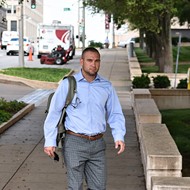
    Ex-Pine Lawn police lieutenant Steven Blakeney leaves federal court on Wednesday.

    A federal judge called an ex-Pine Lawn cop a “disgrace” and sentenced him to four years and three months in prison.

    “I hope you redeem yourself,” Judge Stephen Limbaugh told Steven Blakeney moments before U.S. Marshals led the former lieutenant away.

    Punishment has been a long time coming for Blakeney. The 36-year-old was fired from the north county suburb of Pine Lawn in 2014 after two women accused him of drugging them. He was separately charged in state court with sucker-punching a drunk woman and her designated driver, and Pine Lawn residents say he terrorized them for years.

    He was convicted in January of violating a mayoral candidate’s civil rights after orchestrating her arrest on bogus allegations that she’d stolen political signs. In reality, Blakeney ordered a convenience store clerk to report the signs stolen so that he could cuff the candidate, Nakisha Ford. Limbaugh noted that Blakeney hauled Ford out of her house on Easter night — and called a local TV station to film the resulting perp walk.

    “That’s just unconscionable,” Limbaugh told Blakeney.

    See also: Witnesses Recount Horrors at Sentencing of Ex-Pine Lawn Cop Steven Blakeney

    Limbaugh also weighed in on misdemeanor assault charges Blakeney faces in state court. He’s accused of trying to lure three young women into his car as they were leaving the Flamingo Bowl in downtown St. Louis. When the women’s designated driver intervened, Blakeney allegedly sucker-punched the man and then one of the women.

    A jury couldn’t reach a verdict on that charge, but Limbaugh said he’d reviewed the transcripts and it seemed clear to him that Blakeney was guilty. St. Louis prosecutors haven’t said whether they’ll try that case again.

    Blakeney’s attorney, Matthew Radefeld argued that his client, who will never be a police officer again, had already been punished enough. Blakeney has been “demonized” in the media and blamed for problems in Pine Lawn and policing across the nation.

    “He should not be the scapegoat for public outcry against police and police misconduct,” Radefeld said, adding that prosecutor’s recommended sentence of more than five years was “more than double the sentences” received by officers involved in the Rodney King beating.

    He asked the judge to give Blakeney probation, so he could work and raise his two boys.

    Assistant U.S. Attorney Reginald Harris argued that Blakeney has never taken responsibility for any of his misdeeds. Only a long sentence, he said, would help him understand what he’s done.

    “This is a person who should never have been a police officer in the first place,” Harris said.

    Limbaugh noted awards Blakeney had received during his career and positive notes from a psychiatrist who’d treated him, but he blasted the ex-cop for abusing the people who crossed his path. He cited the arrest of an Army veteran and minister, Anthony Telano, who Blakeney falsely claimed was carrying a gun and using heroin.

    Telano testified on Wednesday that Blakeney had threatened him, ridiculed his service record and told him he was “a disgrace.” Limbaugh returned to that testimony on Thursday as he spoke to Blakeney.

    “You are the one who has become a disgrace,” Limbaugh told him.

    The judge also rejected Radefeld’s request to let Blakeney turn himself in. He instead ordered U.S. Marshals to take him into custody. Blakeney turned around and put his hands behind his back, and the Marshals cuffed him.

    Telano, who is also a former cop, said it was hard to watch a police officer cuffed and hauled away to jail, but he agreed Blakeney was a disgrace.

    “I think the judge said it best,” Telano said later.

    Pine Lawn Alderman Elwyn Walls and longtime city resident Clifford Brown arrived shortly after the hearing.

    “They cuffed him?” Walls asked. “Took him out in cuffs? Great!”

    Walls says Blakeney arrested him multiple times over the years on trumped-up disorderly conduct charges.

    “This is a great day for Pine Lawn,” he said.

    Brown busily dialed numbers into his phone to spread the news.

    “I’ve got to tell all my neighbors, the tyrants that gave our city a black eye have been dealt with,” he said. “Maybe tomorrow the sun will even shine on Pine Lawn.”

    We welcome tips and feedback. Email the author at [email protected] or follow on Twitter at @DoyleMurphy.

  • The Real Drinker’s Guide to St. Louis’ Best Dive Bars

    The Real Drinker’s Guide to St. Louis’ Best Dive Bars

    PHOTO BY JOSEPH HESS

    Hey you! Every tried Weber’s Bar? “A pure and unadulterated drinker’s oasis,” it’ll cure what ails.

    Let other cities have their flashy clubs and mixology meccas. Here in St. Louis, we’re happy with a bar stool, good company and a stiff drink. In short: Give us a dive bar and we’re as happy as a pig in a bathtub of gin.

    Now, in lesser cities, the “dive” label might connote something dirty or depressing. Not so St. Louis. In this hard-drinking metropolis, a dive bar is simply a place where the booze comes first. The patrons may be professionals or derelicts, but they’re there to drink — no gimmicks, no games.

    We had a great time exploring the myriad bars across the metro area that fit this description, from Carondelet to St. Charles, from the north Riverfront to Lemay Ferry. Use our comprehensive guide to plan your next day of drinking — or just get a good reminder to visit an old favorite.

    South City Dive Bars (South of 40)


    Silverleaf Lounge: a hidden treasure in North Hampton. - PHOTO BY DOYLE MURPHY

    PHOTO BY DOYLE MURPHY

    Silverleaf Lounge: a hidden treasure in North Hampton.

    Silverleaf Lounge
    You should probably just make the Silverleaf Lounge (3442 Hereford Street, 314-481-4080) your regular bar. The company is good, the confines cozy and the beer cheap and cold. Nearly hidden mid-block on a one-way street in the North Hampton neighborhood, the Silverleaf has been a destination for generations of St. Louis drinkers. The bar outmaneuvered the tyranny of Prohibition with a brief run as an ice cream parlor in the 1930s — the wooden coolers remain — but its true nature as a great neighborhood tavern is unmistakable. No less than Esquire wrote it up in 2015. Even with the national media attention, though, the location out of sight of Kingshighway commuters has kept the clientele to neighbors within walking distance and first responders, who are welcomed by owner Ron Damery, himself a retired firefighter. The entire place is the size of a living room with nine bar stools and four pub tables. Allegiances include America, the St. Louis Cardinals and Elvis Presley. Fortify yourself with a Ziploc bag of mild or spicy beef jerky for $2. Wash it down with a $1.50 Natural Light draft.


    Barney’s Sports Pub
    Say what you will about strip mall bars, but they can be damned convenient. Sandwiched between a vape shop and a bank across the street from Target, Barney’s Sport Pub (6027 Chippewa Street, 314-457-0240) is a rest stop halfway between being a responsible adult and saying “Screw it. Let’s get plastered at lunch.” You’ll meet people of both persuasions in the sprawling Clifton Heights bar and grill. On a recent afternoon, patrons debated whether it was possible to drink yourself sober. (General consensus is yes, on day two.) Low, dark-wood ceilings run the long expanse of the bar and give it a heavy feeling, like a converted horse stable. You’ll find pool tables, skeeball, video games and a half-dozen cork dart boards along a back wall. Plenty of televisions and literally dozens of drink specials support its sports bar claim. The food is passable pub fare, and there’s a patio. Basically, it’s got everything you need to disappear for an hour or twelve. Bonus: This one doesn’t close until 3 a.m.


    The Cat's Meow has a cat theme, but also a Mardi Gras one. - PHOTO BY SARAH FENSKE

    PHOTO BY SARAH FENSKE

    The Cat’s Meow has a cat theme, but also a Mardi Gras one.

    The Cat’s Meow
    It may have a cutesy name, but the Cat’s Meow (2600 S. 11th Street, 314-776-8617) is a place for some serious drinking. Tucked at the far end of Soulard, far from the frat-tastic action and party buses full of county revelers, it’s a surprisingly big space with plenty of friendly regulars and a few cheap eats to soak up the booze (a package of crackers is a quarter; pistachios will set you back $1.25). There’s a vague cat theme going on here — you can learn about “A Cat’s Wisdom” from one piece of wall art — and an even more pronounced Mardi Gras one. Six-foot boas are on sale for $10, while five-foot ones are $5. That extra foot of feathers would easily buy you a strong drink here, with enough left over for a tip; spend wisely.


    Colorado Bob's Ship of Fools: You'll know it by the ship wrecked in the front yard. - PHOTO BY KELLY GLUECK

    PHOTO BY KELLY GLUECK

    Colorado Bob’s Ship of Fools: You’ll know it by the ship wrecked in the front yard.


    Colorado Bob’s Ship of Fools

    Ahoy, matey! When you’re crawling your way down Morgan Ford Road’s row of low-key neighborhood bars, don’t forget to dive into Colorado Bob’s Ship of Fools (3457 Morgan Ford Road, 314-772-7564). You probably know this nautical-themed bar by that ship jettisoned out front. But what you may not know is that there actually is a Bob, a remarkable captain with wonderful stories and a kind heart. Bob’s bar is full of familiar faces — and a crew that’s among the best in town. Friendly banter and cheap drink specials ($10 buckets, $2.50 wells and $2.75 shot specials) both go well with the local food favorites on offer here, which include Imo’s, TJ’s, homemade jerky and, on a good night, some smoked chicken with Bob’s award-winning BBQ rub.


    Muser’s Pub
    Some days, you just need a bar. No crazy themes. No curated “identity.” Just a place to sit on a stool and drink a cold beer. That’s Muser’s Pub (6594 Scanlan Avenue, 314-647-0804). The barroom is a big rectangle with a handful of tables scattered across thin blue carpet. Watch a game on TV, or don’t. Throw some darts or play shuffleboard if you’re feeling motivated. There are no taps. Regulars pour Stag and Natty Light into glasses, delivered without irony by perfectly pleasant bartenders. A frozen pizza is $8. Southern Comfort shots are $2. If you’re looking for a bar in Lindenwood Park, Muser’s will do the job.


    CBGB's: Have you tried the gin buckets? - PHOTO BY KELLY GLUECK

    PHOTO BY KELLY GLUECK

    CBGB’s: Have you tried the gin buckets?

    CBGB
    Looking to get some teenage kicks? CBGB (3163 S. Grand Boulevard, no phone number) will take punk rockers back to the time when all they cared about was how dirty their Chucks looked and where to find the cheapest beer — and give younger drinkers a taste of the down and dirty fun they missed. Known for its loud and grungy local shows and cheap booze ($1.50 stags and massive $9 “gin buckets”), CBGBs gets patrons ready to jam and slam. It’s dark as hell, though the shadows are concealing a decent game area (darts, shuffleboard, arcade games, pinball) to keep you occupied on the slower nights. Heads up to female patrons: the ladies bathroom has no dividers. But what could be more punk than pissing in front of a stranger?


    Black Thorn Pub
    Dark and nearly entirely covered by graffiti, Black Thorn Pub and Pizza (3735 Wyoming Street, 314-776-0534) is a true hidden gem. Tucked away on a quiet residential street in the heart of Tower Grove South, Black Thorn boasts drink prices on the steep side of dive scene, ranging from $1.75 PBR bottles to $4.75 tallboys. But it’s not really about the booze. The alcohol is just here to keep patrons happy while they play games during the long wait for the best pizza in St. Louis. Black Thorn’s Chicago-style pies may take up to an hour to procure, but they’ll ruin Chicago for you. This deep-dish pizza has a savory, spicy sauce and a full inch of cheesy deliciousness. It’s totally, and always, worth the wait.


    Stella Blues
    If you love the idea of Fast Eddie’s, but hate the crowds and that drive east, Stella Blues (3269 Morgan Ford Road, 314-762-0144) is a rockin’ alternative. Adorned with neon signs and eclectic memorabilia, Stella’s also features a fun patio and a gritty pool room in the back. The cash-only bar is stocked with an array of bottled beers, and while there aren’t any fancy cocktails, the bartenders can accommodate staple orders such as gin and tonics and whiskey sours. But though the drinks are less than $5, the real draw here is the kitchen, which is unusually good for such a low-key spot. The Korean pork kabobs ($1 each or four for $3) and beef kabobs ($4) can’t be beat.


    Super’s Bungalow
    Look, we know change can be scary, and the south city staple Super’s Bungalow (5623 Leona Street) has gone through more than just a few nips and tucks this summer. The recent acquisition by former Adam’s Smokehouse pitmaster Alex Cupp brings BBQ to the space via a new food component called the Stellar Hog. But rest assured, the new menu is meant to add to the dive bar ambiance, not take away from its down-low, neighborly feel. The fenced-in corner at Leona and Bates hides the no-frills biergarten, which remains clean and well-kept, while the renovations so far feature a full restoration of the bar to its 1940s glory and brand new hardwood floors. Beer and shots, however, still flow for a low, low rate. Some things never change, even after nearly 90 years.


    Frank's 1st Alarm has a firefighter theme. - PHOTO BY JOSEPH HESS

    PHOTO BY JOSEPH HESS

    Frank’s 1st Alarm has a firefighter theme.

    Frank’s 1st Alarm
    The huge banner for Fireball Cinnamon Whisky is on the nose at a fireman’s bar like Frank’s 1st Alarm (7800 Virginia Avenue, 314-282-0193). After all, without fires (and fireballs) to fight, we wouldn’t need firefighters. There are no man buns or skinny jeans to be seen here, although the hipster set would be as welcome as any other sort of drinker — just expect a sideways look if you order outside the divey standards. This snob-free fireman’s haunt is especially old-school, offering karaoke, pool and a well-lit backroom for darts and video-gaming. The wheels may sound a little squeaky and the paint may have started to fade, but Frank’s serves its function as a vehicle for cold beer, booze and good company


    The Haunt is a horror-themed dive. - PHOTO BY JOSEPH HESS

    PHOTO BY JOSEPH HESS

    The Haunt is a horror-themed dive.

    The Haunt
    Most dives aim to be anti-kitsch, which would be the polar opposite of the Haunt (5000 Alaska Avenue, 314-481-5003), a horror-themed bar where punk rock is king and gory B-movies fill the screen. The bartender is happy to accommodate those who want to see the game, but how could anyone trade buckets of fake blood for bats and balls? Despite its tiny footprint, the Haunt packs in ear-busting rock bands, with a modest stage in the back of the room. The Busch beer special provides the best bang for a day-drinker’s buck: Starting at 11 a.m., buckets begin at $5 and go up one dollar per hour, topping off at $11. Pre-gaming here likely means you’ll be too drunk to leave around dinner time, but luckily the Haunt’s frozen pizzas from Gallagher Bros are a cut above the rest. And while most patios are rendered pointless once the temp drops, the fire pit in back here provides a spot to have your fresh air and breathe it too.


    Jimmy Mack’s
    In a neighborhood full of bars, Jimmy Mack’s (5838 Southwest Avenue, 314-645-5777) is a solid choice for a beer and a ballgame. The wedge-shaped tavern in Southwest Garden is manned by friendly bartenders who pour stiff cocktails and serve frosted mugs alongside canned beers. (Cans are $1.50 on Thursdays.) You’ll be immediately recognized as a newcomer, but mind your manners and they’ll welcome you back. Help yourself to a mint or step out onto the patio where you’ll be surprised to find a functioning fish pond behind a handful of tables. This bar is a bit off the beaten path, but it’s easy to spot — a brightly colored mural on an exterior wall depicts a quintet of Missouri athletes raising their glasses. Pour one out for the Rams player on the end.


    Pop’s Blue Moon
    Pop’s Blue Moon (5249 Pattison Avenue, 314-776-4200) is about as hard to describe as it is to find. Open since 1908 and largely unchanged since the 1940s, the family-owned gin mill sits in a forgotten north sliver of the Hill, severed from the rest of the neighborhood by Highway 44. That hasn’t stopped an endless parade of musicians from finding their way to its doorstep. Inside, the main barroom is lit by pink neons and a collection of lava lamps. It feels a little like a New Orleans blues bar and a little like the inside of curio cabinet, with knick knacks in every corner. A Christmas tree and glowing snowman centaur light up one end of the bar, and you’ll pass a quarter-ton bombshell on the way to the bathroom. Pop’s is all wonderfully weird and well-worth the effort to find it. Pro tip: Use Pop’s location to your advantage during the next big Forest Park event. Leave your car here and walk about fifteen minutes each way. You’ll make it back in time to sip a beer while everyone else is stuck in traffic hell.


    Tin Cup: the quintessential south city dive bar. - PHOTO BY JOSEPH HESS

    PHOTO BY JOSEPH HESS

    Tin Cup: the quintessential south city dive bar.

    Tin Cup
    In many ways, Tin Cup (518 Bates Street) is the quintessential south city dive, neither markedly grimy nor remotely fancy — and also completely unaffected by current trends or fads. The bar itself remains relatively unchanged, looking very much as it did the day the Anheuser-Busch Company built it. But while many St. Louis haunts look similar on the outside, few are this well-kept. There’s a golf theme going on here, but it’s very loose; expect anything from the ballgame to UFC on the big screens. There’s more variety than the typical pizza fare here too, which works well to absorb all those cheap and boozy drinks.


    Hummel’s Pub
    For old-school bar fare without club-bumpin’ bangers or the glitz and glamour of modern drag, Hummel’s Pub (7101 S. Broadway, 314-353-5080) stands as a homey gay dive where cold beer is king (and queen). Straight patrons won’t get the side-eye even when walking through the backyard, which serves as a well-kept and roomy haunt for the regulars to do what they will. With windows mostly covered, the inside feels safe-guarded from the hum of South Broadway’s industrial court. While old-school drag night might be its biggest monthly attraction, Hummel’s keeps things affordable with a double dose of karaoke every week, $2 Miller Lites and, on occasion, free food in the form of BBQ and burgers in that spacious, gated backyard.

    Turn the page for more south city dives, or skip ahead to your stomping grounds:
    City Dive Bars North of 40
    North County Dive Bars
    South County Dive Bars
    West County Dive Bars
    St. Charles Dive Bars

    See also: 25 St. Louis Bars to Suit Every Mood


    What a name. - PHOTO BY DOYLE MURPHY

    PHOTO BY DOYLE MURPHY

    What a name.

    One Nite Stand Dance Club
    The One Nite Stand Dance Club (2800 Ohio Avenue, 314-776-0996) has the best name in the business. Located just off Gravois Avenue on the border of Benton Park West and Fox Park, it has attracted more than few first-timers out of sheer curiosity. The other main draw is karaoke on Friday and Sa

  • Topless St. Louis Bartenders Cause a Splash on Bar Rescue Episode Airing Sunday

    Topless St. Louis Bartenders Cause a Splash on Bar Rescue Episode Airing Sunday

    image via Bar Rescue

    A group of fun-loving bartenders who flash their boobs, twerk and do shots with patrons will be at the center of a new episode of Bar Rescue airing Sunday — and this one, we must admit, looks like a doozy.

    In the episode, airing this Sunday, July 10, at 8 p.m. central time, host Jon Taffer visits City Bistro, a south city bar where apparently the staff is clearly having way too much fun. The Spike TV cameras capture the bartenders gyrating on top of the bar, flashing patrons and even doing headstands — thongs fully exposed.

    “I call it Titty Bistro,” one staffer tells the cameras.

    “It totally took me by surprise whenever I saw them bartending — what they did to make money,” owner Tiffany Hutchison admits. “It became the norm because it was helping pay the bills.”

    So what happens when Taffer’s crew pays a visit? For that, you’ll have to watch Bar Rescue. (Among other things, in the preview below, Taffer apparently calls the place “the antichrist of female bars.” Say wha?)

    Incidentally, City Bistro’s problems may not have been limited to out-of-control bar staff; in a lawsuit we reported on, a bartender alleged the place was passing off cheap liquor as premium. Quelle horreur!

    And when our correspondent visited after the Bar Rescue makeover, she wasn’t impressed. Even after being rebranded as the Beechwood, she wrote, it needed a rescue.

    But hey, it’s hard to compete with twerking bartenders. What’s bad for business often makes really good TV — and we can’t wait to tune in.

    See also: Bar Rescue Came to St. Louis — and We Were There

    See also: Even After Bar Rescue, the Beechwood Is in Need of a Rescue

    We welcome tips and feedback. Email the author at [email protected]

  • MU330 Is Still Alive and Well, 30 Years Later

    As drummer Ted Moll remembers it, when St. Louis band MU330 was at the height of its traveling life, trombone player Gerry Lundquist was in charge of making the mixtapes — he’d put together a fresh set of fifteen or so every time the band headed out of town. Even with that many, a two-month tour meant that those cassettes got plenty of play, the songs burning into the memory banks of all who were in that van, creating a shared vocabulary in the process.

    “Now that we’re back on the road,” Moll says, “we almost have our own language, an MU330 band-speak. It’s a combination of the different media we were listening to. Gerry’s tapes were a mix of subversive country from the ’50s, surf, punk — just lots of weird stuff. There were so many favorite lyrics that we just ended up picking up. When we’re relating to each other, speaking to each other, a lot of times it’s through lines from different songs. It all has its own meaning to us and it’s a language that relates to just us. If someone listens in, they’d have no idea what we’re talking about.”

    What’s most notable, of course, is that MU330 is back in the game at all, after a stretch of inaction that Moll figures lasted “about two to three years — probably the longest we’d ever gone without playing together.” But now, after a rush of activity at the end of 2015 and into 2016, the band (Moll, Lundquist, his fellow trombone player Rob Bell, bassist Chris Diebold and guitarist/vocalist Dan Potthast) is back, albeit taking on a much less ambitious schedule than in the days when it was a touring machine.

    This year, the long-running group has gone out on the road with old friends — first came some dates with Mustard Plug, then a trio with Streetlight Manifesto. From June 15 to 19, the band is heading to the Bay Area for a few sold-out shows in support of the twentieth anniversary of its label, Asian Man Records. And then there’s talk of at least a show or two in St. Louis and Chicago this fall, again tied to anniversaries.

    While not parsing out specifics, Moll says, “There were definitely some dark periods where people were going through some issues. It got to the point where some of us didn’t want to deal with it anymore. And we didn’t play for some time.

    “But, for whatever reason, it worked out,” he continues. “Whether it was tenacity or understanding or patience or lack of wanting to give it up. I’m sure we were like every band, especially one where there are some big personalities. Definitely there were times where it was a possibility, a real possibility, that we wouldn’t play again. But the fact that we’re where we are today and still friends and relatively healthy people is amazing.”

    Though the ska-punk band is not closed to the idea of new music emerging, for now its members have been focusing on making fans happy with the sets that they were playing when their last album, Ultra Panic, was new in stores in 2002. So far, they say, so good.

    “I’m kind of in shock,” says Bell, who stays active in the local scene with Suzie Cue and the Wackness. “I’d thought people had forgotten about us. I feel humbled and amazed at how the crowds have appeared and that they still dig us. It makes me want to play more.”

    Everything in this round of touring has come organically, Moll says.

    “We were offered sets by our friends in Mustard Plug,” he remembers. “There’d be a couple of shows, and we wanted to play them. But Gerry’s health had been a problem for a couple of years. And opening shows is a nice, safe way to test the waters. You can play 30 minutes and see if it’s something you can do. We didn’t want to have an official St. Louis show at first for that very reason, ’cause you’re committing to an hour or a 75-minute show. And if Gerry couldn’t do it, we didn’t want to make the commitment.

    “But it worked,” he continues. “Gerry’s so strong. He did great, powered through the whole thing. Our secret show in December was a no-pressure gig, without any real obligation other than to do a few songs and see if we could pull it off.”

    That unannounced (but hotly rumored) show took place at a packed Foam, where Potthast was scheduled as a solo act. With word of special plans getting out late, Potthast played some songs, then the band joined for some more. It was a fun homecoming that neatly showed the strength of the ties that still bind the five players.

    Potthast, long since relocated to Santa Cruz, California, has been touring solo, with a band (the Bricks) and as side player in recent times. Within the past year, the amiable songwriter has toured the U.S. and Australia; the fact he’s just played dates in Tasmania, Moll says, “is pretty amazing.” The remaining members of the group have wildly differing musical lives, but all four of them still live in St. Louis.

    Because of their unusual arrangement, the band’s kicked into a more serious practice schedule of late, even without Potthast on hand.

    “Lately, we’ve been rehearsing every weekend” before shows, Moll says. “We were really well-rehearsed for that last set of shows. In the past, doing one or two shows a year, we had the muscle memory — but it’s a matter of getting those muscles back in shape. Especially Chris. I don’t know how he does it; he has to play so fast.”

    Bell agrees that the energy the group puts into shows (now an energy being exerted some twenty years after those “psycho ska” songs were written) is a challenge.

    “MU330 is the hardest band I’ve ever played in,” he says. “Having to play those songs is quite challenging. Not once, when I’m playing these, does it seem easy.”

    Discussing the band’s early days as an opener, Moll suggests that the group has come full circle. In those days they were out to win a crowd over — one there to see the headliner. In opening for Streetlight Manifesto, a group with a hardcore, cult-like following, they again had to win over folks who have never seen them, including a lot of younger fans who struggled to wrap their heads around the fact that the group started gigging in 1989. It was sort of like those old days, blasting mixtapes in the van on the way from town to town.

    “That was cool, going back in time and being on tour, selling yourself,” Moll says. “It was like being on tour with the Toasters that first time. Playing to these ska fans, who were only there for the Toasters. It was similar, but this time we’re not trying to find our musical voice. At this point, we’re bringing the complete package.”

  • This Place Is Hell’: An Undercover Trip Inside St. Louis’ Workhouse

    This Place Is Hell’: An Undercover Trip Inside St. Louis’ Workhouse

    Photo by Danny Wicentowski

    By reputation, the St. Louis Workhouse is a mold-infested pit whose 700-plus detainees — nearly all of whom are merely awaiting trial — are drawn from the ranks of the poor, addicted, homeless and mentally ill. Inmates, lawyers and anti-incarceration activists have alleged that medical care is withheld for months and that guards dole out beatings and pit prisoners against each other in “gladiator-style combat.” In the summer, the cells broil with triple-digit heat, although temporary air-conditioning units installed last month may finally address that problem.

    On Friday, RFT accompanied 15th Ward alderwoman Megan Green on an unannounced visit to the Workhouse. Green also invited a reporter from the St. Louis American and two activists from Decarcerate STL. We did not disclose our identities as media. Green introduced us as graduate students in social work studying the effects of mass incarceration.

    The tour lasted nearly three hours, and while the physical conditions appeared better than the sweating hellhole described by activists earlier this month, some horror stories appeared all too real. Among dirt and grime, detainees attempted again and again to get our attention. In some cases, they wanted to detail the bad conditions they face.

    In others, they simply wanted to remind us who they are, and why they are being held — in many cases, for the smallest of offenses, and simply because they don’t have money for bail, condemning them to city custody while they’re waiting for their day in court.

    The letters above the brick and glass entrance spell out “Medium Security Institution,” but everyone knows the squat, barbed-wire compound sprawled on the north riverfront as the City Workhouse.

    There is irony in the nickname — it comes from an 1848 city ordinance that stipulated that prisoners who could not pay their fines would be committed to the “Work House” to pay off their debts, and then released. These days, many men and women in the Workhouse find themselves imprisoned because they cannot pay their bonds or traffic tickets. (Those accused of more serious crimes are typically held in the Justice Center downtown.) Although prisoners work in the jail kitchen or on cleanup crews, their meager pay cannot be used to satisfy their debts to the criminal justice system. And so they remain in the Workhouse, for months or even years, waiting for the wheels of justice to turn.

    After introducing ourselves as social work students, we leave our phones with the security station and pass through a heavy metal door into the visitation area. A lieutenant leads us through a wide hallway that smells of bleach, and a sign directs us to the “Resident Visiting Cages.” Here, prisoners in yellow uniforms speak to their families using telephone receivers and interact behind thick panes of glass.

    Our tour guide is a supervisor who started patrolling the Workhouse more than two decades ago, and despite her soft-spoken delivery and diminutive stature, she seems to command immediate respect from the inmates and guards we pass along the way. She notes that previous overcrowding had forced jail staff to place inmates on bunk beds in the gym. “We had a lot of prisoners here because they couldn’t afford their $100 traffic tickets,” she says. These days, several dorm and dayroom areas are empty and undergoing renovation.

    We come to a security office. Here, a flat-screen TV monitor on the wall shows sixteen camera views of various dorm rooms and sleeping quarters.

    Inevitably, talk turns to air conditioning. Last month, as a heat wave baked the city with temperatures as high as 107, protesters staged demonstrations at the Workhouse’s front gates, facing pepper spray and arrest as they demanded relief for the people inside the jail. In response to the outcry, Mayor Lyda Krewson arranged for temporary A/C units to be installed. Soon after, older sections of the jail, including the men’s daytime living quarters, were outfitted with what our tour guide refers to as “worms” — heavy white tubes running from outdoor cooling units and attached to windows.


    Air-conditioning tubes installed last month run into the windows of the Workhouse, providing relief for overheated prisoners. - Photo by Danny Wicentowski

    Photo by Danny Wicentowski

    Air-conditioning tubes installed last month run into the windows of the Workhouse, providing relief for overheated prisoners.

    It wasn’t just the prisoners who were relieved by the newly cooled-down areas. Guards and jail staff were just as happy. Yet it only took days for the jail to experience the flip side. As another supervisor tells us, some areas of the jail “were like icicles.” Staffers started showing up to work with jackets. Inmates complained as well; one tried to use a broom handle to damage a vent to stop the flow of cold air.

    Green inquires about the number of inmates serving time on possession charges, and she presses for information about those who cannot afford to pay bonds. Gesturing at the “social work students,” she says we’re studying how the bail system effectively fills prisons with poor people.

    It’s true, responds the second supervisor. It’s not just drug possession. Some inmates are locked up for failing to pay child support — Missouri law considers it a felony to fall behind on payments by $5,000 — and Green stops her short.

    “For child support?” repeats the alderwoman, incredulous. “How does that help? If you can’t pay child support, you certainly can’t pay your child support when you’re locked up.”

    But while the logic is baffling, the law is clear-cut. As our tour guide leads us away from the security office, Green notes, with resignation, that changing the criminal statute would take action in the state legislature.

    The next two hours find us walking into various pods, dormitories and living spaces. It quickly becomes clear that detainees are desperate to get our attention, to share their complaints. They try both shouting and murmured messages. One woman hisses for attention, then whispers, “This place is hell.” As we depart the women’s pod to make way for dinnertime — the menu tonight is grilled cheese, beans, corn bread and chips — a female prisoner motions at the showers and tells us to watch out for fleas.

    We’re led to a pod labeled “close observation,” one of three special pods reserved for male detainees who can’t be housed with the general population. The inmates here might suffer from mental illness or depression or require protective custody. A different pod houses those on suicide watch.

    The “pods” don’t look like a normal cell block. The two-tiered rooms are ringed with heavy metal doors with small windows. Faces are pressed against the glass.

    Our tour guide takes us to one such cell, on the first floor, and chats with the man inside. He’s left a note stuck to the window, reading, “No rec for 3 days, want to talk to supervisor.”

    The men on the second floor begin raising bedlam, shouting about mold and roaches and rat bites. One yells, “Don’t listen to the shit they slinging! Shit’s fucked up here!”

    “Gentlemen, behave,” retorts a nearby guard.

    Our tour guide estimates that around fifteen percent of inmates require some form of observation or special care. She’s seen suicidal prisoners run up the pod stairwell and leap from the second floor. Working as a correctional officer, she says, takes a sense of duty to impart “care, custody and control” of those in custody.

    Dinner is not being served in the cafeteria today (too few staff, apparently), and so we are led to the “dayroom” area, where prisoners might be watching TV or just passing the time. Our presence sends dozens of inmates to the windows to gawk at the visitors.

    Turning a corner, we come face to face with a guard dangling a grilled cheese sandwich in a gloved hand. On a bench sits a detainee with long braids. He’s scowling up at the guard and the sandwich.

    The guard, a well-built middle-aged man, grins at our tour guide. “He took this off a tray — shoplifting!” he says. The guard repeats the charge several times in a singsong, mocking voice. “Shoplifting! Shoplifting!”

    As we head to a flight of stairs to the second floor, a prisoner shouts at us, “This isn’t a place for human beings.”

    On the second-floor dorm rooms, we pass through one of the living quarters that’s been upgraded with A/C. Newspaper lines the bed frames beneath mattresses, and prisoners keep what few personal belongings they have — a Bible, a Koran, a bottle of soda, a small radio, a sheaf of hand-written notes — piled on the bed or beneath the small cots.

    Back on the first floor, we stop in a room full of kitchen workers wearing white uniforms, gloves and head coverings. One man has been here two months on a weapons charge, another ten months. Neither can pay his bond. They’re relative newcomers, and they say that inmates have been known to live here – uncharged and awaiting trial – for more than two years.

    Amid the crosstalk of inmates’ tales of mold and asbestos, a man with short braids and a clear, impassioned voice quiets the others. He declares that the living conditions will change “when we change ourselves.” He’s jeered and laughed at. “Come on, man,” his peers tell him. He laughs along with them and doesn’t bring it up again. I ask the man about the black mold. “It’s where we live, it’s in our dorm,” he says.

    As we leave the kitchen workers and make our way back to the entrance, prisoners again crowd the bars and windows separating them from the hallway. Some shout out their sentences. “I’ve been here sixteen months on marijuana,” one says. Another: “I’ve got two kids and a cousin at home.”

    Despite the repeated claims about black mold and rats, I spot only a few cockroaches in the hallway, though the building, which was built in 1966, is clearly showing its age. Waste and dirt are everywhere. At one point, I see a half-dozen black trash bags lean against a wall, right beneath a paper sign stating: “Please do not pile trash bags in the hallway.”


    'This Place Is Hell': An Undercover Trip Inside St. Louis' Workhouse

    Photo by Danny Wicentowski

    Outside the Workhouse, I ask Green what she took away from the tour. She’d last visited the Workhouse in October 2016. Aside from the newly-installed A/C, she remarks that conditions seem largely unchanged.

    “When we’re talking about people who are picked up on substance abuse charges, possession charges, and then assigned a $10,000 bond and have to put up ten percent to get out, that’s an extraordinary amount of money,” she says. “It’s an extraordinary amount of strain on our system.”

    It’s difficult to convey a broken system that most people never get to see up close. The Workhouse rarely grants tours to media. Green says that recent news coverage of the facility during the heat wave convinced her to arrange the undercover trip.

    “I think it’s important that people who are writing about it, experience it as well,” she says. “So you’re writing from a place of knowledge and not from a place of assumption.” Green concedes that “some people in political power are not going to be happy with me” for sneaking reporters into the jail.

    But Green also believes that city leaders, particularly the Circuit Attorney’s Office, need to look at reducing bail amounts and reducing the inmate population — a goal also shared by St. Louis mayor Lyda Krewson. People with addictions or mental health issues would be better served by treatment, not jail, Green says. If the city or state deployed resources to provide that treatment, we might not even need places like the Workhouse anymore.

    “The cycle just keeps going,” Green says, noting that addicts and the mentally ill are frequently re-arrested, shuffled to emergency rooms and then placed back in the Workhouse. “At some point in time we have to say that it’s not working.”

    At the same time, Green offers praise for the jail staff, especially the supervisors she encountered during the Friday tour.

    “Their budgets are continually getting cut, both from the city and the state level, and services that were there ten or fifteen years ago just aren’t available anymore,” Green says. “They’re having to get creative in how they’re able to address the mental health issues and substance abuse issues in there.”

    Green shares a similar goal with anti-incarceration activists and St. Louis Treasurer Tisharua Jones: What the Workhouse really needs, she argues, isn’t expensive upgrades or renovation. It needs to be shut down.

    Green later explains that she’s planning to float a counter-proposal to the bill already proposed in the Board of Aldermen that would place a half-cent sales-tax hike on the November ballot. Green says her proposal would also create a tax hike, but this one would hit business owners with a payroll tax instead of residents. She claims it would raise $10 million more than the current bill.

    “These funds will transition the Workhouse into a rehabilitation center that helps to end the cycles of mental illness, addition and poverty that keep people coming back to the criminal justice system,” Green writes in an email.

    Transforming the Workhouse from its current position as a jail (and a mental hospital of last resort) would take sweeping cooperation between city agencies, and likely the state as well. But if it works, suggests Green, the Workhouse would become unnecessary. On that day, with the population of inmates decreased, the Workhouses’ services would “no longer be needed.”

    And then, Green writes, “the aging facility can be closed for good.”

    Follow Danny Wicentowski on Twitter at @D_Towski. E-mail the author at [email protected]

  • The 8 Sexiest Bars in St. Louis

    The 8 Sexiest Bars in St. Louis

    Curtain Call at the Fox Theater | Sara Graham

    Some bars just exude “sexy.” These saloons transport you to another place, or maybe just another era. They take you out of the everyday and into a world where anything is possible.

    See also: The 10 Most Beautiful Bars in St. Louis

    1. Curtain Call
    521 North Grand Boulevard, Grand Center
    The newly opened Curtain Call Lounge presents perhaps the sexiest of all drinks — Champagne — in a setting that can only be described as an updated twist on the lavish Siamese-Byzantine interior of adjoining Fabulous Fox Theater. The bar opens at 5 p.m. on every night that features a show at the theater and for two hours after curtain call. It offers a small hors d’oeuvres pairs perfectly with bubbles.


    The 8 Sexiest Bars in St. Louis (3)

    Publico | Greg Rannells

    2. Publico
    6679 Delmar Boulevard, University City
    The restaurant is defined by a central bar. Gorgeously patterned, framed in steel and topped by a thick slab of dark wood, it’s a wonderful place to linger over chef Mike Randolph’s cuisine, which was recently named a semi-finalist for one of the region’s best new restaurants by the James Beard Awards. Low lighting from three large yet delicate orb lamps bounces off a large copper plate hung from the ceiling, casting a warm, inviting glow.
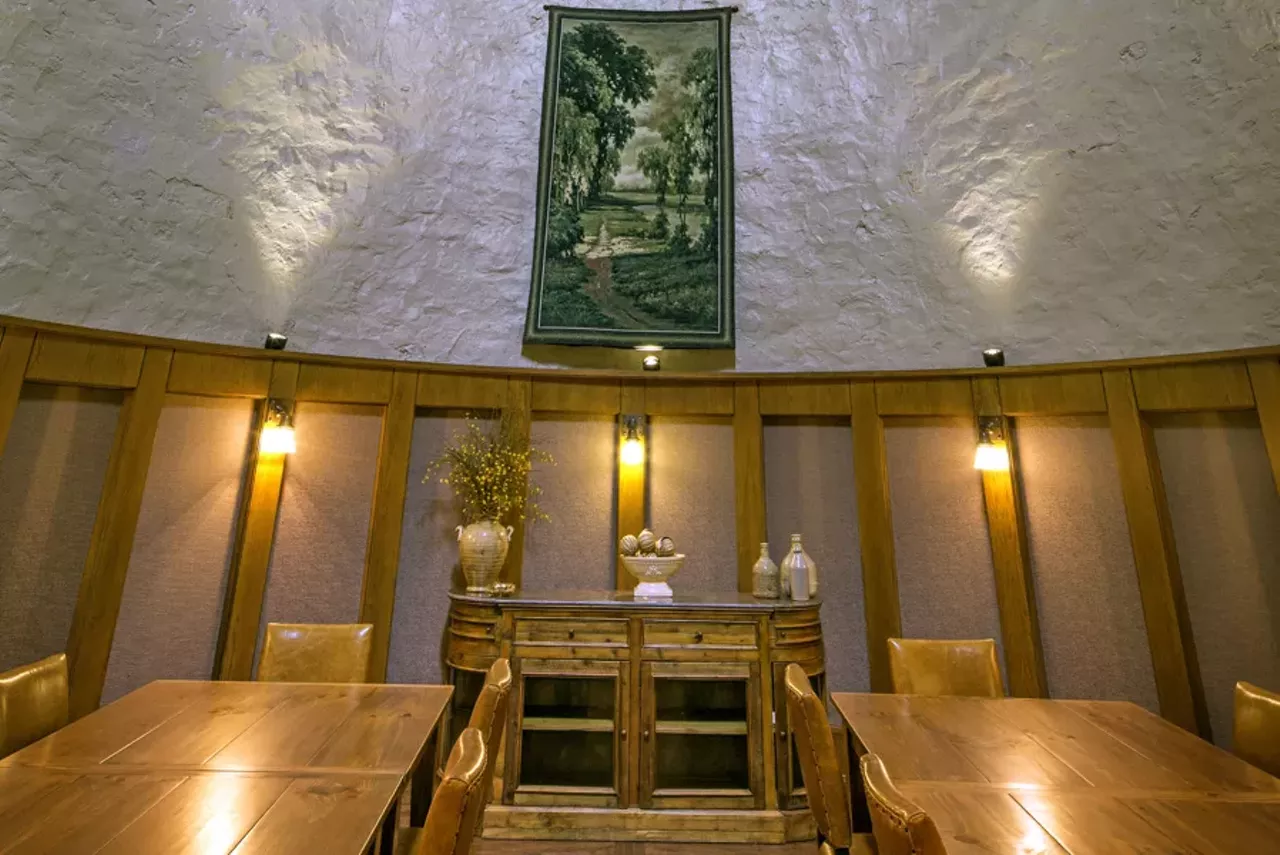
     

    The 8 Sexiest Bars in St. Louis (4)

    Element | Brian Hardesty

    3. Element
    1419 Carroll Street, Lafayette Square
    Element’s upstairs bar features a dramatically lit tiled base that sets a tone for this after-hours lounge. Filled with comfortable couches and chairs, the space overlooks the twinkling lights of the downtown St. Louis skyline from large windows set into original brick-clad walls.

     

    The 8 Sexiest Bars in St. Louis (5)
    Grand Hall | Jonathan Pollack

    4. The Grand Hall at Union Station
    1820 Market Street, downtown
    After its recent restoration, Union Station’s Grand Hall hotel lobby transports you to the grandeur of the late 1800s, featuring a 65-foot ceiling, Romanesque archways, frescos, gold leaf details, mosaics and stained glass windows. The bar remains open even though much of Union Station is slated for changes.

    Turn the page for four more sexy bars.

  • The 10 Worst Cardinals of All Time

    “Any idiot can rank the greatest players of all time, but it takes skill to rank the … worst,” a sports blogger noted. Veteran sportswriter Bill Christine still thought he could take a shot at it. For more on his undertaking, see his intro here.

    Rather read something positive? Check out Christine’s list of the 10 best. Or, you know, just carp in the comments section.

    1. Tony Cruz

    Catcher, 2011-2015

    Cruz spent four years in the minor leagues before being called up in 2011 as a backup for the oft-injured All Star Yadier Molina. Cruz hit .220 in 259 games, striking out four times more than he walked.

    His best games came in the post-season, when he homered against the Giants and got what might have been a big hit against the Cubs, but the Cardinals lost both games and were ousted in both series. At the end of 2015, Cruz was traded to the Royals. In spring training this year, he popped out into a triple play. It wasn’t his fault, really. The hit-and-run play was on, and his crime was making contact with the ball.

    2. Bob Uecker

    Catcher, 1964-1965

    It’s hard to separate Uecker’s apocryphal stories from the ones that really happened. There’s the story about Uecker signing his first contract with the Milwaukee Braves. His father was in their living room with a Milwaukee scout. “Is $3,000 all right?” the scout said. “Oh, no,” the father said. “We couldn’t pay you that much to sign Bob.”

    In 1964, Uecker’s first year with the Cardinals, the team won the World Series. Uecker seldom played during the season and sat on the bench for the entire series. “I helped them win the pennant,” Uecker said one night on Johnny Carson’s show. “I caught hepatitis. The trainer injected me with it.”

    In 1965, Uecker broke out of his slump when he hit .228. Then he was traded to the Phillies. “I remember that deal,” Uecker said. “The Cardinals got somebody named Gene Oliver and a mascot to be named later.”

    3. Tyler Greene

    Second Base – Shortstop, 2009-2012

    Greene was picked in the amateur draft by the Atlanta Braves, but declined to sign. Three years later, in 2005, the Cardinals selected him higher, at the back end of the first round. But Greene never mounted any traction in St. Louis, and after four years in the minors and four years of part-time play for the Cardinals, he was traded for virtually nothing. His average as a Cardinal was .218 and he struck out roughly every four trips to the plate.

    4. Jack Ryan

    Catcher – Infielder, 1901-1903

    A St. Louis sporting goods company sold a glove called the “Jack Ryan Special,” which was named after this turn-of-the-century Cardinal. It was a fielder’s glove, although Ryan played most of his games behind the plate. A bat named after Ryan might have been out of the question. He was 32 when he joined the Cardinals, after playing for several other teams, and his averages in three seasons in St. Louis were .197, .180 and .238.  He scouted for the Cardinals and managed in the minor leagues long after his playing days were over.

    5. Anthony Reyes

    Pitcher, 2005-2008

    I’m always suspicious of players who wear their caps funny. Reyes wore the brim of his flat. It looked like a pancake. “They come in the box that way, and I don’t bend them,” Reyes said. “It helps me see better.”

    Reyes lost two decisions late in 2006. He beat the Tigers in the first game of the World Series, but then started 2007 with ten straight losses, tying a club record that dated back to 1897. It was the beginning of the end. For the year, he went 2-14 with an earned run average of more than six. In 2008, the Cardinals traded him to Cleveland. Surgery on his elbow didn’t help and he was released.

    6. Red Donahue

    Pitcher, 1895-1897

    For other teams, Donahue won twenty games or more three times, and pitched a no-hitter. But while with the Cardinals, he lost 24 games in 1896. In 1897, he had a 6.13 earned run average, won ten and lost 35, setting a record for defeats in a season. The team as a whole won 29 and lost 102.

    During one at-bat, Germany Schaefer was sent up to pinch-hit for Donahue. Donahue asked, “Who the hell are you to hit for me?” He then slammed his bat down and stormed off. Schaefer hit a home run, but while his teammates congratulated him, Donahue sat at the end of the bench and sulked. After he retired, Donahue became a bartender in Philadelphia.

    7. Tom Lawless

    Second Base – Third Base – Outfielder, 1985-1988

    Lawless had the most theatrical home-run bat flips in baseball. In the fourth game of the 1987 World Series, against the Minnesota Twins, he hit a deep drive to left field. Lawless took a half-step and gazed at the ball. Then he took nine mincing steps toward first base, his eyes still transfixed on the ball. Finally, nonchalantly, with his left hand, he flipped the bat over his shoulder, high in the air behind him. He’s lucky he didn’t hit the Twins’ catcher. “I didn’t even know I did it,” Lawless said.

    Trouble was, he only hit one other homer for the Cardinals, and only one more besides that. His batting averages in St. Louis were .207, .282, .080 and .154.

    8. Dal Maxvill

    Shortstop – Second Base, 1962-1972

    Maxvill’s reliable glove kept him in the game. His batting average during a long career in St. Louis was a puny .220, with only six home runs. One year, he batted .175. In the 1968 World Series, which the Cardinals lost to the Tigers, Maxvill was hitless in 22 at-bats. Yet his salary was relatively high for the era.

    “Almost everywhere I go,” said Bing Devine, the general manager, “the question I’m asked the most is how I can pay Dal Maxvill $37,500. But if you could see how he plays shortstop, you would understand.” Maxvill laughed all the way to the bank. He played for five World Series teams—three in St. Louis and two with the Oakland A’s.

    9. Leo Durocher

    Shortstop, 1933-1937 

    The final two players on this list made the case for inclusion thanks to their off-the-field transgressions.  Durocher, according to his biographer, Gerald Eskenazi, was a heavy gambler whose name was linked to the mob in the 1930s. Later, one of his cronies was the actor George Raft, who reportedly won as much as $100,000 in one year betting on baseball, and who partnered with Durocher in hoodwinking other players in rigged craps games.

    All the while, Durocher was a light-hitting, slick-fielding shortstop and a manager who won more than 2,000 games. He won World Series as both a player (Cardinals) and a manager (New York Giants). When Durocher was managing the Brooklyn Dodgers, the commissioner suspended him for the entire 1947 season for “conduct unbecoming to baseball.”

    For years, Durocher moaned about not getting into the Hall of Fame, and he once asked Ken Burns, the documentary filmmaker, to “turn down (the honor) for me, posthumously.” In 1964, Durocher’s last year on the ballot as a player, he got 2 of 226 votes. Thirty years later, almost three years after his death, he was voted in as a manager by the eighteen-member veterans’ committee. Campaigning by the slugger Ted Williams, a member of the committee, didn’t hurt. The actress Laraine Day, the third of Durocher’s four wives, delivered the acceptance speech.

    10. Mark McGwire

    First Baseman, 1997-2001

    At the end of his career, McGwire hit 70 homers for the Cardinals in 1998, breaking Roger Maris’ record, and hit 65 more in 1999. The 1998 season was one of the most heartfelt in team history, but when asked later at a congressional hearing whether he’d used performance-enhancing drugs, McGwire claimed that the people in attendance “weren’t here to talk about the past.” Then, in 2010, McGwire apologized, saying that he had used steroids, on and off the field, for nearly a decade, even while claiming that the drugs did not enhance his power to hit home runs.

    In his ten years on the Hall of Fame ballot, McGwire has never polled more than 24 percent of the votes, far short of the amount needed for election.

    Editor’s note: A previous version of this story misspelled Yadier Molina’s first name. D’oh! We regret the error.

  • Foxing Responds to Questions, Whispers Alleging Past Sexual Misconduct

    Foxing Responds to Questions, Whispers Alleging Past Sexual Misconduct

    Photo by Theo Welling

    Foxing. Member Ricky Sampson sits on the top of the couch.

    Foxing, the St. Louis-based band that hit the big time with its fall release, Dealer, is grappling with questions about a member’s past sexual conduct.

    That’s not unusual in and of itself — allegations of wrongdoing in musicians’ private lives are as old as popular music (even Frank Sinatra faced criminal charges back in 1938, for no less than “seduction”). But what is unusual is the band’s response to it: a lengthy, and extremely detailed, open letter on its website not only responds to the allegations, but also includes band leader Josh Coll’s original email response to an anonymous emailer — a response Coll is now calling “sarcastic” and  “snide” and also apologizing for.

    According to the band’s statement, the controversy began in 2012 with an incident involving member Ricky Sampson, then 17. Sampson writes that after dinner with a group of friends, he started “messing around” with a girl he was into in his car. That, he writes, “led to my taking off my pants and taking out my penis; she reciprocated for a moment but shortly after she stopped, looked at the clock on my dashboard, and told me she was going to be late for her curfew; I reluctantly obliged and took her home.”

    See also: From St. Louis, Foxing Is Taking Over the World

    Sampson writes that he continued to text with the girl; it was only a few weeks later, after she’d gotten back together with an ex, that she told Sampson his actions had made her “uncomfortable.”

    After that, though, they continued to hang out. So when he later heard that she was still troubled by the incident, he writes, “I was surprised but also figured that someone was mistaken or just hadn’t heard that we had already talked about it. I heard about it right after she had just left my house after watching a movie, so I immediately contacted her and asked her if she would clarify it for people, but she didn’t feel comfortable saying anything. I felt embarrassed and ashamed of myself; a juvenile act had really affected someone I cared for.”

    In Foxing’s telling, that’s about all there is to the story — but somehow, the band says, the allegations have gotten increasingly ugly. Over time, the band writes, the incident “has amounted to Ricky now being accused of sexually assaulting a girl he was at one time seeing; some are going as far as calling him a rapist.”

    As the band writes,

    When we first heard of the story, over three years ago, neither of those terms were attached to it, but the way of the world and the telephone game has created such a behemoth that has gone so far away from the original source. We take these secondhand statements just as seriously as when it was initially brought to our attention and the words and the language were of a completely different nature.

    First off we would like to share with you the events; we would prefer to give you as much information as we have on this. Our hope is not to squash, but rather to share a view and open a dialogue. Secondly, this story is his side of the truth and with that we hope that the account is not viewed as, or in any way used as silencing behavior—if you choose to believe his account, please refrain from lashing out at those who do not; it only creates an environment wherein those affected by abuse fear coming forward.

    Lastly, we have attempted to reach out to the other party involved in order to allow her to approve this statement and no we will not be naming her, so please respect her anonymity unless she desires to break it on her own accord.

    When Coll initially got an anonymous email questioning the band about the incident, he acknowledges, he reacted badly.


    Foxing Responds to Questions, Whispers Alleging Past Sexual Misconduct

    He writes,

    It is not a valid excuse to say I was on the wrong side of the bed, that I was depressed, that I was tired of writing long emails about the situation, or that I was put off by their attitude before we started emailing—none of that matters. I acted unfavorably and presented that information in a way that made it appear that I didn’t take his inquiries seriously. When I learned that there was an email chain circling, my first thought was ‘God, I hope it wasn’t with that kid that I was really rude to.’ I know that given the loftiness of everything stated above, this is probably such a small blip, but I just wanted to apologize to anyone who read my personal correspondence and was put off by the way I conducted myself.

    You can read Coll’s original email exchange with “Anonymous“; the band’s later statement is online here.

    In its statement, the band seems intent on showing how seriously they are taking the allegation, even as they suggest it has been badly mischaracterized.

    To some this may seem overdue, all we can say is that from our end we believed this was a private matter and the only two individuals involved didn’t want it to be broadcasted. If there is anything we haven’t handled properly in this situation, we are committed to righting our actions and adjusting our behavior in order to make anyone and everyone feel safe.

    We know that a lot of our fans are younger and we hope that our experience can serve as a lesson on how not to act. We encourage you to do your own research, I’m sure there are places where this is being talked about—we found a thread on Reddit, which we have linked below. We will be donating a portion of our profits from our current tour to RAINN (https://rainn.org).

    We’ve reached out to Sampson. We’ll update this story if we hear back.

    In the mean time, feedback on the band’s Facebook page has been strongly positive. “The handling of this situation is a Feminist’s dream. Thank you for refusing to propagate a culture of sexual animosity, and thank you for understanding the emotions and thoughts of the woman involved,” one fan wrote.

    Added another, “It takes a lot of maturity to own up to something like that.  Keep your head up guys. The bad publicity will soon fade out.”

    We welcome tips and feedback. Email the author at [email protected]

  • Top 20 Party Pics of the Summer (NSFW)

    Top 20 Party Pics of the Summer (NSFW)

    Let’s face it: the meat of the St. Louis summer has been thawed, charred and chewed up. Here’s a look back at the most-viewed shots of the past three months. (NSFW)

    Scroll down to view images
    Far from the beach -- or the sun, for that matter -- contestants in a beach body competition at Home Nightclub on July 18 showed off their assets to a receptive, and pointing crowd. See more photos.

    Egan O’Keefe
    Far from the beach — or the sun, for that matter — contestants in a beach body competition at Home Nightclub on July 18 showed off their assets to a receptive, and pointing crowd. See more photos.
    From the "PBR Me 2" party at sprawling Koken Art Factory on August 8. See more photos.

    By Egan O’Keefe
    From the “PBR Me 2” party at sprawling Koken Art Factory on August 8.
    See more photos.
    1 of 20
    Naughty By Nature played the "STL Prom" at Home Nightclub on August 7. See more photos.

    By Egan O’Keefe
    Naughty By Nature played the “STL Prom” at Home Nightclub on August 7.
    See more photos.
    2 of 20
    Two cigarettes? Check. A PBR and a Red Bull? Check. From the London Calling club night at Halo Bar on July 25. See more photos.

    By Egan O’Keefe
    Two cigarettes? Check. A PBR and a Red Bull? Check. From the London Calling club night at Halo Bar on July 25. See more photos.
    3 of 20
    Sure, Slayer and Metallica and whoever may thrash harder, but we looking so-much-fucking-better. From the Poison and Def Leppard show on July 20. See more photos.

    By Todd Owyoung
    Sure, Slayer and Metallica and whoever may thrash harder, but we looking so-much-fucking-better. From the Poison and Def Leppard show on July 20. See more photos.
    4 of 20
    Duuuuuuudes, we get you. From the Sonic Youth show beneath the Arch on July 17. See more photos.

    Todd Owyoung
    Duuuuuuudes, we get you. From the Sonic Youth show beneath the Arch on July 17. See more photos.
    6 of 20
    Who won??!??!! From the All-Star Game after-party at F15teen on Locust. See more photos.

    By Egan O’Keefe
    Who won??!??!! From the All-Star Game after-party at F15teen on Locust. See more photos.
    7 of 20
    Gotta love the looks on both their faces here. From the Playboy All-Star Party at Lure Nightclub on Washington. See more photos.

    By Egan O’Keefe
    Gotta love the looks on both their faces here. From the Playboy All-Star Party at Lure Nightclub on Washington. See more photos.
    8 of 20
    From the Playboy All-Star Party at Lure Nightclub on Washington. See more photos. The comments on this slide show read like a version of TheDirty.com.

    By Egan O’Keefe
    From the Playboy All-Star Party at Lure Nightclub on Washington. See more photos. The comments on this slide show read like a version of TheDirty.com.
    9 of 20
    Asher Roth loves college and apparently Home Nightclub. From his concert there on July 11. See more photos.

    By Nick Schnelle
    Asher Roth loves college and apparently Home Nightclub. From his concert there on July 11. See more photos.
    10 of 20
    Local noisemakers So Many Dynamos, just after playing at the Firebird on June 27 for their CD-release show. The air-conditioning went out during the show, naturally. See more photos

    By Egan O’Keefe
    Local noisemakers So Many Dynamos, just after playing at the Firebird on June 27 for their CD-release show. The air-conditioning went out during the show, naturally. See more photos
    11 of 20
    Now here's a welcome change: these two DJ's don't seem to take themselves too terribly seriously. From Upstairs Lounge on June 21. See more photos.

    By Egan O’Keefe
    Now here’s a welcome change: these two DJ’s don’t seem to take themselves too terribly seriously. From Upstairs Lounge on June 21. See more photos.
    12 of 20
    German DJ Paul van Dyk returned to St. Louis on June 16, inspiring German pride. See more photos.

    By Egan O’Keefe
    German DJ Paul van Dyk returned to St. Louis on June 16, inspiring German pride. See more photos.
    13 of 20
    Ever wonder what haunted house fanatics do to get their gore fix during the off-season? They get gored up and go roller-skating, natch. From a party on June 12 at the Skatium on South Broadway. See more photos

    By Stew Smith
    Ever wonder what haunted house fanatics do to get their gore fix during the off-season? They get gored up and go roller-skating, natch. From a party on June 12 at the Skatium on South Broadway. See more photos
    14 of 20
    Who doesn't love a pool party, or at least, peeping in on one? See more photos. The Pussycat Dolls partied on the roof of the Four Seasons hotel on June 7.

    By Egan O’Keefe
    Who doesn’t love a pool party, or at least, peeping in on one? See more photos. The Pussycat Dolls partied on the roof of the Four Seasons hotel on June 7.
    15 of 20
    Strategically placing body paint was the name of the game on August 15 for the second-annual World Naked Bike Ride. See more photos.

    By Egan O’Keefe
    Strategically placing body paint was the name of the game on August 15 for the second-annual World Naked Bike Ride. See more photos.
    16 of 20
    From the sweaty, sweaty Los Campesinos show at the Firebird on August 11. See more photos.

    By Nick Schnelle
    From the sweaty, sweaty Los Campesinos show at the Firebird on August 11.
    See more photos.
    17 of 20
    Veteran rave DJ Richie Hawtin proved himeself adept at working St. Louis partiers into a sweaty frenzy, as these photos show. From Koken Art Factory on July 4.

    By Nick Schnelle
    Veteran rave DJ Richie Hawtin proved himeself adept at working St. Louis partiers into a sweaty frenzy, as these photos show. From Koken Art Factory on July 4.
    18 of 20
    Just a few of the 400 or so fans who jammed into Off Broadway to see Brooklyn dance-punk duo Matt and Kim on August 23. See more photos.

    Be Egan O’Keefe
    Just a few of the 400 or so fans who jammed into Off Broadway to see Brooklyn dance-punk duo Matt and Kim on August 23. See more photos.

    19 of 20

  • Amazing Photos from Inside Downtown’s Abandoned Jefferson Hotel

    Amazing Photos from Inside Downtown’s Abandoned Jefferson Hotel

    The hotel at 415 North Tucker Boulevard has been vacant for a decade, but the echoes of its ghosts still resonated when photographer Dan Wampler visited last week. Wampler, the creative director for Life Pixel, was given access by his friend, architect Mark Gettemeyer, and shot these gorgeous photos on site.

    The Jefferson Hotel greeted its first guests one day before the 1904 World’s Fair, on April 29, 1904. Two decades later, the Art Deco ballroom was added, helping to attract luminaries including President Harry S Truman and Judy Garland. But time was hard on the thirteen-story hotel, and by 1977, it had become a home for the elderly called the Jefferson Arms. It closed in 2006.

    Its final chapters, though, are still unwritten: The Post-Dispatch reports that Alterra International has the building under contract and is eyeing a possible redevelopment.

    Since the building is mostly without power, Wampler used a handheld LED light stick and exposures of up to 30 seconds to capture the eerie scenes. “I shot mostly with a wide-angle lens to capture the vastness of the ballroom, and used a higher-numbered f-stop to get as much depth of field as possible,” he says. “In several shots the image of the room and the view through the window helped capture the feelings of loneliness I saw.” Wampler’s images capture both the sadness of forgotten belongings and the beauty of the original edifice.

    For more on Wampler, check out his Facebook page or get details about his upcoming workshops.The hotel at 415 North Tucker Boulevard has been vacant for a decade, but the echoes of its ghosts still resonated when photographer Dan Wampler visited last week. Wampler, the creative director for Life Pixel, was given access by his friend, architect Mark Gettemeyer, and shot these gorgeous photos on site.
    The Jefferson Hotel greeted its first guests one day before the 1904 World’s Fair, on April 29, 1904. Two decades later, the Art Deco ballroom was added, helping to attract luminaries including President Harry S Truman and Judy Garland. But time was hard on the thirteen-story hotel, and by 1977, it had become a home for the elderly called the Jefferson Arms. It closed in 2006.
    Its final chapters, though, are still unwritten: The Post-Dispatch reports that Alterra International has the building under contract and is eyeing a possible redevelopment.
    Since the building is mostly without power, Wampler used a handheld LED light stick and exposures of up to 30 seconds to capture the eerie scenes. “I shot mostly with a wide-angle lens to capture the vastness of the ballroom, and used a higher-numbered f-stop to get as much depth of field as possible,” he says. “In several shots the image of the room and the view through the window helped capture the feelings of loneliness I saw.” Wampler’s images capture both the sadness of forgotten belongings and the beauty of the original edifice.
    For more on Wampler, check out his Facebook page or get details about his upcoming workshops.

    Scroll down to view images
    Page 1 of 2
    Image: Amazing Photos from Inside Downtown's Abandoned Jefferson Hotel

    1 of 24
    Image: Amazing Photos from Inside Downtown's Abandoned Jefferson Hotel

    2 of 24
    Image: Amazing Photos from Inside Downtown's Abandoned Jefferson Hotel

    3 of 24
    Image: Amazing Photos from Inside Downtown's Abandoned Jefferson Hotel

    4 of 24
    Image: Amazing Photos from Inside Downtown's Abandoned Jefferson Hotel

    5 of 24
    Image: Amazing Photos from Inside Downtown's Abandoned Jefferson Hotel

    6 of 24
    Image: Amazing Photos from Inside Downtown's Abandoned Jefferson Hotel

    7 of 24
    Image: Amazing Photos from Inside Downtown's Abandoned Jefferson Hotel

    8 of 24
    Image: Amazing Photos from Inside Downtown's Abandoned Jefferson Hotel

    9 of 24
    Image: Amazing Photos from Inside Downtown's Abandoned Jefferson Hotel

    10 of 24
    Image: Amazing Photos from Inside Downtown's Abandoned Jefferson Hotel

    11 of 24
    Image: Amazing Photos from Inside Downtown's Abandoned Jefferson Hotel

    12 of 24
    Image: Amazing Photos from Inside Downtown's Abandoned Jefferson Hotel

    13 of 24
    Image: Amazing Photos from Inside Downtown's Abandoned Jefferson Hotel

    14 of 24
    Image: Amazing Photos from Inside Downtown's Abandoned Jefferson Hotel

    15 of 24
    Image: Amazing Photos from Inside Downtown's Abandoned Jefferson Hotel

    16 of 24
    Image: Amazing Photos from Inside Downtown's Abandoned Jefferson Hotel

    17 of 24
    Image: Amazing Photos from Inside Downtown's Abandoned Jefferson Hotel

    18 of 24
    Image: Amazing Photos from Inside Downtown's Abandoned Jefferson Hotel

    19 of 24
    Image: Amazing Photos from Inside Downtown's Abandoned Jefferson Hotel

    20 of 24
    Page 1 of 2