Search results for: “/"”

  • The Seven Deadliest Music Festivals

    The Seven Deadliest Music Festivals

    wikimedia commons

    It has been a particularly grim summer already in music festival fatalities, with one death over the weekend at Electric Daisy and two more at Bonnaroo a couple weeks ago. But this is hardly a new phenomenon: The combination of crushing crowds, heat and mind-altering substances (as the Mormons say) at any of the thousands of music festivals that happen each year often proves lethal. In an effort to understand the problem, we tracked down seven of the deadliest music festivals in history. There are more-or-less infinite ties at the bottom end of this list, so Nos. 5, 6 and 7 were chosen as much for notoriety as for number of deaths, but No. 1 through 4 four are pretty much definitive.

    7. Electric Daisy Carnival: Dallas, Texas
    This past Saturday, nineteen-year-old Andrew Graf died after being taken to the Baylor University Medical Center from the Electric Daisy Carnival, an electronic music festival. Though the cause of death remains under investigation, Graf was one of multiple people who were taken “to hospitals for drug, alcohol and heat-related illnesses,” according to WFAA in Dallas. In addition, at least 24 others had been hospitalized after the festival. In a statement, festival founder Pasquale Rotella expressed his condolences and said he “will work with the authorities to understand how this tragedy occurred.” The Electric Daisy Carnival was banned in Los Angeles after a fifteen-year-old died from an ecstasy overdose at last year’s event.

    6. Woodstock: Bethel, New York
    The most famous music festival in rock & roll, Woodstock set the standard, attracting so many people that it became the third-largest city in New York during its run from August 15 to August 18. The “three days of peace and music” proved not all harmony: Within the estimated gathering of over half a million people, two people died during Woodstock. One man died from a heroin dose and “a teenager in a sleeping bag was killed when a tractor ran over him,” according to the Daily Mail, which goes on to state that the driver was never traced.

    5. Altamont Speedway Free Festival: Livermore, California
    What set out to be “Woodstock West” wound up being Hell’s concert: The free event was held on December 6, 1969, and drew 300,000 fans with performances by the Rolling Stones, Santana and Jefferson Airplane, among others. Four people died at the festival, with “two from hit-and-run accidents, one from drowning in an irrigation ditch and, most notoriously, one from repeated wounds at the hands of a Hell’s Angels member” during an outburst of violence during the Rolling Stones’ set that night. Eighteen-year-old Meredith Hunter attempted to climb onstage when Hells Angels members prevented him from doing so. Hunter returned with a pistol and Angel Alan Passaro stabbed him. Hunter later died from his wounds.

    4. Roskilde Festival: Roskilde, Denmark
    On June 30, 2000, nine people died during a Pearl Jam performance at Roskilde, a rock music festival held annually in Denmark. According to the police report, “eight young men were killed outright and on July 5, 2000, another young man died as a result of the accident.” It also noted that all victims had bruising on their bodies and faces and “none of them had been under the influence of narcotic substances.” The cause of death for all nine victims was “suffocation after compression/pressing of the chest,” according to the police report. Pearl Jam paid tribute to the accident victims in their song, “Love Boat Captain,” with the lyrics “lost nine friends we’ll never know, two years ago today.”

  • For Sale: Childhood Home of William S. Burroughs

    For Sale: Childhood Home of William S. Burroughs

    For sale: One fine-looking house with an impeccable literary pedigree.

    If you can imagine it, William S. Burroughs was once a child right here in St. Louis. His grandfather, also named William S. Burroughs, founded the Burroughs Adding Machine Company which presumably did pretty well if the Burroughs house at 4664 Pershing Place is any indication. And now it can be yours! (Actually, it’s been on the market since November. Daily RFT is not as punctilious about checking Central West End real estate listings as we maybe should be.)

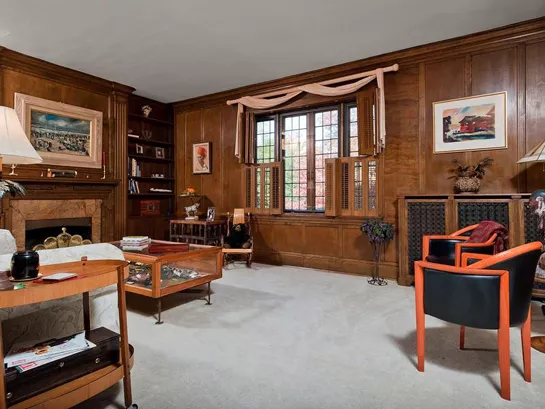
    “Oh, my God, it just exudes charm,” gushes Vicki Armor, the listing agent. “All the houses in the Central West End have something special. This one has a wood-paneled living room and leaded glass windows, and the backyard has beautiful brick. It’s a perfect house for entertaining.” In addition, the house has five bedrooms, four bathrooms and three working fireplaces. (And no, Armor doesn’t know which bedroom was Burroughs’.)

    So what’s the problem? Are potential buyers put off by the $587,900 asking price? Or that it’s nearly 100 years old? Are they afraid the place is haunted by the spirit of the boy who would grow up to write Junkie and Naked Lunch, become a guiding spirit of the Beat and hippie generations and have all sorts of exotic adventures, including accidentally killing his wife during a drunken game of “William Tell”?

    Actually, it’s much more prosaic than that, says Armor. “There’s no garage. And the house is landlocked, so there’s no way to put a garage in. That’s the one thing that’s making it hard to sell.”

    The Burroughs family sold the house and moved to Ladue when William was in high school (John Burroughs, no relation). In later years, when the writer returned to St. Louis, he would be far more nostalgic for the old skid row on Market Street downtown than he was for tree-lined Pershing Place.

    Although the house lacks two fancy plaques announcing it as a Historical Site like the ones on T.S. Eliot’s childhood home on nearby Westminster Place — or even one fancy plaque — it still garners a fair amount of attention. Armor says the current owner, Jackie Millstone, has spotted passerby stopping to stare and point. Recently she arrived home to find a crew from HGTV filming on the sidewalk. But Armor’s not sure if the attention is because of the house’s famous former inhabitant or if it’s just because it’s a really nice house. She’s inclined to think the latter.

    “Jackie’s got literature on Burroughs and one of his books out on the coffee table,” she says. “She puts it out to show to people who come to look at the house. Some people don’t even know who he is. But some raise their eyebrows and say, ‘Oh, really?’”

    For more photos visit here.

  • Show Review: Radiohead in St. Louis at the Verizon Wireless Amphitheater, May 14

    Show Review: Radiohead in St. Louis at the Verizon Wireless Amphitheater, May 14

    (Photos and review by Annie Zaleski. VIEW OUR SLIDESHOW OF PHOTOS HERE.)


    Show Review: Radiohead in St. Louis at the Verizon Wireless Amphitheater, May 14

    (This is probably my favorite shot I took.)

    How do you sum up a show that’s one of the best you’ve ever seen — in your life? It’s almost 4 a.m. and I’ve been working on my show photos since I got home, and I’m still at a loss for words to describe the Radiohead show at Riverport, UMB Bank Pavilion, the Verizon Wireless Amphitheater.

    Here are the facts: The band played all of In Rainbows, its latest album. Kid A was also well-represented, with a manic, squelching version of “Idioteque,” a lullaby twitch of “Kid A” and the robotic paranoia “Everything In Its Right Place.” Bends hit “My Iron Lung” was played for the first time this tour; that album’s “Fake Plastic Trees,” and OK Computer tunes “Airbag,” “Exit Music (For a Film)” and “Paranoid Android” were the only older songs performed.

    The stage setup — a series of light rods arranged from the ceiling, honeycomb-shaped spotlights and tasteful video screens projecting grainy footage of the band in the back — was one of the most amazing I’ve ever seen. Multiple colors cascaded down or traveled up the devices, feeding off of the music — or driving its direction. During many songs, it felt like a Radiohead Rave, the lights, beats and music reverberated so intensely.

    Yorke’s dry (and often overlooked) humor was on display quite a bit. During the Bowie-glam crunch of “Bangers + Mash” — which found him sitting down in front of a mini-drumkit while singing — he stood up during a break and ran around his lone drum, Chinese fire-drill-style, as if in a solitary game of Duck, Duck, Goose. For “You and Whose Army?” he peered into a fisheye-lens camera (something the band’s been doing for years) that projected his face onto the giant screen onstage; knowing that his mug was the focal point, he made funny faces and wiggled his eyebrows knowingly, like a goofball. And during the start of the show, he talked about smelling the funnel cakes being sold, which somehow spiraled into confessing a love for donuts.


    Show Review: Radiohead in St. Louis at the Verizon Wireless Amphitheater, May 14

    Yorke’s dance moves must also get a special mention. During “Everything In Its Right Place,” he did a quasi, stiff-limbed Robot, which then morphed into what looked like a hip-hop robot mimicking swim moves. The electronic thunderhead, beat-stampede “Myxomatosis” found him dancing like an antsy boxer, and punching the air in time to the lyrics. During “The Gloaming,” he high-stepped as if an old-west enemy was shooting bullets at his feet. At other times, it seemed like his feet moved the rest of him away from the mic stand against his will; his arms — all elbows — and legs flailed with liquid ease. Even when holding a guitar, he shook his head back and forth with rabid concentration and hyperactive glee.

    Yorke’s dance moves during “Idioteque” in St. Louis, already posted on YouTube. Hello, Running Man!

    Jonny Greenwood — wearing a shirt that said, “Yes, It’s Real” and rocking hair ca. Brett Anderson of Suede’s 1993 look — merrily twisted knobs and manipulated sounds on stage left, when he wasn’t attacking a guitar. His bassist brother Colin hung out near drummer Phil Selway, while other guitarist Ed O’Brien rocked a scarf and held down stage right. While a talented guitarist in his own right, the harmonies he and Yorke combined to hit were absolutely gorgeous. O’Brien’s rousing concert toms (in tandem with Jonny Greenwood) on “There There” pounded like a thumping heartbeat wild with fear.

    So why on Earth was this show so transcendent?

    I’m still having trouble putting this into words, hours after it’s ended. There was something deeply romantic in the air at the show (and no, I’m not talking about the insane amount of weed being smoked in the crowd). The muted drum-n-bass/acoustic strum friction of “Weird Fishes/Arpeggi” was as placid as a dip underneath aquamarine oceans; the solitude and loneliness of the tune was deeply moving. Yorke’s crystalline croon echoed the studio versions of songs nearly perfectly, especially on standouts “Reckoner” (a clattering electro-hymn), a devastatingly beautiful “Fake Plastic Trees” and the reverbed-folk heart-stab “House of Cards.” But this falsetto hinted at sweet sadness, knowing seduction, gentle romance, mysterious love and fluttering caresses — all of the hushed secrets shared between lovers.

    Yet this atmosphere wasn’t jarred or disturbed by Radiohead’s jagged rock moments (“Bodysnatchers”) or its floating alienation ballads (“Airbag”) or the many instances of electronic mayhem (“Idioteque” was an absolute standout, its ice-scraper rhythms and sunrise synths colliding in wild bouts of dancing and tempo-shifting). The set’s final song, “Paranoid Android,” in fact, might have been the best song of the night. A slow-building shift between frenzied guitar slashes and straightforward sloganeering, the 1997 hit ended in Technicolor neon-bursts of light that made the band silhouettes. The meaning of the song remains as cryptic and ambiguous as it did a decade ago, but its message didn’t sound the least bit dated.


    Show Review: Radiohead in St. Louis at the Verizon Wireless Amphitheater, May 14

    On paper, Radiohead’s ability to mash together rock, electronica, punk, noise and even bits of hip-hop — and the chemistry between band members that makes its live shows so fantastic — keeps it interesting. Abstractly, though, the vulnerability the band conveys adds to its mystique; for me there’s an underlying, irresistible attraction to this aspect of the band. Radiohead is brilliant at stripping down its music right to the emotional core — and that purity of intent (and genuine execution) rang true last night.

    (EDIT, Thursday afternoon: My colleague at the Pitch, Jason Harper, also wrote an excellent review. Go check it out here.)

    Setlist: (culled from my scribblings and a bit of help from ateaseweb.com)
    01. All I Need
    02. Jigsaw Falling Into Place
    03. Airbag
    04. 15 Step
    05. Nude
    06. Kid A
    07. Weird Fishes/Arpeggi
    08. The Gloaming
    09. You And Whose Army?
    10. Idioteque
    11. Faust Arp
    12. Videotape
    13. Everything In Its Right Place
    14. Reckoner
    15. Optimistic
    16. Bangers and Mash
    17. Bodysnatchers

    Encore One:
    18. Exit Music (For A Film)
    19. Myxomatosis
    20. My Iron Lung
    21. There There
    22. Fake Plastic Trees

    Encore Two:
    23. Pyramid Song
    24. House of Cards
    25. Paranoid Android

  • Alex Carlson of Red Guitar — Making Rock Star Bread

    Alex Carlson of Red Guitar — Making Rock Star Bread

    Holly Fann — Alex Carlson of Red Guitar Bread takes baking seriously.

    Holly Fann — Some of the artisan breads at the Webster Groves Farmers’ Market

    Alex Carlson IS Red Guitar Bread. The one-man show researches techniques and developments in bread baking and fermentation, runs marketing, sources his local grain, sells in-person to a fast-growing loyal fan base at The Webster Groves Farmers’ Market (Big Bend Boulevard and South Old Orchard Avenue, Webster Groves; 314-963-5696) and of course, he bakes the bread. Bread that is amazingly good, remarkably flavorful and as sound, solid and simple as the four basic ingredients he works with. “Generally speaking, I bake breads that keep the focus on the grain and fermentation technique,” Carlson says. “I just don’t like to work with more than flour, water, salt and yeast, preferably wild yeast.”

    For the market goer, that means a selection of breads including ciabatta, his with “a high proportion of preferment for a nice balance of sour with a clean white dough flavor”; pan bigio , “an Italian country wheat made from local Cape Girardeau whole wheat flour”; a white sourdough he calls “St. Louis Sourdough in response to San Francisco Sourdough since both are made from wild yeast cultures that are strictly unique to their areas of origin”; pain au levain , “a classic french loaf derived from a wild yeast starter” and pain a l’ancienne , “which utilizes a new development in dough fermentation and treatment.” A unique and aromatic smoked whole wheat gets its flavor from six hours of smoke before being mixed into dough. “I’ve taken to using the analogy that eating it smells like someone’s cooking bacon in the next room,” explains Carlson.

    A native of Eureka, Carlson moved to Chicago to attend culinary school and worked in a bakery in Hyde Park, Illinois. A job working at the Washington Hotel on Washington Island, Wisconsin, under Leah Caplan was a culinary revelation. “I knew nothing of this place,” Carlson says. “Hell, I didn’t even know Wisconsin had islands! My first duty was to walk 300 miles into the woods behind the hotel and forge for ramps. Everything was local, and that set the tone for my entire experience. I also worked with a wood-fired brick oven, a physical element of the hotel that changed my life.” After moving back to St. Louis, serendipity brought him to Five Bistro (5100 Daggett Avenue; 314-773-5553) and the now-defunct Newstead Tower Public House, when he found out about their desires to bring a bread program in house.

    These days Carlson is a busy man. Providing Five Bistro (the home base for Red Guitar Bread), The Mud House (2101 Cherokee Street; 314-776-6599) , Salume Beddu (3467 Hampton Avenue; 314-353-3100) , Big Sky Cafe (47 South Old Orchard Avenue, Webster Groves; 314-962-5757) , Cyrano’s (603 East Lockwood Avenue, Webster Groves; 314-963-3232) and the occasional Entre Underground event with his bread as well as the bread for the Webster Market, one wonders when Carlson sleeps. It’s doubtful that he does. “I get busier every week, and there are no signs of slowing down,” Carlson says. “It’s a damn good thing I like this work and I have a supportive and understanding little lady at home who doesn’t mind my weird hours.”

    The extra work Carlson picked up to sell face-to-face this year at the farmers’ market has been fantastic. “This is my first opportunity to sell directly to customers, and I’ve found them knowledgeable, enthusiastic and appreciative,” Carlson says. “Really gratifying for someone who flies solo for 90 percent of his day. Totally worth the overnight shift I work to get the bread baked fresh for sale.”

    Carlson and his breads can be found at The Webster Groves Farmers’ Market , which runs every Thursday from 3 p.m. to 7 p.m. at Big Bend Boulevard and South Old Orchard Avenue, Webster Groves, 63119.

  • Battle Water Enhancers: Crystal Light vs. MiO

    Battle Water Enhancers: Crystal Light vs. MiO

    The invention of bottled water was clearly a product of marketing genius executed so well that Don Draper gladly would’ve poured those greedy minds a stiff drink. Although that ’90s trend implying health and status has been overshadowed by 21st-century trendiness (green! organic! Nalgene bottles!), bottled water still hasn’t fallen by the wayside, somehow.In fact, taking a cue from the water bottlers, several companies are profiting from the fact that Americans will not only pay for bottled water, but they’ll pay for bottled water that they don’t actually want to drink. (Plain water? Yuck!)Crystal Light has been selling “water enhancing” powders for years, but now parent company Kraft Foods is doubling down with a liquid version aimed at a younger demographic. It’s called MiO, and it looks way cooler than that staid old spinster Crystal Light.

    Sucked in by Madison Avenue’s advertising Hoover, Gut Check set aside our Kleen Kanteen and brewed us up a couple of batches of adult-appropriate Kool-Aid.


    Battle Water Enhancers: Crystal Light vs. MiO

    Chrissy Wilmes

    The Contenders
    Crystal Light
    Price: $2.78 for a 10-count box
    Calories per packet: 10
    Crystal Light’s packaging is convenient, particularly for inveterate water-bottle toters. The pre-measured packets are just right for a sixteen-ounce bottle and the powder readily dissolves when dumped in and shaken. (The mix also comes in bulk containers.)

    Crystal Light is tasty, if a little too sweet. If we didn’t know better, we’d have thought we were sipping the real thing (i.e., Kool-Aid).

    MiO
    Price: $3.57
    Calories per recommended 16 oz. dose: 0
    MiO comes in a small, portable bottle that makes it easy to use in any quantity. However, it’s a little difficult to measure out the suggested 1/2 teaspoon on the go, and the quick-dissolving water-based formula makes it impossible to eyeball. Of course, you can start with a little and simply add to taste.


    Battle Water Enhancers: Crystal Light vs. MiO

    Chrissy Wilmes

    In spite of its deep hue, MiO carries only a mild fruit punch. Of course, the product’s slogan is “Add a little or a lot!” But deployed at the suggested half-teaspoon per sixteen ounces, MiO creates a (dare we say it?) surprisingly satisfying thirst quencher, with none of the cloying qualities that mar the Crystal Light drinking experience.

    If you like to spike your water with a lemon wedge or two, MiO’s a nice change of pace.

    The Verdict:
    MiO, by a long shot. Of course, the qualities that put it over the top — mild flavor and quickness in dissolving — are due to the fact that its primary ingredient is…water. Sure, it’s tasty, but why not just drink water?

    Plus, MiO has a serious downside: It will stain. Crystal Light will too, and so will Kool-Aid mix, but MiO looks and acts like food coloring: It’s liquid, and a little goes a long way. Don’t say we didn’t warn ya.

  • BDSM Club “The Facility” Now Open in South City

    BDSM Club “The Facility” Now Open in South City

    photo by Melissa Meinzer

    Cages at The Facility

    If you were to visit one of the newest businesses licensed to operate in St. Louis, you wouldn’t see people having sex. Not that.

    But you might see a person getting florentined: They’d be cuffed standing, facing a wall, with a person behind them wielding a pair of multi-stranded leather implements called floggers hitting them — hard, yes — in a pattern of interlocking ellipses. It’s possible you’d see a woman bound to a pillar in the middle of the room with Saran wrap, her every curve hugged close by the cling. You might see people taking turns shocking each other with an ultraviolet wand. And you might leave with bruises on your ass that take weeks to heal — but not if you don’t ask for them.

    BDSM — which stands for bondage, discipline, submission and dominance, also known as sadomasochism — is nothing new to St. Louis. The city has a sizable population of BDSM enthusiasts: folks who practice consensual exchanges of power or pain, or other forms of extreme physical sensation.

    The news here is that these kinksters are coming out of the shadows and into your neighborhood. And that’s a good thing, proponents say — for the community, for the economy and for society at large. After all, they’re already in your neighborhood. They just want to be aboveboard about it.

    There are at least four groups around the city, if not more, who routinely host play parties. The parties follow strict codes of behavior: There is no sex and no nudity. Party guests compare notes on bondage techniques, pleasure and pain, and they demonstrate what they’ve figured out. Participants show identification at the door, and parties require guests to be of-age — 18 years old at some parties, 21 at others.

    But despite the strict rules, such gatherings have long operated in a legal gray area. One group had operated in a residential home out near the airport, drawing participants via word-of-mouth and FetLife.com, a kink-oriented social networking site. Other groups rent out halls for their parties. Some parties are hosted in back rooms of established venues like bars. All of them operate at the risk of running afoul of city codes, in terms of safety and occupancy permits.


    Joe Kriegesmann: "Satan's Master" - photo by Melissa Meinzer

    photo by Melissa Meinzer

    Joe Kriegesmann: “Satan’s Master”

    Joe Kriegesmann, also known as “Satan’s Master,” is tired of being in the shadows. After considerable work, he’s opened The Facility, a legal, fully legitimate venue dedicated to BDSM educational workshops and gatherings off Gravois Avenue in St. Louis City. The unassuming and unheralded space is surrounded by empty buildings and lots, along with a few businesses, most of whom support his endeavors.

    His business is operating as COTB LLC, which stands for Clan of The Barbarian, a decades-old national BDSM group dedicated to safety and standards in play. He’s reviving the group after it had gone underground, and its new home is actually its second location in St. Louis.

    Kriegesmann’s previous landlord wasn’t on board with the club seeking out proper inspections and permits, which led to a parting of ways this winter, he says. (The other landlord also never got around to turning the heat up very high, which put quite a damper on the corsets, miniskirts and shirtless leather vests favored by many guests.)

    Kriegesmann is tired of the secrecy and misinformation surrounding the BDSM lifestyle, and has taken months untangling the decidedly unsexy red tape around getting a BDSM club to operate wholly within city codes. He estimates that in setting up the south-city location for fully legal educational workshops, he’s been to city hall more than 30 times.

    “We’re not a sex club,” Kriegesmann says. “We’re a private educational business. We’re trying to educate the community.”

    In order to open the space officially, he appears to have ferreted out all the legal loopholes and has closed them. He’s got an up-to-date occupancy permit with a building inspection and a business license — they’re framed and hang proudly in his office.

    Kara Bowlin, a spokeswoman for Mayor Francis Slay, says that to the best of her knowledge, Kriegesmann is now operating within the letter of the law. “As far as I know we haven’t gotten any resident complaints about it,” she says. (And, in fact, several neighboring businesses have given Kriegesmann “to whom it may concern” letters saying they’re in support.)

    The building is in the city’s 20th ward, which is represented by Alderman Craig Schmid. Kriegesmann says that Schmid has been less than helpful in the process — which he suspects is related to fear and mistrust toward the BDSM community.

    But Schmid says kink has nothing to do with it: “I don’t deal in speculation. The issue we always have to deal with is health, safety and welfare, how people are going to get in and out.”

    With the permits Kriegesmann has for the space, that shouldn’t be a concern. The public areas are all on the first floor, which circumvents the need for elevators. The sprinkler systems are in good working order, and exits are clearly marked.


    One of the Facility's racks - photo by Melissa Meinzer

    photo by Melissa Meinzer

    One of the Facility’s racks

    The building has themed rooms for different sorts of role-playing and kink: There are human-sized birdcages, racks for lashing wrists and ankles apart, and a “littles” room full of toys for folks who enjoy role-playing as children. There’s also space for socialization and business, decorated with tasteful photography of pinup-styled women — complete with bright-red ball-gags in their mouths.

    But Kriegesmann wants it to make it clear that this isn’t a sex club. There is no nudity, and no penetration of any sort. Sexy? Sure. But not sex.

    That said, it’s not a typical classroom. During workshops and social events, groups might bring in a DJ to spin some tunes. Social areas are comfortable and welcoming, and the lights might be just a little lower near, for instance, the rack.

    Certainly participants aren’t dressed for church. You might see a man in a dog collar with custom-made vinyl ears, or women with electrical tape covering their nipples. Surely you’ll see a lot of leather and vertiginous stiletto heels. Most folks are fully dressed most of the time, though.

    “It’s not what you see in pornography,” Kriegesmann says.

    Or, for that matter, in a bar. Alcohol is not for sale, and visitors aren’t welcome to bring it along to the Facility, despite its presence in other BDSM play venues around town. Not only does booze complicate the heck out of permitting, but, says Kriegesmann, it runs counter to long-accepted tenets of power and pain exchange: These acts might hurt like hell, but everyone is on the same page, and their consent is of the utmost importance. Alcohol clouds this.

    “What we’d really like to do is start pushing our educational workshops so we can educate not just people in the lifestyle, but vanilla people as well,” he says.

    Just last weekend, for instance, The Facility hosted a workshop for Generation Kink. Scheduled for the evening were a BDSM Social Etiquette Class, an Intro to Dungeon Equipment demonstration and a Scene Negotiation discussion. One of the post-events comments on FetLife said “Thanks to everyone for making my guests (first timers to the scene entirely) feel welcome and at home.”

    And if that’s not enough to make the Facility a good citizen, consider the private guard they hire to patrol the grounds at night, and the drug dealers and prostitutes Kriegesmann says he’s scared off.

    “This area is bad…maybe blighted,” says Kriegesmann. “We’ve cleaned up a whole city block. What we’re doing here is good for the neighborhood.”

  • Bade Ali Jabir Fled Sudan for St. Louis — Only to Be Killed by Police

    Bade Ali Jabir Fled Sudan for St. Louis — Only to Be Killed by Police

    TYLER GROSS

    Bade Ali Jabir came to St. Louis for a better life only to die in a hail of police bullets.

    Police officers with their guns drawn swarmed Bade Ali Jabir’s apartment. They were everywhere. Outside the door. Outside the window. In front of his neighbor’s door. Everywhere. They yelled over a loudspeaker in Arabic, a language he sometimes struggled to understand. They told him he had to leave his apartment.

    The police said that Jabir had been evicted and there were warrants out for his arrest. But Jabir didn’t trust these people with guns. He trusted his friends, the people who brought him food, stayed with him in the hospital and fed his kids. It took time before he told you about his life in Sudan. And after Jabir’s decades of living through the Sudanese civil war, gaining his trust wouldn’t happen by putting a gun in his face.

    So Jabir didn’t leave. He hid in the apartment as the people with guns outside of his window only seemed to multiply.

    No one knows what went through Jabir’s head that day. Maybe he thought about his four kids. Maybe he was confused. Maybe he didn’t realize that he had been evicted.

    Whatever he thought about, he must have flashed back to Sudan. Five years before, Jabir emigrated from his ravaged homeland to the United States. Villages were burned to the ground, and citizens were shot on sight by government troops. Jabir came to America to escape from that terror, where people in uniforms regularly pointed guns at him.

    On this day, September 7, 2022, the challenges of Jabir’s new life and the years of trauma from war and migration came to a boil. Jabir, more than anything, needed help.

    A few hours after the officers with guns surrounded his apartment, they sent in a remote control robot to communicate. It rolled in with a fuzzy microphone and a fuzzy camera, and the voice coming from it was the voice of Jabir’s friend, a fellow Sudanese refugee.

    “I’m scared,” Jabir told the robot.

    He asked his friend to come inside, to walk out with him.

    The friend never did come. Instead came the officers with guns. That’s when St. Louis police killed Bade Ali Jabir.


    Bade Ali Jabir immigrated to St. Louis in 2017 after living in "hellish" conditions in a refugee camp.

    COURTESY PHOTO

    Bade Ali Jabir, shown in an undated photo, immigrated to St. Louis in 2017.

    When Jabir walked off the plane in St. Louis in 2017, no family members or friends waited for him at the airport. He likely didn’t know a thing about the Arch or toasted ravioli — or anything else about St. Louis. Why would he? His home was a village in the Al Kurumik district of the Blue Nile state, more than 7,000 miles away, where the Ingessana people lived, barely north of the South Sudan border.

    Jabir was from a hilly rural area known for seasonal farming, according to a friend also from Sudan. He says Jabir worked with livestock, farmed a plot of land for a few months and then stored the food for the rest of the year.

    The area was known for its music. “His culture,” says the Sudanese friend, “they like to sing and dance.” It was communal. Neighbors would make their own alcohol for these special occasions, and everyone would come together to sing and dance as a village and as a family.

    But then he had to leave. Jabir was born in 1961, and armed conflict and genocide loomed in the background of his entire life. He lived through two civil wars before government bombings forced him to flee in 2011. The Blue Nile state was situated in a precarious place. Despite siding with the South Sudan-based Sudan People’s Liberation Movement during the wars, the state was excluded from South Sudan when it seceded in 2011. Relations between the Sudanese government and the Blue Nile state were tense.

    Then, on the night of September 1, 2011, gunfire rained down. The Sudanese government bombed the Blue Nile state, razed mosques and schools, and indiscriminately killed kids and the elderly. People were burned in their homes. Those who stayed had little to eat and almost no clean water. Between 2011 and 2013 alone, nearly 150,000 people fled, some walking for days to Ethiopia or South Sudan.

    So Jabir left, too. He found himself in a U.N. refugee camp in Ethiopia. Indran Fernando, Jabir’s caseworker at the St. Louis-based International Institute, calls conditions in the camp “hellish.” During the day, Jabir worked long hours in the hot sun. There were days when the camp had so little food that he had to choose whether to feed his kids or give the food to people who were starving to death.

    When Jabir arrived in St. Louis in 2017, he left behind everyone he knew: his father, his brothers and sister, his three sons from a previous marriage. His mother and brother had recently died and his wife passed away while giving birth to twins. Jabir came to a new country, a single father of four young kids. In his culture, women take care of the children, Fernando says, and Jabir seemed to have little experience parenting.

    Jabir didn’t have family waiting for him in St. Louis, but he did have Fernando and the International Institute. The institute, which did not respond to multiple requests for comment, is paid by the federal government to give short-term help to refugees resettling in St. Louis. Fernando was in charge of acclimating Jabir to St. Louis, getting him a job, signing him up for medical services and teaching him things like how to use an ATM and hygiene expectations.

    And for Jabir, newly settled into an apartment just off South Grand in Dutchtown, plenty of things felt unfamiliar. The humid weather. The taste of fast food. The beer. The health care system. The work expectations. The concrete and speeding cars outside of his window. The English language, which he didn’t understand, making it hard to do almost anything –– order food at a restaurant, read signs on the road, say hello at the grocery store.

    Even seemingly basic tasks in America were new to Jabir. Fernando remembers that Jabir didn’t know how to sign his name. The first time he spoke through a telephone, he seemed in awe. He poured water on the ground as if it were a dirt floor, others say. He didn’t know how to use appliances like a refrigerator, bathtub or washer and dryer.

    Jabir was also isolated. Bilingual International Assistant Services Executive Director Jason Baker says the Sudanese community in St. Louis is “very small.” Few people were familiar with his home, or spoke his first language (Gaam), or understood his trauma, or knew about his culture, or could even find Sudan on a map.

    Christopher Prater, a Washington University physician who works with immigrant communities through Affinia Healthcare, says he sees “high rates” of anxiety and depression among refugee communities.

    “Could you imagine,” says Prater, “stepping into a world where you don’t understand anything? And all of that happens at once?”

    Jabir found himself alone, raising four kids without much of a blueprint, in a country he did not know, without family to help, without knowledge of the language, in a place that seemed to move a little too fast.

    “This is my speculation, but the vibe that I got was just adjusting to living in America was really hard for him,” a neighbor says. “I am not sure that he ever really felt like this was home.”

    But Jabir didn’t complain, Fernando says. He tried. He held a job, at first. He rode his bike to Arab grocery stores and picked up groceries. He took English classes and cooked chicken, on occasion, for his family.

    “He was just endlessly patient,” Fernando says. “Trusting, generous, unflappable. That’s how I would characterize him. He had been through such difficult hardship that he expected very little from this country.”

    Despite his efforts, Jabir struggled to care for his kids amid all of these adjustments. The news reached a social worker with the Islamic Foundation of Greater St. Louis.

    When the social worker met Jabir at his apartment around October 2018, it was a cold day. His kids were playing outside, but some didn’t wear coats. One was barefoot. The social worker could tell none of them had bathed recently.

    In Jabir’s apartment, the situation was even more dire. The apartment was a mess. The social worker found toilet paper stuffed into the bathtub and roaches, rats and mice running across the floor. The kids had plenty of clothes, but Jabir used them as rags.

    The social worker pauses before sharing those details, wondering how it will reflect on Jabir. But she decides to continue.

    “I want to showcase that mental health is real,” she says. “And I want to show that the police didn’t care that he had a mental health problem, and that they still proceeded to do what they did.”

    By all accounts, nothing made Jabir happier than his kids. He was affectionate with them. Fernando watched Jabir console them after nightmares. He fluffed up their pillows before bed. He hugged them and stroked their hair. They were among the few things that could make Jabir smile when they played his favorite songs or made a joke. “I’m doing this for my kids,” he often told the social worker. When Child Protective Services later threatened to take away his kids, he pounded his chest. Over his dead body, he said. “I am their father and their mother.”

    Jabir wasn’t without help. Immigrant organizations, religious groups, members of the Sudanese community, doctors, therapists and, most importantly, neighbors did what they could. After a social worker met with Jabir, the Islamic Foundation covered the family’s rent, bills, clothing and doctor appointments.

    In 2019, the foundation helped relocate Jabir and his kids across the city to the Garden Apartments on Hodiamont Avenue. The north city complex has been home to many refugees and new immigrants in recent years. Yet, in 2018, the International Institute suffered a spate of negative press after Syrian refugees placed there complained that they feared for their safety. In one instance, four Syrian kids were attacked by neighborhood youth, and one ended up in the hospital. The International Institute no longer contracts with the complex.

    For Jabir, however, the move seemed to make sense. The Islamic Foundation paid a Sudanese neighbor at Hodiamont to watch the kids, take them to dentist visits, visit their school and clean the apartment. Some of the kids called her “mom” in Arabic.

    Over the years, she wasn’t the only person who became attached to Jabir. Another neighbor went to the house every day to clean, buy groceries, watch the kids and feed him medicine. A fellow Sudanese refugee brought Jabir his favorite food –– chicken wings with lemon pepper. A woman who lived across the city visited him weekly for five years.

    But no matter how much money, time or help Jabir received, little seemed to improve.


    On good days, Jabir enjoyed being outside. He didn’t go far, just a few steps away from his unlocked door, either sitting in a dining room chair or leaning against the brick wall of his apartment. It was his escape. He would bask in the fresh air. Skinny and wiry with soft facial features, he often wore a button-down shirt, black aviator sunglasses even if the sun was setting and a dark brown coat even if it was blazing hot. “Pondering life,” one neighbor called it.

    In America, there was a short list of things that seemed to make Jabir happy: his kids, company from friends, Arab tea with lots of sugar, chicken, Sudanese music videos, memories of Sudan and sitting outside.

    If you approached Jabir on these days, he was warm, easygoing and calm. When a fellow Sudanese refugee brought him food, Jabir would bow his head, out of respect.

    He cherished the opportunity to socialize with his people. If you came to see him, he’d grab a chair from his dining room and set it so you could sit beside him. Then he might share his memories from Sudan. He might walk over to his neighbors, the Sudanese family, and laugh with them.

    “He was just a kind person,” says neighbor Dalia Atak. When kids came over to visit, he would announce their name with an upbeat, high-pitched voice, and then gift them a piece of watermelon or croissant. He cherished the opportunity to share food. Food wasn’t just something to eat. It was a form of affection. When his kids returned with food, he often told them to share with others in the community.

    “Something I saw was endless generosity,” Fernando says.

    But Jabir could also seem lost. The last two years of his life, Jabir rarely left the house. He wouldn’t walk to the park across the street or ride his bike. Someone would get groceries for him, take his kids to school and drive them to the doctor.

    On his worst days, Jabir wouldn’t go outside and sit on the lawn. The door would be closed but never locked. Inside, it was pitch black. Bare, no decorations. Mice scurrying around, holes in the walls, doors off the hinges, sink clogged, water dripping from the ceiling, sometimes a bed in the living room and one time a raw chicken on the floor.

    If you asked how he was doing, he would always say the same thing –– “good.” But he didn’t seem good. He might curl himself into a ball on the couch or bed, a blanket cloaked over his head. Sometimes, Jabir would hide like this for days on end.

    At times, Jabir seemed to be somewhere else. If people tried to engage in conversation, he would go on incomprehensible rants or simply not respond. “It was like, ‘Who is this guy?’” the fellow Sudanese refugee says.

    He seemed paranoid. He feared signing documents, and he told Atak that imaginary people in the apartment spoke to him. He wondered whether the people who lived above him had put a curse on him –– and if that’s why he felt sick.

    Toward the end of his life, these bad days became more frequent. The worker at the Islamic Foundation wonders if it dated back to a bike accident he had with a car when he lived on Grand. After that, he stopped riding his bike and stayed home more. Or maybe he just felt lost in America. Regardless, he fell into a gradual, but steady, decline.


    Jabir and his children moved from Dutchtown to the Garden Apartments on Hodiamont with support from the Islamic Foundation.

    BENJAMIN SIMON

    Jabir and his children moved from Dutchtown to the Garden Apartments on Hodiamont with support from the Islamic Foundation.

    In the summer of 2021, a neighbor of Jabir’s reached out to Christopher Prater, the Washington University primary care physician. Jabir needed help. He was in constant pain, with a serious health problem that left his body swollen and bloated.

    But there was one issue: Jabir wouldn’t leave the apartment.

    “There was something about him that made him very hesitant and fearful to leave,” Prater says.

    So they scheduled a video call with an interpreter. As Prater walked through introductions, Jabir struggled to understand the interpreter’s Arabic. He made baffled faces and spoke little.

    “It was very clear to me that this was someone who didn’t quite trust what was going on,” Prater says.

    Within five minutes, Jabir left the room and ended the call.

    But Jabir needed care. Prater says Jabir suffered from a kidney disorder called “nephrotic syndrome,” where the body cannot filter protein, causing too much liquid to build up. As a result, the body experiences severe swelling and when that swelling goes unchecked, the liquid can sneak into the lungs, making it hard to breathe.

    Prater wasn’t the first physician to try to help. When Jabir arrived in St. Louis, he was offered in-home case management and in-home therapy services, Prater says. But Jabir refused almost everything.

    That summer of 2021, he’d checked himself out of the hospital against medical advice after doctors tried to put a needle in him. He thought they were trying to kill him.

    “He clearly has had trauma like most refugees, and particularly his case, a refugee of a civil war survivor,” Prater says. “But for someone to have such mistrust that they weren’t even able to engage in care is very unique.”

    Prater saw more than just physical ailments. He thought Jabir probably suffered from depression, anxiety and PTSD. To treat him, Prater had to earn Jabir’s trust. On two separate weekends, he brought his kids to Hodiamont Avenue with fruit and a gift. They played soccer with Jabir’s kids, and Prater introduced himself. One time, Jabir was quiet and hard to reach. Another time, Jabir warmed up to Prater, showed his personality and laughed with the kids.

    On January 1, 2022, Prater got a call from the same neighbor who’d initially reached out about Jabir. Jabir, she said again, hadn’t taken his medication in months, hadn’t left his apartment in days and refused to visit the hospital. He looked like a ballooned version of himself –– his lips, his belly, his legs swollen –– with so much liquid built up that he had gained about 20 pounds. Parts of his body were so swollen that they were rock-hard.

    When Prater arrived with Sudanese friends of Jabir’s, the door to the apartment was closed and the lights were off. It was so dark, Prater had to shine a flashlight. He found Jabir sitting on his bed, hunched over. They could hear him breathing heavily, heaving in and out.

    “This gentleman,” Prater remembers, “needed medical urgent care.”

    By this point, Jabir recognized Prater. He agreed to visit the hospital –– but only if friends drove him.

    Jabir spent the next few weeks in the hospital. He returned more energized and happier, a neighbor said. He expressed a desire to clean his apartment.

    But it didn’t last. That was the last time Prater saw Jabir.

    “I probably knew his health best of anyone –– anyone, ever, in his life,” Prater says. “And I never saw him in the office. So that, I think, paints a picture about how neglectful he was of his health. I mean, we tried to engage him and were not able to. And again, I’m not blaming him. I think he had serious mental health issues that we just couldn’t ever break down. But for me to be the person that knew him best medically, that’s really — that’s sad.”


    On May 28, 2022, Jabir reached a turning point: He punched someone in his complex. The police arrived, without an interpreter, according to the social worker. In a report filed about the incident, the officers said that Jabir brandished a knife and resisted arrest.

    This was Jabir’s first arrest. The police took him to jail, where he was charged with felonies for unlawful use of a weapon and resisting arrest, along with two misdemeanor counts of assault in the fourth degree.

    The rest of the details are murky. Documents from the 22nd Judicial Circuit Court show that a warrant was issued for Jabir’s arrest on May 31. He was denied bond. But community members said he was released within a day or two. Neighbors were told that no charges had been filed. One searched his name on case.net and found nothing, assuming the situation blew over. (The charges didn’t appear on case.net, according to multiple community members, until the day after he was killed.)

    When Jabir came back, he didn’t seem like himself. He was even worse than before: ashamed, rejected, resigned, one neighbor says. “It just was different.”

    But the arrest set other things into motion. Child Protective Services took Jabir’s kids and put them in foster care. (Three of the four remained in foster care, not seeing their father for months before his death; the fourth, a teenager, soon slipped away and reunited with his father.)

    Then on July 22, Jabir received an eviction notice.

    A week before the killing, at the end of August, Jabir was kicked out of his apartment. The social worker called CPS and the police with the hopes they would place him in a shelter. But nothing happened. Some believe he stayed with friends. One night, a neighbor saw him sleeping in the grass. He might have stayed in the janitor’s room. In his final few days, he started breaking into his old apartment and spending the nights there with one of his kids.

    On Tuesday, September 6, Jabir once again broke into his apartment.

    What happened next is unclear. Police say they arrived after receiving a disturbance call related to Jabir. The landlord informed them that Jabir had been evicted, but would not leave. When police approached, Jabir “became combative and armed himself with a knife and pole,” Department of Public Safety spokesperson Monte Chambers says. They brought an interpreter, but Jabir “ignored the officer.” The officers left and charged Jabir with resisting arrest, trespassing to the first degree and assault to the fourth degree, Chambers says.

    Others heard it was a less fraught interaction. The landlord says an officer spent hours in Jabir’s house. The next day, the same officer recited facts about Jabir’s life to a social worker.

    The varying accounts just add to the confusion surrounding what happened the following morning –– when heavily armed police arrived at Jabir’s apartment.


    On September 7, 2022, police swarmed Jabir's apartment. The robot police used to communicate with Jabir is on the sidewalk in the lefthand image.

    COURTESY PHOTO

    On September 7, 2022, police swarmed Jabir’s apartment. The robot police used to communicate with Jabir is on the sidewalk in the lefthand image.

    The social worker with the Islamic Foundation had a plan for Wednesday, September 7: She was going to get Jabir help. She planned to check him into a shelter and take him to a psychiatric unit. There he could get on medication, move to a new apartment and get his kids back.

    “I had it in my mind, Wednesday was game day –– we’re gonna get him out and get him the help that he needs,” the social worker says.

    After the social worker arrived at work that morning, a family friend called her around 8:15 a.m. The friend said that police with automatic weapons had surrounded Jabir’s apartment.

    Chambers says the Fugitive Apprehension Street Team had come to arrest Jabir for his outstanding warrants from May and the day before. When they arrived that morning, Jabir “armed himself with an unknown object and barricaded himself in the apartment bathroom,” Chambers says in a January 27 email to RFT.

    But police have given different accounts of why they came to Jabir’s apartment that day. A week after the shooting, police told the St. Louis Post-Dispatch that they received a burglary call at 8:30 a.m. in the complex (though St. Louis police calls for service and police call records obtained by the Post-Dispatch indicate there was no burglary call at 8:30 a.m.). When they got there, police said they found Jabir and learned he had been evicted and had felony warrants. That’s when the standoff started.

    Regardless of what happened, it doesn’t change one thing: The police surrounded Jabir’s apartment. To community members, the show of force seemed excessive.

    “Like, what are they doing?” the family friend says. “Are they here for an eviction? Like, this isn’t an eviction process. Do they realize he’s just a 61-year-old man? Why are they coming out like this? Do they think he has a bomb? Do they think he has a gun? Like, what is happening?”

    The social worker rushed to the complex. When she got there at 8:45 a.m., she found multiple armed officers in bulletproof vests outside the door and windows to the apartment.

    The social worker says she was “furious.” She stormed past the gate around the complex, past the police officers, with no intention of stopping until she made it into the apartment and left with Jabir. “This was just ridiculous,” she recalls. “This man hasn’t done anything.”

    But the police stopped her. They told her they’d knocked on Jabir’s door; he had a knife in his hand. They tried to shock him with a Taser, but Jabir do

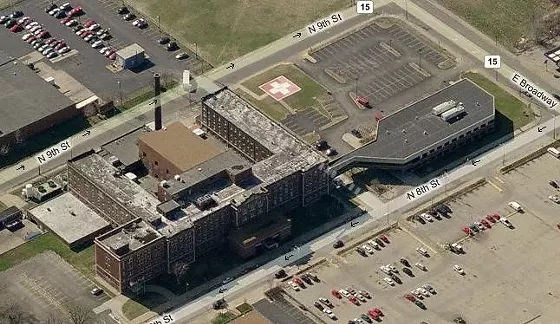
  • East St. Louis Loses Only Hospital; Kenneth Hall Closing After 120 Years

    East St. Louis Loses Only Hospital; Kenneth Hall Closing After 120 Years

    The Kenneth Hall Regional Hospital in East St. Louis will close within the next three to four months.


    Kenneth Hall Hospital should close by end of summer.

    Kenneth Hall Hospital should close by end of summer.

    The Illinois Health Facilities and Services Review Board voted to shutter the hospital yesterday. The facility — founded in the 1890s — had operated as St. Mary’s Hospital until 2004, when its name was changed to Kenneth Hall. The hospital has been losing $5 million a year and currently has just 39 beds for mental health patients, plus a non-trauma emergency room.

    In 2008 the hospital formed a partnership with Touchette Hospital some 4.5 miles away in Centreville, which handles more complicated health services for Kenneth Hall. East St. Louis Mayor Alvin Parks tells the Belleville News-Democrat that he’s saddened, but not surprised, by yesterday’s vote to close his city’s only hospital. Parks is hoping to soon replace the hospital with an urgent care center for East St. Louis.

  • Last Collector Standing: Cliff Hardesty, Owner of CD Reunion, on BBQing with Ozzy and the Who’s Iconic Album Covers

    Last Collector Standing: Cliff Hardesty, Owner of CD Reunion, on BBQing with Ozzy and the Who’s Iconic Album Covers

    Jon Scorfina

    Sometimes the best reason to collect records is for the unabashed love of the music. Picking up from a short winter hiatus, Last Collector Standing met up with Cliff Hardesty, who, above anything else, is a genuine music lover. He is also the owner of multiple record stores, including CD Reunion in St. Charles and O’Fallon, as well as the rock memorabilia and clothing shop Glad Rags. Sitting down for an interview in his newest business venture, his rock & roll bar Red Fish Blue Fish (which is next door to CD Reunion), we discussed the iconic photo of the Who peeing on the cover of Who’s Next and how he once walked in on Ozzy Osbourne barbecuing.

    Last Collector Standing: When did you start working at a record store, and how did you end up owning multiple stores?
    Cliff Hardesty: I used to work at 1380 KGLD, which was an oldies station. Gary “Records” Brown was my boss there. [He] was a St. Louis radio legend. Someone called me up one day and was asking about a record and said, “Have you ever been over to Record Reunion in Hazelwood?” He knew I was from North County. So I went into Record Reunion and started buying records from Dan Keysor. People would always say, “If you got out of radio what would you do?” I would say, “Well, I’d own a record store.”

    I got fired from my radio station job and then I went to Europe for the summer backpacking. I came back and didn’t have a job. I thought, “I’m going to go hit some record stores and see if anybody will hire me.” I got hired at Dan’s Record Reunion, the first one I went to. I was a big record collector so a couple of people in there kind of recognized me. It helped that I worked at an oldies station, because they knew I knew who the Shirelles were, and [groups] like that.

    I started doing that full time. When I first started working for Dan we might have had two dozen CDs in the whole store. It was all vinyl, cassettes and 8-tracks. Then I just started tripping over CDs. They were just growing and growing and growing where we just had stacks of them on the floor. Literally stacks waist high.

    I said, “Dan, you know you need to open up another store. You’ve got so much stuff there’s no way you can sell it all here.”

    I kept bugging him. Finally one day he said, “Look, if you think we need another store then why don’t you go on out and start it.”

    “Really?”

    “Yeah. You can be my partner.”

    “Really?”

    He said, “Yeah!” So I started looking around.


    Last Collector Standing: Cliff Hardesty, Owner of CD Reunion, on BBQing with Ozzy and the Who's Iconic Album Covers

    You might remember, Tipper Gore started a rating system for records. Tipper Gore apparently impressed a Missouri state legislator that wanted to make a rating system for records. A petition drive got started at KSHE. I noticed that about one out of five people who signed the petition lived in St. Charles County. So I was like, “Dan, we should open up in St. Charles County.” There was no used record store there at the time. Streetside wouldn’t sell used records because they were still buddy-buddy with the record companies and the record companies didn’t like the idea of people selling used recordings.

    The record companies never helped us. They would call us and talk about other stores and call them the “real” stores, like we weren’t even a real store. We never got any help from the record labels. We were as independent as you could get. We’re in St. Charles too. We’re not in U. City. We’re not in the cool areas. We’re as mom and pop as it gets.
    Anyway, I came out here and found a place in Hawks Nest Plaza, where the rent was really low. I got a loan of fifteen thousand. Dan put the same amount of money in with records, CDs and movies. That was 1991 and now here we are in 2011 still going. This will be our twentieth year.

    So you started right when CDs where really taking off?
    The timing couldn’t have been better. CDs started to get really big about ’88. By [then] all these people started converting their collections onto CD. For me, it was a goldmine because people were trading their record collections for CDs. Everyone thought CDs sounded better. I thought they were crazy. Records sounded better. I started buying records as much as I could. People thought I was crazy. I was like, “I’ll trade you ten records for a CD. No problem!” So my record collection started going crazy by that time.


    Last Collector Standing: Cliff Hardesty, Owner of CD Reunion, on BBQing with Ozzy and the Who's Iconic Album Covers

    As a storeowner, do you feel that vinyl has come full circle?
    Yeah. CDs are so easy to get that they are not considered as valuable. A record, you have to take care of it. You have to treat it with respect, and I think it gets people’s respect. People will come in with a stack of CDs with literally no cases. They don’t care about the packaging. They don’t care about anything except the disc, but albums [have] the pictures, the liner notes, and all the fun stuff. I think it’s coming full circle, but I don’t think vinyl will ever have the sales volume that CDs had in 1994.

    I just don’t see it happening. They’re not convenient. You can’t pop a record in the car while your driving. I don’t think they’ll ever be back to where they were, but there are a lot of people that [vinyl] means a lot to them. One of our biggest customers for records over the last few years has been teenage girls. They like the sound of them.

    People just like to collect things too. I know people who still collect stamps. What good is a stamp really? You can’t play a stamp. You just look at it. A record you can look at it and you can play it! (Laughs)

  • Alice Huff-Sims: Joplin Woman Tried to Sell Baby on Craigslist

    Alice Huff-Sims: Joplin Woman Tried to Sell Baby on Craigslist

    Joplin police

    Huff-Sims: Not pregnant

    Authorities in southwestern Missouri last week arrested a woman they believe intended to sell a baby on Craigslist.

    What’s so wrong with that, you ask?

    Well, police say 29-year-old Alice Huff-Sims didn’t have a child to sell and had been stringing along three different parties who wanted to pay her for a baby.

    Joplin police began investigating Huff-Sims last week after getting a complaint of someone trying to sell a child on the online ad site. On December 8, two police department employees working undercover acted as potential purchasers of the baby and met Huff-Sims, who claimed to be pregnant, at a local McDonald’s.

    Huff-Sims was then allegedly paid a down payment for the supposed unborn child, and it was agreed she’d receive the full amount when the child was born.

    After the transaction, police arrested Huff-Sims in the parking lot of  and determined that she was indeed, not, pregnant. Police say they’ve since discovered that she’d been corresponding via text message with three other potential purchasers.

    Huff-Sims has been charged with felony stealing.

  • Cher Hughes: St. Louis Woman Murdered in Panama Subject of Dateline Episode

    Cher Hughes: St. Louis Woman Murdered in Panama Subject of Dateline Episode

    Friends recall Cher Hughes as a loving, free-spirit.

    Remember the story of Cher (Cheryl) Hughes — the St. Louis woman whose body was found lying in a shallow grave in Panama earlier this year?

    Hughes had moved to Bocas del Toro, a small island off the coast of Panama, a decade ago with her boyfriend Keith Worle. The couple eventually married, but was separated this spring when Hughes went missing.

    During her disappearance, Worle and friends continued to get bizarre text messages from Hughes saying that she was okay and had run off with another man. Meanwhile, William Holbert — aka “Wild Bill” — another ex-pat living in Bocas del Toro had moved into Hughes’ home and said that she’d sold him the property before her disappearance.

    What no one knew at the time was that Holbert was a con-man and criminal fleeing justice in the U.S. (even appearing on the show America’s Most Wanted).

    On Friday, Dateline did an admirable job chronicling Hughes murder from on location in Panama. Check out the video below.

    See the rest of the story at Dateline.

  • Tea Party Crasher: Hard-charging Ed Martin wants to win your vote — and Russ Carnahan’s congressional seat

    Republican Ed Martin wants your vote. Really, really badly. Tell him what street you live on (he’s going to ask), and Martin may follow up: Which side? He’s memorized the boundaries of Missouri’s 3rd Congressional District down to the lane stripes.

    He could be our salvation, this chummy Catholic conservative with the boyish grin, brazen tongue and yard signs everywhere. Or he could be a hard-right, hothead demagogue antichrist (with yard signs everywhere). It depends on your politics.

    But here’s what doesn’t: Even as the economic storm clouds part, voters still feel hard-strapped. Initiatives such as the stimulus that were meant to rescue us from a fearful recession have bred new fears of the national debt. We binged on Hope and Change. Now we’re hung-over.

    The mood nationwide is anti-incumbent, and St. Louis’ own incumbent Democrat, Russ Carnahan — endowed with all the charm and charisma of C-SPAN — is spending more cash than ever before to keep his seat.

    That’s because the most dangerous place to stand in “MO-3” is between Ed Martin and an eligible voter.

    “He is the one of the hardest-working candidates I’ve ever seen in my life,” says John Hancock, former chairman of the Missouri GOP.

    Just as well, say political observers. Martin is clearly the underdog in the 3rd District — solidly democratic territory stretching from University City to Ste. Genevieve. His base is juiced up, but he can only win this race by wooing undecideds. That’s a tall order for a guy famous for partisan zeal.

    “I like Ed,” says Mike Kelley, former chairman of the state Democratic party. “He’s a person I’ve had drinks with before, and a person I’ve worked with before.

    “But working with Ed is like working with a lit firecracker. It’s gonna explode; you just don’t know when.”


    On a recent September morning, Martin busts out of the back door of his campaign headquarters, a one-story brick house in south city whose basement office is nicknamed “The Freedom Bunker.” He beelines for his F-150 pickup — license plate: “9-11” — with a water bottle in one hand, a Blackberry Curve in the other (he’s checking it) and folded-up MapQuest directions between his teeth.

    “The Tea Party endorsed me, did you know that?” he says, pulling onto Hampton Avenue. “They actually endorsed me.” Well, duh. Wasn’t Martin an originator of the St. Louis Tea Party? Didn’t he stand shoulder-to-shoulder with Bill Hennessy and Gina Loudon on the steps of the Arch at the first gathering in February 2009, expecting 150 people when 1,500 showed up?

    “Yeah,” he says, “but their policy was no endorsing of candidates.” This is true. Hennessy, cofounder of the local grassroots coalition, feared that picking favorites would scare off libertarians, the religious right or disaffected Dems.

    Now, Hennessy says, it would be “irresponsible” not to endorse Martin.

    “If you look at the rate we’re piling up debt, at some point it doesn’t matter what party you belong to,” Hennessy explains. “You gotta look at your kids and take a stand for the future.”

    Martin has made fiscal conservatism his core message. Rarely does he miss a chance to denounce the “runaway spending” embodied in “Obamacare” and the stimulus package. His number-one priority, he says, is jobs. In December, he wrote on his website that “job creation requires nothing more from our government than a willingness to let it happen.”

    Yet that’s tough to square with what he told Charles Jaco in August — that he “emphatically” supports government-funded, WPA-style public projects. (He even once wrote a column in the Metro Evening Whirl advocating federal spending for colonies on the moon and Mars.) Only the government can afford such large-scale undertakings, he explains. His beef with the stimulus package, in fact, was that it didn’t create enough shovel-ready jobs — a bit of careful triangulation from a candidate who’s publicly pledged never to vote for a tax increase.

    Martin’s anti-tax stance is precisely the reason why the National Federation of Independent Businesses chose to endorse him. On this crisp fall morning, he’s heading to a press conference to announce it at a design firm on South Jefferson Avenue.

    Martin crosses the parking lot, whistling. He sports a black suit, apple-red tie and businessman’s haircut. Inside, he does what he does best: talks up the race, razzes folks like a frat boy, works the room. After a quick video shoot, Martin pivots to face the seated office workers. “Are there any other voters here?” he says.

    Within minutes he’s back out the door, checking voicemail.

    “Gosh,” he says, hanging up, “you meet people on the trail, they’re wonderful, and they don’t stop calling you.” Martin affixes his cell-phone number to every e-mail he sends. He responds to all e-mails personally.

    Cruising back to the Freedom Bunker, Martin speaks through yawns, which seems to happen anytime he sits for more than five minutes. Asked how much he sleeps per night, he gets distracted by a lawn festooned with his signs.

    “Oh, there’s a patriot!” he says. “Look at that. Hmm, that’s a nice yard.” A neighbor’s yard displays even more. “Hey — somebody’s motivated over here! Yeah, I don’t know how many hours I sleep. Not very much. The kids are the wild card.”

    Martin’s wife, Carol, is a geriatrics physician. They have a daughter in first grade, a three-year-old boy and a twenty-month-old son Martin calls his “stimulus baby,” thanks to his birth date of February 17, 2009 — the day that legislation became law. Martin has no problem changing diapers, he says, because he literally has no sense of smell. (He also endured open-heart surgery in 2008.)

    Soon he’s back inside his office at the Freedom Bunker. On one wall hang all four of his diplomas, including one from a Pontifical school in Rome. A half-hour from now, Martin will shoot both a four-minute and a one-minute pitch to voters at the KMOV-TV (Channel 4) downtown studio. It’s decided that he will emphasize jobs. Carnahan shot his own clips earlier that morning. He used a TelePrompTer. Martin will not.

    Martin’s press secretary, Theresa Petry, is making a valiant attempt to eat Rally’s, answer e-mails and pack a camera bag at the same time. But now it’s time to go. They pile into the pickup; every time they pass an “Ed Martin” sign, the candidate points it out.

    Downtown, Martin spies a small spot on Market Street and wonders if he can squeeze in.

    “Ed, you’re not the best parallel parker,” Petry says.

    “You see?” the candidate says. “These are the kinds of scurrilous attacks I’m up against.”

    Inside KMOV, the producer and Martin chat as they stride toward the production room.

    “So where do you live?” Martin asks.

    “Edwardsville,” the producer replies.

    “Augh,” says Martin. “Not in the district.”


    Ed Martin is a New Jersey native of Irish stock. His parents both grew up in big families south of Newark. They married, then ventured 65 miles west to a railroad-stop town of 1,000.

    His father set up a solo law practice. His mother abandoned a nursing career to watch after Ed, his older sister and younger brother. Young Ed Martin fished, canoed, got stitches, got in trouble, and scurried home when his parents clanged the bell outside the back door.

    As a boy, he visited the Jesuit-run Saint Peter’s Preparatory School in Jersey City, his father’s alma mater. A self-described “country kid,” Martin was mesmerized. He prevailed on his parents to let him commute three hours every day, by train and bus, in order to attend.

    “That was a big pivot in my life,” he says. “It made me confident.”

    At Saint Peter’s, he played basketball all four years, but was cut from the baseball team his junior year. The coach broke the news by explaining that the team had no uniforms left; otherwise, Martin could have stayed on. Martin offered to buy another uniform. The coach told him that wasn’t the point.

    He attended the College of the Holy Cross in Worcester, Massachusetts, where he roomed with the son of conservative Supreme Court Justice Antonin Scalia. Martin wasn’t gunning for a political career just yet, although he was reading “a ton” on his way to an English degree. (He tacked on a concentration in Peace and Conflict Studies.)

    On a brief cultural immersion trip to Cuernavaca, Mexico, as a sophomore, Martin met a peasant farming family that lost several members to dysentery.

    “For a twenty-year-old college kid,” he says, “that was pretty heavy.” It spurred him to apply for a Thomas J. Watson Fellowship to study infant mortality and water supply in Indonesia, which he received in 1992.

    “I don’t know that I developed any grand theory,” Martin says of his yearlong stay, though he gained an appreciation for how differently Southeast Asian Muslims bathe (by using a small scoop of water) and worship (with daily calls to prayer).

    Although he’d already snagged a Rotary scholarship to stay in Indonesia a second year, he grew so “miserably homesick” that he asked for a transfer to Italy instead. He spent two years studying philosophy at Pontifical Gregorian University in Rome, then finally landed at Saint Louis University in August 1995 for law school.

    Typical Ed Martin chutzpah was on display within three days of his arrival. He rode the MetroLink to the old Busch Stadium, where he informed security guards he had Vatican press credentials (which, technically, he did). “There I was, up in the press box, pretending to really be a journalist,” he recalls fondly, bragging of chats with Bob Costas and the Cardinals’ management.

    At Saint Louis University, Martin earned both a law degree and a master’s in health-care ethics. A work-study job as a campus museum security guard helped pay for it. When he and then archbishop Justin Rigali discovered they had mutual friends in Rome, they began sharing meals together.

    Upon Rigali’s invitation, Martin worked in the Vatican for a month as a lay “youth expert” during a 1997 conference of bishops from the Americas. Martin helped with translation, spoke regularly with the pope and did the first reading at the Mass that kicked off the gathering in St. Peter’s Basilica in Rome.

    “The place was full,” Martin recalls. “Standing in St. Peter’s, with the pope sitting behind you, looking out, it was pretty amazing.”


    Martin’s first taste of leadership — and political controversy — came in 1998, when he finished law school and Rigali tapped him to direct the Human Rights Office of the Archdiocese of St. Louis.

    Martin says he merely “cleaned house” in a “moribund” institution. Others called it a purge of experienced liberals.

    Established in the ’60s, the Human Rights Commission began as a band of priests doing civil rights work. It soon expanded to enlist lay people and broadened its scope to champion labor, immigrant and environmental causes. The commission enjoyed such broad autonomy during the ’80s, in fact, that its positions didn’t always align with those of the more conservative archdiocesan central office.

    All that changed under Rigali.

    In February 1998, the archbishop reached a compromise with disgruntled Catholic elementary school teachers: They could have more say over wages and benefits, but not unionize. But when the commission issued a statement supporting a teachers’ union, it was rebuffed and muffled from public comment.

    Tom Nolan, director of the Human Rights Office, resigned in frustration, as RFT reported at the time. (Then, as now, Nolan declines to discuss the matter.)

    Rigali subsequently ignored the commission’s written suggestions for selecting a new director and hired Ed Martin instead.

    Martin was 28 years old. He’d never managed people before.

    “They brought us all in, and Ed handed out his résumé,” remembers Angie O’Gorman, then a Human Rights Office employee. “It showed a noticeable lack of work experience and knowledge of the social-justice teachings of the Church. There was widespread concern about that.”

    As Martin remembers it, the Human Rights Office had dominant personalities that were “grandstanding” for fringe labor issues, such as strawberry workers. “Not much was being done,” he says. “It had gotten too far left for no good reason.”

    On one occasion, O’Gorman recalls, Haitian activists informed the staff that soccer balls exported from their Carribean island were manufactured with child labor. The activists pleaded for the archdiocese to stop buying them. Afterward, O’Gorman says, Martin expressed a reluctance to “rock the boat” with the procurement office, but promised he’d consult with the supervising bishop.

    Nothing ever came of it.

    “The desire to protect the procurement office from grappling with the soccer-ball issue was just one example of Ed trying to protect the status quo,” explains O’Gorman. “Ed’s allegiance was to — and Rigali’s interest was in — protecting the business sector from demands of the Church’s social justice teaching.”

    Today, Martin proudly ticks off his accomplishments as director. He increased funding for the pro-life programs, while defunding groups such as ProVote, a progressive political-activist coalition. He says he strengthened ties with the National Black Catholic Congress, and coordinated a meeting between Rosa Parks and John Paul II during the papal visit of 1999. (The Pope, he notes, remembered him.)

    Martin also funneled resources to the prison ministry and Catholic Charities, which O’Gorman considered a good thing — but beside the point.

    “The point of the Human Rights Office was social-change work, to help people become conscious of the way that society is organized to cause oppression,” she says. “I’m not sure [Ed] understood the difference between social justice and charity.”

    As for the personnel changes, Martin says, “We didn’t get rid of everybody. Some people moved on, and some people we pushed on.”

    O’Gorman says that Martin “decimated” the office, adding: “It was hard to tell what he was doing on his own and what he was doing at the request of the archbishop.”

    Today, according to the archdiocese, the tasks of the Human Rights Office have been absorbed by Catholic Charities.


    In April 2002, U.S. Senator Christopher “Kit” Bond, the Missouri Republican, brought an English springer spaniel onto the Senate floor in Washington, D.C. Making the case for national election reform, he wanted all to meet Ritzy. She’d been registered to vote in St. Louis.

    The city had a bad reputation for voting irregularities, but the November 2000 election was truly a farce. Hundreds of citizens showed up to vote but found their names had been mistakenly dropped from the rolls. When a judge ordered an emergency extension of voting hours, a higher state court quickly reversed it — but folks kept voting anyway.

    By the end of Election Day, Bond was pounding his fist on a lectern, declaring the whole thing “an outrage.” Yet the problems persisted into the next year, when two prominent aldermen registered to vote — despite being dead.

    In 2003, the St. Louis Post-Dispatch editorial board blasted the Board of Election Commissioners as an “unconscionable mess,” where patronage employees “who owe their allegiance to politicians have never been known for their devotion to long hours and hard work.”

    Enter Ed Martin.

    He’d been busy since leaving the archdiocese, clerking for a federal appeals court judge, getting married, having a baby and practicing law at Bryan Cave. Governor Matt Blunt appointed him to chair the bipartisan board in May 2005.

    Within three months, Martin and his two fellow commissioners had fired or demoted seven top staffers, including some Republicans. They refined the duties of those remaining with a clear message: Do your job, or lose your job. Martin also handed over evidence of voter fraud to the authorities.

    Even Democrats who wouldn’t dream of supporting Martin’s current bid for Congress give him props for his tenure as chairman.

    Jeff Rainford, St. Louis mayor Francis Slay’s chief of staff, lauds Martin for recruiting able workers to get the trains running on time. By November 2008, Rainford observed, the board of elections was “like night and day” from its 2000 woes, which he finds ironic, given that it probably hurt Martin’s party.

    “Though he is obviously one of the most partisan guys around,” Rainford says, “Ed still wanted the place run right, even if that meant more Democrats would vote.”

    Clarence Dula, the Democratic commissioner, often differed with Martin. “We’re both strong-opinion guys, we dig in our heels,” Dula says. But Martin kept things light with jokes, and agreed to a mode of communication with Dula that they nicknamed “gloves off.”

    “When we went ‘gloves off,’ we would talk about things offensive to most people and make each other clear,” Dula recalls. “That was the fantastic thing about working with Ed. I don’t think I’d worked that closely with anyone before.”

    One fired board staffer, however, accused Martin and the other commissioners of excessive partisan zeal. Oddly, she was a member of the GOP.

    In 2006, Jeanne Bergfeld, an assistant director of operations, filed a federal lawsuit claiming she was wrongfully terminated by Martin and his two colleagues for being “not Republican enough.”

    Martin denies it. “She said she was a Republican; nobody ever questioned that,” he tells RFT, adding that Bergfeld was a patronage employee who had enjoyed “twelve years of not having to do anything” and who “wasn’t interested in changing.”

    Martin concludes: “We did everything we could, appropriately, to have her do her job, but it wasn’t in the cards.”

    The parties settled the suit in 2007. Chet Pleban, who represented Bergfeld, says only that it was “resolved satisfactorily.”


    By the time Governor Matt Blunt went hunting for a new chief of staff in 2006, Ed Martin had become the city’s It conservative. The chairman of the board of elections was hosting a call-in talk show on KTRS (550 AM). He was president of the Federalist Society. He brought Supreme Court Justice Scalia here to speak before a capacity crowd of attorneys from the local bar association (Scalia and Martin then shared a meal with Rush Limbaugh).

    Martin had also proven himself a staunch pro-life crusader. He founded his own law firm in 2004 and filed several lawsuits on behalf of pharmacists who refused, on religious grounds, to dispense Plan-B, better known as the “morning-after pill.” He even argued his position on CNN’s Lou Dobbs Tonight opposite then-Illinois Governor Rod Blagojevich.

    Back in Jefferson City, Blunt’s approval ratings had dipped. His first chief of staff, Ken McClure, had been a mild-mannered administrator. Observers said the governor was looking for new blood. He brought in Martin in September 2006.

    Democratic senator Timothy Green of north St. Louis county says Martin proved himself a “vindictive” political hatchetman.

    Says Green: “His solution to public policy is to create total chaos.”

    George Connor, a political science professor at Missouri State University, says that partisan warfare in Missouri government “didn’t start with Ed Martin or end with him, either. It only got worse while he was chief of staff.”

    Martin hurtled the sharpest spears at Jay Nixon, then attorney general, who was expected to run for governor as a Democrat. Martin faulted Nixon for not prosecuting anyone after the Taum Sauk reservoir collapse devastated Johnson’s Shut-Ins State Park. When e-mails surfaced suggesting that Martin put pressure on the Missouri Highway Patrol to make the same critique, the chief of staff denied any impropriety.

    One state employee in the Blunt administration, a Republican who declined be named, says Martin was known in the governor’s office for “angry outbursts.”

    “I thought very highly of Ed before he took that job,” the former employee said. “When he got that power, he became a ruthless animal.”


    On August 27, 2007, reporter Tony Messenger of the Springfield News-Leader sent the governor’s office a modest request under Missouri’s Sunshine Law, which ensures that government records are open to the public. Messenger wanted copies of any e-mails that Martin had sent to a certain pro-life group during the previous week.

    Blunt’s staff responded that no such e-mails existed.

    Messenger insisted they did. A source had already forwarded one to him. And he believed that it strongly suggested that Martin was mixing “partisan campaigning with the process of doing his state job,” or working for the GOP while on the public dime.

    Martin acknowledged writing the e-mail in question, but maintained — and still does today — that all of his correspondence was policy-based, and therefore legit.

    In that case, Messenger argued, the documents were public record and had to be retained. Yet Blunt staffers insisted at first that none of their e-mails were public record. That’s exactly why they were getting deleted.

    Deleted? The media collectively gasped. “Memogate” had begun.

    At least one man working for Blunt in the fall of 2007 did believe some e-mails were public records: the governor’s 30-year-old deputy general counsel, Scott Eckersley.

    In a September 14 memo, Eckersley encouraged his superiors to concede that very fact. Not to honor the spirit of the Sunshine Law, however; Eckersley thought he’d found an escape hatch. Any e-mails generated in the “deliberative decision-making process,” Eckersley reasoned, were public record only if they were retained. If the governor’s office wasn’t retaining them, ipso facto, they weren’t public record.

    Convoluted as that sounds, Eckersley would soon be using that memo as evidence that he’d urged greater transparency. And he was going to need all the evidence he could get.

    At the time Memogate broke, Eckersley wasn’t exactly employee of the year. He’d shown up late on at least three occasions. After getting reprimanded, he e-mailed a friend, “I just kind of don’t really care too much.”

    Eckersley’s supervisor, general counsel Henry Herschel, allowed the young man to do legal work for his family’s business while at the office. But on September 21, Herschel admonished him to focus more on his tasks for the state.

    Eckersley fired back in an e-mail: “If you have a problem with me come in and talk to me about it face to face.”

    Worst of all, Eckersley — a devout Mormon who’d just broken up with his fiancée — registered on the racy website Adult Friend Finder, looking for a “slim and attractive woman.” He apparently checked several boxes in the “Looking For” section of his profile, including “Group sex (3 or more).”

    The adult website generated messages to Eckersley’s family business e-mail account — which automatically forwarded them to his state e-mail. (He claims he never looked at them at the office.)

    Eckersley and Herschel had a blow-up confrontation on Friday, September 21, 2007. Martin assured the young man by text over the weekend that all would be well.

    But on Sunday evening, Eckersley found himself frozen out of his government e-mail account. He was told to stay out of the office for a few days.

    The next Friday, Ed Martin hauled Eckersley into his office.

    As Eckersley secretly recorded the conversation, Martin mentioned the Sunshine Law and said he’d heard that Eckersley planned to go out “with guns blazing” and “take down the governor.” Martin then said he was firing Eckersley, citing the personal business he was doing on state time, e-mails from the “group sex” site and the argument with Herschel.

    As the recording makes clear, Eckersley tried to explain that his disagreement with Herschel involved the Sunshine Law.

    Eckersley: This was about me sending an e-mail to you, which I’ve done several times, where things are being overlooked. This was me trying to say: We’re saying this, and it’s not that.

    Martin: You’re not fucking right. And it’s not your role, so —

    Eckersley: How am I not right?

    Martin: You’re not right on any of this shit. You were told not to send e-mails to me and you decided to do it anyway. It’s called insubordination to your direct supervisor.

    Tipped off one month later that Eckersley was about to go public with his own story, Martin had packets sent to media outlets. Inside were printouts of e-mails from Scott Eckersley’s account showing the private work he’d done on government time. A letter, composed by Martin but signed by another staffer, reiterated the governor’s justification for firing Eckersley. It also added new reasons, such as possible drug use — an accusation Martin has never proved.

    In the stories that finally ran on October 28, Eckersley publicly swiped back at his bosses. He got canned, he said, because he’d urged them, both verbally and in writing, to follow the Sunshine Law.

    Eckersley sued the state for wrongful termination in January 2008. The case was settled last year. Total cost to Missouri taxpayers, including legal fees: about $1.8 million.

    Neither side ever backed down from its accusations.

    “I’m not pretending we didn’t play hardball,” Martin says. “He was threatening the governor of the state of Missouri, and he was lying.”

    Eckersley, for his part, is running for Congress in southwest Missouri, touting his record as a “whistle blower.”

    “I think he’s despicable,” Eckersley says of Martin. “He has no place in public service.”

    Whatever the merits of Eckersley’s legal claim, his settlement left a critical issue unresolved: Did Ed Martin and others in the governor’s office who deleted their e-mails knowingly violate the Sunshine Law?

    On November 15, 2007, Attorney General Jay Nixon appointed special investigators to look into the matter. They requested to review some 60,000 government e-mails.

    Five days later, Martin resigned as chief of staff.

    “I’d become such a lightning rod,” he explains today. “I said, ‘This may be a good time for me to go.’”

    Blunt wrangled with the investigators for a year, then finally agreed to release the records free of charge. When reporters pored over them, they discovered hundreds of e-mails responsive to Tony Messenger’s original request. Martin had deleted them — before, he says, the request came in — but they’d been retained on backup tapes.

    “I did not, and I don’t think anybody did think, that a normal request for Sunshine information required retrieval from the backup tapes,” Martin later said in a deposition.

    Interestingly, when Messenger finally got his hands on Martin’s e-mails — the ones the governor’s office fought so hard to protect — the worst he could write was that they were “questionably relevant to state business.” The scandal, it turned out, had more to do with Blunt’s resistance to releasing the e-mails, than their actual content.

    Indeed, the investigators concluded in February 2009 that the governor’s record retention policies had been “insufficient” and “not in compliance” with the Sunshine Law, due to unsound legal advice.

    However, special attorney general Louis Leonatti testified in court: “I have looked at 1,500 pages of documents. I have been involved in twelve depositions. I have not seen anything to indicate any criminal conduct.”

    Martin says the investigators’ final report vindicates him. “I assure you,” he tells RFT, “if you get investigated by the attorney general, and they find something you’ve done that was wrong, you’ll be prosecuted.”

    And though Martin left state government in the wake of Memogate, he never left the spotlight.

    On the eve of President Barack Obama’s election, an independent political committee called the American Issues Project ran ads linking Obama to “’70s radical” William Ayers. Martin was the group’s founder.

    When the Belgium company InBev geared up to take over Anheuser-Busch in 2008, Martin launched his “Save AB” nonprofit to “fight the foreign invasion.” Last year, the group’s website began pointing visitors to Martin’s congressional campaign. (His critics accused him of violating federal election rules.)

    But the Carnahan campaign won’t let anyone forget about Memogate. It has created a Flash video game modeled after Pac-Man that they call Hackman: Ed Martin’s head darts around gobbling up e-mails. Players rack up not points, but “tax dollars wasted.”

    Hackman may be a first in America: the video-game attack ad.

    Martin fancies himself an outsider in this race. His ads portray him as someone who’s never run for office and will bring greater transparency to government. Yet Memogate was the ultimate insider controversy, and Martin was right at its center. The most charitable interpretation, Democrats say, is that Martin violated the spirit, if not the letter, of the Sunshine Law.

    Not that it will mean anything to undecided voters, suggests political science professor George Connor.

    “There are two sides to that scandal,” he says. “I cannot believe that it will have any impact on this race. [Memogate] is all about firing up the base.”


    A crowd of about 400 people chants “Ed! Ed! Ed! Ed!” as all three 3rd District candidates file into an Arnold gymnasium for a debate on the evening of September 30. Ed Martin beams like a child just pinned with a blue ribbon, his grin so wide it practically touches the shoulders of his opponents, Russ Carnahan and Nicholas Ivanovich of the Constitution Party. This crowd is Martin’s crowd.

    Even in the comfort of his office, Martin squirms incessantly. He grabs things off his desk and bends them. He runs his hand up and down the back of his head and scratches his arm. He once checked his cell phone in mid-sentence, then tossed it across the room to avoid temptation of checking it again.

    Supporters have warned him not to fidget, and so tonight, with hundreds watching, he sits almost woodenly.

    But rhetorically, he keeps jumping off the top ropes for the body slam.

    Asked about abortion, Carnahan stresses the need to prevent unwanted pregnancies, to render abortion a “rare choice.”

    He passes the mic to Martin. They make almost no eye contact this entire evening.

    “I’m not sure whether he’s using Pelosi talking points or not,” Martin booms over the P.A. system, “but it sounds like he’s saying he’s for abortion.”

    Carnahan gets asked for his take on the military’s “Don’t Ask Don’t Tell” policy. Just like many generals, he says, he doesn’t support it. America needs more soldiers, he explains. We shouldn’t be excluding capable and willing patriots.

    Martin, emboldened by the reaction so far, responds by swin