Tag: Music News & Interviews

  • Chappell Roan’s Reign Started in Small-Town Missouri

    Chappell Roan’s Reign Started in Small-Town Missouri

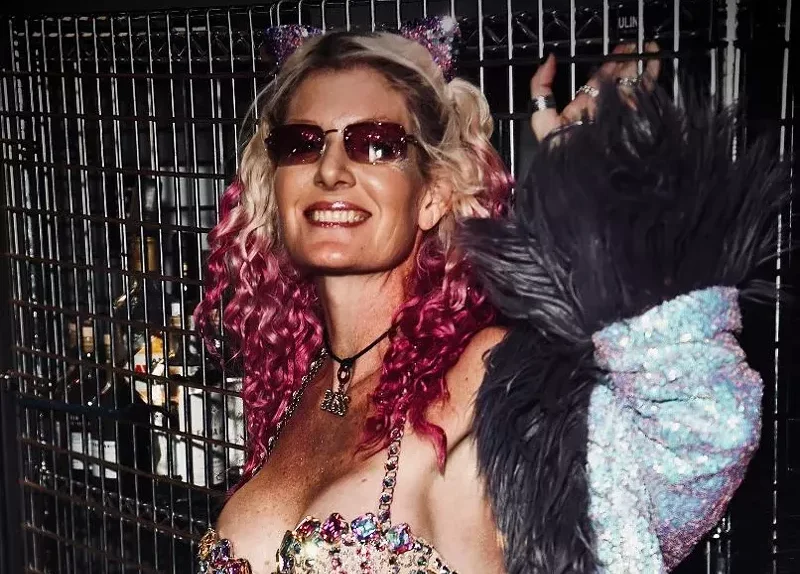
    Missouri native turned international queer pop supernova, Kayleigh Rose Amstutz — better known as Chappell Roan — took the world by storm with her bold, sex-positive, in-your-face songs and flashy, drag-inspired appearance.

    Hailing from the small town of Willard, Missouri, Roan felt “disconnected and emotional” as she made her way through Willard High School.

    “I didn’t have a good time,” she tells the RFT on a phone call from Austin, Texas, where she’s on tour playing arenas as she opens for Olivia Rodrigo. “I was really struggling with bipolar and being a teenager was the hardest thing I’ve ever been through. I just felt really out of place and I couldn’t really understand myself. I always longed for an artist community like the one I have now.”

    Being gay in the Ozarks didn’t make things easier. Roan would later tell the Washington Post, in its words, that she was “caught between two selves” — going to church but “sneaking out frequently.” It took performing to reconcile who she really was.

    She signed with Atlantic Records and took the name Chappell Roan as a way to honor her late-grandfather, Dennis Chappell, and his favorite song, “The Strawberry Roan” by Marty Robbins. It’s a cowboy song about a horse breaker who more than meets his match in a “regular outlaw” of a strawberry roan, “the worst bucker I’ve seen on the range.”

    The name let Roan become a character — and “Chappell Roan,” she says, is “definitely a character.”

    “The character is like me, of course, but the dressing, the confidence, the makeup, like that is all kind of like a showgirl version of myself — or drag, if you will,” Roan says. “I dress pretty differently, more tomboy, I guess. I don’t wear bright colors anymore. I only wear black, white and gray. I like wearing crazy outfits, obviously but I like being alone and reading. I just love quiet because I feel like my life is so chaotic in every way, which I also love.”

    In a profile of Roan that crowned her “pop’s next big thing,” the Guardian reported that Roan was initially terrified and thrilled in equal measure by Los Angeles (apparently “shaking in Trader Joe’s” when she saw women shopping for groceries in sports bras) but found freedom in the city’s gay bars.

    “I grew up thinking being gay was bad and a sin,” she told the Guardian. “I went to the gay club once and it was so impactful, like magic. It was the opposite of everything I was taught.’”

    Shortly after visiting that first gay club, Roan wrote “Pink Pony Club” to showcase her newfound freedom, but the euphoria didn’t last. Atlantic Records dropped Roan and she moved back home, where she nannied and served coffee to get back to LA.

    “Money was like the biggest [obstacle],” Roan says. “I think it was like having no money to do this, and then like being bipolar, and the breakups and LA sucks sometimes, and missing my family, like all these like trillion obstacles.”

    She adds, “Now I have a label, very grateful. But it’s really really difficult to get your feet off the ground whenever you are independent.”

    Now signed with Island Records in Los Angeles, Roan continues to rise. Roan’s newest album, The Rise and Fall of a Midwest Princess, released September of 2023, speaks to her experiences with breakups, love and her embracing her queer identity.

    She also has songs: “California,” “Love Me Anyway,” “Naked in Manhattan,” “My Kink is Karma,” “Femininomenon,” “Casual,” “Kaleidoscope,” “Red Wine Supernova” and “Hot To Go.” The Guardian called the record “one of the most over-the-top, gloriously tasteless debuts in recent memory. It sounds, at turns, like Patsy Cline, 80s Madonna and RuPaul at his nastiest.” That’s some praise.

    Roan, however, considers herself country — even if it’s like no country your mom (much less your grandpa) ever heard.

    “I really started getting into music whenever I was, like, in high school,” she explains. “It was just based on like Christian rock and some country, but I just didn’t really identify with it at the time. Now I identify with country music in such a different way. I think it’s so camp and fun.”

    Roan will be opening for Rodrigo on her “GUTS World Tour” in her native Missouri on March 12 at the Enterprise Center. Didn’t get tickets? She will be back Thursday, May 30 for her “The Midwest Princess Tour” at Saint Louis Music Park in Maryland Heights.

    To learn more about Chappell Roan or to purchase tickets for her upcoming tour, visit her website.

    Email the author at [email protected]


    Subscribe to Riverfront Times newsletters.

    Follow us: Apple News | Google News | NewsBreak | Reddit | Instagram | Facebook | Twitter | Or sign up for our RSS Feed

  • One of the World’s Best Irish Bluegrass Bands Now Lives in St. Louis

    One of the World’s Best Irish Bluegrass Bands Now Lives in St. Louis

    St. Louis has its share of musical claims to fame, and our latest is also one of our greatest: St. Louis is home to one of the top Irish bluegrass bands on the planet.

    We’re talking about JigJam, the renowned four-piece band that formed in Ireland in 2012. The band that combines traditional Irish music with American bluegrass; the band that made its Grand Ole Opry debut last March, sharing the stage with Garth Brooks and Steve Earle; the band that plays to uproarious crowds on tours around the U.S. and lands premium spots on some of the country’s biggest festivals, including the Telluride Bluegrass Festival in Colorado and, later this year, Merlefest in North Carolina and Delfest in Maryland.

    So what are they doing here? Out of everywhere in the U.S., why would a band of JigJam’s stature within the Irish music community settle in St. Louis? After all, on any list of the most Irish cities in America, St. Louis is nowhere near the top.

    The answer is a startlingly simple one: JigJam’s relocation to St. Louis came down to John D. McGurk’s, the celebrated Irish pub in Soulard. “Honestly, it’s mainly because of McGurk’s,” JigJam singer/guitarist Jamie McKeogh tells me. “We’ve been in a lot of Irish bars around the States, and this definitely tops them all, you know? It’s the real deal.”

    McKeogh and I are sitting at McGurk’s main bar about an hour before JimJam is set to take the stage on a Thursday night, part of a five-night-per-week residency at the bar that is set to last a full five weeks. As we talk, Johnny “Lucky” McAteer, who has been tending bar at McGurk’s for 30 years, brings me a perfectly poured Guinness, which McKeogh insists on putting on his own tab. McKeogh is tall, handsome and reddish-headed. He is also unfailingly polite and speaks in a charming Offaly accent; when I ask his age, he says that he is “turty one.”

    “The pictures on the wall tell the story, really,” McKeogh says, referring to the framed photographs of Irish musicians that line the walls behind and around the stage at McGurk’s. “I didn’t realize the first time I was here the amount of Irish musicians that have played here. Fellas like Jackie Daly and Joe Burke. You see them all around the walls, and they’ve all spent time here, and after you play here, you realize why.”

    Indeed, McGurk’s makes JigJam feel at home. McKeogh and JigJam banjoist Daithi Melia were raised in the town of Tullamore, which McKeogh describes as “your run-of-the-mill small Irish town, slam-bang in the center of Ireland,” best known for its famous export, the whiskey Tullamore Dew. Raised by a music-teacher mother who emphasized traditional Irish music and a father who turned him on to the American classic rock of Bruce Springsteen and the Eagles, McKeogh was blending musical influences early on, playing mandolin and tenor banjo alongside his sister Ciara, a fiddler.

    JigJam started in 2012 with the siblings, along with Melia and friends, playing at parties and pubs around Tullamore on weekends, “making a little pocket money playing covers” while McKeogh was still in high school. Eventually, McKeogh moved to Dublin to study physical therapy at the Royal College of Surgeons in Ireland, keeping the band going by finding fans of traditional music. “Traditional Irish music always has a strong pocket in Ireland,” he says. “The really traditional stuff doesn’t have a massive following, but the following that it does have is very strong, very dedicated.”

    After graduating from college, he worked as a physical therapist for four years while still keeping JigJam going, but eventually music took over everything. “The band got busy enough, and I got the opportunity to come over here to the States,” he says. “So I put the PT on the back burner for a while and haven’t really seen it since.”

    With some personnel changes — his sister Ciara left the band and Tipperary-born mandolinist and banjoist Gavin Strappe joined on mandolin and tenor banjo — JigJam toured throughout Ireland and the UK and recorded a series of well-received albums that mixed traditional Irish tunes with the band’s own originals. Eventually JigJam crossed the pond, landing stateside in 2015 for its first U.S. tour.

    The band made some important discoveries in America. First, they fell in love with American bluegrass music, which they started to work into their own sound, building on the historical connections between Irish music and bluegrass. “That’s what we discovered when we started putting it all together, that bluegrass started from Irish music really,” says McKeogh. “The Irish immigrated to the States years and years ago, and that helped kind of kick off bluegrass and American folk music.”

    Stylistically, the band has adopted many of the techniques of modern bluegrass pickers, which has helped McKeogh’s own guitar-playing evolution. “I look up to all those fast bluegrass guitar players,” he says. “I didn’t grow up playing bluegrass guitar. I grew up playing Irish traditional guitar, mainly as an accompanying instrument, so [bluegrass guitar] is new to me. It’s a different language. But I had the flatpicking aspect from tenor banjo and mandolin, and the last few years I’ve incorporated that technique into guitar. So I’m probably a bit of a hybrid.”

    It’s a hybrid that runs throughout JigJam. Melia has mastered Scruggs-style five-string banjo picking and is as slick and inventive a banjo ace as you are likely to find anywhere on the newgrass scene these days. On the other hand, Strappe is a phenomenal four-string tenor banjo player of Irish traditionalism. On certain songs, both Melia and Strappe will simultaneously play their respective banjos for a truly original melting-pot of styles that the band calls “iGrass” for its blend of Irish and bluegrass idioms.

    Having been on the bluegrass festival circuit, JigJam has been able to meet and play with jamgrass all-stars like the Infamous Stringdusters, Greensky Bluegrass and others. “We played with Billy Strings and his band out in Colorado,” McKeogh says. “We were able to pick up some tricks from them because we didn’t grow up playing that music. We see what they do, where one song goes on for 10 minutes.”

    Still, no matter how much JigJam experiments with progressive bluegrass or extemporaneous jamming, they remain first and foremost an Irish band. “That’s why we still have a job here in the States,” McKeogh laughs, pointing to the universality of Irish music. “Our songs are very much upbeat and feel-good. Our motive is to bring people together for the two hours that they’re at our show and to make sure we can include everybody, and it doesn’t matter if you’ve never even heard Irish music. You can still tap your foot to it no matter what your background is and no matter what your beliefs and views are.”

    The other discovery in coming here was the realization that the U.S. was going to be their most fertile market. If anything surprised McKeogh about America, he says, it was “how big of a passport the Irish passport is when you travel around the States. No matter where you go, they’ve all heard of Ireland, and they’ve all heard of Irish music in some shape or form. There’s a lot of Irish culture over here in the States. For a small country, we make quite a bang.”

    That bang translated into enough successful American tours that JigJam knew they needed to relocate here to make the U.S. their base of operations. “We’d do our tour and we’d all fly home [to Ireland]. Then we’d do another tour and we’d fly home. If we had a base here, it would make it easier to tour and we could pick up other shows along the way.”

    And that’s where McGurk’s came into play. When the band was looking for an American city in which to drop anchor, their friend, Irish banjo player Pio Ryan, suggested McGurk’s. “If we didn’t have a busy enough tour and had a month or two with no gigs, we could set up shop here and do a residency,” he says. “So it made sense for St. Louis to be home base when we weren’t touring.” All three Irishmen now make their homes in Soulard just down the street from McGurk’s, where they play their nightly gigs without any planned setlists, tapping into their vast repertoire of original songs, traditional tunes and a seemingly endless number of covers.

    “Audiences have been great here,” McKeogh says. “It’s a bar gig, but at the same time, they are a listening crowd. They want to listen to our own music.” Still, JigJam knows that crowds get younger and rowdier on the weekends, so they modify their sets as they read the room. “If a bachelorette party comes through, and they want ‘Country Roads’ or Taylor Swift, we can give them that, too.”


    JigJam is in fine company in Soulard, as this wall of Irish music luminaries at John D. McGurk's makes clear. - ZACHARY LINHARES

    ZACHARY LINHARES

    JigJam is in fine company in Soulard, as this wall of Irish music luminaries at John D. McGurk’s makes clear.

    Sure enough, I caught JigJam again two days after our interview during part of a marathon gig in the midst of Soulard’s big Mardi Gras celebration. Playing from 11 a.m. to 8 p.m., McKeogh called it “the longest gig I’ve ever played in my life.” Still, the band challenged themselves not to repeat any songs all day. While I was there amid the beads and the beers and the bawdy behavior, I heard JigJam cover everything from Tyler Childers to Fleetwood Mac to Van Morrison.

    The move to St. Louis also created the opportunity for another important step in the band’s evolution: the addition of local fiddler Kevin Buckley. As a versatile force on the St. Louis music scene, Buckley is a mainstay of McGurk’s and the leader of the excellent Americana rock band Grace Basement. As a fiddler, he is a natural fit for JigJam. “Kevin has been a breath of fresh air,” McKeogh says. “Musically, personality-wise, he’s been brilliant. The beauty of Kevin is that not only does [our fiddle player] have to be able to play Irish music, they have to be able to play bluegrass and whatever else we throw in. You can find a bunch of great American bluegrass fiddle players, but to find one that plays bluegrass, Irish music and all the other stuff is rare, and Kevin has all those things, which is fantastic.”

    JigJam’s first full album after moving to the States — recorded here with Buckley — will be out March 1. Three singles from the record are already out, including a song the band wrote about their new home away from home. “John D. McGurk’s (The Heartbeat of St. Louis)” is a rousing call-and-response number, and its accompanying video was filmed, of course, on location in their favorite pub.

    “We’ve been playing the McGurk’s song every night,” McKeogh says. “People have latched onto it already. There’s a call-and-answer part, so the crowd can get involved, and that’s been quite popular for us so far.”

    The new album is called Across the Pond, a title that McKeogh says gets to the heart of what JigJam is all about. “It’s the first album that captures what we do as cohesively as possible, in regard to song choices, the writing process, instrumental choices,” he says. “It’s about all the Irish in America, and how they paved the way in the States, making a living and bringing their songs and music and culture, and how the Irish music and bluegrass go hand in hand. The whole album tells that story.”

    JigJam will hit the road for a U.S. tour in March that will culminate in St. Louis with a show on March 29 at Off Broadway, which the band is treating as an album release party. “It will be a celebration of our album, a good representation of what we’ve been doing for the last year,” he says. “It’s going to be a high-energy show, a chance for people to have a few drinks and have a good time and just forget themselves for a few hours.”

    In the meantime, if you’re looking for JigJam, you know where you can find them. The Guinness pairs excellently with the iGrass.

    Subscribe to Riverfront Times newsletters.

    Follow us: Apple NewsGoogle News | NewsBreak | Reddit | Instagram | Facebook | Twitter | Or sign up for our RSS Feed

  • KDHX Executive Director Kelly Wells Tried to Explain Herself Yesterday

    KDHX Executive Director Kelly Wells Tried to Explain Herself Yesterday

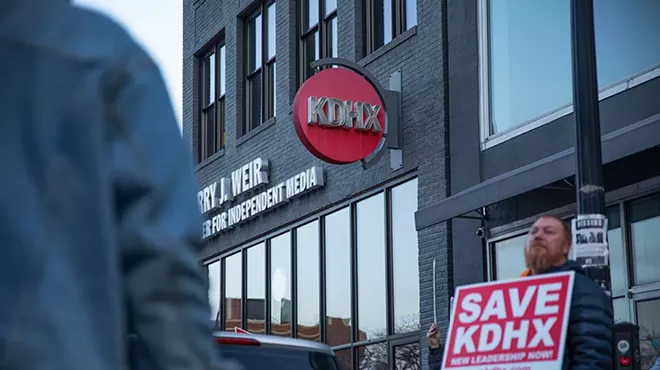
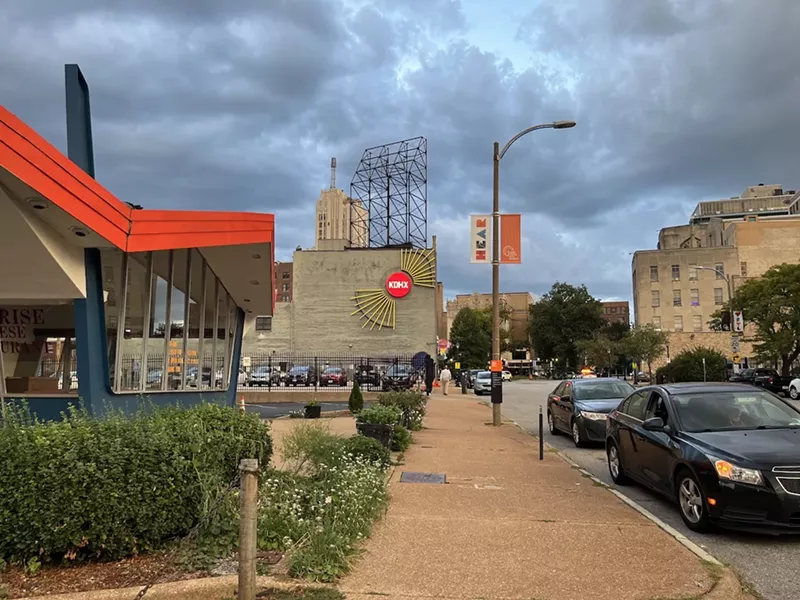
    KDHX (88.1 FM) Executive Director Kelly Wells made an extended appearance on the station she stewards yesterday, facing and frequently dodging tough questions submitted by critics of her leadership delivered by a friendly KDHX host who appears on the air at her discretion. The resulting hour of radio proved pretty much as riveting, and as hard-hitting, as the above sentence would imply.

    The appearance came on the station’s new Tangazo show, a group discussion-based program initially created as a podcast for KDHX in 2018 that was moved to the airwaves last week. Wells’ interview had been promoted with a call for people to write in with any questions they might have in the wake of a turbulent 12 months that saw large swaths of longtime volunteers depart the airwaves (some voluntarily, some not) amid criticism from even larger swaths of the listening public — including a third of the station’s now-former donors and more than 150 local business leaders — over what they see as poor leadership, with Wells and Board President Gary Pierson at the center of those complaints.

    Host Hank Thompson brought Wells on at the top of the 1 p.m. hour, along with the station’s underwriting account executive, Jesse Hebisen, whom Wells apparently sometimes calls “Pork Chop.”

    Thompson started the show by introducing Wells as the “general manager of this fine station” before pontificating about how that must be a hard position in an organization staffed by mostly volunteers, who “feel like they have some equity coming, I guess, whether they do or not.”

    “It gets blurred in a volunteer situation,” Thompson went on to add. “People assume authorities that aren’t really there.”

    Wells and Hebisen replied with a bunch of words that essentially amounted to “volunteers are good,” with Hebisen offering that those folks’ not being paid “allows them a freedom that they wouldn’t be able to get as employees,” a sentiment with which Wells agreed.

    “That’s the beauty of it,” Wells said. “The agency that folks can have on air, the autonomy that people can have, too. You can say what you want to say,  people can play the music — ‘unbridled’ is the word.” This would seem to fly in the face of the fact that some now-former volunteer DJs were fired specifically for things they allegedly said on the air — and were also asked to sign a formal volunteer agreement stipulating what they could and could not say.

    After offering that Wells has had a “tough road” and remarking on her “nice smile” through it all, Thompson insisted that he’s “not carrying water here, as somebody would suggest,” and then began reading verbatim from a recent press release touting what the station’s leadership sees as the organization’s recent accomplishments, with lofty talk of a “bold new vision to harness the power of music to create a better St. Louis,” and efforts to “amplify underrepresented voices in music,” and so on.

    Wells acknowledged that 2023 was a year of change and transformation at the station, and that it hasn’t come without difficulty. But she also saw some upsides.

    “We have had wonderful opportunities here, and it is a time of inspiration at KDHX,” she said. “You mentioned all the new voices that you hear on the radio, and we have leaned into the opportunity to say, ‘How do we continue to use the airwaves to deflect’” — she then corrected herself — “to reflect, not to deflect, ‘the community and the people that are in it.’”

    Thompson then noted that Wells has run into “a lot of opposition as you are moving forward in realizing the mission,” seemingly conflating, as Wells and Pierson often do, the DJ firings and resignations and subsequent community outrage — which were centered around criticism of Wells and KDHX’s board — with the station’s efforts to diversify the station and better reflect the community it serves, a push that followed accusations of racism and racial insensitivity against Wells herself from a group of Black former KDHX staffers and volunteers in 2019.

    Thompson inadvertently reminded some of Wells’ critics of that history with a seemingly innocent question: “Where do you think the real conflict started?”

    After a pregnant pause, a near eternity in radio time, both Wells and Hebisen said that it was “a big question” before Wells remarked, “I don’t know if I have a specific answer to that” and pivoted to more talk about “progress” and “bridging barriers,” at one point mentioning the killing of Michael Brown in 2014 as a catalyst for change at the station, which notably happened a full five years before those accusations of racism were leveled against her.

    Thompson then turned his attention to Hebisen, remarking that the “negative noise” of the last year has surely impacted his ability to raise funds for the station. Hebisen said that was “undoubtedly true” but suggested that the money will come as KDHX “continue[s] to live out this mission.” The program then went to its first break of the hour, wherein the station aired a spot asking for donations.


    KDHX at Grand Center.

    Jessica Rogen

    KDHX is located in Grand Center.

    Upon returning from the break, Thompson moved to the portion of the program that featured questions from the public, reading them to Wells and Hebisen.

    Question one: “I’m sure that the past year has been a tense one for you. Looking back on things, is there anything you wish you would have done differently, and how do you think the station would look/sound today if somebody else was executive director of KDHX?”

    Wells replied that she didn’t know how it would look or sound differently with someone else, then asserted that she has a “very collaborative leadership style” and is “buoyed and supported by a board and a staff.” She did not address the portion of the question that asked if, in hindsight, she would have done anything differently.

    Question two: “With a board that has been acting at half capacity, and now about a quarter, why not seat the three candidates elected at the associates’ meeting in September? Throwing out whether she believes the meeting was legitimate or not, seating three highly qualified and capable directors should be a no-brainer.”

    Wells said the processes for how meetings take place and how people are elected are outlined in KDHX’s bylaws, and that the board “has a strong commitment to following those processes and procedures.”

    Question three: “The Double Helix Corporation parent company of KDHX was originally set up with checks and balances and a governance structure that was specifically designed so that no party would have too much power. Its original 1972 bylaws set up a true democratic structure between annual members, donors, associate members, volunteers and the board of directors, all of whom had voting rights to appoint board members, and the associate members would have to approve any bylaw changes by a two-thirds majority. By a 2002 bylaw update, in fact, it had evolved to where annual members (donors) would elect five board members, the associate members (volunteers) would elect six and the board self-appointed four. And still the associate members would have to approve any bylaw changes by a two-thirds majority. Since Kelly Wells has ascended to power, the bylaws have been perverted to the point where the annual members have no voting rights.”

    “That’s the donors that we’re talking about there, is that right?” Thompson interjected in the middle of reading the question. “Is that true? Do the annual members, or the donors, have no say-so?”

    “We don’t use a membership model at KDHX,” Wells replied. “So that is true, I guess you could say, because there aren’t members.”

    Thompson resumed reading the question: “Now, where the annual members have no voting rights, the board members self-appoint 12, and the associates are only allotted 3 members to vote on, and all of the associate candidates must be approved by a nominating committee consisting of the board and Kelly Wells. And the board now claims sole ability to make bylaw changes.”

    Thompson again paused, and asked if Wells or Hebisen wanted to respond.

    “I’d just like to say that there was one word right there in the middle of that long statement that was made, and that word was ‘evolved,’” Hebisen remarked. “So we talked about 1972 and today is 2024, and yes it has evolved. So there are many things that have happened throughout that history. That was a good summation. I can’t speak to how accurate it is or is not, because I don’t really know. But what strikes me personally is the evolution of the organization. … And now here we are.”

    Wells offered that “many of those things happened before my time” and stressed that the board “has the values of the organization in mind as they work through those processes that are outlined in our bylaws,” after which Thompson resumed reading.

    “This has led to a shocking imbalance of power in what was supposed to a power-sharing relationship, and a total lack of accountability with a de facto self-perpetuating board. When the community protests her extreme actions the only way it can now, by withholding donations, Kelly Wells blames them for trying to hurt the station. When the associates tried to organize to seek legal remedies to this usurpation of their rights, their leadership was dismissed from the organization and they were denigrated in the press.”

    Once again, Thompson stopped, apparently responding to the growing frostiness in the room, which was palpable even over the airwaves. “I’m just reading ’em,” he said with a nervous laugh, whereupon Hebisen called it “a great statement” and said “thank you.”

    “Any response to that? None whatsoever? OK,” Thompson said before continuing once more to read the question.

    “Mr. Thompson, I have admired your work over the years and call upon you to exercise your watchdog duties as a member of the media and to do your due diligence as a member of the community advisory board. What I have described above is the reason that the current controversy exists, an existential crisis.”

    Thompson then asked if that characterization is accurate. “Are we in a crisis?” he inquired.

    “We need money the same way we always have,” Hebisen responded. Predictably from a man whose job depends on his ability to raise funds for the station, he then disagreed with the assertion that the only way for the listening public to protest leadership’s actions is by withholding donations. “I would say that’s not true. There are a lot of ways you can register dissent, and that’s only one — and maybe not the most necessary.”

    Question four:What has been more damaging to the financial stability of KDHX: Two programmers allegedly discouraging their listeners from supporting the station, or firing those two programmers, plus many more, and ignoring all communications from donors canceling their donations? Why did KDHX leadership not consider the financial fallout of those firings and act in accordance with the overall sustainability of the station, as financial stewardship is the primary responsibility of the executive director and an ongoing challenge for the station?”

    Wells said she’d argue with the question’s premise, granting that she and the board have a fiduciary duty but arguing that their “higher duty” would be “the responsibility we have to live into the values of this organization and to live into our mission and use those values and mission, and the fact that we are here to serve our entire listening audience, as the foundation for making decisions.”

    Question five: “How can you claim that your actions at KDHX have only angered a small group of people when there are over 150 local businesses that have signed a letter of discontent with your actions?”

    “KDHX has about 65,000 listeners a week,” Kelly replied. “I certainly do not want to diminish the feelings and the experiences of groups of people who are frustrated. However, we also are serving a large and wide community.” She then touted some of the same talking points from the press release Thompson read from at the beginning of the segment, claiming that online listenership is up and that people are excited for the new direction of the station.

    “We appreciate feedback from people in our listening area,” Wells said. “But it would not be our full responsibility if we stewarded a small group of people at the — you know, with not listening to the whole community.”

    Question six: “Ms. Wells has stated that the station has lost more than a third of its donors. Is there any plan other than the constant on-air pleas for money to fill the gap? How long can the station operate at the current funding level?”

    Wells responded by saying, essentially, “We are going to fundraise.” Thompson then cut to another break, which featured a spot suggesting helpfully that listeners should give their cars to KDHX.

    Question seven: “What regional event is KDHX appearing at next?”

    “I’m not sure if I know the specifics on that,” Wells admitted, before insisting “that is an exciting focus for 2024.”

    “Let me make sure that I’m clear on this,” Thompson replied. “The next regional event is not set yet? Or you’re not certain what that will be?”

    “Yes, I don’t have the next event off the top of my head,” Wells confirmed.

    The Q&A format kinda fell apart at this point, about 45 minutes in, as Thompson started editorializing. He said he disagreed with much of the criticism he was reading about the person who allows him to have a radio show, and it started to be less clear what was coming from the listenership and what was coming from him.

    “Folks speak in broader terms, when it’s just, maybe, you know, a couple dozen people that are upset, or something of the sort, you know they try to make it the universe,” Thompson said seemingly in summation. “I’m editorializing. I just want to read the questions, but I speak my mind, too.”

    Asked why a meeting was held with only a week’s notice, Wells said she didn’t know what meeting the question was referring to. Asked why KDHX doesn’t allow associates to elect more than one member to the board, she mentioned the bylaws again. “I’ll just keep saying the same thing,” she said, making it fairly clear that her patience for answering questions was running thin. Asked about the financials, Wells directed people to the station’s website. Asked why it took so long for an anti-racist charter to be adopted by the station, she said, “That was something that we did very intentionally and very carefully because that’s not something we take lightly.”

    “I think you’ve acquitted yourself pretty well,” Thompson said, wrapping things up. “I mean, I’m satisfied.”

    Wells then  offered her own summary to wrap things up.

    “I appreciate the opportunity to be here,” she said. “It’s not hard to talk about KDHX. It’s not hard to talk about both the challenges that we face and where we are going, and where we want to go. Again, it’s inspirational work, as difficult as it may be at times. I hope that people will continue to tune in and listen to all the wonderful new voices that we have on the air, the incredible music that’s coming out of this place.

    “And look for us out in the community this year too,” she added, “because we’re excited for that as well.”

    The specifics of the next regional event where the public would get the chance to see KDHX out in the community, of course, were never made clear.


    Subscribe to Riverfront Times newsletters.

    Follow us: Apple NewsGoogle News | NewsBreak | Reddit | Instagram | Facebook | Twitter | Or sign up for our RSS Feed

  • Russell Hitchcock Is Relishing Air Supply’s Big, Young Audiences

    Russell Hitchcock Is Relishing Air Supply’s Big, Young Audiences

    My 15-year-old daughter says that she has never heard of Air Supply. This is distressing. She is a classic-rock-loving teenager, with many of the same posters on her bedroom walls that I had on mine when I was her age. Yet somehow the music of Air Supply — those massive, swoony love songs that were ubiquitous in the early ‘80s, songs that seemingly came right out of the taps and drifted along on the, well, air supply — have escaped her. How do these screenagers today slow dance at parties without Air Supply?

    The answer is, of course, they don’t. Slow dancing has, tragically, gone extinct. It’s another thing that has died with Gen Z — like malls, cursive, dating and reading. But guess what. The world is starting to experience a RenAirssance. Air Supply, the Australian duo that started back in 1975 by Graham Russell and Russell Hitchcock, is playing to bigger, more enthusiastic audiences than at any time in decades. Naturally, longtime Airheads still show up and sing along to “Lost in Love” and “Every Woman in the World to Me” and “Making Love Out of Nothing At All” and “Even the Nights are Better,” but younger audiences are also discovering these big timeless soft-rock ballads, as Air Supply continue to tour 50 years into their career with no signs of stopping.

    I called lead singer Hitchcock — you’ll remember him as the shorter of the two, the one who had the rad black afro back in their heyday, the one with that soaring tenor range — while he was on a tour bus somewhere in the Nevada desert ahead of the band’s show at River City Casino on Friday night. We talked about the music, the longevity, the crowds, the singing, the tattoos (!), octopi, getting snubbed by the Rock Hall of Fame and much more. Here he is, the one that you love.

    How long are you out on tour this time?

    Well, we really don’t stop. In April, we go to Latin America, to seven different countries, for a month, and then we have dates booked through December. We don’t consider that we ever stop. We just sometimes have time to go home and wash our undies and put the cat out.

    What do you do for fun on the road besides play the shows? Do you explore the cities you’re in?

    We don’t really get a chance to see too much. We’ve been in every state so many times now that the newness is gone. This weekend, for instance, we played Thursday, Friday and Saturday and then traveled overnight, so we don’t really have a chance to get out. It’s actually a pretty boring life most of the time. We were reminiscing the other night about touring in the ‘80s. We would get on the bus after a show, put on some AC/DC, grab a couple of bottles of whatever was available and hang out all night, but we can’t do that anymore. That’s for the young guys.

    What are you noticing about the audiences at Air Supply shows these days?

    Now we’re getting a lot more younger people. Teenagers. People who used to come to the shows are now bringing their grandchildren, which is good. For the last five years or so there’s something afoot that we haven’t experienced for a while. There is a lot more enthusiasm. Audiences are typically very rowdy. We’re selling out everywhere. There’s a great resurgence of Air Supply’s profile. We have songs in a lot of movies and TV shows, so there’s just a new thing going on, which we’re very happy to see.

    I suppose there are about eight or so Air Supply classics you have to play every night?

    Absolutely. I wouldn’t want to go see the Eagles without them playing “Hotel California,” that’s for sure. We play what people expect to hear — “Here I Am,” “Lost in Love,” “Sweet Dreams,” etcetera. Graham has a solo spot in the middle of the show now, which is very cool. We’re in the process of finishing a new album, so those songs will start appearing in the show.

    With your touring pace after all these years, singing the same songs, how do you keep the songs fresh?

    I love them every night, and I always have. The fact that people come out in droves to see us means that the music has touched them quite deeply. The guys in the band now are a lot younger than Graham and I, so they bring a new distinctive influence to playing, so there’s always something that someone will suggest subtle changes that make it refreshing every night for us. But we’re a really energetic band, and we’re prompted by the audience’s reaction. We have a lot of direct contact with the audience, so all of these things make it better for us.

    But I’ve been singing “All Out of Love” since 1978, and I never tire of playing it or singing it or hearing it. All of our hits — the response to those songs every night is awesome, so that gives us an extra hit of adrenaline every night that you play them. Last night, for instance, the crowd was crazy from the get-go. We just look at each other and say, “Wow, this is something else!” We just try to appreciate the moment.

    Vocally, those songs are in a very demanding range. Are you able to still sing everything in the original keys?

    It’s certainly harder than it used to be, but I’ve been very fortunate, and we play so often that it’s hard to get rusty because we play pretty much three or four times per week. But I try to look after myself now, eat more healthfully. I quit drinking booze a couple of years ago, which has made a big difference in my life. Your responsibility is to the audience. People have to pay a lot of money now to see shows, and we want to be as good as we can. I’m extremely proud with the way the band is right now. It sounds awesome.

    Do you have a vocal regimen that helps you prepare for shows?

    We get together with the band and just sing some parts to make sure everyone’s got their harmonies right. But not too much. When I’m not working, I very rarely speak at all, and when I do, it’s this low monotone thing. People always say, “Why do you speak so quietly?” And I always say, “I don’t get paid to speak. I get paid to sing.” Just looking after yourself is the most important thing these days. You have to be in tip-top shape to do the schedule that we do.

    Graham Russell writes all the songs for the band. I’ve heard you say that you can’t write songs. What does that mean exactly?

    I wrote some lyrics many years ago, and they weren’t good. It’s as simple as that. I don’t have whatever it is. I wasn’t given that gift at all. And when you work with Graham, who writes something every day, you’re never in need of material. And I’m very happy with what I do within the band. He doesn’t want to be the lead singer, and he can write songs and I can’t. It’s very simple. In that regard, we never have any problems with egos. Like “I want my songs on the record” or “I want to sing that.” We don’t go through any of that stuff. I really don’t feel the need to express myself in any other way than performing.

    Talk more about the secrets of Air Supply’s longevity. How have you two managed to outlast almost everybody as a band?

    I guess there is no secret. We respect one another. We love each other as brothers. We absolutely love being on stage together. We don’t see too much of each other when we’re not on the road. Graham lives in Utah out in the boonies, and I live in southern California. But it’s just a very easy relationship. We’ve never had to work at it. Graham says during the show that we’ve never had an argument, and that’s the truth. We’ll discuss things if we don’t agree with something, but it’s with a mature attitude. It’s always what’s best for the band or best for the song. That’s all that matters. We put our personal egos aside because at the end of the day, the song you put on stage has to be a mutual collaboration. I don’t see any reason for any fallout or confrontation. It’s not in our DNA anyway. Also, it ain’t rocket science. We play songs.

    What is it like for you going back to Australia these days?

    We went there the year before last and played with the Sydney Symphony at the Opera House, which was great. But we’re not as popular in Australia as we are pretty much everywhere else in the world. We call it the tall poppy syndrome. You’re supported until you have a lot of success. If you want to leave the country and explore other avenues and parts of the world, the people resent it and they cut you down like tall poppies so you’re even with everyone else. We had massive hits in Australia in 1976. Then we toured with Rod Stewart in the U.S. and Canada in 1977, played 60 shows, a great success for us. When we came home to Australia, we were dead in the water. We couldn’t get a show. It was just heartbreaking. To be asked to tour with the biggest act in the world at that point and to come home to nothing was very disappointing. We were dropped like a hot potato by the media and press there. But I hold no hard feelings about Australia or anywhere else. I love going back to Australia. I love the food there, and when I go back there I regress rather quickly and start speaking in tongues to my wife that she’s never heard before.

    Next year will mark your 50th year as a band. Have you ever considered retiring or launching a farewell tour?

    No, we haven’t thought about that at all. We both made a pact years ago — as long as we can perform at the level we want to and people want to still see us and we don’t feel silly doing it, we’ll keep doing it. Our days are far from over.

    You mention having new music coming out. What should we expect?

    We’re going to Canada next month to finish the vocals, and the album should come out a few months after that. The songs are done. Graham writes new stuff every day. I’ve never seen him on a flight of two or three hours without him writing something. I think the new songs are more mature than they have been before. He has a different perspective on life as we all do as you get older. Our song “Be Tough” from a couple years ago is quite thought-provoking. It’s a tip to what you can expect on the new album.

    I want to ask you about tattoos. I saw you on the cover of a tattoo magazine years ago, and I was surprised because I thought it was at odds with your image. Now I realize that you were just ahead of your time. How does it feel to be a tattoo trailblazer?

    [Laughs] I would certainly never remotely resemble that remark! I got my first one when my daughter was born in 1988. In the 1990s, I got quite a few more. In the last three years, I’ve really taken the plunge, and I have two full sleeves and I’m working on a new piece on my back. I love ‘em. I take a lot of flak about them from time to time, but I don’t really care. I get a lot of support from Air Supply fans, but I also get emails saying, “Why did you do that to your body?” And my response is, “Because it’s my body and I’ll do whatever I want to it. It’s none of your business. If you don’t like it, that’s fine.” I always find it surprising that people who are tattooed don’t give a shit whether people have tattoos or not. People who are not tattooed care if people have them or not.

    I saw that you recently got a large tattoo on your arm of an octopus. What inspired that one?

    I saw the [2020] documentary My Octopus Teacher. Have you seen that? It’s just phenomenal. The next day, I stopped eating calamari! And I got the octopus tattoo because the more I learned about octopi, I found out how intelligent and emotional they are. Just amazing creatures, and I wanted to immortalize one on my arm. It turned out great.

    You have been eligible for the Rock and Roll Hall of Fame for several years. You sold millions of albums and broke records for consecutive top five hits. Do you speculate about why you haven’t gotten in or if you ever will?

    We’ve always speculated why we haven’t gotten in or why we won’t get it. It’s because we’re not cool. That’s the only reason. You can put sales and achievements and stack them up, and it will never be enough. I always look at the nominees. I looked at them this year. Quite frankly, I’m amazed at some of the acts that in my opinion don’t deserve to be there and acts that have been overlooked for so many years that it’s not funny. I really don’t feel any negative things toward it. It’s just the way it is. We’re not considered rock and roll either. We’re “middle of the road” or “soft rock” or whatever you call it. Which isn’t true when you see us live. We’ve always been a rock and roll band. But you can’t fight City Hall. We’ve carved out our niche in the business, and we’ve been going longer than most bands, and we’re very proud of where we are, and we’re getting more respect from the media these days than we ever did. We’re very happy about that.

    Do you have any specific memories of paying in St. Louis?

    If I said yes, I would be lying to you. Of all the people in our organization, I have the worst memory. Every time we pull up somewhere, Graham says, “You remember this hotel?” No. “Do you remember this theater?” No, I don’t. The good thing about that is you’re always surprised when you get somewhere because you think it’s the first time you’ve ever been there.

    Air Supply plays River City Casino on February 23, 2024 at 8 p.m. Tickets start at $50.

    Subscribe to Riverfront Times newsletters.

    Follow us: Apple NewsGoogle News | NewsBreak | Reddit | Instagram | Facebook | Twitter | Or sign up for our RSS Feed

  • Rapper BlakeIANA Went from TikTok to Arena Shows With Just One Track

    Rapper BlakeIANA Went from TikTok to Arena Shows With Just One Track

    It was less than a year ago that a young rapper who grew up in St. Louis dropped her first single and saw her entire life change. The catchy rap track “Bing Bong” went viral on TikTok and, in a short period of time, labels were circling, rising star rapper Sexyy Red was collaborating with her on a remix and the artist — who calls herself BlakeIANA, a variation on her real first name, Blake — was performing in arenas.

    BlakeIANA released the track in March 2023 and it quickly blew up on TikTok, earning millions of views. However, it wasn’t until September, when fellow St. Louis native Sexyy Red collaborated on a remix of the track, that Blake-IANA’s career rocketed to the next level almost overnight.

    “The remix brought another crowd and exposure to the song,” BlakeIANA recalls. “Having Sexyy Red on the song and the fact that we are both from St. Louis is attracting more people. They know Sexyy Red is from St. Louis, and now there’s another girl called BlakeIANA!”

    BlakeIANA grew up near Union and Lotus avenues (“westside babyy,” she jokes over email). Her answer to the high school question is McCluer North, and before “Bing Bong,” she worked at Foxworth Hair Works off Natural Bridge and Goodfellow, a hair salon owned by her godmother.

    While the 23-year-old was certain she’d become famous, she thought it would be through modeling.

    “I never thought I would do music, but I was so in love with music,” she says. “I knew I was going to be big and be some type of entertainer, but rapping? I never thought that!”

    It all changed when BlakeIANA went to Atlanta for a friend’s birthday and decided to visit the Trap Music Museum. The museum had a recording studio, and she and her cousin were invited to freestyle and record a track. The rest is history.

    “It made me feel that I wanted to be a rapper,” she says. “I liked the process of making a song and expressing feelings.” She adds, “I was always just around people that did music so it grew on me to be involved in the music industry.”

    A huge milestone in the young rapper’s career came in November when multi-Grammy Award-winning producer Murda Beatz announced BlakeIANA as his first signing in partnership with 300 Entertainment. The Canadian producer has worked with some of the biggest names in the industry from Drake to Travis Scott to Nicki Minaj. He saw something special in the St. Louis rapper.

    He says, “From the moment I saw her on TikTok, I knew she was a star and had star presence.”

    BlakeIANA recently dropped her first Murda Beatz-produced single, “Gahdamn,” and she describes the recording process as an exciting challenge as she had to step out of her comfort zone.

    “I was a free spirit [in the studio] and I came up with the song by just being open. ‘Bing Bong’ was a certain sound, but I’m so used to that now, so I wanted to step out of my comfort zone and try something new and make it easy and fun,” she says.

    BlakeIANA says she tries not to think too much about her recent success.

    “I try to allow myself to live in the moment,” she says. “[Sometimes] I think, ‘Damn, this is really happening to me,’ but I try to live in the moment so I can enjoy it more. I don’t want to think about it too much because I can get nervous or it can throw me out. It’s crazy how everything is starting to unravel so fast with only doing music for a year!”

    One of the highlights of BlakeIANA’s breakout year was getting the opportunity to perform in front of her hometown crowd at the Chaifetz Arena not once, but twice — first during Moneybagg Yo’s show in August and then with Sexyy Red in October.

    She’s recently performed in various cities across the country with Sexyy Red. She admits that she was “nervous” leading up to these shows. However, she says performing in St. Louis brought a “different type of comfort” unlike anywhere else.

    “My city knows our song and they were singing it and there was real crowd engagement,” BlakeIANA says. “I had so much fun, and I appreciate Sexyy Red for bringing me out. That was needed for our city and the city wanted to see it too.”

    St. Louis is enjoying a hot streak with rappers breaking through, with the likes of Big Boss Vette, Sexyy Red and Smino hailing from the city. BlakeIANA looks to be the next big name, and she hopes to use her fame to shine a spotlight on the city and its culture.

    “This [success] draws people into wanting to know more about St. Louis,” BlakeIANA says. “That’s where I’m at in my career, I want to expose people to what my city is like because people don’t really know! The last big act was Nelly, then it was Sexyy Red and now it’s me and Big Boss Vette.

    “I get the chance to show my version of my city and how I grew up. It’s always interesting to know where somebody comes from or why they talk the way they do or why they dress and act in a certain way. Even though we are small, we got stuff going on in St. Louis.”


    Subscribe to Riverfront Times newsletters.

    Follow us: Apple NewsGoogle News | NewsBreak | Reddit | Instagram | Facebook | Twitter | Or sign up for our RSS Feed

  • YouTuber Finds Nelly’s Wildwood Mansion Is Still Abandoned

    YouTuber Finds Nelly’s Wildwood Mansion Is Still Abandoned

    Two years ago,  an alleged cult bought the crumbling Wildwood mansion previously owned by pop star Nelly.

    But no one seems to have moved in yet. A YouTube explorer with a sizable following recently visited the sprawling mansion — and in his video, posted earlier this week, it still appears utterly abandoned.

    The YouTuber who visited goes by BigBankz, describing himself as “just a 25-year-old dude from a small town in Oklahoma.” Judging by recent videos he’s posted, he seems to specialize in visiting giant suburban homes that for whatever reason have been abandoned — a description that fits Nelly’s crumbling 10,000-square-foot former estate on Wildwood’s western edge.

    The video does not show how BigBankz made his way into the property, but suggests it was without keys or consent of the property owner.

    Sergeant Tracy Panus, a spokeswoman for the St. Louis County Police, says that “trespassing on any private property could be an issue and lead to arrest.” She says police have received just two recent calls about trespassing on site. In the first, recorded last August, officers in the City of Wildwood Precinct responded to a call for service for a burglar alarm and found an unlocked door. “A search of the home revealed it did appear to have been burglarized,” she writes. “A keyholder/emergency contact for the residence did respond and stated nothing appeared out of place.”

    More recently, on January 9, police responded to a call for service for an open door at the residence. “A neighbor called and stated they observed a door to the residence standing open,” she says. “Officers did not locate anything out of place nor evidence of a crime.”

    Property records show the Kingdom of God Global Church bought the mansion in September 2021. Church’s leader David E. Taylor has made numerous wild claims, including being able to raise people from the dead.

    The church also owns a $2.1 million mansion in Chesterfield. A project manager doing work on the house reported to the city of Chesterfield that the church had “20 to 30 people staying at the property zoned single family” and “a lot of shady things going on,” including a drug and alcohol rehab center being operated out of the house. The reports from Chesterfield had led to some concerns by neighbors in Wildwood — but so far, their biggest nuisance may be the occasional YouTube star.

    You can browse photos of the mansion the RFT obtained before its 2021 sale. Judging by BigBankz’s video, it doesn’t seem to have changed much.


    Subscribe to Riverfront Times newsletters.

    Follow us: Apple NewsGoogle News | NewsBreak | Reddit | Instagram | Facebook | Twitter | Or sign up for our RSS Feed

  • Layton Greene Went from East St. Louis to Billboard’s Top 100

    Layton Greene Went from East St. Louis to Billboard’s Top 100

    In early 2020, Layton Greene was riding high. The East St. Louis native had just signed a record deal with Quality Control Music, had plans for a 10-date debut tour and was garnering a rapidly growing fan base for her heartfelt R&B.

    However, the COVID-19 pandemic struck, sending the artist into a dark place mentally. She decided to protect her mental health and took a break from music.

    “I went into a very depressive state. I lost myself and my mental [health]. Then I found out I was pregnant in 2021 with my first child,” she says. “Going through that, I felt that life was just life-ing, and I had to take a step back to really focus on myself so that when I was ready to put myself out there again, I can give my best to them.”

    Her plan worked. Says Greene, “I’m in a great head space now. I’m ready to come back on the scene and go crazy.”

    Last week, Greene, 25, dropped a new single, “Cinderella Story.” The melodic track was a long time in the making, as she first recorded the song four years ago and only revisited it this year.

    “When I first cut the song, I loved it, but I felt like I needed to recut it because my voice had grown, and I grew in different places,” she says. “I’m ready to get this music out because I’m in my head about it. I know I’ve grown so much, but also I want [fans] to see the growth, too.”

    Greene caught her first big break in 2017 by releasing covers of popular songs, most notably Kodak Black’s “Roll in Peace” — which became her first hit, garnering 3.5 million-plus streams on SoundCloud in the first month alone.

    When she released the cover, she was working at Walmart, unloading trucks and stacking groceries.

    “The first day when my phone was blowing up, it was going off the hook. I left Walmart, I left my job and never came back,” Greene says. “Once I went viral, I was like, ‘This is it!’ I was working on getting my GED, but I dropped everything.”

    For all the viral success Greene achieved with her covers, she was looking for something more from her music and decided to write her own songs. She used songwriting as a form of therapy as she wrote about trauma and formative life experiences.

    “I used to take entries from my journal and come up with songs,” she says. “That’s how ‘Blame on Me’ came about, just putting my feelings onto paper.”

    She adds, “It feels most therapeutic once I put my music out and see how people relate to it in the way that they do. I’m just writing from my own life experiences. That’s why I put my life into these songs, and I’m not afraid to be vulnerable because people deserve it.”

    After the viral success of her covers and 2018 debut single “Myself,” Layton Greene became the first-ever R&B artist signed to Quality Control Music, the Atlanta-based hip-hop label. Her first single with it, “Leave ‘Em Alone,” soared to No. 60 on the Billboard Hot 100.

    Even in her first meeting with the label, she says, it was clear she’d found the place to grow as an artist.

    “QC is like a family; everybody is tight-knit. I’m trying to get back on the scene, and they’re so supportive, just to have a label and label-mates that go so hard for each other. It’s another blessing, and I don’t think I could have signed with a better label,” Greene says. “It just felt like home, and it felt right. I felt like I was seen, and that I could relate to everybody on the label.”

    Greene grew up in East St. Louis before moving to Knoxville, Tennessee, at age 14. Signs that she would pursue a music career were evident from a young age: She would sing on her porch to friends and family, making them pay to watch her sing.

    “I always knew that I wanted to be a singer. I just didn’t know how it was going to happen,” she says. “Nobody in my family is musically inclined, and my parents told me that I needed to go to college because it’s not possible, it’s a one-in-a-million chance. I was determined it was going to happen. I didn’t know how, but I knew it was going to happen.”

    When Greene moved cities she experienced a huge culture shock. She is mixed race and says that in East St. Louis was considered a white girl, but after moving to Knoxville and attending an all-white school, she was considered a Black girl. The change was tough, but Greene says that it gave her more to write about and a chance to turn hardships into art.

    With her new album slated for early next year and plans for a debut headlining tour, Greene has big plans for 2024.

    “I’m ready for the album to come,” she says. “In 2024, I want to give myself to my fans and be on the scene more. I want to tour and get out and touch my supporters. You can just expect great things.”

    Subscribe to Riverfront Times newsletters.

    Follow us: Apple NewsGoogle News | NewsBreak | Reddit | Instagram | Facebook | Twitter | Or sign up for our RSS Feed

  • 2 More KDHX DJs Quit, Citing Frustration With Leadership

    2 More KDHX DJs Quit, Citing Frustration With Leadership

    Community radio station KDHX is down another two DJs — both part of a cohort of DJs being required to undergo mediation to keep their volunteer roles.

    On November 28, Jeffrey Hallazgo, a.k.a Dr. Jeff of the Big Bang, resigned on air after accepting an online streaming position with WFMU in New York after 22 years with the station. In a Facebook post, Hallazgo wrote, “[T]he zest for doing a three hour upbeat radio program in the setting of the deteriorating vitality of the radio station had gradually diminished as the weeks went on to the point where it simply became untenable for me to continue. … [T]he guiding principles which I live my life by every single day were totally incompatible with the growing malignant atmosphere brought about by the governance of the organization.”

    Then, on December 1, Andrea Rowe, or Ace, the Girl From Space of Sonic Space, announced that she was departing the station but hoped to return at a later date if leadership attitudes changed.

    Rowe tells the RFT that her resignation came shortly after an incident during her show last Monday, November 27, after which KDHX Executive Director Kelly Wells suspended Rowe and canceled a scheduled mediation session with the Conflict Resolution Center.


    Andrea Rowe had volunteered with KDHX since 2016.

    Courtesy photo

    Andrea Rowe had volunteered with KDHX since 2016.

    With the station’s firing of 13 DJs and the resignations of at least 14 more, Rowe says that her Monday afternoon show was siloed without live DJs hosting shows before or after, leaving her nervous about being in the station in Grand Center by herself. On top of that, a mediation session on November 7 had put her on edge.

    “I didn’t feel comfortable going to the station by myself,” Rowe says, explaining that she’d begun to regularly book local talent or bring friends or family along as moral support.

    That Monday, Rowe brought her father and a friend: Darian Wigfall, who also happens to be one of three people that the KDHX associate members voted to represent them on the station’s board of directors. The associate members are suing to oust two members and seat Wigfall and two others.

    During her set, Rowe says she was approached by Director of Volunteer Connections Andrea Dunn, who asked, “Who’s that gentleman with your dad?” Dunn told Rowe that Wigfall should not be in the building but turned down Rowe’s offer to walk him out with only a shake of the head before walking away, Rowe said. Then Wells showed up to escort Wigfall out.

    The next day, Rowe received a notice from Conflict Resolution Center that her mediation had been canceled. She then received notice from Wells that she had been suspended.

    “You invited a person who is in active litigation against KDHX into the station and promoted his work on the air during your show,” Wells wrote. “Unfortunately, there are legal ramifications to Darian having been in our building, and the situation has been referred to our attorneys and his attorney to work out.”

    Rowe says that she had never been informed that Wigfall was banned from the building, something she pointed out via a reply email to Wells.

    In a statement issued to the RFT, Wells wrote, “Last week, an incident occurred involving a volunteer at KDHX. One of the plaintiffs who recently filed a lawsuit against our organization was allowed into our studios without our knowledge. This person was asked to leave which he did promptly, and we notified our attorney. At the advice of counsel, the volunteer involved was notified that her show would be off the air pending a review of the situation. This weekend, she resigned from her volunteer position.”

    Rowe said she is particularly unhappy about the mediation being canceled.

    She says she had her first (and, to date, only) mediation session earlier last month, which yielded no resolution, she says. Despite being one of 12 DJs told they needed to undergo mediation, she says it was never made clear to her how she ended up on the list. During mediation, she was told only that she had taken part in a DJ marathon event held at the Royale in late September.

    “I don’t think the Conflict Resolution Center ever really knew what my citation was,” Rowe says. “Because I don’t even think that I necessarily know what my citation was aside from affiliation with those who are dismissed.”

    But Rowe, who has volunteered with KDHX since 2016 after moving to St. Louis post-college, says that affiliation was something artificial created by Wells: “I’m my own person. My own independent person. I didn’t ever work at Magnolia. I’m not part of some old guard.”

    At one point, Rowe had hoped to work for the station and wanted to apply for a community coordinator position or equity officer that was proposed in KDHX’s strategic plan, something she says was thrown in her face during mediation. She says Wells and Dunn acted as if Rowe expected to be given the job, but in reality, she says all she wanted was the chance to apply.

    “It was another one of those moments where I was like, ‘Yeah, I guess you guys don’t see me for who I am or what I’m actually saying or for the work I actually do,’” Rowe recalls.

    Another sticking point was a few incidents where old pre-recorded material had been played for Rowe’s show instead of new recordings she had made. She wanted the old ones deleted so it didn’t happen again.

    Wells, Dunn and Rowe couldn’t come to an agreement, which led to the second session being scheduled — only to be summarily canceled after Rowe allowed Wigfall into the station during her show.

    Rowe says that she’d already been thinking about taking a sabbatical from the station when the continuance was canceled and she was suspended. She still hopes to support the other DJs and her community despite her departure.

    “I was hoping to walk away from mediation being able to feel like I could actually contribute authentically to the station in that way instead of being undermined for the work that I was doing,” she says, adding later, “I do feel lighter. I do feel more free to speak about what’s bothering me or speak my truth.”

    Email the author at [email protected]

    Subscribe to Riverfront Times newsletters.

    Follow us: Apple News | Google News | NewsBreak | Reddit | Instagram | Facebook | Twitter | Or sign up for our RSS Feed

  • When One of the Burney Sisters Left the Band, Another Stepped Up

    When One of the Burney Sisters Left the Band, Another Stepped Up

    REBECCA ALLEN

    When eldest sister Olivia left the Burney Sisters’ lineup, youngest sister Bella (left) took on a much bigger role.

    The Burney Sisters, the Columbia, Missouri-based sibling combo that specializes in preternaturally tight harmonies, sublime Americana originals and instrument-swapping musical dexterity, have been wowing audiences since before the girls were old enough to ride in the front seat of a car.

    April Shafer first put instruments in her daughters’ hands when the girls were still pre-K. They were busking on Columbia sidewalks when their ages had barely reached double digits and were performing publicly as the Burney Sisters when Olivia was 13 and Emma was 10. That was 2017, and for three years, Olivia (ukulele, guitar, banjo) and Emma (fiddle, cello, guitar, bass, piano, kitchen sink) were mainstays of the Columbia music scene, graduating from nursing home gigs to the Rocheport General Store to headlining spots at Rose Music Hall to main stage sets at Roots N Blues. The girls toured regionally, developed a loyal following in St. Louis, became members of mid-Missouri hillbilly-roots band the Kay Brothers, released oodles of beyond-their-years original songs and generally gasted the flabber of anyone who saw how good these kids already were.

    In 2019, youngest sister Bella, then nine years old, officially made the Burney Sisters a trio, playing the bass and adding a third layer of family-tuned vocal harmony. The homeschooled girls continued to tour and record extensively as a trio, scoring dates opening for some of their heroes, including Willie Nelson and the Avett Brothers, until a major shakeup rocked Burneyland earlier this year: Oldest daughter Olivia, who had turned 18, decided to leave the group.

    To get the whole story, I recently climbed aboard the Burney Sisters’ RV, parked behind the Big Top in Grand Center where in a few hours the girls would be taking the stage as part of Pines Fest, the now-annual festival curated and headlined by the Mighty Pines. Up close in conversation, Emma, who turned 16 a few days earlier, and Bella, now 13, look and act more or less their ages, something that has been a source of incredulity in the past.

    After all, beyond some Faustian bargain at some crossroads somewhere, how could these kids get this good this fast? How could these tweens reach such a level of instrumental accomplishment and performance poise, holding their own on stage with professionals four times their age? How could they possibly write such emotionally authentic lyrics about adult subjects — love affairs, breakups, marriage, mortgages — at age 12? While other girls were in their bedrooms making their Elsa dolls sing “Let It Go,” the Burney Sisters were mesmerizing thousands from the stages of major festivals.

    So did anyone ever accuse them of fudging their ages? “Oh, all the time,” Emma says. “People always thought we were lying. It was awkward for us. I would be, like, ‘I don’t know what to say to you. We’re not lying.’”

    Bella chimes in to say that their mom started having fun with their precocity: “She does this thing where she has people guess how old we are. I’ve seen someone guess we are, like, 25.”

    Emma celebrated her 16th birthday by getting her first tattoo, a large cowgirl on her right upper arm that looks not unlike Emma herself, with similar raven pigtails. The cowgirl is smoking a cigarette, with the smoke forming a heart, a juxtaposition that seems to fit Emma’s current transformation as her adolescent freckles and dimples yield to a septum piercing and cat eyes drawn sharp enough to kill a man.

    Bella, for her part, exudes a golden-age-of-Hollywood glamour while still playing a big silvery five-string Valenti that looks like it weighs more than she does. Yet when she plugs in on stage and starts playing spidery scales all over the fretboard, other bassists of any age in the audience see what this 13-year-old kid is doing and must be tempted to go home and run over their own basses with a backhoe.

    April says what looks like her daughters’ freakish talent in reality comes down to hard work, which was mandated in the early years as part of their homeschooling regimen. “Monday through Friday, they each had to [practice] an hour on their own and an hour with their sisters,” April says.

    And did the girls ever resist? “Oh, yeah,” April says as the girls nod in agreement. “It’s like school. At the time they didn’t know what they were doing, didn’t know the shapes, so practicing was a chore. But now they’re proficient, and it’s the most exciting time for me. I don’t have to say much. They are down there dabbling and experimenting on their own.”

    “Down there” refers to the basement of the Burneys’ Columbia home, familiar to anyone who tuned in to the Sisters’ pandemic-incited live streams, in which the girls played original songs and covers surrounded by musical instruments hanging on the walls. That kind of access to stringed instruments, in fact, was another of April’s early strategies. “My mom would place instruments all around the house and see if we would gravitate toward them,” Bella says.

    Olivia first took to the ukulele after finding one for a dollar at a garage sale. Emma took a few Suzuki-style violin lessons early on but had no patience for the classes’ rigid structure when all she wanted to do was bust out fiddle tunes. By age eight, she was teaching herself guitar by watching YouTube videos. “I practiced in the laundry room so no one could hear me,” she says laughing.

    Bella learned the bass to give her older sisters a rhythmic foundation on which to expand their melodic instruments, and in typical Burney fashion, jumped straight into the deep end of the pool.

    “The first songs I learned were [Duke Ellington’s] ‘Caravan’ and [Stevie Wonder’s] ‘Sir Duke,’” Bella says. “Our method is that whenever we pick up an instrument, we learn a super hard song and then the rest becomes easy. ‘Caravan’ is a really hard one I learned when I was 10, and I’ve been playing it ever since.”

    April and the girls agree that homeschooling was fundamental to the girls’ quicksilver musical growth. “We had just moved to the [Columbia] area and had to decide which school we wanted to put Liv in for kindergarten,” April explains. “We met a family at the park that had an older child with them, and I was curious why they weren’t in school. She explained what they did for curriculum and how they did a ton of interesting excursions together and with other homeschooling groups, and I thought, ‘How badly can I screw up kindergarten?!’”

    April was accustomed to new challenges. The three Burney girls were all born in different cities — Olivia in Tulsa; Emma in Hamilton, New York; Bella in Iowa City — as the girls’ father and April’s then-husband continually relocated as a collegiate strength and conditioning coach, eventually landing a job at Mizzou.

    Once in Columbia, April found herself transitioning to divorced homeschooling mom and then multitasking manager of the Burney Sisters as the girls became up-and-coming musical prodigies.

    As many hats as April wears in managing her daughters’ career, she is careful to avoid the aggressive maneuvers one might expect from “stage moms.” She encourages the girls to call their own shots whenever possible and never set out to compel the girls into show business in the first place. Still, when their talent became unmistakable, she felt obliged to help maximize their opportunities. “I had zero knowledge of the music industry,” she says. “But I just sort of dug in. Who can we talk to? Let’s find resources. Let’s become friends with people in the local music scene. And people really embraced them.”

    In 2017, April met John Shafer, a trumpet player for Columbia-based roving band the Mobile Funk Unit, who added mariachi-style trumpet to the Burney Sisters’ song “Say It to My Face.” The two fell in love, married in 2019 and both now work full-time to keep the Burney Sisters in business. April is the band’s manager, booking agent, publicist, merchandise handler, webmaster, fanclub overseer, roadie and RV driver. (“Our stepdad backs the RV in sometimes,” Bella explains helpfully.) John serves as the Burneys’ soundman and instrument tech, often seen during shows running around with an iPad adjusting levels on the fly.

    On the road, April also assumes the role of, you know, mom, which means she has to find the balance between protecting the girls and letting them find their own way. “I want them to have some separation from me,” she says. “They have so many opportunities to meet amazing people. But I do get a little nervous because guys think they’re 20.” However, Emma jumps in to allay her mom’s fears. “We’re really good at fending people off,” Emma says. “We’re already watching out.”

    The whole operation was cruising along when Olivia started to experience burnout and developed an aversion to the road and officially left the band in February 2023. April and the girls tread carefully when talking about Olivia’s departure, but it’s clear that the experience took an emotional toll and initially left the future of the band in serious doubt.

    “We had a lot of intense conversations for a couple of months,” Emma says. “Do I do solo stuff? Do Bella and I stay together as a duo? What is Olivia going to do? Should we change our name?” Ultimately, Emma and Bella decided to continue on together under the same name. After all, they are still Burney sisters.

    Still, challenges persisted, including the fact that the bulk of the Burney Sisters catalog was written by Olivia, who also handled lead vocals on nearly all of the band’s original material. Would the band play Olivia’s songs without her?

    “At first I didn’t feel right singing [Olivia’s] lyrics because they’re from her heart, even though I did arrange a lot of those songs,” Emma says. “But we are putting some of those back in. We’re relearning them in our own style.”

    With the transition to Burney Sisters 3.0, Emma talks about adjusting to her role as the band’s primary singer/songwriter. “I didn’t like my voice for a long time. It wasn’t until like 2019 or 2020 that I started liking my voice. And I didn’t write a song until I was 11,” she says, as though such a timeline makes her a late bloomer.

    Indeed, longtime Burneys fans were accustomed to Olivia taking center stage, commanding shows with her anguished, distinctively stretchy vocals and confessional lyrics. But it was Emma who was always the instrumental ringer in the band, with gorgeous cello playing and with blazing fiddle chops that could stand up with the best pickers on any bluegrass stage in the country.

    Moreover, when Emma would take over vocals, she sang with astounding clarity, soulfulness and power, channeling Stevie Nicks and Lake Street Dive’s Rachael Price in equal measure. Plus, behind the scenes, it was Emma who took Olivia’s melodies and chord progressions and built both the instrumental arrangements and the vocal harmonies. To many, Emma was a frontperson waiting to break out.

    So when Olivia left, Emma knew she had to pick up the pen. “I don’t write 20 songs in one night like Olivia, but I had a few, and this has pushed me to write a lot more. Bella has written a song or two, too,” Emma says, quick to credit Bella with the prodigious growth necessary to reinvent the band. “Bella and I both had to step up as lead performers in this band. We both push each other to learn more.”

    “It’s pretty inspiring,” April says. “I told the girls, ‘You built a skill for years that you can still move forward and make it whatever you want it to be’.” April admits, however, that from a business standpoint, moving forward without Olivia wasn’t easy. “It’s not seamless,” she says, noting that the new duo had to prove that they were as good — or better — than ever to keep getting booked and getting paid as much as before.

    It appears to be clicking. The Burneys just returned from a well-received tour of Canada and a lineup spot on the latest Camayo Cruise to the Dominican Republic and Aruba, sharing a bill with Tweedy, Andrew Bird, Trampled By Turtles and many others. Camayo was a thrill-a-minute for the Burneys, as the band Joseph invited them on stage to sing with them and Shawn Mullins became a new Burneys fan, taking in their entire set. “Jeff Tweedy was walking on the beach, and he comes up to us!” Emma says. “He said, ‘My son showed me a video of you guys playing, and it sounded great.’” As her sister recounts the story, Bella puts her hands over her face at the wonder of it all.

    At Pines Fest last month not long after we spoke, Emma and Bella, backed by a drummer, played a set heavy with covers (Fleetwood Mac, McCartney, Billy Joel) and new Emma originals, including songs like “Struggle to Find” and “Half Hearted Sorry” that are defining a fresh Burney Sisters sound, a beautiful folk-soul hybrid that is ushering the band to a new peak. Bella, playing with arresting grace and power, is emerging with her own unique vocal personality, and at one point shifted over to the piano to allow Emma to pick up the fiddle.

    I can’t help but think it’s a sign of things to come. Just before their set, Bella expressed confidence and unstoppability in typical Burney fashion, vowing to do whatever it takes to push the Burney Sisters to the next level. “Just tell me what to learn, and I’ll learn it,” she told me. “I’ll figure it out.”

    Editor’s note: A previous version of this story gave the wrong artist for one of the songs that Bella Burney used to learn bass. It was Duke Ellington’s “Caravan,” not Van Morrison’s. We regret the error.

    Subscribe to Riverfront Times newsletters.

    Follow us: Apple NewsGoogle News | NewsBreak | Reddit | Instagram | Facebook | Twitter | Or sign up for our RSS Feed

  • Frenchtown Audio Gives St. Louis a Hub for High-End Vintage Audio Gear

    Frenchtown Audio Gives St. Louis a Hub for High-End Vintage Audio Gear

    DANIEL HILL

    David Boykin is the owner of Frenchtown Audio.

    David Boykin has spent the majority of his life surrounded by piles of high-end audio equipment in various states of repair.

    When he was growing up in the early ‘70s, his dad started a DJ company right as the disco craze was sweeping the nation. At the time, Billboard magazine could only reliably get data about the genre’s popularity in New York and LA, due largely to disco’s status as a club format rather than one over the airwaves. In order to figure out the particulars of who was dancing to what and which records were hitting, each week they’d send music to DJs around the country — including Jim Boykin in El Paso, Texas — and request that they play them and report back as to the reaction.

    Armed with a decade’s worth of free records, the elder Boykin was able to grow his company to the point that on any given Saturday he’d have DJs working at 6 to 12 different gigs. An electrician, Jim Boykin would do the repair work on any of his broken equipment himself — meaning young David’s home life was punctuated by a whole lot of high-end gear.

    “Just having grown up in it and being around it all my life, it was natural to me,” he explains. “And then my brother was a DJ for a long time. He worked in high-end audio stores and he kind of helped me become an audiophile.”

    In 2018, David Boykin’s career in the financial services industry brought him to St. Louis. Last month, the 50-year-old opened his own high-end audio shop, Frenchtown Audio (1624 South Broadway, 314-630-1163), across the street from DB’s Sports Bar in the Kosciusko neighborhood. The shop joins Frenchtown Records, Antiques & More (941 Park Avenue, 314-630-1163) and a permanent display at the Soulard Farmers’ Market in Boykin’s growing empire.


    Frenchtown Audio offers a variety of refurbished equipment. - DANIEL HILL

    DANIEL HILL

    Frenchtown Audio offers a variety of refurbished equipment.

    Boykin has teamed up with Bill Huber, an electronics technician who specializes in speakers and turntables, to purchase and repair old equipment. Boykin then sells the refurbished equipment to both burgeoning audiophiles and seasoned veterans of the scene.

    Boykin calls Huber “the Repair da Vinci.”

    “He’s one of the best in the country,” Boykin says. “Bill and I were a good partnership because he’d never met anybody with more broken shit, and he knew how to fix it. That was a match made in heaven.”

    In keeping, Frenchtown Audio’s 2,000-square-foot showroom is filled with vintage treasures, with amps and receivers both tube and solid state, record players both belt-driven and direct drive, and speakers both quaint and massive filling the space. The back room boasts another 2,000 square feet, with three workbenches and audio equipment stacked literally to the rafters. Brand names include such well-respected companies as Pioneer, TEAC, Marantz, Onkyo, Sony, Integra and more. Boykin is especially proud of the multiple McIntosh pieces that dot the space, which he notes is a brand his dad often used.

    “McIntosh is the Cadillac of high-end receivers,” Boykin explains. “They’re a pretty big brand, but their new stuff is very pricey.”

    A good new McIntosh amp, he says, will run you between $10,000 and $20,000. Most people can’t afford that, so they turn to the secondhand market.


    Frenchtown Audio also offers a limited selection of vinyl. - DANIEL HILL

    DANIEL HILL

    Frenchtown Audio also offers a limited selection of vinyl.

    “Let me tell you, these vintage ones, they are no joke,” he says, showing off a McIntosh MA230 tube amp priced at $2,300. “They sound ridiculous, especially if they’re reconditioned like this one here is. … That thing sounds as good, if not better, than it did when it rolled off the factory.”

    In addition to the vintage gear, Boykin has a selection of new equipment in stock, and is a licensed dealer of Klipsch speakers and Crosley turntables. Asked about the latter’s reputation for treating records unkindly due to their inferior needles, Boykin bristles.

    “A lot of people say, ‘Oh, that’ll hurt your vinyl.’ No, they do not,” he says. “I know that because I spoke to the engineer. He gave me all the specs on it. It’s a good needle. It’s not a high-end needle, but it’s a good needle. That needle will not hurt anything.

    “It’s not gonna sound like the expensive ones, but for $50 to $75 it’s not supposed to,” he adds.

    Boykin notes that the recent vinyl resurgence has prompted a secondary resurgence of people seeking out machines that can play their newly purchased records. In keeping, he stocks the store with more affordable gear than a monied audiophile might demand. The Crosleys in particular fill that gap, and a customer can easily walk out of the store less than $100 lighter with everything they need to get going. If they want to move up in quality, Boykin recommends the TEAC turntables, which he says generally run between $300 and $700. Beyond that, he says NAD turntables are really popular and often outperform more expensive equipment.

    “NAD is the ultimate budget audiophile name,” he says. “Any NAD product will compete with things three times its price. That’s how they’re built.”

    It’s clear from the way Boykin speaks about audio equipment that his own home system must be a doozy. It’s equally clear that one could very easily spend a near-unlimited amount of money chasing the dragon that is high-quality audio reproduction. Boykin notes that he primarily deals with less expensive items in order to up the accessibility of the audiophile world, but on the second day the shop was open he did sell a pair of new Klipsch La Scala speakers — just the speakers! — for more than $10,000. The shop also offers repairs, so those hoping to hold on to their existing gear can put it in the capable hands of Huber and know that it will be treated right.


    David Boykin pours a drink at Frenchtown Audio's in-house bar. - DANIEL HILL

    DANIEL HILL

    David Boykin pours a drink at Frenchtown Audio’s in-house bar.

    One thing the shop does not offer, though, is online ordering. The only way to get your hands on its wares is to head down South Broadway and step into the store. Boykin even offers demonstrations of the gear by appointment. He’s got a well-stocked bar toward the back of the showroom, and he’s not shy about offering guests a drink as he plays music and waxes on about the magical world of high-end audio.

    Boykin points out a McIntosh 240, one of the rarest of its kind, that he says is the type of amp that is capable of making a serious audiophile cry tears of joy. He has it priced at $3,650, and he says that if he did put it online it would sell within an hour. But he has no intention of doing such a thing. He wants it to end up in the hands of someone in St. Louis.

    “It means something to me to keep it local, in St. Louis. If it’s in St. Louis, it might come back to me, you know, and then we can move it around again,” he says. “But St. Louis is such a mecca for music and equipment and amps and guitars and things like that, that the whole country — there’s this pipeline of stuff leaving St. Louis and going to New York or to LA, all our good stuff. It’s been happening with antiques for 25 years, because this used to be a money town.

    “All this stuff just pipes out of St. Louis,” he laments. “I’m just trying to keep as much of it here as I can.”


    The shop is located in Kosciusko. - DANIEL HILL

    DANIEL HILL

    The shop is located in Kosciusko.

    Subscribe to Riverfront Times newsletters.

    Follow us: Apple NewsGoogle News | NewsBreak | Reddit | Instagram | Facebook | Twitter | Or sign up for our RSS Feed

  • Why John Mayer’s ‘Daughters’ is the Worst Song Ever

    Why John Mayer’s ‘Daughters’ is the Worst Song Ever

    A face only a mother could love. Well, and Katy Perry, apparently.

    I have three daughters. I love and adore my three daughters. If it were possible, I would move heaven and Earth for my three daughters. I hate the song “Daughters” by John Mayer.

    See also: The greatest song of all time

    Every year, I take my oldest two children to a father-daughter dance where there are three things I can count on with absolute certainty: a brave soldier falling down while attempting the Limbo, a Dad’s hula hoop contest that lasts only slightly longer than a sneeze, and slow dancing to “Daughters”. Instead of feeling the swell of emotions the song is supposed to evoke, I suffer through those four torturous minutes, looking forward to better times of sliding, both cha-cha and electric.

    I will confess that I am not a fan of any of John Mayer’s music. While it would be foolish to deny his talent as a guitarist, I find his vocals shoddy and his songwriting desperately lacking (exhibit A: “Your Body is a Wonderland”). I am less a fan of Mayer himself. In spite of his leading man looks, fame, success and fortune, he carries himself publicly like the rich, entitled, jerky character from any John Hughes movie. Yes, his list of former love interests is impressive, but the manner in which he discusses them publicly is loathsome. Getting on the wrong side of America’s former (Jennifer Aniston) and current (Taylor Swift) sweethearts doesn’t make him any more likeable either.

    “Daughters” is a sparse song with Mayer singing unaccompanied over light acoustic guitar and piano. This places all the focus on the vocals, which is not a good thing. Mayer’s raspy, whispery voice has an unmistakable “hey, kid, want some candy?” quality to it which ratchets the creepiness of the song up to a full 11. A song that should be about something as pure and unquestionably noble as fathers loving and cherishing their daughters should not sound like it emanates from a man on the edge of the bed with his shirt half-unbuttoned. Taken in this context, the overriding point of the song seems to be for fathers to treat their daughters well for no other reason than to stop sending pre-screwed up girls into his life. Mayer would rather screw them up all by himself.

  • How St. Louis Rocker Moon Valjean Found His Way

    How St. Louis Rocker Moon Valjean Found His Way

    COURTESY OF MOON VALJEAN

    The artist known as Moon works the crowd.

    He goes by Moon. On stage, on the radio, among his friends, when approached by fans — he’s Moon. It’s a name Philip Sneed came up with as he formed the band Greek Fire while still a member of Story of the Year, the platinum-selling, emo-metal band he played guitar and bass in for 15 years.

    Moon parted ways with Story of the Year in 2018, but Greek Fire is still going strong, and Moon has also been an official member of LA punk-rock mainstay Goldfinger since 2013. In addition, Moon recently started the Teenage Dirtbags, a tongue-in-cheek cover band specializing in ’90s nostalgia, and heads up Punk Rock Machine, a group that stages high-energy theme concerts, like last year’s Punk Rock Christmas and the upcoming Can You Feel the Punk Tonight, a night of Disney covers at Delmar Hall.

    All of that points to the fact that the 42-year-old Moon is a seriously hard working dude. He also happens to be a highly affable guy, and what was originally intended to be an hour-long chat turned into two and a half hours, a testament to his loquacious style and action-packed life. That talkability has made Moon familiar with legions of fans outside of his musical life as a radio personality and member of the Rizzuto Show, the popular morning program on The Point (105.7 FM). We sat down at the studio for a conversation that ranged from Moon’s south county childhood, feeling like an outcast, a Garth Brooks epiphany, his love of Phantom of the Opera, his Christian-metal formative years, Story of the Year’s successes and hardships, his painful exit from that band and how he got into radio.

    This interview has been edited for length and clarity.

    St. Louis Magazine recently named you St. Louis’ Best Musician.

    It’s a ridiculous honor. By all objective measures, I’m nowhere near the Top 50 of the best musicians in St. Louis. I’m crazy humbled by anybody in this community appreciating how much energy I put into just trying to make music, man. I’m not doing it for money. I’m not doing it for fame. I’m not doing it for cool points. I’m doing it because it’s really all I know as a base of communication for me.

    Are you from St. Louis?

    I grew up in South County. St. Louis all the way through. Graduated from Lindbergh High. I didn’t belong in any of it. I was kind of the invisible kid. I was really a delayed kid as far as knowing how to communicate with the world around me. I just wasn’t good at it. I was just befuddled by the way the world kept passing me up. In school, I was always a few years behind socially.

    What kind of musical upbringing did you have?

    That’s the crazy thing — I wasn’t raised around music. There was no music playing in my house. I don’t really remember music being played in the car. I remember the school bus rides because they would play pop radio. I was, like, ‘Whoa, the world is happy and sweet. There are a lot of weird sounds out there.’

    When did you start taking music seriously?

    In sixth grade, I had a music teacher who spent the entire semester on Phantom of the Opera. I had never really heard music like that. We had the scripts, and we would follow along and dissect the music, how and why it was written in that way. Before that, I had always tried to do that on my own. I had a good ear, but I didn’t have the language, and this was the first time somebody stripped the songs down using the right language. Dude, Phantom changed my life.

    Would you like to perform in the role of the Phantom on stage?

    I would love to. That’s a bucket list thing for me just because I love taking challenges. I think I can do anything. I hate to say that, but that’s the way I’ve lived since I was a child. It’s like, “Oh, you’d like to challenge me? I would love to take that challenge.” I don’t know my way around that [theatrical] world, which is why I’d love to be forced into it.

    What made you want to perform popular music?

    I was 10 years old. I saw Garth Brooks live on HBO. There was something that was planted that day. I had never seen a concert before. I had only known tapes and radio — I had no idea what live performance was. This Garth Brooks special came on, and I was a different person after that. People do this for a living? The door had opened. I remember turning around to my dad and saying, “I’m going to do that!”

    Did you just start playing?

    My parents had an old Casio keyboard player, and I would just mess with the keys until I did something familiar, like, that’s that Alabama song I heard at the neighbor’s house! So I started realizing that you could manipulate the same notes in different ways and move people in different ways. So the goal after that was trying to figure out why this song moves me. Is it the tone, is it the lyric, is it the vocals? And I would just sit there and dissect it. I just became this weird obsessive scientist when it came to music, and it wasn’t the choice. I was just behind the curtain from then on out.

    What was your first band?

    At soccer tryouts going into high school, I met a kid who started singing a Silverchair riff, and I finished the line, and he gave me this weird look. I got a call that night, and he was, like, “This is John [Anthony Ingoldsby] from soccer. Do you want to hang out?” So I got a rental guitar from Mel Bay. He got drumsticks. He did not get drums. So we started banging out all of our favorite Filter and Green Day and Silverchair. Man, ’94 was the greatest year ever for alternative music. It just so happened that all this stuff was coming out right when I first got a guitar in my hands. We learned everything we could.

    Did you two eventually start playing out?

    Our only goal was to be in Lindbergh’s Battle of the Bands. We went to the Battle when we were freshmen, and suddenly, there were 100 kids in Rage Against the Machine shirts all in the same room, and I was, like, “Maybe I’m not as alone as I thought.” So we told ourselves that before we are out of this school, we were going to play the Battle of the Bands. That’s all we cared about. We played every day in his basement. He rented some drums, and we were just a two-piece called Next Level for three years, just ripping P.O.D. covers. We were super into the Christian metal scene.

    Did you make it to the Battle of the Bands?

    Senior year is about to start, and we still don’t have a singer or a bass player. We’re running out of time. The first week of school, there’s this kid in our gym class wearing an MxPx shirt. He said he played the bass, and we were like, “Holy shit, brother! You’re in a band!” We had a three-piece now. We still didn’t have a singer. This kid who was in the madrigal group at the high school joined and we became Sound Advice. We did rapcore versions of our favorite bands, and we got second place at the Battle of the Bands.

    How long did Sound Advice stay together?

    We were pretty serious. We were touring regionally, playing different churches and coffee houses and skate parks, playing all originals. After the MxPx kid quit, we picked up this 15-year-old kid, just this wild ass-dude [Mark Joseph Roth] wearing a gas mask, ripping the bass, in this band that was opening for us at this coffee shop in Eureka. We were 18, and he was already a better musician than us. It was in this dude’s blood. We started getting respect. But at the Creepy Crawl, we would get threatened by fans because our lyrics were very faith based. Like, if we played this show they were gonna jump us. But then these dudes in the other bands started defending us against their own fans. So the hardcore scene took us in, and that changed the trajectory. The only people that we ever got robbed by were churches. The Creepy Crawl didn’t make any money off of us, but they paid us the $40 they promised us.

    How else were you paying the bills after high school?

    My high school girlfriend got pregnant, so I was a father at 17 and had another kid before I was 21. I worked four jobs. I drove a school bus for Special School District — I had this giant afro, so I looked like Otto, straight out of the <i>Simpson</i> — worked at the YMCA, Hot Topic, McMurray Music. At night, I would pass out flyers and stickers at Mississippi Nights for my band. I couldn’t afford to get in, but I would pass out flyers for our show coming up at the Hi-Pointe trying to get 10 people to go. It was pure hustle. I didn’t hate it, but it was extremely difficult, and we were broke.

    When did you start singing?

    In 2001, our singer left the band. We had a couple of gigs booked, one opening for Taking Back Sunday at Rocket Bar. I’d never sung anything. But we were now a three-piece band, changed our name to Maybe Today and became really fusion-y, super-progressive, all over the place with really cool parts. There were four people at the show — two for us and two for Taking Back Sunday. I was just winging the vocals, and we were spinkicking, backflipping, throwing guitars. But after the show, they were telling me that my voice was so cool and unique. It gave me the confidence that I could do this. I was so hung up on my voice my entire life. Everyone from every grade and classroom had been making fun of it since I was in kindergarten. Started writing as a three-piece. I want to move people, and here’s how we do it.

    How did Story of the Year come along?

    By a weird twist of fate, the guy that beat us at Battle of the Bands in 1999, Greg Haupt, was in a band called Disturbing the Peace, all Webster and Lindbergh guys. They were fucking awesome. Greg then joined a band called Big Blue Monkey, and then Maybe Today opened for Big Blue Monkey at Mississippi Nights. It was a wild show. A couple of months later, the guitarist for Big Blue Monkey called me from LA and said they had fired Greg and that they needed someone who could learn songs really fast to help them get this deal they were showcasing for. I’d never been to California. I just thought I was helping out these other St. Louis musicians. I ripped five or six songs I learned in a day and came back home. Eventually, they said, “We need somebody to finish this record and asked me to join the band.” They had just signed a deal with Maverick. I went home and had a long conversation with Greg. There was an honor barrier there. I couldn’t just take his gig without talking to him. I’ve never said this publicly, but he gave me a lot of warnings, coming from someone who just got forced out of a band. But Greg knew a lot more than I thought he did. The conversation was way more relevant and poignant than I thought it would be. [Note: Haupt passed away from cancer last year.] Then the next big conversation I had was with my band Maybe Today. I asked for their blessing. There were tears shed from all of us. We were a family.

    What were those early days like with Story of the Year?

    I went from being broke with four jobs in St. Louis to broke with one job in LA. [Laughs.] We went from the studio after finishing our record in LA into a van, drove to St. Louis to see our families and then drove 10 hours to Rhode Island to start a tour with My Chemical Romance and the Used. This was April 2003. The record [Page Avenue] came out in September, and we didn’t get off the road until 2005. We played shows every day in the U.S. and Canada in a van. It was wild.

    Were you partying a lot?

    No, brother. It was not a party band. We were working. Our whole goal was just to kick the shit out of anybody else that was playing. Our goal was that everybody needs to go home forgetting everything they saw except for us.

    Did you still consider yourself a St. Louis band?

    Not only that, we decided St. Louis was going to be a part of our brand. We wanted to put St. Louis on the map. Almost all of our merch had “314” and other St. Louis stuff on it. We said it from the stage. We had St. Louis tattoos. Evn the record is called Page Avenue. We definitely waved the St. Louis flag.

    Were you finally seeing some money come in?

    No, dude, we were living off the dollar menu. We would do what we called “band breakfast.” We’d go to a hotel with a continental breakfast. One person would go in, open the back door, let everyone in, and we’d stroll in one by one and eat breakfast. That’s how we survived. That and selling our promo samplers for three bucks. It was hard to leave your family for two months and come home with no money. On the surface and from the fan’s perspective and other bands looking at you, it looks like a success, but there was a mismanagement of money and some other things, and it’s kind of soul crushing. There were a lot of years, even our most lucrative years, when our crew was making more money than we were.

    But Page Avenue ended up going Platinum.

    Yeah, if we’d been born 10 years earlier, I think we’d be really rich folks, but we’re not. Or at least I’m not. You have to remember, that was the beginning of the end for CDs. A lot of other newer bands were signing these 360 deals with labels (that gave the labels a revenue share of concerts, merchandise, etc.), and we were classic ’80s and ’90s kids, so we were like, “You can’t take our touring and our merch!” So we found ourselves in this weird no-man’s land. It was grueling. We had just come off a huge record cycle of success. People thought it was an overnight success, but it was years of grinding, grinding, grinding. That’s what we knew how to do.

    Was there another band that you toured with that you especially admired?

    Linkin Park changed our life. As people, as a band, as business people. They were the perfect example of a perfect band. They were just exquisite people and characters. To this day, I love them, and we owe them a ton. Anybody who doesn’t believe that wasn’t there. Because that band kicks ass, man, in every way, mostly behind the scenes.

    About this time, you started Greek Fire, right?

    I started Greek Fire, which was basically Maybe Today plus our other guitar player from Story. There was just a lot of stuff in me and stuff being written that didn’t really belong with Story.

    And so Story were kind of on a break, and Greek Fire was kicking ass and gaining momentum, and we landed the Disney movie. (Greek Fire’s “Top of the World” was featured in the trailer for Disney’s Big Hero 6 in 2014.) It was interesting launching a band in a completely different way that we had launched before. We made sure we built it right and built it real.

    Then you left Story of the Year?

    I didn’t leave Story.

    What happened?

    We sold out two shows, Chicago and St Louis [in January 2018], and the next morning management fired me.

    Why?

    All I will say is that it’s a super sad situation based truly on a misunderstanding. I don’t want to say anything that sounds bad. It’s just a very sad situation, especially how it went down

    Have you talked to the members of Story of the Year since then?

    Those guys have not talked to me since before that [St. Louis] show.

    Have either you or anyone from Story gone public with what happened?

    No. And we won’t. Because it’s just personal stuff. And what’s really tragic about the whole thing is that a conversation was never had, and I think that would change everything, and I look forward to the day when that’s even possible. It’s always been possible for me. I’m open to anything. That’s how I’ve always lived. I’d love to talk to those guys because the tragedy is that all of us sacrificed and risked so much. We put it all out on the line for that 15 solid years of true dedication and hard work and sacrifice. We went through some really gnarly struggles, and we always did it together. We did something so special, and it sucks that it’s not all special. Listen, my dream came true if I did anything — writing, a performance, guitar, a lyric or a moment after a show — if I did anything as far as moving somebody, then my whole life has been worth it. All the efforts and all the sacrifice was worth it, and the majority of the opportunities that I have been given to move people have been because of the dedication of us five people for those 15 years. And to have it so tragically cut sucks, and for that reason and a hundred others, the door is always open for me.

    How did the radio thing come about?

    In 2011, I happened to be setting up a Greek Fire show with the program director for the Point, and he needed someone to babysit the station overnight for 10 bucks an hour. I was like, “You gotta be shitting me, but OK.” My gold records were on the wall when I’m babysitting the station for 10 bucks an hour, but I was willing to pay my dues because that’s what you do. So I did that on nights and weekends, and I wasn’t really allowed on the air, but I started getting on the microphone anyway. Months went by, and nobody said anything, and the boss called me in and I was like, “Great, I’m getting ready to get fired.” But he said, “I heard you the other night. I liked what you did.” Since then I’ve never been airchecked. [Laughs.] Then in 2014, [Rizzuto Show host Scott] Rizzuto called me and said, “I’m taking over the morning show, and you’re a creative dude — I like what you’re doing on the weekends — I need a producer for the show. I was like, “Cool.” He said, “OK, you’ve got to be here at 4 a.m.” I was, like, “Fuuuck.” [Laughs.]

    Now you’ve added another band, the Teenage Dirtbags.

    It’s the same guys as in Greek Fire, but we play ’90s covers. We play about 10 shows a year. These are the songs that inspired me to play, and now I get to rip on these songs. It’s so much fun. I’ve been pushing ’90s country on these guys since I’ve known them, like 20 years. We played Eureka Days last year and did two hours of alternative ’90s and then left and came back out in hats and boots and bolo ties and accents and did an hour of ’90s country. The country band was the party, man.

    That’s a lot of musical projects.

    That’s not all! Tim Convy from the band Ludo and the Morning Show [on 106.5 FM The Arch] came up to me in the hallway last year and told me he wanted to do a Christmas rock & roll show. I called John Pessoni [from The Urge and El Monstero] and got him in. We called it Punk Rock Christmas and sold it out and, dude, it was some of the most fun we’ve ever had. Clownvis emceed it. So now we’ve started Punk Rock Machine, and we’re taking all these different things, our favorites from whatever, and we’re going to build these shows and have a big party and just let you know all are welcome.

    When did you start going by Moon?

    When Greek Fire started, I knew that it didn’t sound like Story and didn’t represent the same things, so I didn’t want to go by the same name. I didn’t want anybody to think it was a side project because it was a true passion that needed to stand on its own legs. I had a song called “I Am the Moon” about how I was affecting my world but was not part of my world. Again, it was about feeling really lost in my youth, so the song was about how I’m a satellite like the Moon. Also, I’m adopted, and right around this time I found my birth parents and got a wave of answers to questions that had never been answered before, and when you build 30 years of your identity on unanswered questions that becomes part of your identity, so when I was looking for a pseudonym, it just kind of made sense. And then I love the character arc of Jean Valjean from Les Mis, and nobody was really talking about Les Mis at the time, so I thought that would be a cool name. But then of course the giant movie came out a few years later, and I was, like, “Ugh, it seemed more obscure at the time!”

    Catch Moon at Can You Feel the Punk Tonight at 8 p.m. on Saturday, August 26, at Delmar Hall (6133 Delmar Boulevard, 314-726-6161). Tickets are $25.


    Subscribe to Riverfront Times newsletters.

    Follow us: Apple News | Google News | NewsBreak | Reddit | Instagram | Facebook | Twitter | Or sign up for our RSS Feed