Tag: Music News & Interviews

  • Beatle Bob, St. Louis Dancing Legend, Has Died

    Beatle Bob, St. Louis Dancing Legend, Has Died

    Beatle Bob is dancing in the afterlife now.

    A St. Louis icon has passed on to the big dance floor in the sky.

    Love him or leave him, everybody in St. Louis knew Beatle Bob.

    Known for his black mop top, polyester suits and aggressive dancing, Robert “Beatle Bob” Matonis could be seen dancing in the front row of concerts all over St. Louis (and beyond) for the past 25+ years.

    He seemed to be everywhere always — from concert venues to street festivals — dancing to the beat of his own drum in front of any stage with a live band. Spying him and his retro dance moves (“throwing the dice” was a common one) at an event was a favorite pastime for St. Louisans for decades. It was kind of like playing “Where’s Waldo” except you always knew were to find Bob — down in the front row absentmindedly elbowing anybody in his immediate vicinity as he danced it out.

    Some considered him a nuisance (for a few different reasons), but to his credit we will say that he was always happy to take a picture with somebody or to share all of his (truly impressive) knowledge about the history of rock and roll.

    His dance moves were cruelly taken away by Lou Gehrig’s Disease (also known as ALS) a couple of years back, and Matonis had spent many of his last months in the hospital. (No matter how you felt about the guy, you wouldn’t wish ALS on your worst enemy.) When word spread of Matonis’ illness, many in St. Louis flocked to his bedside to pay their respects and share a hug or two.

    Beatle Bob’s sister shared the news of his passing online just a few hours ago. Here’s a screengrab from Facebook:


    Beatle Bob, St. Louis Dancing Legend, Has Died

    If there’s a heaven (and a forgiving God), Beatle Bob is certainly dancing wildly inappropriately right now in the front row of the big concert celebrating Sinead O’Connor’s return this week.

    Our condolences to all who loved him. This St. Louis legend will never be forgotten.

    This story has been updated.

    Subscribe to Riverfront Times newsletters.

    Follow us: Apple News | Google News | NewsBreak | Reddit | Instagram | Facebook | Twitter | Or sign up for our RSS Feed

  • Here’s What Really Happened When Sexyy Red Visited Hazelwood Central

    Here’s What Really Happened When Sexyy Red Visited Hazelwood Central

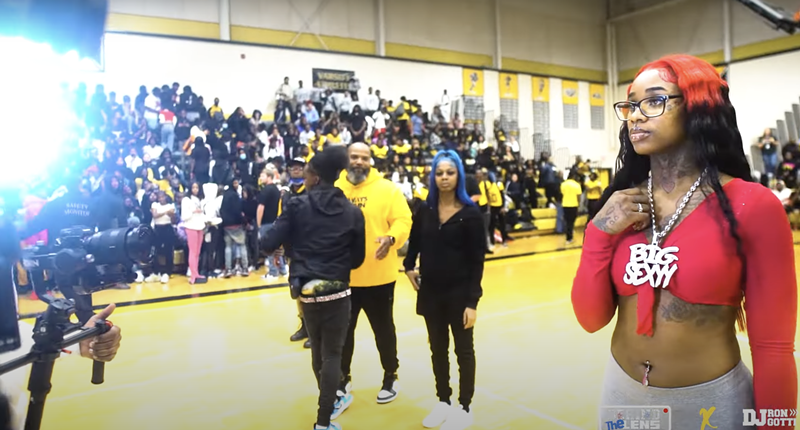
    SCREENSHOT VIA YOUTUBE

    She came, she saw, she … didn’t get to perform after all.

    Rapper Sexyy Red took some heat a couple weeks ago when a video posted on social media showed her arriving at a St. Louis high school, middle fingers up, to perform for students. Video of the event gives more insight into the chaos, which ultimately led to the rapper being escorted out of the school.

    It wasn’t clear at the time the RFT covered the social media backlash which high school had hosted the rising star rapper’s performance. A former staff member of Hazelwood Central High School in north St. Louis County has since confirmed to the RFT that Sexyy Red did show up at the school during the past school year — only the rapper never got the chance to do much more than walk in or out.

    Other local performers and DJs made appearances at Hazelwood Central that day in addition to Sexyy Red, part of a pep rally for the district’s homecoming last fall, according to DJ RonGotti’s Instagram. His account also shows that close to the same group of performers hosted a pep rally at Normandy High School around the same time.

    RonGotti recorded most of Hazelwood Central rally in a video posted to his YouTube. Before Sexyy Red’s arrival, the footage shows students dancing and rapping along to music as school officials yell at them to sit down.

    Sexyy Red arrives at the school’s gym around the 22-minute mark of the video. Students scream and quickly swarm the rapper to take photos.  But for a reason that isn’t clear in the video, Sexyy Red is escorted out of the gym a few minutes later.

    “Everybody! Y’all just messed it up,” a man yelled into a microphone. “Go sit back down. I told y’all not to come onto this court.”

    According to the former staff member, who asked us not to use their name, school officials ended the rally after a fight broke out in the student section of the gym. The staffer then left, saying, “I could sense things were not going to end well.” The performers, they add, did not have to go through the school’s metal detectors and were let in through various fieldhouse entrances.

    “Not only was the performance(s) inappropriate, but there was marijuana smoking as well as weapons displayed by the ‘performers,’” the staffer explains in an email.

    The whole rally was a “disgrace,” the staffer adds.

    “To be honest, it is one of the factors that lead to my decision to retire.”

    At the end of the video, Sexyy Red is seen outside of the school talking to the other performers. “I didn’t even do shit!” she says.

    “We just went crazy,” RonGotti says into the camera afterward. “They ain’t gonna let us come back in a minute, but we did just turn them up. Kids just had a good time.”

    Hazelwood School District has not responded to multiple requests for comment about the appearance.

    You can see the complete video from DJ Ron Gotti below:

    Subscribe to Riverfront Times newsletters.

    Follow us: Apple NewsGoogle News | NewsBreak | Reddit | Instagram | Facebook | Twitter | Or sign up for our RSS Feed

  • St. Louis Musician Who Kicked Jason Aldean in the Balls Tells All

    St. Louis Musician Who Kicked Jason Aldean in the Balls Tells All

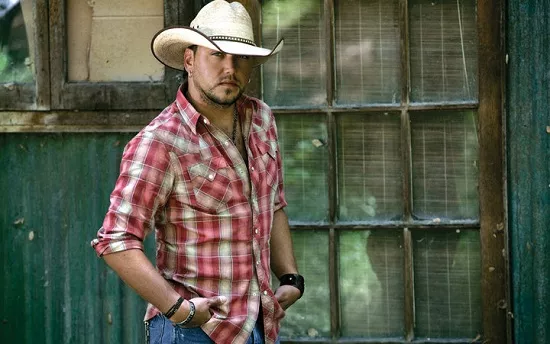
    Press Photo

    He’s got a kickable groin.

    Nowadays all good people know that Jason Aldean is a racist dipshit who should be kicked in the balls frequently and thoroughly, but one St. Louis-based musician was way ahead of the curve in that realization.

    In light of the considerable controversy surrounding the recent release of Aldean’s “Try That In a Small Town,” a middling piece of pop-country claptrap that’s long on deafening dogwhistles and short on competent songcraft, our hometown hero recently took to social media to share a personal anecdote, under this heading: “About 14 years ago, I kicked Jason Aldean in the ballsack. For real.”

    The musician, who plays in a country-infused rock & roll band, agreed to let us share the story — but only if we kept his name out of it. So, if his boast got your attention like it did ours, here’s the scoop:

    I moved to Nashville around the time he was starting out. He’d only charted a time or two by then, and he was big on a song called “Hicktown” at the time. It was a dumb song then too.

    Drake White and I were both up for this Outlaw Country tour thing he was on. It would have been my first shot to hire a band and do 5 to 10 songs — like the opening opener for the opener type thing. A bunch of us were in this preproduction meeting, and Jason Aldean was there. He was exactly the guy he seemed like. Total thumb. Absolute toad. Fifteen miles up his own ass.

    We were all sharing a green room, and he was feeling hot shit because a couple of the new artists were kissing his ass. He made a comment that I overheard that was something like, “Nobody in Nashville needs to be writing their own songs.” I laughed out loud, and he got uppity about it. I was a lot more uppity myself at the time. We kinda nosed up, and I said something about how I ought to lay him out for what he did to country music, and he got all “hyuck hyuck Billboard charts” and I kicked him in the sack. He was big mad, and I left.

    I didn’t get the tour, and I got SUPER yelled at and almost dropped by my benefactor. A few people told the story, and he denied it happened. But it happened, and I’ve never regretted it.

    Nor should you, good sir! Excellent work.

    Appropriately, our new favorite St. Louis musician says that after sharing his story with the masses, people have been treating him like a hero, not a jerk.

    “Try that in a sundown town!” one friend enthused, while another added, “Do it again please. Harder this time.”

    Even so, he feels a little sheepish.

    “I’ve never been a physically violent person, but I was definitely kind of a little shit back then. As someone who is vehemently anti-pop country, it was sort of just a point of pride for me at the time,” he explains. “And my benefactor was just so mad that I lost what could have been a break for me. It wasn’t what I wanted, though. What I’m doing now is so much cooler.”

    So what is he doing now? Well, we can’t share that or you’d figure out who this St. Louis-based hero is, and he doesn’t want that. But on a completely unrelated note, we can share that the Fighting Side has two new singles out — “Fires” and “Can’t Help Myself.”

    And they write their own songs, too.

    Subscribe to Riverfront Times newsletters.

    Follow us: Apple NewsGoogle News | NewsBreak | Reddit | Instagram | Facebook | Twitter | Or sign up for our RSS Feed

  • Britt Barbie Drops Out of St. Louis Music Festival Following Backlash

    Britt Barbie Drops Out of St. Louis Music Festival Following Backlash

    Photo courtesy of Britt Barbie, screengrab via TikTok

    Britt Barbie.

    St. Charles TikTok rapper Britt Barbie will no longer be headlining the Queens of the Lou festival.

    The “Period Ahh, Period Uhh” rapper announced her decision on Instagram two days ago, writing, “I will no longer be performing at queens of the Lou.” Instead, Barbie says she will be holding her own meet-and-greet.

    The inaugural Queens of the Lou Music Festival is scheduled to take place on Saturday, August 19, at Off Broadway (3509 Lemp Avenue). Other musicians set to perform include Bates, Cedes Cedes, T $kyy and more.

    Instagram account @stlrapvideos reported that the decision to pull out of the festival came after backlash aimed at Barbie. The music news source had been the first to announce that Barbie would be headlining the show, which swiftly drew criticism of Barbie’s music credentials and the fact that she’s from St. Charles, rather than St. Louis.

    Another performer, Cedes Cedes, posted on her official account: “Well I’m one of the headliners and my music is far from trash just ain’t went viral yet ‍♀️, St. Louis got a lot of talented artists like @bates_stl and myself ❤️”

    One user added, “definitely not gon support a culture vulture like brittbarbie clown ahh”

    Another wrote, “How u host sum queen of the Lou stuff without the real queens on there now this sum funny stuff here ”

    Comments on the post announcing that Barbie would not, in fact, be headlining, seemed to align, with one user writing, “Can she receive more backlash? for this solo concert of hers? i like the outcome.”

    Barbie first went viral for her song “Period Ahh, Period Uhh” last year. She’s previously drawn criticism from people saying that she is imitating Black women.

    Subscribe to Riverfront Times newsletters.

    Follow us: Apple NewsGoogle News | NewsBreak | Reddit | Instagram | Facebook | Twitter | Or sign up for our RSS Feed

  • St. Charles TikTok Star Britt Barbie to Headline St. Louis Music Festival

    St. Charles TikTok Star Britt Barbie to Headline St. Louis Music Festival

    Photo courtesy of Britt Barbie, screengrab via TikTok

    Britt Barbie.

    A St. Charles native who rose to stardom on the internet will soon play her music IRL.

    Britt Barbie, an aspiring rapper who rose to fame through TikTok, will headline a music festival in St. Louis this August called Queens of the Lou.

    Barbie’s song “Period Ah, Period Uh” catapulted her to viral fame last fall. She’s since shared more music on social media, with videos that can garner millions of views.

    Reached on social media this week, Barbie answered questions in short responses and said, “I’m looking forward to seeing all my fans.”  This is her first headliner show. She plans to perform “Bags Secured,” “Queen of STL” and “Hello Kitty.”

    Barbie did not address questions about how her newfound fame has affected her. But according to music news source STL Rap Videos, Barbie said on Instagram last month that “influencing wasn’t for me,” and she could “no longer take this anymore.”

    Part of the attention around Barbie centers on her perceived controversy. She’s been called out for imitating Black women, and detractors have also criticized the quality of her music.

    Barbie’s breakout track, “Period Ah, Period Uh,” involved not much more than Barbie repeating the title phrase over a beat. Barbie has since explained in interviews that “period ah” is a phrase she’s said her whole life. When something was good, it’s “period uh.” She coupled the phrase with “period ah,” meaning something not-so-great.

    Barbie will perform at Queens of the Lou along with several other artists, including Bates, Cedes Cedes and T $kyy. Off Broadway will host the event starting at 7 p.m. on August 19.

    Subscribe to Riverfront Times newsletters.

    Follow us: Apple NewsGoogle News | NewsBreak | Reddit | Instagram | Facebook | Twitter | Or sign up for our RSS Feed

  • Six Most Overused Rhymes

    Six Most Overused Rhymes

    You’ve been there, listening to a song for the first time, hearing the word at the end of one lyric and thinking “please don’t end the next line with [insert predictable rhyme here].” Of course, nine out of ten times, the internalized wish is futile. Nobody expects songwriters to reinvent the wheel with every lyric, but there are some word pairs that are far past their expiration dates. Here are the six most overused rhymes. If you let us know your least favorite, we’ll read your comment and savor it.6. Sorrow/Tomorrow
    The rhyming dictionary entry for “tomorrow” is sparse, and so much rock and pop music has to do with sadness that “sorrow” is one of its only logical partners. Accordingly, the two words have paired up innumerable times. Hootie and the Blowfish sing “Can you teach me about tomorrow/And all the pain in sorrow” on the prechorus to “Time.” Electric Light Orchestra not only makes this rhyme in “21st Century Man,” the group quotes the same lines in the track “Epilogue,” which closes out the album Time. Coincidence, Hootie? And two instances come from the BeeGees’ Barry Gibb (RIP Robin, by the way) on “How Can You Mend A Broken Heart?” and his Streisand duet “What Kind Of Fool?” two songs that suggest that the only thing Barry loves more than rhyming “sorrow” and “tomorrow” is ending song titles with question marks.

    5. Far/Star/Car
    These words form a triumvirate, as the contexts for all three are similar even when only two are used. “Star” generally refers to fame, in which one has gone “far” from their humble roots. In such, “car” becomes a symbol for status, either a measure of success (as in “Rock Superstar” by Cypress Hill) or failure (as in “Someday I’m gonna stop tryin’ to borrow your car/I’m gonna go far” from Atmosphere’s “Godlovesugly”). The Beatles covered both extremes on “Drive My Car,” where a budding starlet recruits a driver and then reveals her patheticness in the song’s final verse. In some instances, “star” is used in the literal sense, a flaming ball outside of our galaxy, like in Soul Coughing’s “Circles,” in which Mike Doughty crams the entire trinity into one lyric: “Slip into the car/Go driving to the farthest star.”

    4. Alone/Home
    This pair is so prevalent that it seems every song with either word in it contains the other. Just examining “home” songs, we get instances of “alone” in the Monkees’ “Long Way Home,” Grand Funk Railroad’s “I’m Your Captain/Closer To Home,” Neil Young’s “My Country Home” and Ozzy Osbourne’s “Mama, I’m Coming Home.” The rhyme also appears in “A House Is Not a Home” by Burt Bacharach and Hal David; it should be noted that Luther Vandross’ recording of this tune was sampled by Kanye West for his Twista/Jamie Foxx track “Slow Jamz,” and that we would be ignorant to talk about rhymes and not mention that song’s genius pairing of “Vandross” and “Pants off.”

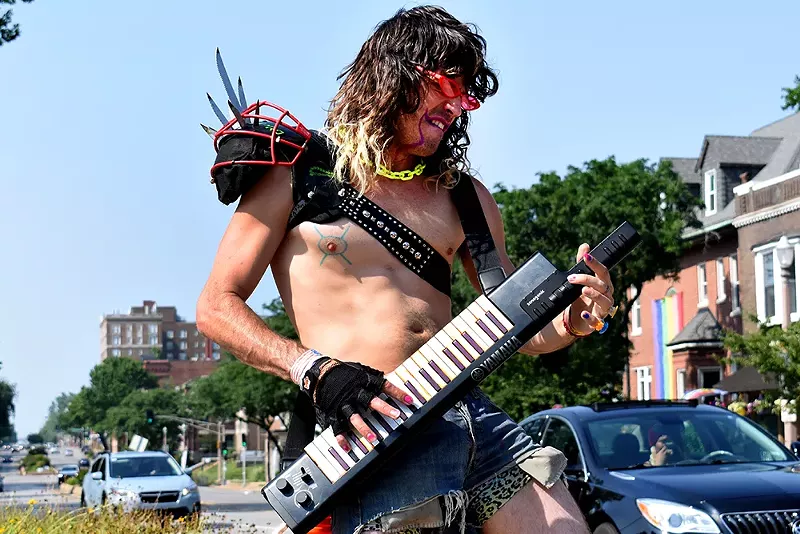
  • Local Keytar Musician Helps Keep St. Louis Weird

    Local Keytar Musician Helps Keep St. Louis Weird

    Monica Obradovic

    Kyle Kostecki, a.k.a. poopyknife, plays his keytar on South Grand.

    It’s 90 degrees out, but Kyle Kostecki’s standing on the concrete at South Grand Boulevard and Arsenal Street barefoot, his worn leather flip flops strewn to the side. Kostecki grabs a lot of attention; he’s wearing nothing but torn jean shorts, cheetah-print boxers that stick out the sides of his shorts, and a sports shoulder pad he fashioned into some kind of metal band armor. Oh, he’s also rocking a keytar at full volume.

    This busy intersection during Monday evening rush hour is Kostecki’s stage. He bangs his head, bites his lip, and convulses to his music as if he’s playing for a rock concert crowd and not to an audience of drivers who either ignore him or whip out their phones for a photo. Some honk as they pass by, to which Kostecki trills a few notes in their direction.

    You may know him as poopyknife, or Mannequin, (his wrestling name). He’s been busking on St. Louis streets for the past couple months. A video captured by St. Louis Public Radio journalist Brian Munoz a few weeks ago showed Kostecki shredding on South Grand and spread quickly through St. Louis web circles.

    We caught up with Kostecki on his most recent shred sesh in south city. He answered our questions in between licks on his keytar.

    This conversation has been edited for clarity and length.

    You describe yourself as a Midwest mutant, an “EEArTHLING” and a “fartist” on your Instagram page. Tell me, how do you manage to juggle it all?

    Well, being an earthling is easy, ‘cause like, we’re on Earth. And I don’t really have an explanation for Midwest mutant other than we’re in the Midwest and Midwest mutant sounds cool. For fartist, people are always like, “Oh, I’m an artist.” That sounds too pretentious. I know damn well I’m an artist, but I can’t bring myself to say “Oh, I’m an artist,” so I say I’m a fartist to make fun of it.

    So no art out of farts?

    Maybe someday.

    @riverfronttimes♬ original sound – Riverfront Times

    People are calling you an “STL Easter egg.” What are your thoughts on that?

    I don’t really know what’s inside me, because I’ve never seen it. Maybe there’s candy? Maybe some spare change? But until I’m proven wrong, that title can stand.

    Does your head ever hurt from head banging so hard?

    No, no, no. I’m blessed with a good sturdy neck.

    I like your get up. What are your style aspirations?

    A whole lot of things. Most recently I watched a documentary about an ’80s band called Twisted Sister and I sat there and cried. Man, those guys were cool. Another visual inspiration is the Rocky Horror Picture Show.

    I saw that movie when I was in third grade. When you’re young, your brain’s like a sponge and you can’t help but be influenced by things, especially something that’s completely bizarre to you. My parents are very straight-laced Republican kind-of-guys. So when I saw Rocky Horror Picture Show I was like, ‘Whoa, that guy’s cool!’”

    Also, GWAR. Because they got pointy shoulders and stuff.

    Are those kitchen knives? (RFT pointed to the augmented shoulder pad secured to Kostecki’s torso with what looked like a leather belt. Knives stuck through it and a jaw guard from a football helmet laced over its top.)

    Yeah, I think so. I got them from Goodwill and I found the football piece on the streets of New Orleans this past Halloween. I build stuff out of scrap I find on the street. You know when you’re driving and see shrapnel everywhere from what looks like someone’s bumper exploded? I have another piece of armor that’s made out of old car parts and has knives sticking out of it.

    Do you ever get haters on the street?

    Actually, it’s quite rare. The most notable instance of hate came at the recent Pagan Festival. I thought I’d fit right in there. But the Pagan [burps] Police came up to me wearing some like official staff shirt with a pentagram on it and they were like, “Hey man, you gotta go.”

    I know I wasn’t doing anything wrong. If I was doing something that was overwhelmingly met with hatred and negativity, I’d call it a day and do something else. The whole idea is to boost the morale of myself and the city.

    What would you like to say to any haters out there?

    Get over it.

    Subscribe to Riverfront Times newsletters.

    Follow us: Apple NewsGoogle News | NewsBreak | Reddit | Instagram | Facebook | Twitter | Or sign up for our RSS Feed

  • Mattie Schell Embarks on a Solo Record After River Kittens Split

    Mattie Schell Embarks on a Solo Record After River Kittens Split

    Courtesy Photo

    Mattie Schell is a fixture in the St. Louis music scene.

    You smell like fresh laundry,” Mattie Schell tells me. We are waiting for drinks amid the varicolored tiles and eclectic bric-a-brac of Venice Cafe, a short walk from the house the talented singer-songwriter shares with her fiancé, musician and audio engineer Nathan Gilberg. Schell describes her home’s proximity to Venice Cafe as “dangerous” due to the tempting convenience of such easy access to her favorite watering hole.

    It’s a convenience she apparently enjoys often. The bartender knows her drink without Schell having to order it, and no fewer than a dozen people stop to talk to her during our sidewalk-table interview. (“We’re doing an interview right now,” she tells one friend. “But when we’re done I’m gonna come over and hug ya!”) She’s a popular and convivial fixture of the place, almost always smiling, the kind of gal who likes to have one foot on the dance floor and one elbow on the bar. Plus, she performs at Venice twice a month as one of St. Louis’ most popular new solo artists.

    The key phrase is “new solo,” as Schell is most familiar to St. Louis and beyond as one-half of acoustic-based folkicana duo River Kittens alongside singer/guitarist Allie Vogler. Over the last decade, River Kittens recorded two EPs, released a flurry of singles and kicked up dust around the country mixing olde-tyme musical idioms with wry modern songwriting and seamless vocal harmonies.

    Vogler had already formed River Kittens as a duo with singer Martha Mehring when Schell first met her in 2014 at the Crow’s Nest in Maplewood. After an impromptu set together that night, Schell officially joined River Kittens, turning the group into a trio.

    The lineup took off, as the Kittens played five nights a week around town, released a well-received self-titled EP and opened for Pokey LaFarge’s 2015 New Year’s Eve show at the Pageant. After Mehring left the band in 2018, Schell and Vogler forged ahead as a duo, eventually connecting with guitarist and producer Devon Allman, who signed the girls to his Create Records label and put out the Kittens’ 2021 EP Soaking Wet.

    “That record literally took us coast to coast,” Schell says of the band’s cross-country tours opening for the Allman Betts Band and playing venues such as the Ryman in Nashville with the Allman Family Revival. It’s a lifestyle that fit her well. “I love the road,” she says. “For me, it takes a lot longer to want to come home than it does to want to go back on the road.”

    River Kittens chalked up a long list of highlights. They recorded at Sun Studios in Memphis, closed the Open Highway Music Festival by jamming with Old Crow Medicine Show on a cover of the Beastie Boys’ “Fight For Your Right,” played the Mighty Pines’ inaugural Pines Fest last year and collaborated with G. Love on a version of Bruce Springsteen’s “Atlantic City,” released as a River Kittens single. “G. Love gave us a boost,” Schell says, though she notes that the younger Vogler had previously never heard of G. Love. “I was like, ‘I had him on fucking Napster, dude!’ She was like, ‘What’s Napster?’”

    Despite the many successes, the Kittens felt like 2023 was time for a change. Schell treads lightly when talking about Vogler, careful to avoid saying anything negative about her former bandmate or the reasons for their split, and she says she considers the door open to future collaborations with Vogler or River Kittens reunions.

    “The experience of the River Kittens is one of the most incredible things in my life,” Schell says, emphasizing the unique vocal connection she and Vogler shared. “Allie and I were really good at telegraphing what we’re going to do, really good at singing harmony. We just had that chemistry with each other.”

    Still, she notes that the two were quite different in other ways and that after eight years together, Schell was ready to go solo. “I can’t speak for Allie, but at the end of the day, every artist deserves to be able to create without compromise, and I think we were both ready to just do our own thing.”

    So suddenly, she became Mattie Schell, solo artist, the girl who grew up as the musical-theater-loving kid from Jerseyville, Illinois, and member of the sprawling Schell clan of bluegrass pickers. Back in those days, Schell cut her teeth in high school praise bands until heading off to college in Nashville and broadening her horizons. “I discovered marijuana,” she says, laughing. Today, she is wearing overalls and a flat-brimmed ball cap adorned with Grateful Dead dancing bears, attire that sums up both her farm-girl roots and her eventual foray into more expansive, jammier music.

    A big influence on her was her uncle, Wayne Schell, who turned her on to some of her favorite artists (Dylan, the Band, Gillian Welch), gave Schell her first mandolin and played covers with her on weekend nights in Grafton, Illinois bars back in the early ’10s. “I really started finding my sound and my voice with my Uncle Wayne every Friday night,” she says.

    She eventually landed in St. Louis, waiting tables in Maplewood, dating Gilberg, meeting Vogler and carving out the River Kittens years. After the split with Vogler, Schell found herself taking on previously scheduled River Kittens plans by herself, including a tour with singer-songwriter Jackson Stokes and an Off Broadway concert in February paying tribute to the Grateful Dead’s American Beauty and the Band’s Stage Fright, two of Schell’s favorite albums.

    That show ended up being billed as Mattie Schell & Friends and featured an impressive all-star crew made up of Al Holiday, Nick Gusman and members of the Mighty Pines, Funky Butt Brass Band, One Way Traffic, Yard Eagle and more. “I knew that if it’s not going to be River Kittens, I needed an awesome lineup,” she says. The night was a big success, and Schell promises similar shows to come. She is also a favorite on Sean Canan’s Voodoo nights, most recently a two-night stint channeling Stevie Nicks and Christine McVie for Voodoo Fleetwood Mac.

    But Schell is most excited for her upcoming solo album, which she recently recorded in Nashville with producer JD Simo. “I’ve never done a solo record in my life,” she says with visible excitement. “They are all songs that I’ve written or co-written with my fiancé. We cut the whole thing live in the studio — no headphones, no separate rooms.”

    In the spirit of her solo debut, the album’s working title was Baby’s First Record. “I thought it was funny,” she says. “I get so tired of people taking themselves so seriously. Then I recorded one last song, the only one with just me and the guitar, called ‘And So It Goes,’ so we named the album after that song.

    And So It Goes has no release date yet, as Schell is fielding some promising label options, but the first single, “Let You Let Me” is out now. “The album is definitely the best thing I’ve ever done,” Schell says. “I’m really proud of it.”

    With an advance listen to the album, it’s easy to see why. And So It Goes highlights Schell’s chameleonic ability to channel a range of Americana styles into an assured tour through country crooners, funk-soul groovers, jazzy ballads and folk confessionals, all delivered with Schell’s powerful, pliant vocals.

    In the meantime, she’s gearing up for an action-packed summer. She will be singing at Venice Cafe on the first and third Tuesdays of each month; she is scheduled to play three separate sets at the Open Highway Music Festival on June 16; she will hold a solo showcase at Joe’s Cafe on June 22; and she is on the lineup for the Summer Sundown Festival in Effingham, Illinois, in August.

    “I’ve started finding my own sound as much as I ever had in my life,” she says. “And I’m chomping at the bit to get it out there.”

    Subscribe to Riverfront Times newsletters.

    Follow us: Google News | NewsBreak | Reddit | Instagram | Facebook | Twitter

  • Complaints About Victor Goines Preceded Jazz St. Louis Conflict

    Complaints About Victor Goines Preceded Jazz St. Louis Conflict

    Cedric Ellsworth

    Jazz St. Louis named Victor Goines its new president and CEO last year.

    Not long after the RFT published an article detailing allegations from employees and volunteers about troubles at Jazz St. Louis under new president and CEO Victor Goines, former students of Goines reached out with a common response: sounds familiar.

    They say the stories about Goines exploding in anger at Jazz St. Louis’ Young Friends Board — and other incidents that had some local staff members and volunteers alarmed — echoed their experiences.

    His former Northwestern students say Goines alternated between being absent and micromanaging, often subjecting students to angry outbursts. A Juilliard graduate reports a hostile environment where another instructor would warn her away when Goines was in a foul mood.

    Goines, 61, is an accomplished musician who has played with Wynton Marsalis since childhood. He served as artistic director of Juilliard Jazz, which he’d helped found, from 2000 to 2007 and as the director of jazz studies at Northwestern University from 2007 until last July.

    In both cases, Goines’ former students report that his departure followed groups of students reporting concerns about his behavior to administrators.

    “When you meet him, initially, he’s always very cordial, very nice, very personable, approachable, but the minute you get in deep with him in terms of in a professional setting for a long term or an education setting with students, that’s when things turn really, really negative,” says Erica von Kleist, a Juilliard graduate who has played at the Jazz at Lincoln Center Orchestra and is an instructor at the Manhattan School of Music.

    When asked to comment on allegations about Goines’ tenure, Northwestern Director of Media Relations Hilary Hurd Anyaso said via email on May 3, “[W]e do not comment on personnel matters.” In April, Juilliard Director of Communications Allegra Thoresen directed the RFT to an article detailing Goines’ plans to focus on his music. Thoresen indicated today that the school did not have further comment.

    In response to a detailed list of questions, Jazz St. Louis Board Chair Bill Higley issued a statement in support of Goines, writing: “As part of the search process that led us to hire Victor, the Board sought input from colleagues who know him well, including during his time as a tenured professor at Northwestern. We received overwhelmingly positive reports demonstrating not just Victor’s qualifications but his commitment to our values of diversity and inclusion.”


    The arts are rife with cliches of tough and sometimes harsh directors and teachers who turn out peerless musicians. Goines — and many of his supporters — seemed to place himself in that category.

    “I would talk to some people about his behavior, and they would just be like, ‘Oh, yeah, that’s just the way he does things.’ And certainly some of the older generation of players were like, ‘Yeah, but, you know, he gets results, and that’s the way that he’s decided to do things,” says Mikey Ahearn, a second-year graduate student at Northwestern. “He had this whole joke about, ‘This is why the boss has to be an asshole.’”

    Higley has a similar idea, writing in a statement that Goines has a “more direct leadership style” that will “necessitate a period of adjustment.”

    But did Goines’ behavior get results? Five of his former students say no, and Northwestern teacher evaluations shared with the RFT seem to back them up.

    The problems with the Northwestern jazz program began with Goines’ absences. His students report he spent a significant amount of time away on tour, which caused logistical problems — even as he insisted on having all decision-making power.

    “He was away for most of rehearsals,” a former student says. “He would try to micromanage the logistics of everything via email or phone, and it just wasn’t really working.”

    Von Kleist says that pattern dates back to Juilliard. “Not only was he not overseeing the functionality of the program because he was there intermittently, when he was there, if there was any confusion or anything wasn’t going right, he would be angry at the students,” she says. “He’d be angry at us, and he would let us know how awful we were.”

    Goines would sometimes fall asleep in rehearsal after returning from touring, which could lead to tension. One student says Goines had “outbursts” from time to time, especially when “overworked and sleep deprived” but that “as long as he felt like he was on the moral high ground, then it was OK.”

    “I’ve had lessons where he’s falling asleep because he is tired from touring,” a different student says. “Then I’ve had lessons where I just never had a shot of it being a good lesson because he was pissed off going into it.”

    Northwestern teaching evaluations shared with the RFT show similar sentiments. “[P]rof Goines is rarely present – when he is, he’s in a flurry trying to fix and adjust things, only to disappear again as quickly as he came,” one wrote after the spring 2022 semester. Another wrote that Goines “was absent the majority of the quarter and would sometimes doze off or leave unexplainedly [sic] when he was present.”

    Goines’ Northwestern students also take issue with the jazz program he designed. They say the curriculum was not differentiated enough from the classical music program and did not include a jazz theory sequence. (Northwestern did not respond to an email last week asking for comment on those complaints.)

    Students were also frustrated by the hurry-up-and-wait push-pull caused by his absences.

    “We didn’t know what we were playing until like two weeks before the show,” one student says. “We’d have three rehearsals a week that, at that time, were not managed well because Goines was absent. And we were just sitting there kind of twiddling our thumbs playing different songs until eventually we had like crunch time, and all of a sudden he decided our setlist and then he got angry at us for not knowing the music.”

    The teacher evaluations, which are public to everyone at Northwestern, reflect these statements. Students from the winter 2021 semester said, “This quarter was — in general — a failure.” “NUJO made jazz not fun for me.” “[T]ough environment in rehearsals.”

    From spring 2021: “poor directorial management,” “Consistently disorganized. We are treated by Mr. Goines like children and are frequently made examples of and talked down to in a demeaning and unhelpful manner.” “Woefully underwhelmed by jazz orchestra.” “Everything that went wrong with the winter quarter has happened again.”

    The trend continued in spring 2022, though there are fewer overall: “Oh man, what to say that hasn’t already been said. I think we should take a second look at how we are handling this class’s instruction. Structure is lacking.”


    What’s the difference between talk that’s tough and abusive?

    Von Kleist says that Goines was “punitive in his demeanor” toward students at Juilliard, that he’d open rehearsals by saying things like, “You are the most disrespectful students I’ve ever had.” She continues, “He would say things like, ‘You were the most ungrateful, immature people, young people I’ve ever worked with.’” Even so, she says he was angry but calm, and she only witnessed him raising his voice a few times.

    It was different at Northwestern. The students there say Goines semi-regularly yelled at them in rehearsal or over the phone and that he’d make threats in the heat of the moment.

    “He would bully us; he was incredibly emotionally abusive to a lot of us and would throw a tantrum when he’d been away on tour for three, four months and then came back and couldn’t micromanage everything,” Ahearn says. “He’d get into shouting matches with us for no apparent reason other than to just assert some kind of dominance.”

    An undergraduate said Goines would use the Socratic method with his students and then get frustrated if they didn’t furnish the correct answer, describing how Goines’ temper would flare, and he’d raise his voice. “It would just kind of be sudden and unexpected.”

    The student describes an incident in rehearsal, saying Goines liked to close the door and have what he called a “come to Jesus” moment. Once, when displeased with a recent concert performance, Goines told the students that they weren’t motivated and not practicing enough. The student made a suggestion about submitting videos of practice and Goines said that was too strict and boxed in, going so far as to compare it to slavery.

    “I was like, ‘Whoa,’” the jazz student recalls, saying that they replied that Goines’ statement was an over-exaggeration and a fallacy. “Then [Goines] said, ‘You don’t have to contribute to the conversation.’”

    During the discussion, the student says Goines raised his voice and laughed in the student’s face. “It was demeaning,” the jazz student says. “… He got extremely defensive, like, ‘What are you saying? I’m part of the problem?’”

    A third student describes how Goines went up to a student in rehearsal and started “aggressively clapping in his face,” and told the room, “If you guys don’t play well, ‘I’ll be Whiplash” — referencing the 2014 movie about an abusive music instructor.

    “It’s just an absurd comment to make for anybody to model any of their teaching off of that movie,” the student says, noting that Goines was never physical with them.

    Goines’ temper, Ahearn says, often came up when someone questioned him. “He would start off speaking kind of naturally. And then you’d suggest an alternative or maybe question a bit further. And he’d go nuts.”

    Von Kleist says that Goines’ temper was so known that her private instructor, the late Joe Temperley, would warn her if Goines was in a bad mood. “He would call me and say, ‘Hey, you might want to avoid Victor because he’s just on a rampage,’” she says.

    Ahearn, who is non-binary and had used a move from London to Chicago to study jazz and “live a little more authentically,” says initially Goines was supportive and OK with them wearing dresses during performances. Yet, “the more I spoke to him about it,” the more Goines seemed to misgender Ahearn.

    When Ahearn brought up these issues with Goines, Goines asked if Ahearn had considered it might be difficult for others.

    “And had I considered that maybe, you know, I don’t have to wake up every morning and pick up a gun and fight in Ukraine?’” Ahearn recalls. “I said, ‘Well, I do have to risk my life because every time I walk out the door, I might not come back. The only choice I’m making here is whether to live authentically or not.”


    Several students who spoke with the RFT about Goines had either considered dropping out of the program or actually had.

    “I think the environment was such that people found it easier to quit and not say anything rather than face any potential repercussion,” Ahearn says.

    Two of the undergrad students who spoke with the RFT left the jazz program. One dropped the major but picked it up again after hearing Goines was gone.

    “I thought about coming back,” a third student says. “This is something quite sad — or was quite sad to me and now I’m OK with — I think my interest in pursuing music professionally is gone. I don’t know if I can fully say that Goines took it out of me.”

    Von Kleist says that she cried in the bathroom after rehearsal almost daily and that she couldn’t listen to a jazz record for five years after graduating. “They were so soured for me, they gave me such a pit in my stomach because I associated school with them,” she says. “… He really nearly killed my love of this music.”

    About a year after she graduated in 2004, Von Kleist says she declined to take part in a group of jazz students who’d gone to make a formal complaint about Goines to then-President Joseph W. Polisi because she was “so traumatized that I can’t even be in that building.” But she is sure the meeting happened.

    Reached by phone on Tuesday, Polisi said that he couldn’t recall the incident and that he can’t comment on it.

    Ahearn says that it was difficult to say anything about Goines because he is a famous, well-connected musician and because he’d alternate between generosity and verbal abuse.

    “No one would believe us,” Ahearn says. “Like we’d go out maybe after a concert, and he would treat all his friends to this wonderful meal, and they would think he was so friendly. And so wonderful.”

    Then, in another moment, he’d lose his temper at the students.

    “[Goines] threatened people with not not having a future in the program because of not knowing one simple thing or you’d get phone calls about how you were really fucking up and then a phone call later, asking you how your life was going and him telling you to just treat him as another guy when he just kind of ruined your entire self esteem,” Ahearn says.

    Ahearn never reported Goines’ behavior to Northwestern. But the other three students say that they did and that a group of other students did as well.

    “[The assistant dean’s] response was always, ‘Yeah, we’ve heard this before,’” one student says.


    How Goines came to leave Northwestern and how he ended up at Jazz St. Louis is not clear.

    In an interview with the RFT last August, Goines said that he’d retired from Northwestern because “it’s a good time to hand the football off to somebody else.” At that time, Goines said he was aware of the opening at Jazz St. Louis but that he didn’t apply for it immediately.

    “However, in the past month or two, some information was coming to me that made me reconsider and look at it through a different lens,” Goines told the RFT.

    Ahearn says that they and others didn’t hear about Goines’ departure at the end of the semester. Instead, in a letter dated August 25, Dean Toni-Marie Montgomery announced that Goines had left and that an interim director had been appointed.

    “I am writing to share the news that Professor Victor Goines has resigned, effective July 31, from his positions as a member of the faculty in the Bienen School of Music and as Director of the Jazz Studies Program. We are grateful to Professor Goines for his contributions during his 14-year tenure in the Bienen School of Music,” Montgomery writes.

    Then the Northwestern students saw that Goines had landed at Jazz St. Louis — and, as weeks turned to months, read that some jazz supporters here were having similar experiences.

    “It was interesting seeing the parallels,” one Northwestern student notes, later saying, “I just wanted to make aware that this is a pattern about Mr. Goines.”

    This story has been updated.

    Email the author at [email protected]

    Subscribe to Riverfront Times newsletters.

    Follow us: Google News | NewsBreak | Reddit | Instagram | Facebook | Twitter

  • The Six Best NPR Theme Songs (In Honor of Talk of the Nation’s Cancelation)

    The Six Best NPR Theme Songs (In Honor of Talk of the Nation’s Cancelation)

    If you are like me, you drive a car with a broken cd player. So you have to listen to the radio while driving, and you end up on NPR most of the time because you are sick of Adele on the commercial stations and your favorite independent music channel always seems to have a zydeco show on when you’re in the car. (Ahem, KDHX.)

    But just because you’re listening to NPR talk shows doesn’t mean you won’t hear some great music. In fact, some of the most wonkish news programs on public radio feature some truly groovy theme songs. Take for example, these six shows:

    6. On The Media
    The theme song to “On The Media” is a variation of “Disposable Genius” by bassist Ben Allison. Even among the nerdy world of NPR, this tune often goes unnoticed. At the time of writing this, the video below was the only trace of this song on YouTube and it only had seven hits. I believe with all of us combined, we can double that!

    5. All Things Considered
    Perhaps the most iconic of NPR themes, “All Things Considered” shows the power of a simple melody. It is peppy and vaguely patriotic, which means it basically sounds like something you’d hear on Sufjan Stevens’ Illinois record. Listening to the daily program, the primary melody reprises itself as an interlude by a’la carte instruments throughout the daily program. My personal favorite is the upright bass version.

    4. The Moth Radio Hour
    “The Moth Radio Hour” could be NPR’s edgiest program. For example, last weekend Jillian Lauren told a detailed story about her experience as a call girl exported to Brunei. Fittingly, the show uses “Uncanny Valley,” an obscure Tortoise-esque jam by San Francisco group The Drift. Like the best stories on “The Moth,” The Drift’s tune begins by raising eyebrows and reveals its purpose later. There is no distinct melody, but the spy-movie funk vibe is its own statement.

  • The BoDeans Took a Sold-Out St. Louis Crowd Back in Time

    The BoDeans Took a Sold-Out St. Louis Crowd Back in Time

    Ky Katzman

    The BoDeans played City Winery on Saturday.

    Forty years into it, BoDeans are still on the road. These days, that means that founding member Kurt Neumann is still singing and playing the easy-going rock & roll songs he wrote with BoDeans co-founder Sam Llanas, who is no longer with the band. With Neumann the sole focus, BoDeans played the last show of the band’s current tour at City Winery, a convenient tour finale given the band’s newfound St. Louis connections.

    First, current BoDeans drummer Brian Ferguson grew up in St. Louis and is in the process of returning to raise his family in Webster Groves. Second, the Bodeans’ new tour manager is none other than our own Ky Katzman, a local music mainstay best known as the manager and media guru behind Sean Canan’s Voodoo Players, seen briefly on stage Saturday night delivering Neumann a tumbler of hot tea.

    The City Winery was sold out with a crowd of BoDeans faithful who responded favorably to Neumann’s reminders of how much fun the 1980s were. As the City Winery floor is packed solid with tables, dancing (or even standing) space is limited, so most of the evening’s visible enthusiasm was kept to amiable head-bobbing, and the expensive drinks and the 9:45 p.m. last call did little to help encourage liveliness in the crowd.

    However, the four-piece BoDeans sounded uniformly excellent with a terrific mix in the room highlighted by Neumann’s luminous guitar tone. The 61-year-old, wearing a headscarf and sunglasses, played without a pick, using a thumb-taxing technique to conjure up flawless chiming chords and tasty solos, holding everything together as the only guitarist on stage and making it all look easy.

    The band time-traveled around eras, working in three songs from last year’s 4 the Last Time, including the rousing “Ya Gotta Go Crazy” driven by Ferguson’s train beat, but BoDeans knew the audience showed up for the oldies. Therefore, the band kicked early into the guitar crunch of “Only Love,” a song that could only be released only ’87, and “Dreams,” doubling down on the ’80s by folding in the chorus of Modern English’s “Melt With You.” (Another St. Louis connection: We will get to hear the original when Modern English plays Evolution Festival in August.)

    “My Hometown” was not the Bruce Springsteen song but a BoDeans original about Neumann’s Wisconsin roots. The band did, however, turn in a version of Springsteen’s “I’m On Fire,” a welcome surprise even if it is the Boss’s most over-covered song. “Naked” was the best of the band’s ’90s offerings, before which Neumann advised, “Let’s get naked!” It was hardly that kind of party, but Ferguson earned his payday on the song anyway with some frenetic hi-hat-happy skinwork.

    Italian keyboardist Stefano Intelisano broke out the accordion for a mid-set run of Tex-Mex-embracing tunes, including the Johnny Cash-inspired “Flyaway” and another ’80s nugget, “Still the Night,” which finally got three ladies in the crowd to their feet. “Texas Ride Song,” the night’s peppiest song, kept the momentum going, complete with some synchronized stage strutting as bassist James Hertless worked the upper frets and Neumann peeled off a lyrical Jeff Beck-ian solo.

    The rest of the set was reserved for biggies, at least by BoDeans standards (“Runaway,” “Good Things”) that had most of the crowd standing and the band jumping in place. A three-song “encore,” before which the band never left the stage, included couples skate “Say You Will” and a cover of the Rolling Stones’ “Miss You,” with Nuemann handling Mick Jagger’s falsetto whoops on the guitar and Ferguson doing his best Charlie Watts, which had even the waitresses dancing.

    Finally, the ’Deans couldn’t send us home without “Closer to Free,” the group’s big smash and the moment everyone was waiting for, a final push of pure ’90s nostalgia that rattled the room’s decorative whiskey staves and shaved 30 years off of the crowd. Everybody one, everybody two, everybody free.

    Coming soon: Riverfront Times Daily newsletter. We’ll send you a handful of interesting St. Louis stories every morning. Subscribe now to not miss a thing.

    Follow us: Google News | NewsBreak | Reddit | Instagram | Facebook | Twitter

  • How Hyperpop Stars 100 Gecs Got Their Start in Normie St. Louis County

    How Hyperpop Stars 100 Gecs Got Their Start in Normie St. Louis County

    COURTESY 100 GECS

    Dylan Brady and Laura Les of 100 gecs got their start in St. Louis.

    The first time I heard 100 gecs, I thought it was a joke.

    The duo’s music first pummeled my eardrums when I was a junior at Webster University. A staffer at our student newspaper (picture your best liberal arts student stereotype, Dr. Martens boots and all), played me one of 100 gecs’ most popular songs, “money machine.” It began with what sounded like the twangs of a deep-fried banjo, followed by an autotuned voice wailing, “Hey lil piss baby / You think you’re so fucking cool, huh? / You think you’re so fucking tough? / You talk a lot of big game for someone with such a small truck.”

    If someone recorded Avril Lavigne on speed after inhaling a helium balloon, that’d be a reasonable approximation of what 100 gecs sounds like. But only if pockmarked by random bleeps and bloops. And dog barks.

    I remember nodding politely as the song blared on my friend’s cracked iPhone. She braced for my reaction as I looked at her with furrowed brows; she knew how unhinged it sounded.

    The music was cool, I told her, but I wasn’t high enough to enjoy it. I told her anything to politely dismiss the introduction to a band that would eventually change the way I listened to music — just so I could put my earbuds back in and return to listening to Philip Glass, or whatever music I thought I had to like at the time to feel original.

    Four years later, that memory reminds me to never be so quick to judge art. The gecs continued to invade various friends’ music libraries. The story of how a gecs concert instantly wiped away one of my best friends’ depressive episodes is a legend among our mutual friends. My vision of 100 gecs changed as time went on. The music transformed from an over-glorified meme to pure genius art. I’m now one of nearly three million monthly gecs listeners on Spotify.

    More than the mind-warping music, what baffled me the most about 100 gecs is how the duo became the eccentric pop stars they are now. Dylan Brady and Laura Les, who make up 100 gecs, grew up in the suburbs of St. Louis. Some fellow gecheads don’t believe me when I tell them Les and Brady are from St. Louis and lived in Webster Groves and Kirkwood, respectively — just a few miles away from where I grew up in Crestwood. The inner-ring suburb is one of the sleepiest municipalities in south St. Louis County and is known most for what it used to have: a bustling mall and a drive-in theater along old Route 66.

    On the surface, there’s nothing remarkable about these suburbs. Most who grow up there dream of leaving. Young parents move in for the comforting quiet. Strip malls abound. Subdivisions of ranch homes wind through south county like veins. Webster Groves, with its century homes and quaint remnants of the railroad town it once was, has an atmosphere that’s more Mayberry than St. Louis. Less than a 10-minute drive away, Kirkwood isn’t much different.

    This sprawling suburbia could not have been a more boring place to grow up. At least, that’s how I felt as a kid raised at the border of west and south St. Louis County. But when I compare county notes with 100 gecs, my description is quickly rebuffed.

    “You don’t have to put it down like that!” Les, the band’s lead singer, tells me. “Yeah, St. Louis is great,” says Les’ counterpart, producer Brady.

    It was not the response I expected from a duo so wonderfully and wildly weird.

    Les and Brady are nothing like the areas in which they were raised. Brady, a Kirkwood High School alumnus, and Les, a graduate of Webster Groves High School, are eccentric and exciting. Their music is erratic and irreverent — a frenzied collage of genres that encompasses everything from nightcore and dubstep to punk and ska. The sound of 100 gecs has been described by Complex as “an anarchic assault on the ears” and “like throwing digital glass into a blender” by Pitchfork.

    It takes a lot to describe 100 gecs’s sound, because there’s never been anything like it. After the release of their first album, 1,000 gecs, Brady and Les unwittingly established themselves as the frontrunners of hyperpop. The new, genre-mashing scene is distinguished by a countercultural sound characterized by auto-tuned vocals, quick beats and excessive distortion. But even that description only scratches the surface of a genre that defies norms practically by definition.

    It’s the sound of the internet. It’s audio adrenaline that electroshocks the depressed neurons of Gen Z. It’s simultaneously nostalgic for early 2000s pop yet futuristic. It’s glitchy. It’s fun. It’s … not for everyone, that’s for sure.

    So how could Kirkwood and Webster Groves, two of the most normie places, cultivate the creative geniuses behind one of the country’s most up-and-coming acts?

    It started with dog food, bloodstains, 25 bands and a geccco.


    100 gecs music is erratic and irreverent — a frenzied collage of genres that encompasses everything from nightcore and dubstep to punk and ska.

    MICHAEL WORFUL

    100 gecs music is erratic and irreverent — a frenzied collage of genres that encompasses everything from nightcore and dubstep to punk and ska.

    We’re speaking over Zoom from different sides of the country. Les, 28, and Brady, 29, chat from their homes in Los Angeles. I’m in my south St. Louis apartment. Brady says, “Fuck yeah!” when I tell him where I am.

    About an hour into our interview, a conversation about St. Louis snowballs into a tangent on local sports teams and former Cardinals first baseman Mark McGwire.

    Brady: “They should have let him juice.”

    Les: “Me and Dylan have the distinct belief that you should be able to juice in any sport you do. Push your body to the test.”

    Brady: “Why not?”

    Les: “We’re not the first people to say this.”

    Brady: “Won’t be the last.”

    Les: “I’ll watch sports again when there’s, like, no holds barred. Let people juice. Make the field twice as big.”

    Brady: “Baseball should be scoring as much as basketball.”

    Les: “Their game would be over within 30 minutes, and it’d be great. The pitchers just throw balls as fast as they can, and the people batting have to hit and run, and then the next person comes up and tries to hit. There’s no time outs. You don’t have to wait for anything. It’s just …” She claps her hands together in a quick 1, 2, 3.

    It’s irreverent sibling-like banter such as this that 100 gecs fans love. It matches their music: quick, uninhibited, fun and all over the place. It’s far from the formulaic predictability of most pop music.

    Even so, the gecs never sought to create something so anarchic. Music for Les and Brady began out of curiosity.

    Les’ interest in music began in her early teens. Her dad had a huge collection of rock CDs, she says. She listened to Van Halen and Black Sabbath and started experimenting with creating music on her computer in her bedroom. Daft Punk’s second live album, Alive 2007, inspired her to download the free version of Ableton, a music-making software. It was the first time she switched from guitar to keyboard.

    The Guitar Center off Watson Road was about three miles away from each of her parent’s houses, and she used to walk there everyday to try different guitars and effects pedals. She went there so often that the store’s employees pooled money and bought her a Line 6 amp.

    Music didn’t seem a possibility for Brady until his sophomore year of high school, when a music teacher at Kirkwood High School, David Cannon, urged him to join the choir. Brady shot photos for his school newspaper and wanted to make films, but choir opened up a whole new world.

    “I didn’t really feel like I had access to make music or the skills to do it,” Brady says. “I didn’t even want to do it until I took that class.”

    Cannon taught thousands of students over three decades (including pop singer Slayyyter) before he retired last year. But even so, when reached by phone one afternoon, Cannon remembers Brady vividly.

    He was “quirky, obsessive and funny,” Cannon recalls. After choir, he also convinced Brady to take a class on music theory, which was where Brady’s creativity “really shined.” Despite Brady’s clear talent, Cannon didn’t expect Brady to become as big as he is now.

    “I’m hopeful for my students,” Cannon says. “I always told them that if they make it in the music business, great, but that was never my goal for them. I wanted them to be music consumers, to be the ones who might try out an avant garde concert or go to the symphony.”

    Whatever fire Cannon’s classes ignited in Brady, it never went out. Brady started producing music for numerous local artists in his late teens. He’d later go on to produce for Charli XCX, Rico Nasty, the Neighbourhood and so many more.

    How Les and Brady actually met is something of a debate among gecs fans. They give various answers in different interviews, so the truth is unknown. Did they meet at a rodeo — or a house party?

    Les tells me the latter. “Dylan was playing tracks, and I was like, ‘Wow, that dude is super duper good at music,’” she says. “‘I have to go home and be better at music.’”

    Even more ambiguous is the origin of 100 gecs’ name. In an interview with Rolling Stone, Les said she accidentally ordered 100 geckos online, when she meant to order one. In other interviews, the duo said they saw “100 gecs” spray-painted on a wall outside of Les’ dorm room in Chicago.

    The name actually derives from Les’ social security number, she tells me, and she’s surprised fans haven’t figured it out already.

    “It’s actually huge for me to be admitting this,” Les says. “You’re getting the exclusive on that one.”

    The quick delivery of her answer makes me think she’s only half joking. Then she does my job for me and comes up with a fake headline: “‘Riverfront Times Exclusive: Leaking Laura’s Fucking Social Security Number.’”

    “That’s an epic cover,” Brady responds.

    “Let the hunt begin,” Les says.


    Laura Les of 100 gecs says the band name derives from her social security number.

    MICHAEL WORFUL

    Laura Les of 100 gecs says the band name derives from her social security number.

    By the time 100 gecs formed in 2015, Brady and Les were in different places musically. Les was producing high-pitched electronic music under the moniker osno1 on Soundcloud and Bandcamp. Brady was more known as hip-hop producer Lil Bando at the time. That year, he released his debut solo album, All I Ever Wanted, to critical acclaim. The album featured a moody mix of slow and syrupy tracks that a former RFT music critic praised while describing Brady’s generous use of autotune as “a crutch.” (Autotune would later become a 100 gecs staple.)

    Les moved to Chicago for college while Brady stayed in St. Louis, but the two kept in touch. They grew closer as they texted each other what they were working on and what they were listening to.

    Gecs’ first EP, the eponymously titled 100 gecs, was a product of what they were listening to on a drive from St. Louis to Chicago — Skrillex and Diplo’s collab album, Jack Ü, and DJ S3RL. They recorded the EP in Les’ dorm room in a week.

    Released in 2016, 100 gecs embodies the band’s sound even seven years later, and demonstrates how Brady and Les have made a career out of turning seemingly banal topics into headbangable anthems. Take “dog food,” and “bloodstains.” The tracks’ lyrics seem completely random, making it impossible to decipher their meaning, if there is any. But the pace of both songs, the over-processed vocals, the random noises infused in each, are quintessential 100 gecs.

    The song “25 bands and a geccco” has lyrics that include: “I’ve got 25 cans of the pesto / And I’ve got 25 mans but they’re dead though,” along with 12 seconds of dog barks, each bark pitched to a different note to compose a melody.

    Brady and Les didn’t blow up until two years later with the release of their first album, 1,000 gecs. By then, Brady had moved to Los Angeles. Les was working in a coffee shop to make rent. She quit soon after the album was released.

    “I definitely didn’t think that anything I did would break,” Les says. “[I was] just trying to have fun.”

    The album catapulted them from Soundcloud to the mainstream. New York Times critics Jon Caramanica and Jon Pareles ranked 1,000 gecs in each of their Top 10 albums of 2019. The album’s cover featured a photograph of Les and Brady facing a pine tree at dusk with their backs to the camera. The gecs’ cult-like following of fans started traveling to that tree, designating it as a “place of worship” on Google maps open from 7:45 a.m. to 4:20 p.m. As a result of these “pilgrimages to gecca,” this random tree in an office park in Des Plaines, Illinois, has been adorned with Yu-Gi-Oh! cards, pregnancy tests, a plunger, a hula hoop and naked dolls hung by their necks on the trees’ branches.

    Critics kept trying to figure the gecs out. Where did they come from? What were they? What about their music works? But trying to explain 100 gecs or reduce them to a succinct and accurate description is fruitless — and beside the point.

    “We want people to have a good time,” Les says. “We’re pop musicians. We’re not trying to make you break your brain trying to pick apart everything. We just ultimately want everybody to enjoy the listen, whether it’s at a show or listening to the album.”

    It’s not like they are trying to be one thing, either. Last month, Les and Brady released a new album, 10,000 gecs, an alt-rock follow-up to their freshman effort.

    Skeptics question how much of what 100 gecs does is intentional. Are they geniuses or wayward anarchists? Surely anyone who thinks to rhyme “mosquitos” with “Danny DeVito” has put some thought into their music. There’s also the matter of their perfectionism. 10,000 gecs comprises only 10 tracks selected from more than 4,000 demos (“none of them good enough,” according to Brady) after four years of production.

    When I interview 100 gecs, I ask all the wrong questions. I wanted to figure out a way to box them into a succinct and accurate description. Hyperloop? Nightcore? Audio jet fuel? So I ask them what genre they’d ascribe to themselves. It doesn’t result in a real answer.

    Brady responds with “alternative pop … whatever Apple Music says.”

    “Two friends, having fun, throwing spaghetti on the wall,” Les says.

    It wasn’t until weeks later, after talking to the gecs’ old friends and scrubbing through old Soundcloud pages and Reddit threads, that I truly started to understand 100 gecs.


    100 gecs' first EP was inspired by the Skrillex and Diplo colab Jack Ü and DJ S3RL.

    MICHAEL WORFUL

    100 gecs’ first EP was inspired by the Skrillex and Diplo colab Jack Ü and DJ S3RL.

    Around 2014 in St. Louis, a ragtag group of young hip-hop, jazz, rap and pop artists started their own community, the Hella 314 Collective. Their performances were scantily attended. Their audience was not much more than a few hundred listeners on Soundcloud.

    They didn’t care about notoriety, though. That wasn’t what they were there for. It wasn’t really about the music, either. It was about spending time with one another.

    “We were hanging out together every single day,” rapper Robel Ketema says. “Shows on shows on shows, nonstop work.”

    Each member of the group had a connection to some other member. For the most part, they all went to south county schools: Kirkwood, Lindbergh, Webster Groves.

    How the group formed depends on who you ask. But all the artists’ stories lead to Brady, who produced some, if not most, of each artist’s music throughout the years.

    Brady and Ketema made their first song together in Brady’s family’s basement in 2010. Ketema couldn’t remember what they called it. The experience was what he took away.

    “After the first song we made together, I just knew it,” Ketema says of Brady’s musical promise. “There was no doubt in my mind at any point.”

    Several of the artists in the Hella 314 Collective still make music together. They make up the experimental pop band Cake Pop. The group formed in 2015 and made an entire self-titled EP in one night, according to Ketema. They did close to the same thing for Cake Pop 2, the band’s first album, released in 2021 (though this album was created at the relatively leisurely pace of two days).

    Creating music wasn’t a task for them, Ketema says. It was pure creative expression; something fun for them to do during the long and empty days of summer.

    “You see that type of freedom and fun with 100 gecs now,” Ketema says. “It’s never stopped being fun for them. I feel like that’s what people love most about them.”

    Back in its St. Louis days, the Hella 314 Collective all hung out in Brady and rapper Cali Cartier’s dorm rooms at Webster University (Brady studied audio engineering until he got “kicked out of the major” for having bad grades, he says). They’d freestyle and record whatever sounded best.

    “It was a very creative and competitive environment that helped all of us become better artists,” says Kevin Bedford, a rapper now based in Los Angeles.

    They all used to fantasize about the future, according to Lewis Grant, a long-time Brady collaborator and friend since the seventh grade.

    “I kind of always knew that some, if not all, of us were going to make it to the main stage,” Grant says.

    He wasn’t wrong. Brady and Les have made it larger than they ever would have thought. Other members — Ravenna Golden, Tonina Saputo, Pritty — have all paved music careers in their own right.

    Back then, the possibility was palpable, Grant says. They were just messing around, taking themselves seriously while not at the same time. They were late teens and early 20-somethings having fun and working on themselves as much as they were discovering music during those freestyle jam sessions in dorm rooms. Still, it wasn’t all accidental. Something pulled them forward like an invisible rope. And while they laughed and pounded down energy drinks and cigs, listening to nightcore and experimental pop, a desire to be heard outside the dorm room walls and small concert venues sped their momentum forward.


    Dylan Brady of 100 gecs.

    MICHAEL WORFUL / EVAN SULT