Tag: Music News & Interviews

  • University City’s Brothers Lazaroff Lives and Breathes Music

    University City’s Brothers Lazaroff Lives and Breathes Music

    Courtesy Photo

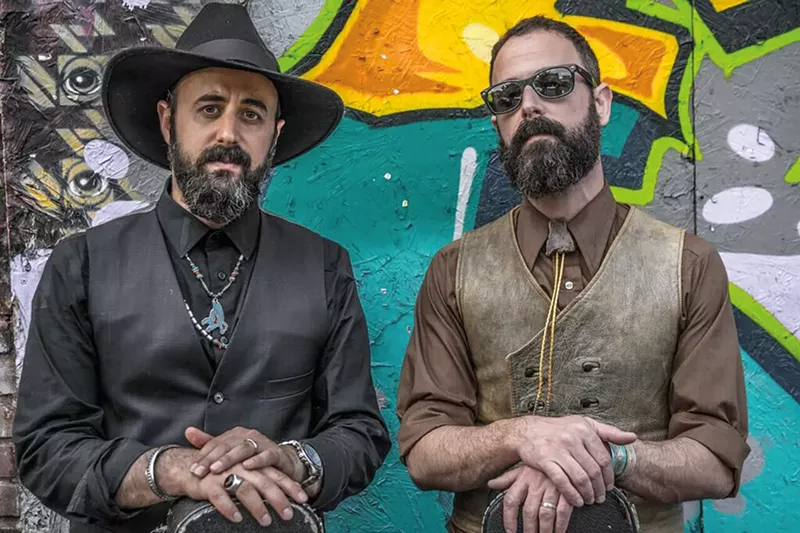
    Brothers Lazaroff has become known for putting together events, including the Hanukkah Hullabaloo and Jazz Lazz Fest.

    It’s a beautiful afternoon in University City as Jeff and David Lazaroff — better known to St. Louisans as the eclectic jazz-and-soul-infused Americana band Brothers Lazaroff — invite me into their music studio and practice room, located inside the home David shares with his wife and two kids. When David brings me a cup of coffee, it’s in a Country Music Hall of Fame and Museum mug, complete with a guitar-shaped handle. It’s an unsurprising gesture from a duo that lives and breathes music as players, writers, genre mixologists, sound explorers and ardent fans.

    The Lazaroffs, both Parkway Central High School products, are warm and intelligent men, hovering around age 50, raising families, making music and planning special Brothers Lazaroff events as one of St. Louis’ best and most-productive bands over the last 20 years. Their studio is lined with instruments — guitars, basses, keyboards, a screen-enshrined drum kit — as well as rock artifacts such as a framed photo of Jerry Garcia sitting in with Bob Dylan and his band.

    The Lazaroffs got serious about making music together around the time younger brother David was living in Austin after attending the University of Texas and immersing himself in the local music scene as a side guitarist and steel guitar player. As the brothers started writing and recording together, they gigged around on Midwest mini tours, picking up musical collaborations from Austin to St. Louis to Chicago.

    Eventually, David settled back in St. Louis, and he and Jeff solidified a core group of musicians, caught the attention of the local scene with their rootsy 2009 album American Artifact and established a monthly residency at Pop’s Blue Moon. On naming the band, David says, “We hated the sound of ‘the Lazaroff Brothers.’ One night, one of my friends started yelling, ‘Brothers Lazaroff!’ and we were like, ‘OK, we like that better.’” Jeff chimes in to note playfully that they were always careful to keep the article “the” out of the band’s name.

    While the brothers occasionally play as a duo, they consider Brothers Lazaroff to be a six-piece collective, which includes some of the most talented players on the scene. The brothers know how to pick them: Bass guru Teddy Brookins has been with the band for 17 years, forming a colossal rhythm section with the masterful drumming of Freddy Spencer (replacing longtime drummer Grover Stewart). Violin hotshot Mark Hochberg and keyboardist Sam Golden round out the core Brothers Lazaroff members, but the brothers maintain a bullpen of musicians — including Funky Butt Brass Band’s Adam Hucke (trumpet), Ben Reece (sax/flute) and others — who can augment the band into 10 or more pieces.

    Jeff says such excellent supporting players have helped bring out the best in the Lazaroffs’ writing: “All of a sudden, they created a new way to play our Americana singer-songwriter stuff.”

    “All the ways you always wanted to hear it — they were able to play all the deep-pocket stuff,” David adds.

    Of course, the success of the band’s records — from 2010’s shape-shifting Give ‘Em What They Need to the folk-inflected Science Won to the loose, rocking Day and Night to 2016’s jazzy, politically informed Dangerous Times — comes down to the siblings’ songwriting, something the duo is constantly working on.

    “It happens in all kinds of different ways,” Jeff says as his brother pulls out a fat binder filled with what looks like hundreds of the band’s songs — lyrics and chords — arranged alphabetically. “And this is about three albums behind,” David says with a laugh.

    All of the compositions are officially co-written by Jeff and David. So are the brothers able to be honest when it comes to criticizing each other’s writing? “Oh, yeah,” Jeff says, laughing. “Usually it’s the opposite,” David says. “He’ll be like, ‘Eh, I don’t like it,’ and I say, ‘No, it’s awesome!’”

    The Lazaroffs’ forward momentum has the two of them continually looking for new ideas. Years ago, the brothers, who are Jewish, noticed that some of their peers in the local music scene were establishing Christmas traditions, such as Rough Shop’s annual Holiday Extravaganza and Funky Butt Brass Band’s Brasstravaganza. “All the Hanukkah shows were in the lamest places, like these community centers,” Jeff jokes. “We thought, ‘Why isn’t there a rock & roll Hanukkah show?’”

    So Brothers Lazaroff started one: The Hanukkah Hullabaloo, which often features the Lazaroffs’ wives frying latkes on stage and the mystical poetry of Rabbi James Stone Goodman, is now 12 years strong. This year, it will expand to two nights.

    On the subject of Judaism, the brothers say that while some traditional teachings might seep in, they don’t write faith songs and that their trademark beards aren’t related to their faith. After all, these guys were beardy before beardy was cool. “We’re not that kind of observant,” David says. Jeff adds, “My mother-in-law likes the beard! So if your mother-in-law tells you not to shave. …”

    Lately, the brothers have been on a roll creating amazing opportunities. Hardcore Dylanolgists, they drove to Memphis last year to see Bob Dylan perform and took a tour of the legendary Sun Studio. Discovering that the recording studio is rentable in the evenings, the Lazaroffs seized the opportunity, choosing a serendipitous date: Dylan’s birthday, May 24.

    Those sessions resulted in an album, Memphis, recorded live during one night at Sun Studio and released earlier this year. An accompanying short documentary of the same name helps capture the experience for posterity. Beyond the raw, immediate feel of the album, the record features the expanded Brothers Lazaroff band with the full horn section and the poetry of Rabbi Goodman, around which many of the songs are structured. One of the album’s highlights is “The Great American Invention,” Goodman’s deep, intoxicating tribute to St. Louis, jazz, rock & roll, automobiles, the river and beyond.

    Always eager to move on to the next project, the brothers are now focused on July’s inaugural Laz Jazz Fest, an extension of the band’s previous Laz Jazz shows (and live album), which had been staging at Jazz at the Bistro since 2016.

    “We knew our songs could bend in a lot of ways,” Jeff says. “So we wanted to take our songs and move them in jazz directions.”

    For this year’s Laz Jazz Fest, which takes place at the Grandel and the Dark Room on July 15, the brothers have curated a three-stage festival that will see sets from artists as diverse as funk/soul ambassador Blvck Spvde and the Cosmos, soulstress and frequent collaborator Anita Jackson, local piano legend and former Brothers Lazaroff member Mo Egeston, local jazz supergroup KBA (Kaleb Kirby, Bob DeBoo, Adam Maness) and a long list of hip-hop, jazz, DJ and singer-songwriter performers. There will also be a youth stage for kids performing as part of the Heal Center for the Arts Jazz Camp. Proceeds from the festival will benefit the St. Louis Art Place Initiative, which supports homeownership for low-income artists.

    Even with all of the event planning going on, and hot on the heels of this year’s Memphis album, the brothers can’t wait to tell me about an even newer album (“It’s another departure!” David promises) in the works, which they hope to get out later this year. In fact, they play a couple of the new tracks for me, including a groovy number filled with electronic elements and Eastern European vibes, and a robust anthem with Tom Petty and Springsteen inflections.

    It’s an impressive, relentless pace of production, and I wonder what drives them.

    “It’s important to continue to stay relevant even if it’s only to yourself,” Jeff says.

    “There’s real value in creating new things and pushing each other,” Dave agrees. “Sometimes it is just doing it. The making of the thing is the thing.”

    Catch the Brothers Lazaroff at the Laz Jazz Fest at 6 p.m. on Saturday, July 15, at the Grandel (3610 Grandel Square). Tickets are $30.

    Subscribe to Riverfront Times newsletters.

    Follow us: Apple NewsGoogle News | NewsBreak | Reddit | Instagram | Facebook | Twitter | Or sign up for our RSS Feed

  • An Oral History of Nirvana’s Lone, Near-Riotous St. Louis Show at Mississippi Nights

    An Oral History of Nirvana’s Lone, Near-Riotous St. Louis Show at Mississippi Nights

    VIA SUB POP

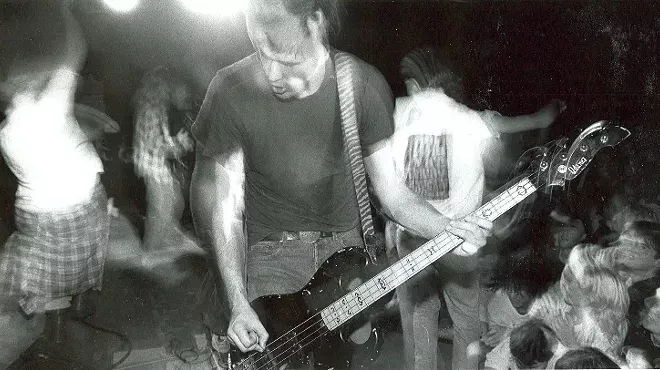
    This photo is not from the night in question — proper documentation of Nirvana’s Mississippi Nights show has largely been lost over the years — but it’s an apt visual from the same era.

    Thirty years ago, on October 16, 1991, Nirvana played its first and only St. Louis gig at the beloved and now-bygone venue Mississippi Nights. It was a clear and cool autumn Wednesday when the trio of Kurt Cobain, Krist Novoselic and Dave Grohl pulled into the late, famous Landing night club. The band was in the middle of a massive metamorphosis from underground punkers to generation-defining, international superstars; its landmark album Nevermind had been released 22 days earlier on September 24, 1991, by major label DGC Records, and the accompanying music video for its first single, “Smells Like Teen Spirit,” had premiered as a “Buzz Bin” clip on MTV’s late night alternative video show 120 Minutes just seventeen days prior on September 29. The group’s unexpected ascension to a garish grunge commodity was as close to a viral sensation as anything got in the time before dial-up internet, largely due to “Teen Spirit” almost immediately leaving the “Buzz Bin” and landing in continuous rotation on MTV. In this short period, which was less than a month from the album’s release and the tour stop in St. Louis, the relatively small 1,000-capacity venue was completely oversold (tickets cost between $8 and $10 dollars!), and anticipation was at a fever pitch for Seattle’s greatest flannel-clad exports to play their debut gig in the river city.

    What happened that night has gone down in St. Louis history as one of those legendary gigs, a show that now everyone claims to have attended but only a lucky few actually witnessed. From the start, the crowd erupted into a cacophony of blood, sweat and passion as slam-dancers and crowd-surfers ransacked the pit, stopping the gig more than five times before Cobain got frustrated or inspired (perhaps both) and invited the whole audience onto the stage mid-show.

    Naturally, the crowd enthusiastically complied, with chaotic results. Gear was stolen. The fire marshal was called. Grohl booked it backstage and giddily watched as anarchy engulfed his fellow bandmates, who were pinned to the walls with their instruments, and a near-riot broke out.

    School-yard legend among ’90s stoners about the gig alleged that Cobain wanted to cause a stir that would rival Guns N’ Roses’ infamous “Riverport Riot.” A few months earlier, on July 2, 1991, Axl Rose had stormed off stage after attacking a fan who was taking pictures of the band and pouted, “Well, thanks to the lame-ass security, I’m going home!” An actual three-hour riot ensued, with dozens of injuries, as intoxicated fans angry about Rose’s early departure attempted to rip seats out of the then less-than-a-month-old amphitheater in Maryland Heights. Though the rivalry between Nirvana and Guns N’ Roses was very real in the early ’90s and is used by many rock historians as a way of describing the cultural shift from the days of hair-metal dominance to the Nevermind era, this was likely not on the minds of the Nirvana crowd. Novoselic even allegedly pleaded that night with the audience, saying, “Don’t be like the GnR crowd, because shit attracts flies.” The fervor at Mississippi Nights was more spontaneous, with a crowd simply elated by a fleeting few hours of raucous rock & roll and the opportunity to see a band at the peak of its performance in a venue the size of which it would likely never play again.

    The Riverfront Times spoke with some of the lucky few who were there that night in a series of one-on-one interviews to build an oral history of the chaotic show.

    Pat Hagin, booking agent for Mississippi Nights, current owner of the Pageant and Delmar Hall: I booked the show. In those days, it was probably [booked] six weeks to eight weeks before the show. We booked [Nirvana] before we had any idea about the band.

    Rob Wagoner, Ultraman and Bent, Euclid Records: When Bleach came out it wasn’t really my thing. I knew a lot of people who liked them a lot. Ultraman was in Munich playing on September 24 when Nevermind came out. We were in the club in the daytime and they were playing it. I remember thinking, “Wow, is this the same band?” And the kid from Scream was on drums.

    Matt Harnish, Bunnygrunt, Matt Harnish’s Pink Guitar, Vintage Vinyl: I had heard “Smells Like Teen Spirit” on Tony & Cat’s radio show on KDHX, “The Groove Machine,” on Saturday nights. That was the only song I had heard by [Nirvana].

    Eric Eyster, Hell Night: I remember it was particularly exciting because they’d never played St. Louis before. Their buzz was strong though, because the show was sold out at Mississippi Nights. My friends and I had already heard most of Nevermind because of all the bootleg recordings of the demos that were floating around. Most of us already knew the songs, we just didn’t know a lot of their correct titles.

    Hagin: The guest list might have been huge because everyone was crawling out of the woodwork trying to go to that show. There could have been another hundred people in there just from various record stores, newspapers, fan-zines.

    Roberta Patterson, former KCOU music director: In 1991, I was a music director at KCOU in Columbia, Missouri. The station was an early supporter of grunge and other alternative music, and we had played Bleach. When Nevermind came out, I remember writing the album review for the station. Since the station was so supportive, the DGC college radio rep hooked me up with tickets and my roommates and I were going to drive to STL for the show.

    Thomas Crone, former Riverfront Times music writer: I was really, really lucky because I was covering music for the RFT, so my ticket was comped. I certainly would have paid for a ticket. I absolutely wanted to see them. I think a lot of people at the time felt like Urge Overkill was the better band. I never quite found my clique as a fan of Urge Overkill. For me it was 100 percent a Nirvana concert.


    Thomas Crone's preview for the show, from the Riverfront Times archives. - VIA RFT ARCHIVES

    VIA RFT ARCHIVES

    Thomas Crone’s preview for the show, from the Riverfront Times archives.

    Harnish: Probably the reason I was at the show was because my roommate was a big Urge Overkill fan. I was in college. I was DJing at KSLU. Mississippi Nights was kind enough to give us free tickets to almost every show to give away, but we had essentially zero listenership. It was pretty much always the DJs that went to the shows.

    Jim Utz, former Vintage Vinyl employee: The night before I went to Columbia, Missouri, to see the Meat Puppets and Urge Overkill play at the Blue Note. We’re hanging out after the show at the Blue Note, and Urge Overkill was just hanging out too. I was talking to them. I told them I was going to see them tomorrow night with Nirvana. They asked if there were cool places to shop [in St. Louis] for vintage clothes. I told them about Haberdashery and Hullabaloo. We exchanged numbers. I drove back to St. Louis and went to work the next day at Vintage Vinyl and they called me at work. They told me [Hullabaloo was] great. So they said, “Thanks, we’re going to leave tickets for you at the door.”

    Patterson: Urge Overkill played a warm-up show at the Blue Note. We were big fans, and the band came by KCOU and did an interview before the show.
    As it turns out, UO left the Blue Note without a guitar, a bunch of tools and a sweater. When they got to STL, they went by Vintage Vinyl. That is where Jim Utz had spoken to them, and they asked him if he knew anyone in Columbia that could get the things and bring them to the show. Jim knew I was driving in and put them in contact with me. I was able to pick up the things and deliver them to Mississippi Nights. I remember walking up with the guitar and the other things and there were loads of people all around the club. Since I already had tickets, UO gave me and my friends backstage all-access passes for our trouble.

    Wagoner: During Urge Overkill you could freely walk around and not bump into anybody. I remember when Urge Overkill played, Grohl was standing on the first riser by himself and nobody was paying him any attention. We knew him from when he was in Scream, so we went up and talked to him for a while.

    Utz: I get to the door that night, and Urge Overkill put my name on the guest list and gave me some backstage passes. When Urge Overkill finished their set, I went backstage. Between bands, I’m back there hanging out with Urge Overkill and they said “Hey, why don’t you watch with us from the side of the stage.” I’m like, “Cool!”


    A backstage pass from the show. - VIA JIM UTZ

    VIA JIM UTZ

    A backstage pass from the show.

    Crone: The lights guy invited me into the light booth, which was all the way at the back of the club and up a small flight of steps. I remember it was so crowded. He saw me and fished me out. I watched both bands from the sound booth, which gave me this outrageously cool ability to see as it all started to break down. From that vantage point it was quite a thing to see.

    Eyster: By the time the lights went out for Nirvana, the place was ready. I was jam-packed in the very front, knowing full well I would soon be feeling crushed. Everyone was hypnotized by Nirvana’s opening song, “Jesus Doesn’t Want Me for a Sunbeam.”

    Crone: I think everyone in the room felt like they were there for something special. The room was really alive, in the sense of, like, electric. It seemed like there was a lot of chaos happening in front of the stage, spilling onto the stage.

    Hagin: I went down that night and ended up sitting in the office talking to the owner. Urge Overkill plays. Set break. Then Nirvana goes onstage. I was still talking to the owner, but I was listening out of one ear to the show, and I could pick up [that] something wasn’t going right by what I could hear from the stage.

  • New 3,000-Capacity Venue the Factory Set to Open in July in Chesterfield

    New 3,000-Capacity Venue the Factory Set to Open in July in Chesterfield

    DANIEL HILL

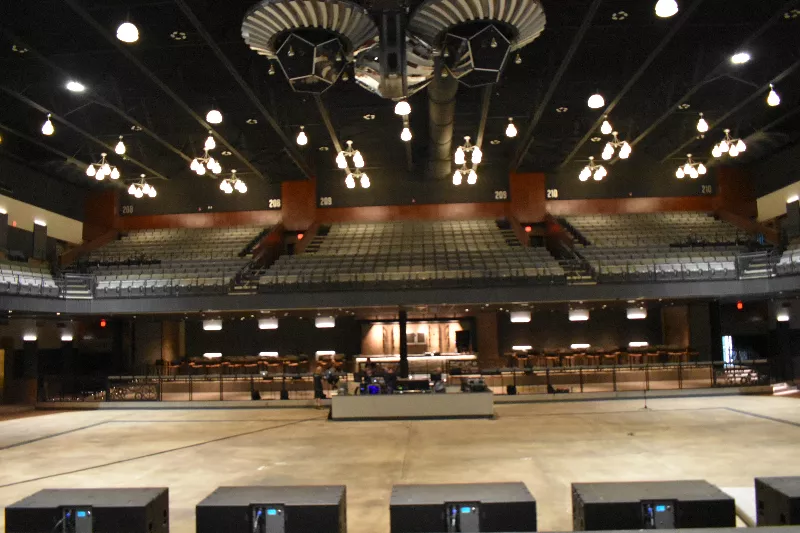
    The view from the stage at the Factory.

    Live music is coming to Chesterfield in a big way this summer with the opening of a 3,000-capacity space dubbed the Factory.

    The gleaming new venue is situated just off I-64 at the Boone Crossing exit, and the team behind it has just this week announced its grand opening, with a July 16 performance by Canadian EDM producer and DJ Deadmau5. It’s just one part of an eclectic roster of shows currently on the books that also includes performances by rapper Jelly Roll, pop-punk acts Simple Plan and New Found Glory, comedian Nikki Glaser and bluesman Buddy Guy.

    The 52,000-square-foot, newly built building that houses the venue is seeing the finishing touches to its construction now. It’s one piece of an ambitious development project called the District that will replace the Chesterfield Outlets.

    “The District is being completely renovated to be an entertainment and food and beverage destination,” explains Brian Carp, chief operating officer of the Factory. “So all the retail’s going away. Gap closed yesterday, Polo’s going away, Banana’s going away, all those retail ancillaries are going to stop. The Polo building will come down; there’ll be a gathering area in the middle flanked by four restaurants with outdoor patios. It will really kind of be an open-door welcome area in the center of the District. And then everything between Topgolf, Residence Inn and us will be all of these different types of entertainment features.”

    Those entertainment options will include pickleball courts, escape rooms, volleyball courts and mini golf, among others, Carp says. The Factory will serve as the anchor for the west side of the development, with a location of the Texas-based family fun center Main Event holding down the east side.

    “We really envision this as you park once, and there’s things for everyone in the family to do,” Carp says. “Everybody joins back up for dinner, and then, you know, some people could come over here and see a show or do the types of things or go to Topgolf or whatever it may be. So really, the first destination like this anywhere in the country. Places have a music venue, places have Topgolf, places have Main Event, but there isn’t anywhere in the United States that has them all in the same location.”

    The ambitious project is being spearheaded by the Staenberg Group, the developer behind Chesterfield Valley Square, Chesterfield Sportscomplex, Chesterfield Commons and Chesterfield Mall. And though the Factory is just one piece of the larger whole, there’s been no skimping on the details, with Staenberg Group President Michael Staenberg putting the cost of its construction north of $25 million.


    The venue's industrial theme gives it an air of timelessness, despite the fact it's new construction. - DANIEL HILL

    DANIEL HILL

    The venue’s industrial theme gives it an air of timelessness, despite the fact it’s new construction.

    Carp was tapped to helm the Factory due to his decades of experience in the business at venues across the country. He’d previously held management positions at music halls across the U.S., including the Fox Theatre in Boulder, Colorado, and the House of Blues locations in both Anaheim and Dallas. He acknowledges that heading to Chesterfield for a concert might be something of a tough sell for some city-dwelling folks, but his experience in the industry tells him that can be overcome if the booking is solid enough.

    “When I worked for Live Nation, we did a study when we relocated the House of Blues in Anaheim, that people will drive up to 50 miles for a show without really considering the distance,” Carp explains. “So what we see is all the way from the east side from Belleville and Alton and all those areas, anybody who’s coming across the river for entertainment purposes, this isn’t that much further. Then there’s the St. Charles, St. Peters, Wentzville area. And then how far is it really for a kid at Columbia to jump in the car to drive 90 minutes to see a show?”

    In order to pull the caliber of acts that could convince concertgoers to make those drives, the Factory has secured an exclusive booking deal with veteran production company Contemporary Productions. Contemporary is something of a powerhouse in the St. Louis area, one which previously developed and owned Hollywood Casino Amphitheatre when it was still called Riverport and served as one of the Pageant’s original partners in its early days.

    Jeff Jarrett, senior vice president for Contemporary, says the group is intent on booking a wide range of entertainment options.

    “We’re going to have every type of show possible,” he says. “I won’t go through every genre of music — you know what those are — but we’ll do comedy. We’ll do, you know, kid shows, we’ll do lectures, we’ll do speakers. We also, while this is a concert venue first, it is open for private events, private parties. So it’s a great place for corporate events or, you know, weddings, if you want to somehow get married in a rock venue. But we’re going to be as open as everyone will allow us.”


    The high-tech lighting rig/chandelier over the Factory's dance floor can put on a show all on its own. - DANIEL HILL

    DANIEL HILL

    The high-tech lighting rig/chandelier over the Factory’s dance floor can put on a show all on its own.

    “We want this to feel, not necessarily like a community center, but an asset to the entire community, right?” Carp adds. “We want to do hip-hop, we want to do EDM, we want to do rock & roll, we want to do country, we’re gonna have pop in here, we want to have jazz, we want to do plays, you know, that don’t have a bunch of set changes and those different types of things. The kid shows that Jeff mentioned. This facility is designed to be able to handle any type of production.”

    Part of the Factory’s ability to cater to just about any event is the flexible nature of the venue’s layout. In its full, 3,000-capacity setting it includes the floor area, which can remain open or have seats added depending on the show, a large second-floor balcony and an elevated area in the back with tables and chairs. But the space is modular, with a sliding wall that can close off the back of the space. Depending on the configuration, Carp explains, they can scale from a 1,500 cap to 2,100, then to 2,350 and up to the full 3,000. This has already come in handy in terms of releasing new batches of tickets when a show sees more interest than originally anticipated, and it’s good for the relatively smaller shows in ensuring that a band doesn’t have to look out from the stage and see a half-full room.

    There are myriad thoughtful details like this that show the level of attention the team put forth to anticipate every possible problem or need. The multiple bars in the venue, for instance, are deliberately set up so that the stage is not in sight when you are ordering a drink; this is to help prevent a bottleneck in the line that might come if showgoers were able to lean back and drink there while watching the band. The sightlines are such that no seat in the house is a bad one, with those more to the side up on the balcony cited as some of Carp’s and Jarrett’s favorites in the building. Naturally the lighting and sound rigs are state-of-the-art, but they are also modular and easily removable so that acts who prefer to use their own equipment can do so with little effort.


    The balcony at the Factory. - DANIEL HILL

    DANIEL HILL

    The balcony at the Factory.

    “We’re thinking about the guests’ experience,” Jarrett says. “But we’re also thinking about the tour manager and the production manager that come in, and what the bands are going to do all day when they park three buses and sit at the venue. So we kind of thought, like, ‘Let’s make the experience good for everyone.’”

    In all, the team behind the venue say that they want to help ensure the St. Louis area is recognized more as a destination for touring acts than it is at present — even if they are doing so from a Chesterfield base of operations. Carp explains that their intention is not to steal shows from the venues in the city, but rather to add another option for when those venues are already booked.

    “All those bands that skip St. Louis, well, most of the time they’re skipping St. Louis because there’s nowhere for them to play,” he says. “So we see this as one plus one equals three, not necessarily having to cannibalize shows from other people in the market.

    “For us, it’s really about showing that we’re a part of St. Louis,” he continues. “The majority of the staff is from St. Louis. I’m originally from St. Louis — I was gone for 23 years. Jeff’s not originally from here, but has been here forever. Michael Staenberg, the same way, he would call himself a St. Louis person. Our talent buyer who’s based out of Nashville, Dan Merker, is originally from St. Louis. The AGM I just hired is originally from St. Louis and moved away. So there’s a lot of people that are coming back. And there’s a lot of pride in what we’re doing, to be able to provide something for St. Louis.

    “We want this to feel like we’re all St. Louisans that are proud to be able to provide something for St. Louis,” he adds. “That’s really been the mentality of the design and development. Our goal in operating this place is to give back something to St. Louis.”


    The Factory's floor will remain open for some shows and include seating for others. - DANIEL HILL

    DANIEL HILL

    The Factory’s floor will remain open for some shows and include seating for others.


    Seating at the back of the venue. - DANIEL HILL

    DANIEL HILL

    Seating at the back of the venue.


    The lobby area of the Factory. - DANIEL HILL

    DANIEL HILL

    The lobby area of the Factory.


    New 3,000-Capacity Venue the Factory Set to Open in July in Chesterfield

    DANIEL HILL

    • Sign up for our weekly newsletters to get the latest on the news, things to do and places to eat delivered right to your inbox.
    • Follow us on Facebook, Twitter and Instagram.
  • Let’s Remember That Time Some Birds Pooped on Kings of Leon in St. Louis

    Let’s Remember That Time Some Birds Pooped on Kings of Leon in St. Louis

    ERIN KINSELLA / GEORGETAN / FLICKR

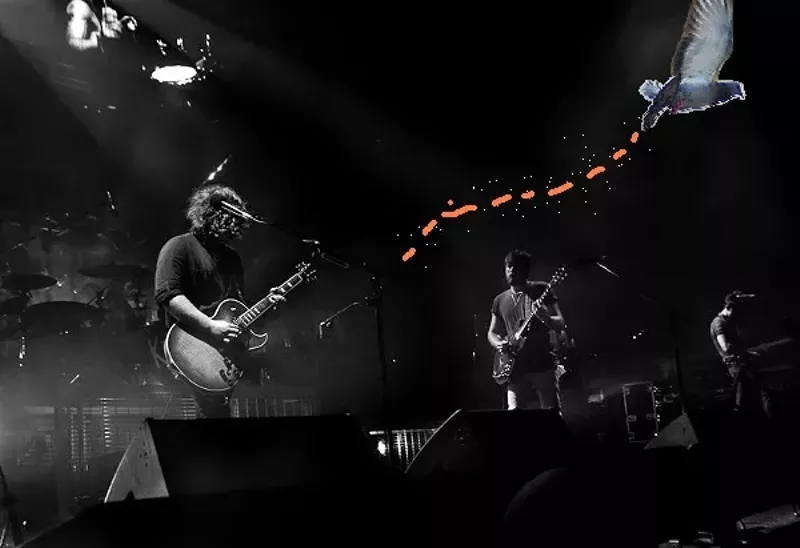
    An MS Paint-generated artist’s rendition of the fateful night in question, using a live shot from the actual show.

    Nashville rock band Kings of Leon has a new album coming out soon, and in keeping, the familial foursome has just this week released a video for the single “Echoing.” It’s fine! The jangly parts jangle, the poppy parts pop and the low-stakes video has the feel of a live performance, which we’re all desperately missing by this point in pandemic life.

    But speaking of, all this deadly virus hubbub kept us too distracted last year to properly acknowledge the ten-year anniversary of a true St. Louis milestone: that time the band walked off a St. Louis stage mid-concert after a pigeon (allegedly!) pooped in bassist Jared Followill’s mouth. A shameful oversight, that, and one that must be rectified!

    So here we go: The now-infamous avian defecation cancellation situation went down on July 23, 2010, as Kings of Leon made a stop at what was then known as Verizon Wireless Amphitheater (now dubbed Hollywood Casino Amphitheatre, but forever etched into the hearts and minds of most St. Louisans as simply “Riverport”) with openers the Stills and the Postelles in tow.

    There were early indications that the pigeons spotted up in the rafters of the outdoor venue might make trouble for the Followill boys. Specifically, the feathered beasts had already pooped all over members of both the opening bands.

    Reviewer Steve Hardy, who was covering the show for RFT at the time of the poopening, noted to then RFT music editor Annie Zaleski that the Postelles dedicated one of the band’s songs “to our bassist, who just got shat on.”

    And Justin Burnett, an attendee at the show who was seated in the front row, told Zaleski that he personally watched the bassist of the Stills get hit with a solid stream of bird shit during their set as well.

    “It was so high up you couldn’t see it, but it was definitely a bird,” Burnett said. “And not to be gross, but when a pigeon shits, it comes out as a long line, and it’s very noticeable. We thought it was water at first, and when the opening act commented on being shat on, we knew it was a bird.”

    The sight of the bassists of both those bands coming off the stage dripping in bird shit was likely a disconcerting one for Kings of Leon — particularly for fellow four-string enthusiast Jared (not enough has been made of the fact that the birds seemed intent on only dropping bombs on bassists on this evening, but it’s certainly worthy of note). To their credit, though, when the time came, the band members stepped out onstage and played their hearts out nevertheless. … for three songs, at least.

    The band made it through just “Closer,” “Crawl” and “Taper Jean Girl” before walking off the stage in a huff. As the show’s entry on Setlist.fm succinctly notes, “Concert ended early due to bird shit.”

    The house lights came on after a few minutes of confusion, and a staff member took to the stage and announced that the show was over. “Due to concerns over the band’s safety, we are canceling the show. Please file out in an orderly fashion,” he said.

    At first, those in attendance thought the sudden end to the concert was a prank or a hoax, according to Hardy. But as reality set in, there was a great wailing and gnashing of teeth, and enraged Kings of Leon fans booed and began a chant of “bullshit!” — apparently unaware that, actually, it was pigeon shit. According to Hardy, the scene in the parking lot descended into a cacophony of honking and broken bottles as those same disgruntled fans queued up to leave.

    Drummer Nathan Followill soon took to Twitter to address the matter. “So sorry St. Louis. We had to bail, pigeons shitting in Jared’s mouth. Too unsanitary to continue,” he wrote. “Don’t take it out on Jared, it’s the fucking venue’s fault. You may enjoy being shit on but we don’t. Sorry for all who traveled many miles.”

    The fallout was swift. Just after midnight, Livenation issued a statement offering refunds due to the abbreviated set. The following afternoon, a member of the band’s management team, Andy Mendelsohn, officially laid the blame on a “pigeon infestation” at the venue, saying he was “surprised they stayed for as many songs as they did.”

    “Jared was hit several times during the first two songs,” Mendelsohn said. “On the third song, when he was hit in the cheek and some of it landed near his mouth, they couldn’t deal any longer. It’s not only disgusting — it’s a toxic health hazard. They really tried to hang in there. We want to apologize to our fans in St. Louis and will come back as soon as we can.”

    Jared spoke up about the situation in the statement as well.

    “We couldn’t believe what the Postelles and the Stills looked like after their sets,” he said. “We didn’t want to cancel the show, so we went for it. We tried to play. It was ridiculous.”

    A clearcut case, then: The show was stopped short because a bassist-hating bird took a dump in Jared’s mouth. Who could blame him for wanting to walk off?

    But soon, the rumor mill kicked into high gear.

    When Monday rolled around, longtime KSHE DJ Favazz mentioned the incident during his radio show and received a call from a listener who claimed things were not, in fact, as they were being presented. The caller, who asked to remain anonymous and said he didn’t want his call to be aired, claimed he was working backstage at the show. He said the culprit was not a discourteous bird — it was alcohol.

    “He said that the band got there at 11 o’clock, drank all day — and I don’t think I said this on the air — but each of them took an IV to try to sober up,” Favazz told Zaleski at the time. “And that they were just wasted. They went out there and just couldn’t play, [and] blamed it on the pigeons.”

    Favazz told Zaleski he had read a similar story on Facebook over the weekend about the band’s drinking, and he said that the caller even told him that the person who had posted about it had already been canned by the venue. Kings of Leon’s publicist vehemently denied the allegation, telling RFT that the rumor was “absolutely untrue.”

    And, seemingly, that was that. Kings of Leon came back to Riverport just a couple months later in September, the birds behaved themselves and the show went off without incident. “Pigeongate,” as it came to be known in St. Louis circles, became a thing of the past.

    Or did it? Fast-forward about a year later to July 29, 2011. Kings of Leon take to the stage at Gexa Energy Pavilion in Dallas, Texas, and manage to make it only 40 minutes into their set before singer/guitarist Caleb Followill, who had been slurring throughout the performance and had mentioned earlier in the set that he’d been drinking, announced that he did not feel well. “I’m going to go backstage and vomit and then play three more songs,” he told the crowd.

    He wouldn’t return. The rest of the band followed him off the stage, and soon Jared reemerged, telling the crowd the show was over.

    “We’re sorry,” he said. “Caleb can’t sing. Go ahead and burn our records. We are sorry.”

    Darryl Smyers, who reviewed the concert for the Dallas Observer, dubbed the performance “one of the worst shows I’ve ever seen.” Within days, the band cancelled the entirety of its remaining U.S. tour dates. “I love our fans so much,” Jared wrote on Twitter. “I know you guys aren’t stupid. I can’t lie. There are problems in our band bigger than not drinking enough Gatorade.”

    Kings of Leon wouldn’t perform again until September 28 in Vancouver. On October 31, the band announced they’d be going on hiatus at the conclusion of their November tour in Australia. The band played only a handful of shows in 2012 and didn’t resume a full touring schedule again until the summer of 2013, as its members geared up for the release in September 2013 of the album Mechanical Bull.

    Kelsey Whipple, a former RFT contributor, noted that the U.S. tour cancellation served as “vindication” for St. Louis — and its poor, scapegoated pigeon population.

    “To put it clearly: While we thought their complaints of pigeonshit were pretty bullshit, it turns out the band is just chickenshit — and maybe, also, full of shit,” she wrote, adding, “Different brother this time around? Sure. Same story? Definitely. A year later, it looks like the real problem has nothing to do with St. Louis.”

    Kings of Leon followed up Mechanical Bull with Walls in 2016, then went quiet on the recording front for a few years, though it did continue touring during that time — even making a stop in St. Louis again in July 2014.

    Since early January of this year, the band has been teasing new songs from its first new album in years, the upcoming When You See Yourself, to be released on March 5. “Echoing,” the song for which a music video was released this week, will be one of the tracks included on that record.

    What with the pandemic and all, there are obviously no plans for future stops in St. Louis to support the album at this time. But we do hope they’ll come back and see us when things go back to normal again.

    It’ll be a much less shitty time, guys! We swear….

    • Sign up for our weekly newsletters to get the latest on the news, things to do and places to eat delivered right to your inbox.
    • Follow us on Facebook, Twitter and Instagram.
  • Attitudes Nightclub, St. Louis’ Oldest Gay Bar, Closing for Good Due to COVID-19

    Attitudes Nightclub, St. Louis’ Oldest Gay Bar, Closing for Good Due to COVID-19

    VIA GOOGLE MAPS

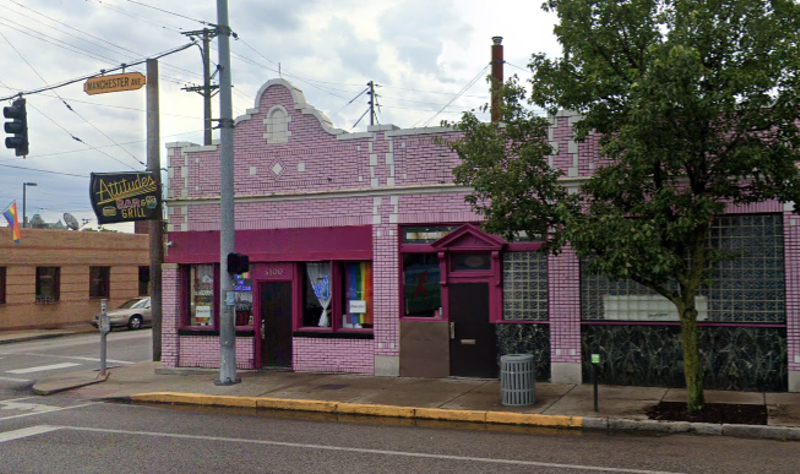
    A longtime staple of the Grove is closing its doors for good.


    Attitudes Nightclub
    (4100 Manchester Avenue, St. Louis; 314-534-0044), a staple of the Grove neighborhood for some 32 years, will close for good on August 15.

    The closing of St. Louis’ longest-running gay bar and drag venue was attributed to the uncertainty that the coronavirus pandemic has brought to the industry at large, and was announced on its Facebook page in a lengthy statement.

    “One of my fondest memories of Attitudes will always be the nights that we would start off with only the pub side open,” the statement reads in part. “It would be packed as guests waited anxiously to be let into the club. At 10 p.m., we would open the club doors with music playing, laser lights beaming and fog misting in the air. People scattered out searching for their table, for their spot that they owned for the night. Life was Good!

    “But now, we are living in a time where we don’t know what the future looks like,” the statement continues. “So many businesses, especially in the hospitality industry, have been hit hard by this pandemic. It has been rough, but we can’t thank our current staff enough for how hard they have been working during this time. They’ve worn masks, followed CDC guidelines, and kept everyone safe! And all the while, they worked to provide some normalcy for you to enjoy a fun night out.”

    In the end, though, the shaky footing the bar industry sits on due to COVID-19 proved to be too much.

    Attitudes’ owners had already put the nightclub up for sale back in 2018. And that’s after Jann Brigulio, who opened the club in 1988 and retained ownership of the building ever since, had swooped in to save the bar in 2016 after leasing it to Dan Stoner the year prior and moving to California. Stoner’s run lasted less than a year, and his announcement that he’d be closing it took Brigulio completely by surprise.

    She promptly returned to St. Louis to make sure that wouldn’t happen. She hoped she could sell the building and business, and she knew that she had better odds of making that happen if the club remained open.

    “If I get the right price, I would sell it,” she told RFT at the time. “Until that time I need to get something going on in there. I’m not about to let that space sit there.”

    According to the bar’s recent statement, the building itself has since sold, but everything within it is still up for grabs. Those who are interested in purchasing some of those items are encouraged to reach out to Brigulio via email at [email protected].

    The closing of Attitudes is just the latest in a string of recent shake-ups to the Grove neighborhood.

    In June, arcade bar Parlor and vinyl listening lounge Takashima Records both closed their doors amid a storm of sexual assault allegations. It’s unclear if or when those establishments will reopen, as the business partners behind them seem to be at odds with one another in the fallout.

    Before that, in May, the midsize-capacity concert venue the Ready Room closed its doors and the building was put up for lease as the venue’s owners seek out a new location.

    Attitudes will remain open for the next week and a half, and then it will close its doors for good. The final day of operation will be August 15.

    “Attitudes was a special space and became an iconic place for so many,” reads the statement announcing its closure. “Remember what we said as you left for the night, ‘You don’t have to go home, but you can’t stay here!’ Now is the time we will all leave and take our memories with us. We sincerely thank each of you! It has been our pleasure to serve you for the last 32 years!”

    • Sign up for our weekly newsletters to get the latest on the news, things to do and places to eat delivered right to your inbox.
    • Follow us on Facebook, Twitter and Instagram.
  • A Farewell to Fubar After 12 Years of Hardcore, Heavy Metal and Hip-Hop

    A Farewell to Fubar After 12 Years of Hardcore, Heavy Metal and Hip-Hop

    By the time the last notes of Ultraman’s set have rung out on February 15, 2020, Fubar will have stood tall for twelve years as St. Louis’ de facto home of hardcore, heavy metal and hip-hop shows. In that timeframe, innumerable venues have come and gone while the shotgun-style, double-sided space occasionally called the Funbarn defied the odds.

    But, as the cliche goes, all good things must come to an end. Fubar is closing, and in its place a much larger, shiny new venue, Red Flag, will open its doors.

    St. Louis scene veterans will know that we can’t discuss the history of Fubar without bringing up long-shuttered venue the Creepy Crawl. A staple of St. Louis’ hardcore and heavy metal community in the ’90s and early aughts, not only did the Creepy Crawl host a wide range of shows from iconic bands, the tiny, stickered-up North Tucker dive employed several of the key players who would go on to open the short-lived second Creepy Crawl on Washington Avenue — and eventually Fubar.

    Fubar would prove to be at least a slightly classier evolution of the dingy punk rock joint while still maintaining the ethos of the hardcore culture, as most evident in its logo — a blatant homage to the iconic Black Flag bars tattooed on many of the venue’s patrons.

    Over its decade-plus run, Fubar has hosted scores upon scores of iconic punk and metal acts: Black Flag, Fear, the Dead Kennedys, the Business, T.S.O.L, H.R. from Bad Brains, Pentagram and many, many others have all come through Fubar’s hallowed halls. These names may not mean much to the average Warped Tour scenesters, but for those who grew up on these acts, and grew old with these acts, Fubar has been a stalwart of the community. Every middle-aged St. Louisan with a mohawk knows that they could go see their favorite bands and enjoy some cheap canned beers at the bar (or in their car) without paying exorbitant fees or dealing with militant, fun-hating security.

    The venue began as one large, shotgun style room with a stage near the door and the bar at the back. When entering the venue, you could go straight in to the main room, or 21-and-up patrons could make a detour to the left and hang out in the lounge, quietly enjoying beers and socializing while the opening bands played. A couple years into Fubar’s tenure, the lounge tables were cleared out and DIY promoters could rent the area for their own shows, as long as they brought their own PA.

    Eventually, that bare space gave way to a small stage a couple inches high and house PA stacks with side-fill monitors, which in turn gave way to the approximately two-foot-high stage that stands there today, equipped with the PA system from the now defunct Firebird. In the past couple of years, Fubar’s owner Bob Fancher has even upgraded the venue side to include a modest green room and a crow’s nest area in the back.

    For all the good times, unfortunately there has been no shortage of controversy over the past twelve years. As both Fubar and Red Flag reside at Locust Street and Cardinal Avenue, Fubar has always relied on metered street parking, much of which lies out of eyeshot of venue staff and concertgoers outside enjoying a smoke. Most folks opt not to pay for the secured lot across the street — which provided a veritable buffet of potential loot for anyone who knew how to pop a lock.

    This crime wave came to a head from 2014 to 2015, after a certain sludge band was ripped off for a couple grand in cash, which spurred a particularly aggressive streak of break-ins. This resulted in a lot of bright-eyed and bushy-tailed young bands getting their first taste of the grittiness of the world, some of them adamantly and very publicly insisting that Fubar employees, even the owner himself, conspired to commit the robberies.

    The actual culprits of these crimes eventually being apprehended did very little to relieve Fubar of their reputation as the place where bands get robbed, and seldom, if ever, have any of the accusing bands apologized for the controversy. Fubar, for its part, combated this crime surge by increasing lighting outside the venue, posting signage encouraging patrons to not leave valuables in their cars, advising where to park and oftentimes employing additional staff to specifically watch the outside areas.

    Speaking as a musician myself whose first real venue show was at Fubar in summer 2008, as well as a former employee and just in general a dude who goes to a decent amount of shows, the closing of Fubar is definitely bittersweet. I’ve gotten to see so many of my favorite bands there, played some of my biggest shows there and learned a lot about the music industry there. While Red Flag surely offers a bigger, arguably better concert experience, we still don’t know a whole lot about what this means for the smaller shows that have long been a mainstay of the venue and lounge.

    Fubar typically capped out at about 500 people, whereas by some estimates, Red Flag could accommodate as many as 1,200, putting it in league with Delmar Hall, Pop’s and the Pageant. The closing of Fubar represents the death of one of the last of a dying breed of mid-sized venues in St. Louis, which could certainly serve as a boost to some of the smaller, more DIY venues in town such as the Sinkhole.

    I will miss it, but I for one can’t wait to see what the new space offers, and I can’t express my gratitude enough for what Fubar has provided to this city’s music community over the past twelve years. It will be missed.

    Fubar’s final show will be held February 15 at 7 p.m. with performances by Fister, Ultraman, Slow Damage and the Disappeared. Red Flag’s grand opening on March 28 features local favorites Fragile Porcelain Mice, Ashes and Iron, Bastard and Blight Future.

  • Tool Would Be a Better Band Without Maynard James Keenan

    Tool Would Be a Better Band Without Maynard James Keenan

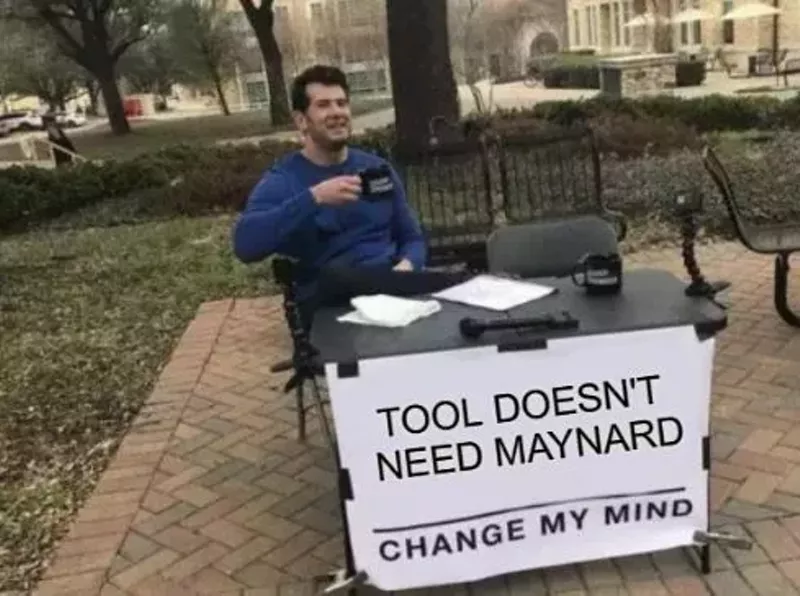
    Image via imgflip.com

    Later, Maynard.

    Somebody has to say it: Maynard James Keenan is a completely unnecessary member of Tool.

    The internet rejoiced earlier this year when everyone’s favorite pseudo-intellectual band announced it was going to tour again. Bros of a certain age flipped their shit and started saving up to buy (very expensive) tickets to the shows. They just love them some Tool.

    And there is a lot to love about Tool, too. The band has been making great music since the 90s, mixing up a powerful combination of prog, psychedelic and industrial rock to create its own genre. Its members’ musicianship is indisputably some of the best in the business. Adam Jones’ guitar style is legendary, Justin Chancellor’s bass work is enchanting and Danny Carey remains a monster behind the drums and an unmatched titan in his field.

    But then there’s James Herbert Keenan a.k.a. “Maynard.”

    As the lead singer and lyricist, Maynard is the reluctant face of the band. And because the image of the group rests on his tiny shoulders, the entire band is often perceived as a joke, when it should really be seen as three professional-ass musicians and one embarrassing dork.

    Maynard takes a world-class band and does his best to ruin it at every turn. Even when he’s performing he ignores the audience and hides at the back of the stage in a Starbucks Stormtrooper costume or in a glued-on rainbow mohawk and clown makeup.

    Proof of his ineptitude is in his other bands. Nobody really likes A Perfect Circle. That group was a disappointment from top to bottom. And Puscifer? Come the fuck on. It’s almost like Maynard and Morrissey are in a secret competition to see who can bring more shame to their fans.

    Need more proof? The issues with Maynard range from bad to worse. First of all, he likes to hang out with Guy Fieri. And few years ago he called his fans “retards.” And then there were those heavy (but unproven) #MeToo accusations.

    Tool fans not only have to deal with Maynard’s insufferable public persona, they also have to realize that he’s completely checked out of the band. Homie moved on about two decades ago. He’s run a successful wine company for the past fifteen years and his involvement with the band and the music industry in general seems minimal at best. Dude just wants to make Jesus Juice in the desert, not engage with his stupid white trash fans.

    And then there’s the obvious fact that listeners dare not speak: Maynard can’t hit the notes anymore, anyway. Sorry. The truth hurts.

    His vocals and lyrics might have been useful back in the day, but at this point Maynard is the Bernie Sanders of rock: You want to thank him for his past contributions, but send him on his way.

    Without his interference, Tool could be a much more prolific, respected band. Free from Maynard, Tool has the potential be the best instrumental band ever. With him out of the way, the band would just be three seriously talented musicians at the height of their game performing intense songs with crazy time signatures and genius-level instrumentation. And everyone would love it.

    It’s time we all face facts: Free Maynard. Save Tool. It’s the best option for everybody.

    Tool plays the Enterprise Center (1401 Clark Avenue; 314-622-5400) in St. Louis tonight. There are still many tickets available because they are hella overpriced.

    Email the author at [email protected]

    • Sign up for our weekly newsletters to get the latest on the news, things to do and places to eat delivered right to your inbox.
    • Follow us on Facebook, Twitter and Instagram.
  • The Twenty Best-Dressed Juggalos at the Gathering

    The Twenty Best-Dressed Juggalos at the Gathering

    Juggalo fashion generally involves great big pants and T-shirts that were possibly purchased at truck stops. Hair is best when it is braided and aloft in the style of Coolio, and everything looks better coated in a thin layer of sticky-delicious Faygo, of course.But some juggalos go out of their way to trot out their hottest looks for the Gathering of the Juggalos, Here, then, are the twenty best-dressed juggalos at this year’s big event.


    The Twenty Best-Dressed Juggalos at the Gathering

    Legendary wrestler Mick Foley came to the Gathering wearing a Hawaiian shirt, sweatpants, slippers and a fanny pack. During his comedy set, one juggalo heckled him about the latter of those items, and then Foley choke-slammed him off a 40-foot steel cage.*

    *May not have actually happened.


    The Twenty Best-Dressed Juggalos at the Gathering

    This guy stood for an extended period of time, silent and on guard, right in the middle of a major pathway. His armor is not black, but I still completely expected a Monty Python-style “None Shall Pass” at any moment.


    The Twenty Best-Dressed Juggalos at the Gathering

    Why yes, we did include this guy, because DUH.


    The Twenty Best-Dressed Juggalos at the Gathering

    Pretty sure this is the Predator in clown paint. They don’t allow weapons in the venue and therefore no one was adequately armed enough to be a worthwhile hunt, so luckily nobody had to be killed.


    The Twenty Best-Dressed Juggalos at the Gathering

    This woman actually bothered to wear pasties instead of (like most juggalettes here) just wandering around with nothing on top at all. Clearly this is a woman of sophistication.


    The Twenty Best-Dressed Juggalos at the Gathering

    This handsome fellow is sporting a Grateful Dead bear, a Crass logo, two anarchy symbols and a Rancid patch on his studded denim jacket. Add the facepaint to that and this man successfully represents basically every underground subculture, all at once.


    The Twenty Best-Dressed Juggalos at the Gathering

    I’m pretty sure this is one of those shitty government scientists from E.T., taking a break to hang out with his clown friends at the Whoopty Whoop Party in between enslaving and dissecting adorable aliens.


    The Twenty Best-Dressed Juggalos at the Gathering

    This and “I Am A Gang Member Not A Juggalo” were the best Gathering-themed T-shirts we saw on the grounds.


    The Twenty Best-Dressed Juggalos at the Gathering

    I’ll be honest: This guy’s gear looks good, but the main reason he is included is so that I have an excuse to publish a photo of a guy juggling a gigantic, floppy dildo.


    The Twenty Best-Dressed Juggalos at the Gathering

    This guy’s dildo, in fact — the one in the bathrobe. File under “Obi-Wang Kenobi.”


    The Twenty Best-Dressed Juggalos at the Gathering

    It was cool of this Smoke Monster to make it out to the show. And he even wore a scary mask! How fun.

    Story continues on the next page.

  • Six Nerdy Groups With Intolerable Fans

    Six Nerdy Groups With Intolerable Fans

    Press Photo

    Ween

    Surfer Blood. Vampire Weekend. Imagine Dragons. Bowling for Soup. Slightly Stoopid. I’ve ignored every single one of these bands for one reason and one reason alone: terrible band names. In this culture, we have so many things competing for our attention at all times that your brain naturally has an override mechanism that steps in and sorts things out. You’ll ignore an advertisement for something you actually want because it’s the wrong color scheme. Or ignore a band over something as trivial as its name. Or, in some cases, on account of its intolerable fans.

    That band might be great, but the dorks that preach its gospel are so off-putting it makes it impossible to give the actual music a chance. The following six bands are nerdy in their own separate ways, but there is one unifying theme between all of them: their intolerable fans.

    6. Anything Related to Mike Patton

    Mike Patton is a cool, handsome, talented Renaissance man. He co-runs the fantastic Ipecac Records and has collaborated across numerous genres with myriad offbeat projects. In his earlier years, he made his name fronting two extremely influential bands — Faith No More and Mr. Bungle. That influence on music is precisely what sends his fans crashing into the middle of this list.

    Mike Patton fans are constantly reassured through their rock god that manic genre-straddling is an acceptable way to make music. An incalculable number of bands have been forged with the lofty goal of fusing jazz, death metal and dance music. But nine out of ten times the output is the same as mixing together every ingredient in your kitchen — distinctive, boundary-pushing, festering garbage.

    A secondary concern with Mike Patton fans is their grating insistence that he’s some sort of unknown and underappreciated legend. Listening to music made by a guy who toured with the likes of Robert Plant, Red Hot Chili Peppers and Guns N’ Roses does not make you a member of some hermetic society of special geniuses.

    5. Ween

    The members of Ween are wildly talented and their music fascinatingly strange. Unfortunately, they suffer greatly from one thing: the band’s crazed fans, hell-bent on taking every opportunity possible to get you understand that Ween is best band in the world. The consequence is that the mere mention of the prolific Pennsylvanians causes the world to slam their ears shut, ignoring them further. Curiously, the only individuals I know who have ever smoked the mysterious and elusive drug DMT were all huge Ween fans as well — possibly a coping mechanism to the years of twisting and contortion from being a Gene and Dean Ween devotee.

  • The Pink Slip Will Reopen, Grandson of Founder Vows

    The Pink Slip Will Reopen, Grandson of Founder Vows

    NICK SCHNELLE

    The Pink Slip was a mainstay in Brooklyn for 25 years.


    The Pink Slip
    (114 South 4th Street, Brooklyn, Illinois; 618-271-3151) is coming back.

    The Brooklyn-based strip club unceremoniously closed its doors last September. But Lennil Johnson, a grandson of its original founder, says he plans to reopen it this June after winning a fight in probate court. He says he plans to run it differently than his predecessor, vowing to “remodel and modernize” the popular club.

    In its new incarnation, though, the Pink Slip will still remain the Pink Slip that St. Louis drinkers have come to love. Of his plans, Johnson says, “Rappers and naked bitches. That’s it.”


    Lennil Johnson. - COURTESY OF LENNIL JOHNSON

    COURTESY OF LENNIL JOHNSON

    Lennil Johnson.

    Johnson, who has most recently served as the club’s bookkeeper, says one of his main goals is to improve its safety. In 2012, a Pink Slip security guard shot and killed a man in line after a fight broke out. In 2015, a man was killed inside the club. “I want to make people feel safe,” Johnson said. “I don’t want no guns, no bullshit.”

    Johnson plans to bulk up on security guards, but part of improving security will also include more extensive security guard background checks and better supervision of the parking lot. There will be no more customer parking or people selling food in the parking lot, he says.

    Johnson has ambitious goals for his new business plan as well. He wants to bring in music stars like R. Kelly, Boosie Badazz, Young Jeezy, and TI to perform. He even claims to be in contact with a few of them. He also says he wants to add more attractions inside of the club — possibly inserting a hookah bar, barber shop, gift shop, and food court — while also bringing back private booths and laser lights.

    The club has been in Johnson’s family for his entire life. His grandfather, Madison Garrett Sr., founded the Pink Slip in 1993 and ran it before passing away in 2003. Johnson credits Garrett for its success in the late 1990s and early 2000s, calling it the first all black strip club in America. “Not in St. Louis,” he clarifies. “In America.” In those days, he claims, the family was bringing in over $1 million in revenue.

    Garrett Sr., however, died without a will, creating some tension within the family. Madison County records show that his estate ended up in probate court last November, with Johnson’s mother and Madison Garrett Jr., who served as the previous manager, both making claims. (Garrett Jr. did not return a call seeking comment.) Johnson says the case’s resolution has cleared the way for his management going forward, saying, “I’m operating the Pink Slip strip club until death calls my name.”

    Johnson hopes to restore some of the energy surrounding the Pink Slip after what he feels like were unproductive years under his uncle. “We have to upgrade Brooklyn entertainment and that’s where my focus is… My goal is for Brooklyn to flourish again,” Johnson says. He adds that he specifically wants to help Brooklyn receive “adequate street lights and affordable housing.”

    Brooklyn, a city of just 700 residents, had been a hotbed for nightlife and strip clubs, but in recent years, the scene has diminished. Roxy’s Strip Club announced its closing December 4. Another club, P.T.’s Brooklyn, rebranded as Black Magic, only to close last year as well.

    These closures don’t worry Johnson. He is confident that the updated safety precautions and attractions will bring people to the club. “I don’t give a damn if [other businesses] are around,” he says. “We started alone.”

  • Roxy’s Strip Club in Brooklyn, Illinois, Has Closed

    Roxy’s Strip Club in Brooklyn, Illinois, Has Closed

    Roxy’s, a longtime staple of the East Side strip club scene known for its wild “shower shows” and even wilder female employees, has closed.

    The news comes via the club’s Facebook page, which shared a post on November 21 announcing that it would be shuttered “until further notice.”

    “You can still party with all your favorite Roxy’s Foxes at PT’s Centreville, Country Rock Cabaret and Diamond Cabaret,” the post reads.


    Roxy's Strip Club in Brooklyn, Illinois, Has Closed (2)

    It is unclear why, exactly, the club has closed its doors. When we tried to call its phone number it just rang and rang, and no one from the club immediately responded to an e-mail asking for details.

    Roxy’s closed for a week earlier this year after it was the scene of a contamination scare involving the powerful opioid fentanyl in July, resulting in three overdoses. Five people in total who had come in contact with the substance went to the hospital in that incident, including two police officers who responded to the scene. It was a dramatic situation that even necessitated a hazmat team and a quarantine.

    Approximately one week later, Micheal Ocella, the chief operating officer of International Entertainment Consultants, the group that owns Roxy’s as well as fellow strip clubs PT’s Centreville, Country Rock Cabaret and Diamond Cabaret, told the Belleville News-Democrat that the entire club had been temporarily closed as it was scrubbed and cleared.


    Roxy's as it appeared back in July. - VIA GOOGLE MAPS

    VIA GOOGLE MAPS

    Roxy’s as it appeared back in July.

    “For the continued safety of our employees and guests, we voluntarily closed our doors and had our building professionally cleaned after the incident last Friday morning,” he said, adding that the East Side Health District had given the club the all-clear.

    Then in October, the Pink Slip, one of Roxy’s neighbors and also one of the longest-running strip clubs in the area, shut down for good. As RFT writer Thomas Crone noted in a December 2017 cover story, time has simply taken a toll on the Brooklyn strip club scene:

    Brooklyn’s scene used to be not only livelier, but also more racially diverse. P.T.’s Brooklyn, also known as P.T.’s Classic, rebranded as Black Magic just one year ago, only to later close its doors. Its primarily white sister club, Roxy’s, is still hanging in there, though at reduced hours, with a multi-hued clientele and worker base.

    Meanwhile, the S&L Rub, an erstwhile massage house, is now an empty lot, the same fate that befell Brooklyn Books after a fire. The ’round-the-clock Mustang Sally’s, up the road a piece, became a clearance house for, of all things, outdated hotel furniture; it’s now empty, the same status as the nearby club last known as C-Ro’s. Many a dollar has been made — and lost — along this short, winding, weedy stretch of highway.

    File Roxy’s next to all the others, it would seem. Next time you find yourself doing shocking and unspeakable things to yourself or a friend in your shower, spare a thought for the bygone club. It’s truly the end of an era.

    • Sign up for our weekly newsletters to get the latest on the news, things to do and places to eat delivered right to your inbox.
    • Follow us on Facebook, Twitter and Instagram.
  • The Pink Slip Has Closed, Ending an Era in Brooklyn

    The Pink Slip Has Closed, Ending an Era in Brooklyn

    NICK SCHNELLE

    Chef Nell served patrons outside the Pink Slip in November 2017.

    One of the East Side’s long-running strip clubs, the Pink Slip (114 South 4th Street, Brooklyn, Illinois; 618-271-3151) has closed its doors after 25 years.

    A sign on a window states simply “CLOSED out of business.” It includes a phone number for people to call for more information, but no one answers (or has responded to messages left over a two-day period). And the Pink Slip’s phone number simply rings and rings. A man patrolling a nearby parking lot confirms that the place closed a few weekends ago.

    The Pink Slip was built in 1975 and became an adult club in 1993. At one point, it was quite the establishment — parking lots both across the street and a few blocks away are marked specifically for its overflow.

    But as Thomas Crone reported in a memorable December 2017 cover story, time has been hard on the Brooklyn scene. At the time of his visit, Crone reported, the Pink Slip’s customers were 95 percent black, writing,

    Brooklyn’s scene used to be not only livelier, but also more racially diverse. P.T.’s Brooklyn, also known as P.T.’s Classic, rebranded as Black Magic just one year ago, only to later close its doors. Its primarily white sister club, Roxy’s, is still hanging in there, though at reduced hours, with a multi-hued clientele and worker base.

    Meanwhile, the S&L Rub, an erstwhile massage house, is now an empty lot, the same fate that befell Brooklyn Books after a fire. The ’round-the-clock Mustang Sally’s, up the road a piece, became a clearance house for, of all things, outdated hotel furniture; it’s now empty, the same status as the nearby club last known as C-Ro’s. Many a dollar has been made — and lost — along this short, winding, weedy stretch of highway.

    During Crone’s visit, an observer noted, “The Pink Slip itself is a community stalwart. The number of people it employs, the money it puts back in the community … tonight, it has between 25 and 30 dancers alone.” No more.

    Pour one out for the Pink Slip. And maybe read Crone’s story one more time, an elegy to a club that survived a long time in Brooklyn, but didn’t live to see 2019.

    We welcome tips and feedback. Email the author at [email protected]