Tag: News Feature

  • Officer Steven Blakeney Terrorized the St. Louis Area. Why Did No One Stop This Very Bad Cop?

    Officer Steven Blakeney Terrorized the St. Louis Area. Why Did No One Stop This Very Bad Cop?

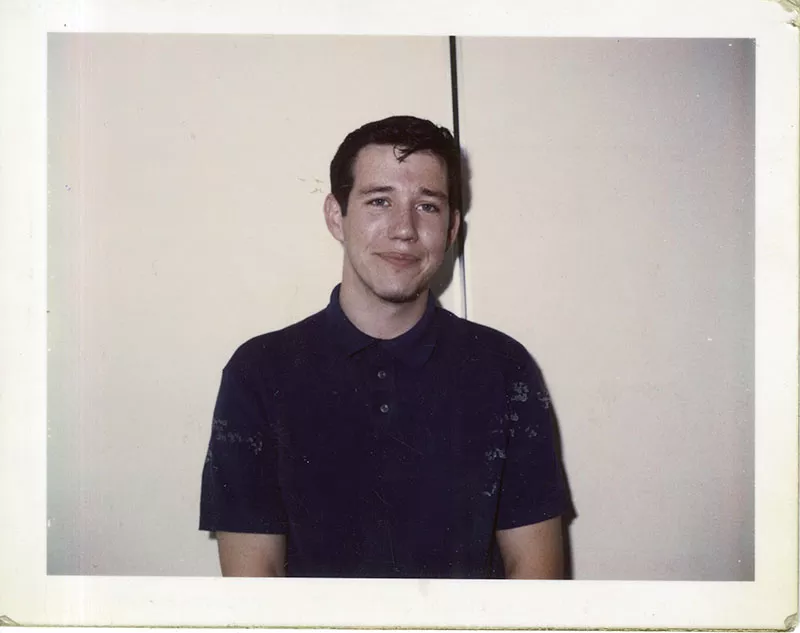
    As a police officer himself, Detective Sergeant John “Vito” Parisi wasn’t big on arresting cops — but the guy from north county St. Louis was pushing right to the edge of what they could accept in Sauget.

    “He was teetering on it,” says Parisi, sitting behind his desk in the blond brick building that is home to the tiny town’s police department, village hall and fire station. “You know, you want to extend every courtesy.”

    Parisi has been policing Sauget, Illinois, for nearly 30 years. It’s always had an outlaw reputation. Originally called Monsanto, the village was incorporated in 1926 as a place where the chemical giant could operate within sight of the Arch but without the burdensome environmental oversight of St. Louis regulations. Even today it enjoys a legacy of minimal governmental interference. The smokestacks of a gauntlet of industrial plants cut across the low horizon. Where other towns have schools and grocery stores, Sauget has long, windowless strip clubs, 24-hour bars and acres of parking lot to accommodate the after-hours crowds that flow across the Mississippi River in the early morning dark.

    Parisi is one of about 160 people who live in the village. He’s dealt with plenty of knuckleheads who like to treat his town like St. Louis’ own little sin city.

    He can’t remember anyone like Steven Blakeney.

    “No,” he says, “just because it was so bizarre.”

    A beefy six-footer with a military buzz cut, Blakeney was then a police sergeant in the pocket-sized north St. Louis County suburb of Pine Lawn. Known around north county St. Louis as a vindictive brute, he’d somehow managed to rocket through the ranks of his troubled department despite allegations of rape, cocaine abuse and the kind of hyperaggressive policing tactics condemned by the Justice Department after the Ferguson protests.

    Eventually, he’d be fired from Pine Lawn — accused of using a police escort to take women home after he’d met them at a bar and, allegedly, drugged them. He has never been charged in the incident, although this year Blakeney was finally convicted in federal court of framing a mayoral candidate. The federal judge handling his case described him as a “disgrace.” Assistant U.S. Attorney Reginald Harris opined, “This is a person who should never have been a police officer in the first place.”

    For years, though, he seemed untouchable. In Pine Lawn, he was thought to serve as the hammer for the city’s corrupt mayor, and that gave him a certain amount of freedom.

    He was a frequent visitor to Sauget, even during the night shift, when his fellow Pine Lawn cops say he was on duty. Sauget Officer Brian Phillips says he’d see Blakeney’s police-issued Dodge Charger in the employee lot at the Penthouse Club five or six nights a week.

    His problems in Sauget started as your garden-variety nuisance. Blakeney seemed like he wanted to play the tough guy at Pop’s, a metal-sided concert hall and dance club that never closes. Security guards there told police they were busy throwing somebody out one night in January 2014 when Blakeney tried to join them.

    When the bouncers tried to get Blakeney to back off, he told them he could intervene anywhere he wished. An assistant manager had to physically force Blakeney and a buddy out the door. Blakeney and his friend later slipped back inside through an employee entrance, fooling no one. Security eventually called Sauget police to get him to leave — and told him not to come back.

    When Blakeney returned less than two weeks later, security ushered him away. The next night, he and a partner cruised past the front door in an unmarked police car.

    They circled, returned and paused at the front entrance. One of the bouncers walked out of the club and toward the car, assuming the occupants were part of an auto-theft task force that sometimes patrolled the area. He soon realized it was Blakeney — in full tactical gear, Parisi says.

    Now armed, Blakeney told the bouncer he was working on an investigation that required him to stake out the lot. He asked which Sauget police officers were working that night and fished for information about Pop’s head of security. When the bouncer told him to beat it, Blakeney drove slowly away.

    Blakeney was eventually banned from at least three clubs on the East Side, but he continued to show up. Parisi decided it was time that Pine Lawn kept Blakeney at home.

    He called over to the department.

    “Hey, this guy is nothing but trouble for us,” he recalls saying. “If you would, let him know to stay out of our venue.”

    Not long after, a Pine Lawn officer in a police van hand-delivered an envelope to the Sauget station. Inside was a letter referencing Parisi’s phone conversation, claiming, “It has been determined that the investigator(s) were found to be operating within the scope of this Department’s standard operating procedures, and of course, within the scope of the statutory authority while on duty, conducting a lawful investigation(s).”

    What kind of investigation would require a cop from Pine Lawn, a town of less than a square mile, to stake out a bar’s parking lot twelve miles away in Illinois was never explained. “This matter is considered to be closed,” the letter concluded.

    It was supposedly signed by Pine Lawn Detective Lawrence Fleming, who happens to be Blakeney’s longtime friend. Parisi thought the signature looked like it had been copied and pasted. He faxed a copy to Pine Lawn’s new chief with a one-line message: “Please advise if this is a forgery.”

    He never heard back, but Blakeney stopped showing up at the clubs shortly after. Parisi says it was one of the weirdest episodes of his career.

    “Just a strange, strange character,” he says of Blakeney.

  • A Tiny Town, a (Possibly) Haunted Church and a ‘Priest’ Fleeing His Past. Welcome to Armstrong, Missouri

    A Tiny Town, a (Possibly) Haunted Church and a ‘Priest’ Fleeing His Past. Welcome to Armstrong, Missouri

    The fake priest came to town in April 2014, presenting himself as a Benedictine abbot — black robes, clerical collar and all. He put up a small sign in front of an edifice with crimson doors, advertising morning services at the old Methodist church he now called Holy Rosary Abbey.

    In the age of Google, though, no one with a long public history of cons can stay under the radar for long — and certainly not a man trying to shake things up in a tiny Missouri town, population 284. Soon there were rumors of lawsuits and bankruptcies. Web searches brought up allegations stretching back decades.

    And if the man who calls himself Father Ryan thought moving to rural Missouri would free him from the controversies in his past, he made a terrible error in judgment. He should have known that it was only a matter of time. When a disciple made a desperate phone call, law enforcement pounced.

    The church has since been bought and sold and bought again. Its steeple looms over the street where the neighbors’ kids run and play. And the people here still talk about the robed man and his nuns. Some are convinced the church is haunted, that the evil spirits it unleashed proved to be his unraveling. There are whispers of demonic possession, of sexual scandal.

    But for Armstrong, Missouri, the real question might be who corrupted who?

    Did the pretend priest let loose the trouble that became the talk of the town? Or did something behind those crimson doors — some malevolent spirit, some remnant of the building’s past — cause Father Ryan’s downfall?


    One of Father Ryan's sets of mugshots, from a 2016 arrest stemming from a parole violation.

    One of Father Ryan’s sets of mugshots, from a 2016 arrest stemming from a parole violation.

    Father Ryan has lived under many names.

    He was born Randell Dean Stocks in Richland Center, Wisconsin in 1953 (although another source puts his birth year as 1950). Little is known about his early years, but he later told the Chicago Tribune that he fathered a child out of wedlock in his twenties. He married and divorced; the child was put up for adoption.

    He eventually moved west, to California and then Hawaii. When he returned to Wisconsin in the late 1980s, he arrived as Ryan Patrich Scott — though he soon began introducing himself as “Damien St. Anne.” He claimed to be a Franciscan brother associated with an order based in Canada.

    But in a 1989 letter responding to an inquiry from a woman in Wisconsin, the director of the Franciscan order advised in the strongest terms that Damien St. Anne was a fraud: His stay in the monastery had lasted less than four months, he had never taken his vows and instead disappeared without permission with another novice. Not only that, but his abrupt exit was shadowed with additional suspicion: The order had received word from a bishop in Ontario and a priest in Wisconsin that the wayward monk was presenting himself, fraudulently, as a full-fledged brother of the order. (Through his attorney, Ryan declined to comment for this story.)

    And so Father Ryan kept moving, trying to outrun his past. But he took too many risks.

    In 1992, he was hired as the city finance director in Edgerton, Wisconsin. A private investigator would later find his resume riddled with degrees from institutions that had no record of his admission. His career in public service ended one year later. He was accused of helping himself to $300.97 of city money by modifying what should have been a $30.97 check. In 1994, he was convicted of felony misconduct in public office and sentenced to three years probation.

    He went back to being a fake priest. This time, in California, he fell in with the Reformed Catholic Church of America, an offshoot of the traditionalist Catholic movement that does not recognize the late 1960s reforms that modernized the faith.

    Even that fringe group excommunicated Father Ryan almost immediately.

    In a scathing letter dated 1995, an archbishop chastised him for his “self-centered attitude and un-priestly conduct,” and noted his failure to properly operate a monastery, “causing problems in the local community by allowing drugs, alcohol and other misuse.”

    Father Ryan returned to Wisconsin, but found no respite there. He found himself hounded.

    In La Crosse, Bishop Raymond Burke (the future archbishop of St. Louis) sent letters sounding the alarm to every diocese in the country: Be wary of this “Father Ryan St. Anne Scott” and his “Holy Rosary Abbey,” Burke warned. Do not attend his mass or take his sacraments.

    “He is not a priest of the Roman Catholic Church,” wrote Burke.

    Still, Father Ryan attracted a flock that was willing to embrace him as shepherd. His followers didn’t care that he’d been previously married or fathered a child.

    The believers were mostly older women, widows and aspiring nuns who yearned for a traditional Catholicism. They sought the majesty of the old ways, the Latin Mass, the robed priest kneeling at the foot of an altar intoning in nomine Patris, et Filii, et Spiritus Sancti.

    Over the next two decades, Father Ryan would pass through America like a holy apparition. City to city, diocese to diocese, all it took was one or two believers here, a few more there. It was enough to sustain him and his traveling abbey.

    He appeared and departed with equal abruptness. He trafficked heavily in the Midwest, setting up his abbey in Wisconsin, Iowa and Illinois, but he also turned up in North Dakota, Louisiana, Alabama, Arizona and New Mexico.

    But wherever he fled, both the Church and the law gave chase. Warnings were sounded in Catholic dioceses across the country, including St. Louis. A trail of legal disputes include bankruptcies in Illinois and Iowa. He was sued by a former nun over unpaid loans, resulting in a civil judgment to pay her $161,000.

    In 2012, he was evicted from his abbey in Buchanan County, Iowa. He left behind thousands of dollars’ worth of religious accoutrements. He also abandoned a herd of nineteen llamas. He had intended to sell the animals and their wool as part of a venture called Monastic Fleece. Like everything else Father Ryan touched, the llama-based business failed.

    In 2013, he regrouped in St. Louis while looking for the next location for his abbey. It is unclear what precisely drew him to Armstrong, a small town about 40 miles north of Columbia, but he was known to trawl through online property listings that featured cheap real estate.

    So it came to pass that in April 2014, with two elderly nuns in tow, Father Ryan made the 166-mile drive to his new home in Armstrong.

  • The 10 Worst Cardinals of All Time

    The 10 Worst Cardinals of All Time

    “Any idiot can rank the greatest players of all time, but it takes skill to rank the … worst,” a sports blogger noted. Veteran sportswriter Bill Christine still thought he could take a shot at it. For more on his undertaking, see his intro here.

    Rather read something positive? Check out Christine’s list of the 10 best. Or, you know, just carp in the comments section.

    1. Tony Cruz

    Catcher, 2011-2015

    Cruz spent four years in the minor leagues before being called up in 2011 as a backup for the oft-injured All Star Yadier Molina. Cruz hit .220 in 259 games, striking out four times more than he walked.

    His best games came in the post-season, when he homered against the Giants and got what might have been a big hit against the Cubs, but the Cardinals lost both games and were ousted in both series. At the end of 2015, Cruz was traded to the Royals. In spring training this year, he popped out into a triple play. It wasn’t his fault, really. The hit-and-run play was on, and his crime was making contact with the ball.

    2. Bob Uecker

    Catcher, 1964-1965

    It’s hard to separate Uecker’s apocryphal stories from the ones that really happened. There’s the story about Uecker signing his first contract with the Milwaukee Braves. His father was in their living room with a Milwaukee scout. “Is $3,000 all right?” the scout said. “Oh, no,” the father said. “We couldn’t pay you that much to sign Bob.”

    In 1964, Uecker’s first year with the Cardinals, the team won the World Series. Uecker seldom played during the season and sat on the bench for the entire series. “I helped them win the pennant,” Uecker said one night on Johnny Carson’s show. “I caught hepatitis. The trainer injected me with it.”

    In 1965, Uecker broke out of his slump when he hit .228. Then he was traded to the Phillies. “I remember that deal,” Uecker said. “The Cardinals got somebody named Gene Oliver and a mascot to be named later.”

    3. Tyler Greene

    Second Base – Shortstop, 2009-2012

    Greene was picked in the amateur draft by the Atlanta Braves, but declined to sign. Three years later, in 2005, the Cardinals selected him higher, at the back end of the first round. But Greene never mounted any traction in St. Louis, and after four years in the minors and four years of part-time play for the Cardinals, he was traded for virtually nothing. His average as a Cardinal was .218 and he struck out roughly every four trips to the plate.

    4. Jack Ryan

    Catcher – Infielder, 1901-1903

    A St. Louis sporting goods company sold a glove called the “Jack Ryan Special,” which was named after this turn-of-the-century Cardinal. It was a fielder’s glove, although Ryan played most of his games behind the plate. A bat named after Ryan might have been out of the question. He was 32 when he joined the Cardinals, after playing for several other teams, and his averages in three seasons in St. Louis were .197, .180 and .238.  He scouted for the Cardinals and managed in the minor leagues long after his playing days were over.

    5. Anthony Reyes

    Pitcher, 2005-2008

    I’m always suspicious of players who wear their caps funny. Reyes wore the brim of his flat. It looked like a pancake. “They come in the box that way, and I don’t bend them,” Reyes said. “It helps me see better.”

    Reyes lost two decisions late in 2006. He beat the Tigers in the first game of the World Series, but then started 2007 with ten straight losses, tying a club record that dated back to 1897. It was the beginning of the end. For the year, he went 2-14 with an earned run average of more than six. In 2008, the Cardinals traded him to Cleveland. Surgery on his elbow didn’t help and he was released.

    6. Red Donahue

    Pitcher, 1895-1897

    For other teams, Donahue won twenty games or more three times, and pitched a no-hitter. But while with the Cardinals, he lost 24 games in 1896. In 1897, he had a 6.13 earned run average, won ten and lost 35, setting a record for defeats in a season. The team as a whole won 29 and lost 102.

    During one at-bat, Germany Schaefer was sent up to pinch-hit for Donahue. Donahue asked, “Who the hell are you to hit for me?” He then slammed his bat down and stormed off. Schaefer hit a home run, but while his teammates congratulated him, Donahue sat at the end of the bench and sulked. After he retired, Donahue became a bartender in Philadelphia.

    7. Tom Lawless

    Second Base – Third Base – Outfielder, 1985-1988

    Lawless had the most theatrical home-run bat flips in baseball. In the fourth game of the 1987 World Series, against the Minnesota Twins, he hit a deep drive to left field. Lawless took a half-step and gazed at the ball. Then he took nine mincing steps toward first base, his eyes still transfixed on the ball. Finally, nonchalantly, with his left hand, he flipped the bat over his shoulder, high in the air behind him. He’s lucky he didn’t hit the Twins’ catcher. “I didn’t even know I did it,” Lawless said.

    Trouble was, he only hit one other homer for the Cardinals, and only one more besides that. His batting averages in St. Louis were .207, .282, .080 and .154.

    8. Dal Maxvill

    Shortstop – Second Base, 1962-1972

    Maxvill’s reliable glove kept him in the game. His batting average during a long career in St. Louis was a puny .220, with only six home runs. One year, he batted .175. In the 1968 World Series, which the Cardinals lost to the Tigers, Maxvill was hitless in 22 at-bats. Yet his salary was relatively high for the era.

    “Almost everywhere I go,” said Bing Devine, the general manager, “the question I’m asked the most is how I can pay Dal Maxvill $37,500. But if you could see how he plays shortstop, you would understand.” Maxvill laughed all the way to the bank. He played for five World Series teams—three in St. Louis and two with the Oakland A’s.

    9. Leo Durocher

    Shortstop, 1933-1937 

    The final two players on this list made the case for inclusion thanks to their off-the-field transgressions.  Durocher, according to his biographer, Gerald Eskenazi, was a heavy gambler whose name was linked to the mob in the 1930s. Later, one of his cronies was the actor George Raft, who reportedly won as much as $100,000 in one year betting on baseball, and who partnered with Durocher in hoodwinking other players in rigged craps games.

    All the while, Durocher was a light-hitting, slick-fielding shortstop and a manager who won more than 2,000 games. He won World Series as both a player (Cardinals) and a manager (New York Giants). When Durocher was managing the Brooklyn Dodgers, the commissioner suspended him for the entire 1947 season for “conduct unbecoming to baseball.”

    For years, Durocher moaned about not getting into the Hall of Fame, and he once asked Ken Burns, the documentary filmmaker, to “turn down (the honor) for me, posthumously.” In 1964, Durocher’s last year on the ballot as a player, he got 2 of 226 votes. Thirty years later, almost three years after his death, he was voted in as a manager by the eighteen-member veterans’ committee. Campaigning by the slugger Ted Williams, a member of the committee, didn’t hurt. The actress Laraine Day, the third of Durocher’s four wives, delivered the acceptance speech.

    10. Mark McGwire

    First Baseman, 1997-2001

    At the end of his career, McGwire hit 70 homers for the Cardinals in 1998, breaking Roger Maris’ record, and hit 65 more in 1999. The 1998 season was one of the most heartfelt in team history, but when asked later at a congressional hearing whether he’d used performance-enhancing drugs, McGwire claimed that the people in attendance “weren’t here to talk about the past.” Then, in 2010, McGwire apologized, saying that he had used steroids, on and off the field, for nearly a decade, even while claiming that the drugs did not enhance his power to hit home runs.

    In his ten years on the Hall of Fame ballot, McGwire has never polled more than 24 percent of the votes, far short of the amount needed for election.

    Editor’s note: A previous version of this story misspelled Yadier Molina’s first name. D’oh! We regret the error.

  • A Killing in the Hills

    A Killing in the Hills

    Part one in a two-part series.

    At midday on March 11, 1982, two brothers steered their truck off Route 32 about eight miles southwest of Salem in the Missouri Ozarks to go feed their cows. Gerald and James Nickles trundled through some woods and parked at a gate. They stepped into a clearing around the one-room Bethlehem School.

    The building stood vacant, unused for decades. Its yard was littered with Busch cans — a common nuisance, since local teens favored this spot for boozing and necking.

    While tidying up, though, the brothers glanced at the yard’s edge. A pair of white panties dangled in the brush just over the barbed wire fence.

    “I smelt the perfume off the clothes,” James would later testify.

    They approached and saw more items: Levi’s jeans, a sock and brushed-suede shoes — one missing a shoelace. Proceeding to the rear of the school, they noticed twin drag marks in the dirt. The brothers followed the marks to a waistdeep outhouse foundation about 50 yards away. Now they were vexed. They suspected someone had ground-butchered one of their calves and dumped the carcass.

    The pit was heaped with logs and leaves. Peering in, they spied a human leg.

    James rushed to a nearby home and phoned the Dent County Sheriff’s Department. The dispatcher there radioed Missouri State Highway Patrol Trooper Gary Dunlap, who arrived around 1:40 p.m.

    When Dunlap climbed out of his patrol car, James pointed at the hole. The trooper walked over to it. He moved some debris and discerned a female body. Kneeling, he pressed his fingers to her neck for a pulse. It was chilled and stiff.

    She was a brunette, five foot three, 115 pounds. She lay nude, save a bra and velour top hitched up to her armpits. She had been strangled with her own shoelace, then blasted in the neck with a shotgun.

    At that time, 14,500 people lived in Dent County, a rolling plateau of pasture, oak and cedar. St. Louisans knew it as float-trip country, two hours southwest by car, a place where you could canoe along the bluffs of the Current River. The area was still absorbing years of flux: Many folks had left the fields to toil in the factories and shops of Salem, the only town, while a few thousand newcomers had moved in. The old clans still knew each other, but on that afternoon, a dozen men converged on the scene — troopers, the sheriff, the coroner — and no one recognized the girl.

    “She’s laying there crumpled up in a dirty hole with us standing over it,” Dunlap recalls. “It didn’t seem real.”

    The trooper left the crime scene by heading east on 32 back toward Salem, then abruptly pulled over. His colleagues had halted at an iron bridge. Acting on a hunch, one of them searched the dry creek bed below and picked up a leather purse. The driver’s license photo inside matched the victim. It was 21-year-old Judy Spencer.

    The Spencers were a well-respected family with a plot of land south of Montauk State Park, down in the valley carved out by the Ashley Creek. Kenneth Spencer, Judy’s dad, raised beef cattle and co-owned a lumber mill there. Kenneth and his wife Mildred were founding members of the Montauk Baptist Church. They were strict parents who led their children to services thrice weekly.

    Judy was the baby daughter — the fourth of the five Spencer kids. A feisty extrovert, she had made cheerleader at Houston High School in adjacent Texas County. She loved to go sledding with her nieces and nephews, to water-ski on Table Rock Lake and to sail her Oldsmobile down the back roads at night, windows down, singing along to eight-track tapes of the Eagles and REO Speedwagon.

    Fresh out of business college, she had returned home to work the switchboard at Salem Memorial Hospital. She rented a house on the east side of town and trimmed the long caramel hair of her youth to a short bob. She was a young woman, striking out on her own. Then this.

    “The entire county still is in shock this week over the horrible murder of the Spencer girl,” the Salem News opined. “This heinous crime has caused considerable fear.”

    Senior circuit judge and former Dent County Prosecutor J. Max Price recalls the impact as “tremendous,” adding, “You couldn’t go into a restaurant without hearing about it.”

    What stunned locals wasn’t just how the young woman died; it was who she was. In dozens of interviews with Riverfront Times, they utter the same phrase again and again: Crimes like this just didn’t happen here. Not to families like the Spencers.

    And the Spencers proved extraordinarily driven to get justice for Judy. For 27 years they prodded law enforcement to solve the case, with no results.

    Finally, in 2008, the state tested Judy’s old fingernail clippings and detected a trace amount of DNA belonging to Donald “Doc” Nash, her boyfriend at the time of her death. The Spencers had long eyed Nash with suspicion. When a jury convicted him of the murder in 2009, they felt their prayers and persistence had paid off, at last.

    But not everyone is convinced. Three attorneys at Bryan Cave, a prominent St. Louis-based law firm, believe Nash, now 73, is innocent. They are so sure, they’ve agreed to represent him pro bono. When they last took on such a case, they won, and the exoneration sparked national headlines and a multi-million- dollar settlement.

    Yet this one is different. DNA discovered decades late often remedies a wrongful conviction, but here the Bryan Cave team argues that it caused one. They believe that the jury misinterpreted the fingernail DNA — a largely unexplored corner of forensic science — and never got to hear about other likely suspects.

    The campaign to free Nash is only the latest twist in a case that has altered dozens of lives, in several states, for 33 years and counting.

    “A lot of cases, I never hear about again,” says former highway patrol sergeant Henry “Jamie” Folsom, one of the investigators. “This case never goes away. It just keeps resurfacing.”

  • The Dark Wall: Legendary tornado chaser Tim Samaras’ last ride

    The Dark Wall: Legendary tornado chaser Tim Samaras’ last ride

    Before it came for him, Dan Robinson watched the thing grow. It began as a bolus that descended out of the storm, projecting needlelike vortices that lanced the wheat fields. Columnar towers 100 yards wide gathered and darkened against the pale light, unspooling into wispy coronas that moved across the prairie beneath the two-and-a-half-mile-wide wall cloud above.

    It was a little after 6 p.m. on May 31. Dozens of storm chasers were navigating back roads beneath a swollen mesocyclone that had brought an early dusk to the remote farm country southwest of El Reno, Oklahoma. Robinson, a website designer and chaser from St. Louis, jumped into his compact Toyota and sped east. He peered out at the tornado, now wrapping itself in rain so dense that he struggled to make out its leading edge. He swore it was moving farther away. If he got out ahead of it, he reasoned, he might get a better look.

    For seven miles, he raced the tornado over dirt roads. It spanned close to a mile, but it would have looked like a shapeless wall of torrential rain to the untrained eye. The last time he’d had a good bead on the funnel, it was tracking east-southeast. Now, as he drove south, he could tell something had changed. It was nearly imperceptible, the way mountains loom larger as you drive toward them. But in 30 seconds, the darkness on the horizon was filling his entire field of vision.

    “I’m getting too close,” he said to himself.

    His view to the south was wide open, a country of buffalo grass, red cedar and scrubby blackjack oak. He glanced out of the passenger window, but he couldn’t find the tornado’s outline. That was worrisome. Robinson didn’t like getting in front of tornadoes he couldn’t see.

    He rolled up to Highway 81 but stopped. The mass was already passing over. Robinson drove across the highway’s four lanes and picked up a gravel road. He caught sight of something out of the corner of his eye.

    A gray, vaporous curtain swept toward the road ahead of him.

    At the heading and speed he thought the tornado had been traveling, there was no reason it should be this close. Yet his windshield was lashed by bands of rain. A darker form took shape in the south. Robinson blew through the stop sign. The heavy rains slackened, and in that moment he knew he should not be there.

    The curtain overtook him again and the rain came faster, with a sound against his windshield like stones against glass. His Toyota lurched to the side in 100 mph gusts and began fishtailing in the gravel, causing the car’s traction control to cut power to the wheels. He backed off on the accelerator to override it. He did this again and again, never maintaining a speed faster than 42 mph.

    He punched through swirling eddies of rain. His windshield wipers couldn’t clear the water. He drove on, blind.

    If he had looked at his rearview mirror, he would have seen the headlights of a white Chevy Cobalt. Inside was Tim Samaras, one of the country’s most respected tornado scientists, who had built his career by placing sophisticated probes in the paths of oncoming tornadoes. These devices, which he called “turtles,” took measurements from inside the storms. No chaser could claim as many intercepts.

    Samaras had an uncanny ability for finding twisters and escaping them with his life. But the monster hiding in the rain that day was something he had never encountered. What neither Robinson nor Samaras could have known was that in seconds it had grown from 1 mile to 2.6 miles wide, making it the largest tornado ever documented. And it was tearing toward them across open wheat fields at highway speed. The difference between escape and incomprehensible violence was measured in hundreds of yards. And while Robinson never looked back, his rear-facing dash camera did, capturing the last living images of a legend.


    To ride with Tim Samaras and his expert forecaster, Carl Young, was to ride with the “big boys,” as Matt Grzych puts it. For two seasons, Grzych ventured with them beneath mesocyclones, the rotating masses of air that stretch for miles overhead and often spawn tornadoes. In a crew-cab GMC truck outfitted with a winch, chain saws and a mobile weather station, they’d run them down.

    He remembers the way that truck could slice through the current of rain, hail and wind feeding a supercell thunderstorm. They’d drop down ahead of the tornado, deploy devices made of hardened steel and filled with instrumentation to measure wind velocity, barometric pressure and temperature. Then they’d run as fast as the GMC could carry them.

    Much of this was well documented on the Discovery Channel’s Storm Chasers. But it only told part of the story. Samaras and Young were one component of a much larger endeavor. Left out was the rest of TWISTEX, a loose confederation of PhDs, trained spotters and meteorologists who fanned out behind the tornadoes in Chevy Cobalts, assembling themselves into a dragnet of atmospheric measurements. As important as it was to get readings from inside tornadoes, they also needed to understand the environment that caused them to form, intensify and unravel. But that part of the operation didn’t make for good TV. So the camera crew focused on Grzych, Samaras, and Young, and their daredevil tornado intercepts.

    The chasers were willing to get close enough to smell ripped-up grass or the scent of splintered lumber and shredded insulation given off by the twister. Once, when they ventured into Dixie Alley and found a tornado hidden inside the deep pine woods near Canton, Mississippi, Grzych pleaded with them to stay out of the trees. But Samaras had already announced that they would deploy a probe at all costs. They narrowly missed a tornado that felled timber and power lines as it crossed the road no more than 100 yards in front of them. He told the cameras that this was why they chased — to feed hard data into the study of these dimly understood and deadly phenomena. The risks, for him, were worth it. Yet they were carefully calculated, and he had always managed to bring his crew out alive.

    Samaras, a slight, professorial-looking man with an aquiline nose and kind eyes, was an autodidact with only a high school education. He nonetheless went on to become a star engineer at Applied Research Associates in Littleton, Colorado, specializing in blast testing and airliner crash investigation. The National Transportation Safety Board recognized him for his work on TWA flight 800, which exploded over the Atlantic Ocean in 1996, killing 230 passengers.

    Samaras loved a puzzle, to know how things worked. And there were few greater mysteries than the titans that tore through the plains east of his home in the Colorado foothills. He began chasing in his twenties, wanting only to be near them, transfixed by their terrible beauty, by the sounds and the way they smelled. When experiencing the tornadoes was no longer enough and his analytical mind sought questions that his eyes couldn’t answer, his engineering ability and resources transformed a passing fascination into a legitimate scientific pursuit. Using a wind tunnel, he developed turtle probes that remained firmly anchored to the ground even as they took a direct hit.

    They were put to the ultimate test on June 24, 2003, outside Manchester, South Dakota. Samaras jogged into a roadside ditch, hefting a probe as an EF-4 tornado bore down on him. Moments later, the tornado struck the instrument. Samaras watched from a safe remove as houses were blown apart like piles of leaves. The tornado that razed Manchester registered the steepest drop in barometric pressure on record, and it was captured on Samaras’ turtle.

    The finding catapulted him to fame. National Geographic wanted to underwrite his research. He partnered with the University of Iowa’s famed tornado laboratory. Boeing paid him to field-test hail-resistant skin for its aircraft. He found a chase partner in Carl Young, a bit-part Hollywood actor turned atmospheric science student who was quickly becoming a promising forecaster. He began collaborating with Bruce Lee and Cathy Finley, University of Northern Colorado researchers who studied the forces at work outside of tornadoes. TWISTEX was born.

    The group authored peer-reviewed papers for Monthly Weather Review and the American Meteorological Society. They could lay claim to nearly every measurement taken from within a tornado. This was partially because Samaras was a brilliant engineer, but it was also because no one could read a storm quite like him. Young excelled at choosing the right storm systems using Doppler radar, but once they sat beneath the mesocyclone, Samaras’ ability to spot the signs led them to the tornado.

    Samaras was an aggressive, dogged chaser, who often had to be reminded by his colleagues to stop and eat. But he was also beloved. To his children, he was the father who set up a camera on a tripod in front of the Christmas tree because they had demanded evidence of Santa’s existence. He once dressed his son, Paul, as a ham radio for Halloween. He was the first male Girl Scout troop leader in Colorado.

    To his chasing friends, he was the guy who had them out to his home in Bennett, Colorado, where the Great Plains met the foothills, for war stories and copious bowls of his “bunghole-burnin’ green chili.”

    To his colleagues, he was their benevolent leader and mentor.

    Samaras made sure his crew ate well and stayed in the best lodging to be found. But every chaser will tell you the pursuit exacts a price. For days, sometimes weeks at a time, they leave loved ones and place themselves at hazard — in part because they want to better understand the storms, but also because humans have always taken the measure of themselves against the natural world. Though he respected these forces, by walking away with his life from hundreds of tornadoes, in some way Samaras had shown he was equal to them.

    After the 2011 tornado season, the Discovery Channel canceled Storm Chasers, and with it a significant source of funding for TWISTEX. The next year, one of the weakest seasons on record, the team was all but dormant. But as 2013 rolled around, Samaras managed to secure a grant through National Geographic for lightning research.

    As a ballistics researcher, he had used a one-ton camera capable of capturing 150,000 frames per second to study explosions. When the government put it up for auction, he bought the hulking device for $600. Samaras replaced the film technology with digital sensors that allowed him to capture up to 1 million frames per second. The “kahuna,” as it came to be known, sought the moment of contact when intricate, negatively charged fingers of light splintered out of the sky, meeting a positive charge reaching up out of the earth. Samaras pursued yet another of nature’s most fleeting moments.

    For now, his tornado research would remain on the back burner. Samaras brought his 24-year-old son, Paul, a Star Wars geek who’d developed into a brilliant photographer and videographer. And he brought Young, his trusted chase partner. They crisscrossed the Corn Belt together, hunting lightning. If they chased twisters, it would be on their own time and on their own dime.


    On May 19, Matt Grzych sat in gridlocked traffic in Moore, a suburb of Oklahoma City, during a stalled chase. A mile-wide EF-5 tornado tore through the middle of town and across Interstate 35, uprooting sturdy oaks and shearing houses from their foundations. The elementary school near him was razed, killing seven children. Grzych watched as those around him panicked. Trucks sped through the median, some in reverse, while insulation rained down from the sky. It was the first EF-5 he’d ever witnessed. He swore he’d never chase in the Oklahoma City metro area again.

    Almost as soon as he’d posted about his experience on Facebook, he heard from an envious Young. “He called me up immediately, freaking out about how I got onto Moore,” Grzych says. “His main thing was, ‘What were you looking at in the forecast that brought you to Moore?’ Carl was all about big tornadoes.” Yet he’d never witnessed the strongest: For all their talent for finding tornadoes, neither Young nor Samaras had ever encountered an EF-5.

    Eleven days later, violent supercell thunderstorms were forecast near Oklahoma City. Samaras, Paul and Young met Cathy Finley and Bruce Lee in Guthrie, 30 miles away. They’d arrived in the Cobalt, with three turtle probes in the trunk, leaving the kahuna back in Kansas. Looking back, some of Samaras’ colleagues were surprised by his decision to use the Cobalt to attempt to deploy a probe. The four-cylinder, two-wheel-drive sedan would have been weighed down with three grown men and three heavy probes. Tony Laubach, a TWISTEX team member who had driven one, likened it to a pizza-delivery car. “It did fine,” he said. “I chased with it for many years. But it didn’t handle some roads so good. It didn’t handle high winds.”

    It was, however, economical, and TWISTEX operations were on a shoestring.

    Young was a little frustrated, Finley recalls. They’d missed a strong tornado a few days before because of Samaras’ research obligations. They weren’t about to miss the setup forming over Oklahoma, predicted to explode the following day. But Finley and Lee told them they would not be joining them for this chase. They were wary of pursuing tornadoes into densely populated areas. As they’d seen in Moore, the roads tended to clot with panicked people and the growing ranks of amateur storm chasers.

    Inside the nerve center at the National Weather Service Forecast Office in Norman, Oklahoma, a team of meteorologists peered into monitors, their faces bathed in the primary colors of Doppler radar imaging. Along one wall, a battery of flat-screen televisions was tuned to the Weather Channel and local news. Despite the boiling in the atmosphere west of Oklahoma City, the room was quiet.

    Meteorologist Jonathan Kurtz saw a complex system of storms merging, and he needed to know where they were headed. Warm, dry air was blowing out of the Rocky Mountains and rising in their lee, leaving a void of low pressure. Warm, moist air from the Gulf of Mexico rushed into the void along this imaginary boundary, known as the dryline, which was sitting right over central Oklahoma. The Gulf air wanted to rise, but it was being blocked by a cap of dry desert air.

    Atmospheric instability was building. Once it was warm enough near the surface, probably by late that afternoon, the Gulf air would punch through the cap. Soon, it would meet the cold, 85 mph jet stream from the north. At the same time, the vacuum created below would draw strong southerly winds. The differences in wind speed, elevation and direction of these two currents, known as wind shear, were getting ready to set this unstable air mass spinning. That was the stuff of all supercell thunderstorms. What alarmed the forecasters was the off-the-charts strength of its ingredients. Kurtz knew something big was about to happen.section break

    Samaras and Young lost sight of the tornado in the rain, but they would have known at least that it was a mile away. They were in position. They would have seen Dan Robinson driving ahead of them.

    As Robinson paused at Highway 81, he would have seen them pull up right behind him, along with the gauzy curtain of the tornado’s outer circulation. Because Young’s camera was later found, we know a little about what transpired in that car until the final minute or two.

    Samaras took a call from a reporter as Young steered along the dusty back roads. Young seemed annoyed: Samaras was supposed to be the navigator, and Young needed to know what the roads ahead looked like; they had a habit of dead-ending unexpectedly. Samaras rushed the reporter off the phone, and they began discussing their next move.

    Again and again, Samaras told Young to slow down and let the tornado get ahead of them, worried it might cut them off. But Young wanted to get farther east, to deploy a probe ahead of it. Samaras, who always made the final call in deployment situations, didn’t override him.

    They commented on how poor the visibility was becoming. They sounded confused, disoriented. Samaras said he wasn’t sure he could see the funnel anymore.

    But it was still there, growing, hooking and doubling in speed. It’s likely they were in its outer circulation, though they almost certainly didn’t realize it. Because Young put his camera down on the floorboard, there was only the sound of heavy rain, wind and their voices. No one in the car was panicking. At the end of the video, perhaps a minute or two before the tornado overtook them, Samaras said in a matter-of-fact tone: “We’re in a bad spot.”

    Robinson’s rear dash cam tells the rest of the story. At 6:20 p.m., as Robinson fled, the thin, drifting miasma gave way to something opaque and iron gray. Headlights behind him shrank farther and farther into the distance. As Robinson was pummeled by rain bands and 100-mph winds, the camera lost track of them.

    A few moments later, Samaras’ car crested a rise and was seen as little more than two points of light in the gathering dark. For the first time, it was as though the tornado had shed the cloak and offered the men a glimpse of itself. Its outline stood sharply against the dim horizon.

    But in a matter of seconds, it swelled to 2.6 miles wide, and its sharp edges were lost again in currents of rain. As it closed in at up to 60 mph, everyone in that car likely knew what was about to happen. Samaras’ son Paul probably trained his video camera on the tornado right up until the very end, members of TWISTEX say. But that camera was never found.

    In the last existing images of the three men alive, their headlights shone brightly as the clouds above lowered and a dark wall swallowed the horizon. They were obscured for a moment by a sheet of rain running down Robinson’s rear window. They reappeared as the faintest of lights and glimmered once more. Then, in an instant, the wall moved into the road and they were extinguished.

    Ahead of them, the way before Robinson cleared. Behind, through the rain-streaked window, there was nothing — no gravel road, no trees, no wheat fields, no sun or sky. It was as though the world had ended there.

    Robinson stopped 400 yards away. The post oaks along the road bowed toward the tornado as the storm drew wind to its core. He would always question what he did next. He would come to see differently the act of stopping, pulling his video camera from the back seat, and crow-hopping with the 80 mph gusts at his back, tearing a shoe from his foot. He knew he had gone out that day and met some other thing that he was not equal to. He knew it when a two-inch hailstone opened up a bleeding gash over his left eye. He knew it when he was sheltering in the ditch and the tornado’s outer circulation shattered his Toyota’s rear window and waylaid the world around him.


    Once the hail had passed, Sergeant Doug Gerten of the Canadian County Sheriff’s Office got out of his SUV to investigate a car sitting in a canola field. He knew it was a car only because it had a single wheel left, with the Chevy emblem on the hubcap. Otherwise, it was unrecognizable, as though it had been cubed by a salvage yard’s compactor. “There wasn’t a straight piece of metal on it,” he says.

    He could see that there was a person inside, still wearing his safety belt. He confirmed the man was dead and removed his wallet and took out the driver’s license. Gerten watched Storm Chasers, and he knew exactly who Tim Samaras was. As he began his search, he found the Cobalt’s motor half a mile away. He noted gouges in the wheat field where the car had been driven into the soil.

    Judging by where the debris field began, the car had been carried nearly half a mile before it was dropped vertically on its rear end. Somewhere in between, deputies found Young in a ditch. Paul’s body wouldn’t be located until early the next morning. The fire department cut Samaras out of the Cobalt, and a wrecker hauled it off. Gerten met Kathy Samaras a few days later. She had come to see where her husband and son had died.

    “You’ve got to admire the lady,” Gerten says. “She’s held up better through this than I would have.”

    At a memorial in Littleton, Colorado, she said she didn’t know how she was still standing.

    From time to time over the next month or so, Gerten drove down that stretch, looking for the equipment he knew must still be out there. On July 3, he caught sight of a small black object, half submerged in the creek. He stopped, clambered down into water that was only a few inches deep, and came up with Young’s camera.


    The day after the storm, Gabe Garfield of the National Weather Service set out from Norman with a team to explore a savaged landscape. Little had actually been damaged, primarily because the tornado had passed through unpopulated farm country. The most incredible evidence he saw was in high-resolution Doppler images collected by the University of Oklahoma.

    Most tornadoes of that size maintain a fairly straight heading and make a left turn as they weaken. This tornado’s arc turned sharply, growing in size, speed and intensity. The 2.6-mile-wide wedge was incredible. Inside were swarms of sub-vortices, 200-yard-wide tornadoes within the tornado, whose wind speeds approached 300 mph. It “was designed to kill storm chasers,” in the words of veteran chaser Amos Magliocco.

    On a recent afternoon, beneath a wide dome of sky over the Southern Plains, barbwire lay in coils in the ditch. Steel fence posts laid bent and flat against the earth. A single headlight, the kind belonging to a sedan, sat just off the road. Pieces of metal and glass glinted in the field, where the car would have been carried.

    Close by, a stained wooden board had been driven into the ground and etched with initials: TS, PS, CY, all arrayed around a pair of wings with a twister in between. It said: R.I.P., TWISTEX, 5-31-13. Next to it was a bouquet of silk daisies and roses, a tiny American flag and a car’s gray floor mat. For an hour, not a single car or truck passed through this remote stretch of road. There was only the sound of the wind blowing down.


    Matt Grzych will always wonder why Samaras, Paul and Young were in that place at that moment. Were the winds and the weight of three men too much for the Cobalt? Did the engine fail? Did they blow a tire? Or had they simply been playing the odds for too long?

    “Everyone had that false impression in their minds, that we’re too good, that we’ll always beat it,” he says. “As humans, we think of it as a solid object. We plan our actions around a solid object. But they’re ghosts. They’re in one place and can appear in another.”

    Their deaths have forced the insular storm-chasing community to search its soul. None from their ranks had ever died in a tornado. And this wasn’t some amateur yahoo with an iPhone. Samaras was the godfather of this pursuit. Now he and the compacted hull of his white Chevy Cobalt had become the glaring evidence of their own fallibility. If so great a man could not save himself, how could any?

    Yet Dan Robinson had saved himself, a fact that had not ceased to puzzle him. He had stopped and filmed the thing as it passed, barely out of its reach. He should have been poring over the incredible, once-in-a-lifetime footage his video cameras had captured. But he couldn’t bring himself to look at any of it for days.

    When he finally saw those headlights, Robinson was plagued by the same questions that plagued Grzych. “I’ve thought about this hundreds of times,” he says. “I can’t imagine they were doing anything different than me. I wonder why they slowed down and got so far behind.”

    He’s haunted by the blind randomness of it all. Had the tornado’s arc been just a degree wider, he isn’t so sure he would have survived. He was about to run out of road.

    “There’s always been chasers who pushed the limits, got too close, and I’ve certainly done that a few times myself,” Robinson says. “You’d think maybe it should have been somebody who did something reckless or careless. It shakes you up when you realize that someone with his experience can end up in that situation.”

    One of things Samaras loved about the study of tornadoes was that it remains a wide-open frontier. So many fundamental questions go unanswered.

    And perhaps that’s what is so maddening about what happened to Carl Young and Tim and Paul Samaras. There is no simple explanation, no single factor. As unknowable as the chain of random events that give rise to tornadoes is, so too was the series of decisions that ended three lives.

  • The Ten Weirdest Members of Congress

    The Ten Weirdest Members of Congress

    By just about any measure, Congress is at its lowest point in history. Only 9 percent of the country has a favorable view of the 535 men and women who make up the bicameral body. One poll even revealed that they’re less popular than cockroaches, traffic jams and that ultimate barometer of public repulsion, Nickelback.

    Why such unhappiness? Because our legislators rarely resemble human beings. When the main job requirements are boasting, begging for money and possessing the moral elasticity to promise anything to anyone, only narcissists and sociopaths need apply.

    But within the cast of America’s longest-running reality show, some manufacture a weirdness that soars above the rest. Meet the ten members of Congress who are setting new records for creepiness and depravity.

    Slideshow: The 10 Weirdest Members of Congress


    10. Ted Cruz (R-Texas)

    Protecting America’s Golf Courses From an International Conspiracy

    In just about any other state, Ted Cruz would be mumbling for spare change outside a Dollar General store. In Texas, he’s a U.S. senator.

    Cruz has been called the “intellectual voice of the Tea Party,” a laurel on par with being the valedictorian of a carjacking ring. He’s been known to brag that, as Texas state solicitor, he once nullified the divorce of two gay men. His biggest campaign applause line comes with the boast of how he had a man sentenced to death.

    But it’s Cruz’s Agenda 21 conspiracy theory that sets him apart.

    Agenda 21 is the kind of feel-good plan that’s made the United Nations a model of ineffectiveness for nearly 70 years. It’s a vaguely worded, non-binding, 300-page resolution that reads like a fifth-grader’s wish list for a better world. (Combat poverty! Prevent deforestation!)

    The measure is so innocuous that known radical George H. W. Bush signed on in 1992, as did the heads of 178 other countries. Since then, it’s been largely forgotten. Except by Cruz.

    As he sees it, Agenda 21 is actually a conspiracy led by liberal financier George Soros to rob honest Americans of their property rights — two words sure to induce Pavlovian terror in anyone living west of the Mississippi.

    Cruz claims Agenda 21 is a “globalist” plan to forcibly relocate rural Americans into urban “hobbit homes,” which are too small for necessities like a still or a firing range. He also believes it will lead to the abolishment of paved roads and golf courses, threats scientifically proven to unbolt the wallets of Republican donors.

    A Princeton debate champion with a law degree from Harvard, Cruz has yet to provide any evidence of the plot. Which should make him a force in the Iowa GOP primary come 2016.


    9. Alan Grayson (D-Florida)

    The Loudest of the Loudmouths

    In a town full of bluster, no one blows harder than Florida Congressman Alan Grayson, a Category 5 hurricane of bombast.

    A trial lawyer who specialized in contractor fraud, Grayson burst onto the scene after winning election in 2008 as the loudest critic of the Iraq War. The Democrat was funny, clever and had a way with words you might expect of someone who made his living convincing juries to give him money.

    Yet as righteous as that original cause may have been, he soon earned a reputation as the biggest contributor to the partisan firefight disabling Washington, resulting in his being the only Democrat nominated for this list by members of his own party.

    Of former vice president Dick Cheney, Grayson once said: “I have trouble listening to what he says sometimes because of the blood that drips from his teeth while he’s talking.”

    On another occasion, he noted that “scientists have studied this difficult question of why some people have a conscience and some people don’t. Some people are called Democrats, and some people are called Republicans.”

    Grayson also referred to a female adviser to the Federal Reserve as a “K Street whore.” His opponents, meanwhile, are best known as “foot-dragging, knuckle-dragging Neanderthals.”

    But while he may be more artful of tongue than the average politician, he shares his colleagues’ gift for situational ethics when the going gets tough.

    In 2010, for example, he was on the verge of losing his seat in central Florida to Republican challenger Daniel Webster. That’s when the anti-war Grayson trotted out the go-to smear of tin patriots everywhere. He released a campaign commercial referring to Webster as a draft dodger who didn’t love his country.

    Webster, it turns out, had been rejected for military service on medical grounds during the Vietnam War. But to Grayson, this meant his opponent was practically a terrorist. He began referring to Webster as “Taliban Dan.”

    Grayson lost that election, and Washington got a little less breezy. But the winds resumed last fall when he won a newly drawn seat centered in Clearwater, Florida. Among his first acts was to coin a new term for Republicans: the “bath salts caucus.”

    Like all Grayson one-liners, it was funny and even contained a kernel of truth. But it wasn’t particularly helpful in getting members of Congress to put down their plastic swords and do something useful for the country.


    8. Scott DesJarlais (R-Tennessee)

    The Anti-Abortion Zealot With a Running Tab at Planned Parenthood

    Scott DesJarlais, a family doctor from the outback of Tennessee, is stridently pro-life, known for his righteous denunciations of abortion and adultery.

    “All life should be cherished and protected,” he declares on his website. Except when that life poses an inconvenience for Scott DesJarlais.

    His problems began when he cheated on his first wife in an affair with a patient, and the patient got pregnant.

    To save his marriage — and prove the affair was over — the Tennessee Tomcat devised the most misguided coverup since Watergate. He secretly recorded a conversation with his mistress in which he pressured her to get an abortion.

    The cherished life of his child had become a “problem” that needed to be “fixed.”

    “You told me you’d have an abortion,” DesJarlais says on the tape. “And now we’re getting too far along without one.”

    As you might expect, his ham-fisted reconciliation plan backfired. As it turns out, DesJarlais wasn’t just a serial philanderer; he’d also spent years compiling frequent-flier miles at Planned Parenthood.

    Last November, the congressman’s 700-page divorce-trial testimony went public. In it, he admitted to affairs with three co-workers, a drug rep and two other patients. He also confessed to encouraging his wife to get two abortions before they were married.

    But these revelations didn’t move DesJarlais to a healthy round of soul-searching. Instead, he played the victim card, blaming a political opponent for “false, personal attacks.”

    When that didn’t work — he’d taped his own confession, after all — he took cover in religion, claiming that God had given him a mulligan.

    “I know God’s forgiven me,” DesJarlais announced. “I simply ask my fellow Christians and constituents to do the same.” In other words, if his constituents weren’t up for “grace and redemption,” they were rejecting direct orders from the Lord himself.

    DesJarlais was abandoned by members of his own party. The Tennessee Conservative Union, the largest and oldest right-wing group in the state, demanded that he resign.

    “The level of shamefulness was unprecedented,” says Tennessee Democratic spokesman Brandon Puttbrese. “This is a doctor who had sex with patients and then tried to lecture people on health-care policy, as if he gave a good damn about being an ethical physician.”

    Yet the cloak of God still trumps hypocrisy in the fundamentalist backwaters of middle Tennessee. DesJarlais was reelected by a comfortable margin last fall, allowing him to carry on as Washington’s official face of grace and redemption.


    7. Tom Harkin (D-Iowa)

    Burning Through Billions on Quack Science

    In January, Senator Tom Harkin announced that he would retire in 2015. Washington was soon to lose its biggest advocate for questionable science.

    Harkin is most responsible for the creation and continued survival of a little-known office called the National Center for Complementary and Alternative Medicine. If it sounds relatively harmless, that’s the problem.

    Harkin’s interest in alternative medicine came from personal experience. After trying everything to rid himself of a hay fever allergy, the senator reportedly found relief through heavy dosing of bee pollen, taking up to 60 pills a day.

    At the time, he happened to be the chairman of a subcommittee responsible for funding the National Institutes of Health. So in 1991, he introduced a law that would allow the agency to “investigate and validate…unconventional medical practices” — like his bee pollen cure.

    “This was the equivalent of a politician starting an organization to investigate UFOs, the Bermuda Triangle and every other kooky conspiracy theory that’s out there,” says Alex Berezow, editor of online site RealClearScience and author of the book Science Left Behind. “This was the X-Files of medical research.”

    Investigating is certainly something the center has done. It’s the validating part that has caused trouble, much to Harkin’s dismay.

    Though the agency’s budget started at a paltry $2 million, like everything else in Washington, it has metastasized, to nearly $130 million annually. It has blown through billions testing dubious “cures” better left to late-night infomercials. The effect of distant prayer on AIDS. Harp music on stress levels. Therapeutic touch on bone cancer.

    Unsurprising, not one of these methods has proven effective. In fact, in his attempt to legitimize alternative medicine, Harkin has actually accomplished the opposite: He’s managed to nearly discredit it entirely.

    Study after center study has shown that placebos are just as effective as Harkin’s homeopathic miracles. In some cases, the “cures” were actually found to make things worse, as when the center discovered that St. John’s wort rendered certain cancer drugs less effective.

    That the scientific method is able to weed the good from the bad would seem to be the one positive outcome of Harkin’s two-decade misadventure. Yet the senator sees it as “discrimination,” lamenting that his agency has been “disproving things rather than seeking out and approving things.”

    Unfortunately for Harkin, that’s how science works.


    6. Dana Rohrabacher (R-California)

    When Tragedy Strikes, You Can Never Go Wrong by Blaming the Muslims

    Dana Rohrabacher isn’t a central-casting conservative. The Laguna Beach congressman surfs, wears Hawaiian shirts under his blazers and has admitted to doing everything except slurp the bong water when it comes to drugs.

    But when it comes to seeing Muslims around every dark corner, Rohrabacher is the self-anointed flag-bearer of the Republican fringe.

    Take the Oklahoma City bombing: Though all evidence points to a plot executed by homegrown goobers, Rohrabacher was certain the Muslims were to blame.

    So he traveled to a supermax prison in Colorado to interview co-conspirator Terry Nichols. The congressman was convinced that Nichols had been taught to build bombs in the Philippines by Ramzi Yousef, the man behind the first World Trade Center attack. He also sent a staffer to the island nation to prove the connection.

    Yet Nichols, who had every incentive to throw blame elsewhere, admitted there was no conspiracy.

    A year later, Rohrabacher stumbled into a new black hole, this one involving the assassination of Robert F. Kennedy.

    On the night in 1968 when Kennedy was murdered by Sirhan Sirhan, the congressman was attending a different election party at the Ambassador Hotel in Los Angeles. He claims he saw “another Arab” tackled and arrested by police in the lobby.

    Naturally, the spotting of two Arabs in a single LA hotel could not be coincidence. To Rohrabacher, it could only mean one thing: a vast Palestinian conspiracy!

    Fast-forward to the day in 2007 that Sirhan, an inmate at California State Prison, Corcoran, was told by guards that someone named “Diana” had arrived to see him. Instead of a woman visitor, however, Sirhan found himself face-to-face with Rohrabacher and two aides. He assured the congressman there was no conspiracy.

    “I think [Rohrabacher’s] kookiness is part of what’s kept him in Washington,” says Debbie Cook, the former mayor of Huntington Beach, who came closest to unseating the thirteen-term representative. “The more he keeps his name in the press, the better he does.”

    Even without the support of convicted killers, Rohrabacher’s conspiracy theories soldier on. His latest emerged after the slayings of Libyan ambassador Chris Stevens and three other Americans in Benghazi. The congressman took to Twitter to suggest that President Obama had left the men to die to ensure his reelection.

    It was a bizarre assertion, given that dead ambassadors rarely make for effective campaign commercials.


    5. Louie Gohmert (R-Texas)

    Loud, Proud and Without a Functioning Cerebral Cortex

    In January, Republican leaders convened in Charlotte to lick their wounds from the last election. Louisiana Governor Bobby Jindal got straight to the point: “We must stop being the stupid party.”

    No one better exemplifies Jindal’s lament than the man whose district shares Louisiana’s border, Texas Congressman Louie Gohmert. Or, as the spokesperson for Texas’s Democratic Party calls him, “our go-to guy when we want a crazy quote.”

    Gohmert’s apparent strategy: The louder and crazier he talks, the less anyone will notice his lack of a functioning cerebral cortex.

    Take the February 2012 hearing at which Gohmert claimed the trans-Alaska pipeline was responsible for a booming caribou population. Flowing oil warmed the ground, he explained, serving as an aphrodisiac for the antlered set.

    “So when they want to go on a date, they invite each other to head over to the pipeline,” claimed the Carrie Bradshaw of imaginary science.

    Less amusing were comments in the wake of two high-profile shootings. After the Sandy Hook massacre, he said of the school’s murdered principal: “I wish to God she had an M-4 in her office.”

    Following the movie-theater slaughter in Aurora, Colorado, he bemoaned the fact that no one had pulled a gun, allowing for “ongoing attacks on Judeo-Christian beliefs” — as if deranged killer James Holmes had somehow struck a blow for atheism.

    Gohmert tried to remedy this perceived cowardice in his own workplace, introducing legislation that would allow politicians to carry pistols in the Capitol. (Like nearly all legislation he proposes, it went nowhere.)

    But Gohmert’s weirdness reaches beyond guns and caribou. Any conservative congressman worth his American-flag lapel pin must have a Muslim conspiracy theory. So Gohmert fabricated one more lacking in evidence than all the rest.

    His latest outcry is the “terror babies” conspiracy, a scenario in which scores of pregnant Muslim women fly to the U.S. solely to give birth, and the children then return to the Middle East to undergo decades of anti-American indoctrination. Once the kids reach maturity, they fly back to blow up a small chunk of the country, thus completing their mission.

    Unfortunately for Gohmert, the FBI gives no credence to his theory. And when told by CNN’s Anderson Cooper that the notion was ridiculous, Gohmert offered no evidence to the contrary.

    Instead, he compared himself to Winston Churchill, telling Cooper that “the explosions will not happen for ten or fifteen or twenty years, and then you will be one of those blips.”

    It doesn’t quite sound like the new, intellectual Republican Party Jindal is aiming for.


    4. Sheila Jackson Lee (D-Texas)

    The Queen of Mean in the Nation’s Capital

    Houston’s Sheila Jackson Lee arrived in Congress in 1995. It took just eleven days for the first of Lee’s staff members to quit, and the congresswoman has shown no sign of slowing down since.

    Every year, Washingtonian magazine runs a survey of the “meanest” bosses on Capitol Hill. Lee has never finished outside of the top three. According to employees, she often refers to them as “morons,” “idiots” and the always-endearing “stupid motherfuckers.”

    “I am a queen, and I demand to be treated like a queen,” she once told an aide, according to the Houston Press.

    When she flies home for visits, she demands that a staffer be waiting with a motorized car to whisk her from the gate. And when she goes abroad, while the rest of the congressional delegation usually travels by military bus, nothing less than a black Mercedes will do to squire her around town.

    Although government employees are banned from performing personal services for elected officials, Roll Call magazine discovered that Lee was ordering low-paid workers to run errands during off-hours. Some chauffeured her to the hairdresser. Others picked up her laundry. One was summoned from bed after midnight to fetch a bottle of garlic supplements.

    The work environment is so bad that one ex-employee was warned by a doctor to either quit or die from the stress. “It’s like being an Iraq War veteran,” said another.

    All this might be easier to swallow if Lee were abusing her power for something important. Yet when it comes to being ineffectual, she’s the Democratic answer to Louie Gohmert.

    The congresswoman is known as a grandstander extraordinaire, her floor speeches both endless and mind-blistering. At the start of one such effort, journalist Robert Draper counted 100 Democrats on the House floor. Within the first minute, 80 had fled for cover.

    “If she were effective, it’d be forgivable,” says a Texas Republican who asked not to be named. “But she’s not. The only reason she proposes anything is to get airtime.”

    In fact, abusing employees might be Lee’s only achievement after eighteen years in Washington. No member of Congress has proposed more failed amendments, indicative of her lack of legislative juice. According to C-Span, Lee has had 39 proposals spiked in the past year alone.


    3. Trent Franks (R-Arizona)

    You Say “Tomato,” He Says “Abortion”

    Arizona Congressman Trent Franks is the John Coltrane of Congress. He’s managed to spend the last decade in Washington playing but one note: an extreme take on abortion.

    He might be the country’s most irrelevant congressman, passing exactly zero of the 45 bills he’s sponsored. Few have been taken seriously enough to even merit a vote.

    As Frank sees it, his job isn’t to move America forward. It’s to talk, talk and talk some more about abortion.

    “Abortion has been his one and only issue,” says Arizona Democratic Party spokesman Frank Camacho. “That’s his main claim to fame.”

    This proved true during a recent House debate on fiscal policy, when Illinois Congressman Jesse Jackson Jr. — who recently pleaded guilty to blowing $750,000 in campaign contributions on his wife and himself — asked if anyone could explain a balanced-budget amendment. Franks eagerly offered his assistance. “I’ll give it a shot,” he said.

    He then proceeded to talk for three minutes about — what else? — abortion. (And Nazis, too!)

    Franks has called Obama the “abortion president” and once claimed that abortion laws were more devastating to African Americans than slavery.

    But his zealotry hasn’t been particularly effective. Unable to pass national legislation, he lowered his sights to the capital city, pushing a law that would ban women in Washington, D.C., from having an abortion after twenty weeks of pregnancy.

    When D.C. residents objected in a novel way — by lining up outside Franks’ office and asking the Arizona legislator they sarcastically called “mayor” to fix potholes — Franks clumsily sidestepped. “District of Columbia is not the issue,” he said. “It’s the pain of the child.”

    The protesters, however, had little to fear. The bill soon died on the House floor. Like everything else Franks does, it was merely one more piece of amateur theater in an ongoing show with no end.


    2. Paul Broun (R-Georgia)

    Science Is the Devil’s Playground

    One of the more distressing movements in Jindal’s “stupid party” is its increasingly anti-scientific fervor. Leading the charge is Georgia Congressman Paul Broun, who believes that science is the Devil’s work. Literally.

    “All that stuff I was taught about evolution and embryology and the big bang theory, all that is lies straight from the pit of Hell,” Broun once declared.

    This didn’t stop Republican leaders from appointing him to the House Committee on Science, Space and Technology, a decision akin to Apple hiring Nicki Minaj to head its research division.

    In a speech before a sportsman’s club, Broun told the audience that while Jesus hates science, Our Savior showed a great deal of enthusiasm in getting Paul Broun elected to Congress and helping him kill a Kodiak bear and two lions.

    He’s also accused President Obama of upholding the Soviet constitution rather than the U.S. version. Among his proudest moments: He claims to be the first politician to call Obama a “socialist.”

    Though Broun represents a fundamentalist swath outside Atlanta, his anti-science views don’t reflect a sliver of sanity in his district known as Athens, home to the University of Georgia. So biologist Jim Leebens-Mack started a write-in campaign against the congressman.

    Instead of running himself, Mack encouraged voters to back a new candidate: Charles Darwin. Broun may have won reelection, but the long-deceased Darwin still managed to get 4,100 votes.


    1. Michele Bachmann (R-Minnesota)

    The Demagogue Slugger With Power to All Fields

    Years from now, historians will look back on the year 2013 and think to themselves, Michele Bachmann? Really?

    She’s the rare politician who can demagogue any issue — and the only member of Congress weird enough to be nominated by everyone contacted for this story, be they Republican or Democrat. If there’s a crusade requiring crazy talk, Bachmann is sure to be yammering on a newscast near you.

    Perhaps only Donald Trump rivals her thirst for attention, a neediness that often causes her to fabricate arguments from Play-Doh. She’s claimed that hundreds of scientists and Nobel Prize winners support intelligent design and that same-sex marriage will force judges to tell little kids, “Homosexuality is normal, and you should try it.”

    During an appearance on the Today show, Bachmann suggested that the HPV vaccine could cause mental retardation. She’s also intimated that there’s a direct correlation between swine flu outbreaks and Democratic presidencies.

    Finally, she’s claimed that no study has ever shown that carbon dioxide is harmful to the environment — neglecting the hundreds of studies concluding just that.

    But her worst stunt came last year, when she launched a McCarthyesque witch hunt to rid Washington of Muslim Brotherhood infiltrators. Her prime suspect was Secretary of State Hillary Clinton’s top aide, Huma Abedin, whose only crime was having a foreign-sounding name.

    But even if she were voted out tomorrow, Bachmann’s legacy would live on: Roughly a third of this list is composed of frequent Bachmann co-conspirators. Not only is she their leader, but she’s a role model, too, the crazy North Star that guides them, even as she makes an ever-growing number of Americans question this whole experiment we call democracy.

    Slideshow: The 10 Weirdest Members of Congress

  • Thirty years after a white minister’s son was beaten to death in the Central West End, one black man remains in prison. But there’s plenty of guilt to go around.

    Thirty years after a white minister’s son was beaten to death in the Central West End, one black man remains in prison. But there’s plenty of guilt to go around.

    There was that thing about Todd Weems. He and his friends would be partying and having a good time, and then someone would look up and Todd had disappeared.

    “He was outgoing, carefree, fun, exasperating,” says Earl Mulley, known to friends as Smitty, who developed a close friendship with Weems when his family joined University City’s Trinity Presbyterian Church, led by Todd’s father, the Reverend Don Weems. “But he really had a serious side. And the serious side didn’t get seen unless you spent a lot of time with him. I just loved the guy to death.”

    Thirty years have passed, but Mulley will never forget August 13, 1982, the night Todd Weems, home for the summer before his junior year at Southwestern College in Memphis, celebrated his 21st birthday in Forest Park.

    Doubtless, the others remember that night, too.

    There was Dave Durham, a U. City grad and close friend of Weems who organized the party; Gabe Katz, a U. City boy who not long afterward split for Brooklyn with his metal band Blind Idiot God. And a cohort who’d graduated from the storied John Burroughs prep in Ladue: The Taylors — twenty-year-old John and his sister Kate, twenty-two. Scott Lockwood, nineteen, son of KSDK-TV (Channel 5) anchorwoman Karen Foss. And big Dave Winkelmeyer, a rocker who eventually found a niche as lead singer for Rugburn, a long-time fixture on the local club scene.

    For August, the weather was unseasonably cool. The afternoon temperature had failed to reach 80 degrees, and as midnight passed, the mercury fell through the 60s.

    When Weems had a lot to drink, he would, as Earl Mulley put it, “go into his own little world.” Given that the pastor’s son had kicked off the day with a bottle of Champagne a well-wisher had left on his doorstep, by the time Mulley met up with everyone in Forest Park, he knew it wouldn’t be long before his friend tuned out. Mulley decided to call it a night before the clock struck twelve. No big deal — he’d invited Weems and Durham over to his place the following day for a birthday dinner. He said his goodbyes at the bridge over the lily pond east of Union Boulevard.

    Sometime after twelve o’clock the remains of the party adjourned to Lockwood’s house on Hortense Place, an exclusive block between Euclid Avenue and Kingshighway in the Central West End, lined with turn-of-the-century mansions. Suzy Rust, a recent Burroughs grad from Webster Groves, headed home with her boyfriend, but Lockwood, Durham, Winkelmeyer, Katz and the Taylors partied on. It was still summer, plenty of Busch yet to be drunk.

    And then Weems did that thing again. At about 2 a.m., the guest of honor silently walked away from the Foss residence, headed east toward Euclid.

    “Todd, don’t go too far,” Kate Taylor, Scott Lockwood’s girlfriend at the time, would remember calling after Weems. Dave Durham recalled that Todd “sort of waved us goodbye.”


    Just past 11 a.m. on Saturday, August 14, 1982, a janitor at Gene Lynn’s Cocktail Lounge on the corner of Maryland and Whittier — about a mile and a half east of the Foss home — noticed a man sleeping in the weeds of the overgrown yard adjacent to the bar. As he approached, he saw a young white male, fully clothed, lying face up. Blood oozed from his nose and mouth.

    The janitor flagged down a passing patrol car.

    As police canvassed the area, a homicide detective interviewed a desk clerk at the Windsor, a transient hotel on Lindell Boulevard a block from where the body was found. The clerk pointed to a black man sitting in the lobby who had been beaten up the previous night.

    Lindsey Washington, age 30, an unemployed military vet from Memphis, explained to the detective that he got drunk the night before, went looking for a prostitute with a friend whose name he couldn’t remember, got lost and was robbed of $20 by three black youths. Then at the corner of Maryland and Newstead, he met “an unknown white guy” who bummed a cigarette.

    “[T]hey began to walk together east on Maryland conversing,” the investigative report reads, “when at about 4470 Maryland, five negro male subjects, one armed with a long shiny colored pipe, for no reason began to jump on both of them….

    “He was able to get away…. [He] stated that the last time he saw the white guy, he was running east on Maryland and a couple of subjects were chasing him.”

    Detectives took Washington to the medical examiner’s office, where he identified the body of Todd Weems. From there they drove him to the crime scene, where he insisted again that he and Weems had been jumped by unknown assailants. The officers dropped him off at the hotel “pending further investigation,” and seized the bloodstained clothing he had in his room.

    An officer interviewed a resident of the 4300 block of Maryland who said he and a neighbor had been outside their apartment sometime after 1:30 a.m. when they saw two men, whom they’d later identify from photos as Washington and Weems, arguing at the Newstead intersection. The witness said the argument lasted five minutes, at which time the pair walked east on Maryland and stopped in front of his house. “[Washington] ascended the steps and asked them to ‘beat this guy up for me, will you beat this guy up for me?’” referring to the white man. Police also rang the doorbell of a house on the 4200 block of Maryland, where an elderly minister told them he’d looked out his window around that same time and saw a black man strike a white man with a pipe.

    As police learned more about Washington, they found that he’d spent two stretches over the past year confined at the VA’s Jefferson Barracks facility, where records indicated he “has a long history of alcohol dependance [sic], paranoia, schizophrenia and suffers from auditory hallucinations.”

    Though he insisted that both he and Weems had been attacked, under questioning he variously claimed his attackers were black, white and his friends.

    On Sunday, August 15, 1982, police arrested Lindsey Washington on suspicion of murder.

    Then the case took a new turn. The following afternoon a confidential informant told detectives that a resident of the 4200 block of Maryland, Stanley Barnes, claimed he’d been followed home from work on the night of August 13 by a black man and a white man who’d made “sexual gestures” toward him, then tried to rob him. Barnes, along with his half-brother and several friends, had “joined in beating up” the pair.

    The owner of the City Cousin restaurant at Lindell and Euclid, where Barnes worked as a kitchen helper, provided corroboration, telling police that when Barnes came to work on August 14, he’d told her he’d been confronted the night before by two men, one black, the other white. The men “had made some type of sexual gesture” to him and followed him home, whereupon Barnes and others administered “a good whipping.”

    Detectives apprehended Barnes at the restaurant. Under questioning he supplied the names of four fellow assailants: his half-brother Eric Clemmons, age twenty; a neighbor on Maryland, sixteen-year old Keith Fair; nineteen-year-old Antonio Hawkins, who lived with the Fair family; and twenty-year-old Gerald Williams.

    By nine o’clock that night, all five were in custody and telling various versions of the story the schizophrenic Lindsey Washington had supplied as an alibi: They’d been the ones who had attacked him and Todd Weems.


    When a reporter pitched Riverfront Times a story last year about a St. Louis man’s plea for clemency on his 30-year-old capital-murder conviction, my first inclination as editor was to turn him down. Stories like this too often veer from news to advocacy; it’s not my brand of journalism.

    A few days later, though, I took a closer look at the materials he’d sent me.

    The murder victim’s name: Todd Weems.

    I hadn’t known Todd Weems, though I’d gone to school with him at University City High. I’d first learned about his death only a few years earlier, from Suzy Rust, a woman I’d talked into contributing stories to the paper.

    She said Weems was part of a group of U. City kids she hung out with, that he was murdered in 1982 after celebrating his 21st birthday with her and a dozen other friends in Forest Park. She told me the party had moved to the home of one of the kids, the son of KSDK anchor Karen Foss, and that not long afterward, Weems — drunk, stoned and tripping on LSD — had wandered off down the alley, away from Foss’ house. He turned up dead the next morning.

    The reporter had no information about any LSD, nor about Karen Foss, who read the lead-in to Channel 5’s coverage of the killing without disclosing that the victim had disappeared from her home.

    Clearly, there was more to the story. I told the writer to dig up everything he could.


    Eric Clemmons was the first to go to trial, in the summer of 1983, on a charge of capital murder. Nancy Wagoner, a long-time parishioner at Trinity Presbyterian and a close family friend of the Weemses, was in attendance.

    Seated in the kitchen of her U. City home, Wagoner — the neighbor who’d left the Champagne on Weems’ doorstep the morning he was killed — says the murder “destroyed everyone.” Don and Ann Weems were vacationing in Kennebunkport, Maine, and police had to summon Todd’s younger brother, David, to the morgue to identify the body.

    “We had a hard time grasping how it could happen to this family, to the pastor,” says Wagoner.

    Throughout the four-day trial, the courtroom gallery was divided, with Clemmons’ family and friends on one side of the aisle, Weems’ contingent on the other. “It was almost like the bride’s side and the groom’s side,” Wagoner recalls.

    Weems’ friends testified. Though they stressed their friend’s good character, prosecutor John Bauer compelled them to elaborate on Weems’ drinking, drug use and erratic behavior. They weren’t alarmed when Todd wandered away. But they began to worry, and Durham, Katz and John Taylor piled into Winkelmeyer’s Chevy Suburban to search for him, to no avail.

    They gave up and went home: He’d pulled this stunt before, sometimes passing out on neighbors’ lawns. He’d always turned up safe.

    Winkelmeyer said Weems had smoked pot that night. Durham had told police that Weems had reported drinking three ales earlier in the day, plus the Champagne. “Durham stated that the victim purchased a case of 9-0-5 beer and drank several of those and then he started drinking some V.O. that he (Durham) had, further stating that the victim was pretty ‘wiped out,’” the investigative report reads. Medical examiner Mary Case testified that at the time of death, Weems’ blood-alcohol content was twice the legal limit. (The toxicology report did not include a test for LSD.)

    Speaking by phone from his home in San Angelo, Texas, where he works as a wine retailer, Earl Mulley says, “That was one of my biggest lessons of this whole experience: The fact that what I said in that police report” — that Weems “had used marijuana and other drugs” — “ended up in the defense counsel’s hands. Being that I’d lost one of my best friends, I was opening up to the police, hoping to help them in any manner I can, and then all of a sudden some of the things I said were being used to try to slander him.”

    Mulley finds it hard to believe Weems’ assailants weren’t familiar with Lindsey Washington. “I lived in that area. I knew who the guy was. He was always walking. I had found out that he lived in [the Windsor Hotel], and it just made sense — it clicked to me: This is what Todd was doing; he was helping this guy find his way home. Or just walking with him going home, just talking to the guy.”

    RFT attempted without success to reach Dave Durham, Dave Winkelmeyer and Scott Lockwood to comment for this story.

    Eric Clemmons argued that he acted in self-defense. Most damaging to his case were his own friends.

    Greg and Keith Fair and Antonio Hawkins testified that although the group had chased and beaten Weems, it was only Clemmons who’d swung the pipe. Clemmons, they alleged, hit Weems more than twice, couldn’t be restrained and, afterward, laughed that he may have killed the young man.

    Called to the stand as the sole defense witness, Clemmons insisted his friends lied to protect themselves. (Murder and assault charges had been dropped against Keith Fair and Antonio Hawkins.) He told the jury the group had found his brother struggling with Lindsey Washington and that after knocking Washington to the ground they’d spotted Weems. “‘That other guy’s with him — he robbed me too,’” Clemmons said Barnes told him. They chased Weems to the abandoned lot.

    “Where is my brother’s gold chain?” Clemmons shouted. “He swung a board at me. I scooted back on the ground. He stepped toward me. I picked up the pipe and swung it and hit him in the back part of the head. I swung at him again. By that time, this guy hit the ground.”

    Defense attorney Jack Walsh maintained that the eyewitness testimony was “shot full” of inconsistencies. “That’s why Eric Clemmons called them liars,” Walsh declared. “Because that’s what they are.”

    Added Walsh: “Even if you believe all of the [state’s] evidence, you have a bunch of people running amok under sudden provocation, under sudden passion.”

    Bauer countered that Clemmons was the liar, and that as he pursued Weems he’d “reflected coolly” on killing him. “When he had Weems on the ground, Eric Clemmons told the others to stand back because he knew what he wanted to do, and that was to kill Todd Weems,” Bauer contended, deeming the slaying “a classic case of capital murder.”

    Bauer, now in private practice, declined comment for this story. Dee Joyce-Hayes, who held the elected post of St. Louis Circuit Attorney from 1992 to 2000, was an assistant in the prosecutor’s office in 1982. “Had it come before me, I probably would have charged murder-second,” Joyce-Hayes, now general counsel for the bistate transit agency Metro, tells RFT. “Clemmons was guilty, there’s no doubt about that. It’s just that the circumstances led me to believe it was second-degree murder.”

    Nevertheless, after deliberating for four and a half hours, the jury found Clemmons guilty.

    “We have profound sympathy for the family and for the young man,” Reverend Weems told the St. Louis Post-Dispatch. “We know they are feeling deep pain.” But Weems bridled at the notion that his son had participated in a robbery. “I don’t believe it’s the truth and nobody that knows [Todd] believes it’s the truth…. He practiced what I preach.”

    Nancy Wagoner still recalls the moment the verdict was read. “There was no joy, we didn’t clap or cheer, because there was another life lost,” Wagoner says. But, she adds, “The fact that they beat him to death and then left him — we felt justified. We had hoped this was behind us, that the conviction would bring closure.”

    In imposing a life sentence, St. Louis Circuit Court Judge Jack L. Koehr stipulated that Clemmons serve a minimum of 50 years before he’d be eligible for parole. Clemmons was sentenced to ten years, to be served concurrently, for assaulting Washington.

    A year later at Stanley Barnes’ trial, the Fair brothers and Antonio Hawkins reprised their roles as star witnesses for the prosecution. Unlike his half-brother, Barnes had a private attorney, Doris Black, to represent him. Black pointed out that the Fairs’ father, Joseph Edward Fair, was a deputy sheriff, and that another member of the group that night, Dewayne Fair, had since become a deputy sheriff. While cross-examining the latter, she asked rhetorically, “Isn’t it a fact, Mr. Fair, that none of you got arrested and charged because you all stuck together with your stories?”

    The jury convicted Barnes of second-degree murder. He was sentenced to twelve years and was freed in 1989. Barnes, now a paralegal, says, “The overaggressive prosecutor along with their father gave [the Fair brothers and Antonio Hawkins] direction on what to say. [Weems] had every opportunity. It was his choices that brought him to that situation. We were poor, we were black. The only thing they cared about was a conviction.”

    Joseph Fair, the now-retired deputy sheriff whose sons turned the state’s witnesses against their childhood friends Clemmons and Barnes, rejects any suggestion that he shielded the boys from charges or that they testified out of self-preservation.

    “Eric’s pissed off because he’s the one that got the time, and he’s implicating other people in it. This is nothing new. He said that back then,” Fair asserts, adding, “If his jury had some blacks on it, he would have gotten less time. It was because Weems was a white boy.”

    Dewayne Fair, who works for the city’s parking-enforcement division, declined to comment for this story; the other Fair brothers did not respond to interview requests relayed via their father.

    Gerald Williams avoided incarceration via plea bargain, and he served five years’ probation. “Eric did hit [Weems] in the head, it wasn’t a pipe, it was a piece of aluminum,” Williams, now a St. Louis County bus driver says. “Keith Fair hit him with a boulder. ‘Rat’ (Antonio Hawkins) was stomping on his head. [After my release] I told Antonio, ‘You didn’t have to lie.’ He said he couldn’t take jail and was sorry.”


    Suzy wasn’t a friend, exactly, but someone whose social circle had merged with mine for a brief time between high school and college.

    She was blond and bright and funny. She grew up in stodgy Webster Groves, graduated from the old-money private school John Burroughs in a separate cultural universe from mine. To a U. City kid like me, she had a sophisticated air of the exotic. We ran into one another a few times. She flirted. My heart went pitter-pat. She went off to Boston in the fall and I didn’t.

    I left St. Louis in the mid-1980s but came home in 2004 to helm this paper. When I discovered Suzy was still living here and blogging about her passion for kitsch, I persuaded her to write blurbs about junk stores and flea markets for our annual “Best of St. Louis” series. Then came pieces for our food blog and, eventually, a few full-length features.

    “I felt his arm around me when I took a walk the other day,” Suzy writes in an e-mail to my request that she elaborate about Todd. “He called me ‘Suze’ as soon as we met, which usually only my oldest friends do. He looked like a young Keith Richards, complete with fangs and jack-o’-lantern grin. He had that indefinable ‘it.’”

    She writes that she was “utterly repelled” by Karen Foss’ coldhearted response to the tragedy. “‘Maybe Todd’s death will make all of you reconsider how much you party,’” she says Foss scolded Weems’ friends the day of the funeral. “I remember how utterly repellent that sounded. If anything, Todd’s death made us party harder. Only it wasn’t fun any more.”

    Now retired and living in Santa Fe, Karen Foss didn’t respond to requests for comment relayed through her daughter.

    Another prominent local newscaster, KMOX (now KMOV-TV Channel 4) anchorman Julius Hunter, had a connection to the case: He was a member of Don Weems’ congregation at Trinity. “That group of kids that hung out in Forest Park were known to be enshrouded in a cloud of marijuana,” relates Hunter, who says he helped the Weems family navigate media requests and avoided covering the story owing to the potential conflict of interest. “I vaguely remember a memorial service for Todd [in] Forest Park. We all had balloons, and after some words of tribute we ceremoniously released the balloons into the skies. There wasn’t a dry eye at that point,” Hunter says.

    “I realize from my memories that I only knew Party Todd,” Suzy tells me. “Maybe that’s all there is to know of any teenager. He was a nut and a great guy and his death was my first real taste of bad.”


    “I do regret it now,” says Eric Clemmons, now age 50, seated in the bare visiting room at Missouri’s Southeastern Correctional Center near Cape Girardeau. “The [older convicts] told me to take a plea bargain. They said, ‘You’ll be out within eight years.’ It seemed like way too much time.” Clemmons says he turned down an offer of 25 years for second-degree murder, choosing to take his chances with a jury trial for what he believed was an act of self-defense.

    Today the patch of ground where Todd Weems’ body was discovered is covered by a Schnucks parking lot. But in 1982 Maryland Avenue still began at Sarah Street. The predominantly African-American eastern fringe of the city’s Central West End was undergoing a period of uncomfortable transition. Neatly kept homes stood beside unkempt vacant lots. Working-class black households were hemmed in by seedy bars and a booming drug trade; patrons of Gene Lynn’s Lounge had been known to open fire on patrons of the J.C. Lounge. “The Stroll,” the infamous stretch of Washington Avenue where Lindsey Washington had gone looking for sex that night, was a quarter-mile away.

    “We spent time every day together on Maryland,” recalls Clemmons, who by the early 1980s had moved with his mother to the municipality of Pine Lawn in north county while his half-brother Stanley remained in the city, in the house their great-grandfather owned and where Clemmons had grown up. Clemmons remembers how, for privacy, he and his friends would “unhook one of the streetlights and it would darken half the block.”

    On the night of August 13, Clemmons was leaning against his Buick LeSabre on the southwest corner of Whittier at Maryland, listening to R&B playing on the stereo. With him were the Fair brothers — Greg, Dewayne, Darrell and Keith — whose father was a deputy sheriff, and who lived with their mother right across Maryland from Clemmons’ great-grandfather. Antonio Hawkins, who lived with the Fairs, was there, too, plus Gerald Williams and Darryl Wiley. Some of the guys had just gotten off from a shift at Gene Lynn’s, others had seen the Gap Band downtown at Kiel Auditorium. Clemmons, who’d dropped out of Vashon High School, was unemployed.

    His memory of the night of the murder is hazy. “We’re sitting there. Somebody says, ‘Stanley’s hollering he’s being robbed!’ Everybody got to running down there.” He told police that the friends found Barnes fighting with Washington, whom they beat until he fled. They knocked down and beat Weems on Maryland, then chased him across Whittier into the lot behind Gene Lynn’s. That’s where Clemmons says he picked up a pipe and hit Weems twice in the head. He claimed he hadn’t known Weems had died. And though his statement at the time mentioned nothing about it, he maintained at trial (and has continued to insist) that he picked up the pipe in self-defense after Weems swung a board at him.

    The entire episode — racing down Maryland, pummeling Washington, the lethal beating of Todd Weems, began and ended in a matter of two minutes.

    “In that neighborhood, you had to take people at face value,” Clemmons says. “Most white [people] out at that time of night — they’re hustlers or looking to buy drugs. My little brother was being robbed. We saw it as a threat. Todd Weems made a mistake in causing the problem, but I compounded it by overreacting.

    “The Fairs were the people I was closest to in the world,” he adds bitterly. “I considered myself part of the Fair family. Greg put me away. That’s how I feel about it. I would like to ask them, ‘Why did you have to embellish the truth?’”

    Clemmons’ mother, Carole Blocker, now lives in Black Jack, having retired after a career as a bookkeeper for a tool company. “We didn’t come from a bad background,” Blocker says. “My grandparents were ministers. Eric and Stanley were good boys. This one incident ruined their lives — it’s almost the same as if Eric died.

    “The Weemses are still deeply hurt,” she goes on. “I do feel for them. But they have to search their hearts and ask: ‘Why was my son in that area and with [Lindsey Washington]?’ This was a manslaughter case. Eric’s lawyer was drunk and didn’t do anything for him.”


    Transported to the maximum-security Missouri State Penitentiary in Jefferson City at age 21, Clemmons was unprepared for prison. “I was very green,” he says now. “I was very friendly. You cannot be friendly without suffering some kind of consequences.”

    For Clemmons the consequences took the form of a cellmate, Henry Johnson, who Clemmons says made persistent sexual advances, which he violently rebuffed. Ultimately prison officials moved Clemmons to another cell.

    Not long afterward, on August 7, 1985, Johnson was stabbed outside a housing unit. The scene was chaotic and crowded, but a guard ID’ed Clemmons as the assailant, and when Johnson died of his wounds, Clemmons found himself on trial for murder again. Three fellow inmates testified on his behalf, but the guard’s version of events swayed the jury. In 1987 Clemmons was sentenced to death by lethal injection.

    As in the Weems case, he maintained his innocence. This time, however, he had material evidence, in the form of a memo that had been withheld at trial, in which another guard noted that an inmate who’d witnessed the killing had fingered someone else for the crime. With the assistance of a fellow Death Row inmate (Doyle Williams, who was executed in 1996), Clemmons filed appeal after appeal, before engaging the help of two attorneys from Kansas City, Cheryl Pilate and Charlie Rogers.

    In 1997 Rogers persuaded a panel of three federal judges to overturn Clemmons’ conviction.

    Undaunted, then-Missouri Attorney General Jay Nixon retried Clemmons in 2000. A jury acquitted him after three hours of deliberation.

    “He basically had written Cheryl with a desperate plea for help,” recounts Rogers, reached by phone in Kansas City, now with Wyrsch Hobbs & Mirakian. “It was poorly done by his defense the first time. Doing a decent investigation made a big difference.”

    Interviewed after his acquittal for an article in the Kansas City Star, Clemmons brought up the Weems case.

    “I can’t just sit back,” he said. “I’ve got to let it be known I want to be free.”


    Past high school “the party” went on: endless nights, college for some, reunions in town during summer breaks. Part-time jobs, profound conversations, guitar jams, perennially lit Marlboros. Weekend camping trips, east-side beer runs, no shortage of pot, coke when you could afford it, the occasional Quaalude or hallucinogen. At twenty we all had glazed eyes half the time.

    Suzy’s friends and mine. The orbits intersected only briefly, but “the party” was the same.

    Still, there were a few differences. My orbit was more culturally diverse, the U. City populace a laid-back bunch, even in an era known for its permissiveness.

    “What did we all do at that time?” Earl Mulley says, hedging when I ask him to elaborate about Todd’s drug use. “You know the time. You know what people were doing back then. You and I knew a lot of the same people. You go to [so-and-so’s] house, and you know what was going to happen.

    “And the partying [in Forest Park] was no different than that group of people. And you know we’re all sane and alive and everything from what we did. But how that cost Todd — for that to be the cause of what happened — that’s what I saw the defense was trying to prove.”

    Understand, it was a different time. The legal age to buy alcohol in Missouri had always been twenty-one, but in Illinois it was nineteen. The stigma attached to drug use didn’t extend much beyond heroin. Sex? At U. City any student could earn the state-mandated health-class credit by taking a sex-ed course taught by a gorgeous woman who put up posters with slogans like “Protect Your Lover/Wear a Rubber.”

    At least, that was how I grew up.


    As he’d told the Kansas City Star, Eric Clemmons had not spent his time in prison sitting back.

    He petitioned for a new trial, post-conviction relief, recalls of mandates, appeals of denials of appeals and, finally, the convicted man’s Hail Mary: a federal writ of habeas corpus.

    Chief among Clemmons’ contentions:

    • That the trial judge failed to give the jury the proper instructions regarding a potential verdict of self-defense, essentially ruling out the lawful use of deadly force;

    • That his public defender provided ineffective counsel, refusing to call witnesses and otherwise putting little effort into Clemmons’ case;

    • That the medical examiner testified at his trial that he had struck the fatal blows but at his brother’s trial testified that Barnes had.

    To the eyes of most appellate judges, the first assertion, though true, probably had no bearing on the jury verdict. The second pillar of Clemmons’ protest rang of boilerplate prison lawyering, and appellate panels likewise dismissed it. Yet in hindsight his contention sheds light on a troubling era of the state’s jurisprudence.

    In the course of this investigation, RFT came across a 2010 Missouri Law Review paper titled “Missouri’s Public Defender Crisis,” in which author Sean O’Brien examines how the system has been dogged by “heavy workloads, a lack of resources, and staff turnover for so long that many attorneys do not even know what competent representation is.”

    O’Brien’s Exhibit A: John M. “Jack” Walsh, disbarred in 1988. Walsh was Clemmons’ public defender.

    Walsh’s flameout began a year after he lost Clemmons’ case, when a jury sentenced another of his clients, Mose Young, to die for a triple murder that took place during a pawn-shop robbery.

    “Although Walsh was an experienced public defender,” writes O’Brien, himself a former public defender, “he presented no mitigating evidence on Young’s behalf. He had conducted no investigation…. He did virtually nothing to attempt to save his client’s life.”

    Walsh had inherited the case at the last minute, having just completed a major rape trial and another murder trial, back to back. “He had given no thought to the penalty phase of Young’s case,” O’Brien writes. “His workload did not permit it.”

    Reached by phone at the University of Missouri–Kansas City, where he now teaches law, O’Brien tells RFT, “Alcohol was Jack Walsh’s downfall. But it was parallel to his caseload. He was going from trial to trial to trial not having time to meet with clients. What he was capable of, even drunk, was giving the appearance of representation, because he had courtroom skills. He was flying by the seat of his pants. Someone looking in from the outside would see what superficially appeared to be a fair trial. When the defense lawyer is not functioning properly, that’s a significant contributing factor in improper convictions.”

    Riverfront Times was unable to locate Walsh for comment.

    Jay McKay, a public defender in the Middlesex Judicial District in Connecticut, was Walsh’s assistant at the time of Clemmons’ trial. “It was a really brutal period in the city’s criminal-justice system,” McKay recalls. “There was an unprecedented volume of cases. It was not something anybody could keep up with — it was just

  • Five St. Louis Ghost Stories That Just Won’t Die

    Five St. Louis Ghost Stories That Just Won’t Die

    “Ghost stories exist because most people want some kind of tangible connection to the past.”

    So says Christopher Gordon, director of the Missouri History Museum’s Library and Collections, whose job title requires that he devote some time looking into local tales of the occult and paranormal.

    Yet there’s another reason why we love our lore and gore. “Most everyone appreciates a good scare,” admits Gordon.

    That’s especially true this time of year as interest in St. Louis’ urban legends grows. Some of these tales, handed down from generation to generation, date back nearly 200 years to the city’s founding. Others were born around campfires within the past half-century. And while it’s easy to dismiss most of these yarns as an out-and-out fallacy or exaggeration, some fables refuse to be laid to rest — no matter how outlandish their claims. Here are five of those tales.

    Believe them…or not.


    The Bubblehead Family of North County

    On a windswept October evening, Carrico Road seems like the sort of place plucked right out of a Grimms’ fairy tale. The winding stretch of asphalt disappears from one bend to the next. Fallen leaves swirl across the pavement, and at least eight signs along the shoulder of the roadway carry the same ominous message: No trespassing.

    Somewhere in the thick woods beyond those signs, according to local lore, live the Bubbleheads. Some say they are a family who took experimental drugs that caused their heads to swell to the size of large pumpkins. The government — or the pharmaceutical company — bought them off and hid them away on this isolated road just south of the Missouri River in unincorporated Florissant. Others say that the Bubbleheads are an old St. Louis family with physical deformities from years of inbreeding. They keep to themselves, or they attack trespassers in a flurry of rage. Some stories about the area reference “hook men” who stalk the night, mysterious hitchhikers from the great beyond or simply ghosts with big, swollen heads.

    Yes, Carrico Road is the kind of place where urban legends are born, though ask local thrill seekers for directions there, and you will likely get blank stares. People know it better as Bubblehead Road, and they’ve been coming here for at least 40 years — much to the dismay of residents.

    A homeowner along Carrico Road who declined to give his name says interest in the myth seems to ebb and flow. Still, a couple times a year, he says, he’ll wake up in the middle of the night to the sound of a car stereo blasting at full volume or maybe the squealing of tires.

    “I know those are kids out there messing around, looking for the Bubbleheads,” he says.

    Dr. John L. Oldani, a retired professor from Southern Illinois University Edwardsville who has studied regional folklore for decades, says the Bubblehead tale follows a common pattern.

    “It’s one of those stories that relies on an FOF — a friend of a friend,” Oldani says. “People will keep telling these stories, but it’s always going to be a friend of a friend, maybe someone they know but can’t name, who saw the Bubbleheads themselves or who picked up the ghostly hitchhiker.”

    Still, might the myth contain a kernel of truth?

    John Goessmann, who inherited an old farmhouse on Carrico from his aunt and uncle six years ago, suggests there could be. He remembers a boy who lived at the far end of the street a long time ago. The boy had hydrocephalus, a medical condition that leads to swelling of the brain. Supposedly he would play outside wearing a helmet to protect his sensitive skull. Goessmann and others say the family moved away a long time ago — probably to seek privacy.

    Yet the search continues for the Bubbleheads.

    Randy Vaughn, a media-relations officer for the St. Louis County Police Department, remembers how trespassing and noise complaints kept him busy throughout the 1990s when he patrolled the area near Bubblehead Road.

    “We’ve issued so many tickets and violations out of there over the years,” Vaughn says. “Kids won’t leave it alone, especially in summertime and around Halloween.”


    Molly Crenshaw: It’s Hard To Keep a Good Woman Down

    Molly Crenshaw may be the most well-known woman in the history of St. Charles county. At Francis Howell High School generations of students pass along the myth of Crenshaw — a bitter Haitian (sometimes Jamaican) woman who was allegedly lynched as a witch in the mid-1800s after villagers blamed her for a devastating crop failure.

    In other versions of the story Crenshaw is a freed slave and a voodoo practitioner who cast spells on neighbors. Just before being murdered at the hands of the angry mob, Crenshaw warned that anyone who touched her grave would drop dead.

    Legend has it that townspeople chopped her body into quarters, burying them across the countryside so that she would never rise again.

    But the real Molly Crenshaw (actually Mollie Crenshaw), the one whose tombstone teenagers have been seeking out for half a century, wasn’t a witch or a murder victim or an Afro-Caribbean woman. According to the obituary that ran in the now-defunct St. Charles Cosmo-Monitor, Crenshaw was a schoolteacher-turned-spinster who quietly ended her own life one morning with carbolic acid she’d purchased from a drug store.

    The paper reported that she became despondent after losing her hearing with age. Crenshaw was also white, according to her death certificate, and died in 1913 — decades later than local legend has it. Moreover, she was buried not in four parts but in a difficult-to-find private family burial ground.

    To this day Crenshaw’s remaining descendents, relatives of her maternal uncle George Towers, have no idea how their ancestor became so infamous around St. Charles. It appears, though, that the legend really gained steam in the 1960s — a time when St. Charles was a hotbed for people interested in witchcraft. (Gavin and Yvonne Frost founded the the Church and School of Wicca in St. Charles in 1968 and successfully petitioned the IRS for recognition as an official religion before moving to North Carolina in the early 1970s. )

    “The family seems to think that the legend did grow out of the real person…. She had a really unfortunate life, and it was an intolerant time,” says Ray Castile, a local horror enthusiast and former journalist who has written several pieces on Crenshaw. “You can see how in schoolyards or something, people would make up stories about someone who was ill or disabled. There was so much stigma about suicide then. I’m sure it caused quite a commotion in St. Charles.”

    In the mid-1970s Crenshaw’s myth was so entrenched that the reference librarians at the Kathryn Linnemann branch of the St. Charles City-County Library started keeping a file of genealogical information and newspaper clippings about her. By 1979 Crenshaw’s popularity led the family to remove her headstone from their burial grounds.

    Not that that has stopped the fun.

    For several years in the early 2000s Joe Glenn operated a Molly Crenshaw-themed haunted forest in St. Charles county’s Rotary Park in conjunction with the St. Louis Renaissance Faire. Like other Francis Howell alumni, Glenn (class of 1978) remembers scouring forests and old graveyards looking for the plots that held Crenshaw’s remains. It was rumored that her severed body parts inched closer to each other with every passing year. In 2006 Glenn and some friends finally found the real Crenshaw’s gravesite after consulting librarians.

    “The funny thing is, we got there, and a few minutes later this big truck full of teenage guys shows up, and they’re also looking for Molly’s grave,” says Glenn, who now lives in Florida. “It’s a big part of local history.”


    Mark Twain’s Ghost’s Ghostwriter

    In the spring of 1916 a dozen ladies from
    St. Louis’ society set gathered around a Ouija board, hoping to channel lost relatives. Instead they claim to have conjured up the spirit of America’s greatest author, Mark Twain.

    “Every scribe here wants a pencil on earth,” the planchette spelled out as it moved across their board.

    Twain had died six years earlier with unfinished business, according to the spirit that identified itself as “Lazy Sam,” or Samuel Clemens (the author’s legal name). Mark Twain still had a few more books in him, and he had in mind the perfect ghostwriter. That person, participating in the séance that day, was Emily Grant Hutchings, a formerresident of Hannibal, Twain’s birthplace.

    One of the most celebrated journalists of her time, Hutchings had made a name for herself as a freelance writer for national magazines such as the Atlantic Monthly and Cosmopolitan, and as the anonymous pen behind the St. Louis Globe-Democrat‘s juicy gossip column.

    She was also a budding spiritualist who, with the help of a medium named Lola Hays, dived into the months-long task of transcribing Twain’s novel letter by letter through the Ouija board.

    In the fall of 1916 Hutchings published Jap Herron, the story of a Missouri farmboy born into poverty who becomes a cutthroat newspaper publisher. The subtitle of the work read: “A novel written from the Ouija board.”

    An editor for the San Francisco Chronicle marveled at the book’s authenticity, adding that two women couldn’t possibly invent Twain’s trademark profanity and sauciness. A review from the New York Times was less complimentary of the 230-page novel: “If this is the best that ‘Mark Twain’ can do by reaching across the barrier, the army of admirers that his works have won for him will all hope that he will hereafter respect that boundary.”

    Meanwhile, Hutchings soon found herself in trouble with Twain’s daughter, Clara Clemens, and the author’s former publisher, Harper & Brothers (now known as HarperCollins). Both sued on copyright claims, and Hutchings and her publisher agreed to discontinue publication.

    Henry Sweets, curator of the Mark Twain Boyhood Home & Museum in Hannibal, says that despite the embarrassment caused by Jap Herron, Hutchings and her husband, Edwin, remained committed to exploring proof of life after death. The couple never had any children, and Emily Hutchings died in relative obscurity in 1960 in her home in the Central West End. She’d reportedly suffered dementia for many years. In obituaries, few remembered her as anything more than the widow of Edwin Hutchings. No mentions were made of her literary career or love affair with the Ouija board.

    Miles Hochstein, the son of Emily’s grand-niece, says spiritualism does not run in the family. He recalls his mother referring to Emily dismissively, often mocking her claims to the spirit world.

    Hochstein, a professional genealogical researcher who lives in Oregon, says he tried to read his great-aunt’s novel but could never finish it.

    “If you pick up Jap Herron, you will see that it is more or less unreadable,” he says. “That was my experience, anyway. It is truly an awful piece of writing.”

    He says the family was never sure if Aunt Emily was a sincere spiritualist or a fraud out for a quick buck. According to family lore, Emily was the “alternative” sister, the one who often struggled to make ends meet.

    In 1932, Cyril Clemens published a book of letters that belonged to his famous cousin, Samuel. Included in the trove were at least two fan letters from Emily Hutchings from the summer of 1902, after she’d met Twain at a reading in St. Louis. According to Sweets at the Mark Twain museum, the famous novelist and humorist scrawled the word “Idiot!” on the envelope of Hutchings final letter before filing it away in a box.


    Monkey Business
    in the Lemp Family

    The boy was said to occupy the third floor of the Lemp Mansion in south St. Louis, striking fear in passersby who caught glimpses of him through the attic windows. The child seemed to be of a different world — half human, half primate.

    Some believed he belonged to beer baron William Sr. and his wife, Julia, who first occupied the 33-room manse in the 1860s. Others thought the boy was the illegitimate child of William’s adult son, William Jr., a notorious philanderer who took over the brewery and family home following his father’s suicide in 1904.

    William Jr. — like his dad — died inside the home of a self-inflicted gunshot wound in 1922. A third Lemp family suicide in the mansion in 1949 secured the legend that the property fostered evil spirits.

    But what about the lesser-known story of the monkey-faced boy? Did he exist, and what spawned that legend?

    Christopher Gordon of the Missouri History Museum believes the tale may have sprung from the attitudes at the time toward the mentally disabled. In the early 1900s eugenics was all the rage, and families — especially the well-to-do — didn’t want to be perceived as having “impure” bloodlines. It was not uncommon for offspring with physical or mental disabilities to be institutionalized or kept out of view in basements or attics.

    The monkey-faced boy was probably “someone with what we’d now call Down syndrome,” surmises Stephen Walker, the author of the book Lemp: The Haunting History, who has studied the story exhaustively.

    Walker says the legend of the boy grew in the 1970s when the Lemp Mansion opened to the public as a restaurant and inn and immediately caught the attention of ghost hunters and clairvoyants. At one point a psychic held a séance in the mansion in which a spirit allegedly confirmed that he was the monkey-faced boy and gave his name as Zeke. The psychic claims he told her that he died falling down the stairs in 1943, when he ventured out of the attic to look for his mother. That story — apocryphal as it may be — stuck.

    Adding to the myth was the rumor that the boy’s remains now reside in the family’s mausoleum, tucked away inside a crypt that carries only the generic label “Lemp.”

    But Richard Lay, vice president of Bellefontaine Cemetery and a man who has studied the Lemps for 30 years, says that is incorrect. There are only sixteen bodies in the Lemp mausoleum, and each is accounted for.

    “I’ve heard so many different variations of this story over the years,” Lay says. “People keep coming back to it, but the stuff about unmarked graves in Bellefontaine is just not true.”

    Andrew Lemp Paulsen, one of the last living descendents of St. Louis’ once mighty beer family, echoes that sentiment. He wishes the story of his ancestors locking up a so-called monkey-faced boy in the attic would go away.

    “It’s bogus. He never existed,” says the 27-year-old Paulsen. “People think the Lemps were just suicides and ghosts, but we weren’t. We’re a real family, and these were good people. To claim that they would do something like that to a mentally handicapped child is extremely insulting.”


    Zombie Road:
    Never a Dead End

    Long before the 1968 film Night of the Living Dead and Michael Jackson’s 1983 “Thriller” ushered in a preoccupation with all things zombie, there existed a wooded trail stretching along the hills and hollows of far west St. Louis county. Kids called it “Zombie Road.”

    Originally the path served as a crossing point over the Meramec River for members of the Osage tribe. When white settlers arrived in the 1800s, natives didn’t hand over the land or the crossing peacefully. In his 1883 history of St. Louis county, John Thomas Scharf reported that Native Americans regularly attacked early pioneers from behind trees and atop cliffs, establishing the area’s reputation as a place where danger lurked.

    Later, in the 1860s, the path became known as Lawler Ford Road and was used to connect the train station at the Glencoe resort community to the Meramec River. One of the first documented deaths along the path occurred in 1876 when Della Hamilton McCullough, the wealthy widow to a prominent St. Louis judge, was hit and killed by a train. Legend has it that McCullough’s ghost continued to walk the railroad tracks near the path following her untimely passing.

    Dozens of drownings in the nearby Meramec River over the past century cemented stories that the path and its surroundings harbored bad luck. In the 1950s a myth surfaced that a mental patient named Zombie met his end on Lawler Ford Road after escaping from a nearby asylum; only his bloody garments were ever found.

    Soon after, the trail earned the nickname “Zombie Road” — a hangout for teens to stage late-night parties. And in true slasher-film fashion, some of those teens allegedly experienced bizarre and gruesome deaths along the trail — including getting struck by unseen trains, falling from cliff sides and even one tale of a high school student who suffocated after huffing cooking spray.

    A schlocky 2007 documentary on Syfy titled Children of the Grave earned the trail even more notoriety. In the film paranormal investigators present photos and videos of “shadow people” who stalk the edges of the trail. The documentary claims that these shadow people are the spirits of children who “suffered horrible, horrible deaths down there,” possibly at an orphanage or asylum for the mentally ill.

    But there is no record of an asylum ever being located nearby, and the closest orphanage, a Catholic home that burned to the ground in 1885, was located several miles away. Newspapers reported no fatalities from the fire.

    In 2010 the trail (accessible near Ridge Meadows Elementary School in Ellisville) was paved and renamed Rock Hollow Trail. But that hasn’t kept thrill seekers from congregating along the path. Between January and Halloween of last year, St. Louis county police reportedly issued 83 tickets to people trespassing after-hours along the roadway.

    Greg Myers, an investigator with the St. Louis-based Paranormal Task Force (and one of the ghost hunters featured in Children of the Grave), says he’s starting to think some of the stories surrounding the path — such as the one about a mass grave of children hidden away in the forest — are pure urban myth. But that doesn’t mean there isn’t a good deal of supernatural activity on Zombie Road.

    “Some areas, environmentally, just keep people there for various reasons,” Myers says. “Zombie Road is an interesting place. There’s been so much tragedy there over the years, you can see why it releases these energies. It could be vortex or a portal to the other side.”

  • Code Dead: Do the encrypted writings of Ricky McCormick hold the key to his mysterious death?

    Code Dead: Do the encrypted writings of Ricky McCormick hold the key to his mysterious death?

    Ricky McCormick’s remains
    were well on their way toward fertilizing the soil when investigators arrived to the scene in late June 1999. Filthy Lee blue jeans and a stained white T-shirt clung to his scrawny five-foot-six-inch frame. Although it had been just three days since he disappeared, the flesh on his outstretched hands was already rotted to the point that his fingertips, just below the top knuckles, had fallen off and lay next to him in the weeds.

    How his corpse ended up facedown in this cornfield in rural St. Charles County — twenty miles from where he worked and lived in downtown St. Louis — was anyone’s guess. But the desolate sliver of land between the Mississippi and Missouri rivers has been a criminal dumping ground for years.

    In 1995 authorities discovered the bullet-ridden body of an alleged prostitute in an abandoned house along the same stretch of U.S. Route 67. Two years after McCormick’s death, state road crews mowing grass some 300 yards away from where he lay found the nude bodies of two more women.

    Advanced decomposition made an autopsy of McCormick difficult. Following a thorough examination of the 72 pounds of bones and flesh that survived exposure to the elements, pathologists with the St. Charles County Medical Examiner’s Office ultimately ruled McCormick’s cause of death “undetermined.” Yet police suspected foul play.

    Homicide detectives searched the 41-year-old victim’s pockets for clues and interviewed his relatives, girlfriend and others who knew him. Soon leads began to run dry, and a stack of other cases piled up on investigators’ desks. Before long McCormick appeared to join the ranks of countless other poor, indigent men whose short lives ended under suspicious circumstances only to be forgotten.

    Twelve years passed, and then everything changed.

    In March 2011, FBI officials made a rare and remarkable revelation, seemingly out of the blue. Dan Olson, chief of the bureau’s Cryptanalysis and Racketeering Records Unit (CRRU) in Quantico, Virginia, disclosed for the first time the existence of two pages of handwritten encrypted notes found stuffed in a pocket of McCormick’s jeans. Unable to decipher the tangle of letters and numbers, the FBI released copies to the public with a plea for assistance to hardcore puzzle solvers and wannabe sleuths alike.

    It turns out McCormick’s riddle, allegedly written by a man who could hardly write his own name, has stumped the world’s foremost code breakers. They remain so baffled, in fact, that McCormick’s notes now rank third on the CRRU’s list of top unsolved cases, behind only an unbroken cipher authored by the self-proclaimed Zodiac killer in 1969 and a secret threat letter written to an undisclosed public agency about 25 years ago.


    FBI code breakers typically unlock the meanings of ciphers they receive in a matter of hours. McCormick’s notes have eluded Dan Olson for more than a decade. Although he has since been promoted to lead the bureau’s cryptanalysis unit, Olson was a forensic analyst when the McCormick codes first made their way east to Quantico in late 2001. He’s been puzzling over them ever since.

    Olson projects a clinical approach to his job: disciplined, methodical, emotionally detached. When the McCormick codes originally hit his desk, Olson attacked them as he always does, counting characters and looking for patterns. He attempted to break them down manually with graph paper and a pencil. He dissected the strings of letters and numbers on whiteboards amid the acrid whiff of dry-erase markers. He employed computers with state-of-the-art software to perform statistical analyses. Olson worked on the codes for two solid weeks.

    He got nowhere.

    He brought in other analysts to take a look and brainstorm ideas and consulted experts for clues. He compared the letters and numbers in the notes to every street address in St. Louis and vetted them against maps from across the country, but no hits rose to a level beyond coincidence.

    “It doesn’t happen often that we have an unsolved cipher of this length and significance,” Olson says. “The characters are not random. There are many E’s, for example, that could be used as a spacer. There are many characteristics that suggest it could be solved, many patterns. The problem is we don’t know why it is not solvable.”

    Cracking a code takes four steps. First one must determine the language used, in this case, English. Then the system used — a cipher in which letters are transposed or substituted for something else, for example, or a code in which a letter such as “R” represents a person or place, or perhaps even a secret language such as a version of pig Latin. After

    that one must reconstruct the key that explains how the code maker changed the letters of the message, such as by shifting every character three letters to the right in the alphabet. Finally, one can apply the key and transcribe the intended text.

    “We cannot get past step two,” Olson says of the McCormick case.

    Some have suggested the notes are meaningless, the random scribblings of a man who by all accounts was functionally illiterate and demonstrated a low IQ. Olson is quick to argue otherwise. He is convinced the codes could contain leads about where McCormick was or with whom he met in the last hours before his corpse was abandoned to rot along with his secrets.

    “This means something,” Olson says. “We look at a lot of things that are gibberish, arbitrary strikes on a keyboard. This is not that case.”

    The McCormick notes eventually moved to the back burner. But a few years ago, with some new staff and capabilities in the FBI laboratory, Olson decided it was time to revisit the case and bring in some fresh eyes. Approximately fifteen of the twenty analysts on staff applied their experience and techniques to the codes. Still nothing worked, putting McCormick’s handiwork in rare company. The FBI examines hundreds of suspected codes each year. After weeding out those that are nonsense from the codes the bureau categorizes as solvable, only about 1 percent go unbroken, Olson says.

    In September 2009, Olson’s frustrated team looked outside for help. They presented the McCormick puzzle to a room of about 25 amateur code breakers gathered in Niagara Falls, Ontario, for the annual convention of the American Cryptogram Association. The challenge generated interest, but association members have been unable to make any breakthroughs.

    Despite investing hundreds of hours to decipher the mystery over nearly a decade, the FBI’s elite CRRU — the same unit that cracked the codes of Nazi spies during World War II — remained foiled by the apparent craftsmanship of a high school dropout.

    Olson’s rare, and some would say humbling, decision to appeal to the masses last year for help garnered immediate attention. Local newspapers and TV stations in Missouri and Illinois ran with the update. So did news organizations from as far away as New Zealand, Germany and Ghana.

    The deluge that followed prompted the FBI to establish a special Web page just to handle the more than 7,000 public comments and theories that have poured in so far. Respondents have suggested the encrypted notes could mask information about everything from vehicle identification numbers, gambling books and drug-dealing transactions to addresses and directions, mental-health episodes or medications. The list goes on and on. Sifting through them all has prompted seven or eight conversations about potential leads between Olson’s team and local investigators, he says. But no arrests or significant developments in the case have emerged. The secrets buried in the codes remain as mysterious as the events that precipitated McCormick’s death.


    Ricky McCormick always stood out as different from his peers. His mother, Frankie Sparks, describes him as “retarded.” His cousin Charles McCormick, who shared a brotherly relationship with Ricky for most of his life, says Ricky would often talk “like he was in another world” and suspects Ricky might have suffered from schizophrenia or bipolar disorder.

    “Ricky went to see a psychiatrist, and he said Ricky had a brick wall in his mind,” remembers Gloria McCormick, an aunt better known as “Cookie” in whom Ricky often confided. “He said Ricky refused to break that wall. He didn’t like the life of living poor and had an active imagination.”

    It’s unclear whether McCormick ever received formal treatment for mental illness, but family members recall Ricky’s penchant for concocting tall tales and his displays of unusual behavior. As a boy he spent so much time at recess standing off by himself that his mother would receive calls from school administrators asking if anything was wrong.

    Teachers shuffled McCormick along from grade to grade, but he could hardly read or write when he dropped out of St. Louis’ former Martin Luther King High School on North Kingshighway.

    McCormick subsisted on occasional odd jobs — floor mopper, dishwasher, busboy, service-station attendant — and disability checks he collected due to chronic heart problems. He preferred the graveyard shift and developed a reputation as a night owl, heading out the door at dusk and dragging himself home at dawn.

    “I called him a vampire,” Gloria McCormick says. “He slept all day, and then at night he rises.”

    As a teenager and later as an adult, he frequently hitched a ride or caught a bus to distance himself from the street toughs who dealt drugs and picked fights outside his now-bulldozed home near the present-day intersection of Lindell Boulevard and North Sarah Street.

    Eventually Ricky found trouble himself. In November 1992, St. Louis police arrested the 34-year-old McCormick for having fathered two children with a girl younger than fourteen years old. McCormick had been sleeping with the girl since she was eleven, according to court files, which protected the girl’s identity. McCormick’s mother and aunt knew the girl simply by her nickname, Pretty Baby.

    While awaiting trial on the first-degree sexual-abuse charge, McCormick’s public defender noted she had reasonable cause to believe McCormick was “suffering from some mental disease or defect” and requested that the judge order a mental-health exam. Dr. Michael Armour, a local psychologist, evaluated McCormick at the former St. Louis State Hospital. Following Armour’s report and a hearing, however, the court certified McCormick was fit for trial. Six weeks later, on September 1, 1993, McCormick pleaded guilty to the crime. State inmate 503506 would spend thirteen months behind bars in the Farmington Correctional Center before being sent home a year early on conditional release.

    McCormick’s relationship with Pretty Baby reflected an obvious lapse of good judgment. It wouldn’t be his last.


    McCormick may have been regarded as something of a simpleton who, despite some street smarts and his criminal record, was generally naïve to the world. The same cannot be said for the men who ran the Amoco gas station at 1401 Chouteau Avenue south of downtown St. Louis where he worked.

    Fawaz M. Hamdan, the original owner of the business, killed his neighbor with a butcher knife during a front-yard argument in May 1994. He later died in Missouri’s Potosi Correctional Center while serving a life sentence for second-degree murder.

    Juma Hamdallah, a Palestinian immigrant who until 2002 used the name David Radigan, took over as president of the business. Juma employed his brother Baha “Bob” Hamdallah. Despite their familial ties, the two have had a rocky relationship. In August 1999, less than two months after McCormick’s death, police from Maryland Heights investigated an incident in which Juma allegedly shot Baha. Baha Hamdallah survived and filed no charges, but, according to police records, detectives looking into the shooting gathered information allegedly linking Baha “to black gang members in St. Louis City and narcotics use” and noted “Baha is reported to be violent and in possession of several weapons which include handguns and knives.”

    Indeed, among the Hamdallah brothers (another, Jameil Hamdallah, is a registered sex offender), Baha appears to be the most volatile. Police reports and witness statements spanning several years illustrate repeated episodes of violence that seemed to accompany him wherever he went.

    Shortly after moving to St. Louis in 1997 from Cleveland, Ohio, then 22-year-old Baha Hamdallah was cruising the streets of St. Louis in a blue Mazda Protegé when a police detective saw him pull up alongside a man named Tarrence Clark, lean out his car window and fire a shot at him with a .38-caliber revolver, according to the police report of the incident and witness statements. Clark escaped unharmed. Baha was arrested but never prosecuted.

    Nine months later, on the evening of March 4, 1998, Baha Hamdallah was visiting one of his older brothers, Bahjat Hamdallah, at his job at the Family Market, a small corner grocery store in the Tower Grove East neighborhood. They got into an argument, and Baha allegedly grabbed a gun and opened fire on Bahjat from across the street. A bullet tore into the left side of Bahjat’s abdomen and knocked him to the ground. Baha jumped into his car and sped off.

    The eyewitness reports, including that of the manager who knew Baha from frequent visits to the store, were consistent in the police report. But a bloodied Bahjat, either out of fear or a remaining shred of fraternal loyalty, told police he had never seen his assailant before and described him as a goateed Hispanic man rather than his five-foot-ten, 225-pound Middle Eastern brother.

    Six days later Baha Hamdallah turned himself in and was arrested on a felony charge of first-degree assault, but Bahjat told police he did not wish to prosecute. State court files show no record of the case.

    Later the same month, while working at the family’s Amoco station, Baha Hamdallah was arrested again, this time on a felony charge of second-degree assault, for allegedly beating a man named Elroe Carr with a rusty hammer. Baha allegedly threatened to kill Carr, described by family and acquaintances as a sometimes-homeless drug addict, if he didn’t get off the property. Baha told police, “I just figured I’d take care of this myself,” according to the incident report.

    On August 7, 1998, two weeks before Carr’s case against Baha Hamdallah was slated to go to court, Carr was gunned down just blocks from the Amoco station on a residential street in the neighboring housing project. The pending assault charges against Baha died that night with Carr.

    Carr’s murder remains unsolved, and police made no arrests. But confidential informants told police Carr was killed “at the behest of Baha Hamdallah,” according to St. Louis police reports obtained through a public-records request.

    There would be more violence to come.


    Minutes before sunrise on June 15, 1999, about two weeks before his death, Ricky McCormick walked up to the counter at the Greyhound bus terminal downtown and purchased a one-way ticket to Orlando. It would turn out to be the last of at least two brief trips to Florida he made that year.

    It’s not clear whom McCormick met during his stay in Room 280 at the Econo Lodge in Orlando. But phone records show he or his girlfriend, Sandra Jones, made a flurry of calls to several people in central Florida a couple of weeks ahead of his arrival. Jones and McCormick exchanged a similar barrage of short phone calls during the two days McCormick spent in Orlando, and he made at least one call to the St. Louis gas station where he worked.

    Jones would later tell police she suspected McCormick went to Florida to pick up marijuana. According to a sheriff’s department investigative report, Jones’ explanation went like this:

    McCormick would accept offers to pick up and deliver packages for money. He made trips to Florida before and on several occasions brought marijuana into the apartment he shared with Jones in the Clinton-Peabody housing project south of downtown. The drugs would usually be sealed in zip-lock bags rolled together into bundles the size of baseballs. McCormick told Jones he was holding the stashes of weed for Baha Hamdallah, the police report states.

    McCormick never liked to talk about his excursions to Orlando, but he seemed different when he got back that last time, Jones told police. He seemed scared.

    Indeed, McCormick’s already unsettled lifestyle seemed to become more erratic after he came back, as if he sensed trouble around the corner but didn’t know where to turn. McCormick used much of his time during his last days to seek out medical care or, perhaps more accurately, a safe place to stay.

    Around three o’clock the afternoon of June 22, 1999, McCormick walked alone into Barnes-Jewish Hospital’s emergency room complaining of chest pains and shortness of breath. This was nothing new. McCormick had a history of ER visits and had suffered from asthma and chest pains since childhood. He told his doctors he didn’t abuse drugs or alcohol, a statement friends and family back up. It didn’t help, however, that he smoked at least a pack of cigarettes a day since he was about ten years old and drank coffee by the gallon. By his own estimate, he told his doctors he downed more than twenty caffeinated beverages a day.

    Doctors ruled out a heart attack but admitted McCormick for observation and kept him there for two days. Ricky left the hospital on June 24 with orders to return for follow-up visits in the coming week. He would never make it to those appointments.

    McCormick took a bus to his aunt Gloria’s apartment after leaving Barnes-Jewish and visited with her for about an hour. Her home had always been a sanctuary for him, and he maintained a closer relationship with Gloria than with his own mother, who lived just around the corner.

    “Everybody needs someone to talk to now and then,” Gloria says. “Ricky would come visit and talk with me.”

    But he revealed little this time, chatting just a bit before getting up to leave. It was late afternoon, and Ricky waved off offers to drive him wherever he needed to go. Gloria’s last image of Ricky is him walking down the street.

    Around 5 p.m. the next day, June 25, McCormick entered the emergency room at Forest Park Hospital, less than two miles from Barnes-Jewish. This time he complained that he was having trouble breathing following an afternoon of mowing grass. Doctors diagnosed his wheezing as another asthma flare-up. He was not admitted, however, and was officially released at 5:50 p.m. It’s not clear when he actually left the hospital. Gloria says she heard McCormick spent that night in the waiting room before leaving the next morning.

    Jones told police that she talked with McCormick on the phone at about 11:30 a.m. on June 26. He told her he was out of the hospital and was on his way to the Amoco to get a bite to eat. At least one gas-station employee told police he last saw McCormick there the next day, on June 27.

    McCormick left the gas station with at most hours left to live; medical examiners determined he was definitely dead the same day.

    Looking back, Gloria McCormick suspects Ricky’s hospital visits were attempts to find a hideout where he could lay low. Sitting at an open window in her same apartment, Gloria’s voice softens between tugs on her Salem 100’s cigarettes. “Maybe he knew he got into something that put his life on the line,” she says. “He knew he could have stayed here. But maybe he didn’t want to put my life on the line.”

    When McCormick’s corpse turned up, his girlfriend Jones’ thoughts turned to Baha “Bob” Hamdallah. After McCormick returned from his trip south, Jones said she suspected Ricky might have done something wrong in Orlando. If anyone was going to hurt McCormick, she told investigators, it would probably be Bob Hamdallah.


    On December 23, 1999, detective Jana Walters of the St. Charles County Sheriff’s Department received a call from Sgt. Ed Kuehner of the St. Louis Metropolitan Police Department’s homicide division. He had information to share about Ricky McCormick’s death and wanted to arrange an inter-agency meeting.

    Nine investigators gathered on the fourth floor of St. Louis’ police headquarters six days later. In addition to Walters and her partner, detective Michael Yarbrough, Kuehner’s gathering included members of St. Louis’ homicide and narcotics divisions, investigators with the U.S. Department of Housing and Urban Development (HUD) and a special agent from the FBI.

    Walters and Yarbrough learned St. Louis police were investigating a man named Gregory Lamar Knox, a major drug dealer who operated in and around the housing complex where McCormick had lived, as a suspect in several homicides, including “at least two murder-for-hire schemes.” According to police records, a confidential informant also told police that Knox was responsible for the murder of a black man who worked at the gas station on Chouteau Avenue and whose body was dumped near West Alton. St. Louis police had also linked the Hamdallahs with alleged “criminal activity and the possible association with Gregory Knox.”

    The St. Charles detectives came away from the meeting wanting to know more about the role Knox and the Hamdallahs may have played in McCormick’s death. Within weeks they began conducting stakeouts of the Hamdallahs’ gas station and the homes of several of its owners and employees.

    No arrests ever materialized. Yarbrough says that despite ongoing suspicions, detectives never could substantiate claims from informants suggesting a connection between the Hamdallahs and Knox or prove either was responsible for McCormick’s death.

    Still, both Knox and Baha Hamdallah found their way to prison, at least for a time.

    Knox was arrested on July 25, 2000, and pleaded guilty in January 2001 to charges of possession with intent to distribute crack cocaine and carrying a firearm during and in relation to a drug-trafficking crime. A March 2001 HUD report to Congress noted Knox “was a suspect in at least four homicides that occurred in 1998 and 1999 in the LaSalle Park Homes and Clinton-Peabody public housing developments (in St. Louis). He was also the number one supplier of narcotics to LaSalle Park Homes.” Knox is currently serving his sentence at the Federal Medical Center in Lexington, Kentucky, and is scheduled to be released in November 2013.

    On October 13, 2000, Baha Hamdallah was managing another store, Charlie’s Food Market in Madison, Illinois, when he got into an argument with a customer named Robert Steptoe. Different versions of events were later presented in court, but ultimately a jury convicted Hamdallah of first-degree murder after he shot Steptoe in the face with a 9-mm Glock pistol outside the store. In September 2002 a Madison County judge sentenced Hamdallah to 38 years in prison for killing Steptoe.

    Nearly four years later, however, in May 2006, an Illinois appellate court ruled Hamdallah’s lawyer erred by not calling a gunshot-residue expert to testify in person in the shooting case. The appellate court granted a retrial. In the second go-round, the jury bought Hamdallah’s claims of self-defense and his version of events in which the gun went off while he and Steptoe were struggling for control of the pistol. On May 15, 2008, Hamdallah walked out of court a free man.

    Attempts to contact Baha and Juma Hamdallah for this story were unsuccessful. Brother Bahjat Hamdallah says Juma now lives in the Philippines and that Baha has married and relocated back to the Cleveland area in his attempt to start over following his Illinois murder trial.

    Gregory Knox, responding by e-mail from prison to questions about McCormick and allegations he was involved in McCormick’s murder, wrote: “At this moment this is all new information to me, and I have no information that could help your case.”

    With little left to go on, investigators now believe that the codes found on Ricky McCormick may offer the best hope to explain how his corpse ended up in that isolated cornfield so many years ago. The FBI’s Olson is convinced an answer to the codes is out there, though it will not appear out of thin air.

    “Can it be solved? Yes, I am absolutely confident,” Olson says. “But you can’t just will it.”


    Today the field in West Alton offers no hint of its murderous history. No marker or makeshift memorial stands in the place where McCormick’s body was found. The cycle of seasons erased long ago what little impression he left behind.

    A few miles south, no headstone identifies McCormick’s final resting place at Laurel Hill Memorial Gardens. If not for an entry in the cemetery’s log book, one would never know his bones are buried beneath the grass designated as Space #2 in lot 11D. Here and there other graves are decorated with red silk flowers and plastic green wreaths, but not McCormick’s. There is no sign anyone has ever visited his anonymous plot.

    Back in St. Louis, McCormick’s family members say they have never heard from police about the Hamdallahs, Knox or other details of the investigation into Ricky’s death. They never heard about the encrypted notes found in his pocket until the local evening news broadcast a report on the codes.

    “They told us the only thing in his pockets was the emergency-room ticket,” McCormick’s mother, Frankie Sparks, says. “Now, twelve years later, they come back with this chicken-scratch shit.”

    Contradicting the FBI’s statements to the media, family members say they never knew of Ricky to write in code. They say they only told investigators he sometimes jotted down nonsense he called writing, and they seriously question McCormick’s capacity to craft the notes found in his pockets.

    “The only thing he could write was his name,” Sparks says. “He didn’t write in no code.” Charles McCormick recalls Ricky “couldn’t spell anything, just scribble.”

    Don Olson stands by his assessment, however.

    “I have every confidence that Ricky wrote the notes,” Olson says. “They are done in more of a format of something written to oneself than something written to someone else.” As an example, he points to circles drawn around some segments of code that suggest a to-do list where items are marked as tasks are completed.

    Elonka Dunin, an expert amateur cryptographer who has consulted novelist Dan Brown of The Lost Symbol and The Da Vinci Code fame, agrees the McCormick notes appear to be personal. They might be a message from one person to another but do not look as if intended, as with some other famous ciphers, to be challenges to a broader audience, she says. Dunin, a computer-game developer who happens to live a short distance from where McCormick’s body was found, has spent tens of hours during the past year analyzing his notes. Like Olson, she suspected McCormick might have authored them for his own private consumption. Upon learning more about McCormick’s illiteracy and personal background, however, she has second thoughts. “I don’t think McCormick wrote these notes,” she says. “Perhaps he was a courier.”

    Olson insists the only reason he decided to make the notes public was to see if somebody would recognize the code or provide new information that could help decipher it.

    “Sometimes tips generate a seed that generates an ultimate break,” Olson says. “The codes were released in the hope that someone would see this and suggest ideas. We can become tunnel-visioned. We know a little bit about this case, and sometimes that puts us at a disadvantage.”

    At St. Charles County Sheriff’s Department headquarters, detective Yarbrough peers through eyeglasses over a salt-and-pepper mustache. A career cop since 1979, he has seen his share of murders, frauds and other crimes. Few have generated as much exasperation as the McCormick case.

    Unincorporated St. Charles County has only seen about five unsolved murders since the 1960s, Yarbrough says. The McCormick investigation remains an unfinished job, an unmet challenge and a professional frustration. He remains unsure whether he will ever know McCormick’s true fate and be able put the mystery surrounding Ricky’s death to rest.

    “I still have the same feeling that things don’t add up,” Yarbrough says. “It’s kind of like Humpty Dumpty. All the pieces are there, but how do you put them back together?”

    More great, true-crime writing from Village Voice Media available in the new ebook, Seven Sins.

  • The Producers

    The Producers

    Tucked away in a small public park off North Warson Road in Olivette, Saints Roller Skating Center is an institution. For a quarter-century, it’s been attracting legions of mostly African-American skating aficionados from all over the St. Louis area. Constructed in the mid-’70s, when rollermania reached its apex, it’s a sprawling, barnlike one-story time capsule. With its lurid orange-and-yellow circus-theme décor, it could easily serve as a set for That ’70s Show.

    Within these charmingly anachronistic walls, future pop stars are groomed for world domination, and multimillion-dollar deals are struck.

    In addition to housing the area’s premier roller-skating rink (there’s not much competition, alas), Saints serves as the official headquarters of D2 Entertainment, a recording studio and music-publishing company helmed by 31-year-old identical twins David and Darren Stith. Amid the general din of skaters, the tinny screech of the video-arcade games, the brothers field calls from label executives, corporate honchos and expensive lawyers.

    While gaggles of little kids glide around the rink and stagger over to the concession stand for sodas and hotdogs, the Stith brothers are pacing around with their cell phones, making deals, scouting out talent, schmoozing with suits on both coasts. When Avery Lipman — president of Republic Records, a subsidiary of Universal — calls to discuss a six-figure marketing campaign for D2 artist Pretty Willie, the person who answers the phone might be the kid who rents out skates or the lady who handles the time cards and collects money at the door.

    “Record labels are in town looking for the next Nelly,” Dick Ford solemnly intones in a 9 p.m. news segment titled “Hip-Hop in the Lou.” “And they aren’t disappointed with what they’re finding.”

    The Fox News feature surveys hot talent on the St. Louis rap scene: There’s 12-year-old Meesha, a cute, cornrowed girl who’s just signed with Tony Davis of T-Luv, Nelly and the St. Lunatics’ management company. There’s Twan, whose single “Real Life” recently went into rotation on the local hip-hop stations, and Abyss, veterans of the circuit who reportedly just inked a deal with Atlantic. There’s Pretty Willie, whose debut CD, Enter the Life of Suella, is about to be released by the biggest label in the world, Universal Records.

    Ford and his mainstream-media ilk would have you believe the major labels are hovering over our city as we speak, ready to swoop down and pluck the next lucky superstar from our midst. It doesn’t work that way, but the star-is-born paradigm makes for better news bites than the complicated, unsexy truth. The fact is, stars are made, not born, and mostly it’s not the big-city executives who are making them. Out of the limelight, away from the TV cameras and the newspaper reporters, is a whole other tier of businessmen, unsung hustlers who scout out the talent, determine its potential on commercial radio, hammer out a business plan and wrap it all up into a tidy package for the consideration of the suits.

    Hustlers such as David and Darren Stith.


    Unlike many of the artists they represent, the Stith twins don’t go for the bling-bling. No flashy platinum-and-diamond pendants, no Rolexes, no designer-label tracksuits for these guys: They favor dark jeans, cotton sweatshirts, baseball caps. David wears small, rimless eyeglasses; Darren wears a plain gold wedding ring. They’re businessmen; they don’t have time to front.

    In photos, they’re near-doubles, the same small, regular features set in unlined round faces. In person, they’re easy to distinguish: David seems more intense, assertive; Darren is more laid-back. David, the elder by seven minutes, started the business and convinced his twin, who was in his second year of college, to drop out and join him.

    “David tied Darren’s shoes until they were about 5 years old,” recalls their mother, Almeda, with a chuckle. She’s proud of her boys — the youngest of seven children — but it still irks her that David didn’t go to college. In fact, he didn’t graduate from University City High School with his twin. Though David got his GED later, his father, Lloyd, who died three years ago, couldn’t accept his decision to leave high school and go to work for his older brother André, who owns Saints.

    “His father gave him many spankings,” Almeda sighs. “But we have to accept that all our kids don’t function the same way,” she says. “College is not for everybody. But as far as David goes, I think he’s done really well with the education he has. He’ll be a good businessman someday.”

    Chuck Atkins thinks the twins are good businessmen now. The operations manager at 100.3 The Beat, Atkins has been an important figure in D2’s business plan from the beginning. Before the twins bring an artist to a label, before they invest in expensive professional mastering, they play the best songs for Atkins and get his professional input.

    At first, Atkins recalls, the twins seemed shocked that he even agreed to meet with them. “I thought that was kind of flattering,” he says, laughing. “Most producers and artists, they want to come late in the afternoon. They say, ‘I really want you to hear my stuff,’ and I say, ‘How about 8 — I get started early,’ and they’ll say, “We’ll be there!” And I’m like, right. But David and Darren were right there, waiting in the lobby by 8 a.m.”

    In the first couple of meetings, Atkins told them bluntly that the stuff they’d brought in for him to hear would never get airplay. It just wasn’t up to the standards of the other music in rotation at the station, he explained — and, as a commercial radio station in a competitive urban market, they couldn’t afford to give local artists a break just because they were local. He explained what was wrong with the recordings, the performances, the songs themselves, and the Stiths got to work. By the third meeting, they had something good to bring him, a track by an unknown rap group from U. City called the St. Lunatics.

    That single, “Gimme What You Got,” would change their lives forever.


    David and Darren started out as musicians. Beginning at age 9, Darren took piano, and David studied guitar. Both took lessons at the CASA conservatory and began to write songs and perform live in various bands with their U. City High buddies, some of whom now work at D2 as producers. Back then, they all liked Prince and the Time, the slick, funky, keyboard-heavy dance music of the ’80s, the extravagant purple stage outfits. They dreamed of careers in the music business, but they weren’t sure how to make that happen.

    In 1992, David and Darren opened D2 Recording Studios in an empty suite of offices at Saints and began to shift their focus from performance to production. By 1994, they had decided to move into artist development, signing an R&B vocal quartet called Ol Skool. When singer Keith Sweat expressed an interest in signing the group to his Kia label, an imprint of Warner Bros., the brothers agreed to let the members of Ol Skool out of their contract — but, in a canny business move, they insisted on keeping the publishing rights, which ensured them a cut of future profits.

    Ol Skool sold 400,000 units worldwide before fading into oblivion. David and Darren didn’t get rich off the deal, but they learned an important lesson about the music industry, one that would serve them well a couple of years later, when they hooked up with the St. Lunatics: Get the publishing rights.

    “The Lunatics used to come into our studio to record,” Darren recalls. “We never really paid attention for, like, a year. They’d just come up to the studio and pay; they were real good customers.” He laughs ruefully at the memory.

    David and Darren began to pay closer attention to these customers when the Lunatics performed at a local showcase held by Jive Records. “The whole crowd was amped on them,” Darren marvels, his eyes wide and shining, “and we were, like, ‘Whoa! This is hot!’”

    After researching market practices and looking at other artists’ record contracts, they signed the Lunatics to a full publishing deal. Shortly after acquiring the contract, they worked with the group on a demo single, “Gimme What You Got,” which exploded on local radio and quickly sold 7,000 copies regionally. “It just took off!” Darren exclaims, still struck by the implausibility of it all. “First local act ever to go No. 1 and stay No. 1 for five or six consecutive weeks! And it was hard back then to get something played on commercial radio.”

    It didn’t happen overnight. First the twins had to train the Lunatics’ future producer, Jay E [Jason Epperson], creator of those irresistible bouncing beats, the so-called Midwest swing of Nelly’s breakthrough solo single, “Country Grammar (Hot S**t)” and the vast majority of tracks on both Nelly’s and the Lunatics’ CDs.

    Back then, though, Jay E was just a white kid from St. Charles County, a DJ who worked exclusively with turntables. An acquaintance of his who worked at the rink introduced him to the twins. “The thing that got me about Jay E,” Darren says, “Jay E would go into the studio and just work on scratches and stuff for eight or nine hours straight! I said, ‘Dude, you need to work on this sampler, start programming stuff!’ So I showed him how to go through all that, thinking to myself in the back of my head, ‘If I can get him to stay here eight hours and start creating songs …’”

    With the help of the twins and the other producers, Jay E eventually had the studio skills necessary to work with a group. Darren hooked him up with the St. Lunatics for a recording session that eventually culminated in “Gimme What You Got.”

    “They started working together,” Darren recalls, “and I was, like, ‘From now on, Jason’s gonna do all your stuff.’ You couldn’t stop the progress!”

    Most of the tracks from Nelly’s debut, Country Grammar, were recorded during these sessions, on D2’s equipment and with the help of D2’s producers, two of whom played keyboards and guitar on Nelly’s third big hit, “Ride Wit Me.”

    Over the next couple of years, the Stith brothers tried — and failed — to get a major-label deal for the Lunatics. They knew they had something big, but they couldn’t seem to make the major labels take notice, despite the regional success of “Gimme What You Got.” “I think why they said no at first was that we were from St. Louis,” Darren admits, “and they were scared to take a chance on something unknown.”

    The Lunatics were frustrated by their apparent inability to get a record deal and wanted out of their D2 contract. They were anxious to sign with Cooda Love, the former manager of Notorious B.I.G. and Mase and the founder of FoReel Entertainment. Love, who was based in New York, had a lot more pull in the industry than D2, the group reasoned — and they were right. Aware that a compromise was in order, the Stiths agreed to release the Lunatics from their contract — but, as with Ol Skool, they opted to retain a generous portion of the publishing rights.

    It was a wise decision. Country Grammar soared to the top of the charts; it still appears in the Billboard Top 200, nearly two years later. The CD has sold more than 8 million copies, making it the most successful album ever to be released by a St. Louis artist.

    Although D2 lost the group — and the credit for developing them — the money will keep rolling in for a while. “We came out pretty good on the publishing end,” Darren admits. Asked whether the royalty split constitutes a kind of finder’s fee, he laughs uncomfortably: “How am I going to explain this so it doesn’t come out — ” He stops midsentence and is silent for a moment. “I mean, we’ve had issues already.”

    “D2’s game is publishing,” he continues after another long pause. “We like to have the rights, do the deals when we go to labels. What happened with the Lunatics is that they wanted to do their own publishing deals and then kick back a percentage to us. So we went and struck a deal with Universal. They weren’t happy about it, but they did OK with the deal, too. Country Grammar was such a huge success — and you get those royalties for the rest of your life. If a record doesn’t hit and you do a million, 2 million copies, you’re gonna have to fight for what’s yours. But when you’re talking about 8 or 9 million records, well — if you get any significant amount of publishing on a deal like that, you can’t be mad at anybody for anything.”

    That said, the relationship between D2 and the St. Lunatics camp is decidedly chilly. No one speaks directly anymore, and the rumor is that the Lunatics think they got the shaft. Darren is philosophical. “When guys walk in here,” he says, absently stroking a keyboard in the recording studio, “they don’t have anything, they’re not doing anything, and you’re just spending your time with them. I don’t care if a person says, ‘I will never forget who I am; I’ll never forget where I came from’ — trust me, he will. We see it before it happens. So we’re fair about it — if you’re not, when you go to court and you’re there in front of a judge, you look like a monster who took advantage of someone, and you pay for that. We didn’t do that, and that’s why we ended up with such a wonderful deal with Universal.

    “And, like the lawyers say,” he continues, “you’re always gonna have problems with an artist if there’s any amount of success. There will always be renegotiations.”


    “Skaters are serious music listeners,” Darren explains, perched in a small Formica booth just outside the empty skating rink. “You get the real deal from them right away. If they’re skating and vibing to it, you know it’s hot, especially if it’s a new song they haven’t heard on the radio yet. And if they don’t like a song we’re playing, they’ll all pull out and go get drinks.”

    Once a month, the rink hosts a lock-in, a supervised slumber party for teenagers, who spend the night vibing to hot tracks, skating and dancing in the party room. If D2 has come up with a promising mix on one of its artists, the song goes right into the DJ’s rotation. Later, someone from D2 might pass around a survey form to gauge the kids’ reaction.

    While Darren explains the ins-and-outs of D2’s consumer-survey approach, David sits in the front office, patiently trying to download Pretty Willie’s first video, “Roll Wit Me.” He’s on speaker-phone with Scott Franklin of Partizan Video. “If I click on this QuickTime thing, will it automatically open?” he asks Franklin. “Something just came up. Do I click on ‘accept’?”

    In the last cut he viewed — back in LA, where the video was filmed — the Hummer that Pretty Willie is driving looked too fake in certain scenes, and David asked the director, Scott Palmer, to re-edit the film, make it look more realistic. He and Darren must approve this version before it’s released to BET and MTV, but it’s going to take at least two hours for the video to arrive over the Internet. In the meantime, the twins have a lunch appointment with their lawyer.

    “You drive,” David says to Darren, tossing him the keys to his Ford Expedition. “When we come back, hopefully it’ll be ready to watch.”


    A preternaturally self-confident young man with an immaculate pencil-thin goatee and lots of platinum-and-diamond jewelry, Pretty Willie is slouched on a folding chair in a back office that’s still under construction, just off the main studio. It’s early on a Friday evening, and he has to leave soon to see his cousin in a play. He looks smaller, more delicate in real life than in his video — when he’s not swaying and mugging and racing around in a yellow Hummer, surrounded by admiring models, he seems like any nice-looking, well-built 22-year-old from Berkeley.

    At a glance, you’d never know he was D2’s great hope, the artist everything is riding on right now, the one who will make or break D2’s reputation in the music industry.

    Pretty Willie (né Willie Moore Jr.) isn’t a bona fide star yet, but if anyone could get famous through sheer force of will, it might be him. He talks in a hurried drawl, one sentence tumbling from the next in a glib, semirehearsed spiel. He just returned from a radio showcase in Portland, Ore., with industry kingpin Master P, and he’s about to audition for a role in a cable movie about a blood feud among rappers. When he’s not promoting his new album or recording with his crew, Frontline, he’s juggling his stock portfolios, making investments in real estate, reading books about finances, hosting a radio show on The Beat. He’s hustling.

    Pretty Willie had known about D2 for years before signing anything, and he was aware of all the grumbling from the St. Lunatics camp. “Well, Nelly and them didn’t seem to care for [D2] too much,” he says cautiously. “But everything’s been all right for me so far. David and Darren are businessmen at the end of the day, so they’re gonna try to get what they can get. I’m a businessman myself — I know. If you handle your own business, there’s no way you can get done in. If you don’t pay for it now, you’ll pay for it later. I learned that early, and I’ve got one of the best lawyers in the country.

    “Of course we care about each other,” he continues, toying with the sparkling pendant that dangles to his waist. “But at the end of the day, it’s a business that we’re both trying to make money at. They let me in their studio for free because I had a dream and a hope. I didn’t have a major deal when I came here; all I had was a strong talent, and when somebody believes in your talent, lets you in their studio to record night after night instead of making you pay $500 an hour — well, you got to give them some love for that.”


    The critics scoff, but the little girls understand. So it has been in pop music, and so it shall remain: Pretty boys sell records. Nelly’s sold more than seven times the number of units the rest of his crew has sold, and although the reasons for this are surely numerous, the most important one is that he’s the cutest. Those perfect cheekbones, accented by the mysterious, ubiquitous tiny black Band-Aid! Those six-pack abs, those almond-shaped eyes! Such a stroke of genius, his recent collaboration with ‘N Sync on the Neptunes-produced hit “Girlfriend” — bubblegum aristocrats uniting in a biracial orgy of preteen-targeted bliss.

    It’s a song about girls, duh. Girls are desirable — a tried-and-true precept of pop music throughout the ages, not to mention a savvy marketing strategy. Every generation has to have its fave rave, its Ricky Nelson, its David or Sean Cassidy, its Michael Jackson, its Justin Timberlake. Are Nelly and Justin all that different, when it comes right down to it? “Girlfriend” says no. It’s the perfect fuck-all-y’all to those hard dudes out there who say Nelly’s gone soft, that he’s lost any semblance of street cred by hanging with a Disney-sanctioned boy band. Nelly doesn’t give a shit whether the thugs like him. Thugs don’t buy his records anyway.

    And Pretty Willie wasn’t named Pretty Willie for nothing. His debut is called Enter the Life of Suella — “Suella” being one of his nicknames. It’s an acronym for “suave usually educated luckily ladies ask,” a not-quite-grammatical — and unintentionally hilarious — phrase meant to underscore his appeal to the fairer sex.


    “Women dictate radio,” Alfonso Everett insists, “and radio dictates sales. Men don’t even count. Ain’t no men calling the radio stations, saying, ‘I wanna hear this or that.’ Women doing that. That’s who buys the records, the women. The guys just steal the CDs from girls.”

    Everett, who lives in Detroit, has been in the business since 1988. An early mentor to the twins, he inspired them to transform D2 from a simple pay-by-the-hour recording studio to a full-fledged entertainment company. Now, it seems, the tables have turned. Everett’s hoping to interest them in a business partnership, a joint effort to develop and market Janine, an R&B singer who used to be part of a duo called Fabu that Everett launched in the mid-’90s.

    Everett is riding in the back seat of Darren Stith’s SUV, on his way from the hotel to D2. He’s on a roll, holding forth on the state of the record industry, obviously pleased that a reporter’s in the car. A big, serious man with a basso profundo speaking voice, Everett expounds at length on the music business and how it conspires to keep guys like him down. Some of his arguments are convincing, a few are clearly full of shit, but Everett’s no dummy. He sees what D2 has achieved, and he’s trying to get in on the action.

    One of Everett’s pet theories is that New York and, to a lesser degree, LA have effectively sewn up the recording industry. He’s at a particular disadvantage, being from Detroit, a city he believes is blacklisted by the corporate overlords running the major labels from either coast. By promoting Janine from St. Louis, Everett hopes, they can get her in through the back door.

    “Detroit can compete with New York and LA,” Everett says emphatically. “St. Louis is a neutral market — it ain’t no threat. They ain’t worried about these people taking over the industry. And you’ve got more support for local artists here than in Detroit. Coming out, [Janine] has got a better chance here. D2, they got a vision. They got an opportunity, an avenue to break some groups here.”

    Asked later whether D2 will merge with Everett’s company, Darren is noncommittal. They’d like to work with Janine, see what happens after they run a few songs by the radio programmers. But their friendship with Everett probably won’t influence their decision. As David explains in another context, “The only consideration for us is, is it going to sell?”


    Occupying a row of windowless offices between Saints’ entrance and a cavernous playroom, D2’s recording studio is nothing elaborate. A worn loveseat and a couple of chairs fill one corner. Covering one wall are posters and press shots featuring Pretty Willie, the Lunatics, Out of Order and a bunch of people no one’s ever heard of, has-beens and never-wases. The rest of the space is devoted to recording equipment. It’s a decent setup — a 32-track Tascam soundboard, a couple of samplers, a computer loaded with editing software, a DAT recorder — but it’s hardly state-of-the-art. It’s a preproduction studio — a place to come up with rough mixes, not to put fancy fillips on a finished product. It’s a place to work.

    Early on a Wednesday afternoon, MoCapo is cutting a downtempo, feel-good hip-hop track called “Thug No More.” His producer and engineer — Roderick Smith, who goes by the nickname LS — looks a little tired; the 12- and 13-hour days are getting to him. At 21, MoCapo is a good 10 years younger than LS, and he bristles with youthful energy. While LS shuttles among the soundboard, the DAT recorder, the samplers and the computer, MoCapo grabs his notebook and hunkers down in an easy chair, trying to come up with another eight bars’ worth of lyrics.

    MoCapo — his real name is Chester Holland, he admits with a mortified grin — is a polite, friendly kid with a thick East Coast accent and permanent dimples. The twins flew the aspiring rapper in from his home in upstate New York after hearing a demo he sent them on the advice of a juiced-in industry acquaintance. D2 is putting him up at a nearby hotel, but he spends most of his time in the studio, writing lyrics, listening to playbacks and taking catnaps on the couch. Sometimes, when he’s feeling blocked, he’ll borrow some skates and take a spin around the rink, something he’d never done before visiting St. Louis. He’ll stay here about two weeks, during which time he’s expected to complete 15 to 20 songs.

    “This song we’re about to do is the only time I’ve used anything that I’d already written,” he explains. “I’ve always been adapted to rushing. It takes me about 20, 25 minutes to come up with a song, and we’re ready to fly.”

    He points to LS: “I credit these guys because they have to be able to make music that can move me in that way. If the track doesn’t move me, we have to try something different. But once the foundation is laid, it’s my job to go in there and do it.”

    A few minutes later, MoCapo returns to the sound booth and begins rapping over LS’s keyboard hook, a simulated Rhodes electric-piano riff that sounds as if it could have been lifted from the soundtrack to some ’70s blaxploitation flick.

    MoCapo spits out the rhymes, bobbing his head and waving his arms: “I used to be confused, consumed by rage/Idolizing hustlers when I saw money be made/Driving down the wrong track … I’ll never go back.”

    He stops. It’s not working. “When I come off the back of that ad-lib part, I gotta take a breath,” he calls out to LS. He tries it again, subtly adapting his delivery to fit the flow of the beats.

    While LS plays back what they have, MoCapo explains what he hopes to accomplish with the help of D2 — get an album’s worth of hot songs together, garner some regional airplay and then score a major-label deal.

    “As long as the quality product is there, you can’t lose,” MoCapo concludes. It sounds as if he’s recited this maxim many times before, hoping that it’s true.

    LS comes up with a harmony vocal for the chorus, singing along with the playback and idly strumming an acoustic guitar. MoCapo’s excited — he likes the way LS’s sweet, gospel-inflected harmonies augment the main hook — and he sings a contrapuntal melody under his breath. When LS emerges from the sound booth, blushing from the spontaneous applause, MoCapo goes back in and sings his countermelody.

    “We don’t have to thug no more, sell drugs no more,” he sings, indulging in some old-school R&B melisma. Although his rapping style is guttural and propulsive, his singing voice is surprisingly sweet and flexible, the product of a childhood spent in the church choir. “Once I got to high school,” he admits sheepishly, “I was, like, ‘I’m too cool to be in the choir!’”

    A half-hour elapses, and the two listen to the track in its entirety. MoCapo can’t quit beaming. “This is my favorite part, watching it all come together,” he says, marveling at how quickly they’ve created a song. “I walked in at 10 to 12, he made the beat at maybe a quarter after 12, and we just came up with the hook right when you came in. We’re gonna keep doing it, record every day, keep getting the concepts out and make good music.”

    Three weeks later, MoCapo’s back in New York. Asked whether any of the mixes were ready to be brought to Atkins or tested on the public, a producer groans and says, “Aww, please don’t even go there. He still hasn’t found his sweet spot.”

    D2 flies him back to St. Louis for another marathon recording session.


    D2 doesn’t have a payroll per se, and getting paid is a constant preoccupation for all the producers. The twins are musical matchmakers, setting artists up with producers, who help them create songs in exchange for a share of the royalties. Usually a producer gets between one-and-a-half and three points of the artist’s royalties; one point equals 1 percent of a CD’s suggested retail price, minus the marketing deductions that come off the top. “When you’re talking about a lot of sales,” explains D2’s entertainment lawyer, Dan Friedman, “you’re looking at a lot of money.”

    It’s a gamble: If an artist takes off, a producer can do very well. If an artist flops or doesn’t get signed at all, the producer probably won’t get paid.

    David and Darren are the executive producers at D2, but they don’t do much actual production work anymore. Most of their time these days is consumed by administrative duties, not fiddling with knobs and building tracks in the studio. The twins are talking to lawyers, negotiating contracts, scouting new talent and meeting with record-company executives and radio-station program directors while the other producers — “Big Al” Henry, LS and Willie Woods — work with the artists in the recording studio.

    Big Al holds the job title of co-executive producer. Like the twins, he spends a good part of his day taking care of business outside the studio. He still produces songs in the evenings sometimes, but lately he hasn’t been working with the artists as much. Less musical than the main producers, LS and Willie Woods, Big Al sees himself as more of a straight-ahead rap guy, able to program beats and evaluate performances but not as suited to the more melodic R&B-flavored songs the company’s been leaning toward of late.

    “Who produces has a lot to do with the artist,” Big Al explains. “In the beginning, Pretty Willie mostly worked with me. Then he kind of fell into the guitar-driven thing, and him and Willie Woods just vibed so well. I was, like, ‘These songs are hot. I’m not gonna disturb that!’ — because I’m a music fan myself; it takes a little unselfishness.”

    LS was a music major at Columbia College in Chicago. There he learned to use ProTools, an audio-editing software program, a skill that would stand him in good stead years later, when he moved into production and engineering. After college, he toured with Fontella Bass and even did a short stint with Michael Bolton. He spent some time in Atlanta, producing tracks for Lisa “Left Eye” Lopes of TLC and doing session work before moving back home to U. City.

    LS makes a living as a producer now, under contract to D2 but able to freelance at other studios during his downtime. These days, he’s grinding out the tracks at D2 and has little time for anything else. “Every time I see a band play in the clubs,” he says with a wistful smile, “I’m, like, ‘Wow, I wish I was up there.’ But I still play — if I’m in the middle of a project and we need a different feel on it, I might grab a guitar and bass and add that in there.”

    Willie Woods is a dark, heavyset guy with a soft, rumbling voice. His new club remix of “Roll Wit Me’ — a bit harder and more uptempo than the album track — blares through the studio’s big speakers. After being complimented on the cut, Woods breaks into a huge, shy grin. He’s proud of his work with Pretty Willie. If the album explodes the way everyone at D2 hopes, he’ll get much of the credit and the biggest share of the production royalties. Nicknamed “Hitmaker” by the twins, Woods is responsible for most of the music on Enter the Life of Suella. Pretty Willie, a trained pianist, co-wrote the music and came up with all the lyrics, but Woods delivered the actual goods, created the beats and the arrangements, the hooks and the textures.

    “It’s a totally clean record,” Woods says proudly. “That’s important to me personally. I want my music to be heard — don’t kill nobody on my record! I got kids. Whatever music I do, I want my kids to be able to listen to it.”

    Woods’ daughters, 7 and 8 years old, are, predictably, ardent Pretty Willie fans. “At first they just thought he was cute,” Woods chuckles. “What do they know about cute? Then they start hearing his stuff on the radio, and they’re, like, ‘Oooh, Dad! Pretty Willie’s on the phone! Tell him I said hi!’”

    Hanging in the studio is a promotional poster for “Roll W

  • Where You Should’ve Gone to High School

    Where You Should’ve Gone to High School

    Like residents of every city, St. Louisans have their quirks that must be explained to outsiders: their fondness for Provel cheese, for one, or their use of the word “hoosier” to mean anybody with three teeth, a pickup and a mullet instead of a person from Indiana.

    But the habit that seems to perplex newcomers the most is the eternal question, “So, where’d you go to high school?” Nobody’s entirely sure how the custom began, but it’s now a topic worthy of academic study: Sarah VanSlette, who once attended St. Joseph’s Academy but who is now a professor at Southern Illinois University Edwardsville, has received a grant from the Institute for Urban Research to study the experiences of newcomers to St. Louis, including whether the high school question is giving the region a bad reputation.

    A story that ran in the local daily last week about VanSlette and her research set loose a shitstorm of controversy. Defenders of The Question claimed that it’s just small talk and a way to identify common acquaintances, a useful tool in a town where everyone is separated by only one or two degrees.

    Others, however, saw in the The Question more sinister intentions. It’s all stereotyping, they carped. It’s just another way for people to judge you (as if they’re not already checking out your shoes or the make of your car)! And worst of all, if you’re a transplant, it singles you out and makes you an ideal target for shunning.

    Well, if that’s what you’re worried about, Riverfront Times is here to help! Just answer a few simple questions, and this handy-dandy flow chart will lead you to where you should’ve gone to high school if you didn’t, you know, go to high school somewhere else. We can’t promise you it’ll lead you to your own high school sweetheart or a group of friends that will be just as loyal as they would’ve been if you’d really known them since ninth grade, but hey — at least you’ll have a better idea of your people.

    A disclaimer: This chart is, of course, based on gross stereotypes, but isn’t that part of what the high school question is about?

    To see the flow chart and find out where you should’ve gone to high school, download the PDF here.

  • The trail of an international child-porn ring led to a tiny house in the woods outside St. Louis

    The trail of an international child-porn ring led to a tiny house in the woods outside St. Louis

    Tucked like a thumbprint inside a bend in the Meramec River, Miramiguoa Park is a remarkably secluded piece of real estate. Surrounded on three sides by the river, the sparsely populated — 127 residents at last count — 200-acre village guards its landward flank with the entirety of Meramec State Park, whose woodlands and bluffs stretch south and west through the Franklin County Ozarks. Only about 50 miles from downtown St. Louis as the crow flies, Miramiguoa is half again more distant to reach by car. To get there one must stay on Interstate 44 all the way to Sullivan, then exit and double back through five miles of state forestland. At winter’s dusk, the leafless trees on the hilltops cast jagged silhouettes against the pale sky, and you might catch a smoky whiff of recently chopped timber.

    You wouldn’t think so to look at it, but for a brief time in 2009, one little house in Miramiguoa was the focus of significant attention. Back then an incongruous sticker festooned a pane of glass in the front door: the goofy, good-natured visage of the cartoon canine Scooby-Doo.

    The man who rented the place wasn’t well known to neighbors. No one appeared to take much note of him or the young boy with whom he sometimes came and went.

    On the chilly afternoon of October 23, 2009, a team of five state and federal law-enforcement agents drove into Miramiguoa Park and took up positions that offered clear views of the cottage. Two more officers parked up the road, just outside the village. For several weeks the lawmen had been looking into a tip from the Los Angeles Division of the Federal Bureau of Investigation.

    Now they were waiting for the man inside the house to come out.


    Thirty-eight-year-old Brian Mize is a bona fide, card-carrying computer geek.

    A St. Louis-based forensic investigator who serves as a special federal officer with the FBI’s cybercrime squad, Mize also finds time to teach Internet-investigation techniques at the St. Louis County Police Academy (and, on the bureau’s behalf, around the world) and attend local and national hacker conferences undercover.

    One of Mize’s investigative specialties is child pornography. His résumé dates back to the VHS days and includes the infamous Michael Devlin case, wherein a suburban pizza-parlor manager kidnapped a rural Missouri boy whom he held hostage and molested for four years. (That ordeal ended in 2007, when agents investigating a recent abduction apprehended Devlin and were shocked to find not only the boy they were looking for but also the victim who’d been missing since 2003 and had been all but given up for dead.) Mize often educates parents and teachers about how much easier child molestation has become in the digital era, when so many young children are equipped with smartphones.

    The nonprofit National Center for Missing & Exploited Children reports that it received 17.3 million pornographic images and videos last year through its Victim Identification Program — twice as many as the program amassed in 2008.

    “It’s no longer a six-foot cord attached to the wall. Bad guys have unprecedented access to communication with kids, and it’s made things more dangerous,” Mize imparts, sitting at a desk in his office in Clayton, surrounded by the electronic tools of his trade.

    Beneath his desk is a behemothic computer that would dwarf a typical workstation. Known as FRED, an acronym for “Forensic Recovery of Evidence Device,” the hunk of hardware is designed to create bit-for-bit copies of each piece of electronic evidence investigators seize in a case and to facilitate the process of decrypting data that has been rendered unreadable and password-protected.

    FRED’s capabilities — and Mize’s — were put to the test in the fall of 2009, after an FBI colleague called to summon him to a house in the backwoods of southern Franklin County.


    A year earlier, in October 2008, FBI agents in Los Angeles got a tip from the bureau’s legal attaché in Copenhagen indicating that two men, Harout Hagop Sarafian of North Hollywood and Woodrow Tracy of Sun Valley, had traveled to Romania the previous year in order to have sex with young boys.

    After obtaining federal warrants, LA’s Sexual Assault and Felony Enforcement Team, a task force comprising federal prosecutors and law-enforcement officers at the local, state and federal level — arrested both men and seized computer equipment that turned out to contain an abundance of child pornography.

    Both Sarafian and Tracy eventually confessed to investigators that they belonged to a group that called itself “Lost Boy,” an international network of pedophiles who exchanged copious quantities of child pornography, including photos and videos depicting men sexually molesting young boys. Lost Boy operated a password-protected online forum that allowed members to post digital images and discuss each other’s contributions; the group also made use of a popular file-sharing site, alerting fellow members by posting samples on the Lost Boy forum along with links to the downloadable files.

    Though the investigators regularly trolled the Web for clues that might lead to active child-porn message boards, this was the first they’d heard of Lost Boy.

    For the task force, the learning curve was both steep and swift. Tracy provided his screen name and password, and under the guise of their informant, the investigators were able to build a profile of the group: about three dozen members on four continents, who identified themselves as “boylovers” and posted under aliases including “Bobo,” “Undy12” and “Harry Potter.”

    Court documents, including a 45-page federal grand jury indictment filed in September 2009 and a 41-page sworn affidavit from an Ohio FBI agent, itemize a vast array of pornographic images involving young boys, described in numbing clinical detail: “[O]ne image depicts a nude, prepubescent boy kneeling on a bed with his buttocks in the air exposing his anus, scrotum, and penis. There is semen on his buttocks.” Another image “depicts the face of a prepubescent boy bent over a bed and facing down. Behind him, a post-pubescent male appears to be engaging in anal sex with the boy, while holding a revolver pointed at the boy’s buttocks.” A series of seven images “depict a minor boy, approximately 12 -13 years old, with a baseball bat inserted in the boy’s anus. Two of the images depict what appears to be the same boy, with a Crayola marker inserted in his anus. In the message, [Lost Boy member] mr bean wrote ‘almost baseball season…’.”

    Most of the boys in the photos were between seven and twelve years old. One had Down syndrome.

    Click here to read the indictment.

    Among the videos the LA task force found were several that featured an identical opening sequence: an image swirling into focus to reveal the iconic Hanna-Barbera cartoon Great Dane Scooby-Doo, accompanied by the tag line “Scooby-Doo Productions.” The agents would discover that Scooby-Doo videos had cropped up in child-porn investigations nationwide, but no one had been able to trace the videos back to their source.

    In its efforts to evade detection, the group resembled an exclusive country club. A prospective Lost Boy had to be nominated by an existing member, and in order to remain in good standing, all members were required to upload new images on a regular basis; a prolonged stretch of inactivity was taken as a sign that authorities had hijacked a member’s account.

    Court documents indicate that members believed they were immune to detection.
    “[S]ome Latin boys for your enjoyment,” wrote one. “Have fun and watch out for sticky keyboards, lol,” posted another. “That top boy is super hot,” one man commented on a fellow member’s recent contribution.

    In another exchange, a member expressed his distaste for “Asian boys or darker,” writing, “If I had one in my arms, they would just be like tissue paper. Use and then throw away.”

    Responded a fellow commenter: “yeesh why throw them away when you know that me and [Lost Boy member] flipper will gladly take them? [emoticon]”

    Offered a subsequent commenter on the same thread: “hey! i am attracted to tissue paper so i don’t appreciate your comments. i like the rolled up kind that most people call toilet paper. i saw a roll at the grocery store the other day that looked good to me. it was 100% recycled roll so it wasx [sic] slightly darker than the rest. that turned me on. it was really soft and smooth and had a good personality. i paid a man so I could take it home with me. we played, Xbox, watched some Adam Sandler movies, and then had sweaty sex on the floor. the next day we went into town and i bought it a skateboard.”

    The 2009 Los Angeles indictment named twelve alleged Lost Boy members and charged them with operating a child-exploitation enterprise; conspiracy to advertise, transport, receive, distribute, solicit, and posses child pornography; and transportation of child pornography.

    But the task force was left with more questions than answers. They had uncovered a mother lode of child porn and rooted out a diverse crew of pedophiles who got their kicks from viewing and sharing it.

    But who was producing the material? Who were the men depicted in the photos and the videos, committing seemingly countless acts of molestation?

    Who — and where — were the children?


    Carrie Costantin’s office on the 21st floor of the Thomas F. Eagleton Federal Courthouse faces north, affording the federal prosecutor an enviable view of downtown St. Louis’ Gateway Mall. At 50, the veteran assistant U.S. attorney, who grew up in University City and studied law at the University of Chicago, is slightly built, slim and easygoing, blessed with a streak of spontaneous understated humor that belies the dark nature of her specialization.

    During her eleven years trying cases for the Eastern District of Missouri, Costantin has prosecuted hundreds of child molesters. In 2006 she was tapped as the regional coordinator for the U.S. Department of Justice’s new Project Safe Childhood program, a national initiative to combat the sexual exploitation of minors. (She stepped down last year in order to assume a new role as supervisor of the district’s White Collar Crime Unit.) It’s not inconceivable that Costantin has tried more child-pornography cases than anyone else in the nation.

    In the twelve months ending in September 2010, the Eastern District of Missouri took on 84 child-exploitation cases — more than any other judicial district in the United States. In each of the two years preceding, the office ranked second.

    In September 2009 Costantin received a call from federal agents in St. Louis, indicating that a Los Angeles investigation into an Internet-based network of child-porn aficionados had turned up a possible connection to the St. Louis metropolitan area.

    A pedophile living abroad had told the LA investigators that a man who went by the screen name “Muddyfeet” was producing copious quantities of child pornography in Missouri. “Muddyfeet” also came up during the questioning of a Lost Boy suspect who attributed a large set of pornographic stills of young boys to a photographer who operated under that alias. A third clue, an archived chat-room exchange between a Lost Boy member and an outside acquaintance who went by the screen name Muddyfeet that was found on a computer the LA team seized as evidence, brought the picture into better focus: The file included an e-mail address, which the agents were able to trace to Franklin County and a man named Jeffrey Greenwell.

    Though the information was tantalizing, Costantin knew better than to be optimistic. It would be difficult, she knew, to secure a search warrant, let alone prosecute anybody, with nothing to go on but an Internet alias, two addresses, a possible name and a handful of photos of unidentified boys being molested.

    “In order to get a search warrant, we needed to identify a child,’” Costantin explains.

    At the same time, she was fully cognizant of the urgency involved. Her LA counterparts were pursuing an ongoing child-porn enterprise and had good reason to presume that some of the men involved were actively molesting children. As Michael Osborn, the FBI agent who heads up the SAFE task force in LA, notes, “We knew there were hands-on victims out there that we had to ID as quickly as possible. We didn’t have a six-month luxury. Every day counted.”

    The FBI assigned a St. Louis-based agent to track down the lead. For local assistance, the bureau turned to the Franklin County Sheriff’s Department.

    Lieutenant Chuck Subke, who runs the county sheriff’s detective division, began by visiting the two addresses linked to Greenwell. One was vacant. The other, about the size of a single-wide mobile home, was tucked at the back end of Meramec State Park, a few hundred yards from the river.

    Subke traced the license plates on the two cars he saw parked in front of the little house. Both were registered in Greenwell’s name. It appeared he was living there alone.

    Next Subke and the FBI agent visited several Franklin County elementary schools, where they asked each principal to go through the handful of photos of fully clothed boys they’d received from LA in search of familiar faces. On October 22, 2009, two weeks into a fruitless fishing expedition, they got their first nibble when a principal pointed out one of the boys in his school’s hallway — a fourth grader.

    The lawmen contacted the boy’s mother, then flew in an FBI investigator from Detroit who specialized in questioning children and adolescents. The investigator, Catherine S. Connell, had spent the past year flying around the nation, interviewing the majority of the victims who’d emerged from the Lost Boy probe.

    Speaking with children about molestation is tricky, as most infamously evidenced in the 1980s, by the McMartin Preschool case in California. That fiasco, which cost the U.S. government $15 million and jailed an innocent man for five years, was brought on by false testimony, embellished to the point of absurdity, that a therapist elicited from hundreds of children.

    You don’t set out to upset the children you interview, Connell explains, but you don’t want them to suppress memories that by their nature are upsetting. Nor do you want to put words in their mouths. “You talk about the truth, and you test whether they can tell the difference between a truth and a lie.”

    Connell says that when broaching potentially traumatizing subjects with kids, she’s careful to be both reassuring and skeptical.

    “I try to reduce suggestibility and authority,” she says, describing a technique based on guidelines adopted by the state of Michigan designed to prevent kids from fabricating stories. “The difference between what we do and what other investigators do is that we go in unbiased, seeking to test the hypothesis rather than confirm it. We use phrases like, ‘If you don’t know the answer, then tell me you don’t know it.’”

    While the St. Louis-based FBI agent watched a live video feed in a room nearby, Connell sat down one-on-one with the fourth grader. As soon as the boy told her that Jeffrey Greenwell had fondled his genitals and photographed the experience, the FBI agent phoned Subke.

    “I said, ‘I got it, Chuck, let’s go,’” he recalls. (The agent consented to an on-the-record interview for this story on the condition that Riverfront Times not reveal his identity. The FBI’s St. Louis division declined to share any details about the Greenwell case that might identify any of the victims or jeopardize future investigations.)

    Subke, who had prepared for this eventuality by readying a search warrant, led his team into the woods.

    The FBI agent also alerted Brian Mize, asking the decryption specialist to drive down from Clayton to lend his expertise in collecting evidence.

    A mere 24 hours after the school principal pointed out the fourth grader, federal agents and Franklin County detectives reached Miramiguoa Park. When they saw Greenwell, a baldheaded man with a close-cropped beard, exit his house and drive away, the search team went in.

    The Scooby-Doo sticker on the door was merely a preview of what they would find inside.

    “The whole place was littered with Scooby-Doo,” Mize recounts, enumerating the highlights: a Scooby-Doo bedspread, a life-size Scooby-Doo blowup doll and numerous Scooby-Doo figurines.

    There was also a small dog in a crate in the living room, happily wagging its tail. The dog’s name, recalls Subke, was “Scrappy.”


    What with the square jaw and short-cropped hair, Brian Mize’s appearance practically screams cop. In fact, the computer forensics whiz is a detective on the Chesterfield police force in west St. Louis County. But when he talks about crime-scene analysis, Mize sounds more like a physician, which is what he aimed to be back when he majored in biology. Then he fell in love with law enforcement.

    “We’re crime-scene technicians, and our magnifying glass is software, which lets us look for clues,” Mize sums up.

    Mize belongs to the Regional Computer Crimes Education and Enforcement Group, a task force launched in 2002 in order to team the FBI’s area cybercrime squad with its counterparts from the U.S. Secret Service and local law-enforcement agencies. Working as a unit, the group provides technical forensic support to fight computer crimes throughout Missouri, including those related to child abuse.

    The FBI seized two computers from Greenwell’s cottage, along with multiple external storage drives, two digital cameras and a Sony Handycam video camera, as well as a cache of DVDs and CDs the agents found locked in a safe. (Greenwell’s landlord would later find a third digital camera, wrapped in clothing, while clearing out his former tenant’s bureau drawers.)

    Mize quickly saw that Greenwell had encrypted the hard drive on his main PC. After working his way past the suspect’s safeguards, Mize would find 15,000 still images of child pornography. Some of the photos included Greenwell or other men in the frame, engaging in sex with the boys.

    Many of the photos were composed so as not to reveal faces. In order to identify victims, Mize searched for reappearing details — a birthmark or scar, or a specific pair of pajamas, for example — and began the painstaking process of sorting and grouping the images. If he noticed a discarded article of children’s clothing in the background of one photo and then spotted it being worn by a boy in another, he’d group the photos together.

    In this fashion, Mize was able to create a file for each suspected victim. These he named “1 Series,” “2 Series” and so on. For each series, he created a “sanitized” non-pornographic image that showed the boy’s face and any distinctive physical features that might aid in identification. The work took weeks. When he was finished, Mize believed he had found at least five victims whom Greenwell had molested — and perhaps as many as ten.

    Investigators were subsequently able to determine that Greenwell had been molesting and photographing his victims since at least 2003. Most of the photos were taken in whatever home Greenwell was renting at the time, though some were shot during excursions to other towns and tourist attractions.


    Investigators in Los Angeles found that one area of the Lost Boy forum was conceived as a work in progress, an ever-growing handbook of tips on how to coerce boys into a trusting relationship, a process often referred to as “grooming.” Every Lost Boy member was expected to contribute to the handbook, which contained suggestions that include targeting children from broken homes or impoverished conditions and going after the sons of drug abusers. One member reported that “introverted boys from Latin America’s poor broken homes (street kids) are the easies to handled [sic] and for cost per boy ratio they are the cheapest.”

    Elsewhere the handbook advised plying boys with drugs, alcohol and sleeping pills in order to lower their inhibitions and suggested molesting them while they’re unconscious. Another section offered advice on ways to move on from victims who’ve outgrown their allure.

    At the sheriff’s office in Union, the Franklin County seat, Chuck Subke slides a red binder across a conference-room table. A sticker on the cover reads: Sensitive information enclosed. Not for public release. Law-enforcement eyes only.

    Inside is a 175-page document, entitled, “How to practice child love. Child love explained by professionals.” Subke and the St. Louis FBI agent say the handbook is much like the one on the Lost Boy forum, covering everything from “risks involved” and “when to start/what age” to “exploring the child’s genitals” and “making love for the first time.” This particular version contains a section called “Our Latest Project: How to kidnap children.”

    Observes the FBI agent: “It’s basically Wikipedia for predators.”

    The St. Louis investigators point out one section that has particular relevance to the Greenwell case.

    Its title: “Single parents and moms with kids.”

    “Unfortunately not all of us are blessed with children in our lives, as in having our own children, or children in the family,” the chapter begins. “But do not worry, that is not a show stopper.”

    The handbook suggests advertising for dates on websites and in newspapers and limiting one’s search to single mothers looking for long-term relationships. “The usual guy does not really like single moms with a lot of kids running around,” the book states. “So these moms are therefore suffering from the lack of men, love and self-confidence.” Readers are encouraged to emphasize a mom’s “inner values” during courtship.

    “We want to apologize in advance for this statement,” the writer warns. “The uglier and fatter the moms, the easier it will be for you to get into that family.”

    (Forensic computer analyst Brian Mize notes that pedophiles increasingly are connecting with their young prey via interest-specific websites, such as a youth soccer team’s home page. Sometimes, Mize says, predators adjust their Facebook profiles to match the interests of the kid they’re targeting. The near-ubiquity of smartphones facilitates communication out of range of parents’ prying eyes and ensures that video capability is a mere touchscreen away.)

    FBI investigators say Jeffrey Greenwell relied on a consistent method to seduce boys: In nearly every instance, he sought out single mothers on online dating websites. He would romance a woman and spoil her son, lavishing the boy with attention and gifts. After a time he’d move the relationship to a more intimate level, taking the boy on trips to Six Flags or babysitting him and, finally, sexually molesting him.

    “You’re talking about the best predators ever,” the federal agent from St. Louis says. “Greenwell was very smooth-talking. He dressed normally. He wooed the heck out of the mothers. This wasn’t ‘the guy in the ice cream truck.’”

    The agent points to a flow chart the investigators created to diagram Greenwell’s various connections to molestation victims and their parents, as well as two suspected fellow pedophiles. He gestures to photos of four mothers and ticks off Greenwell’s tie to each: “boyfriend, boyfriend, babysitter, coworker.”


    Subke and his partner from the FBI questioned their quarry at the sheriff’s office on the evening of his arrest.

    Subke began by offering Greenwell, 37 years old at the time, a soda. After reading him his rights, the investigators explained that there had been some allegations made against him. At first the conversation skewed toward small talk. A Riverfront Times request for a transcript of the interrogation under the federal Freedom of Information Act was denied by the Records Management Division in Winchester, Virginia, because the investigation into Lost Boy is ongoing. But Subke and the St. Louis-based federal agent consented to describe the interview.

    “Mr. Greenwell, what kinds of hobbies are you into?” asked the detectives.

    Scooby Doo, SpongeBob and playing Xbox, the suspect replied.

    “What’s your type, Mr. Greenwell? Guys or girls?”

    Guys, the man answered. Young males, specifically — around eight to twelve years old. “But I don’t like hardcore sex images,” he asserted. “Society doesn’t look too kindly upon adult males who like young boys.”

    “Let’s talk about child porn,” the interrogators suggested a little later.

    “They’re boring,” the suspect replied. His computer skills, he added in response to another question, were “beginner to low-intermediate.” He said he had encrypted the contents of his hard drive “because of personal information.”

    The FBI agent asked about a framed photo of a boy he’d seen on a wall in Greenwell’s home: It appeared to be a formal school portrait. Greenwell explained that it was an old photo of a boy he’d been a father figure to.

    After a while the investigators brought up the fourth grader who had described how Greenwell had sexually molested him. Eventually Greenwell admitted that he had fondled the boy’s penis and photographed the experience.

    But Greenwell didn’t stop there.

    Mindful of Greenwell’s penchant for Scooby-Doo merchandise, the interrogators broached the topic in the hope that he might be familiar with the “Scooby-Doo Productions” material that LA investigators had turned up on Lost Boy. But instead of referencing those videos, Greenwell described a pornographic video a friend had sent to him — and also a non-pornographic video he had made, which featured the son of a coworker playing in a park.

    “We didn’t know what the hell he was talking about,” says the FBI agent. “So we played off of it.”

    “Yeah, tell us about those other videos,” the agent prompted.

    At that Greenwell abruptly opened up.

    He admitted incorporating Scooby-Doo imagery into the home movie he’d shot in the park, featuring a boy he knew. He began spouting “computer lingo,” as the agent puts it — saying he’d used the Sony Vegas software to tag three other videos with his “Scooby-Doo Productions” imprimatur. He hadn’t shot those videos, he said; they’d been sent to him by acquaintances. He said he’d blurred background details so as not to reveal where the videos had been shot.

    “Everyone knew him as ‘the computer guy,’” the federal agent notes in retrospect. “If there was something in the background that identified someone, he would take care of it.”

    The detectives asked Greenwell who’d sent him the videos. One man was from New Hampshire, he said; another, who went by the screen name “SpongeBob,” was from Utah.

    The investigators could hardly believe what they were hearing.

    “LA was hot after ‘SpongeBob,’” the FBI agent explains. When Greenwell offered up the man’s name, Antonio Cardenas, “We immediately call LA, and Salt Lake starts their investigation full-bore.”

    Greenwell kept talking.

    He admitted that the framed photo on his wall was of a boy he’d molested, and he told Subke and the agent where the boy’s mother lived. He admitted he was “Muddyfeet.” He admitted to operating a child-porn message board of his own, called “aLL bois.” He identified by name all of the boys in photos that had been sent from Los Angeles. He coughed up the screen names of ten additional fellow porn traders.

    After three and a half hours of questioning, minus a few breaks for cigarettes, Greenwell finally wound down.

    The next day Subke and his partner from the FBI set out to find the boy in the framed photograph.


    As he catalogued the contents of Greenwell’s porn cache, Brian Mize considered how to identify the men in the photos. Part of the solution lay in the DVDs Greenwell had stashed in his safe.

    Though Mize encountered pornographic examples of Greenwell’s Scooby-Doo Productions handiwork, the DVDs in the safe contained no sexually explicit content but instead depicted scenes from trips Greenwell took with other men and small groups of boys. Destinations included nearby attractions Six Flags and Jellystone Park, as well as towns in Arkansas and Illinois. The footage was outwardly innocuous, though every now and then the banter betrayed the men’s forbidden proclivities. Mize viewed the travelogues over and over again for four straight days, searching for clues.

    Eventually he found one.

    During a road trip to Arkansas, one of Greenwell’s adult traveling companions pointed out various landmarks, leading Mize to conclude that the man must live in that state. After watching for hours, the cyber-sleuth heard Greenwell address the man by name: Evan.

    Mize had Greenwell’s cell phone, and when he checked it, he discovered a match — a man named Evan Batton, who turned out to be a youth pastor at a Baptist church near the town of Dardanelle, off Interstate 40 about 80 miles northwest of Little Rock.

    Just as he had with Greenwell, Mize constructed a photo series for each boy he suspected was one of Batton’s victims. He sanitized one photo for each series and sent the package to his colleagues in Arkansas. Batton was later arrested and convicted for raping a seven-year-old.

    In the end Mize discovered two more names through video analysis and repeated his cataloguing process twice more, preparing a package for agents in another Midwestern state and one in New England. By the time investigators located the New England suspect, the man had committed suicide; the Midwestern suspect remains at large.

    Meanwhile, in December 2010 the U.S. Department of Justice announced that its investigation had dismantled the Lost Boy network. Federal authorities in LA had indicted nineteen defendants on charges of running a child-exploitation enterprise. Two were charged with production of child pornography. (To date, fifteen have been convicted, including Harout Sarafian and Woodrow Tracy. One died in custody; three remain at large. Only one defendant has been sentenced; an FBI spokeswoman in LA declines to reveal whether Sarafian and Tracy were promised leniency in exchange for providing information, saying only that “it’s fair, as a general statement, to say that cooperation is among multiple variables that factor into a sentence for a given defendant.”) Fourteen Lost Boy members living in foreign countries were indicted in absentia.

    All told, the authorities identified 200 victims.

    “You can’t overstate the significance of rescuing more than 200 kids worldwide, so it was obviously a good day,” says the FBI’s Michael Osborn, the special agent who supervises LA’s SAFE task force. His team, Osborn says, watched long-term victims “basically growing up in front of our eyes” as they gathered photographic evidence.

    The Lost Boy investigation produced twenty spinoff investigations. Officials in Los Angeles say the Greenwell and SpongeBob cases were the most significant among them. (To read more about the various investigation