
Search results for: “/"”

  • Ask a Mexican: Why do whites tan if they hate brown people so much?

    Dear Mexican: If dark-skinned people are so “undesirable,” unwelcome and put down by you gringos, how come you bake in the sun like zopilotes to get dark? Summer is fantasy time for all of you, when you can actually get some color in that white skin of yours. Maybe the whole deal about racists is that they hate being white. I would too! Maybe white angry males are actually latent homosexuals attracted to dark-skinned men! I know for a fact, that white women at one point or another fantasize about a dark man, and that many more actually convert that fantasy into reality with guys like me. Who wants to go to bed with a pale guy? I don’t think being brown or black is bad after all. Comments?
    Tall, Handsome, and Dark

    Dear Wab: You won’t hear any arguments from me about this, but since I’m not versed in the gabacho ways, I threw the question to the Mexican’s Mexican, William Nericcio of San Diego State and the scabrous Tex(t)-Mex: Seductive Hallucinations of the “Mexican” In America. In addition to dissecting the semiotics of Mexican imagery, Profe Nericcio also has insight into the American obsession with image (check out his upcoming Eyegiene: Permutations of Subjectivity in the Televisual Age of Sex and Race). Take it, Nericcio!

    “This is the age-old sexual conundrum that is actually easy to explain — we all covet something ‘strange’ from time to time; or, to use other words, the ‘exotic’ is erotic, the other beckons with an erotic electricity that can be blinding and impossible to overcome. Let’s pause here a second and throw racism and sexuality into the proverbial conceptual blender: racism is an extension of sex when you think about it — the racist’s hate of the visually different other stems from an anxiety (at the level of DNA) for ‘the same.’  The tribal backstory of homo sapiens evolution (whether or not you buy into the frisky intersexual intrigues that just had to be going down with Neanderthals) is a tale of a species that ‘feels safe’ when making the beast with two backs within the tribe, but that benefits in terms of evolution when philandering outside the tribe.  Evolutionary anthropologists call this exogamy — basically the species (or the tribe) thrives when you stop sleeping with your familia, second-cousin lovers be damned! 

    “So enjoy all the love you’re getting and sharing with pale chicas lusting after your swarthy goodness. While you might feel muy guapo with all the attention, know also that these melatonin-challenged mujeres are merely following basic laws of attraction that owe more to Darwin than your own inner-Papi-chulo!”

    Dear Mexican: I read your column some time ago about why Mexicans go swimming in their undershirts. But I think you missed something. All us Mexican guys are terribly un-tanned. Lift up my sleeve, and it looks like someone dipped my arm in the deep fryer, at least after the shirt ends. How do I fix this?
    Prieto but Not That Prieto

    Dear Dark but Not That Dark Wab: You want to be darker? Um, okay, but the Mexican always loves to shock gabacho audiences by rolling up his sleeves to show a natural skin color even lighter than their lace-curtain Irish auntie. Besides, there’s no better way to get into a gabacha’s chonis is by asking them if they want to see your naturally tanned verga…or not.

    ¡ASK A MEXICAN! VIDEOS ARE BACK!: Gentle cabrones: after a years-long hiatus, I’ve relaunched the video version of this columna. Follow my weekly rants on Twitter by clicking the hashtag #askamexican and ask away. Enjoy!

    Ask the Mexican at [email protected], be his fan on Facebook, follow him on Twitter @gustavoarellano or follow him on Instagram @gustavo_arellano!

  • Central High: Buyer Needed to Save Historic St. Louis School Before It’s Too Late

    Central High: Buyer Needed to Save Historic St. Louis School Before It’s Too Late

    Except as indicated, all photos by Chris Naffziger

    Central High School, at the corner of Garrison and Natural Bridge.

    Central High School has seen better days in its 100-year-old history. Boarded up since 2004, the building at the corner of North Garrison and Natural Bridge avenues now shows the signs of almost a decade of abandonment. While many of the vacant schools in the St. Louis Public School District have fallen victim to scavengers, Central High seems to have suffered far more than others with vandals destroying or walking off with its exterior stonework and copper.

    One can only wonder how much damage vandals have committed inside the shuttered building. Meanwhile, neighbors and those with a connection to the school can only watch the building’s slow-motion destruction.

    “It was — and still is — a fine building, so on a practical level I’m disheartened that it isn’t being put to some use,” says Kara Clark, a graphic-design professor who attended the school back in the 1990s.

    See also: Old Breweries Tell the Forgotten Legacy of Falstaff Beer in St. Louis

    It wasn’t always like this. At one time the St. Louis public schools were the envy of educators across the nation, thanks to its grand buildings designed by architects William B. Ittner and Rockwell M. Milligan. Drawing inspiration from the great private educational institutions of Great Britain, Ittner and Milligan created veritable castles of learning over several decades, including Central High School.


    Central High School in its heyday. - Photo courtesy of Missouri History Society

    Photo courtesy of Missouri History Society

    Central High School in its heyday.

    Originally named Yeatman High School, the building was to fill the need for additional classrooms in the rapidly expanding city of St. Louis. By 1900 the city’s population was nearing 600,000, and yet it had only one public high school, the former Central High School on Grand Boulevard. The school district turned to Ittner for two new high schools: Yeatman and McKinley High School on the south side. McKinley opened in 1902, Yeatman opened in 1904. Three years later, Yeatman added two new wings to accommodate its ever-growing student body. In 1927 a tornado destroyed Central High School, bringing even more students to Yeatman, which changed its name to Central High School. The building last housed the Central Visual and Performing Arts High School, which moved out in 2004.


    Central High School in 2002, before its closure in 2004. - Courtesy of Robert Powers, Built St. Louis

    Courtesy of Robert Powers, Built St. Louis

    Central High School in 2002, before its closure in 2004.

    St. Louis Public Schools has suffered declining enrollment since it peaked in 1967 at more than 100,000 students. One by one, the district has closed its buildings to keep in line with its shrinking student body and to save on maintenance and other costs. Every so many years parents hold their breath, hoping their child’s school will survive the next round of closings. Currently, St. Louis owns several dozen empty schools, in varying degrees of repair.

    Read more about the plight of Central High.

  • IKEA Construction Stops When Workers Find Human Body

    IKEA Construction Stops When Workers Find Human Body

    IKEA

    Don’t worry, workers didn’t find the body in the spot where the IKEA store will go.

    Construction workers had to stop bulldozing and call in homicide detectives after finding human bones near the site of St. Louis’ future IKEA store.

    Luckily, there wasn’t any foul play. Rather, the human remains were most likely buried when the land was still the old Rock Springs Cemetery back in the mid-1800s.

    See also: St. Louis IKEA Begins Construction: “It’s Full Steam Ahead to Fall 2015”

    Officials will x-ray the land to check for more graves, says Maggie Crane, spokeswoman for Mayor Francis Slay, to the St. Louis Post-Dispatch.

    It’s not immediately clear whether the newly found dead body will delay or otherwise affect construction on the IKEA store, which is scheduled to open in fall 2015.

    Crews dug up the human remains and will rebury them at Calvary Cemetery, which has its own section for bodies discovered in the old Rock Springs Cemetery, the St. Louis Archdiocese tells the Post-Dispatch. The archdiocese says it likely won’t be able to identify the remains since records don’t reach that far back.

    For those of you worried about IKEA being haunted by the ghost of the unearthed body, there’s no need to fear. Crews unearthed the remains a block away from the official store site while bulldozing to create roads for construction on land owned by Metro, according to the Post-Dispatch.

    Follow Lindsay Toler on Twitter at @StLouisLindsay. E-mail the author at [email protected].

  • Ask a Mexican: Why don’t Mexicans give good handshakes?

    Dear Mexican: While vacationing in Mexico, a couple of times I have had vendors or waiters address me as chica. I didn’t think much about it at the time, but while relating a conversation with one of these guys to a Mexican friend of mine back in the U.S., he insisted that chica is WAY too familiar, and that these guys were insulting me by addressing me in this way. I was a little surprised to hear that, since I think I’m a very respectful person, and wouldn’t have given anyone a reason to disrespect me. What do you think?  Were they just being friendly, or taking advantage of my ignorance?  Any advice for the next time I get chica-ed?
    La Chica Blanca

    Dear Gabacha: While chica isn’t the most formal of expressions (it translates as “girl” in Spanish), it’s also hardly the most insulting Mexican Spanish term a male stranger usually use to get a woman’s attention. The starting lineup, in devolving order, are doña (ma’am), señora/señorita (missus/miss), mujer (lady), querida (darling), linda, (pretty), chica (girl), chula (honey), mamacita (cutie), pendeja (“dumb” by itself; “bitch” when modified by), bruja (witch), mamona (cocksucker), puta (whore), piruja (slut) and Thalia.

    Dear Mexican: I’m wondering what’s going on with Mexicans and their seeming discomfort when presented with a handshake as a greeting. Most of the brown guys that I have been around seem like they don’t know what’s going on when it’s time to shake hands. They are slow in taking the hand that is offered, and when they finally do raise their hand for the shake, they don’t look you in the eyes. The worst thing about it is their grip — limp wrist and fingertips only. It’s like you have a wet noodle in your hand. Do guys in Mexico not shake hands at all, or do they just do it differently than Americans? Should I stop trying to shake hands with these guys? What’s up?
    Not Shook Up

    Dear Gabacho: Two types of handshakes exist for Mexican hombres — the firm, look-you-in-the-eye one, and the chokala, which is where the men exchange a light handshake, cock their manos upwards and grip each other’s thumbs, do another mini-handshake involving just the fingers, and finally end with a fistbump (sometimes, it’s reduced to just three steps, with the fingers part dropped). The firm handshake is the hallmark of the older generation and chúntaros; the latter is practiced by the younger generations. You do get the occasional aversion of the eyes, but that’s just a vestige from the Spaniards who took anyone looking at them directly in the ojos as a sign of disrespect, but fuck Spanish traditions. But Mexicans, limp wrists? Are you sure you weren’t shaking hands with Puerto Ricans?

    ¡ASK A MEXICAN! VIDEOS ARE BACK!: Gentle cabrones: after a years-long hiatus, I’ve relaunched the video version of this columna. Follow my weekly rants on Twitter by clicking the hashtag #askamexican and ask away. Enjoy!

    Ask the Mexican at [email protected], be his fan on Facebook, follow him on Twitter @gustavoarellano or follow him on Instagram @gustavo_arellano!

  • Ask a Mexican: Is “sancho” a euphemism?

    Dear Mexican: I’m a pocha and my husband is a gabacho (by the way, we loved your explanation in your book on why Mexicans and Irish get along so well — it really explained a lot about our marriage). We had the rehearsal dinner for our wedding catered by one of our favorite Mexican restaurants. Two guests from Santa Fe thought our choice of caterer was hysterical because the restaurant is called Sancho’s. They explained to us that in Santa Fe, a sancho is a “back door man.” I had never heard this before. Is sancho a term just in Santa Fe, or among all Mexicans (except for, apparently, me)?
    Don’t Need No Sanchos

    Dear Pocha: Sancho as a euphemism for anal sex? That’s a new one for me — and I know all the pervert sexual euphemisms out there, from the infamous Dirty Sanchez to even the Angry Dragon. I’m more familiar with sancho as Mexican Spanish slang for the other man in a relationship — in other words, the man that a husband or boyfriend knows his mujer is cheating with when said husband or boyfriend isn’t around (the female equivalent is sancha). The palabra comes from a Mexican Spanish farming term for a “male animal raised by a female animal that isn’t its mother,” according to the definition offered by the Real Academia Española (RAE), the world’s much-fabled custodians of Cervantes (they’ve yet, for instance, recognized the term chúntaro to describe country bumpkins). It’s a perfect description of a cheater: after all, the woman is taking care of someone that’s not theirs. The mystery for the Mexican, though, is why sancho — which is also a proper name ala Sancho Panza — took on such a strange meaning. The RAE only says it comes from sanch, which they say is the call used to round up pigs. The Mexican thinks the researcher who wrote that etymology had his sancha underneath his desk when brushing up THAT entry…

    Dear Mexican: I’m a white middle-class guy from a part of the country that very obviously used to be Mexico — and might again someday, if some people there get their way. I don’t think it was any accident that my forebears ended up where they did — I’m proudly told we have a long pattern of being less-white white people. But that does not mean that people in my family do not grow up to wear American Eagle and name their children things like Harper, Logan, and Madison. They are also white in other ways: stuck up! When I moved to Denver, I called my second cousin to hang out. I was very friendly with most of that side and our dads grew up together in New Mexico. Well, we did not hang out because she thought I was calling up to date her.

    Mexican, I am sad. Not sad that my stuck-up cousin won’t hang out with or date me, but that we went from being so interesting to so sterile. I understand white people who wish they were ethnic, but I don’t know that I’m qualified to get a tattoo of the Virgin. Some white people shave half their head and join other white people who want to be more “real” or more “gutter” or something, but I may not join them because most of them are also named Logan and Harper. What can a white guy do to take a stand for decency and hang on to whatever is left?
    White Guy

    Dear Gabacho: Who says you’re not ethnic? Trying to mack on your second cousin is a VERY Mexican thing to do! Mexicans encourages gabachos to be proud of their ethnic heritage, whether you’re a mick, honky, limey, goombah, squarehead, armo, ruski, or whatever chingada slur is used against Croats. That’s different than expressing general “white pride,” a term loaded with supremacist overtones, undertones, and every tone except sense.

    Ask the Mexican at [email protected], be his fan on Facebook, follow him on Twitter @gustavoarellano or follow him on Instagram @gustavo_arellano!

  • Anheuser-Busch’s Historic St. Louis Taverns

    Anheuser-Busch’s Historic St. Louis Taverns

    All photos by Chris Naffziger

    The Bevo Mill, along with other Anheuser-Busch restaurants, tried to make drinking family-friendly.

    Anheuser-Busch faced a new threat at the dawn of the twentieth century. For decades, the venerable brewery on Pestalozzi Street had battled rival brewers such as the Lemps, but its new enemy didn’t brew beer. Quite to the contrary, the Temperance movement sought the annihilation of beer in St. Louis and the entire country. August Busch correctly predicted that the goal of the anti-alcohol zealots, Prohibition, would prove to be the greatest existential threat to the future of his brewery.


    The half-timber construction popular with A-B restaurants.

    The half-timber construction popular with A-B restaurants.

    For most of the history of America, drinking alcohol in public remained a strictly male pastime. Saloons served as gathering places for men supposedly neglecting their familial duties after work. Busch realized the consumption of alcohol in St. Louis needed a public-relations makeover; ever the hustler, he tackled the challenge with the Busch characteristic need for innovation. First, he began to promote the corporate icon of the Feasting Fox, or Bevo, from traditional German myth. Likewise, also looking back to the Old Country, Anheuser-Busch sought to redefine public drinking in America with a series of “family-friendly” drinking establishments.

    See also: Mausoleums Recount St. Louis Beer War Between Rival Clans — Lemps and Wainwrights

    Borrowing from German half-timber construction, or fachwerk, the new restaurants sought to not only to project a more wholesome image, but also to embrace Busch’s European heritage. The new restaurants abandoned the dark interiors of saloons, substituting them with bright, light-filled interiors and hearty German meals. Placed in strategic locations throughout the rapidly expanding Dutchtown and Bevo neighborhoods, the heart of German St. Louis, Anheuser-Busch began its most daring experiment in community relations.


    The Feasting Fox on the side of the Anheuser-Busch Brewery.

    The Feasting Fox on the side of the Anheuser-Busch Brewery.

    Continue to read more about Busch’s new restaurants.

  • The Seven Best Vietnamese Restaurants in St. Louis

    The Seven Best Vietnamese Restaurants in St. Louis

            Pho for days. | Ian Froeb

    Editor’s note: It has come to our attention that some of the language in the recommendations below was excerpted from previous Riverfront Times’ articles without giving proper credit to the writer who originally reviewed the restaurant. RFT is working on correcting this oversight and ensuring that it won’t happen again.

    In recent years, a spate of Vietnamese restaurants have popped up, bringing delicious Pho, a spice-filled broth served with noodles, to the masses. And we couldn’t be happier. Lemongrass and ginger, rice and noodles, all fresh and remarkably healthy — here are seven of our favorite spots to grab authentic Vietnamese cuisine.

    See also: The Nine Best Chinese Restaurants in St. Louis

    Pho Long
    (8629 Olive Boulevard, University City; 314-997-1218)

    The pho broth at this U. City spot is so deeply flavored with the generous addition of basil and lime that you’ll pause for a moment just to take in the aroma. You don’t need much more than a bowl of good pho for a fast, satisfying meal: thin rice noodles, onions and scallions in beef broth, customized with your choice of meats — eye round steak or flank steak are a solid option; oxtail or beef meatballs offer a heartier, earthier flavor. Best of all, pho is good for breakfast, lunch or dinner, in hot weather or cold.
    Mai Lee
    (8396 Musick Memorial Drive, Brentwood; 314-645-2835)

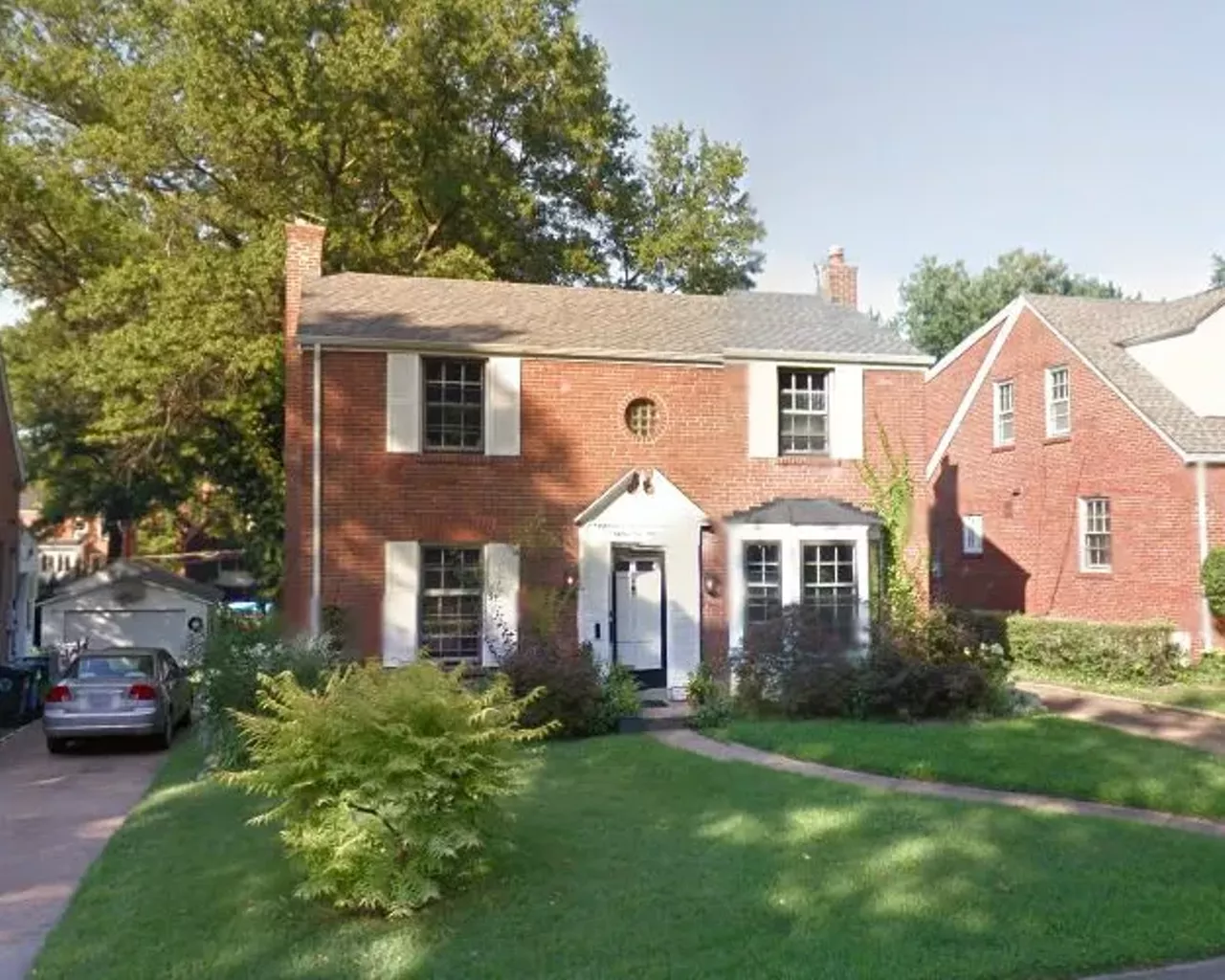
    Mai Lee is St. Louis’ first Vietnamese restaurant, bringing in the crowds and introducing our city to this sumptuous cuisine. Though somewhat strangely located on the ground floor of a parking garage in Brentwood — sandwiched between the Best Buy/Sports Authority colossus and the South Hanley Road Home Depot — Mai Lee thrives, its dining room seemingly packed at every lunch and dinner. The menu is massive — more than 200 dishes. Order any of them with confidence, from simple goi cuon (fresh summer rolls) to exotic ech xao lan (a stir-fry with lemongrass, curry and frogs’ legs).

  • Ask a Mexican: Why do Mexis hang out in the front yard instead of the back?

    Dear Mexican: I am a butt-white Irish guy, happily and stoked to be married to a beautiful Chicana. Her familia is from a gorgeous rancho deep in the corazón of Zacatecas, and I’ve been wanting to experience all of the ranchero lifestyle I keep hearing about from my acquired familia mexicanos (and from those songs at all of the truly awesome parties we attend just about every weekend). HOWEVER, our State Department has warned Americans to NOT travel into Mexico due to the violence by the drug cartels. Tales of decapitated bodies strewn across highways throughout Mexico has aired on just about all of the Spanish-speaking noticias I tune in to (so I can practice my español, and drool over the female newscasters — ¡que caliente!). Additionally, I’ve gotten such a mixed response from my compas of Mexican origin that now I’m as confused as my Irish grandpa was during prohibition! Some of the family and my pocho partners have said that all is great, and stop being a pinche güero panocha, and just go!  However, los otros amigos have told me that I’d be loco to travel into the moreno motherland because my six-foot, two-inches blond blue-eyed ass would stick out more than a pimple on a prom queen as I made my way into the ranch, and I would surely lose my oversized Ted Kennedy-looking head! Ayuda me — I’m so confused! Do I stay or do I go?
    Scared White Boy (With His Cabeza Intact)

    Dear Mick: I recently talked to a pal who just came back from Zacatecas, and you know what he said? He dijo that his hometown is safe now “because los del Chapo killed all the Zetas and now rule everything.” OY VEY! While bigger cities like Tijuana and Mexico City (and even Juarez, to a lesser extent) are generally safe now after the narcoviolence of the Calderón administration, I’d still stay away from the rural regions Mexico, which are experiencing full-fledged rebellion between warring cartels, corrupt cops, the Mexican military and autodefensas (local vigilante groups) who are saying a la chingada with everyone and defending their ranchos on their own terms. Then again, you’re gabacho, and as I’ve said before, ustedes can walk around Mexico with all the impunity of Winfield Scott because the cartels know better than to mess with one, They know if they do, the Obama administration will stop its eternal waltz with various cartels and rain down the drone desmadre.

    Dear Mexican: Why is it that Mexicans prefer to party, barbeque, dance, and drink in their front yards? Friday and Saturday nights, their low-riding buddies machine-pistol them without having to slow down their Honda. Tight-assed pink peeps party too, but in the safety of the back yard.
    Cabana Man

    Dear Mexican: Why do Mexicans do everything in the front yard? From cooking on the grill, to celebrating birthday parties with inflatable playgrounds like at Burger King to hanging their wet clothes over the railings on their front porch? A friend of mine told me the back yard was where Mexicans keep all their chickens, roosters and autos up on blocks, but it isn’t true. At least not here in Texas. Is this just genetic?
    Tony Romo is Lame, but Jerry Jones is Lamer

    Dear Gabachos: The sooner gabachos realize that front yards are just a pathetic remnant of Gilded Age nitwits pretending to live like British lords and start using yardas like Mexicans, the better off this country will be. Since houses in Mexico historically had no lawns or ornamental plants (that’s what the fields were for), Mexicans view front yards as virgin land ripe for the taking. We grow fruit trees and sugarcane; we park cars on it. And, : we’ll happily put a Dora the Explorer bounce house in the front. Why? Because the back yard is already too packed with partying Mexicans.

    Ask the Mexican at [email protected], be his fan on Facebook, follow him on Twitter @gustavoarellano or follow him on Instagram @gustavo_arellano!

  • Sister Act: Broadway musical retains the fun of the film, but not the music

    Midway through Act One of Sister Act, the ingratiating musical that is currently on view at the Fox Theatre, a shy police officer named Eddie Souther (Chester Gregory, reprising the role he created on Broadway) imagines what it might be like if he were as cool as Tony Manero, the disco-dancing dynamo portrayed by John Travolta in Saturday Night Fever. In the batting of an eyelash, Eddie’s basic blue uniform vanishes, and fantasy becomes reality. Or perhaps reality becomes fantasy. Whatever is going on, it occurs with surprising dexterity and is very clever indeed. Eddie’s “how’d they do that?” costume change is as effective as anything you’re going see (or hear) all night long. Thanks to unexpected moments like this one, the show charms. If you can’t have a good time at Sister Act, you’re not trying.

    Chances are that you already know the plot. The popular 1992 movie upon which this musical is based has grossed in the neighborhood of $230 million worldwide. In the film Whoopi Goldberg portrays Deloris Van Cartier, a Reno lounge singer who must hide out in a San Francisco convent disguised as a nun after witnessing a gangland murder. As Sister Mary Clarence, Deloris takes over the feeble choir and lives are impacted, including her own. This stage version has changed the locale to 1970s Philadelphia, but the general arc of the story is the same.

    Deloris is portrayed with assurance, aplomb and a killer smile by Ta’Rea Campbell. As the conservative Mother Superior who resists Deloris’ willful ways, Hollis Resnik is masterful. From the moment Resnik first enters twirling the sleeves of her habit as if they were a pair of maracas, this actress commands the stage. Her number in Act Two, “Haven’t Got a Prayer,” could be renamed “A Life in the Theater,” because Resnik’s performance is the culmination of a lifetime of having honed the tricks of her trade: timing, simplicity, focus. Although the strict Mother Superior is an entertaining foil to the free-spirited Deloris, during those rare occasions when Campbell and Resnik support each other, their combined energy provides a power surge that suffuses the stage with a nigh-holy glow.

    But here’s the thing. Although the original Sister Act benefited from the chemistry of the irrepressible Whoopi and the brittle Maggie Smith as Mother Superior (not to mention a string of acerbic one-liners hurled by St. Louis’ own Mary Wickes), this otherwise formulaic movie was made special by the way it redeployed already-familiar pop songs like “My Guy” and “I Will Follow Him” into songs of faith. Alas, none of the songs from the film are included in this stage adaptation. Those popular standards have been replaced. In their stead we hear a new score from composer Alan Menken and lyricist Glenn Slater (who has concocted some clever rhymes indeed). But because the Menken-Slater tunes are unfamiliar to us, that original concept of reinvigorating popular song — which was the axis upon which the movie turned — has been lost.

    Instead we are treated to rousing, shake-the-rafters choral numbers that entertained Broadway audiences for a year and a half and which surely will delight Fox Theatre audience during the current St. Louis run. But we cannot respond as we responded to the musical numbers in the movie, simply because these songs are not already part of our fiber. Anyone who attends this stage adaptation of Sister Act should have a high time, because the easygoing fun is contagious, and the laughs are bountiful. But it’s a different kind of fun than you had with Whoopi, Maggie and the singing nuns at St. Katherine’s. Here we get more choreography but less soul.

  • Monte Bello: A Basement Pizza Kitchen That’s About to Become St. Louis’ Worst-Kept Secret

    Monte Bello: A Basement Pizza Kitchen That’s About to Become St. Louis’ Worst-Kept Secret

    Welcome to Hidden Gem, a short love letter to restaurants, coffee shop and bars we at Gut Check have discovered off the beaten path. These are the places that soldier on in relative anonymity, beloved by their regulars and largely overlooked by the greater populace. Hidden Gem will attempt to rectify these terrible oversights. Have a Hidden Gem of your own to recommend? Tell us in the comments.


    Monte Bello Pizzeria's homemade toasted ravioli. - All photos by Mabel Suen

    All photos by Mabel Suen

    Monte Bello Pizzeria’s homemade toasted ravioli.

    In what seems like a top-secret pizza lair in south St. Louis — in a Lemay basement, to be specific — 54-year-old Tom Nix spends six nights a week single-handedly baking up what he calls St. Louis’ original thin crust pizza. That claim sounds like a tall one coming from a place that many St. Louisans aren’t even aware exists, but Nix seems determined to show us how it’s done.

    Last April, he took over management of Monte Bello Pizzeria (3662 Weber Road; 314-638-8861), equipped with all the restaurant’s original recipes from 1950. Those pies are now flying out of the oven for the first time in decades.

    The original owners, an Italian family by the name of Petrillo, built the restaurant in 1950 and lived in an attached building next door, says Nix. In its heyday, the restaurant had a bar upstairs and turned out upward of 270 pizzas a night into the late evening, not including the pastas and entrees they also served, he says.

    Though not related by blood, Nix simply knew the owners Mike and Helen as “Grandpa” and “Grandma” and still remembers peeling potatoes, grating cheeses and helping them out with other kitchen prep work while growing up around Monte Bello’s kitchen. By age ten, he was already assisting with the actual making of the pizzas.


    General manager Tom Nix slices up a steaming-hot pizza in the kitchen.

    General manager Tom Nix slices up a steaming-hot pizza in the kitchen.

    His mother, Peggy Morgan, worked there from the time that he was born, with the Petrillos’ son and his wife running the restaurant. In 1967, Morgan bought the restaurant from the Petrillos with her husband, who was a bartender upstairs. From that time, however, the products deviated from the original recipes and business slowly declined, Nix says.

    After his return to the restaurant in August of 2012, Nix found the original recipes locked away in a drawer. With a magnifying glass, he transcribed them letter for letter — everything from the four-cheese blend, sauce and dough to the homemade toasted ravioli, meatballs and Italian sausage. He went on to post signage, something the building lacked for over a decade, and says business has picked up nearly 75 percent since last April.

    “We’re using all original ingredients to make everything again. People are happy with the quality and the quantity,” says Nix. “I think it should be the way it was, you know. That’s my whole thing. We went back to to the original recipe to make it the way it should be made.”

  • Inside the North St. Louis Rec Center That Built Jayson Tatum

    Inside the North St. Louis Rec Center That Built Jayson Tatum

    THEO WELLING

    Michael Nettles, 58, a staffer at the Wohl Community Center, is the architect behind this sports institution.

    It feels like a normal day at the Wohl Community Center — kids running everywhere and adults doing their best to keep up. Then, suddenly, out of nowhere, Jayson Tatum appears. Shrieks echo throughout the building. Jayson Tatum, the Jayson Tatum, the Boston Celtics player who people are calling the next all-time great, is walking through this recreation center in north St. Louis.

    The entire place orbits around him. Kids, grandmothers, volunteer coaches, even babies and staffers. Everyone is running up to Tatum. Some want a photo. Some just want to see him in the flesh. The NBA star towers over everyone; his head looks close to hitting the ceiling, as if he no longer fits.

    Tatum, now 24, was once one of these Wohl kids. Up until high school, Tatum traveled to Wohl multiple times a week from his home in University City. There was always something going on: a pickup game, a workout, a men’s league game, kids shooting pool.

    “That’s just kind of how it was,” says his mom, Brandy Cole-Barnes. “They don’t turn anybody away.”

    As a kid at Wohl, Tatum saw his first Bentley in the Wohl parking lot, when two NBA players pulled up to play in a Pro-Am game, his mom says.

    Now, Tatum is that NBA player, returning to Wohl multiple times a year. He paid for the basketball court to be refurbished and for a new computer lab. He also hosts an annual summer basketball camp. He even brought ESPN to the court for an exclusive interview.

    “This,” he told ESPN in 2021, standing in the Wohl Center, “is like my home.”

    On this Tuesday afternoon in August, Tatum is running a backpack drive, complete with Jordan bookbags, Beats headphones, notebooks, pencils, Chick-fil-A chips and Celtics hats. It’s for Wohl kids –– and Wohl kids only. There’s no press, no fanfare. Tatum’s family is there, including his four-year-old son, Deuce, who chases a bouncy ball around the gym with Wohl kids.

    Any rec center with Jayson Tatum to its name would have a lot to boast about. And Wohl does. Tatum’s name is plastered on the hardwood floor that he donated. A banner in the gym reads, “Home of Jayson Tatum.”

    But there’s also a wall-length glass case in the hallway, layered with foot-long trophies earned by former Wohl legends who went on to star in college basketball and the NBA.

    Wohl, they say, is the mecca of St. Louis basketball.


    Nettles shows an image on his phone of Jayson Tatum visiting Wohl Center. The NBA star grew up coming to Wohl and now supports the center. - THEO WELLING

    THEO WELLING

    Nettles shows an image on his phone of Jayson Tatum visiting Wohl Center. The NBA star grew up coming to Wohl and now supports the center.

    The rec center has produced elite athletes: NBA players including Tatum, Larry Hughes and Patrick McCaw and college superstars including Torrence Watson, Courtney Ramey and Caleb Love, who recently led North Carolina to the March Madness finals. There are also countless local legends who never made the NBA but old timers still mythologize, like Antonio “Windmill” Rivers, whose head nearly hit the rim when he dunked.

    This is a public rec center on the corner of Kingshighway Boulevard and Dr. Martin Luther King Drive, where the grass is unkempt and the rims seem a little too high.

    Yet, somehow, it continues to produce some of the best basketball players in the world.


  • Ask a Mexican: Why do successful Mexi men marry white women?

    Dear Mexican: Long-time reader, first-time writer about this noble Aztlán. I watched the brown pride marches of the early 1970s and heard the shouts of La Raza and how it was going to be different now that the “Chicano” had arrived. The Mexicans were going to change things for the greater good. I remember when President Ronald Wilson Reagan gave amnesty to some 5 million illegal Mexican immigrants and how this was going to change things once and for all, bringing the Mexicans into American society with welcome arms and citizenship. Nothing was going to hold the Mexicans down now. And here we are: Mexico might not be falling, as you say, but the police, the Army or the citizens seem unable to stop the killing. Predominantly Latino school districts in Santa Ana and Los Angeles are failing, the Latinas are having babies out of wedlock at the rate of Guatemalans and the young Latinos are still tagging and banging. I believe Mexicans re-colonizing not only the Southwest but of most of America is only a matter of time, with brown pride and illegitimate children filling this great country. So what are you going to do with it, Mexican? History does not paint a very bright future for a Latino-controlled America. 
    Reading The Turner Diaries to Prepare

    Dear Gabacho: Sure it does! Rather than me offering you my usual pendejadas, I’ll direct you to the research of ¡Ask a Mexican! pal, University of Southern California professor Jody Agius Vallejo, whose book Barrios to Burbs: The Making of the Mexican-American Middle Class was just released in paperback (with a rambling intro by your favorite Mexican). Her pioneering research shows how, contrary to Know Nothing assertions, Mexicans are following the same assimilation and financial achievement patterns as previous immigrant groups. Can’t argue with facts, yet I’m sure you will, which only shows why your kind deserves your half-brown grandkid destiny.

    Dear Mexican: I have always wondered why high-achieving Mexican-American men tend to date/marry white women. I have noticed that since I was an undergraduate, now working in academia, most of the Chicano professors are married to white women (WHAT AN OXYMORON). Also, it seems that the more power a Mexican-American man has (whether it’s in academia or politics), the more likely he is to marry a white woman. What is this phenomenon about? Are educated Latinas threatening to high-achieving Chicanos? Are we too complex? What gives? I know this is a rather-sensitive matter and no one seems to want to talk. What is your take on the issue?
    A Xicana Scholar in San Antonio

    Dear Wabette: Your assumption is correct. A 2012 Pew Research Center study on intermarriage in los Estados Unidos put it thusly: “For newly married Hispanic men and women, marrying a white person is associated with a college education.” If anything, you smarty-art Chicanas marry gabachos at a HIGHER rate that smarty-art Mexicans: nearly 33 percent of mexicanas who marry a gabacho are college-educated, compared with about 23 percent of scholarly Mex-men who marry white. The Pew people didn’t get into the why of the matter, but I’d argue it’s because of the scandalously low amount of Latinos in college — coeds tend to get with what’s around, you know? All this said, chula, ALL Mexican men want a gabachita at some point in their lives, regardless of class — witness the shout-outs given to the wetbacks who nailed American women in Los Alegres de Teran’s “El Corrido de los Mojados” and “El Mojado Acaudalado” by Los Tigres del Norte (your humble Mexican can boast of a mick and a Yid in his past). Nothing against you fine-ass Xicanas, but dating a white woman is the ultimate status symbol for hombres, not so much for the prestige but so we can get our share of the romance Reconquista.

    Ask the Mexican at [email protected], be his fan on Facebook, follow him on Twitter @gustavoarellano or ask him a video question at youtube.com/askamexicano!