Search results for: “/"”

  • Chauncey Brown Murder: Tyrell Davidson, 16, Charged as Adult with Shooting Teen in Feud

    Chauncey Brown Murder: Tyrell Davidson, 16, Charged as Adult with Shooting Teen in Feud

    SLMPD

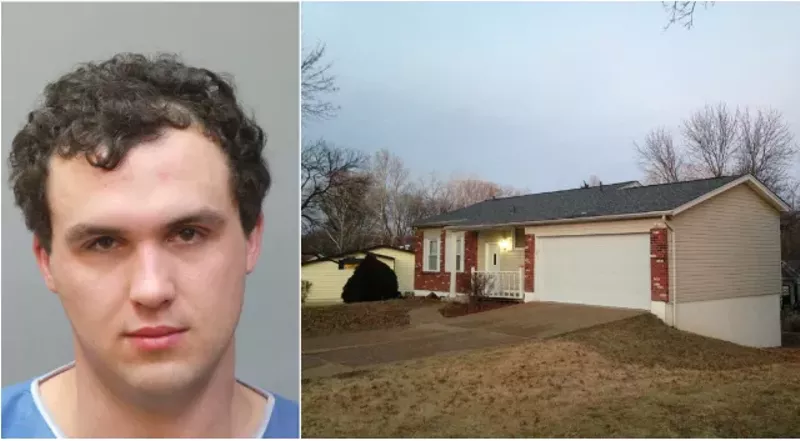
    Tyrell Davidson, a sixteen-year old black male of the 9900 block of Danideer

    Tyrell Davidson, sixteen, faces first-degree murder, first-degree assault and armed criminal action charges after a teenage feud turned into a drive-by shooting.

    The teens were partying at Club 187, at Martin Luther King Drive and Marcus Avenue, in September when a suspect threatened to shoot a rival group with a handgun, according to police.

    Three teens — including Chauncey Brown, a sixteen-year-old from the Dutchtown South neighborhood — left the club to avoid a confrontation when four black males in a white Dodge Challenger pulled up and started shooting.

    See also: Chauncey Brown, Missing Teenager, Found Shot In The Chest (Homicide No. 78)

    When the bullets cleared, Brown was missing. His friends say they looked for him but couldn’t find him in the dark. By 4 p.m. the next day, Brown’s guardian called police, saying he hadn’t responded to calls or messages.

    Police found him one-tenth of a mile north of the club, face down, with a gunshot wound to his chest in the back of a house in the 4700 block of Cote Brilliante Avenue. He was pronounced dead at the scene.


    4700 block of Cote Brilliante - Google Maps

    Google Maps

    4700 block of Cote Brilliante

    Davidson will be charged as an adult for Brown’s murder, as well as for assault and armed criminal action.

    Follow Lindsay Toler on Twitter at @StLouisLindsay. E-mail the author at [email protected].

  • The 6 Toughest Eating Challenges in St. Louis and One Foolish Man’s Attempt to Beat Them All

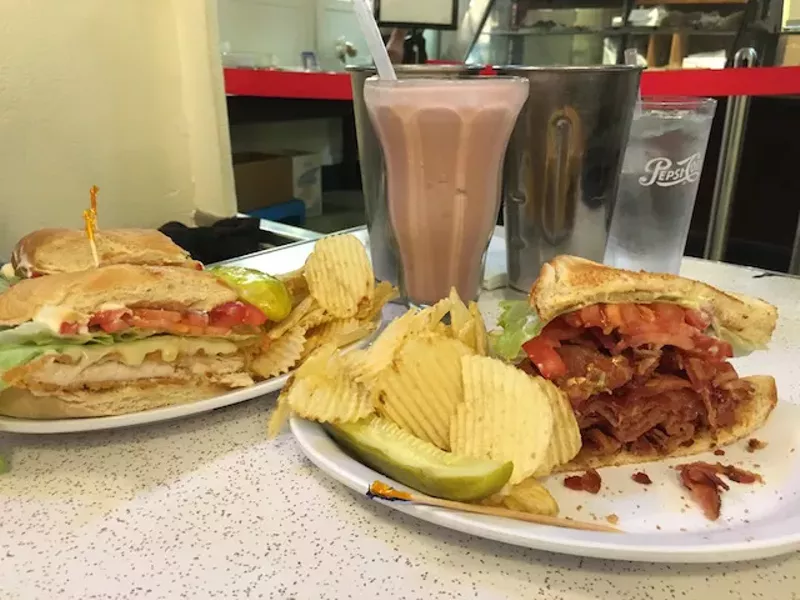
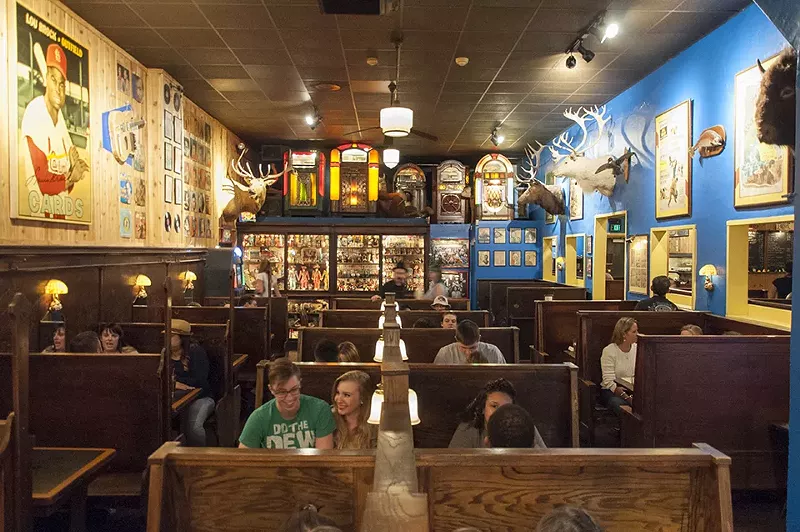
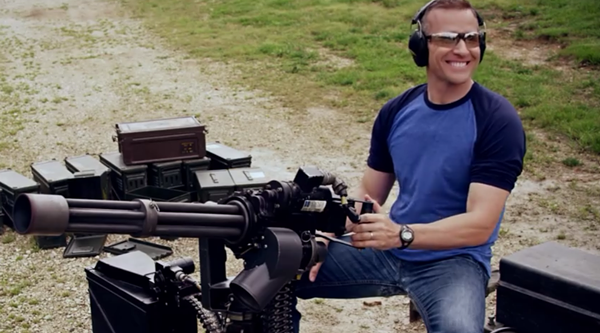
    The 6 Toughest Eating Challenges in St. Louis and One Foolish Man’s Attempt to Beat Them All

    The author at Mama Campisi’s. | Zach Garrison

    Charlie Stark, owner of the Whistle Stop in Ferguson, readily admits where the inspiration for his restaurant’s thirteen-scoop, frozen-yogurt challenge comes from.

    Man v. Food. I won’t lie,” he says.

    Jeff Mullersman, owner and chef at de.lish Cheesecake Bakery & Cafe, also found inspiration after seeing a food-challenge show on television.


    “I just loved watching people taking on the different challenges,” says Mullersman of his fiery-hot Inferno Sandwich Challenge. “It’s just fun to watch people sweat.”

    It’s not as if this is an entirely new trend — Crown Candy Kitchen started its 5 Malt Challenge all the way back in 1913. And there is nothing more prototypically American than our celebration of eating, whether it’s our ridiculously large portions, professional competitive-eating circuits or conquering unfathomable levels of spice, people can’t get enough.

    Lance Ervin, owner of Mama Campisi’s Restaurant, was inspired after he saw someone try to vanquish the largest burger he’d ever seen at a restaurant in Memphis. “I thought I should try to incorporate the idea, but for an Italian restaurant,” he says. Thus, Mama’s Pasta Challenge was born.

    For Ervin, the goal of hosting a challenge was to “create something that would be talked about,” and he notes that people travel from all over with the specific goal of defeating Mama’s Pasta. Simply put, food challenges are fun and attract customers.

    “We don’t really make money on the actual challenge,” says Stark. “It’s just that people always bring friends, and no one wants to sit there and watch their friend eat ice cream, so they have to order something too.”

    There’s another reason why eating challenges succeed: suckers like me. While researching local food challenges, I came to believe that given the right circumstances, my immense appetite could probably handle whatever portions or spice level was presented to me, no problem. The cocky, overly competitive voice inside my head kept insisting that I go out there and dominate.

    I decided to attempt six local food challenges over five weeks — having done no preparation or training — believing fully that my exploits would prove successful and I’d soon receive widespread admiration. Here’s what actually happened.

  • Immaculate Deception

    When Pope John Paul II tapped him to be Archbishop of St. Louis last December, Raymond Burke took yet another stride along the ecumenical fast track. Ordained as a priest in Rome by Pope Paul VI in 1975, Burke had studied canon law in Italy. In 1989 he was appointed to the Supreme Tribunal of the Apostolic Signatura, the church’s highest court, and six years later the pope named him bishop of La Crosse, Wisconsin. Now, at age 55, he was taking his place on the national stage.

    The local press described him as the ultimate Vatican insider, a conservative who was said to follow papal decrees minutely. His hard-line stances often spilled over into the eccentric: He’d pulled his diocese out of Church World Services’ annual Crop Walk because the agency advocates birth control. He’d criticized J.K. Rowling’s Harry Potter series of children’s books. He’d spearheaded a controversial $25 million shrine in La Crosse honoring Our Lady of Guadalupe. Most remarkably, he’d ordered priests in his diocese to deny Communion to Catholic politicians who supported euthanasia or abortion rights.

    One controversy, however, appeared to have missed Burke entirely: the clergy sex-abuse scandal, which for two years running had rocked the moral underpinnings of the Catholic Church.

    While other dioceses reeled amid thousands of allegations of abuse by priests, the Diocese of La Crosse had recently reported that from 1950 to 2002 a mere 10 out of a total of 705 clerics had been found guilty of sexual misconduct — a rate of 1.4 percent. By contrast, the United States Council of Catholic Bishops reported a national average of roughly 4 percent during the same time period. All told, only 31 allegations of clergy sexual abuse had been substantiated in La Crosse. Only three of those cases had made headlines in Wisconsin. One involved a non-diocesan priest, Timothy Svea, who was part of a religious order (see accompanying sidebar); the other two priests are dead.

    Burke, it seemed, had tended his garden nicely in La Crosse and was well poised to minister to the fallout of the scandal in the Archdiocese of St. Louis. Whereas his predecessor, Justin Rigali, had drawn fire for ignoring victims of abuse, the incoming archbishop was tidily insulated from the problem. So much so, in fact, that when St. Louis Post-Dispatch reporter Ron Harris asked him to name the most pressing issue facing the Catholic Church here, Burke replied, “How to organize our parishes and our Catholic schools.”

    But some members of Raymond Burke’s former flock paint a far different portrait of the erstwhile bishop of La Crosse. If cases of clergy sex abuse were few and far between, they say, it was because Burke was a master at keeping a lid on them. Several victims who claim they were abused by priests in La Crosse tell Riverfront Times they were stonewalled by Burke, who declined to report their allegations to local authorities. And while some of his fellow church officials nationwide were reaching hefty settlements with victims, Raymond Burke was unyielding in his refusal to negotiate with victims’ rights groups. He declined to make public the names of priests who were known to have been abusive, and he denied requests to set up a victims’ fund. Most strikingly, Riverfront Times has learned, while bishop in La Crosse Burke allowed at least three priests to remain clerics in good standing long after allegations of their sexual misconduct had been proven — to the church, to the courts and, finally, to Burke himself.

    His critics say Burke’s ability to conceal the diocese’s dirty laundry was abetted by Wisconsin’s unique civil code, which makes it virtually impossible for someone to sue the church for the actions of an individual priest.

    “He stands with his fellow bishops in Wisconsin as having had the ability to just rebuke and ignore our victims,” says Jeff Anderson, an attorney in St. Paul, Minnesota, who specializes in clergy abuse cases. “He has a long history of making pastoral statements that they care, that they want to heal, that they want to help. They are very long on words, but very short on actions.”

    “We don’t exist, for him,” seconds Peter Isely, a Wisconsin leader of the national Survivors Network of those Abused by Priests (SNAP). “Loyalty to the church is of the highest order for him, and his response to victims’ claims has been lethargic and slow and reluctant and bureaucratic and impersonal.”

    Then again, if success is measured in money saved and avoidance of scandal, Raymond Burke possesses a sterling record. At a time when dioceses are reaching million-dollar settlements with individual victims and filing for bankruptcy, Burke reported in January 2004 that between 1950 and 2002 the Diocese of La Crosse paid out a grand total of $15,807.38 to victims seeking counseling for clergy sexual abuse.


    It was in May of 1971 that B.V. first met the man she says sexually abused her. She was nine years old, and her family had traveled 45 minutes to the small town of Hewitt, Wisconsin, to attend a relative’s wedding. While at the wedding, her parents befriended Father Raymond Bornbach, pastor of St. Michael’s Parish. (At their request, victims in this article are not identified by name.)

    “After that wedding he called my mom and asked to spend some special time with my sister and I,” B.V. writes in a handwritten statement delivered to diocesan officials on September 22, 2003.

    Her mother agreed, and soon Bornbach was traveling far outside his parish to pick up the girls and take them for drives along central Wisconsin’s rural two-lane roads.

    B.V. alleges that during the drives Bornbach would pull over at outdoor rest stops and ask her eight-year-old sister to get out of the car. “She would sit nearby on a rock, while in the car he would have me sit next to him[;] he would rub his hands up and down my thighs,” B.V. writes. “He would always kiss me on the lips and he smelled of cigar breath. He would stick his tongue in my mouth.”

    According to the statement, a copy of which B.V. supplied to Riverfront Times, the abuse continued for more than a year, becoming progressively more intense. Eventually, B.V. alleges, Bornbach brought her to his house, took her upstairs to his bedroom and offered her a rosary before molesting her. “[He] asked to see the scar on my left arm and side where I had been burned as a child,” she writes. “He removed my dress and rub [sic] my chest and laid me on the bed, he then laid on top of me and started to hump up and down and rub his body on mine.”

    Bornbach didn’t go any further, B.V. states. He was interrupted by his housekeeper. When the bedroom door opened, she writes, “he jumped up and told her we would be right down.”

    Afterward, B.V. recalls in her statement, Bornbach took her to a local hardware store and bought her a bike. “[It was] my 1st ever bike,” she writes. “It was purple.”

    The statement was penned nine months after B.V. came forward with her allegations in a January 6, 2003, letter to then-Bishop Burke. “They told Bornbach to get an attorney and not to talk to anyone,” B.V. says during an interview in her central Wisconsin home. “So when I called, I asked if I was supposed to get an attorney, too. They proceeded to tell me that if I got an attorney, all communication with them would cease.”

    It was the beginning of what became for her a painful eighteen-month saga. “I was really naive in thinking that once they received this letter they would right away do something with this guy,” B.V. says today. “Bishop Burke protects his own.”

    Archbishop Burke declines to comment about specific instances of sexual abuse, but he defends his record and his “open door” policy for victims of clergy abuse. “I have a policy, both in La Crosse and here, to meet personally with those who are making allegations, and then to follow very carefully the protocols that have been established by church law,” Burke said during a telephone interview with Riverfront Times that also was attended by archdiocesan attorney Bernie Huger and archdiocesan communications director Jim Orso. “My response was always pastoral. I wanted to meet personally with the victims, or alleged victims. I met with them as often as they wanted.”

    Initially B.V. wanted four things from the diocese: She wanted Bornbach stripped of his collar. She wanted his name released to the public. She wanted to meet her alleged abuser face to face and she wanted to meet with Raymond Burke.

    “From day one I asked to speak with the bishop. Almost every time I talked to these people I asked how come I wasn’t talking to the bishop,” B.V. says. “How come something wasn’t being done?”

    Instead of meeting with B.V., the bishop appointed a liaison to meet with the alleged victim. When B.V. asked if her therapist could attend the liaison’s initial fact-finding interview, Burke agreed, though it went against a policy on child sexual abuse he’d set out in 2002. He stipulated two conditions, however, in a letter dated May 6, 2003. “The interview will be confidential. Therefore, no recordings or notes may be made or taken,” he writes. The second stipulation: “You agree that the interview is part of an internal Church process which may not be disclosed, compelled to be disclosed, or used as evidence in or as a basis for any non-Church action.”

    B.V. balked. She wasn’t ready to tell her story to a stranger, and she canceled the meeting. “You have to be ready,” she says. “Some days you don’t want to talk about it, other days you do.”

    But the diocese wasn’t waiting around. Unbeknownst to B.V., Burke had passed the matter off to the Diocese of La Crosse Child Sexual Abuse Review Board, a six-member group of church and lay officials — including the diocesan attorney — whose duty it is to review allegations of clergy sexual abuse. So B.V. was surprised to receive a letter from the board on August 28, 2003, warning, “If we do not hear from you by Monday, September 15, 2003, we will assume you do not wish pursue to [sic] the matter and the case will be closed.”

    “I called them immediately,” she says. “[I] told them, ‘You can close the case, but it will never be closed for me.’”


    At age 89, Father Raymond Bornbach now lives in a humble single-story home in Marshfield, Wisconsin. Diabetes and a recent operation to replace his aortic valve have restricted his movements. Nonetheless, he continues to put on his Roman collar and visit patients at nearby St. Joseph’s Hospital. During a recent interview, he confirmed that he still draws a pension from the church. He also is still listed in the Official Catholic Directory as a retired priest in good standing. He denies ever engaging in any sexual misconduct and describes his relationship with B.V. as “best friends.” (When asked by the sexual review board about the abortive assault at the priest’s home, Bornbach’s housekeeper, with whom he still lives, also denied the incident occurred.)

    It took years of therapy before B.V. finally mustered the strength to bring her allegations to the bishop of La Crosse. What she did not know, however, was that she was not the first to contact Burke regarding Raymond Bornbach.

    In a letter dated March 26, 2001, another alleged victim of clergy abuse contacted by Riverfront Times wrote to Burke, stating: “I know I have talked to you about Fr. Raymond Bornbach before, and I thought when you retired him it would take care of the problem of his dirty little hands and his filthy mouth…. But it has not since he still goes to the St. Joseph [sic] Hospital in Marshfield, and visits sick people,” the letter reads. “He still goes on the psych unit and tells women there that ‘Jesus loves them and he does too.’ When he was visiting [illegible] there he not only told her that but he was also touching her breasts and putting his tongue in her mouth…. I know what he did to her because she told me right after it happened.” (The letter writer, who supplied Riverfront Times with a copy of the correspondence, blacked out the name of the alleged victim at St. Joseph’s.)

    The letter writer goes on to detail other instances of alleged abuse by Bornbach, before concluding: “Bornbach even wearing the collar is such a disgrace to all good priests. I’m surprised the other priests don’t strip Bornbach of his collar.”

    As with all allegations of clergy abuse, Burke declines to discuss specifics. “Whenever an accusation is brought, no matter what the status of the priest was, it was thoroughly investigated,” he says. “The priest was confronted, and it was thoroughly investigated: That’s my policy.”

    The diocese may well have investigated Bornbach, but any such records are strictly shielded from public view. Nonetheless, at least one other alleged victim cited in the letter says she was never contacted by investigators in relation to Raymond Bornbach.

    As the months dragged on, B.V. became increasingly frustrated with Burke’s inaction. “It was pointless to talk to the diocese,” she says. “I called one of [the members of the Child Sexual Abuse Review Board] and said: ‘I want a meeting.’”

    It was not until B.V. contacted the review board that she was finally afforded an interview with Bishop Burke, on January 10 — a full year after she’d stepped forward. Her husband went with her.

    B.V. says that during the meeting Burke promised he’d make a decision about the Bornbach matter by the time he left for St. Louis. “We said, ‘You leave on January 24th, that’s all over the newspapers. We know when you leave. Are you going to be able to make a decision in four days?’ He said, ‘Yes, I will definitely call you and let you know what we’ve decided,’” B.V. recalls. “Of course, January 24th came and went with no word from Burke.”

    Last week B.V. received a letter from the diocese informing her that the Child Sexual Abuse Review Board had substantiated her claim and that appropriate action would be taken.

    “We recommended that action be taken against Father Bornbach,” says one board member, who spoke on condition that his name not appear in print. “[Although] at his age we were told laicization would probably not take place, but it would be recommended that he no longer act or appear with a Roman collar as a Roman Catholic priest.”

    B.V. credits the board for investigating her claim and believes that had she not contacted its members, nothing would have happened. “This man is a rock,” she says of Burke. “He is not moving. He knows his laws, and he knows he’s protected. The law protects the church. They don’t have to do anything about these people. Nothing. And this bishop knows that.”


    “The law” derives from a 1995 Wisconsin State Supreme Court decision in the matter of Pritzlaff v. the Archdiocese of Milwaukee. In that case, Judith Pritzlaff sued the archdiocese in 1992 for $3 million, arguing that an affair she’d had with a priest in 1959 had ruined her marriage. The state’s highest court upheld a lower court’s finding in favor of the archdiocese. The justices held that a court of law cannot determine whether a church has been negligent in hiring or supervising its priests. The relationship between a bishop and a priest is part of religious practice, they reasoned, and therefore a bishop’s decision about an individual priest’s fitness for ministry is fundamentally a religious decision. To rule on such a matter, the justices found, would unduly entangle the courts in religious practice.

    The watershed decision made it virtually impossible to sue a Wisconsin diocese for its conduct regarding an individual priest’s actions — one of the few ways in which abusers become publicly known and dioceses are held accountable. Victims may still sue individual priests, but rare is the lawyer who’ll take a case against a defendant who has taken a vow of poverty.

    “Burke has been effectively insulated from accountability,” says St. Paul attorney Jeff Anderson. “He was operating in a state where there were no effective legal remedies: You can’t sue them.”

    Of course, abuse victims may seek criminal charges against a priest, but the allegations must be presented within the statute of limitations, which for sex crimes against minors in Wisconsin generally means taking action before the victim reaches age 35.

    It was the statute of limitations that doomed a lawsuit Anderson brought against the Diocese of La Crosse in 1991. In that case, Jane Y. Doe v. the Diocese of La Crosse, the plaintiff alleged that when she was fourteen years old she was sexually abused by Father Thomas Garthwaite, who was then pastor of Sacred Heart of Jesus Parish in Marshfield.

    “[The] Diocese knew or should reasonably have known that Defendant Father Thomas Garthwaite suffered a serious significant psychiatric condition requiring professional treatment and was unfit for placement as a parish priest,” reads Anderson’s original complaint filed in La Crosse County Court. “Defendant Father Garthwaite regularly and repeatedly sexually abused the Plaintiff. The sexual abuse occurred, among other places, at the rectory and on the grounds of the Defendant Sacred Heart Church, and occurred during counseling sessions. Defendant Father Garthwaite repeatedly told the minor Plaintiff that she was a devil and was responsible for the sexual contact…. Father Garthwaite severely beat the Plaintiff.”

    Today at age 55, Doe is unflinching in her description of the alleged abuse. “Tom Garthwaite abused me in the confessional. We were having sex on the altar in the church. He was putting the host inside my vagina, and eating it out,” she says during an interview at her home in central Wisconsin. “[Garthwaite] made me come to the confessional and tell him how sorry he was that I took a man of God and caused him to sin. Then he made me suck him off. He would hold my head to his penis — to his belly — and he would ejaculate in my mouth and say, ‘Swallow it, bitch.’ Then he would tell me that I didn’t do enough penance and it was still my fault.

    “Burke knew about all this stuff,” Doe says. “In 1995 I told him about Tom.”

    When Doe’s suit against the diocese was rejected by the court in the early 1990s, Burke was working in Rome. But Doe says she was the first alleged victim of clergy abuse to meet with him after he became bishop in 1995.

    The alleged abuse left lasting scars on Doe’s psyche; her psychotherapist, Daniel Carlson of Minneapolis, Minnesota, diagnosed her with depression and post-traumatic stress disorder. But Carlson would later note in an unrelated correspondence, “I have always found her to be a reliable and believable witness to her own past trauma.”

    Nonetheless, soon after Doe’s first meeting with the bishop, Burke received an alternative analysis for Doe’s condition. “For the last six months, [Jane Doe] has shown symptoms that I cannot explain on a purely psychological basis,” wrote Medford, Wisconsin, psychologist Joseph F. Roe in a letter to Burke dated September 3, 1996, which was supplied to Riverfront Times in a bundle of documents and correspondence. “This patient needs someone to assess whether or not she requires deliverance prayers.” In a follow-up letter dated April 15, 1997, Roe again appeals to the bishop: “I would like to be able to refer her to someone who would be qualified to discern whether or not she is possessed.”

    Burke declines to comment about the case. But judging from his letters, it appears he obliged Roe’s request. In a letter dated June 17, 1998, Burke writes to Gerry Peterson of Family & Children’s Service, a private nonprofit agency in Minneapolis: “Before granting the permission for an exorcism, according to the proven practice of the Church, I require a competent psychiatric or psychological determination of the person’s condition. For that purpose, Ms. [Doe] has been referred to you. When your psychological assessment has been completed, I ask that you provide me with the pertinent records and conclusion, so that I may make a determination regarding a possible exorcism. I am certain she will sign a release to permit this disclosure. Enclosed is payment in full for the above required treatment.”

    Apparently there was a misunderstanding. Peterson was in fact running group-therapy sessions for victims of clergy sexual abuse, and when Burke discovered the therapist was not examining her patients for demonic possession, the bishop balked. In a letter dated July 27, 1998, Burke writes to Peterson: “It was my understanding that [Jane Doe] was seeing you for purposes of conducting a psychological assessment related to potential demonic possession. I was not aware that you would not be providing those services…. I don’t recall agreeing to pay for group therapy…. I do intend to obtain a psychological assessment for Ms. [Doe] in the above mentioned sense. However, if that is not possible through you or your agency, then I would kindly ask you to return the payment made so that it can be assigned for the purposes it was intended.”

    Doe, who provided Riverfront Times with copies of the correspondence, says she was never evaluated for demonic possession. While Burke won’t comment about the specific incident, he does say he is not opposed to the practice. “[If] I thought there was some question of a diabolical influence on the person causing the person distress, or that person had become involved or indicated to me that he or she had become involved with Satanic activity, then exorcism — there are various rites in the Church to combat the influence of Satan and evil spirits,” the archbishop says. “Those could be properly used for the spiritual good of the person.”


    In the coming years Burke met with Doe on multiple occasions. Their correspondence, often combative, occasionally tender, is marked by numerous letters from Doe and the occasional reply from Burke. “Over the years I have come to respect you not just as a Bishop but as a compassionate ‘pastor of souls,’” Doe writes in a letter dated December 14, 2001. “When you told me you were ‘sorry’ that made a huge difference in my recovery. You didn’t just say it once, but you said it again.”

    This brief rapprochement accompanies a formal claim of clergy sexual abuse against Father Thomas Garthwaite. In the document, Doe requests back payment from 1966 to 2001 in the amount of $25,000 per year. In support of her claim, she cites two notes contained in her lawsuit, which she allegedly received from Garthwaite.

    The first, from December 1966, reads: “Hello Baby, My number is still in the phone book — all you need to do is dial. I’ll take you up on the offer you made in the hospital. I did not at the time think [illegible] grab all that subtlety. Nothing wrong with me that a [illegible] would not cure — yours only! I need with you a night of Love[,] Tiger.”

    The second note, which Doe claims is a response to a letter she’d written Garthwaite, is dated July 20, 1984, and reads: “It makes me glad that you’re not so bad as you were at fifteen. You did not know at thirteen. Tiger.”

    In August 2002, more than seven years after Doe first approached the bishop, Burke agreed to help with her counseling costs. In a letter dated August 19 of that year, he appears to accept her claims of abuse: “As I have stated before, I am deeply sorry for any harm that has come to you from any priest, especially form [sic] the Diocese of La Crosse. I have written this to you and stated it to you personally on many occasions, and I am happy to write it once again. I have studied the documents which you have sent to me. I do not question your veracity.”

    Over the course of the next year, the diocese reimbursed Doe roughly $10,000, from a fund for works of charity. Garthwaite, meanwhile, remained listed as a retired priest in good standing. In 2003 his name was quietly removed from the roles of the Official Catholic Directory. Neither Burke nor the diocese would comment on his whereabouts or status.

    Doe requested multiple times that Bishop Burke hand over her allegations to the diocese’s Child Sexual Abuse Review Board. Burke refused. In a July 15, 2003, letter to Doe, he writes: “Regarding Father Garthwaite, as you know, he has been removed from ministry. Given the fact that he has already been removed from ministry, it is not necessary to present your case to the Review Panel. The Review Panel is only used in those cases in which there is a question of whether or not a priest ought to be removed from ministry. If that has already occurred, no review is necessary or possible.”

    The bishop’s reasoning appears to contradict the “Child Sexual Abuse Policy and Procedures of the Diocese of La Crosse,” which Burke himself had composed a year earlier. According to Article 10 of that document, “If the accusation is not admitted, the matter will be referred to the Diocese of La Crosse Child Sexual Abuse Review Board.”

    It is possible, of course, that Garthwaite admitted guilt. At any rate, in an evident change of heart, Burke informed Doe a month later that he was in fact sending the matter on to the Child Sexual Abuse Review Board, “to see whether the members judge it fitting to speak with you personally.”

    According to one member of the board, Doe’s file has yet to arrive. The board member says the panel has received only three cases from Burke. Two of them involved priests who had died; the third was the recently investigated case of B.V. and Raymond Bornbach.

    “There were no allegations brought to us formally on Garthwaite,” the board member says. “Like I say, the ones we have, have all been against deceased priests. Bornbach is the only living priest that has come before the review board.”

    In a written response to a series of questions, Father Lawrence Dunklee, vicar of priests for the Diocese of La Crosse, tersely refutes the board member’s claim, calling it “untrue” and asserting that the diocese has adhered strictly both to the criteria set out by the United States Conference of Catholic Bishops and to Burke’s own policy on sexual-abuse claims.

    Burke seconds the diocese’s stand. “I find that a bit amazing,” the archbishop says of the assertion that only three cases were supplied to the Child Sexual Abuse Review Board. “I cannot comment on individual cases, but I can simply tell you this: Whenever there was an accusation, a full investigation took place.”


    In 1975 D.K. enrolled at the University of Wisconsin-Eau Claire and took a work-study job as a janitor. At the time, Father James E. Mason was leading the campus ministry at the university. D.K.’s relationship with his girlfriend was in trouble, he says, and he often sought the priest’s counsel. When the romance finally ended, Mason asked the young man to move in with him. D.K. accepted.

    It was not the first time D.K. had met the priest; he’d held the same custodial job while a junior in high school. At that time, D.K. says, Mason had made sexual advances. “He started really pressing the issue with me — a lot of hugging and that sort of thing,” D.K. recalls.

    Nonetheless, D.K. says that when he returned to the university as a student, he didn’t avoid Mason. “I thought that I was pretty special to be Father Mason’s friend,” he says. “In some ways I kind of felt sorry for him, you know? He had a drinking problem, and he’d always told me about his problems.

    “Especially after I broke up with my girlfriend, I confided in him and that kind of thing, and he took advantage of that and made it a sexual thing,” D.K. goes on. “He was always trying to push me into having sex with him, and for some stupid damn reason I let him touch me several times in the groin. It was all pretty bizarre. Looking at the whole thing after having been through counseling for a number of years, now I can see just exactly what happened: Father Mason wasn’t my friend; he was grooming me for sex. He got so aggressive one time that he came in in his underwear and started wrestling with me and sticking his tongue in my mouth. I was freaking out about it and everything. He was trying to sexually assault me, is what he was doing. I fought him off. I punched him pretty hard a few times just to get him to stop.”

    D.K. says he left Wisconsin soon after the incident. He worked as a miner in Colorado and South Dakota, married and started a family. It wasn’t until he entered therapy in 2000, he says, that he really began thinking about what Mason had done. “I thought it was my responsibility — once I understood how all this stuff works — because at least in my mind, he had no doubt done this to other people,” D.K. says. “I got hold of [Bishop Burke] in 2000 and told him about it. I got a feeling there’s quite a track record on this guy, and maybe no one’s spoken up about it.”

    What D.K. did not know was that in 1981 Father James Mason had been found guilty in Wisconsin’s Chippewa County Court of sexually assaulting a student who’d come to him for counseling.

    “Mason directed that [the student] seat himself on the couch and remove his shirt,” reads the criminal complaint, filed July 24, 1981. “Mason then maneuvered him into a position where he was laying on his back with Mason lying on top of him. The student stated further that Mason kissed and hugged him during this meeting. The student stated that he did not give Mason consent to have sexual contact with him.”

    Mason’s sentence was withheld, and he was placed on eighteen months’ probation.

    Neither Burke nor the current administration of the Diocese of La Crosse will comment specifically on the status or whereabouts of James Mason. But according to the Official Catholic Directory, the priest moved in 1981 from Chippewa Falls to the Roncalli Newman Parish in La Crosse, where he remained until 1986. From 1987 through 1992, Mason is listed as “Absent on Sick Leave.” From 1993 to the present, he is listed as “On Duty Outside the Diocese.”

    Mason did not return phone calls requesting comment for this article, and diocesan officials would not comment on in what capacity he now serves his diocese, or whether he continues to draw a salary.

    As with Garthwaite, Father Lawrence Dunklee says D.K.’s version of events is “untrue.” Adds Dunklee in his written statement: “Specific cases are confidential and will not be disclosed or acknowledged.”

    According to several diocesan priests, Mason now counsels drug users in the Archdiocese of Milwaukee. He is said to have undergone “voluntary laicization” earlier this year — roughly three years after D.K. first presented Burke with his claims.

    In his correspondence with D.K., Burke appears unwilling to admit that the diocese might be at fault. “I have met with Father James Mason, as I indicated to you, on the Saturday before Palm Sunday. I shared completely with him what you had reported to me,” the bishop writes in letter dated May 6, 2003, which D.K. supplied to Riverfront Times. “Father Mason does not remember the specific incidents which you reported to me. He indicated to me that his memory of that whole period of time is not good because he was suffering, at the time,

  • Lester Davis Shoots Up Barber Shop During Sandy Hook Elementary Discussion, Gets 14 Years in Jail

    Lester Davis Shoots Up Barber Shop During Sandy Hook Elementary Discussion, Gets 14 Years in Jail

    Lester Davis of Wentzville.

    Lester Davis, 57, was sentenced to 14 years in jail Monday after shooting up a Wentzville barber shop during a conversation about the shootings at Sandy Hook Elementary School in Newtown, Connecticut.

    Davis, of Wentzville, pleaded guilty to second-degree assault, armed criminal action and being a felon in possession of a firearm, according to the St. Charles County prosecuting attorney’s office. Each count costs Davis seven years in prison, but he will serve the assault and criminal action sentences concurrently.

    See also: James Crocker: Woman Who Called 911 After Float Trip Shooting Says He Was “Very Calm”

    After a violent attack at Sandy Hook Elementary left twenty children and six adults dead in December 2012, a man at All Cuts Barber Shop mentioned that the shooting made him want to murder Adam Lanza, the twenty-year-old suspect.

    For some reason, that statement caused Davis to lose it. He stepped out of the shop, got his loaded Smith & Wesson 9 mm pistol from his Volkswagen sedan, walked back in and shot three times at the man, according to the St. Louis Post Dispatch.

    “I’ll let you slide,” Davis told the man before walking out of the barber shop and driving away. He later turned himself in to police.

    Davis also has a felony conviction in New Jersey and a history of altercations with neighbors resulting in orders of protection against him.

    Follow Lindsay Toler on Twitter at @StLouisLindsay. E-mail the author at [email protected].

  • Chauncey Brown, Missing Teenager, Found Shot In The Chest (Homicide No. 78)

    Chauncey Brown, Missing Teenager, Found Shot In The Chest (Homicide No. 78)

    via Flickr, Ken

    The body of 16-year-old Chauncey Brown, who was reported missing on Friday, was located Saturday in the rear of the 4700 block of Cote Brilliante. St. Louis Metropolitan Police say the teen was found face down with an apparent gunshot wound in the chest.

    Another 16-year-old black male has been taken into custody in connection to the shooting.

    Brown, who lived on the 2900 block of Keokuk, had gone out Friday night with two friends to Club 187, located on Martin Luther King Drive and Marcus Avenue. They ran into several individuals they were feuding with, and witnesses say one of those individuals threatened to shoot Brown and his friends with a handgun.

    See Also: Kevin Davis, 40, Stabbed Multiple Times In Back (Homicide No. 77)
    Trying to avoid confrontation, Brown’s group left the club. Confrontation followed, however, in the form of a newer model white Dodge Challenger, whose four occupants opened fire on the group of teenagers, who scattered and ran.

    One of the victims told police that he and others searched for Brown after the coast was clear, but they could not find him. He was reported missing Friday afternoon, and after a search officers found his body on Saturday.

    Police say they recovered the car used in the drive-by shooting, and that the investigation is ongoing.

    Here’s the full statement by the police:

    Incident: Homicide

    Location: 4700 block of Cote Brilliante (rear)

    Date/Time: 09/27/13 to 09/28/13 @ 1557

    Victim #1: Chauncey Brown, a 16-year old black male of the 2900 block of Keokuk

    Victim #2: 16-year old black male (not injured)

    Victim #3: Unknown

    Suspect: A 16-year old black male has been taken into custody. The vehicle used in
    the incident has been recovered.

    On 9/28/13, The Homicide Section was requested to 4700 block of Cote Brilliante (rear) for a victim of a shooting. The victim was located facedown with an apparent gunshot wound to his chest. He was pronounced deceased by EMS. On 9/27/13, the victims were at “Club 187”, which is located on Martin Luther King and Marcus. The victims and witnesses observed several suspects they had a prior feud with at this location. One of the suspects threatened to shoot victims with a handgun. To avoid a confrontation, the victims left the club. According to witnesses, a newer model, white Dodge Challenger, occupied by four black males, drove toward the victims. The suspects fired several gunshots at the victims from the moving vehicle. Victim #2 and witnesses advised they searched for Victim #1, but failed to locate him because the area in which he was last seen was very dark. On 09/27/13 at a 4 p.m. Victim #1 guardian contacted police stating the victim had not been seen and had not responded to numerous phone calls or text messages. The guardian stated Victim #1 had gone to a party the night before at Club 187. Aware that officers had previously responded to calls for shoots fired in the area of Dr. Martin Luther King and Marcus, officers responded to area and conducted a search and located Victim #1 in the rear of the 4700 block of Cote Brilliante. Victim #3 ran from the scene hasn’t been identified as of yet. A 16-year old black male has been taken into
    custody. The vehicle used in the incident has been recovered. The investigation is
    ongoing.

    Follow Daniel Wicentowski on Twitter at @D_Towski. E-mail the author at [email protected].

  • The Dark Wall: Legendary tornado chaser Tim Samaras’ last ride

    The Dark Wall: Legendary tornado chaser Tim Samaras’ last ride

    Before it came for him, Dan Robinson watched the thing grow. It began as a bolus that descended out of the storm, projecting needlelike vortices that lanced the wheat fields. Columnar towers 100 yards wide gathered and darkened against the pale light, unspooling into wispy coronas that moved across the prairie beneath the two-and-a-half-mile-wide wall cloud above.

    It was a little after 6 p.m. on May 31. Dozens of storm chasers were navigating back roads beneath a swollen mesocyclone that had brought an early dusk to the remote farm country southwest of El Reno, Oklahoma. Robinson, a website designer and chaser from St. Louis, jumped into his compact Toyota and sped east. He peered out at the tornado, now wrapping itself in rain so dense that he struggled to make out its leading edge. He swore it was moving farther away. If he got out ahead of it, he reasoned, he might get a better look.

    For seven miles, he raced the tornado over dirt roads. It spanned close to a mile, but it would have looked like a shapeless wall of torrential rain to the untrained eye. The last time he’d had a good bead on the funnel, it was tracking east-southeast. Now, as he drove south, he could tell something had changed. It was nearly imperceptible, the way mountains loom larger as you drive toward them. But in 30 seconds, the darkness on the horizon was filling his entire field of vision.

    “I’m getting too close,” he said to himself.

    His view to the south was wide open, a country of buffalo grass, red cedar and scrubby blackjack oak. He glanced out of the passenger window, but he couldn’t find the tornado’s outline. That was worrisome. Robinson didn’t like getting in front of tornadoes he couldn’t see.

    He rolled up to Highway 81 but stopped. The mass was already passing over. Robinson drove across the highway’s four lanes and picked up a gravel road. He caught sight of something out of the corner of his eye.

    A gray, vaporous curtain swept toward the road ahead of him.

    At the heading and speed he thought the tornado had been traveling, there was no reason it should be this close. Yet his windshield was lashed by bands of rain. A darker form took shape in the south. Robinson blew through the stop sign. The heavy rains slackened, and in that moment he knew he should not be there.

    The curtain overtook him again and the rain came faster, with a sound against his windshield like stones against glass. His Toyota lurched to the side in 100 mph gusts and began fishtailing in the gravel, causing the car’s traction control to cut power to the wheels. He backed off on the accelerator to override it. He did this again and again, never maintaining a speed faster than 42 mph.

    He punched through swirling eddies of rain. His windshield wipers couldn’t clear the water. He drove on, blind.

    If he had looked at his rearview mirror, he would have seen the headlights of a white Chevy Cobalt. Inside was Tim Samaras, one of the country’s most respected tornado scientists, who had built his career by placing sophisticated probes in the paths of oncoming tornadoes. These devices, which he called “turtles,” took measurements from inside the storms. No chaser could claim as many intercepts.

    Samaras had an uncanny ability for finding twisters and escaping them with his life. But the monster hiding in the rain that day was something he had never encountered. What neither Robinson nor Samaras could have known was that in seconds it had grown from 1 mile to 2.6 miles wide, making it the largest tornado ever documented. And it was tearing toward them across open wheat fields at highway speed. The difference between escape and incomprehensible violence was measured in hundreds of yards. And while Robinson never looked back, his rear-facing dash camera did, capturing the last living images of a legend.


    To ride with Tim Samaras and his expert forecaster, Carl Young, was to ride with the “big boys,” as Matt Grzych puts it. For two seasons, Grzych ventured with them beneath mesocyclones, the rotating masses of air that stretch for miles overhead and often spawn tornadoes. In a crew-cab GMC truck outfitted with a winch, chain saws and a mobile weather station, they’d run them down.

    He remembers the way that truck could slice through the current of rain, hail and wind feeding a supercell thunderstorm. They’d drop down ahead of the tornado, deploy devices made of hardened steel and filled with instrumentation to measure wind velocity, barometric pressure and temperature. Then they’d run as fast as the GMC could carry them.

    Much of this was well documented on the Discovery Channel’s Storm Chasers. But it only told part of the story. Samaras and Young were one component of a much larger endeavor. Left out was the rest of TWISTEX, a loose confederation of PhDs, trained spotters and meteorologists who fanned out behind the tornadoes in Chevy Cobalts, assembling themselves into a dragnet of atmospheric measurements. As important as it was to get readings from inside tornadoes, they also needed to understand the environment that caused them to form, intensify and unravel. But that part of the operation didn’t make for good TV. So the camera crew focused on Grzych, Samaras, and Young, and their daredevil tornado intercepts.

    The chasers were willing to get close enough to smell ripped-up grass or the scent of splintered lumber and shredded insulation given off by the twister. Once, when they ventured into Dixie Alley and found a tornado hidden inside the deep pine woods near Canton, Mississippi, Grzych pleaded with them to stay out of the trees. But Samaras had already announced that they would deploy a probe at all costs. They narrowly missed a tornado that felled timber and power lines as it crossed the road no more than 100 yards in front of them. He told the cameras that this was why they chased — to feed hard data into the study of these dimly understood and deadly phenomena. The risks, for him, were worth it. Yet they were carefully calculated, and he had always managed to bring his crew out alive.

    Samaras, a slight, professorial-looking man with an aquiline nose and kind eyes, was an autodidact with only a high school education. He nonetheless went on to become a star engineer at Applied Research Associates in Littleton, Colorado, specializing in blast testing and airliner crash investigation. The National Transportation Safety Board recognized him for his work on TWA flight 800, which exploded over the Atlantic Ocean in 1996, killing 230 passengers.

    Samaras loved a puzzle, to know how things worked. And there were few greater mysteries than the titans that tore through the plains east of his home in the Colorado foothills. He began chasing in his twenties, wanting only to be near them, transfixed by their terrible beauty, by the sounds and the way they smelled. When experiencing the tornadoes was no longer enough and his analytical mind sought questions that his eyes couldn’t answer, his engineering ability and resources transformed a passing fascination into a legitimate scientific pursuit. Using a wind tunnel, he developed turtle probes that remained firmly anchored to the ground even as they took a direct hit.

    They were put to the ultimate test on June 24, 2003, outside Manchester, South Dakota. Samaras jogged into a roadside ditch, hefting a probe as an EF-4 tornado bore down on him. Moments later, the tornado struck the instrument. Samaras watched from a safe remove as houses were blown apart like piles of leaves. The tornado that razed Manchester registered the steepest drop in barometric pressure on record, and it was captured on Samaras’ turtle.

    The finding catapulted him to fame. National Geographic wanted to underwrite his research. He partnered with the University of Iowa’s famed tornado laboratory. Boeing paid him to field-test hail-resistant skin for its aircraft. He found a chase partner in Carl Young, a bit-part Hollywood actor turned atmospheric science student who was quickly becoming a promising forecaster. He began collaborating with Bruce Lee and Cathy Finley, University of Northern Colorado researchers who studied the forces at work outside of tornadoes. TWISTEX was born.

    The group authored peer-reviewed papers for Monthly Weather Review and the American Meteorological Society. They could lay claim to nearly every measurement taken from within a tornado. This was partially because Samaras was a brilliant engineer, but it was also because no one could read a storm quite like him. Young excelled at choosing the right storm systems using Doppler radar, but once they sat beneath the mesocyclone, Samaras’ ability to spot the signs led them to the tornado.

    Samaras was an aggressive, dogged chaser, who often had to be reminded by his colleagues to stop and eat. But he was also beloved. To his children, he was the father who set up a camera on a tripod in front of the Christmas tree because they had demanded evidence of Santa’s existence. He once dressed his son, Paul, as a ham radio for Halloween. He was the first male Girl Scout troop leader in Colorado.

    To his chasing friends, he was the guy who had them out to his home in Bennett, Colorado, where the Great Plains met the foothills, for war stories and copious bowls of his “bunghole-burnin’ green chili.”

    To his colleagues, he was their benevolent leader and mentor.

    Samaras made sure his crew ate well and stayed in the best lodging to be found. But every chaser will tell you the pursuit exacts a price. For days, sometimes weeks at a time, they leave loved ones and place themselves at hazard — in part because they want to better understand the storms, but also because humans have always taken the measure of themselves against the natural world. Though he respected these forces, by walking away with his life from hundreds of tornadoes, in some way Samaras had shown he was equal to them.

    After the 2011 tornado season, the Discovery Channel canceled Storm Chasers, and with it a significant source of funding for TWISTEX. The next year, one of the weakest seasons on record, the team was all but dormant. But as 2013 rolled around, Samaras managed to secure a grant through National Geographic for lightning research.

    As a ballistics researcher, he had used a one-ton camera capable of capturing 150,000 frames per second to study explosions. When the government put it up for auction, he bought the hulking device for $600. Samaras replaced the film technology with digital sensors that allowed him to capture up to 1 million frames per second. The “kahuna,” as it came to be known, sought the moment of contact when intricate, negatively charged fingers of light splintered out of the sky, meeting a positive charge reaching up out of the earth. Samaras pursued yet another of nature’s most fleeting moments.

    For now, his tornado research would remain on the back burner. Samaras brought his 24-year-old son, Paul, a Star Wars geek who’d developed into a brilliant photographer and videographer. And he brought Young, his trusted chase partner. They crisscrossed the Corn Belt together, hunting lightning. If they chased twisters, it would be on their own time and on their own dime.


    On May 19, Matt Grzych sat in gridlocked traffic in Moore, a suburb of Oklahoma City, during a stalled chase. A mile-wide EF-5 tornado tore through the middle of town and across Interstate 35, uprooting sturdy oaks and shearing houses from their foundations. The elementary school near him was razed, killing seven children. Grzych watched as those around him panicked. Trucks sped through the median, some in reverse, while insulation rained down from the sky. It was the first EF-5 he’d ever witnessed. He swore he’d never chase in the Oklahoma City metro area again.

    Almost as soon as he’d posted about his experience on Facebook, he heard from an envious Young. “He called me up immediately, freaking out about how I got onto Moore,” Grzych says. “His main thing was, ‘What were you looking at in the forecast that brought you to Moore?’ Carl was all about big tornadoes.” Yet he’d never witnessed the strongest: For all their talent for finding tornadoes, neither Young nor Samaras had ever encountered an EF-5.

    Eleven days later, violent supercell thunderstorms were forecast near Oklahoma City. Samaras, Paul and Young met Cathy Finley and Bruce Lee in Guthrie, 30 miles away. They’d arrived in the Cobalt, with three turtle probes in the trunk, leaving the kahuna back in Kansas. Looking back, some of Samaras’ colleagues were surprised by his decision to use the Cobalt to attempt to deploy a probe. The four-cylinder, two-wheel-drive sedan would have been weighed down with three grown men and three heavy probes. Tony Laubach, a TWISTEX team member who had driven one, likened it to a pizza-delivery car. “It did fine,” he said. “I chased with it for many years. But it didn’t handle some roads so good. It didn’t handle high winds.”

    It was, however, economical, and TWISTEX operations were on a shoestring.

    Young was a little frustrated, Finley recalls. They’d missed a strong tornado a few days before because of Samaras’ research obligations. They weren’t about to miss the setup forming over Oklahoma, predicted to explode the following day. But Finley and Lee told them they would not be joining them for this chase. They were wary of pursuing tornadoes into densely populated areas. As they’d seen in Moore, the roads tended to clot with panicked people and the growing ranks of amateur storm chasers.

    Inside the nerve center at the National Weather Service Forecast Office in Norman, Oklahoma, a team of meteorologists peered into monitors, their faces bathed in the primary colors of Doppler radar imaging. Along one wall, a battery of flat-screen televisions was tuned to the Weather Channel and local news. Despite the boiling in the atmosphere west of Oklahoma City, the room was quiet.

    Meteorologist Jonathan Kurtz saw a complex system of storms merging, and he needed to know where they were headed. Warm, dry air was blowing out of the Rocky Mountains and rising in their lee, leaving a void of low pressure. Warm, moist air from the Gulf of Mexico rushed into the void along this imaginary boundary, known as the dryline, which was sitting right over central Oklahoma. The Gulf air wanted to rise, but it was being blocked by a cap of dry desert air.

    Atmospheric instability was building. Once it was warm enough near the surface, probably by late that afternoon, the Gulf air would punch through the cap. Soon, it would meet the cold, 85 mph jet stream from the north. At the same time, the vacuum created below would draw strong southerly winds. The differences in wind speed, elevation and direction of these two currents, known as wind shear, were getting ready to set this unstable air mass spinning. That was the stuff of all supercell thunderstorms. What alarmed the forecasters was the off-the-charts strength of its ingredients. Kurtz knew something big was about to happen.section break

    Samaras and Young lost sight of the tornado in the rain, but they would have known at least that it was a mile away. They were in position. They would have seen Dan Robinson driving ahead of them.

    As Robinson paused at Highway 81, he would have seen them pull up right behind him, along with the gauzy curtain of the tornado’s outer circulation. Because Young’s camera was later found, we know a little about what transpired in that car until the final minute or two.

    Samaras took a call from a reporter as Young steered along the dusty back roads. Young seemed annoyed: Samaras was supposed to be the navigator, and Young needed to know what the roads ahead looked like; they had a habit of dead-ending unexpectedly. Samaras rushed the reporter off the phone, and they began discussing their next move.

    Again and again, Samaras told Young to slow down and let the tornado get ahead of them, worried it might cut them off. But Young wanted to get farther east, to deploy a probe ahead of it. Samaras, who always made the final call in deployment situations, didn’t override him.

    They commented on how poor the visibility was becoming. They sounded confused, disoriented. Samaras said he wasn’t sure he could see the funnel anymore.

    But it was still there, growing, hooking and doubling in speed. It’s likely they were in its outer circulation, though they almost certainly didn’t realize it. Because Young put his camera down on the floorboard, there was only the sound of heavy rain, wind and their voices. No one in the car was panicking. At the end of the video, perhaps a minute or two before the tornado overtook them, Samaras said in a matter-of-fact tone: “We’re in a bad spot.”

    Robinson’s rear dash cam tells the rest of the story. At 6:20 p.m., as Robinson fled, the thin, drifting miasma gave way to something opaque and iron gray. Headlights behind him shrank farther and farther into the distance. As Robinson was pummeled by rain bands and 100-mph winds, the camera lost track of them.

    A few moments later, Samaras’ car crested a rise and was seen as little more than two points of light in the gathering dark. For the first time, it was as though the tornado had shed the cloak and offered the men a glimpse of itself. Its outline stood sharply against the dim horizon.

    But in a matter of seconds, it swelled to 2.6 miles wide, and its sharp edges were lost again in currents of rain. As it closed in at up to 60 mph, everyone in that car likely knew what was about to happen. Samaras’ son Paul probably trained his video camera on the tornado right up until the very end, members of TWISTEX say. But that camera was never found.

    In the last existing images of the three men alive, their headlights shone brightly as the clouds above lowered and a dark wall swallowed the horizon. They were obscured for a moment by a sheet of rain running down Robinson’s rear window. They reappeared as the faintest of lights and glimmered once more. Then, in an instant, the wall moved into the road and they were extinguished.

    Ahead of them, the way before Robinson cleared. Behind, through the rain-streaked window, there was nothing — no gravel road, no trees, no wheat fields, no sun or sky. It was as though the world had ended there.

    Robinson stopped 400 yards away. The post oaks along the road bowed toward the tornado as the storm drew wind to its core. He would always question what he did next. He would come to see differently the act of stopping, pulling his video camera from the back seat, and crow-hopping with the 80 mph gusts at his back, tearing a shoe from his foot. He knew he had gone out that day and met some other thing that he was not equal to. He knew it when a two-inch hailstone opened up a bleeding gash over his left eye. He knew it when he was sheltering in the ditch and the tornado’s outer circulation shattered his Toyota’s rear window and waylaid the world around him.


    Once the hail had passed, Sergeant Doug Gerten of the Canadian County Sheriff’s Office got out of his SUV to investigate a car sitting in a canola field. He knew it was a car only because it had a single wheel left, with the Chevy emblem on the hubcap. Otherwise, it was unrecognizable, as though it had been cubed by a salvage yard’s compactor. “There wasn’t a straight piece of metal on it,” he says.

    He could see that there was a person inside, still wearing his safety belt. He confirmed the man was dead and removed his wallet and took out the driver’s license. Gerten watched Storm Chasers, and he knew exactly who Tim Samaras was. As he began his search, he found the Cobalt’s motor half a mile away. He noted gouges in the wheat field where the car had been driven into the soil.

    Judging by where the debris field began, the car had been carried nearly half a mile before it was dropped vertically on its rear end. Somewhere in between, deputies found Young in a ditch. Paul’s body wouldn’t be located until early the next morning. The fire department cut Samaras out of the Cobalt, and a wrecker hauled it off. Gerten met Kathy Samaras a few days later. She had come to see where her husband and son had died.

    “You’ve got to admire the lady,” Gerten says. “She’s held up better through this than I would have.”

    At a memorial in Littleton, Colorado, she said she didn’t know how she was still standing.

    From time to time over the next month or so, Gerten drove down that stretch, looking for the equipment he knew must still be out there. On July 3, he caught sight of a small black object, half submerged in the creek. He stopped, clambered down into water that was only a few inches deep, and came up with Young’s camera.


    The day after the storm, Gabe Garfield of the National Weather Service set out from Norman with a team to explore a savaged landscape. Little had actually been damaged, primarily because the tornado had passed through unpopulated farm country. The most incredible evidence he saw was in high-resolution Doppler images collected by the University of Oklahoma.

    Most tornadoes of that size maintain a fairly straight heading and make a left turn as they weaken. This tornado’s arc turned sharply, growing in size, speed and intensity. The 2.6-mile-wide wedge was incredible. Inside were swarms of sub-vortices, 200-yard-wide tornadoes within the tornado, whose wind speeds approached 300 mph. It “was designed to kill storm chasers,” in the words of veteran chaser Amos Magliocco.

    On a recent afternoon, beneath a wide dome of sky over the Southern Plains, barbwire lay in coils in the ditch. Steel fence posts laid bent and flat against the earth. A single headlight, the kind belonging to a sedan, sat just off the road. Pieces of metal and glass glinted in the field, where the car would have been carried.

    Close by, a stained wooden board had been driven into the ground and etched with initials: TS, PS, CY, all arrayed around a pair of wings with a twister in between. It said: R.I.P., TWISTEX, 5-31-13. Next to it was a bouquet of silk daisies and roses, a tiny American flag and a car’s gray floor mat. For an hour, not a single car or truck passed through this remote stretch of road. There was only the sound of the wind blowing down.


    Matt Grzych will always wonder why Samaras, Paul and Young were in that place at that moment. Were the winds and the weight of three men too much for the Cobalt? Did the engine fail? Did they blow a tire? Or had they simply been playing the odds for too long?

    “Everyone had that false impression in their minds, that we’re too good, that we’ll always beat it,” he says. “As humans, we think of it as a solid object. We plan our actions around a solid object. But they’re ghosts. They’re in one place and can appear in another.”

    Their deaths have forced the insular storm-chasing community to search its soul. None from their ranks had ever died in a tornado. And this wasn’t some amateur yahoo with an iPhone. Samaras was the godfather of this pursuit. Now he and the compacted hull of his white Chevy Cobalt had become the glaring evidence of their own fallibility. If so great a man could not save himself, how could any?

    Yet Dan Robinson had saved himself, a fact that had not ceased to puzzle him. He had stopped and filmed the thing as it passed, barely out of its reach. He should have been poring over the incredible, once-in-a-lifetime footage his video cameras had captured. But he couldn’t bring himself to look at any of it for days.

    When he finally saw those headlights, Robinson was plagued by the same questions that plagued Grzych. “I’ve thought about this hundreds of times,” he says. “I can’t imagine they were doing anything different than me. I wonder why they slowed down and got so far behind.”

    He’s haunted by the blind randomness of it all. Had the tornado’s arc been just a degree wider, he isn’t so sure he would have survived. He was about to run out of road.

    “There’s always been chasers who pushed the limits, got too close, and I’ve certainly done that a few times myself,” Robinson says. “You’d think maybe it should have been somebody who did something reckless or careless. It shakes you up when you realize that someone with his experience can end up in that situation.”

    One of things Samaras loved about the study of tornadoes was that it remains a wide-open frontier. So many fundamental questions go unanswered.

    And perhaps that’s what is so maddening about what happened to Carl Young and Tim and Paul Samaras. There is no simple explanation, no single factor. As unknowable as the chain of random events that give rise to tornadoes is, so too was the series of decisions that ended three lives.

  • Wildwood Crash Leaves 3 Teens Dead: Sisters Lauren, Kathleen Oliver, Christopher Lenzen

    Wildwood Crash Leaves 3 Teens Dead: Sisters Lauren, Kathleen Oliver, Christopher Lenzen

    Rockwood School District

    Lauren Oliver.

    Three teenagers are dead after a tragic car crash in Wildwood, police and school officials are confirming this morning.

    A Rockwood School District spokesman tells Daily RFT that the deceased are: Lauren Oliver, an eighteen-year-old graduate of Eureka High School; her sister Kathleen Oliver, a seventeen-year-old senior at Eureka; and Christopher Lenzen, an eighteen-year-old graduate of Marquette High School. A fourth student, Olivia Dames, an eighteen-year-old graduate of Eureka High, was injured.

    Bryan Ludwig, St. Louis county police lieutenant, tells us that police got a call at around 9:40 p.m. yesterday for a crash at the 18000 block of Homestead Manor Drive in Wildwood. The accident was a single-vehicle incident involving a 2013 Infiniti G37S convertible with the top down, he says.

    Police believe Lenzen was the driver.


    Chris Lenzen. - Rockwood School District

    Rockwood School District

    Chris Lenzen.

    The vehicle left the roadway while traveling southbound and struck the side of a residence backyard deck. The vehicle, Ludwig says, came to rest in a wooded area behind the house.

    The accident is still under investigation. Ludwig says he believes the sisters were pronounced dead on the scene and the male was transported and later pronounced deceased.


    Kathleen Oliver. - Rockwood School District

    Rockwood School District

    Kathleen Oliver.

    “Our hearts are breaking for the families of these young people,” Kim Cranston, chief communications officer with the Rockwood School District, tells Daily RFT. “Today, many people in the Rockwood School District are grieving. These were outstanding young women and a young man, and we are so sorry for the loss of their lives.”

    Lenzen, she says, was an “outstanding athlete” who played varsity basketball for four years and varsity baseball for three years.


    Olivia Dames, who was injured in the crash. - Rockwood School District

    Rockwood School District

    Olivia Dames, who was injured in the crash.

    “Both of the young women who died in the crash were also very involved in their school,” she continues, citing cheerleading, cross country and show choir as some of their many activities.

    “Our focus is on supporting our students and staff as they process this tragedy,” Cranston says, noting that they have additional counselors available working with students.

    “Right now,” she says, “it’s really absorbing the shock.”

    The students, she says, were role models and involved in a variety of teams. “Those teams are like second families, lots of very close and deep relationships.”

    She adds, “We’re supporting each other and grieving.”

    Send feedback and tips to the author. Follow Sam Levin on Twitter at @SamTLevin.

  • Albert Pujols Accused of Steroid Use: “I Know for A Fact He Was,” Says Jack Clark

    Albert Pujols Accused of Steroid Use: “I Know for A Fact He Was,” Says Jack Clark

    Albert Pujols in 2006.

    See also:Why Is Jack Clark Now Accusing Albert Pujols? Recall 2006 Chris Mihlfeld Steroid Rumors

    Albert Pujols definitely used performance-enhancing drugs.

    So says former Cardinals slugger Jack Clark, now radio co-host with Kevin Slaten at WGNU (920 AM).

    After Slaten said on-air that he long believed Pujols “has been a juicer,” Clark replied: “I know for a fact he was. The trainer that worked with him, threw him batting practice from Kansas City, that worked him out every day, basically told me that’s what he did.”

    Chris Mihlfeld, once Pujols’ personal trainer, directly admitted it to him more than a decade ago, Clark said.

    Mihlfeld “had told me what he was doing with ‘Poolie’ — threw him batting practice, worked him out, shot him up, all that stuff,” Clark said on his show, the Post-Dispatch reports, noting that Pujols’ agent this week declined comment.


    Slaten and Clark. - via

    via

    Slaten and Clark.

    Mihlfeld, however, is denying these latest accusations altogether.

    See also:
    Albert Pujols Is “Bitter” About The Way Cardinals Handled His Departure
    Cardinals Security Kicks Out Fan on Star Wars Night… For Having Stormtrooper Mask?

    Via NBC Sports, Mihlfeld offered this strongly worded statement:

    I haven’t even talked to Jack Clark in close to 10 years. His statements are simply not true. I have known Albert Pujols since he was 18 years old and he would never use illegal drugs in any way. I would bet my life on it and probably drop dead on the spot if I found out he has. As before once again both Albert and myself have been accused of doing something we didn’t do.

    Why, then, is Clark making these comments?

    “I have no idea. Alls I can say is that it is absolutely not true,” Mihlfeld responded. “I never said those things to Jack Clark or anyone else because they never happened. That’s all I need to say.”


    Albert Pujols in 2011. - via Wikimedia Commons

    Albert Pujols in 2011.

    Clark apparently made these accusations last Friday (audio here) and again on Monday (audio here).

    As the P-D notes, it has never been reported that Pujols failed an MLB performance-enhancing substance test or is under investigation.

    In 2006, Pujols responded to the accusations, saying:

    Why would I do something like that to my family? Why would I do something like that to God? Why would I do something like that to my team? Just to try to gain some small extra? It’s part of what I believe: What you do in the dark will come into the light. I have nothing to fear. I’m just tired of hearing about it.

    Clark this week told the P-D in an interview that he and Mihlfeld spent a lot of time together in 2000 when they were with the Los Angeles Dodgers, saying, “I had asked him about conditioning and working me out, what he would do for me, and he asked me whether I had ever thought of taking some steroids…. He just told me that he wanted me to get started on steroids and he had some other guys that were doing it. He told me that’s how he’s conditioning this guy that he met out of high school and college and he looked like he was going to be a star, keep an eye on him.”

    Send feedback and tips to the author. Follow Sam Levin on Twitter at @SamTLevin.

  • My Girlfriend’s Breasts Are Too Small. Help!

    My Girlfriend’s Breasts Are Too Small. Help!

    Welcome to Ask Willie D, where the Geto Boys MC answers reader questions about matters, in his own words, “funny, serious or unpredictable.” Something on your mind? Ask Willie D!


    Photo courtesy of Peter Beste

    Photo courtesy of Peter Beste

    TWO SIDES TO A FRIENDSHIP
    Dear Willie D:

    The other day I decided to call an old friend to catch up. From the moment she said hello she went on a diatribe about how I don’t call her or come to her house anymore since I married my husband. Granted, I don’t call as much and have only been to her house once in the past year, but the coin she’s flipping has two sides. I told her that she didn’t have to wait on my call. If she wanted to talk she could have called me first. And why do I have to be the one driving across town?

    Just thinking about it has my mind going all the way back to the beginning of our friendship. I’ve always been the one to make the first move. Whenever we went anywhere we usually took my car and I drove. If we were shopping and she was short on cash or didn’t have money, I was the one who pitched in. We have 15 years of history and she is the sweetest person, but I’m starting to think she’s a user; at the least she’s taking me for granted. How do I address this issue and remain friends with her?

    Two Sides:

    When people claim to be your friend and the only time you get to speak to them is when you call them first or they need something, that’s code for, “I don’t value your friendship the way you value mine.” It’s also a sign of selfishness. You already addressed the issue when you told her she could have called you first and when you put her on blast about having to drive across town. Now whether she wants to remain friends or not, that’s on her.

    GIRLFRIEND’S BREASTS TOO SMALL


    Dear Willie D:

    My girlfriend is beautiful, smart and fun to be around. But if she had bigger boobs she would be perfect. I told her a few times that I think she should have her breasts augmented but she is afraid of surgery and the possible side effects.

    I told her she has nothing to worry about and that I would even pay for the surgery but she won’t budge. To get back at her I might not call her or answer my phone for three or four days. Then I’ll finally pick up and halfheartedly kick it with her for a few days and start the cycle all over again.

    I really want her to get the surgery. What can I tell her to convince her that she has nothing to be afraid of? Help a brother out, Willie!

    Boobs Man:

    I don’t know what some men’s fascination is with boobs. They don’t do anything. I understand how important they are for women cosmetic-wise and if a woman wants them fondled during foreplay and intercourse because it arouses her, I get that. But implants take the sensation out of breasts so I really don’t see the point in augmentation. That’s like cutting off your hair to wear a wig.

    Kill the sixth-grader games of going days without calling your girl because she won’t let you pressure her into doing something she doesn’t want to do. If you can’t accept her for who she is you’re not seeing the real her. You should be proud to have a girlfriend who refuses to let society dictate her image.

    She sounds like my type: beautiful, smart and fun to be around. Keep playing and the next time you go without calling her for three-four days I might answer her phone while she’s lying next to me… in her birthday suit… exhausted.

  • Ask a Mexican: What does “Viva la Raza” mean?

    Dear Mexican: I’m curious as to the meaning of the term “Viva la Raza” that I have often heard expressed by my friends and family. I know what it translates to, but I don’t know why we say it. I happen to be what some call a “half-breed,” and therein lies my dilemma. “Viva La Raza” implies that the person who says this saying or their audience is of a certain “race.” My mother’s family is from the state of Georgia and of French, Scottish and English decent, whereas my father’s family hails from New Mexico and has been in the northern part of that great state since 1627; if you count my indio ancestors (that are undoubtedly in my lineage ’cause my grand mother is short and brown), my family has been in the Santa Fe area prior to European settlement in the Americas. This makes me and my fathers people mestizos. In addition, my family may also be Jewish. It has come to light that many of the old Hispanic families of Northern New Mexico are descendants of the “hidden” Sephardim Jews that pretended to be Catholic and moved to the New World in order to escape the Spanish Inquisition. In addition, aren’t most Hispanos (that hail from north of the border) and Mexicans (from south of the border) mestizos, and didn’t most of the Indians get killed by the Spaniards and Anglos? If so, “raza” or “race” seems to be artificial and really doesn’t mean anything. Furthermore, I think this is true the world over with all of the so-called “races.” It seems to me that we are all half-breeds, mestizo, metis, mulattos or what ever you want to call us. It is my understanding that the human race is the only race, and that we all came “out of Africa.”

    With this in mind, shouldn’t we do away with “Viva La Raza” and come up with something new….perhaps “Viva La Herencia!” or “Viva La Gente!”
    NuMexiHillbilly

    Dear Wab: So many questions, so little time! I’ll just concentrate on the viva part, since the rest of your pregunta rumbles along like a Big Jim chile in a gabacho’s panza. No one is going to rally under slogans that translate as “Long live the heritage” or “Up with people” — they’re too fresa. And while I’m with you on the whole chinga tu madre toward racial classifications, “Viva la Raza” will never be dropped, nor should it. It ties anyone who says it back to the Chicano Movement, from where the term originated (the earliest citation I can find was in a 1966 Los Angeles Times article that quoted legendary activist Bert Corona as exclaiming during a fundraising dinner in LA. “Viva la causa, viva la raza, y viva la unidad — “Long live the cause, long live la raza, and long live unity”). The raza part connects the slogan to the idea of la raza cósmica — the Cosmic Race, the idea put forth by Vasconcelos of a day where humanity trumps the antiquated razas of the Enlightenment. The viva part is a direct descendent of the Grito de Dolores, the proclamation issued by Miguel Hidalgo ushering in Mexico’s War of Independence. It might seem strange to have non-Mexis shout “Viva la Raza!” in this egalitarian society, but Mexicans don’t find it racist or exclusionary, because it isn’t — after all, we all have enough female cousins who have married gabachos and bedded enough gabachitas to make us like y’all enough.

    A QUICK NOTE ON MEXICANS BEING THE FATTEST PEOPLE IN THE WORLD: Some of ustedes have sent me reports stating that Americans are no longer the fattest people in the world; Mexicans are. My reaction: who says Mexicans don’t assimilate?

    Ask the Mexican at [email protected], be his fan on Facebook, follow him on Twitter @gustavoarellano or ask him a video question at youtube.com/askamexicano!

  • Inside St. Louis’ Abandoned Railway Exchange: Bored Suburban Kids

    Inside St. Louis’ Abandoned Railway Exchange: Bored Suburban Kids

    The Railway Exchange building in Downtown St. Louis was once where teenagers went to shop, cause trouble and awkwardly stand around. It used to be Famous-Barr’s flagship store. But in 2013, Macy’s closed its doors; last year the city condemned the building. Today, it is a nuisance property where young county teenagers go to experience the blight and decay of the City of St. Louis. Last week, I joined some of them. The building and its surrounding blocks had been featured in a damning Wall Street Journal story on the “doom loop” of Downtown St. Louis. The article caught a lot of hostile feedback on X and other social media platforms. As I stood nearby, camera held up to my face, a man in his late teens or early twenties called out to me, “Hey, have you ever taken pictures in this building?” He meant the Railway Exchange. “Want to go with us? We are going to the roof for the sunset.” I reluctantly said no as I had abandoned my mediocre urban exploring dreams long ago. Then my vagabond counterparts — residents of Brentwood and Creve Coeur, respectively — reminded me that we are in St. Louis city and you could almost guarantee that no legal action would be brought against us for our delinquency. I decided to come along. To stop people from entering the Railway Exchange building, the city erected steel plates facing Locust Street. They were touted as an upgrade from the shoddy wooden boards that once attempted to keep out shitheads, scrappers and squatters, but in no time people were back in the building. Without giving away details, I’ll just say it wasn’t hard to get in. We were soon hiking up the 21-story building towards the roof. Inside was a scene straight from John Carpenter’s 1981 film Escape From New York, famously filmed in St. Louis. Complete chaos. The place was pitch black, its glass panels smashed, with holes in every wall, collapsed ceilings, stairs falling apart, amateur graffiti on the walls and the remnants of wannabe arsonists trying to start fires. Our long journey to the roof would soon be interrupted by our first group of so-called UrbExers — a group of six teenagers stomping on shattered glass. We would see two more groups of teens on our quest. In our hour-long journey inside through the 20th-century masterpiece there were no signs of squatters, just bored young adults wandering through the building. As we made our way through the labyrinth of staircases and empty offices, it was abundantly clear that the code of urban exploring had not been upheld: do not disclose your location and leave everything as it is. The view from the roof was wonderful, perhaps the most stunning sunset I’ve seen in St. Louis city. But the Railway Exchange building is a problem. In March of 2023, a dog with the St. Louis Fire Department’s search and rescue team died in the building. It is only a matter of time before someone else is seriously injured or dies. The city is attempting to use eminent domain to seize the building from its Florida-based owner. It can’t happen soon enough. Until then, the bored suburban kids coming into the city, certain that they’re never going to get in trouble, should proceed with caution. Scroll down for photos from my visit.

    Scroll down to view images
    A pedestrian crosses the street at the intersection of Olive and N. Seventh streets on April 12, 2024. The Railway Exchange is just one block away.

    ZACHARY LINHARES
    A pedestrian crosses the street at the intersection of Olive and N. Seventh streets on April 12, 2024. The Railway Exchange is just one block away.
    2 of 10
    A clock is illuminated by the setting sun on the Railway Exchange Building.

    ZACHARY LINHARES
    A clock is illuminated by the setting sun on the Railway Exchange Building.
    3 of 10
    The building's exterior has lovely details.

    ZACHARY LINHARES
    The building’s exterior has lovely details.
    4 of 10
    The city's steel plates are meant to block trespassers.

    ZACHARY LINHARES
    The city’s steel plates are meant to block trespassers.
    5 of 10
    A plaintive message is scrawled on one plate.

    ZACHARY LINHARES
    A plaintive message is scrawled on one plate.
    6 of 10
    The building that once housed Famous-Barr is a post-apocalyptic scene.

    ZACHARY LINHARES
    The building that once housed Famous-Barr is a post-apocalyptic scene.
    7 of 10
    Sunlight streams down on traffic on Olive Street as viewed from the Railway Exchange building.

    ZACHARY LINHARES
    Sunlight streams down on traffic on Olive Street as viewed from the Railway Exchange building.
    8 of 10
    Urban explorers watch the sun set from the roof of the Railway Exchange Building in downtown St. Louis.

    ZACHARY LINHARES
    Urban explorers watch the sun set from the roof of the Railway Exchange Building in downtown St. Louis.
    9 of 10
    The sunset was beautiful.

    ZACHARY LINHARES
    The sunset was beautiful.
    10 of 10
  • Missouri’s Former Slave Auction Site at Center of Fight to Rename I-70 in Montgomery County

    Missouri’s Former Slave Auction Site at Center of Fight to Rename I-70 in Montgomery County

    About 80 miles west of St. Louis on I-70 sits “Slave Rock” visible in the median of the interstate, with a name tied to the slave auctions that once occurred at the site.

    And it is because of the “shameful scenes of human bondage” that the name represents that Governor Jay Nixon announced today he does not support a plan to rename a part of the interstate there — arguing that it would erase the slave name and gloss over this dark history of the site.

    State lawmakers had widely supported legislation that included renaming a Montgomery County portion of I-70 “Graham’s Picnic Rock Highway,” — sending the proposal along to the governor — who announced today he is vetoing the measure.

    “This designation would have elevated one history of the site above all others, thereby defining this landmark and its historical significance for generations to come,” Nixon says in a statement. “This attempt to erase the name ‘Slave Rock’ from this site, without any public debate, cannot become law.”


    "Slave Rock" in Montgomery County. - via

    via

    “Slave Rock” in Montgomery County.

    The Graham Picnic name is a reference to Dr. Robert Graham, the former owner of the farm where the rock is located. It was apparently popular in the 1880s to drive with horse and buggy over the old Boone’s Lick Road to the Mineola Spring and Graham Cave for a picnic there.

    Census records from the mid-19th century, the governor’s office says, show that he was once a slave owner in Montgomery County.


    Governor Jay Nixon. - via

    via

    Governor Jay Nixon.

    Still, Nixon argues that the new name is problematic. His veto message says:

    [I]n sharp contrast to the idyllic images of picnicking travelers conjured by the name “Graham’s Picnic Rock” are the shameful scenes of human bondage represented by the rock’s other name–“Slave Rock.” The rock’s name as “Slave Rock” comes from the widely held belief that slave auctions occurred at the site, perhaps related to Graham’s slave ownership prior to abolition.

    A renaming like this, he says, requires a “robust public debate so that all interested parties’ voices can be heard.”

    The provision, however, was added as a floor amendment and thus never discussed at a public hearing, he points out.

    Here’s his full veto message.

    SB43 Veto

    Send feedback and tips to the author. Follow Sam Levin on Twitter at @SamTLevin.