Search results for: “/"”

  • The Agony and the Ecstasy: A decade after the heyday of St. Louis’ rave scene, it still feels like the morning after

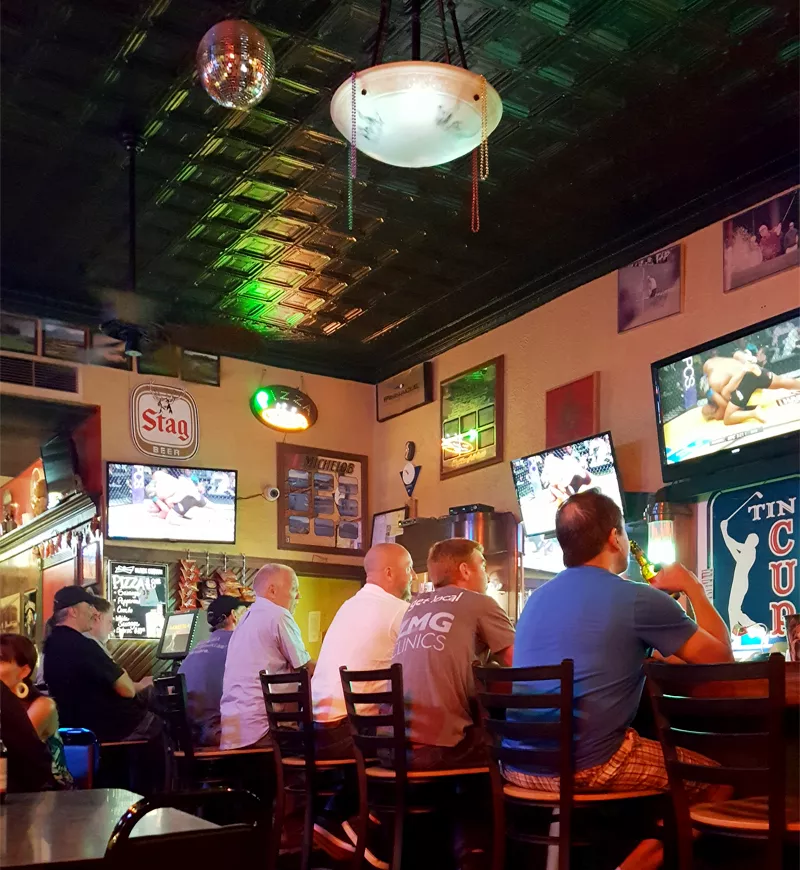
    It is 8:30 p.m., and Kenny is dancing alone.

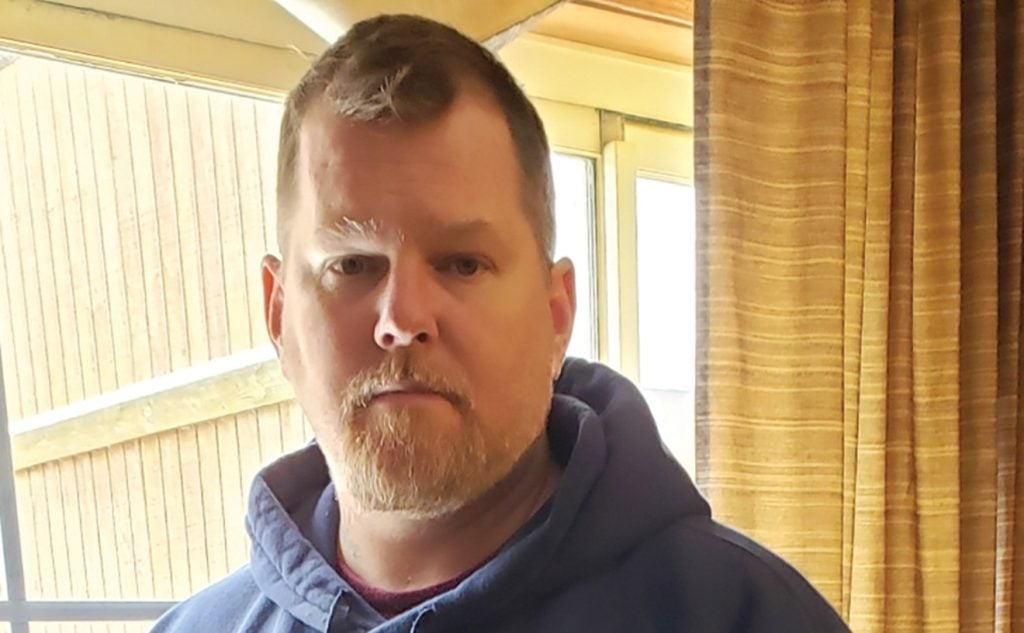
    You might actually say he is flailing alone. In the next room, a dreadlocked man in a cowboy hat and plaid suspenders is freaking out, also solo, to an acerbic techno beat backed only by the words “MUSCLE, GUNS, BURN” on repeat. But Kenny is the only one in Atomic Cowboy’s central room. Darting frantically across the dark dance floor, Kenny rhythmically snakes his limp wrists vertically, then horizontally, then diagonally, then almost double-jointedly through the air around his face. His legs follow a similar, if more stilted, trajectory as he twists his thighs and jerks his feet even faster than his fingers, nine of which sport glow rings he ordered in bulk online. (The tenth one fell off during an ill-conceived dance move.) Kenny is raving — and he is recruiting.

    The other patrons at Atomic Cowboy are, as a result, scooting further into the recesses of their leather sofas. They probably missed most of the era Kenny is single-handedly reviving with all the gusto it takes to be the first person on a dance floor devoted entirely to ’90s rave music. The Kenny dancing by himself is now 42, which means he learned how to dance this way in his twenties.

    Even today, Kenny holds fast to all the tenets that come with his moves. The first unofficial rule revolves around his lack of a surname. We know only Kenny’s first name because that is all Kenny told us, and it’s all he told most people at the raves he attended twenty years ago. The second rule is constant motion. If you stop dancing, you stop mattering. “You’ve got to do it,” Kenny tells his attempted recruits as he offers them light-up necklaces. It takes a while for him to find his first partner, and when he does, she is considerably less vigorous than he. “You’ve got to move more than that,” he chides. “Your feet aren’t even moving.”

    The key, he says, is in the hands. “It’s simple. Take your hands and pretend you’re holding an invisible ball. Now just start rolling that ball, and don’t stop until it’s not even about the motherfucking ball anymore.”

    Perhaps it is this instant, with Kenny cradling his make-believe ball, or perhaps it was earlier, when someone plugged in the strobe lights. Maybe it comes even later, when Kenny is finally joined by hundreds of dance partners, and the old feeling of community comes flooding back.

    Regardless, at some point, in one of the moments of this night, it becomes clear: The city’s original rave culture, one that peaked and plummeted in the ten-year span between 1992 and 2002, has been revived almost twenty years after it mattered the most.

    This feeling will last exactly one night.


    Even now, there’s dissension in the ranks. For a period of approximately ten years, some of them more vibrant than others, St. Louis was a cultural hub for both rave music and the lifestyle that accompanied it. The city was a tactical post between Detroit techno and Chicago’s house scene, and its lack of territorial music rivalries made it the most open-minded rave stop in the central United States. St. Louis parties packed the biggest and most diverse setlists in a collection of regional-based sound, says Marc Buxton, a former St. Louis DJ.

    Fans of either style of music — and those in between, like trance, ambient and trip-hop — found a comfortable home on the couches of St. Louis apartments. Every weekend, ravers flooded the city’s warehouse district on rented buses and in shared cars, coming from Indianapolis, Akron, Dayton, Chicago, Cleveland, Memphis and Nashville. Some of them made the same trip almost every weekend for ten years, while some St. Louis natives were unable to use their own couches for the same period.

    When St. Louis lost its title, it was largely because of a deteriorated internal dynamic: A newly mercurial group of people, jaded by drugs and the demands of constant partying, no longer resembled the naïve high school students they’d been when the party started. In the end, dancers kept their backs to the walls and watched their belongings. In the end, ravers called in their friends’ drug habits rather than face their own being reported instead. In a homogenized era of pacifiers and phat pants, style-biting grew rampant, and people began to clone each other.

    When it was time, the end was quick in coming.

    “I have mixed emotions about it,” says Davidian Alterior, a founding member of the local scene. “The whole old-school rave scene nostalgia bit — I haven’t been too gung ho about it.”

    Today, most of the stories about the city’s rave legacy — how the drugs entered the scene, what genre was most popular, whether rave still exists in St. Louis, whether the reunion should have happened — come from two camps, both arguing aggressively for their own perspective. Members of both groups will warn you whom to talk to, who was first-string, whose memories are wrong and who never cared enough. Those camps came to a head even at the scene’s one-off reunion at Atomic Cowboy July 9, with rival factions disagreeing about the event’s intentions, lineup and setting.

    Alterior, who is the business half of Superstars of Love, one of the scene’s dominant promoters, was invited to the event but not asked to be one of the nineteen old-school artists on its lineup. What he sees as a snub influenced his decision to back out and skip a reunion with people he had not seen for more than a decade: “I felt excluded from it, and it was difficult.”

    He was not alone in his reaction. The most common complaint about the evening is that it attempted to re-create the sentiments of a time that ended past its expiration date. And while several hundred people attended the reunion, it’s worth noting one person who didn’t — the only mainstream celeb to come out of the St. Louis rave scene, Lance Robertson, better known as Yo Gabba Gabba!‘s DJ Lance Rock.

    The only thing everyone agrees on, perhaps, is that the scene’s heyday can’t be re-created. What is less certain is whether nostalgia is enough to bring rave’s most devoted followers back together again for more than just a single night.

    A dynamic, pulsing, electronic sound predicated on rhythms that compel dancing and sounds that don’t appear in nature, rave music originally found footing in the UK in the late ’80s and early 1990s. It wasn’t long before it reached the United States and cemented itself as a subculture in the coastal fringes. When it reached Brooklyn, rave enthusiasts hosted renegade parties under bridges and refused to disclose the details until a rave was only minutes from happening.

    Rave came from underground, and it stayed there as long as it could. Dancers who grew tired of predictable club nights and rotations were drawn to the illicit nature of all-night raves.

    In St. Louis, the scene’s strongest years took place between 1993 and 1995. The parties were as creative in their execution as they were in their conceptual names: Terror Nova, Nocturnal Wonderland, Rejuvenation, Sodom and Gomorrah, Love Generator, Cyberdelica.

    “There was no real nightlife in St. Louis at the time,” former raver Aaron Overfield says. “If you were going down the highway at night on I-40 and there was a car next to you, you would slow down to see who was in the car because they were probably going to the same place.” Rather than head to a club to listen to the music they already heard on the radio, ravers moved the party to the empty (and technically illegal) warehouses along the city’s river. It was an industrial revolution, of sorts: If you were young and had grown tired of the Seattle grunge movement, this, too, could be your alternative.

    “The fact that it was underground and slightly illegal had its allure,” says Joel Sansone, known at the time as DJ Merlin. (Merlin, a surprisingly common name in rave culture, represented the forging of new and frequently magical identities.) “Are we doing something bad? Are we rebelling a little bit? It worked for me.”

    Until its demise, rave was always a young person’s scene but rarely a teenager’s scene. The average age range of those on the dance floor fell somewhere between 19 and 26. Their aesthetic was noticeably similar. “Once you met somebody, you knew them,” says Angelo Dower, who attended his first rave in 1990. “A lot of them were outcasts, people who didn’t really feel like they fit in. The rave movement was the closest thing people our age could get to the hippie movement of the ’60s.”

    Ravers joined the scene for the music, or maybe even for the dancing, but they stayed for the relationships. Eventually, though, many stayed for the drugs. The DIY aesthetic that covered the scene like a haze became harder to maintain when parties grew larger, longer and ultimately younger. Fifteen- and sixteen-year-old attendees meant less control of the drugs permeating the scene’s ranks, and increased drug use meant a noticeable spike in police attention. Parties that originated as uninhibited, music-centric celebrations in grimy warehouses now came with considerable price tags, city paperwork and cops for hire.

    And then people started dying.

    “I was living in a bubble in this little world we had created for ourselves,” Sansone says. “While I might have had some intuitive feeling that what we had started doing wasn’t right, it didn’t deter me from this fantasy. We got away with it as long as we could — and then we were always on the radar at that point.”


    One of the St. Louis rave scene’s cheesier relics is a two-part news segment that aired in April 1994 and was uploaded to YouTube fifteen years later. In its introduction, the news anchors on KMOV-TV (Channel 4) look visibly uncomfortable as their voices imply the air quotes behind their confusion about why these “kids” do it. “Do you know where your children are?” asks one stoic anchor. “They might be at a so-called ‘rave party.’”

    His cohost makes sure to lean forward and chime in: “Rave is all the rage among the young group.” After this, it’s not long before we’re introduced to reporter Jamie Allman, who, in a moment verging on parody, uses the phrase “hip and happening” without either irony or embarrassment.

    The video finds its story arc in interviews with ravers in hoodies and overalls who appear dejected even as they gush about their lifestyle. “They don’t hate their parents,” the host over-enunciates. “They don’t hate the police. They don’t hate the government. ‘Peace through the government’ is their motto.”

    Spliced between wide-angle shots of a rave dance scene, these interviews show the pleasantly sloppy teens you know doing wacky things behind closed warehouse doors. The entire segment is targeted hook, line and sinker for the parents and grandparents of a generation they are hopelessly far from understanding. The proof is in the pairing: When the candid dance footage is looped under the misunderstood voice-over, the need for rave becomes apparent: It’s to escape from all this.

    The single astute comment from Allman is this one, shrouded behind the unfortunate line that the teens “no longer want their MTV”: “If the rave generation is rebelling against anything, it’s boredom.” To that extent, music was an antidote of sorts, in addition to being the rave purist’s sole reason for involvement.

    St. Louis raves often drew thousands, but they began with a budget and roughly four people. Leading rave promoters Superstars of Love, most of whom lived together in a Central West End apartment known as the “rave cave,” followed a specific strategy for their events. “Other people were throwing events, and we just felt like we could do it better,” says Ryan Paradise, the group’s creative brain. “It was the beginning of something, and we all kind of knew it.”

    For a rave with a target audience of 15,000 people, the work began three months in advance of a date carefully selected for weather and, perhaps, a seasonal theme. Then came the venue (the bigger, the better) and the talent (the more, the merrier). They used to be significantly cheaper: “If you look at the rosters of the DJs who were playing at these shows, you’re talking about shows that would cost more than $100,000 these days,” Buxton says.

    In the scene’s early days, organizers shared a reticence to repeat venues. No event should be noticeably similar to any other; organizers planned even the internal structures of their events to allow for maximum diversity in sound.

    In a seven-story warehouse like the one where Superstars of Love hosted some of their parties, each floor was earmarked for a different genre of dance music in a layered strategy that started with tripped-out house and ended with cool-down ambient. “I always went for the trilogy: sound, lighting and flow,” says Alexis Tucci Hansen, a former promoter and current DJ. “My plan was for people to get completely high off of their environment. I wasn’t ignorant to what was going on, but I didn’t want to create a playground for people to eat drugs and lose their minds.

    “Other promoters,” she adds, “intentionally created a Disney World for people on drugs.”

    Promoters based the entrance fees, typically somewhere between $5 and $15, on the number of people they hoped to attract and the overall cost of setup. Superstars of Love drew their early financial backing from a friend. (A few less-than-successful parties left them $18,000 in debt to him at one point in their career.)

    Before rampant Internet use, the quickest way to guarantee attendance was through fliers, first black-and-white and then full-color, designed to sell the theme of a party in the space of a quarter-sheet of paper. If you wanted 1,000 people at your event, you’d be safe passing out 10,000 to 20,000 fliers a minimum of a month in advance.

    The final preparations covered the enticements to keep the party going. Before ecstasy and LSD spread, that was mostly caffeine-saturated beverages and vitamin drinks, Red Bull predecessors like Nitro Cola that included quadruple the caffeine of a Coke. “How innocuous,” says Buxton about the caffeine he ingested. He continues with only, “It was a really exciting time for music.”

    Not all raves took place on a large scale, however. The community was split between extravagant events and standard ones, smaller-scale raves hosted by forward-thinking clubs such as 1227, Fallout, Evolution and the Other World, all defunct today. The handful of clubs that hosted regular rave nights placed a firm emphasis on the music. In the company of two similarly deceased record stores co-owned by Buxton, Deep Grooves and Ultrasonic, they promoted rave culture in the mainstream even as the underground parties did the same outside of it.

    “One of the reasons the energy was really special right then is that, rather than the DJ being steps above the audience, they were all dancing on the same level,” Buxton says. “Don’t tell any club owners that now because they won’t put the DJs on zero level anymore. They might as well just sit in a corner with a label on them that says, ‘Tonight’s Jukebox.’”

    To this day, the music remains hard to describe, even for those who still listen to it. St. Louis’ role as a musically open-minded city meant it housed no shortage of variety inside the span of a single rave. For a bill that included ten acts before 6 a.m., a setlist could cross trip-hop, trance, techno, tribal, house, disco, ambient, noisecore and early dubstep, depending on which room of the warehouse you preferred.

    “It was techno but quirky and sped-up and jittery and boundary-less,” says Hansen, who today plays her own variation on the sounds she grew up with. “It was electronic and deep. It was organic and dreamy and always changing. It was intense.”


    In the beginning, St. Louis’ rave scene was all about the music. When the drugs spread, it became all about the drugs. The national and local rave communities were a victim of nothing if not excess, and bigger parties meant younger people, stronger drugs and increased tolerance for what happens when the two combine.

    Again, the story has two sides. One argues that drugs were not even a real part of the scene until 1993, when club drugs were said to have been introduced to St. Louis through north-county hangouts. The other, more popular belief, is that the drugs started with the scene. The truth is most likely a bit of both: Although the drugs were always a part of rave, they definitively left the eaves somewhere around 1993.

    Joel Sansone’s story follows a path similar to the majority of those who participated in rave culture, if ultimately more serious: Chronologically, the music came first, and the drugs came second. On a list of priorities, he admits, the two would eventually be reversed.

    By 1995, Sansone’s identity as DJ Merlin became prominent enough to require an upgrade in lighting and sound equipment but not quite successful enough to pay for the changes on its own.

    “I decided that the only way to support my lifestyle of just playing music and partying was to sell drugs,” Sansone says. The ecstasy he sold was expensive, $25 to 30 a hit, while acid cost $1,500 a sheet. Demand was high — until someone called the police.

    In his apartment with his girlfriend that night in 1995, Sansone heard yelling and rapping at his door, but his reaction time was too slow to make sense of it before police kicked their way in. Federal officers, already made aware of his drug sales by an informant, spent an hour tearing through his apartment while he lay on the floor, at times with a gun pointed to his head.

    “Very dramatic, these guys. I had just gotten a shipment of acid the night before, and they knew it,” Sansone says. But a friend had already visited and taken the acid from him. “They were like, ‘Where is it?’”

    Although they didn’t find the acid, the police easily discovered evidence of other drugs and more than $7,000 in cash inside Sansone’s south-city apartment — enough that he was charged with conspiring to possess with an intent to distribute LSD, ecstasy and marijuana.

    Sansone was the first on the scene to go away, and the retelling of his story contributed to a spike in finger-pointing. “The reason the bubble popped at that point is that, until then, everyone was family,” Sansone says. “I would never do anything to hurt anyone — ever. But then you realize that the reason I was convicted was because someone told on me.”

    Sentenced to five years in federal prison, he served approximately three and a half before his release. Sansone returned to St. Louis only temporarily before backing out of the scene altogether and moving to Los Angeles. (Now 38, he works as a computer tech and Web designer.) “After that, people started falling like dominoes.”

    In that misguided April 1994 newscast, Buxton is quoted while standing inside Deep Grooves, the record store he co-owned, saying drug use within the scene was impermissible. Although two teens concede to the TV reporter that drug use existed, another rave figure, DJ Nitro, suggests onscreen that the music is his real drug.

    When it’s Buxton’s turn, he shakes his ponytail. “None of us allow it to go on. It’s definitely taboo.” Seventeen years later, however, he admits the drugs are the reason he left St. Louis for Chicago.

    Drugs infiltrated the scene like a fever: What began as a focus on club drugs such as ecstasy and LSD spread to include cocaine, heroin and a generous cocktail of harder and lesser-known partners.

    They augmented the party, made it stronger, increased its duration and let ravers stay up longer, conducting their frantic, tripped-out dancing in chemical euphoria. Parties that used to end at 7 or 8 a.m. now lasted past noon, well into the next day. The pull of the drugs and their social effects added ease to the relationships formed in gritty warehouses and packed clubs. One raver met his best friend as a direct result of a bag of acid he found in a Porta-Potty.

    Morby, a former member of Superstars of Love who designed the group’s logo, took his drug use to an extreme that led to a thirteen-year absence from the community. After a New Year’s party at the armory building in 1996, Morby was not seen for more than a decade; he was only recently discovered, homeless and schizophrenic, in St. Petersburg, Florida.

    “If you have a party with 2,000 people at it, there’s a good chance 20 people are going to be really messed up,” Davidian Alterior says. Parties eventually came with EMTs and off-duty police officers. (Just about every source interviewed in this story conceded to using drugs at some time, though to varying degrees.) “There’s always some shady character standing in the corner and selling god knows what to people.”

    When the number of those who died began to swell, some hoped that it would wake people up, which would then change everything. It never did. Paradise remembers a particularly painful example when Jajo, an early link to Superstars of Love, overdosed.

    Jajo was the first person he knew to die as a result of drug use. “It was devastating,” Paradise says. “It’s interesting because if it wasn’t for the rave scene, I wouldn’t have gotten involved in drugs. After a while, there was nothing I would say no to.”

    On the day he heard the news, Paradise was scheduled to meet Jajo at 9 a.m. The two had made plans to meet at Paradise’s club, Quazar. Flustered by Jajo’s absence, Paradise drove his Toyota Camry to the hardware store to pick up supplies for a party, where a friend called him: Jajo had died the night before of a heroin overdose.

    “He was doing uppers, and he was having difficulty sleeping, so someone gave him heroin, and it killed him,” Paradise says. “Or at least that’s the story I heard. There were so many stories back then.”


    In the end, it was the Internet that reunited what’s left of the city’s rave culture. Six months ago, second-string ravers started (what else?) a Facebook group called “Oldschool crew” for a community that hadn’t even been aware of the Internet in its heyday.

    Discussion threads list hundreds of replies to prompts such as “You know you’re an old-school raver if…” as people share photos of Jajo and others who never left the scene. Without the Facebook group, the one-night reunion at Atomic Cowboy could never have been organized.

    Some members joined the group through both their personal accounts (for friends and family) and their public accounts (for parties). Some use the site to promote their upcoming shows, others to post old show fliers, still others to insult dubstep, the child of rave. The point, though, is that they’re together again, even if the relationship is based on nostalgia. For a long time, that seemed unlikely at best.

    As she talks about just how unlikely the reunion has been, the tone of Hansen’s conversation in no way matches her surroundings. Wearing a sundress, Hansen is seated at a table outside the Forest Park visitors’ center and arguing about music on her cell phone. Although the person she’s talking to can’t see her, she’s shaking her head with fervor as she mentions “local draw” and “lineup consistency.” It’s the same trilogy she has worked with since the ’90s: sound, lighting and flow.

    Today, Hansen, a special-events designer for MAC Meetings & Events, uses the same skills she picked up as a fifteen-year-old in the rave scene to execute large-scale local events such as Soulard Oktoberfest. Nothing in her career since has approached the difficulty of pulling an enormous warehouse up to code for legal permits for a crowd of 6,000 people in five days.

    “I need a vacation,” she jokes with a bite of chicken-salad sandwich in her mouth. “It’s festival season, and it’s a three-ring circus. I’ll be able to breathe in November.”

    In the days since St. Louis’ original rave scene gave way to excess, its legacy has cemented itself through the careers of those who experienced it. The music itself has morphed into new sounds — dubstep, trip-hop, fusion — while the ravers have evolved into adults in their late thirties and early forties, people who either use their former rave connections to their advantage or hide any evidence from their bosses. It’s a mixed bag: “All of the hustlers have hustler jobs in life, and the ones who never really hustled still aren’t,” Hansen says.

    Those careers include party planning (rave promotion) and sound engineering (DJing), as well as hotel management, art and Web design, marketing, PR and jobs such as Hansen’s that mix more than one niche. Buxton, Paradise, Alterior and Sansone still DJ at clubs, and Hansen has joined them in a hobby developed after her days in promotion ended. Paradise maintains a weekend residency at Debonair Social Club in Chicago, where he is a pioneer of new disco.

    Even today, those people disagree on one key question: whether the rave scene still exists. There are those who choose to believe that the scene ended when the big parties did, that it died when their friends died, when the fun stopped and a police presence replaced it, when the crowds got younger and the first wave ravers could no longer relate.

    Symbolically, that’s probably true. But in reality, the rave kept going, albeit with less intensity. The scene took a sizable hit in 2001 after Operation: Get Down, a street party on Washington Avenue that drew 6,000 people and became a swan song for the scene. While rave communities in states such as Colorado and California still draw thousands on an average night, and mainstream events like Electric Daisy Carnival tour to spots of 100,000 people, in St. Louis, police opposition and a new law prohibiting the registration of parties that size meant the scene was officially no longer underground. It was a while before it went there again.

    “The players have just changed,” Buxton says. “There’s so much pressure in St. Louis to become detached, to have your kids and move to the suburbs. It’s still a place where people are afraid of the city. The chasm between an urban and a suburban lifestyle is immense, and people are going to try to fill it.”

    By the new millennium, Superstars of Love was promoting acts such as Moby and the Chemical Brothers, while Boogie Knights hosted a three-day rave, or the closest modern approximation to one, in the woods an hour from the city September 2 through 4. Although the lineup was more expansive, and the promotion was digital, the party came with the same info line setup as its predecessors: Ravers were asked to dial a landline to find out where to show up.

    If you did show up, you probably noticed that the game has changed. Today’s parties have again moved underground, though the definition of that word has expanded with the Internet to include websites, glossy full-color fliers and online promotion codes. Many Missouri events are hosted by third-wave ravers, promotion groups such as Boogie Knights that picked up where Superstars of Love left off.

    For the original ravers, looking back means realizing all the things they did without. It means wondering how the scene lasted as long as it did and when it all ended. The latest rave generation, after all, is a digital one.

    “Now that I look back, I think, ‘How long could we possibly have gotten away with this?’” Sansone says. “As far as I was concerned, everything changed. It definitely lost its innocence.”

  • Angie Young: St. Louis Homicide No. 85; Shot in White Castle Parking Lot

    Angie Young: St. Louis Homicide No. 85; Shot in White Castle Parking Lot

    Police this morning are trying to figure out who shot Angie Young as the 36-year-old mother sat in her car around 11:39 p.m. yesterday at the White Castle at North Kingshighway and Natural Bridge (below).


    Angie Young: St. Louis Homicide No. 85; Shot in White Castle Parking Lot

    Witnesses told police they saw a black male in his late 20s or early 30s fire numerous shots into Young’s vehicle before running to a truck that was parked nearby and driving away. Young was struck multiple times, including once in the head.

    Her family told reporters earlier this morning that they have no idea why someone would murder Young, who works as a medical technician at Delmar Gardens and has a 15-year-old daughter.

  • Battle European Spread: Nutella Vs. Biscoff

    Battle European Spread: Nutella Vs. Biscoff

    You might have sampled Nutella on a crepe, which is standard fare in France. The creamy chocolate-hazelnut spread melts on a hot, buttery crepe shell, and the combination is nothing less than divine.However, France’s neighbor to the north boasts its own sweet spread. The Belgians have always been famous for their waffles and cookies, but now they’ve created a real tour de force: Speculoos Spread. Speculoos, or “Biscoff” spread as its known in North America, is a thick, creamy confection with the consistency of peanut butter. To the naked eye, it even looks like peanut butter: the same brown color, many shades lighter than Nutella. If you’ve ever flown Delta, you might have been served the cookie version of the spread (albeit in shiny plastic Delta wrappers). Both the spread and the cookie taste like gingerbread, with a warm cinnamon aftertaste.

    It’s hard to put to equally delicious contenders up for the prize of Best European spread. Some might say it’s like comparing apples and oranges: Nutella has a strong chocolate-hazelnut taste, and Biscoff tastes more like peanut butter, just with a little more cinnamon. Gut Check had a hard time finding Biscoff, but when Straub’s ran an ad for it in the paper, it set the stage for the duel.

    The Contenders:

    Biscoff Spread – $4.19

    For lovers of peanut butter, this spread undoubtedly has the upper hand. It is thicker and creamier than Nutella, and the lids boasts that it is “made with original Biscoff cookies.” In Europe, they eat the spread on toast for breakfast, but we’ve found that it tastes wonderful mixed into hot coffee, on Eggo waffles, or even on top of a banana. We’re sure that Europeans would shudder, but hey, they were the ones to unleash their creation. The only downside is its unavailability. As of right now, you can only find Biscoff at Straub’s, and a fourteen-ounce jar runs a steep $4.19. Not everyone would be willing to shell out the money, but after one taste of the creamy spread, we’re sure that you’ll be hooked.

    Nutella Spread – $3

    Nutella is better known in the United States than Biscoff, and you can find it at almost any grocery or convenience store. Also unlike Biscoff, the spread boasts more beneficial qualities. Nutella is made from real skim milk and cocoa, and contains no artificial preservatives. This gives the spread a lighter consistency than Biscoff, and the sweetness lingers in your mouth. Plus, there are more than 50 real hazelnuts in every Nutella jar. It’s hard to imagine all of those nuts squeezing into thirteen ounces, but somehow, the Italians found a way. Delicious and nutritious: Does Nutella deliver the knockout punch?

    The Verdict:

    It was a long and hard deliberation, but in the end, Gut Check decided on Biscoff. Both spreads taste good on almost anything and are best served on a large spoon: Serving Size, All. But while we could compare Nutella to the popular kid in the schoolyard, Biscoff is the one with the quiet confidence. You can’t find Biscoff as easily, and it is a bit pricier. Yet it delivers a more unique taste, one that has been crafted by Belgian cookie experts. Who wouldn’t love a spread created from the same recipe as a cookie? We’re not discouraging you from an old favorite. But Biscoff proves that innovation and transformation are the name of the spread game.

  • South St. Louis Residents Fed Up with Prostitution (Again)

    South St. Louis Residents Fed Up with Prostitution (Again)

    The intersections of Jefferson, Chippewa and South Broadway (above) has been a nexus for St. Louis prostitutes. Now residents living farther south on Broadway say the hookers have moved there.

    About 100 residents of the Carondelet and Patch neighborhoods met with St. Louis police last night to discuss rampant prostitution in their neighborhoods.

    According to the Post-Dispatch, the residents “cursed” to police about the hookers and questioned why officials weren’t doing more to stop the trade along South Broadway and South Grand. This week, police say they’ve picked up at least 16 women working the streets in the area, but proving prostitution is often a difficult task. Instead, suspects are more often charged with impeding traffic flow and illegal demonstration.

    Last night’s meeting was only the most recent episode in which south city residents have complained about prostitution. The same issue made news last fall. And back in 2005, south-side aldermen Ken Ortrmann bemoaned prostitution to the daily, saying he constantly got  complaints about people having sex in cars and condoms being
    left in alleys.

  • The Seven Deadliest Music Festivals

    The Seven Deadliest Music Festivals

    wikimedia commons

    It has been a particularly grim summer already in music festival fatalities, with one death over the weekend at Electric Daisy and two more at Bonnaroo a couple weeks ago. But this is hardly a new phenomenon: The combination of crushing crowds, heat and mind-altering substances (as the Mormons say) at any of the thousands of music festivals that happen each year often proves lethal. In an effort to understand the problem, we tracked down seven of the deadliest music festivals in history. There are more-or-less infinite ties at the bottom end of this list, so Nos. 5, 6 and 7 were chosen as much for notoriety as for number of deaths, but No. 1 through 4 four are pretty much definitive.

    7. Electric Daisy Carnival: Dallas, Texas
    This past Saturday, nineteen-year-old Andrew Graf died after being taken to the Baylor University Medical Center from the Electric Daisy Carnival, an electronic music festival. Though the cause of death remains under investigation, Graf was one of multiple people who were taken “to hospitals for drug, alcohol and heat-related illnesses,” according to WFAA in Dallas. In addition, at least 24 others had been hospitalized after the festival. In a statement, festival founder Pasquale Rotella expressed his condolences and said he “will work with the authorities to understand how this tragedy occurred.” The Electric Daisy Carnival was banned in Los Angeles after a fifteen-year-old died from an ecstasy overdose at last year’s event.

    6. Woodstock: Bethel, New York
    The most famous music festival in rock & roll, Woodstock set the standard, attracting so many people that it became the third-largest city in New York during its run from August 15 to August 18. The “three days of peace and music” proved not all harmony: Within the estimated gathering of over half a million people, two people died during Woodstock. One man died from a heroin dose and “a teenager in a sleeping bag was killed when a tractor ran over him,” according to the Daily Mail, which goes on to state that the driver was never traced.

    5. Altamont Speedway Free Festival: Livermore, California
    What set out to be “Woodstock West” wound up being Hell’s concert: The free event was held on December 6, 1969, and drew 300,000 fans with performances by the Rolling Stones, Santana and Jefferson Airplane, among others. Four people died at the festival, with “two from hit-and-run accidents, one from drowning in an irrigation ditch and, most notoriously, one from repeated wounds at the hands of a Hell’s Angels member” during an outburst of violence during the Rolling Stones’ set that night. Eighteen-year-old Meredith Hunter attempted to climb onstage when Hells Angels members prevented him from doing so. Hunter returned with a pistol and Angel Alan Passaro stabbed him. Hunter later died from his wounds.

    4. Roskilde Festival: Roskilde, Denmark
    On June 30, 2000, nine people died during a Pearl Jam performance at Roskilde, a rock music festival held annually in Denmark. According to the police report, “eight young men were killed outright and on July 5, 2000, another young man died as a result of the accident.” It also noted that all victims had bruising on their bodies and faces and “none of them had been under the influence of narcotic substances.” The cause of death for all nine victims was “suffocation after compression/pressing of the chest,” according to the police report. Pearl Jam paid tribute to the accident victims in their song, “Love Boat Captain,” with the lyrics “lost nine friends we’ll never know, two years ago today.”

  • For Sale: Childhood Home of William S. Burroughs

    For Sale: Childhood Home of William S. Burroughs

    For sale: One fine-looking house with an impeccable literary pedigree.

    If you can imagine it, William S. Burroughs was once a child right here in St. Louis. His grandfather, also named William S. Burroughs, founded the Burroughs Adding Machine Company which presumably did pretty well if the Burroughs house at 4664 Pershing Place is any indication. And now it can be yours! (Actually, it’s been on the market since November. Daily RFT is not as punctilious about checking Central West End real estate listings as we maybe should be.)

    “Oh, my God, it just exudes charm,” gushes Vicki Armor, the listing agent. “All the houses in the Central West End have something special. This one has a wood-paneled living room and leaded glass windows, and the backyard has beautiful brick. It’s a perfect house for entertaining.” In addition, the house has five bedrooms, four bathrooms and three working fireplaces. (And no, Armor doesn’t know which bedroom was Burroughs’.)

    So what’s the problem? Are potential buyers put off by the $587,900 asking price? Or that it’s nearly 100 years old? Are they afraid the place is haunted by the spirit of the boy who would grow up to write Junkie and Naked Lunch, become a guiding spirit of the Beat and hippie generations and have all sorts of exotic adventures, including accidentally killing his wife during a drunken game of “William Tell”?

    Actually, it’s much more prosaic than that, says Armor. “There’s no garage. And the house is landlocked, so there’s no way to put a garage in. That’s the one thing that’s making it hard to sell.”

    The Burroughs family sold the house and moved to Ladue when William was in high school (John Burroughs, no relation). In later years, when the writer returned to St. Louis, he would be far more nostalgic for the old skid row on Market Street downtown than he was for tree-lined Pershing Place.

    Although the house lacks two fancy plaques announcing it as a Historical Site like the ones on T.S. Eliot’s childhood home on nearby Westminster Place — or even one fancy plaque — it still garners a fair amount of attention. Armor says the current owner, Jackie Millstone, has spotted passerby stopping to stare and point. Recently she arrived home to find a crew from HGTV filming on the sidewalk. But Armor’s not sure if the attention is because of the house’s famous former inhabitant or if it’s just because it’s a really nice house. She’s inclined to think the latter.

    “Jackie’s got literature on Burroughs and one of his books out on the coffee table,” she says. “She puts it out to show to people who come to look at the house. Some people don’t even know who he is. But some raise their eyebrows and say, ‘Oh, really?’”

    For more photos visit here.

  • Show Review: Radiohead in St. Louis at the Verizon Wireless Amphitheater, May 14

    Show Review: Radiohead in St. Louis at the Verizon Wireless Amphitheater, May 14

    (Photos and review by Annie Zaleski. VIEW OUR SLIDESHOW OF PHOTOS HERE.)


    Show Review: Radiohead in St. Louis at the Verizon Wireless Amphitheater, May 14

    (This is probably my favorite shot I took.)

    How do you sum up a show that’s one of the best you’ve ever seen — in your life? It’s almost 4 a.m. and I’ve been working on my show photos since I got home, and I’m still at a loss for words to describe the Radiohead show at Riverport, UMB Bank Pavilion, the Verizon Wireless Amphitheater.

    Here are the facts: The band played all of In Rainbows, its latest album. Kid A was also well-represented, with a manic, squelching version of “Idioteque,” a lullaby twitch of “Kid A” and the robotic paranoia “Everything In Its Right Place.” Bends hit “My Iron Lung” was played for the first time this tour; that album’s “Fake Plastic Trees,” and OK Computer tunes “Airbag,” “Exit Music (For a Film)” and “Paranoid Android” were the only older songs performed.

    The stage setup — a series of light rods arranged from the ceiling, honeycomb-shaped spotlights and tasteful video screens projecting grainy footage of the band in the back — was one of the most amazing I’ve ever seen. Multiple colors cascaded down or traveled up the devices, feeding off of the music — or driving its direction. During many songs, it felt like a Radiohead Rave, the lights, beats and music reverberated so intensely.

    Yorke’s dry (and often overlooked) humor was on display quite a bit. During the Bowie-glam crunch of “Bangers + Mash” — which found him sitting down in front of a mini-drumkit while singing — he stood up during a break and ran around his lone drum, Chinese fire-drill-style, as if in a solitary game of Duck, Duck, Goose. For “You and Whose Army?” he peered into a fisheye-lens camera (something the band’s been doing for years) that projected his face onto the giant screen onstage; knowing that his mug was the focal point, he made funny faces and wiggled his eyebrows knowingly, like a goofball. And during the start of the show, he talked about smelling the funnel cakes being sold, which somehow spiraled into confessing a love for donuts.


    Show Review: Radiohead in St. Louis at the Verizon Wireless Amphitheater, May 14

    Yorke’s dance moves must also get a special mention. During “Everything In Its Right Place,” he did a quasi, stiff-limbed Robot, which then morphed into what looked like a hip-hop robot mimicking swim moves. The electronic thunderhead, beat-stampede “Myxomatosis” found him dancing like an antsy boxer, and punching the air in time to the lyrics. During “The Gloaming,” he high-stepped as if an old-west enemy was shooting bullets at his feet. At other times, it seemed like his feet moved the rest of him away from the mic stand against his will; his arms — all elbows — and legs flailed with liquid ease. Even when holding a guitar, he shook his head back and forth with rabid concentration and hyperactive glee.

    Yorke’s dance moves during “Idioteque” in St. Louis, already posted on YouTube. Hello, Running Man!

    Jonny Greenwood — wearing a shirt that said, “Yes, It’s Real” and rocking hair ca. Brett Anderson of Suede’s 1993 look — merrily twisted knobs and manipulated sounds on stage left, when he wasn’t attacking a guitar. His bassist brother Colin hung out near drummer Phil Selway, while other guitarist Ed O’Brien rocked a scarf and held down stage right. While a talented guitarist in his own right, the harmonies he and Yorke combined to hit were absolutely gorgeous. O’Brien’s rousing concert toms (in tandem with Jonny Greenwood) on “There There” pounded like a thumping heartbeat wild with fear.

    So why on Earth was this show so transcendent?

    I’m still having trouble putting this into words, hours after it’s ended. There was something deeply romantic in the air at the show (and no, I’m not talking about the insane amount of weed being smoked in the crowd). The muted drum-n-bass/acoustic strum friction of “Weird Fishes/Arpeggi” was as placid as a dip underneath aquamarine oceans; the solitude and loneliness of the tune was deeply moving. Yorke’s crystalline croon echoed the studio versions of songs nearly perfectly, especially on standouts “Reckoner” (a clattering electro-hymn), a devastatingly beautiful “Fake Plastic Trees” and the reverbed-folk heart-stab “House of Cards.” But this falsetto hinted at sweet sadness, knowing seduction, gentle romance, mysterious love and fluttering caresses — all of the hushed secrets shared between lovers.

    Yet this atmosphere wasn’t jarred or disturbed by Radiohead’s jagged rock moments (“Bodysnatchers”) or its floating alienation ballads (“Airbag”) or the many instances of electronic mayhem (“Idioteque” was an absolute standout, its ice-scraper rhythms and sunrise synths colliding in wild bouts of dancing and tempo-shifting). The set’s final song, “Paranoid Android,” in fact, might have been the best song of the night. A slow-building shift between frenzied guitar slashes and straightforward sloganeering, the 1997 hit ended in Technicolor neon-bursts of light that made the band silhouettes. The meaning of the song remains as cryptic and ambiguous as it did a decade ago, but its message didn’t sound the least bit dated.


    Show Review: Radiohead in St. Louis at the Verizon Wireless Amphitheater, May 14

    On paper, Radiohead’s ability to mash together rock, electronica, punk, noise and even bits of hip-hop — and the chemistry between band members that makes its live shows so fantastic — keeps it interesting. Abstractly, though, the vulnerability the band conveys adds to its mystique; for me there’s an underlying, irresistible attraction to this aspect of the band. Radiohead is brilliant at stripping down its music right to the emotional core — and that purity of intent (and genuine execution) rang true last night.

    (EDIT, Thursday afternoon: My colleague at the Pitch, Jason Harper, also wrote an excellent review. Go check it out here.)

    Setlist: (culled from my scribblings and a bit of help from ateaseweb.com)
    01. All I Need
    02. Jigsaw Falling Into Place
    03. Airbag
    04. 15 Step
    05. Nude
    06. Kid A
    07. Weird Fishes/Arpeggi
    08. The Gloaming
    09. You And Whose Army?
    10. Idioteque
    11. Faust Arp
    12. Videotape
    13. Everything In Its Right Place
    14. Reckoner
    15. Optimistic
    16. Bangers and Mash
    17. Bodysnatchers

    Encore One:
    18. Exit Music (For A Film)
    19. Myxomatosis
    20. My Iron Lung
    21. There There
    22. Fake Plastic Trees

    Encore Two:
    23. Pyramid Song
    24. House of Cards
    25. Paranoid Android

  • Battle Water Enhancers: Crystal Light vs. MiO

    Battle Water Enhancers: Crystal Light vs. MiO

    The invention of bottled water was clearly a product of marketing genius executed so well that Don Draper gladly would’ve poured those greedy minds a stiff drink. Although that ’90s trend implying health and status has been overshadowed by 21st-century trendiness (green! organic! Nalgene bottles!), bottled water still hasn’t fallen by the wayside, somehow.In fact, taking a cue from the water bottlers, several companies are profiting from the fact that Americans will not only pay for bottled water, but they’ll pay for bottled water that they don’t actually want to drink. (Plain water? Yuck!)Crystal Light has been selling “water enhancing” powders for years, but now parent company Kraft Foods is doubling down with a liquid version aimed at a younger demographic. It’s called MiO, and it looks way cooler than that staid old spinster Crystal Light.

    Sucked in by Madison Avenue’s advertising Hoover, Gut Check set aside our Kleen Kanteen and brewed us up a couple of batches of adult-appropriate Kool-Aid.


    Battle Water Enhancers: Crystal Light vs. MiO

    Chrissy Wilmes

    The Contenders
    Crystal Light
    Price: $2.78 for a 10-count box
    Calories per packet: 10
    Crystal Light’s packaging is convenient, particularly for inveterate water-bottle toters. The pre-measured packets are just right for a sixteen-ounce bottle and the powder readily dissolves when dumped in and shaken. (The mix also comes in bulk containers.)

    Crystal Light is tasty, if a little too sweet. If we didn’t know better, we’d have thought we were sipping the real thing (i.e., Kool-Aid).

    MiO
    Price: $3.57
    Calories per recommended 16 oz. dose: 0
    MiO comes in a small, portable bottle that makes it easy to use in any quantity. However, it’s a little difficult to measure out the suggested 1/2 teaspoon on the go, and the quick-dissolving water-based formula makes it impossible to eyeball. Of course, you can start with a little and simply add to taste.


    Battle Water Enhancers: Crystal Light vs. MiO

    Chrissy Wilmes

    In spite of its deep hue, MiO carries only a mild fruit punch. Of course, the product’s slogan is “Add a little or a lot!” But deployed at the suggested half-teaspoon per sixteen ounces, MiO creates a (dare we say it?) surprisingly satisfying thirst quencher, with none of the cloying qualities that mar the Crystal Light drinking experience.

    If you like to spike your water with a lemon wedge or two, MiO’s a nice change of pace.

    The Verdict:
    MiO, by a long shot. Of course, the qualities that put it over the top — mild flavor and quickness in dissolving — are due to the fact that its primary ingredient is…water. Sure, it’s tasty, but why not just drink water?

    Plus, MiO has a serious downside: It will stain. Crystal Light will too, and so will Kool-Aid mix, but MiO looks and acts like food coloring: It’s liquid, and a little goes a long way. Don’t say we didn’t warn ya.

  • BDSM Club “The Facility” Now Open in South City

    BDSM Club “The Facility” Now Open in South City

    photo by Melissa Meinzer

    Cages at The Facility

    If you were to visit one of the newest businesses licensed to operate in St. Louis, you wouldn’t see people having sex. Not that.

    But you might see a person getting florentined: They’d be cuffed standing, facing a wall, with a person behind them wielding a pair of multi-stranded leather implements called floggers hitting them — hard, yes — in a pattern of interlocking ellipses. It’s possible you’d see a woman bound to a pillar in the middle of the room with Saran wrap, her every curve hugged close by the cling. You might see people taking turns shocking each other with an ultraviolet wand. And you might leave with bruises on your ass that take weeks to heal — but not if you don’t ask for them.

    BDSM — which stands for bondage, discipline, submission and dominance, also known as sadomasochism — is nothing new to St. Louis. The city has a sizable population of BDSM enthusiasts: folks who practice consensual exchanges of power or pain, or other forms of extreme physical sensation.

    The news here is that these kinksters are coming out of the shadows and into your neighborhood. And that’s a good thing, proponents say — for the community, for the economy and for society at large. After all, they’re already in your neighborhood. They just want to be aboveboard about it.

    There are at least four groups around the city, if not more, who routinely host play parties. The parties follow strict codes of behavior: There is no sex and no nudity. Party guests compare notes on bondage techniques, pleasure and pain, and they demonstrate what they’ve figured out. Participants show identification at the door, and parties require guests to be of-age — 18 years old at some parties, 21 at others.

    But despite the strict rules, such gatherings have long operated in a legal gray area. One group had operated in a residential home out near the airport, drawing participants via word-of-mouth and FetLife.com, a kink-oriented social networking site. Other groups rent out halls for their parties. Some parties are hosted in back rooms of established venues like bars. All of them operate at the risk of running afoul of city codes, in terms of safety and occupancy permits.


    Joe Kriegesmann: "Satan's Master" - photo by Melissa Meinzer

    photo by Melissa Meinzer

    Joe Kriegesmann: “Satan’s Master”

    Joe Kriegesmann, also known as “Satan’s Master,” is tired of being in the shadows. After considerable work, he’s opened The Facility, a legal, fully legitimate venue dedicated to BDSM educational workshops and gatherings off Gravois Avenue in St. Louis City. The unassuming and unheralded space is surrounded by empty buildings and lots, along with a few businesses, most of whom support his endeavors.

    His business is operating as COTB LLC, which stands for Clan of The Barbarian, a decades-old national BDSM group dedicated to safety and standards in play. He’s reviving the group after it had gone underground, and its new home is actually its second location in St. Louis.

    Kriegesmann’s previous landlord wasn’t on board with the club seeking out proper inspections and permits, which led to a parting of ways this winter, he says. (The other landlord also never got around to turning the heat up very high, which put quite a damper on the corsets, miniskirts and shirtless leather vests favored by many guests.)

    Kriegesmann is tired of the secrecy and misinformation surrounding the BDSM lifestyle, and has taken months untangling the decidedly unsexy red tape around getting a BDSM club to operate wholly within city codes. He estimates that in setting up the south-city location for fully legal educational workshops, he’s been to city hall more than 30 times.

    “We’re not a sex club,” Kriegesmann says. “We’re a private educational business. We’re trying to educate the community.”

    In order to open the space officially, he appears to have ferreted out all the legal loopholes and has closed them. He’s got an up-to-date occupancy permit with a building inspection and a business license — they’re framed and hang proudly in his office.

    Kara Bowlin, a spokeswoman for Mayor Francis Slay, says that to the best of her knowledge, Kriegesmann is now operating within the letter of the law. “As far as I know we haven’t gotten any resident complaints about it,” she says. (And, in fact, several neighboring businesses have given Kriegesmann “to whom it may concern” letters saying they’re in support.)

    The building is in the city’s 20th ward, which is represented by Alderman Craig Schmid. Kriegesmann says that Schmid has been less than helpful in the process — which he suspects is related to fear and mistrust toward the BDSM community.

    But Schmid says kink has nothing to do with it: “I don’t deal in speculation. The issue we always have to deal with is health, safety and welfare, how people are going to get in and out.”

    With the permits Kriegesmann has for the space, that shouldn’t be a concern. The public areas are all on the first floor, which circumvents the need for elevators. The sprinkler systems are in good working order, and exits are clearly marked.


    One of the Facility's racks - photo by Melissa Meinzer

    photo by Melissa Meinzer

    One of the Facility’s racks

    The building has themed rooms for different sorts of role-playing and kink: There are human-sized birdcages, racks for lashing wrists and ankles apart, and a “littles” room full of toys for folks who enjoy role-playing as children. There’s also space for socialization and business, decorated with tasteful photography of pinup-styled women — complete with bright-red ball-gags in their mouths.

    But Kriegesmann wants it to make it clear that this isn’t a sex club. There is no nudity, and no penetration of any sort. Sexy? Sure. But not sex.

    That said, it’s not a typical classroom. During workshops and social events, groups might bring in a DJ to spin some tunes. Social areas are comfortable and welcoming, and the lights might be just a little lower near, for instance, the rack.

    Certainly participants aren’t dressed for church. You might see a man in a dog collar with custom-made vinyl ears, or women with electrical tape covering their nipples. Surely you’ll see a lot of leather and vertiginous stiletto heels. Most folks are fully dressed most of the time, though.

    “It’s not what you see in pornography,” Kriegesmann says.

    Or, for that matter, in a bar. Alcohol is not for sale, and visitors aren’t welcome to bring it along to the Facility, despite its presence in other BDSM play venues around town. Not only does booze complicate the heck out of permitting, but, says Kriegesmann, it runs counter to long-accepted tenets of power and pain exchange: These acts might hurt like hell, but everyone is on the same page, and their consent is of the utmost importance. Alcohol clouds this.

    “What we’d really like to do is start pushing our educational workshops so we can educate not just people in the lifestyle, but vanilla people as well,” he says.

    Just last weekend, for instance, The Facility hosted a workshop for Generation Kink. Scheduled for the evening were a BDSM Social Etiquette Class, an Intro to Dungeon Equipment demonstration and a Scene Negotiation discussion. One of the post-events comments on FetLife said “Thanks to everyone for making my guests (first timers to the scene entirely) feel welcome and at home.”

    And if that’s not enough to make the Facility a good citizen, consider the private guard they hire to patrol the grounds at night, and the drug dealers and prostitutes Kriegesmann says he’s scared off.

    “This area is bad…maybe blighted,” says Kriegesmann. “We’ve cleaned up a whole city block. What we’re doing here is good for the neighborhood.”

  • Bade Ali Jabir Fled Sudan for St. Louis — Only to Be Killed by Police

    Bade Ali Jabir Fled Sudan for St. Louis — Only to Be Killed by Police

    TYLER GROSS

    Bade Ali Jabir came to St. Louis for a better life only to die in a hail of police bullets.

    Police officers with their guns drawn swarmed Bade Ali Jabir’s apartment. They were everywhere. Outside the door. Outside the window. In front of his neighbor’s door. Everywhere. They yelled over a loudspeaker in Arabic, a language he sometimes struggled to understand. They told him he had to leave his apartment.

    The police said that Jabir had been evicted and there were warrants out for his arrest. But Jabir didn’t trust these people with guns. He trusted his friends, the people who brought him food, stayed with him in the hospital and fed his kids. It took time before he told you about his life in Sudan. And after Jabir’s decades of living through the Sudanese civil war, gaining his trust wouldn’t happen by putting a gun in his face.

    So Jabir didn’t leave. He hid in the apartment as the people with guns outside of his window only seemed to multiply.

    No one knows what went through Jabir’s head that day. Maybe he thought about his four kids. Maybe he was confused. Maybe he didn’t realize that he had been evicted.

    Whatever he thought about, he must have flashed back to Sudan. Five years before, Jabir emigrated from his ravaged homeland to the United States. Villages were burned to the ground, and citizens were shot on sight by government troops. Jabir came to America to escape from that terror, where people in uniforms regularly pointed guns at him.

    On this day, September 7, 2022, the challenges of Jabir’s new life and the years of trauma from war and migration came to a boil. Jabir, more than anything, needed help.

    A few hours after the officers with guns surrounded his apartment, they sent in a remote control robot to communicate. It rolled in with a fuzzy microphone and a fuzzy camera, and the voice coming from it was the voice of Jabir’s friend, a fellow Sudanese refugee.

    “I’m scared,” Jabir told the robot.

    He asked his friend to come inside, to walk out with him.

    The friend never did come. Instead came the officers with guns. That’s when St. Louis police killed Bade Ali Jabir.


    Bade Ali Jabir immigrated to St. Louis in 2017 after living in "hellish" conditions in a refugee camp.

    COURTESY PHOTO

    Bade Ali Jabir, shown in an undated photo, immigrated to St. Louis in 2017.

    When Jabir walked off the plane in St. Louis in 2017, no family members or friends waited for him at the airport. He likely didn’t know a thing about the Arch or toasted ravioli — or anything else about St. Louis. Why would he? His home was a village in the Al Kurumik district of the Blue Nile state, more than 7,000 miles away, where the Ingessana people lived, barely north of the South Sudan border.

    Jabir was from a hilly rural area known for seasonal farming, according to a friend also from Sudan. He says Jabir worked with livestock, farmed a plot of land for a few months and then stored the food for the rest of the year.

    The area was known for its music. “His culture,” says the Sudanese friend, “they like to sing and dance.” It was communal. Neighbors would make their own alcohol for these special occasions, and everyone would come together to sing and dance as a village and as a family.

    But then he had to leave. Jabir was born in 1961, and armed conflict and genocide loomed in the background of his entire life. He lived through two civil wars before government bombings forced him to flee in 2011. The Blue Nile state was situated in a precarious place. Despite siding with the South Sudan-based Sudan People’s Liberation Movement during the wars, the state was excluded from South Sudan when it seceded in 2011. Relations between the Sudanese government and the Blue Nile state were tense.

    Then, on the night of September 1, 2011, gunfire rained down. The Sudanese government bombed the Blue Nile state, razed mosques and schools, and indiscriminately killed kids and the elderly. People were burned in their homes. Those who stayed had little to eat and almost no clean water. Between 2011 and 2013 alone, nearly 150,000 people fled, some walking for days to Ethiopia or South Sudan.

    So Jabir left, too. He found himself in a U.N. refugee camp in Ethiopia. Indran Fernando, Jabir’s caseworker at the St. Louis-based International Institute, calls conditions in the camp “hellish.” During the day, Jabir worked long hours in the hot sun. There were days when the camp had so little food that he had to choose whether to feed his kids or give the food to people who were starving to death.

    When Jabir arrived in St. Louis in 2017, he left behind everyone he knew: his father, his brothers and sister, his three sons from a previous marriage. His mother and brother had recently died and his wife passed away while giving birth to twins. Jabir came to a new country, a single father of four young kids. In his culture, women take care of the children, Fernando says, and Jabir seemed to have little experience parenting.

    Jabir didn’t have family waiting for him in St. Louis, but he did have Fernando and the International Institute. The institute, which did not respond to multiple requests for comment, is paid by the federal government to give short-term help to refugees resettling in St. Louis. Fernando was in charge of acclimating Jabir to St. Louis, getting him a job, signing him up for medical services and teaching him things like how to use an ATM and hygiene expectations.

    And for Jabir, newly settled into an apartment just off South Grand in Dutchtown, plenty of things felt unfamiliar. The humid weather. The taste of fast food. The beer. The health care system. The work expectations. The concrete and speeding cars outside of his window. The English language, which he didn’t understand, making it hard to do almost anything –– order food at a restaurant, read signs on the road, say hello at the grocery store.

    Even seemingly basic tasks in America were new to Jabir. Fernando remembers that Jabir didn’t know how to sign his name. The first time he spoke through a telephone, he seemed in awe. He poured water on the ground as if it were a dirt floor, others say. He didn’t know how to use appliances like a refrigerator, bathtub or washer and dryer.

    Jabir was also isolated. Bilingual International Assistant Services Executive Director Jason Baker says the Sudanese community in St. Louis is “very small.” Few people were familiar with his home, or spoke his first language (Gaam), or understood his trauma, or knew about his culture, or could even find Sudan on a map.

    Christopher Prater, a Washington University physician who works with immigrant communities through Affinia Healthcare, says he sees “high rates” of anxiety and depression among refugee communities.

    “Could you imagine,” says Prater, “stepping into a world where you don’t understand anything? And all of that happens at once?”

    Jabir found himself alone, raising four kids without much of a blueprint, in a country he did not know, without family to help, without knowledge of the language, in a place that seemed to move a little too fast.

    “This is my speculation, but the vibe that I got was just adjusting to living in America was really hard for him,” a neighbor says. “I am not sure that he ever really felt like this was home.”

    But Jabir didn’t complain, Fernando says. He tried. He held a job, at first. He rode his bike to Arab grocery stores and picked up groceries. He took English classes and cooked chicken, on occasion, for his family.

    “He was just endlessly patient,” Fernando says. “Trusting, generous, unflappable. That’s how I would characterize him. He had been through such difficult hardship that he expected very little from this country.”

    Despite his efforts, Jabir struggled to care for his kids amid all of these adjustments. The news reached a social worker with the Islamic Foundation of Greater St. Louis.

    When the social worker met Jabir at his apartment around October 2018, it was a cold day. His kids were playing outside, but some didn’t wear coats. One was barefoot. The social worker could tell none of them had bathed recently.

    In Jabir’s apartment, the situation was even more dire. The apartment was a mess. The social worker found toilet paper stuffed into the bathtub and roaches, rats and mice running across the floor. The kids had plenty of clothes, but Jabir used them as rags.

    The social worker pauses before sharing those details, wondering how it will reflect on Jabir. But she decides to continue.

    “I want to showcase that mental health is real,” she says. “And I want to show that the police didn’t care that he had a mental health problem, and that they still proceeded to do what they did.”

    By all accounts, nothing made Jabir happier than his kids. He was affectionate with them. Fernando watched Jabir console them after nightmares. He fluffed up their pillows before bed. He hugged them and stroked their hair. They were among the few things that could make Jabir smile when they played his favorite songs or made a joke. “I’m doing this for my kids,” he often told the social worker. When Child Protective Services later threatened to take away his kids, he pounded his chest. Over his dead body, he said. “I am their father and their mother.”

    Jabir wasn’t without help. Immigrant organizations, religious groups, members of the Sudanese community, doctors, therapists and, most importantly, neighbors did what they could. After a social worker met with Jabir, the Islamic Foundation covered the family’s rent, bills, clothing and doctor appointments.

    In 2019, the foundation helped relocate Jabir and his kids across the city to the Garden Apartments on Hodiamont Avenue. The north city complex has been home to many refugees and new immigrants in recent years. Yet, in 2018, the International Institute suffered a spate of negative press after Syrian refugees placed there complained that they feared for their safety. In one instance, four Syrian kids were attacked by neighborhood youth, and one ended up in the hospital. The International Institute no longer contracts with the complex.

    For Jabir, however, the move seemed to make sense. The Islamic Foundation paid a Sudanese neighbor at Hodiamont to watch the kids, take them to dentist visits, visit their school and clean the apartment. Some of the kids called her “mom” in Arabic.

    Over the years, she wasn’t the only person who became attached to Jabir. Another neighbor went to the house every day to clean, buy groceries, watch the kids and feed him medicine. A fellow Sudanese refugee brought Jabir his favorite food –– chicken wings with lemon pepper. A woman who lived across the city visited him weekly for five years.

    But no matter how much money, time or help Jabir received, little seemed to improve.


    On good days, Jabir enjoyed being outside. He didn’t go far, just a few steps away from his unlocked door, either sitting in a dining room chair or leaning against the brick wall of his apartment. It was his escape. He would bask in the fresh air. Skinny and wiry with soft facial features, he often wore a button-down shirt, black aviator sunglasses even if the sun was setting and a dark brown coat even if it was blazing hot. “Pondering life,” one neighbor called it.

    In America, there was a short list of things that seemed to make Jabir happy: his kids, company from friends, Arab tea with lots of sugar, chicken, Sudanese music videos, memories of Sudan and sitting outside.

    If you approached Jabir on these days, he was warm, easygoing and calm. When a fellow Sudanese refugee brought him food, Jabir would bow his head, out of respect.

    He cherished the opportunity to socialize with his people. If you came to see him, he’d grab a chair from his dining room and set it so you could sit beside him. Then he might share his memories from Sudan. He might walk over to his neighbors, the Sudanese family, and laugh with them.

    “He was just a kind person,” says neighbor Dalia Atak. When kids came over to visit, he would announce their name with an upbeat, high-pitched voice, and then gift them a piece of watermelon or croissant. He cherished the opportunity to share food. Food wasn’t just something to eat. It was a form of affection. When his kids returned with food, he often told them to share with others in the community.

    “Something I saw was endless generosity,” Fernando says.

    But Jabir could also seem lost. The last two years of his life, Jabir rarely left the house. He wouldn’t walk to the park across the street or ride his bike. Someone would get groceries for him, take his kids to school and drive them to the doctor.

    On his worst days, Jabir wouldn’t go outside and sit on the lawn. The door would be closed but never locked. Inside, it was pitch black. Bare, no decorations. Mice scurrying around, holes in the walls, doors off the hinges, sink clogged, water dripping from the ceiling, sometimes a bed in the living room and one time a raw chicken on the floor.

    If you asked how he was doing, he would always say the same thing –– “good.” But he didn’t seem good. He might curl himself into a ball on the couch or bed, a blanket cloaked over his head. Sometimes, Jabir would hide like this for days on end.

    At times, Jabir seemed to be somewhere else. If people tried to engage in conversation, he would go on incomprehensible rants or simply not respond. “It was like, ‘Who is this guy?’” the fellow Sudanese refugee says.

    He seemed paranoid. He feared signing documents, and he told Atak that imaginary people in the apartment spoke to him. He wondered whether the people who lived above him had put a curse on him –– and if that’s why he felt sick.

    Toward the end of his life, these bad days became more frequent. The worker at the Islamic Foundation wonders if it dated back to a bike accident he had with a car when he lived on Grand. After that, he stopped riding his bike and stayed home more. Or maybe he just felt lost in America. Regardless, he fell into a gradual, but steady, decline.


    Jabir and his children moved from Dutchtown to the Garden Apartments on Hodiamont with support from the Islamic Foundation.

    BENJAMIN SIMON

    Jabir and his children moved from Dutchtown to the Garden Apartments on Hodiamont with support from the Islamic Foundation.

    In the summer of 2021, a neighbor of Jabir’s reached out to Christopher Prater, the Washington University primary care physician. Jabir needed help. He was in constant pain, with a serious health problem that left his body swollen and bloated.

    But there was one issue: Jabir wouldn’t leave the apartment.

    “There was something about him that made him very hesitant and fearful to leave,” Prater says.

    So they scheduled a video call with an interpreter. As Prater walked through introductions, Jabir struggled to understand the interpreter’s Arabic. He made baffled faces and spoke little.

    “It was very clear to me that this was someone who didn’t quite trust what was going on,” Prater says.

    Within five minutes, Jabir left the room and ended the call.

    But Jabir needed care. Prater says Jabir suffered from a kidney disorder called “nephrotic syndrome,” where the body cannot filter protein, causing too much liquid to build up. As a result, the body experiences severe swelling and when that swelling goes unchecked, the liquid can sneak into the lungs, making it hard to breathe.

    Prater wasn’t the first physician to try to help. When Jabir arrived in St. Louis, he was offered in-home case management and in-home therapy services, Prater says. But Jabir refused almost everything.

    That summer of 2021, he’d checked himself out of the hospital against medical advice after doctors tried to put a needle in him. He thought they were trying to kill him.

    “He clearly has had trauma like most refugees, and particularly his case, a refugee of a civil war survivor,” Prater says. “But for someone to have such mistrust that they weren’t even able to engage in care is very unique.”

    Prater saw more than just physical ailments. He thought Jabir probably suffered from depression, anxiety and PTSD. To treat him, Prater had to earn Jabir’s trust. On two separate weekends, he brought his kids to Hodiamont Avenue with fruit and a gift. They played soccer with Jabir’s kids, and Prater introduced himself. One time, Jabir was quiet and hard to reach. Another time, Jabir warmed up to Prater, showed his personality and laughed with the kids.

    On January 1, 2022, Prater got a call from the same neighbor who’d initially reached out about Jabir. Jabir, she said again, hadn’t taken his medication in months, hadn’t left his apartment in days and refused to visit the hospital. He looked like a ballooned version of himself –– his lips, his belly, his legs swollen –– with so much liquid built up that he had gained about 20 pounds. Parts of his body were so swollen that they were rock-hard.

    When Prater arrived with Sudanese friends of Jabir’s, the door to the apartment was closed and the lights were off. It was so dark, Prater had to shine a flashlight. He found Jabir sitting on his bed, hunched over. They could hear him breathing heavily, heaving in and out.

    “This gentleman,” Prater remembers, “needed medical urgent care.”

    By this point, Jabir recognized Prater. He agreed to visit the hospital –– but only if friends drove him.

    Jabir spent the next few weeks in the hospital. He returned more energized and happier, a neighbor said. He expressed a desire to clean his apartment.

    But it didn’t last. That was the last time Prater saw Jabir.

    “I probably knew his health best of anyone –– anyone, ever, in his life,” Prater says. “And I never saw him in the office. So that, I think, paints a picture about how neglectful he was of his health. I mean, we tried to engage him and were not able to. And again, I’m not blaming him. I think he had serious mental health issues that we just couldn’t ever break down. But for me to be the person that knew him best medically, that’s really — that’s sad.”


    On May 28, 2022, Jabir reached a turning point: He punched someone in his complex. The police arrived, without an interpreter, according to the social worker. In a report filed about the incident, the officers said that Jabir brandished a knife and resisted arrest.

    This was Jabir’s first arrest. The police took him to jail, where he was charged with felonies for unlawful use of a weapon and resisting arrest, along with two misdemeanor counts of assault in the fourth degree.

    The rest of the details are murky. Documents from the 22nd Judicial Circuit Court show that a warrant was issued for Jabir’s arrest on May 31. He was denied bond. But community members said he was released within a day or two. Neighbors were told that no charges had been filed. One searched his name on case.net and found nothing, assuming the situation blew over. (The charges didn’t appear on case.net, according to multiple community members, until the day after he was killed.)

    When Jabir came back, he didn’t seem like himself. He was even worse than before: ashamed, rejected, resigned, one neighbor says. “It just was different.”

    But the arrest set other things into motion. Child Protective Services took Jabir’s kids and put them in foster care. (Three of the four remained in foster care, not seeing their father for months before his death; the fourth, a teenager, soon slipped away and reunited with his father.)

    Then on July 22, Jabir received an eviction notice.

    A week before the killing, at the end of August, Jabir was kicked out of his apartment. The social worker called CPS and the police with the hopes they would place him in a shelter. But nothing happened. Some believe he stayed with friends. One night, a neighbor saw him sleeping in the grass. He might have stayed in the janitor’s room. In his final few days, he started breaking into his old apartment and spending the nights there with one of his kids.

    On Tuesday, September 6, Jabir once again broke into his apartment.

    What happened next is unclear. Police say they arrived after receiving a disturbance call related to Jabir. The landlord informed them that Jabir had been evicted, but would not leave. When police approached, Jabir “became combative and armed himself with a knife and pole,” Department of Public Safety spokesperson Monte Chambers says. They brought an interpreter, but Jabir “ignored the officer.” The officers left and charged Jabir with resisting arrest, trespassing to the first degree and assault to the fourth degree, Chambers says.

    Others heard it was a less fraught interaction. The landlord says an officer spent hours in Jabir’s house. The next day, the same officer recited facts about Jabir’s life to a social worker.

    The varying accounts just add to the confusion surrounding what happened the following morning –– when heavily armed police arrived at Jabir’s apartment.


    On September 7, 2022, police swarmed Jabir's apartment. The robot police used to communicate with Jabir is on the sidewalk in the lefthand image.

    COURTESY PHOTO

    On September 7, 2022, police swarmed Jabir’s apartment. The robot police used to communicate with Jabir is on the sidewalk in the lefthand image.

    The social worker with the Islamic Foundation had a plan for Wednesday, September 7: She was going to get Jabir help. She planned to check him into a shelter and take him to a psychiatric unit. There he could get on medication, move to a new apartment and get his kids back.

    “I had it in my mind, Wednesday was game day –– we’re gonna get him out and get him the help that he needs,” the social worker says.

    After the social worker arrived at work that morning, a family friend called her around 8:15 a.m. The friend said that police with automatic weapons had surrounded Jabir’s apartment.

    Chambers says the Fugitive Apprehension Street Team had come to arrest Jabir for his outstanding warrants from May and the day before. When they arrived that morning, Jabir “armed himself with an unknown object and barricaded himself in the apartment bathroom,” Chambers says in a January 27 email to RFT.

    But police have given different accounts of why they came to Jabir’s apartment that day. A week after the shooting, police told the St. Louis Post-Dispatch that they received a burglary call at 8:30 a.m. in the complex (though St. Louis police calls for service and police call records obtained by the Post-Dispatch indicate there was no burglary call at 8:30 a.m.). When they got there, police said they found Jabir and learned he had been evicted and had felony warrants. That’s when the standoff started.

    Regardless of what happened, it doesn’t change one thing: The police surrounded Jabir’s apartment. To community members, the show of force seemed excessive.

    “Like, what are they doing?” the family friend says. “Are they here for an eviction? Like, this isn’t an eviction process. Do they realize he’s just a 61-year-old man? Why are they coming out like this? Do they think he has a bomb? Do they think he has a gun? Like, what is happening?”

    The social worker rushed to the complex. When she got there at 8:45 a.m., she found multiple armed officers in bulletproof vests outside the door and windows to the apartment.

    The social worker says she was “furious.” She stormed past the gate around the complex, past the police officers, with no intention of stopping until she made it into the apartment and left with Jabir. “This was just ridiculous,” she recalls. “This man hasn’t done anything.”

    But the police stopped her. They told her they’d knocked on Jabir’s door; he had a knife in his hand. They tried to shock him with a Taser, but Jabir do

  • East St. Louis Loses Only Hospital; Kenneth Hall Closing After 120 Years

    East St. Louis Loses Only Hospital; Kenneth Hall Closing After 120 Years

    The Kenneth Hall Regional Hospital in East St. Louis will close within the next three to four months.


    Kenneth Hall Hospital should close by end of summer.

    Kenneth Hall Hospital should close by end of summer.

    The Illinois Health Facilities and Services Review Board voted to shutter the hospital yesterday. The facility — founded in the 1890s — had operated as St. Mary’s Hospital until 2004, when its name was changed to Kenneth Hall. The hospital has been losing $5 million a year and currently has just 39 beds for mental health patients, plus a non-trauma emergency room.

    In 2008 the hospital formed a partnership with Touchette Hospital some 4.5 miles away in Centreville, which handles more complicated health services for Kenneth Hall. East St. Louis Mayor Alvin Parks tells the Belleville News-Democrat that he’s saddened, but not surprised, by yesterday’s vote to close his city’s only hospital. Parks is hoping to soon replace the hospital with an urgent care center for East St. Louis.

  • Last Collector Standing: Cliff Hardesty, Owner of CD Reunion, on BBQing with Ozzy and the Who’s Iconic Album Covers

    Last Collector Standing: Cliff Hardesty, Owner of CD Reunion, on BBQing with Ozzy and the Who’s Iconic Album Covers

    Jon Scorfina

    Sometimes the best reason to collect records is for the unabashed love of the music. Picking up from a short winter hiatus, Last Collector Standing met up with Cliff Hardesty, who, above anything else, is a genuine music lover. He is also the owner of multiple record stores, including CD Reunion in St. Charles and O’Fallon, as well as the rock memorabilia and clothing shop Glad Rags. Sitting down for an interview in his newest business venture, his rock & roll bar Red Fish Blue Fish (which is next door to CD Reunion), we discussed the iconic photo of the Who peeing on the cover of Who’s Next and how he once walked in on Ozzy Osbourne barbecuing.

    Last Collector Standing: When did you start working at a record store, and how did you end up owning multiple stores?
    Cliff Hardesty: I used to work at 1380 KGLD, which was an oldies station. Gary “Records” Brown was my boss there. [He] was a St. Louis radio legend. Someone called me up one day and was asking about a record and said, “Have you ever been over to Record Reunion in Hazelwood?” He knew I was from North County. So I went into Record Reunion and started buying records from Dan Keysor. People would always say, “If you got out of radio what would you do?” I would say, “Well, I’d own a record store.”
    I got fired from my radio station job and then I went to Europe for the summer backpacking. I came back and didn’t have a job. I thought, “I’m going to go hit some record stores and see if anybody will hire me.” I got hired at Dan’s Record Reunion, the first one I went to. I was a big record collector so a couple of people in there kind of recognized me. It helped that I worked at an oldies station, because they knew I knew who the Shirelles were, and [groups] like that.

    I started doing that full time. When I first started working for Dan we might have had two dozen CDs in the whole store. It was all vinyl, cassettes and 8-tracks. Then I just started tripping over CDs. They were just growing and growing and growing where we just had stacks of them on the floor. Literally stacks waist high.

    I said, “Dan, you know you need to open up another store. You’ve got so much stuff there’s no way you can sell it all here.”

    I kept bugging him. Finally one day he said, “Look, if you think we need another store then why don’t you go on out and start it.”

    “Really?”

    “Yeah. You can be my partner.”

    “Really?”

    He said, “Yeah!” So I started looking around.


    Last Collector Standing: Cliff Hardesty, Owner of CD Reunion, on BBQing with Ozzy and the Who's Iconic Album Covers

    You might remember, Tipper Gore started a rating system for records. Tipper Gore apparently impressed a Missouri state legislator that wanted to make a rating system for records. A petition drive got started at KSHE. I noticed that about one out of five people who signed the petition lived in St. Charles County. So I was like, “Dan, we should open up in St. Charles County.” There was no used record store there at the time. Streetside wouldn’t sell used records because they were still buddy-buddy with the record companies and the record companies didn’t like the idea of people selling used recordings.

    The record companies never helped us. They would call us and talk about other stores and call them the “real” stores, like we weren’t even a real store. We never got any help from the record labels. We were as independent as you could get. We’re in St. Charles too. We’re not in U. City. We’re not in the cool areas. We’re as mom and pop as it gets.
    Anyway, I came out here and found a place in Hawks Nest Plaza, where the rent was really low. I got a loan of fifteen thousand. Dan put the same amount of money in with records, CDs and movies. That was 1991 and now here we are in 2011 still going. This will be our twentieth year.

    So you started right when CDs where really taking off?
    The timing couldn’t have been better. CDs started to get really big about ’88. By [then] all these people started converting their collections onto CD. For me, it was a goldmine because people were trading their record collections for CDs. Everyone thought CDs sounded better. I thought they were crazy. Records sounded better. I started buying records as much as I could. People thought I was crazy. I was like, “I’ll trade you ten records for a CD. No problem!” So my record collection started going crazy by that time.


    Last Collector Standing: Cliff Hardesty, Owner of CD Reunion, on BBQing with Ozzy and the Who's Iconic Album Covers

    As a storeowner, do you feel that vinyl has come full circle?
    Yeah. CDs are so easy to get that they are not considered as valuable. A record, you have to take care of it. You have to treat it with respect, and I think it gets people’s respect. People will come in with a stack of CDs with literally no cases. They don’t care about the packaging. They don’t care about anything except the disc, but albums [have] the pictures, the liner notes, and all the fun stuff. I think it’s coming full circle, but I don’t think vinyl will ever have the sales volume that CDs had in 1994.

    I just don’t see it happening. They’re not convenient. You can’t pop a record in the car while your driving. I don’t think they’ll ever be back to where they were, but there are a lot of people that [vinyl] means a lot to them. One of our biggest customers for records over the last few years has been teenage girls. They like the sound of them.

    People just like to collect things too. I know people who still collect stamps. What good is a stamp really? You can’t play a stamp. You just look at it. A record you can look at it and you can play it! (Laughs)