
Search results for: “/"”

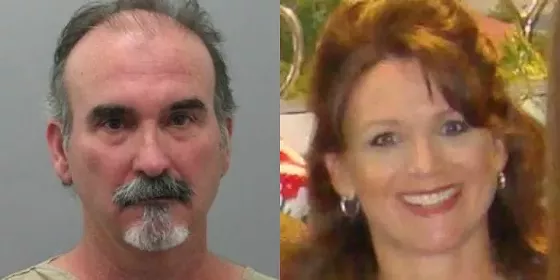
  • Alissa Blanton, Ex-Hooters Waitress and De Soto Resident, Killed By Stalker in Florida

    Alissa Blanton, Ex-Hooters Waitress and De Soto Resident, Killed By Stalker in Florida

    Facebook

    Alissa Blanton on her wedding day last August. She married high-school sweetheart, Brent Blanton, of Hillsboro.

    A 23-year-old graduate of De Soto High School was gunned down yesterday by a stalker as she and her husband, Brent Blanton, returned to the Orlando call center where they both worked.

    Alissa Blanton (nee Alissa Goedecke) had worked at a Hooters in Merritt Island, Florida, until September 2008. That’s where she met Roger Troy, 61, a regular at the restaurant who took a particular liking to Blanton.

    After propositioning her for her phone number multiple times, Blanton at last relented — sort of — giving Troy her email address. Dozens of crazed emails followed.

    In a protection order, Blanton wrote that her boss at Hooters scolded Troy for repeatedly hugging Blanton and following her to her car after her shift ended.

    “He
    has said several times that he spent so much money there and on me, and
    he doesn’t deserve to be treated this way (not talking to him),” Alissa
    wrote in her complaint.

    “After
    this incident he stopped sitting in my section, and the e-mails started
    about how terrible I am and all about an ex-boyfriend I was dating. I
    moved to Orlando to be closer to new job and he began showing up there
    and e-mailing about seeing me. I reported it. Then got married and
    moved back to Brevard County and letters are coming and stalking here
    also.”

    Blanton and her husband were returning to work from lunch yesterday when Troy confronted them in the parking lot of the AT&T call center. After shooting Blanton to death, Troy turned the gun on himself. Both died on the scene.

    You can listen to the 911 call and hear Brent Blanton trying to revive his wife here.

  • Marquis Jones and Keairrah Johnson, St. Louis Homicide Victims No. 15, 16; Gunned Down with Assault Rifle in Drive-By

    Marquis Jones, 26, and Keairrah Johnson, 23, were driving down the 4200 block of Dr. Martin Luther King Drive around 6 p.m. yesterday when they pulled over to await some friends following them in another vehicle.

    The pit stop would prove to be a deadly decision. Moments later a dark colored Chevrolet Impala stopped alongside their vehicle and riddled it with bullets fired from an AK-47 or perhaps an SKS assault rifle.

    View Larger Map

    Jones, of the 4100 block of Penrose, died behind the wheel. Johnson, of the 4400 block of McPherson, expired in the passenger’s seat.

    A third victim also in the car, is described by police only as a black 23-year-old male. He received graze wounds from the bullets.

  • St. Louis Philanthropist Des Lee Dies at 92

    St. Louis Philanthropist Des Lee Dies at 92

    E. Desmond “Des” Lee, a lifelong Missourian and successful entrepreneur who leveraged his business success to fund arts and education, died today at St. John’s Hospital. He was 92.


    E. Desmond "Des" Lee (1917-2010) with his wife, Mary Ann. - umsl.edu

    umsl.edu

    E. Desmond “Des” Lee (1917-2010) with his wife, Mary Ann.
    ​According to a press release from his family, Lee gave away in excess of $70 million over the years, most of it to children’s organizations. Another favored recipient: the Saint Louis Symphony Orchestra.
    Lee was born in Sikeston in 1917 and grew up in Columbia. A graduate of Washington University, he enlisted in the U.S. Army and served as a captain during World War II. After the war he formed a manufacturing company with his father and another father-son tandem. Their first business success: a metal trouser creaser and hanger marketed to department stores.
    Lee’s legacy includes the Des Lee Collaborative Vision, a foundation that endows chairs at UMSL, Wash. U. and Webster U.
    See full press release after the jump.
    E. Desmond Lee:  August 6, 1917 – January 12, 2010
    Noted St. Louis Philanthropist, Civic Leader
    ST. LOUIS, January 12, 2010- E. Desmond “Des” Lee, a retired business executive, philanthropist and civic leader, passed away today at St. John’s Hospital in St. Louis after a brief illness.  He was 92.
    Beyond his generosity as a philanthropist, he was also a visionary in the ways he gave back to the community, as evidenced by the Des Lee Collaborative Vision – the joint program he founded with three of St. Louis’s major universities.  His family and his many friends will remember him for his strength, his determination, his perseverance and his simple love of people.
    Born August 6, 1917, in Sikeston, Mo., Lee was one of two children born to Edgar and Bennetta Lee.  He grew up in Columbia, Mo., and attended Washington University in St. Louis on a full scholarship.  Lee was the captain of the university basketball team and earned a bachelor’s degree in business administration from what is now the John M. Olin School of Business.  Lee later enlisted in the Army during World War II and served as a captain.
    After the military, Lee joined with his father, Edgar, college classmate Jim Rowan and Jim’s father, John, to found Lee-Rowan Co.  The manufacturing company’s first product was a patented metal trouser creaser and hanger sold to department stores; Lee-Rowan later evolved into a wire-shelving business.  Lee sold the business in 1993 and used the money for his next calling in life:  local philanthropy.
    Lee established a long history of giving back to the community, gifting more than $70 million over the years, mostly to children’s organizations.  He founded the Des Lee Collaborative Vision, a program that endows professorships at three universities in St. Louis – the University of Missouri – St. Louis, Washington University and Webster University – with the stipulation that the professors agree to spend a significant amount of their time working within the community and collaborating with one another.  The plan benefits not only collegians, but also the entire community, particularly the underserved.
    The Saint Louis Symphony Orchestra was another notable beneficiary of Lee’s generosity.  In fact, in one of his last public appearances he served as guest conductor for “Auld Lang Syne” to close the orchestra’s 2008 New Year’s Eve Concert at Powell Symphony Hall.
    Additionally, Lee donated to and served on the boards of numerous civic organizations, including the Herbert Hoover Boys & Girls Club, the YMCA, United Way of Greater St. Louis, the St. Louis Science Center, the St. Louis Zoo, the Missouri Botanical Garden, the Missouri Historical Society, Variety the Children’s Charity of St. Louis, St. Louis Art Museum, and Ranken Technical College.  He also funded scholarships at a number of local universities.
    Lee was named the St. Louis Post-Dispatch‘s 1996 Man of the Year.  The same year, he also received the Right Arm of St. Louis Award from the St. Louis Regional Chamber and Growth Association, and was awarded the National Outstanding Philanthropist Award in 1997.  Two years later, Worth magazine ranked him one of the 100 most generous Americans.  With his wife, Mary Ann, he received the 2004 NAACP Humanitarian Award.  In 2004, Lee also carried the Olympic flame in the Torch Relay that led up to the Summer Games in Athens.  He also held an honorary doctor of humane letters degree from the University of Missouri – St. Louis and an honorary doctor of humanities degree from Washington University.
    Lee was an avid golfer who spent his adult years in the St. Louis suburb of Ladue.  He was a noted train enthusiast, and built a model train that remains on display at the Mercantile Library in St. Louis.  His first wife, Margery Stauffer, passed away in 1977.  His second wife is the former Mary Ann MacCarthy Taylor.
    Lee is survived by his wife, Mary Ann Lee; his children Gary Lee (Marilyn), of St. Louis; Christy Pope (Bill) of Aspen, Colo.; and Gayle Lee, of Wickenburg, Ariz; grandchildren David Lee, a professional basketball player with the New York Knicks of the NBA; Elizabeth Johnson (David) of Greensboro, N.C.; Desmond Duggan of Aspen, Colo.; Lyrica Marquez of Nashville, Tenn; and two great grandchildren.  He is also survived by his stepchildren Andrew C. Taylor (Barbara) and Jo Ann Taylor Kindle (Tom), and his step-grandchildren Christine Taylor Broughton (Lee), Patricia Taylor, Carolyn Kindle and Alison Kindle, all of St. Louis, and Kelly Taylor of Delray, Fla.
    Funeral arrangements are pending. The family requests that memorial donations be made to one of Desi’s favorite charities.
    ###
  • Israeli Locksmith Ring Charged with Fraud; Group Operated in Missouri and Florida

    Israeli Locksmith Ring Charged with Fraud; Group Operated in Missouri and Florida

    Question is: Can you keep a locksmith in prison if he doesn’t want to be there?

    Here’s a curious tale coming out of the U.S. Attorney’s office in St. Louis.

    Last week federal investigators charged Eliyahu Barhanun of Creve Coeur and two other men from
    Florida on federal charges involving a scam of overcharging
    customers for locksmith services. According to an affidavit (viewable at the end of this post), the men operated and/or worked with Dependable Lock, a company registered in New York but headquartered in Clearwater, Florida.

    Dependable Lock managed a national network of locksmiths that it dispatched from a call center in Clearwater. The company would allegedly quote customers a price for service but then charge three times that much — or more — when the locksmith completed the work.

    Many of the locksmiths employed by Dependable were illegal immigrants from Isreal. Financial records show that some proceeds from the locksmiths were then funneled to a real-estate company in that country.


    Consumer complaints
    filed by customers in the State of Missouri indicate a persistent
    pattern of fraudulent price quotation and overcharging by Dependable
    Locks locksmith technicians. In 37 of 64 consumer complaints relating
    to Dependable Locks filed with the Missouri Attorney General’s Office,
    the customer reported that he/she was quoted a certain price on the
    phone, and then was charged a significantly higher price by the
    responding locksmith technician at the scene.

    The complaint alleges
    that telephone dispatchers for Dependable Locks were instructed by
    managers to quote a price of $54 for a car lockout, while the
    responding technician was instructed by managers to charge up to $179
    once services had been provided.

    The telephone dispatchers were
    instructed to misrepresent or understate the possibility of additional
    charges above the price quoted.  The market rate for a standard car
    lockout is typically about $60.  The locksmiths were instructed to
    charge significantly more than the price quoted, and significantly more
    than usual market rates.  Technicians use techniques such as accusing
    the consumer who objects to the overcharge of “theft of services,”
    threatening to call the police, withholding the customer’s keys or
    driver’s license, or following the customer to an ATM machine to ensure
    payment.

    The locksmith
    technicians allegedly are allowed to split the profits of the
    fraudulently procured locksmith services with the company, typically
    50/50 or 60/40, and that the technicians are required to remit the
    company’s share of the proceeds by regularly purchasing and shipping
    money orders to the Dependable Locks location in Clearwater.

    The affidavit states
    that Eliyahu Barhanun, David Peer and Moshe Aharoni conspired with the
    managers of Dependable Locks to implement a scheme to procure
    overcharges for locksmith services.

    Eliyahu Barhanun,
    a.k.a. Eli Barhanun, a.k.a. Eli Barhanin, 29, Creve Coeur, MO, is
    charged with a felony violation of structuring financial
    transactions to avoid federal reporting requirements, conspiracy to commit mail fraud, wire fraud, and
    money laundering.

    David Peer, 31; and
    Moshe Aharoni, 28, both of the Clearwater, Florida area, are each
    charged with conspiracy to recruit and employ aliens who are not
    authorized to work in the United States, mail and wire fraud and engaging in financial transactions to promote unlawful
    activity.

    Each of the above violations carry a maximum penalty of five years in prison and/or fines up to $250,000.

    US Postal Inspectors
    have established a hotline for those believing they are victims of this
    scheme.  The phone will not be manned, however callers will be asked to
    leave contact information which will trigger an investigative
    response.  The phone number for victims is 314-539-9441.

    Affidavit on next page…

  • 15 Members of ‘Cochran Crips’ Busted; Gang Sold Crack, Terrorized Carr Square

    15 Members of ‘Cochran Crips’ Busted; Gang Sold Crack, Terrorized Carr Square

    Photo by Doyle Murphy

    FBI Special Agent in Charge William Woods (center) and members of Mission SAVE announce indictments of alleged gang members.

    Fifteen members of a violent gang are facing federal drug charges, authorities say.

    The Cochran Crips warred with rivals and sold crack north of downtown in the Carr Square and Columbus Square neighborhoods, officials from the FBI and DEA said today at a news conference.

    Twelve St. Louis men with nicknames including Greasy, Big Boy and Rumble and three men from Arizona have been indicted as a result of investigation conducted by Mission SAVE, a two-year-old law enforcement partnership between the Justice Department, FBI, DEA, St. Louis Circuit Attorney and the state, along with city and county police.

    “Mission SAVE targets the most violent offenders that all our intelligence agencies believe are out there,” says William Woods, Special Agent in Charge of the FBI in St. Louis.

    The partnership is responsible for making a number of high-profile cases in the metro region, including the arrest of TanCo and MassageLuXe founder Todd Beckman, who is charged along with four co-defendants of holding a Maplewood man captive last November until his family paid a $27,000 ransom.

    This isn’t the partnership’s first gang-related work in St. Louis. James Shroba, special agent in charge of the DEA in St. Louis, says a Mission SAVE operation to dismantle the Downtown Taliban gang in March prevented a bloody battle with a rival crew.

    Investigators learned a Downtown Taliban leader named Damian Lewis and his underlings were planning a hit after Lewis’ brother was murdered in the Metro East, Shroba says.

    “One retaliation, one murder leads to another,” Shroba says.

    About half of the Cochran Crips under indictment have been arrested, authorities say. Woods says agents are still serving search warrants and looking for the others. He asked anyone with information about the gang or any other to call any of the agencies or departments involved with Mission SAVE.

    We welcome tips and feedback. Email the author at [email protected] or follow on Twitter at @DoyleMurphy.

  • Last Call?: East St. Louis nightclubs under siege

    It’s three thirty on a humid Saturday morning. Last call in St.
    Louis was 45 minutes ago, and now Club Casino’s getting wild. A
    party-hungry swarm has completed its migration across the Mississippi
    River, drawn like moths to the neon-orange glow of the nightclub’s
    marquee. Here, just off Interstate 255 on State Street in the heart of
    East St. Louis, they’ll dance till dawn.

    Under a moon-size disco ball, the floor is a sea of bobbing
    dreadlocks and flat-brimmed ball caps. A syrup-slow bass line thumps
    over the speakers, the beat sped up by synthesizers and a jittery
    hi-hat. A woman in a tiny pink dress grabs her ankles while her partner
    steps up behind her and grinds. Others do a knee-swinging version of
    the twist, adding a sly two-step that looks like walking in place with
    swagger.

    The air-conditioning has been off since an electrical transformer in
    the parking lot blew just after midnight. It’s sticky and sweaty, and a
    haze of menthol and blunt smoke adds weight to the air. Enclosed in a
    tinted glass booth, Derrty DJ C-Note spins minute-long song snippets,
    fittingly referred to as “club bangers,” prompting mass sing-alongs to
    choruses like “Donk dat booty,” “Do da booty do” and “Ride dat
    pussy.”

    “Call yo’ people, tell ’em we still open!” C-Note shouts. “We gon’
    keep it poppin’! Text yo’ people and tell ’em it is on!”

    Seated on a stool beneath the fluorescent lights at the club’s
    entrance, holding a fistful of $10 admission cash, Cedric Taylor, Club
    Casino’s owner, imparts that attendance on this night is about 280
    — less than half of what the club averaged three months ago in
    the dead of winter.

    That was before the trouble started.

    On March 19, leaders from across the metro east gathered at a press
    conference and demanded that East St. Louis Mayor Alvin Parks, who also
    serves as the city’s liquor commissioner, make the nightclubs in his
    jurisdiction close earlier. Several establishments remain open until 6
    a.m., and law-enforcement officials say patrons, primed by a night on
    the town in neighboring St. Louis, arrive in East St. Louis in the wee
    hours and wreak havoc.

    A week after the press conference, agents from the Federal Bureau of
    Investigation raided Parks’ office in city hall, carting off documents
    pertaining to what the mayor has delicately characterized as an
    investigation of “unlawful solicitation of money regarding liquor
    licenses.”

    Responding to mounting public concern, Parks called an “emergency
    town-hall meeting” on April 4 to discuss the situation. There he
    distributed a survey that asked respondents to circle the time they
    would prefer local nightspots to stop serving liquor. The options were
    2 a.m., 4 a.m. and 6 a.m.

    “After that a lot of people thought we were closing at two,” Cedric
    Taylor says. “We had people cruising by at 3:30 who would stop in and
    say, ‘I thought you guys were supposed to be closed.’ We did an ad on
    the radio — $2,000 just to say, ‘Hey, we’re still open.’”

    Parks decided late last month not to curtail the 6 a.m. closing
    time, but the controversy is far from resolved. The FBI investigation
    looms over the mayor’s head, and his political rivals have pounced on
    the galvanizing issue.

    Taylor, who maintains he’s merely an upstanding citizen trying to
    provide a safe place to party, says his livelihood hangs in the
    balance.

    “Don’t penalize me because there are some idiots out there who don’t
    run their club like a business,” the club owner gripes. “It’s these
    little, I call them holes in the wall, that have about 50 people in
    them and have an incident every week. We have 500 people and never have
    any problems. It reflects poorly on the city, and it’s upsetting to get
    lumped in with a problem that we’re not a part of.”


    East St. Louis nightlife has long been the stuff of legend. Thanks
    to Chuck Berry, the local juke joints were among the first in the world
    to feature rock & roll. Ike met the future Tina Turner in a
    downtown bar called Club Manhattan. And before Miles Davis became a
    jazz icon, he was tooting his horn here, in the city nicknamed “East
    Boogie.”

    Today, according to Mayor Parks, 70 East St. Louis establishments
    are licensed to sell liquor. Of those, 8 are classified as nightclubs
    and remain open until 6 a.m. The 2 most popular venues, Club Casino and
    Blackmon’s Plaza, have been around for decades.

    Cedric Taylor has owned and operated Club Casino for 21 years. When
    it opened, the place was called Club 24/7 and was a popular stop for
    touring funk and R&B groups. These days it hosts after-parties for
    national hip-hop artists who perform across the river in St. Louis. In
    the past year, the club has hosted events for rappers Jim Jones, Soulja
    Boy, Yo Gotti and St. Louis’ own Nelly, to name just a few.

    “We went from the Temptations to Gucci Mane,” Taylor says, conceding
    he’s more of a Marvin Gaye sort of guy.

    For as long as the city has been known as a place to party till
    dawn, it has battled an equally gaudy reputation for crime, violence
    and corruption.

    “It’s had a wild nightlife since it was founded shortly after the
    Civil War,” says Andrew Theising, a political-science professor at
    Southern Illinois University Edwardsville and author of Made in USA:
    East St. Louis, The Rise and Fall of an Industrial River Town
    . “And
    they’ve had federal investigations into their handling of liquor
    licenses three times dating back to 1918. It has always been a haven
    for crime, sex and drugs. It’s always been there, and it’s still there
    today.”

    In short, while dancing till sunrise and beyond is the norm in
    famous clubbing cities like Barcelona, New York and Las Vegas,
    outsiders’ views of the festivities in East St. Louis are a different
    story. To many it will forever be the place where a goofy honky from
    Chicago named Clark Griswold gets his hubcaps stolen in the movie
    Vacation.

    Caricatures may depict a machine-gun-toting thug on every corner,
    but the sad reality is that the city is mostly desolate. Virtually
    every block is dotted with boarded-up or burned-out buildings. Of about
    31,000 residents, 98 percent are African American and 24 percent are
    unemployed. There were 19 homicides in East St. Louis in 2008 and 31
    the previous year. In the eyes of several local officials, the
    bloodshed and raucous nightlife are inseparable.

    “Let’s face it, if those places were to close at 1:30 a.m. like
    everybody else does, East St. Louis would probably get rid of half
    their crime,” contends St. Clair County Sheriff Mearl Justus. “I been
    sheriff for 27 years. The nightclubs have been a problem since day one.
    In the summertime, when it’s warm, my people have been down there, and
    there are literally hundreds of people swarming around on Collinsville
    Avenue, drinkin’ and druggin’ and everything else going down
    there.”

    “Our judgment, law enforcement’s judgment, is many of the city’s
    problems are caused by nightclubs being allowed to stay open,” echoes
    Robert Haida, St. Clair County Prosecuting Attorney. “You get people
    who are already intoxicated, and they’re armed, and they get into
    trouble on the east side. We know we can save lives by closing the
    clubs.”

    Justus and Haida made their views public at the March 19 press
    conference. They were joined by U.S. Attorney A. Courtney Cox, Illinois
    State Patrol Captain Mark Bramlett, U.S. Marshal Don Slaznik, East St.
    Louis NAACP president Johnny Scott, three members of the East St. Louis
    City Council and a handful of local clergymen.

    Conspicuously absent was Mayor Parks. He says he was never
    notified.

    The next day many reports about the gathering focused on a single
    statistic: The Illinois State Patrol stated that fifteen homicides over
    the past five years “came directly out of East St. Louis
    nightclubs.”

    Bramlett concedes the figure is inaccurate: Two of the murders were
    actually associated with clubs in nearby Washington Park and Venice,
    and one came from a report that vaguely cited “an undetermined East St.
    Louis nightclub.”

    Nevertheless, Bramlett says, his agency responds to enough
    nightclub-related shootings to validate the claim that the bars add to
    the body count. Beyond the murders, he notes, there were “five separate
    cases of weapons fired into vehicles as patrons are leaving the club
    and on their way back to St. Louis, and four cases where individuals
    were shot as a result of an issue in one of the clubs.”

    The last month of 2008 was a particularly violent one. On December
    29 a security guard at the Broadway East nightclub was wounded in the
    thigh after trying to break up a fight in the parking lot at 4:45 a.m.
    The shooters sped across the Eads Bridge into St. Louis in a red
    Lincoln Navigator. Three days earlier a shooting inside the VIP Lounge
    at Blackmon’s Plaza had sent more than 300 people fleeing into the
    street. And on December 7, a woman walking to her car alone after
    leaving Club Etta on State Street was hit in the back by a stray bullet
    at 3:45 a.m.

    (Nightclubs west of the Mississippi River have not been immune,
    however. At about 2:30 a.m. on Friday, May 8, three men were gunned
    down after leaving a concert by rapper Yo Gotti at Club Society, near
    Union Station in downtown St. Louis.)

    Bramlett also cites an episode from January when two cars leaving
    East St. Louis at 3:30 a.m. exchanged fire on the Poplar Street Bridge,
    killing a 23-year-old woman.

    “If these places close down at the same time St. Louis does, then we
    don’t have those types of incidents,” the state patrol captain argues.
    “It’s that simple.”


    On March 26 the FBI raided Alvin Parks’ office and several others
    inside East St. Louis City Hall. Parks says about eighteen boxes of
    files were carted away, records dating as far back as 2003 that deal
    with “what’s taking place with the liquor-selling operations, what’s
    happening with how we handle liquor licenses here, liquor penalties and
    other aspects related to liquor.”

    A spokesman from the FBI’s Springfield, Illinois, office declined to
    comment on an ongoing investigation.

    The search has yet to produce an arrest or indictment, but Parks’
    deputy liquor commissioner, Walter Hill, was placed on administrative
    leave shortly afterward. On April 19 the city council voted to
    eliminate Hill’s position as part of a citywide spate of job cuts.

    Hill could not be reached for comment. Parks says the dismissal of
    his appointee, whose duties included “the total management of all
    liquor licenses in terms of fees,” is unrelated to the
    investigation.

    The day after the city hall raid, federal agents struck again. The
    U.S. Secret Service, along with deputy U.S. Marshals and East St. Louis
    police, arrested Robert Williams, owner of Club TV One, a nightspot in
    downtown East St. Louis that had been open less than three months. A
    search of the club unearthed 419 pounds of marijuana stuffed into
    “eleven large military-style duffel bags.” Williams has been charged
    with mail and wire fraud and with transporting more than $5,000 worth
    of stolen property across state lines.

    Finally, as if to drive home their point, on the morning of Sunday,
    April 12, state and federal agencies joined forces to conduct a
    “roadside safety check” of all vehicles entering downtown East St.
    Louis via eastbound Interstate 64 between midnight and 4 a.m. More than
    50 agents, officers and deputies from the Bureau of Alcohol, Tobacco,
    Firearms and Explosives, the Illinois State Patrol and the St. Clair
    County Sheriff’s Department were present.

    The squad arrested 22 people on outstanding warrants, 7 for driving
    under the influence, and 4 for misdemeanor drug possession (3 for
    marijuana and 1 for crack cocaine). Another 49 were cited for having an
    open alcohol container in a vehicle, and 39 were caught driving with
    suspended or revoked licenses. Officers seized two illegal firearms
    — an assault rifle and an unregistered pistol.

    “If you pulled up and could produce a driver’s license and had your
    seatbelt on — unless you rolled down the window and a purple
    cloud of [marijuana] smoke came out — you were on your way,”
    Bramlett says, adding, “I think it’s indicative of type of clientele
    they have coming into the city.”


    Beneath its chaotic veneer, East St. Louis possesses a strong sense
    of community. There’s a sizable elderly population that can still
    remember the days when the population topped 80,000 and jobs were more
    plentiful. Churches are ubiquitous and play a vital role in local
    politics.

    Both camps were up in arms by March 31, when Parks convened his
    “emergency town-hall meeting” to discuss the federal investigation and
    the suddenly pressing issue of the nightclubs. Several hundred
    residents, a noisy herd of media and nearly the entire East St. Louis
    police force packed city hall to hear what the mayor had to say.

    Dressed in a navy suit, starched white shirt and red tie, the
    silver-tongued Parks did his best to charm the crowd. He announced
    plans to appoint a commission to study the nightclub situation and
    distributed the survey asking residents what time they thought clubs
    should close. He even suggested that the raid on his office was a good
    thing for the city.

    “The people from the U.S. Attorney’s Office are very interested in
    helping expand law enforcement in this community,” the mayor declared.
    “The positive outcome is that we’re having conversations with them that
    we may not have otherwise had. So there are silver linings to this
    situation.”

    But when he opened the floor, a line of eager and angry critics
    quickly formed.

    “We in East St. Louis cannot afford to keep going the way things
    are,” one middle-aged man said to scattered applause. “You [need to]
    shut it down at one o’clock and let people go to sleep.”

    Club Casino proprietor Cedric Taylor was one of the few people
    present to defend the clubs.

    Taylor and his wife, Keisha, are known for their philanthropy. They
    have contributed to a number of causes — from purchasing letter
    jackets for East St. Louis High School’s state-champion football team
    to buying computers and other equipment for the Brooklyn Police
    Department to renting a helicopter to help search for a young woman who
    was swept away in a flash flood last year.

    Taylor pointed to his good deeds and asked that nightclubs be
    treated as individual entities rather than lumped together as one
    troubled whole.

    “Don’t penalize me if I’m running my business effectively and
    efficiently,” he pleaded. “Club Casino is a way of life for me; it’s a
    way to make a living. We been in business over 21 years. It’s one of
    the oldest clubs in East St. Louis. We give back to the community.”

    Then it was back to the mayoral skewering. One woman brought up the
    subject of Walter Hill, Parks’ erstwhile deputy liquor
    commissioner.

    “I been told by more than a few employees and club owners,” she
    said, “that even your own assistant comes into the business, goes
    behind their bar, drinks from the bottle and then asks for some type
    of, um, ‘economic facilitation’ to get their liquor license. Mr. Mayor,
    are you monitoring your own staff?”

    After the hooting died down, Parks, clearly rattled, responded: “If
    you know of or you see evidence of public corruption or know of city
    employees unlawfully soliciting money or other unlawful activity,
    please contact the FBI or the U.S. Attorney’s Office.”

    Ironically, such a call may have led to the March 19 press
    conference.

    In November Parks appeared to bend over backward to issue a liquor
    license to Johnnie Blackmon, owner of two downtown nightclubs,
    Blackmon’s Plaza and Club Illusion, for a new business called the
    Gentleman’s Club.

    Despite the suggestive name, the promise of pole-dancing and a flier
    depicting a woman pulling down her bikini bottom, Parks maintained that
    the new venture was not a strip club because the dancers would wear
    “swimsuit attire or other attractive clothing.”

    The new club was located across the street from a church and near a
    cluster of residential homes. Several citizens complained, and the
    club, which opened November 12, was forced to close eight days later
    when the city council voted unanimously to deny Blackmon’s application
    for a business license.

    “A lot of things coalesced into the timing of that [press]
    conference,” says St. Clair County prosecutor Robert Haida. “Several
    citizens groups approached us and asked us to do something. We had been
    aware of the problem for a long time, and concerns had been expressed
    through official channels. We were asked to increase our efforts and
    make it a more public issue.”

    Johnnie Blackmon did not respond to requests for an interview for
    this story.


    East St. Louis is in dire fiscal straits. Facing a $2 million budget
    deficit, the city plans to cut seventeen positions, including five
    police officers and five firefighters.

    In an embarrassing but illustrative example of the depth of the
    crisis, the police department’s drug-sniffing dog was nearly
    repossessed last month by a breeder who said the city failed to pay him
    the $5,000 he was owed for the canine, which changed hands on February
    1.

    At the town-hall meeting, Parks pointed out that forcing
    establishments to close early would have a significant impact on the
    city’s strained coffers. Cedric Taylor, who also owns Javon’s Fine
    Dining, an east-side restaurant and bar, came prepared with figures to
    back the mayor’s claim.

    “We paid this year over $150,000 to the state of Illinois and more
    than $100,000 to East St. Louis in revenue from sales taxes,” Taylor
    told the crowd. “These are the things you have to look at.”

    According to statistics kept by the Illinois Department of Revenue,
    sales taxes from “Eating and Drinking Places” in East St. Louis
    generated more than $1.3 million in 2008. The funds were divided among
    the state, county and city.

    Beyond the clubs’ direct contributions, others point to a
    trickle-down effect on the city’s economy. Parks argues that the
    late-night visitors help keep other local businesses afloat. Taylor
    points out that he employs fifteen people at Club Casino, almost all of
    whom live and spend money in East St. Louis.

    “There are a lot of people that work in these clubs. Right now, with
    the economy the way it is, you going to take jobs away from
    people?” seconds Club Casino’s DJ C-Note. “I need that money at the
    club. I got a mortgage. I got kids to feed.”

    Willie “Bay-D” Spratt is a promoter who heads a group of East St.
    Louis entertainment businesses, primarily record labels, collectively
    known as the Coalition. Spratt believes that closing at the same time
    as St. Louis’ bars would almost certainly put East St. Louis’
    nightclubs out of business, given that the vast majority of customers
    arrive after 1:30 a.m.

    “Towns die because of things like this,” he says. “Look at Wellston
    — they used to be a hotbed for entertainment. If [the clubs]
    close, East St. Louis doesn’t have anything going beyond that. It’s a
    run-down city already. Imagine what it will be like without this
    revenue.”

    Further complicating matters is the Casino Queen. Taxes
    collected from the riverboat gambling facility account for roughly 40
    percent of East St. Louis’ annual operating budget. Because the
    Casino Queen has the same type of liquor license as the
    nightclubs’, it would be subject to any mandated change in hours. With
    business at the casino down 20 percent in 2009, many city leaders are
    wary of inflicting further damage.

    “We surely don’t want to cut off our nose to spite our face,” says
    Delbert Marion, an East St. Louis council member. “If [the nightclubs]
    are generating the type of revenue that can offset the losses of the
    Casino Queen, then we’ll take that into consideration. But then
    again, do we want to take the risk of having people under the influence
    of alcohol and drugs pouring into the city, where the police department
    is already strained?”

    Hard-line nightclub opponents insist that any arguments about the
    clubs’ financial contributions to the city are moot.

    “The highest priority is saving lives, not whether a bar would go
    out of business,” county prosecutor Haida says. “That’s an easy call.
    If it’s revenue versus saving lives, I’ll take saving lives every
    time.”


    Ask anyone who has ever frequented or worked at an East St. Louis
    club if the establishments are behind the city’s crime woes, and you’re
    likely in for a resounding “no.”

    “With clubs and anything else, you have to look at things deeper
    than that,” says DJ AJ, of radio station KATZ the Beat (100.3 FM).
    “Education, schooling, upbringing — that’s where it falls. I
    can’t say a nightclub is the cause of people getting killed and
    murdered. I don’t want to hear that as an excuse.

    “Violence happens away from the nightclub when people follow each
    other outside, so the easy logic is that if the club wasn’t open, those
    people wouldn’t have been there in the first place,” he continues. “But
    at the end of the day, people who do wrong — whether in the club
    or in the mall or whatever — they going to do whatever they going
    to do. Using the club as an excuse is valid to a point, but it’s not
    everything. Not even close.”

    Others argue the violence has subsided in recent years.

    “I don’t think at this point it’s as bad as it was in the late ’80s,
    when crack hit the scene,” says DJ C-Note. “That’s when it was crazy.
    It’s not like that now. It’s gotten a lot better.”

    Some say race has played a role in shaping the debate. Many of the
    public officials who’ve spoken out against the predominantly black
    nightclubs are white.

    “Go to any of those [night]clubs in Sauget, and it’s the same thing;
    it’s just not talked about,” contends DJ Snow. “They’re trying to
    pinpoint it and say it’s just a black thing. It’s not. As a white boy
    who has worked in these clubs, I can vouch for that.”

    Perhaps the strongest argument in favor of after-hours clubs is that
    in some cases the dance floor is the safest place people could be.

    “If they got no place to go, it’s only going to be worse,” DJ Lonnie
    Bee points out. “That means you have more people giving house parties.
    And from my history of DJing, you have more crazy incidents at house
    parties than you do at clubs, ’cause there’s no control.”

    Nowhere does this line of reasoning hold true more than at Club
    Casino, whose security measures may only be rivaled by those at a state
    penitentiary.

    All patrons are frisked and swiped with a metal detector. Sixteen
    video cameras record areas both inside and out. A uniformed East St.
    Louis police officer often sits in the entrance. Golf carts shuttle
    customers to and from their cars.

    And then there’s the crew of nine bouncers who call themselves the
    Goon Squad. Four men are stationed in the parking lot, five inside the
    club. All look like they could play left tackle for the Rams.

    The squad members claim their reputation alone deters most would-be
    troublemakers, but if a scrap does break out, they trigger “fight
    lights,” strobes placed throughout the club, to alert fellow team
    members. The guards generally issue two warnings before giving anyone
    the boot. One of the combatants is kept behind for a few minutes to
    prevent the clash from continuing outside.

    “I would throw my own brother out if I had to,” says Chico, a Goon
    Squad member with light skin, sleepy eyes and arms the size of
    anacondas. “But honestly, we get more women fights than anything else.
    That’s almost worse, because when women locked up, they locked
    up
    .”

    The only club rule that seems to be consistently flouted is
    Illinois’ statewide smoking ban.

    “We try to enforce it,” Taylor says with a shrug. “But when they see
    us coming, they just put it out.”

    Mark Bramlett of the Illinois State Patrol says that none of the
    fifteen homicides mentioned in his agency’s report are linked to Club
    Casino. Nevertheless, he says, the club’s patrons cause problems after
    they leave the virtual lockdown.

    “I can tell you anecdotally that we’ve had shootings on [Interstate]
    255 early in the morning from patrons who’ve left that particular
    club,” Bramlett says. “I can’t call it a drive-by, ’cause both suspects
    were in cars driving down the interstate shooting at each other.”

    “There are just certain things that are beyond our control,” Taylor
    counters. “You can’t fault us for that.”


    Nearly everyone — Taylor included — agrees there’s a
    seedy side to East St. Louis nightlife that the city could do without.
    There is, however, no such consensus when it comes to a solution.

    Many of those in favor of rolling back the clubs’ hours acknowledge
    that any new measures will be counterproductive if not applied to all
    of St. Clair County.

    City council member Delbert Marion has a full-time job as chief of
    police in the tiny village of Brooklyn, a few miles north of East St.
    Louis on Route 3. The town is home to several popular strip clubs that
    remain open all night. Marion says the crowd the strip joints draw

    already strains his eight-man police force.

    “On a Friday night our population already doubles,” he says. “If
    East St. Louis is at the forefront of closing early, those displaced
    people are going to come to little communities like Alorton,
    Centreville and Washington Park, and other city leaders are going to
    have to look at doing the same thing.”

    “It doesn’t matter if you close down at 10 p.m. or 2 a.m.,” agrees
    former East St. Louis Mayor Carl Officer. “People who really want to go
    out and do their drinking will do it in those neighboring
    communities.”

    Officer proposes setting a last call of 11 p.m. for all places that
    sell liquor in East St. Louis. Business owners who want to continue
    serving would pay a fee for each additional hour they remain open. The
    licenses could be priced on a sliding scale based on square footage and
    gross revenue.

    Officer, who consulted with Marion and NAACP leader Johnny Scott to
    create the plan, says the additional fees could cover the cost of
    installing surveillance cameras and stationing a uniformed police
    officer at each club.

    “How are you going to put men and women out of business strictly
    because of an hourly thing?” asks Officer, who now runs his family’s
    mortuary business. “Business is tough enough as it is. You need to
    treat everyone fairly and protect the employees of these places.”

    In terms of enforcement, Bramlett says more roadside safety checks
    are in the works, but regularly patrolling the streets around the clubs
    isn’t an option.

    “We certainly have jurisdiction. We could if we wanted to,” the
    state patrol captain says. “We tend to prioritize, putting coverage on
    areas where no other police agency is at — such as the interstate
    — and allow the places that have police, like East St. Louis, to
    police themselves.”

    East St. Louis Police Chief Lenzie Stewart did not respond to
    requests to discuss his department’s handling of nightclub-related
    crime.

    Still others, including Robert Haida, insist that as mayor and
    liquor commissioner, Parks has had unilateral authority to crack down
    on the most egregious offenders but has failed to do so.

    “Under the current administration, in my view, there’s been a lax
    view taken toward the operation of these clubs,” the county prosecutor
    says. “There’s little to no enforcement of laws pertaining to liquor
    establishments, and we’ve seen a substantial increase in violence as a
    result.”

    “I’ve made that abundantly clear to our liquor-selling operations,
    if we have a club that is clearly irresponsible in its behavior, we
    have the opportunity to shut it down as early as midnight if necessary
    or to shut it down for a certain time period,” counters Parks. “We’ve
    typically said when we have a troubled nightclub or liquor-selling
    establishment, there’s either been a fine or penalty or a suspension of
    the license.”

    Parks announced late last month at a meeting of the city’s 70
    liquor-license holders that nightclub hours would remain the same.

    “When you say that these places are basically sources of violence,
    that’s not true. The source of the violence is the drugs that people
    are trying to deal, and gangs,” he says, explaining the decision. “And
    when you’re trying to maximize revenue for your town along with
    maximizing health and safety, you don’t do things that restrict
    revenue-producing opportunities.”

    Parks says there will be a few changes to the current system. Bar
    and club owners are now required to post a note that reads “No weapons
    allowed on these premises except by properly licensed persons.” He also
    recommended that business owners increase the lighting near their
    entrances and parking lots and install security cameras.

    “They’re not actual laws,” Parks concedes, “but strong, strong
    suggestions from the liquor commissioner.”

  • Ahoy, amigos: Did Mexican pirates ever sail the high seas?

    Dear Mexican: My wife and I have an argument going
    on about pirates. And since you are the source for all things Mexican.
    I’d thought I’d ask: While I know there were Spanish and Portuguese
    pirates back in the early 1600s and 1700s, were there ever any Mexican
    pirates? Not pirates from Spain who pirated in Mexico, but real, honest
    to hay-soos Mexican pirates! Would be interesting to know!

    Pirates Pat McGroin and The Right Reverend One Eye

    Dear Gabachos: It depends by what your definition of “pirate” is. If
    you’re looking for a famous swashbuckler from the days of Blackbeard,
    tough tamales: Historians never bothered to glorify the numerous
    buccaneers who ransacked Spanish galleons laden with the gold and
    silver of Mexican mines off the Mexican coast. The most famous Mexican
    pirate was Fermin Mundaca, who operated a contraband empire from the
    island of Islas Mujeres off the coast of Quintana Roo during the
    mid-1800s — but Mundaca was a Spanish native. Why look back in
    the past, though, when so many Mexican pirates exist in the present?
    Piratería is as Mexican an industry as tortilla-making
    and immigrant-smuggling: The International Federation of Phonographic
    Industry, an international organization that fights music piracy
    worldwide, estimates Mexicans make more than $220 million off of
    illegal CDs, most sold at the nearest swap meet, bodega or taco truck
    near you. And before some of you readers start insinuating that such a
    startlingly large amount is somehow indicative of the Mexican culture’s
    tendency to steal, what would you call file-sharing?

    Dear Mexican: Do Mexicans get annoyed that whenever
    a Hollywood movie calls for a Mexican character actor, Cheech Marin
    gets the job? This is great for Cheech, but must be bad for Mexican
    actors struggling to land a good part in Hollywood. Danny Trejo gets
    the badass roles, Antonio Banderas gets the leading man roles, and
    character roles go to Cheech (in case of a small budget, maybe Tommy
    Chong, but he’s cast more for being an old stoner than Mexican). With
    the blooming careers of truly great Mexican directors Alfonso
    Cuarón and Guillermo del Toro, don’t you think Hollywood should
    give some other Mexicans a chance in the limelight? Cheech is already
    rich — let someone else have a slice of the pie!

    Celluloid Culero

    Dear Gabacho: No argument from me, except Tommy Chong and Antonio
    Banderas ain’t Mexican!

    Dear Mexican: If we stereotype a person by drawing
    attention to the fact that someone is Mexican instead of the content of
    their actions, why do minority cultures celebrate the very fact that,
    say, Mexicans fought for certain types of rights? Aren’t they
    stereotyping themselves by doing so? If I did the same thing as a white
    person, I’d be considered racist. So, why aren’t you considered racist
    as well?

    14/88

    Dear Gabacho: I’ve contestado many a silly question in
    this column, but yours takes the pastel as the stupidest I’ve
    yet answered. What Know Nothings such as yourself don’t understand is
    that when minority groups struggle for civil rights, they’re merely
    calling America on its founding bluff — you know, that whole “all
    men are created equal” bullshit. So, when Mexican parents in Orange
    County in the 1940s sued four school districts for segregating Mexican
    kiddies away from gabachitos, the parents didn’t do it just to
    benefit wabs; the resulting lawsuit, Mendez vs. Westminster,
    served as a precedent to the much-more-famous Brown vs. Board of
    Education
    . When Cesar Chavez marched and fasted for justice in the
    fields, his ultimate causa was the same as European unionists at
    the turn of the twentieth century: a fair shake for the working man.
    When millions march for amnesty for the undocumented, it’s a protest
    against a hypocritical, Byzantine immigration system that entangles all
    foreigners, not just Mexicans. Whites fighting for “white” rights only
    shows how freaked some gabachos get about realizing that
    minorities are actually, finally being treated like Americans. If
    trying to battle hate makes me a racist, then here’s a Roman salute to
    your face, pendejo.

    Ask the Mexican at [email protected],
    myspace.com/ocwab, find him on
    Facebook, Twitter, or write via snail mail at: Gustavo Arellano, P.O.
    Box 1433, Anaheim, CA 92815-1433!

  • Ask a Mexican: Dumping Grounds: Do Mexican workers poop in fields?

    Dear Mexican: You seem like a smart guy and your input regarding an ethnic phenomenon I’ve observed would be of interest. I live in a tiny, gated neighborhood that I would describe as solidly middle- to upper middle-class. On each side of me live Vietnamese small business owners whose kids attend prestigious universities; across the street is a Filipino medical technologist, and four doors down is the Korean engineer. On the next block over is the Sikh Indian family and a family from Nigeria. They are all recent immigrants and except for the Indians, none of them speaks English fluently. What is conspicuously missing is even one single Mexican immigrant family, with the exception of the rich Mexican nationals from Saltillo — but they only visit on Christmas, Easter and shopping holidays. How come immigrants from south of the border stay stuck on the bottom rungs of the proverbial ladder of success for generations? By contrast, other recent immigrant groups, particularly Asians, are kicking whitey’s ass, economically speaking, by the second generation.
    Puzzled in San Antonio

    Dear Gabacho: “First of all, the children of immigrants from south of the border make steady intergenerational progress. In other words, each generation is doing better than the one before it in terms of socioeconomic indicators. DUH!” says Jody Agius Vallejo, assistant professor of sociology at the University of Southern California and a scholar who specializes in the study of the Mexican-immigrant y Mexican-American middle class. “Latino immigration is generally a low-skilled, low-wage labor migration; how can you even compare that to your Korean engineer and Filipino med tech neighbors who migrate to the U.S. with college degrees and who start off in the middle class?” Vallejo also points out that more than a few non-Latino immigrants get resettlement assistance or initially qualify for welfare, “which greatly facilitates their upward mobility.” The Mexican will only add the reality of middle-class suburbs like Whittier, California where Mexis moved into a generation ago once they made money, only to have their gabacho neighbors white-flight it out of town — you can look it up!

    Dear Mexican: Is it true that women migrant workers who work in the fields wear skirts or dresses over their pants so that when they have to use the bathroom in the fields, their private parts will be covered?
    Screw Latrinos

    Dear Gabacha: No, but I see where you’re getting at. One of the great Know Nothing conspiracies is the fundamentally fecal nature of Mexicans — essentially, that we’re shit and proof is in the periodic E. coli outbreaks that sicken and even kill Americans. They blame the disease on illegals not washing their hands properly or cagando next to tomorrow’s grilled asparagus, not bothering to blame the farm owners who push workers to skip bathroom breaks under threat of a lesser wage, or ridiculous regulations that allow farmers to have restrooms as far away as a quarter mile from work sites (let’s see you march five minutes under a sweltering sun, with the pennies in your paycheck slipping away, just to take a piss) per Occupational Safety and Health Administration standards. Even more telling, incidents of E. coli entering the public have increased in los Estados Unidos even as sanitation standards are higher than ever before, suggesting something other than shitting migrant workers is amiss in our nation’s food chain — but why bother with reasoning when it’s always easier to blame Mexicans? By the way, the only report the Mexican was able to find on defecating farm workers was in a 1995 issue of the American Journal of Public Health, which showed 15 percent of them did the deed — 15 percent too many, but hardly a sea of brown.

    GOOD MEXICAN OF THE WEEK! Gay Latino Studies: A Critical Reader is a collection of essays that’s a literate chinga tu madre to the heteronormativity that’s still endemic in Mexican (and Latino) society. Remember, gentle raza readers: we can’t be homophobes and whine about Mexi discrimination in the same breath. Help eradicate H8 by buying this libro.

    Ask the Mexican at [email protected], be his fan on Facebook, follow him on Twitter or ask him a video question at youtube.com/askamexicano!

  • Ask a Mexican: Why do so many homes have wrought-iron fences?

    Dear Mexican: What’s up with all the elaborate wrought iron fences in the Mexican parts of town? It almost seems like everyone is trying to outdo each other with these amazing displays of metallurgy. Is it just another way to try to protect the cars parked on the lawn and keep the livestock from wandering off, or is it a pathway to instant respect and envy among the neighbors?
    WHrought Iron To Envy (WHITE) Guy

    Dear Gabacho: This is a question that fascinates even sociologists. At a 2005 seminar called “The Latinization of American Culture,” UCLA professor David Hayes-Bautista showed pictures of wrought-iron fences to describe what gabachos can expect when Mexicans move into their neighborhoods. But you can find the answer on the United States-Mexico border, WHITE: fences. Miles and miles of American-made fences. Triple-layered. Jagged. Deadly. That’s our introduction to American society when we illegally enter los Estados Unidos.All Mexicans want to assimilate, so fences are usually the first thing we erect once we buy a casa: pointy, menacing bars wrapped with organic barbed wire like bougainvilleas or roses to keep the damn Mexicans at bay. And still—as evidenced by the lemons stolen from my front lawn every night—Mexicans jump them.

    Dear Mexican: What is it about the word “illegal” that Mexicans don’t understand?
    D.G.

    Dear Gabacho: Take your pick, D.G. Mexicans don’t understand the word “illegal” because: (A) when paying their gardeners, nannies, busboys and factory workers in cash (and forgetting to withhold payroll taxes), U.S. employers don’t seem to understand the word “illegal,” so why should Mexicans? (B) The Anglo-American trappers and traders whom you and I were taught to admire as tough, self-sufficient frontiersmen and pioneers were among the American Southwest’s first illegals. Who are you calling illegal, gabacho? (C) Presidentes proposal to offer amnesty and a guest-worker program during his administration to all illegal immigrants—a move designed to appease his supporters in the business community—means even Republicans don’t understand the word. (D) Whether they buy a fake passport or take a citizenship oath, Mexicans will never be more than wetbacks in the eyes of many Americans, so why bother applying for residency? (E) The Society of Professional Journalists just passed a resolution asking newspapers to require its reporters to describe as “undocumented workers” the men and women you call “illegal.” (F) Little-known fact: the fragment of poetry on the Statue of Liberty (“Give me your tired, your poor, your huddled masses yearning to breathe free,” etc.) does not, because of a French engraver’s error, include Emma Lazarus rarely cited footnote: No Mexicans, please. Fucking French. But the real answer is the word itself. Illegal is an English word; Mexicans speak Spanish yet you never hear Mexicans whine that their bosses don’t understand such easy Spanish phrases as pinche puto pendejo baboso, do you?

    Ask the Mexican at [email protected], be his fan on Facebook, follow him on Twitter or ask him a video question at youtube.com/askamexicano!

  • Ask A Mexican: Why are there Mennonites in Mexico?

    Dear Mexican: A few years ago, my girlfriend and I visited the beautiful city of Merida in the Yucatan. We were surprised to see a sentence in our guidebook warning us to be on the lookout for Mennonites pedaling queso in the mercado. Sure enough, we bumped into a bearded, light-skinned Mennonite carrying cheese! As we left Merida and drove into the heart of the peninsula we noticed that the Mennonite farmers were the only ones to own modern farm equipment. After seeing two Mennonite farmers broken down on the side of the road, it was clear no Mexicans were going to stop and help them. Can you tell us more about this unusual population of Mennonites in a predominantly Catholic country? How did they get to the Yucatan, why are they seemingly better off than other Mexican farmers and how do Catholic Mexicans feel about them?

    Ecumenical Eric

    Dear Gabacho: Actually, Mexico’s main concentration of its 26,000 Mennonites is in the northern part of the country, specifically in the state of Chihuahua. Their ancestors arrived in the 1920s from Canada at the invitation of then-president Álvaro Obregón, who’s perhaps better remembered for erecting a monument in Mexico City to his blown-off arm. Obregón gave the Mennonites special economic protection, which allowed their religious colonies to quickly prosper, especially in the agriculture that Mennonites (God bless their Anabapist ways) concentrate on even to this day. Mexicans generally like Mennonites — they’re not heretics like Mormons or those pendejos Pentecostals and pose little threat to the Catholic Church. More importantly, however, Mexis can’t get enough of their legendary queso menonita, milky cheese sold acrosss the country, soft and mild and bueno. They remain the best Europeans to ever invade Mexico, with the exception of the Doors when they toured the country way back cuando.

    Dear Mexican: Your two responses to the recent questions about Mexicans not wanting to migrate legally to the United States and how you would secure our borders couldn’t be more guilty of skip-logic. There are a finite number of resources in this country, a finite number of jobs, housing, etc. It has nothing to do with what country you are coming from — if you enter illegally, you are breaking the law, and every day you are here illegally you are breaking the law. Period. Bringing in drugs, or more border guards or fences isn’t the issue. You’re criminals if you are here illegally. I don’t care how crappy the water or housing or whatever in Mexico City is. Be born here, or come here legally; other than that, you are no different than a drunk driver or robber or carjacker. You’re breaking the law.

    Made in ‘Merica

    Dear Gabacho: …except that the crimes you mentioned are usually felonies committed with malice, while the act of entering this country illegally is generally classified as a misdemeanor for the first offense, and the super-vast majority of those initial offenders are coming in for a better life. Please take your Malthusian conspiracies elsewhere, pendejo.

    GOOD MEXICAN OF THE WEEK: Is actually a gabacha: Enamorada Gabacho. In 2006, she asked the Mexican how she could calm down her nervous Mexi guy. My response was wisdom for the ages: give him a blow job. She just wrote in with an update five years later:

    Enamorada Gabacha and her gorgeous, kind Mexican guy are still together after all these years. We bought a house together not too long after my initial letter to you, so it definitely wasn’t a one-night stand or a midnight run to the border.  Must have been your marvelous advice! Best of all my white, Midwestern farm/ranch family loves him because, finally, I got a real man who knows how to work with his hands and build things instead of some dumb white city boy. It’s all good!

    Gracias for the update — now, go make some beautiful tan babies!

    Ask the Mexican at [email protected], be his fan on Facebook, follow him on Twitter or ask him a video question at youtube.com/askamexicano!

  • Ask a Mexican: Where’s the beef? Why Mexicans like their steaks cut thin.

    Dear Mexican: Mi hermano y yo tenemos un dispute. We all know that Mexicans love their bistec sliced muy thin, but why? My brother is adamant that the diet of free-range vacas mexicanas results in tough meat, necessitating a thin slice for easy mastication. I think the reason is purely an economic one, since Mexicans are famously poor. Are mis amigos south of the border just trying to pinch a peso? We both know that usted es the sole hombre qualified to answer this question. So, what’s the scoop?
    Two Meatheads

    Dear Gabachos: The Mexican’s theory: you won’t find many thick cuts of meat in Mexi kitchens because carne delgadita is easier to cook, simpler to stuff into tortillas, and ultimately more delicious. However, your wabby servant is a mere novice in Mexican food knowledge compared to James Beard Award-winning Robb Walsh, one of the most Mexican gabachos after George Lopez, and author of the recently released Sex, Death and Oysters: A Half-Shell Lover’s World Tour. His thoughts? “Thick steaks became popular in the 1960s, when the U.S. switched over to a national beef production system,” Walsh told the Mexican. “Calves were born in Florida, raised on ranches in the West, injected with chemicals and fattened on feed lots in the Midwest, butchered at large central slaughterhouses and aged by meat packers in Chicago. Premium thick-cut ‘corn-feed’ beef steaks became available under this system.” Before that, American cows were much like their brown cousins — grazing on open ranges, always near local butchers, and so never bulked up to the freakishly large sizes reached by modern-day gabacho cows (can bovines belong to a race? In this column they do!) — and American beef was thin as a result. The introduction of NAFTA, however, has flooded Mexico with inferior American beef, and restaurants south of the frontera now offer thick cuts. “Famously poor”…for crying out loud. Such racism! Save that thought when you ask me about Mexicans living eighteen to an apartment, m’kay?

    Dear Mexican: Do Mexicans hurt more and longer after lost amores, more than gabachos? I’m asking, vato, because I can’t get someone out of my mind and my heart yearns for her, even though I last saw her in 1995. Y está casada también.
    Confessin’ a Feeling

    Dear Wab: Most of us can’t get over the fact that the United States stole half of our territory 160 years ago — what do you think?!

    Dear Mexican: The recent death of Samuel P. Huntington begs the question: What sort of dance should one do on his grave? A snappy son jarocho zapateado would rattle his bigoted bones pretty good, but you’d probably opt to see couples twirling over his plot to the brassy strains of some banda sinaloense. I know how much you love that oompah-loompah crap.
    El Jefe

    Dear Boss: Have some respect: Mexican brass music is not Oompah Loompah doodlings. Anyways, the holidays did bring some cheer to the world: the death of the Harvard historian Huntington, the most overrated public intellectual since Mark Steyn. Huntington, who famously predicted the rise of worldwide cultural conflicts in the 1993 essay “The Clash of Civilizations ” spent his last years arguing that Mexicans were almost as grave a threat to the American nation as Al-Qaeda because we come from a culture altogether incompatible with American ideals, a hilarious thought when one considers how easily Dallas Cowboys quarterback Tony Romo throws interceptions. Mark my words: Huntingon’s theories will one day be held in the same respect as phrenology and Bernie Madoff. I thereby curse Huntington with the worst possible hex for Know Nothings: brown descendants. And guess what? If Huntington is proven correct, my curse will become reality. Either way, Mexicans win — ¡arriba, arriba!

    Ask the Mexican at [email protected], myspace.com/ocwab, or write to him via snail mail at: Gustavo Arellano, P.O. Box 1433, Anaheim, CA 92815-1433!

  • Dirty jokes for the D&D crowd in Your Highness

    Your Highness plays like a dirty-joke blooper reel made by the cast of a junky sword-and-sorcery epic, streaked with carelessly contemporary-sounding blue humor, blunt profanity replacing the naughty-naughty, tankard-sloshing, heaving-bosom ribaldry that goes with the period setting.

    The scene: a generic medieval realm from an EverQuest or Forgotten Realms module. In a kingdom beneath two moons, where everyone attempts English accents when they remember to, Prince Thadeous (Danny McBride) resigns himself to live in the shadow of his firstborn brother, Fabious (James Franco, strapping straight man). In Goofus and Gallant style, as Thadeous loafs and tokes, Fabious returns flecked with gore and glory from his latest quest, having freed a bride-to-be, Belladonna (Zooey Deschanel), from fairy-tale captivity.

    When wicked wizard Leezar (Justin Theroux) re-kidnaps Belladonna, planning to force her into ritual breeding, Fabious drags reluctant Thadeous along on a rescue mission; the party is eventually rounded out by Rasmus Hardiker as Thadeous’ valet — giving the newtish reaction-shot cutaways treasured by Saxondale fans — and Natalie Portman, in easily her greatest role as a vengeance-lusty ranger.

    Your Highness was directed by David Gordon Green, from a scenario by Ben Best and McBride. The last time Green, McBride and Deschanel worked together, the actors were relative unknowns on the set of the indie All the Real Girls (2003), filmed in the Black Mountains of North Carolina with the sword budget of Your Highness. More recently, Green has worked in comedy, directing Pineapple Express (2008) and episodes for Best and McBride’s HBO series Eastbound & Down, in which McBride plays a Randy Myers–esque braggart whose bullying is made forgivable by the transparency of his insecurities and his little-boy obsession with a heroic ideal of his life.

    Green’s crossover comedies aren’t necessarily a 180-degree turn from his earlier work. The innocence found in his first feature, George Washington (2000), is parodied in the interplay between McBride and Franco, who seem like eager, frightened, petulant children, swashbuckling with cardboard tubes (“I don’t want to do swords with you, I was doing it by myself”). The splashy bloodshed is so much red crayon. The picaresque quest model in Green’s Undertow (2004) continues with the wayfaring stoners of Pineapple Express and, in his latest, with McBride’s peasant-prince, as the unfurling discovery of the director’s road-movie storytelling keeps Your Highness buzzing. 

    The fantasy setting is selected less for Bored of the Rings send-up — though there is obvious relish in putting dumpy McBride into Boris Vallejo landscapes — than to license anything-goes liberation. One giddy sequence starts with Thadeous mocking Fabious’ anxiety about his bride’s endangered maidenhead — as in All the Real Girls, the plot hinges on Deschanel’s intact virginity — when they’re suddenly surrounded by nude, mud-daubed warrior nymphs from the sleeve of the Slits’ Cut; they drag the captive heroes into a primitive coliseum presided over by an infantilized chieftain with a spit curl squiggle down his forehead who wields a hand-puppet hydra.

    But such unobstructed, whooping and wheeling free association isn’t the rule. The movie’s improvisatory recklessness often relies on stock, fallback comedy: scenes lazily punch lined on four-letter words, pot slang and gay jokes only offensive in their unoriginality.

    The constant raunch in Your Highness spoofs on the horny confusion of the adolescent audience that fantasy art has traditionally catered to. A climactic battle royale rages around Leezar’s performance anxiety — Theroux plays the wizard with very funny insidious skeeviness, like a dirty kid bluffing at experience. Much mileage is elsewhere got from a Minotaur dong, while the last laugh makes it very clear that the grail of every magical adventure is actual sex (after which most folks ditch their Dungeon Master’s Guide).

    In the film’s opening credits, Prince Valiant–style illustrations of the characters are graffiti’d with drawn-on dicks, tits and lit joints — like the vandalized movie posters in the subway that make the advertised products seem much more entertaining than they could ever possibly be. So through auto-defacement does Your Highness restore the heroic saga.