Tag: Music News & Interviews

  • Remembering STLPunk.com — How to View the Site Today and Find Your Old Profile Page

    Remembering STLPunk.com — How to View the Site Today and Find Your Old Profile Page

    RIP Unnamed St. Louis Punk Guy

    Before Pinterest, Google Plus, Facebook, Myspace, Friendster, Qapacity, Quechup, Wakoopa (can you believe these made up words? Also yes, I found a weird list on the internet of social networking websites) there was STLPunk.com, founded and operated by local artist / punk Jerome Gaynor. And before STLPunk.com ever resembled anything close to those sites, it was a hub for St. Louis punk bands to anonymously shit-talk each other. In these early days (1998?) one would merely sign their band up and then have a little white page with a message board requiring no login. It was simple and goofy and fun, and an incredible resource for finding out about local punk bands and shows. It wasn’t until the introduction of personal profiles (early 2000-ish?) that things got out of hand, and by out of hand I mean the site was the most hilarious destination on the internet.

    At its peak (2005) STLPunk had over 80,000 registered users, and on any given day you could check the “Punx Online” column on the front page and note that you were currently in the company of some 500 or so of your presently-online co-patriots. Band pages still existed, now in suped-up form with MP3 and image hosting, but truly the personal profiles had taken over. Users were no longer exclusively punks and were no longer exclusively from St. Louis. In the years before online social media’s massive rise to power STLPunk was essentially Myspace before Myspace was. In many ways it was superior, even, though the rise of the ‘space is what ultimately culminated in the site’s downfall.

    Recently some saintly nostalgic do-gooders have begun utilizing the Internet Wayback Machine to crawl through cached copies of old STLPunk pages, mining hilarious diamonds from the rough and posting them on their tumblr account at http://fuckyeahstlpunk.tumblr.com. For the uninitiated, the Wayback Machine allows users to view content from websites that are no longer online, by archiving tons and tons of screenshots and cache grabs and presenting them for the user by date. Since STLPunk was so hugely successful, the Wayback Machine has thousands of captures from the site, spanning from October 2000 to July 2011.

    Okay, we know why you are here, and so now we’re going to try to help you find your old STLPunk profile.

  • The Six Best Rock Songs With Turntables

    The Six Best Rock Songs With Turntables

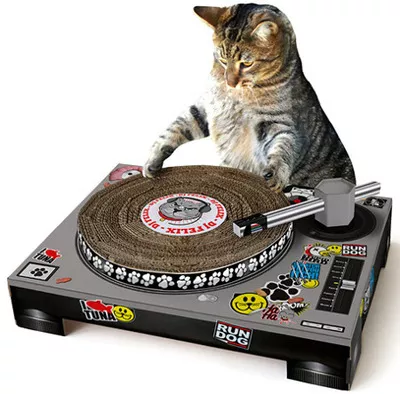
    Remember when the turntable was considered a legitimate instrument in a rock band? Neither do I. But there are rare instances where DJ scratches are not a dealbreaker in a non hip-hop context. Here are the six best rock songs featuring turntables. Let us know your favorites and we’ll REEEEEEEEEEEEMIX. (Note; Remixes are not included in this list)6. Pearl Jam & Cypress Hill – “Real Thing”

    Real Thing by Pearl Jam & Cypress Hill on Grooveshark

    Judgement Night was a forgettable 1993 action flick starring Emilio Estevez and Dennis Leary; its soundtrack, which commissioned rock bands to collaborate with hip-hop artists, is more memorable. Some of the pairings are clumsy, like Sonic Youth and Cypress Hill’s dub weed ode “I Love You Mary Jane.” Cypress Hill’s other contribution, “Real Thing” with Pearl Jam is the album’s second best track (behind the Helmet/House Of Pain opening cut) and the most direct example of the then-rare meeting of turntables and alternative rock.

    5. The Dismemberment Plan – “Close To Me”

    Close To Me by The Dismemberment Plan on Grooveshark

    If I wasn’t told that this was a cover of the Cure classic, I may never have figured it out. The Dismemberment Plan’s contribution to the Give Me The Cure covers compilation is a head-scratcher even before the unexpected turntable cameo. What’s particularly impressive is how much the scratches resemble the guitar work – which, in the great tradition of Washington D.C. indie rock, is “angular.” Back in 1995, the Dismemberment Plan was a snotty, art-punk band whose debut ! sounded like a band playing in a sewer (this practice would not be commonplace until ten years later in Baltimore). “Close To Me” is the first sign of ambition that lands outside of the realm of fast and loud. Oh, and The Dismemberment Plan is writing new songs now, which is totally freaking me out.

    4. Deftones – “MX”

    MX by Deftones on Grooveshark

    If Deftones wanted to break away from the nu-metal trend of the late 90s, adding new band member Frank Delgado on turntables was a questionable decision. Luckily, Delgado preferred to use records as a sampler, manipulating the sounds and capitalizing on the warbling pitch that results when an LP is scrubbed over the needle. “MX” from Around The Fur, Delgado’s first appearance as a Deftone, is one such example. I have no idea what source record he is using, or what effects he runs said record through, but I do know it sounds like a demon laughing, which is all together not out of place in a Deftones song.

  • The Six Best References To Drunk Driving In Song

    The Six Best References To Drunk Driving In Song

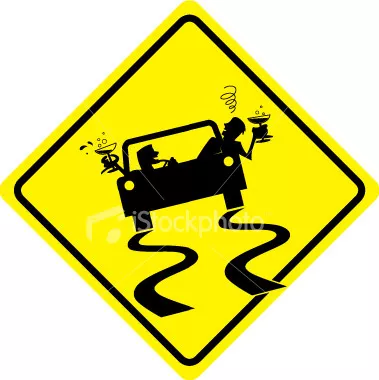
    The trifecta may be sex, drugs, and rock & roll, but at some point you have to get from point A to point B. Against its better judgement, rock & roll has gotten behind the wheel while intoxicated several times. We are not endorsing such an activity, but the risk factor of driving while intoxicated has inspired some pretty stellar tracks. Here are the six best references to drunk driving in song. Feel free to comment on your favorites, but only if your blood alcohol content is lower than 0.08.6. Death Cab For Cutie – “Champagne From A Paper Cup”
    “I think I’m drunk enough to drive you home now”

    Champagne From a Paper Cup by Death Cab for Cutie on Grooveshark

    In an essay Death Cab For Cutie frontman Ben Gibbard wrote for Paste Magazine in 2008. he discussed his lyrical progression: “I decided a handful of years ago that I just want to write songs that you can understand as soon as you put the record on. There’s no need to veil what’s happening in the song the way I used to.” This explains the directness of the band’s last few albums, and also why he no longer produces tracks like 1998’s “Champagne From A Paper Cup,” which plays its vagueness like a hook. Opening line “I think I’m drunk enough to drive you home now” sets up the cloudy imagery that makes the tune comes off like a particularly unsettling Alice In Wonderland tea party dream sequence. Gibbard has written technically better songs over the last five-ish years, but none are this interactive and open-ended.

    5. Montell Jordan – “This Is How We Do It”
    “So I reach for my forty and I turn it up / Designated driver take the keys to my truck”

    This is How we do it (lp Version) by Montell Jordan on Grooveshark

    In fifth grade, everything I knew about hip-hop I learned from Montell Jordan’s “This Is How We Do It.” This includes the following terms: hood, gang-bangers, drive-by, old-school, O.G., mack, wanna-be player, and the difference between a lower-case g and big G (The latter has the money, hundred dollar bills, y’all). His plug for designated drivers is the one nugget of responsibility amidst all the forties and tipped-up cups. Maybe “This Is How We Do It” is a PSA in disguise.

    4. Billy Joel – “You May Be Right”
    “You told me not to drive / But I made it home alive / So you said that only proves that I’m insane”

    You May Be Right by Billy Joel on Grooveshark

    One could argue that the above lyrics refer to the “rode my motorcycle in the rain” phrase beforehand. But there’s a potential DUI here, implied by the “Sunday came and trashed it out again” line in the previous verse. My guess is that Billy Joel, the piano man himself, has been told to chill on the booze more often than he’s been warned about motorcycle safety.

  • 50-Plus St. Louis Hip-Hop Artists You Should Know

    50-Plus St. Louis Hip-Hop Artists You Should Know

    Editor: Tef Poe is an artist from St. Louis City. Through powerful imagery and complicated honesty, he has earned a reputation as one of the best rappers telling the story of St. Louis, which is about much more than one place. Poe has been featured in music publications such as XXL and Urb Magazine. His next project War Machine 2 was released this Tuesday, June 5th and will be followed up by a full-length with DJ Burn One entitled Cheer For The Villain. Follow him on twitter @tefpoe. 

    Get War Machine 2 here.


    Every week in I’m Just A Rapper, Tef discusses modern life, hip-hop, and the deep connection between them.

    St. Louis is overflowing with talented musical artists. It’s always my goal to elevate our city’s hip-hop music in general and not just my own personal profile. I decided this week I wanted to talk about the St. Louis emcee’s I actually listen to. I desire to pay homage to the music I actually have in my mp3 player from St. Louis-bred talent.

    In the beginning I felt as if typing this blog would be offensive to some so I hesitated to do so. I am not a professional journalist. I am writing this entry from the perspective of myself as a fan. I am a human being with his very own personal likes and dislikes.

    I spent days racking my brain trying to not exclude anyone who deserves to be mentioned. I am just a fan that listens to hip-hop and desires to tell others about some of the amazing artists my journey within the culture has led me to. I am a product of the local scene. Everything about my persona was created by the St. Louis music scene and the fans that keep it alive. I’m not going to mention these artists in any particular order.

    This isn’t a poll or a best of competition but more so a simple blog educating the readers about a few artists from St. Louis they might enjoy. If you’re currently a fan of these specific artists then keep following them and pushing their music. I can only write about the music I’ve been introduced to and most of these artists did it the old fashioned way. As a fan I seek to understand the person and the music in one package. The battle to launch a career from our city starts and ends with the fans.

    This is simply my way of paying homage to the acts that I listen to and respect musically. My opinion is not worth a wooden nickel. I hope this will inspire all of us to keep pursuing our goals while using the utmost forms of diligence and respect for each other. I don’t want to be accused of covertly promoting people I’m cool with, so I won’t express my thoughts about people like Rockwell Knuckles, Vandalyzm, Family Affair, Corey Black and Black Spade. I feel like all those guys are geniuses in there own right, and I could spend an entire blog breaking down how talented they actually are. Hopefully if all goes well I will be able to do a sequel to this blog and include the artists that slipped through the cracks on this go around. So with no further delay, here it is:

    T. Prince I featured him on my mixtape Power Over Everything (“Inner City Blues” feat T. Prince). This guy is like Biggie meets Nas meets Lupe. I’ve never heard a wack verse from him, period. His aura onstage says rap star all over it. He is probably one of my favorite rappers on the planet. He mixes street anthems with tales of black consciousness in a very untouchable way. He can write a party song or club record with some of the slickest dialogue you’ll ever hear. He has a ridiculous imagination and can tell a story overflowing with the most vivid descriptions. He has every component needed to be the GOAT in any city he resides in. His crew is equally talented: One of the standout members is Trig, a young guy who writes infectious hooks and also produces.

    Doorway (L-Gifted, Whiteout, RT-Faq, S.D). To me Doorway is an important crew because they basically became a portal for anything going on over the bridge. Through them I was introduced to the music of Aurelius the Saint, LMNOP and countless other acts from across the water. Doorway stands out to me primarily because of the quality of their music and the unity these guys display amongst each other. L-Gifted is like the wise older spirit in a young man’s body. RT-Faq is a natural born performer onstage and his presence often helps legitimize the team. S.D. is their go-to guy when it comes to touching the club scene and street music demographic. I feel like Whiteout is the Method Man of their crew. He’s not the leader necessarily but he wears almost any hat needed to get the job done.

    Aurelius The Saint One conversation with Aurelius and his positive demeanor just spills over into your spirit. His music is layered with rich messages challenging the listener to think differently. He hails from the east side but isn’t heavy on club music and even though he’s a bit of a conscious rapper he has discovered a way to appeal to the masses. I sense that he could easily have chosen another route, but due to life experiences and past circumstances he has chosen to take the high road. He recently opened for legendary Southern rapper Devin the Dude. Aurelius The Saint’s music is very mature and reality based.

    Legend Camp The St. Lunatics, Family Affair, Bits N Pieces, Scripts N Screwz, Midwest Avengers and Legend Camp. These are the St. Louis rap groups with eternal reputations to me. Legend Camp a.k.a. LC is a two-man group consisting of Fresh Voice and X-Luger. LC is armed with one of the most amazingly synced hip-hop stage shows you’ll ever see. Fresh Voice is sort of like the voice of reasoning, sprinkling hyped energetic conscious profanity free vibes into his verses. X-Luger does the same but somehow adds a more hardened edge to his approach. Something about X-Luger makes me believe he’s done it all and seen it all. Fresh Voice is like the wise shogun at the top of the mountain. I have never encountered a rap group quite like Legend Camp. What if you took the skill level and down-to-earth demeanor of Murphy Lee and mixed it with the message of Stic. man from Dead Prez? The St. Louis underground breaks down into many different scenes and these guys are basically respected in each sector.

    Thi’sl DJ Drama coined one of my favorite hip-hop music terms “quality street music.” Thi’sl creates this kind of music all while placing his own spin on it. Most rappers in his position never lived the life they speak on. Every rapper isn’t a gangster and every gangster isn’t a rapper. Somehow when the two components meet in the right light they can create a masterpiece. Thi’sl has made a commitment to change his lifestyle and not endorse the madness that he helped give birth to in the St. Louis streets. Some would consider him a gospel rapper. I myself consider him and independent Missouri powerhouse in the making. Thi’sl has charted on iTunes and spawned a nationwide underground movement with zero major cosigns. He made a song about his hatred for crack cocaine and followed its release with a jaw dropping video. His brand of street music is exactly what our city needs. He manages to speak the truth without preaching to the listener.

    OOOPS This guy is unique for several reasons. He reps the Southside, has a reputation for being a fierce battle emcee and can create top 40 records with ease. He has his own following and has worked hard to become a household name in the club scene. He has also worked with the likes of Wacka Flocka. OOOPS has a stage show that can easily be considered one of the best you’ll ever see. His musical range and talent are hard to match.

    Prince EaOne of best lyricist in the Midwest, period. Ea has a ridiculous fan base and truthfully with the right moves on the business end of things it’s only a matter of time for him.
    He writes thought provoking punchlines, and his verses are overflowing with content. Ea has somehow transformed into a marketing genius on a certain level. His “Make Smart Cool Movement” reaches as far as Australia and beyond. He is certainly one of the Lou’s brightest up and coming prospects. I respect him because he has real accomplishments attached to his name and understands the power of branding.

    Tag Team A very energetic group of young men still in high school but shooting for the stars. One of the problems with local groups is they seem to have trouble developing a fan base and actively engaging with them. For the staff of development and and crew members behind Tag Team this is not a problem. I’ve heard rumors about their stage show even though I’ve yet to see them live for myself. They have a buzz and a following that is all their own. I recently saw them in the middle of the street on Natural Bridge with billboards and posters promoting themselves and selling CD’s. You have to respect die-hard efforts such as this.

    Kenny Knox He’s living everything he raps about. His recent joint about Trayvon Martin is one of the dopest songs I’ve ever heard from a St. Louis artist. Kenny Knox is a street artist some might classify as gangster rap. I dig his music because it’s raw, uncut and legit. He’s one of those artists that could start a movement simply with his voice. You take Chuck D. add a little bit of Jeezy and a pinch of Tupac and the outcome is Kenny Knox.

    Saint O St. Louis is known for making club music. Let’s make no mistake about it: this is nothing to be ashamed of as long as it’s done right. The thing is Saint O. does this form of music all while rapping with the ferocity of a beast. He is known almost as much for his personal grind as much as he is known for his music. Ninety nine percent of the rappers attempting to do what this man does are complete trash. He has a natural aura that spells stardom. He relies on his work ethic and lyricism to spread the acclaim of his music. I always say a good rapper can introduce you to a universe you never knew existed. Some kind of way Saint O. discovered a gap in the defense and exploited it. His latest mixtape Flawless Victory contains features from his always animated partner in rhyme M-Eazy and Slim Dunkin R.I.P.)

  • Remembering Tega, A St. Louis Rapper Who Couldn’t Shake Criminal Past

    Remembering Tega, A St. Louis Rapper Who Couldn’t Shake Criminal Past

    There are plenty of musicians who died before getting definitive time in the musical spotlight. Tega — a rapper who was affiliated with Nelly’s St. Lunatics — is sadly in that category, as he passed on while he was in the midst of climbing the musical ladder.Tega — whose real name was Oretga Devon Henderson — was part of Da Camp, a rap group that often performed with Nelly and Murphy Lee. By 2009 the group had put out some mixtapes and was in the process of completing a full-length album.But by the end of May of that year, Tega had died after succumbing to injuries sustained in a shooting.

    Initial reports stated that Tega was fatally wounded in a Wellston shooting that occurred on this day in 2009. But later reports revealed that Tega’s death had a more disturbing undertone. the Associated Press reported that Tega was actually shot on May 22, a day when police say he joined two other friends to rob an apartment.

    The wire service noted that the three men broke into a house at 1:53 a.m., and were met with gunfire from people inside.

    This was, unfortunately, not unfamiliar territory, as Tega had a criminal record that included two drug charges, felony tampering with a motor vehicle and felony unlawful use of a weapon.

    That gave many of Tega’s friends pause. While not condoning his crimes, many people who worked with Tega said that he had immense promise in his bid to make it in the music world. For instance, Futurre Ali — a member of Da Camp — told the Post-Dispatch “everyone has their positives and everyone has their negatives. I’m not going to say he was an angel. But I think the good outweighed the bad.”

    And St. Lunatics member Kyjuan Cleveland told the P-D that Tega “got mixed up in the streets, but he was so talented, we thought we could pull him out of it. He was on the right path for a minute, but times are hard, and he started getting around the wrong people.”

    For what it’s worth, Tega’s contributions to St. Louis’ music scene can be heard on Da Camp’s MySpace page. That includes “UCME,” which features a guest appearance by Murphy Lee. And Tega also lives on through YouTube, as evidenced by this video where makes a guest appearance with Arch Ryvals:

  • The Six Best Songs Over Thirty  Minutes Long

    The Six Best Songs Over Thirty Minutes Long

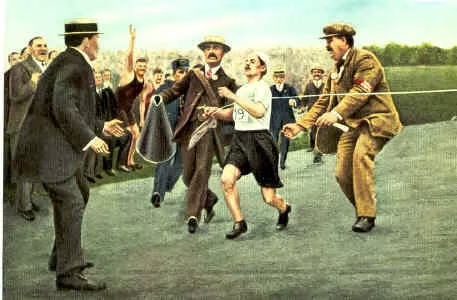
    Dorando Pietri, wishing Nike had commissioned workout music from LCD Soundsystem at the 1908 Olympics.

    “American Pie” is eight and a half minutes, “In-A-Gadda-Da-Vida” is seventeen. It is not uncommon for a prog track to reach twenty minutes, but it takes a certain breed to break the half-hour barrier. Below is a list of the six best songs over thirty minutes long. Feel free to interject your favorite long songs in the comments, but please keep it brief.

    6. The Vindictives – “In Pursuit Part II (Featuring Hypno-Punko Sound)”

    In Pursuit: Pt. II (Featuring “Hypno-Punko” Sound… For Experienced “Hypno-Punko” Users Only) by The Vindictives on Grooveshark

    Punk band the Vindictives made an ambitious record called Hypno-Punko in 1999, full of bizarre acapella tracks and songs that disappear before hitting the one minute mark. The highlight was “In Pursuit,” a speedy pop punk number borrowing chords from Pachabel’s “Canon in D” (or, if you prefer, “Basketcase” by Green Day). The tune ends with layers of vocal lines, each of which would make its own great hook individually. After the song tapers off, “In Pursuit Part II” enters, essentially a loop of the previous track’s great ending that plays for 44 minutes. It can be jarring, but it’s fascinating how hypnotic this actually is, the perfect score for zoning out while keeping your energy level at its max.

    5. LCD Soundsystem – “45:33”

    45:33 by LCD Soundsystem on Grooveshark

    James Murphy’s “work-out album” was commissioned by Nike to flow like an exercise routine. Warm ups, slow downs, jogging tempos, et cetera. Turns out that same pattern of intensity lends itself well to listening while not moving, perhaps while driving or staring at a computer. Most notably, a chunk towards the beginning of the track was rearranged and given lyrics for “Someone Great,” a standout of LCD Soundsystem’s Sound Of Silver. The corporate sponsorship could have added a level of discomfort (I’ve read horror stories of Lil Wayne’s recent on-stage Mountain Dew commercials at this year’s SXSW), but Murphy used the challenge as a stepping off point for awesomeness. Bravo.

    4. Orthrelm – “OV”

    OV by Orthrelm on Grooveshark

    Orthrelm guitarist Mick Barr shreds so quickly on “OV,” you worry he’s going to hurt himself. And actually, he did. The duo had to cancel dates on its tour performing the 33 minute composition due to flare-ups of Barr’s carpal tunnel. “OV” is brutally repetitious, an artsy track that loops 2 second segments of grind metal for minutes on end, and each riff change emerges like a new demon escaping the gates of hell. It’s not as much of a headache as it may sound. Each melody hangs out long enough for the listener to get comfortable in its shape, and the overall structure moves forward with subtle changes – drummer Josh Blair (also of dance band Supersystem) spends a good twenty minutes not touching a single cymbal. “OV” is easier on the ears than an album half its length by the Number 12 Looks Like You or Tony Danza Tapdance Extravaganza or whatever other grind metal band that fifteen year old girls inexplicably like. Just enter at your own risk.

  • Ike Turner and Cocaine: A Devastating Dance

    Ike Turner and Cocaine: A Devastating Dance

    Last.fm

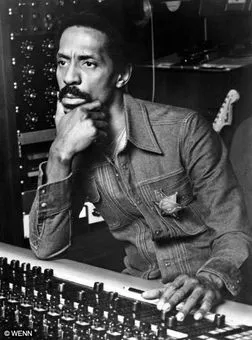
    Cocaine ended up sending Ike Turner to jail — and serving as a catalyst in his death.

    There’s a well-established struggle in Ike Turner’s musical legacy. Although he’s considered a rock and roll innovator, his musical accomplishments were sometimes overshadowed by his personal struggles.

    While Turner’s abusive behavior toward Tina Turner garners plenty of attention, another lingering demon — drug abuse — caught up with the former St. Louis resident 22 year ago. On February 16, 1990, Ike Turner was sentenced to four years in prison for a variety of cocaine-related offenses. He eventually was paroled before his entire sentence was completed.

    Back in the 1960s, according to Ebony magazine, Turner had a far different view of drugs and alcohol. The article states that Turner didn’t drink or use drugs for the early part of his career. He even fired members of the Kings of Rhythm that consumed either substance.

    But Turner’s attitude changed considerably. Ebony cites an excerpt of Turner’s autobiography stating how the musician was introduced to cocaine by “two well-known performers in Las Vegas, both now deceased.” Turner tried the drug while writing songs at his piano, and was soon purchasing “pure cocaine” from South America.

  • The Seven Deadliest Music Festivals

    The Seven Deadliest Music Festivals

    wikimedia commons

    It has been a particularly grim summer already in music festival fatalities, with one death over the weekend at Electric Daisy and two more at Bonnaroo a couple weeks ago. But this is hardly a new phenomenon: The combination of crushing crowds, heat and mind-altering substances (as the Mormons say) at any of the thousands of music festivals that happen each year often proves lethal. In an effort to understand the problem, we tracked down seven of the deadliest music festivals in history. There are more-or-less infinite ties at the bottom end of this list, so Nos. 5, 6 and 7 were chosen as much for notoriety as for number of deaths, but No. 1 through 4 four are pretty much definitive.

    7. Electric Daisy Carnival: Dallas, Texas
    This past Saturday, nineteen-year-old Andrew Graf died after being taken to the Baylor University Medical Center from the Electric Daisy Carnival, an electronic music festival. Though the cause of death remains under investigation, Graf was one of multiple people who were taken “to hospitals for drug, alcohol and heat-related illnesses,” according to WFAA in Dallas. In addition, at least 24 others had been hospitalized after the festival. In a statement, festival founder Pasquale Rotella expressed his condolences and said he “will work with the authorities to understand how this tragedy occurred.” The Electric Daisy Carnival was banned in Los Angeles after a fifteen-year-old died from an ecstasy overdose at last year’s event.

    6. Woodstock: Bethel, New York
    The most famous music festival in rock & roll, Woodstock set the standard, attracting so many people that it became the third-largest city in New York during its run from August 15 to August 18. The “three days of peace and music” proved not all harmony: Within the estimated gathering of over half a million people, two people died during Woodstock. One man died from a heroin dose and “a teenager in a sleeping bag was killed when a tractor ran over him,” according to the Daily Mail, which goes on to state that the driver was never traced.

    5. Altamont Speedway Free Festival: Livermore, California
    What set out to be “Woodstock West” wound up being Hell’s concert: The free event was held on December 6, 1969, and drew 300,000 fans with performances by the Rolling Stones, Santana and Jefferson Airplane, among others. Four people died at the festival, with “two from hit-and-run accidents, one from drowning in an irrigation ditch and, most notoriously, one from repeated wounds at the hands of a Hell’s Angels member” during an outburst of violence during the Rolling Stones’ set that night. Eighteen-year-old Meredith Hunter attempted to climb onstage when Hells Angels members prevented him from doing so. Hunter returned with a pistol and Angel Alan Passaro stabbed him. Hunter later died from his wounds.

    4. Roskilde Festival: Roskilde, Denmark
    On June 30, 2000, nine people died during a Pearl Jam performance at Roskilde, a rock music festival held annually in Denmark. According to the police report, “eight young men were killed outright and on July 5, 2000, another young man died as a result of the accident.” It also noted that all victims had bruising on their bodies and faces and “none of them had been under the influence of narcotic substances.” The cause of death for all nine victims was “suffocation after compression/pressing of the chest,” according to the police report. Pearl Jam paid tribute to the accident victims in their song, “Love Boat Captain,” with the lyrics “lost nine friends we’ll never know, two years ago today.”

  • Show Review: Radiohead in St. Louis at the Verizon Wireless Amphitheater, May 14

    Show Review: Radiohead in St. Louis at the Verizon Wireless Amphitheater, May 14

    (Photos and review by Annie Zaleski. VIEW OUR SLIDESHOW OF PHOTOS HERE.)


    Show Review: Radiohead in St. Louis at the Verizon Wireless Amphitheater, May 14

    (This is probably my favorite shot I took.)

    How do you sum up a show that’s one of the best you’ve ever seen — in your life? It’s almost 4 a.m. and I’ve been working on my show photos since I got home, and I’m still at a loss for words to describe the Radiohead show at Riverport, UMB Bank Pavilion, the Verizon Wireless Amphitheater.

    Here are the facts: The band played all of In Rainbows, its latest album. Kid A was also well-represented, with a manic, squelching version of “Idioteque,” a lullaby twitch of “Kid A” and the robotic paranoia “Everything In Its Right Place.” Bends hit “My Iron Lung” was played for the first time this tour; that album’s “Fake Plastic Trees,” and OK Computer tunes “Airbag,” “Exit Music (For a Film)” and “Paranoid Android” were the only older songs performed.

    The stage setup — a series of light rods arranged from the ceiling, honeycomb-shaped spotlights and tasteful video screens projecting grainy footage of the band in the back — was one of the most amazing I’ve ever seen. Multiple colors cascaded down or traveled up the devices, feeding off of the music — or driving its direction. During many songs, it felt like a Radiohead Rave, the lights, beats and music reverberated so intensely.

    Yorke’s dry (and often overlooked) humor was on display quite a bit. During the Bowie-glam crunch of “Bangers + Mash” — which found him sitting down in front of a mini-drumkit while singing — he stood up during a break and ran around his lone drum, Chinese fire-drill-style, as if in a solitary game of Duck, Duck, Goose. For “You and Whose Army?” he peered into a fisheye-lens camera (something the band’s been doing for years) that projected his face onto the giant screen onstage; knowing that his mug was the focal point, he made funny faces and wiggled his eyebrows knowingly, like a goofball. And during the start of the show, he talked about smelling the funnel cakes being sold, which somehow spiraled into confessing a love for donuts.


    Show Review: Radiohead in St. Louis at the Verizon Wireless Amphitheater, May 14

    Yorke’s dance moves must also get a special mention. During “Everything In Its Right Place,” he did a quasi, stiff-limbed Robot, which then morphed into what looked like a hip-hop robot mimicking swim moves. The electronic thunderhead, beat-stampede “Myxomatosis” found him dancing like an antsy boxer, and punching the air in time to the lyrics. During “The Gloaming,” he high-stepped as if an old-west enemy was shooting bullets at his feet. At other times, it seemed like his feet moved the rest of him away from the mic stand against his will; his arms — all elbows — and legs flailed with liquid ease. Even when holding a guitar, he shook his head back and forth with rabid concentration and hyperactive glee.

    Yorke’s dance moves during “Idioteque” in St. Louis, already posted on YouTube. Hello, Running Man!

    Jonny Greenwood — wearing a shirt that said, “Yes, It’s Real” and rocking hair ca. Brett Anderson of Suede’s 1993 look — merrily twisted knobs and manipulated sounds on stage left, when he wasn’t attacking a guitar. His bassist brother Colin hung out near drummer Phil Selway, while other guitarist Ed O’Brien rocked a scarf and held down stage right. While a talented guitarist in his own right, the harmonies he and Yorke combined to hit were absolutely gorgeous. O’Brien’s rousing concert toms (in tandem with Jonny Greenwood) on “There There” pounded like a thumping heartbeat wild with fear.

    So why on Earth was this show so transcendent?

    I’m still having trouble putting this into words, hours after it’s ended. There was something deeply romantic in the air at the show (and no, I’m not talking about the insane amount of weed being smoked in the crowd). The muted drum-n-bass/acoustic strum friction of “Weird Fishes/Arpeggi” was as placid as a dip underneath aquamarine oceans; the solitude and loneliness of the tune was deeply moving. Yorke’s crystalline croon echoed the studio versions of songs nearly perfectly, especially on standouts “Reckoner” (a clattering electro-hymn), a devastatingly beautiful “Fake Plastic Trees” and the reverbed-folk heart-stab “House of Cards.” But this falsetto hinted at sweet sadness, knowing seduction, gentle romance, mysterious love and fluttering caresses — all of the hushed secrets shared between lovers.

    Yet this atmosphere wasn’t jarred or disturbed by Radiohead’s jagged rock moments (“Bodysnatchers”) or its floating alienation ballads (“Airbag”) or the many instances of electronic mayhem (“Idioteque” was an absolute standout, its ice-scraper rhythms and sunrise synths colliding in wild bouts of dancing and tempo-shifting). The set’s final song, “Paranoid Android,” in fact, might have been the best song of the night. A slow-building shift between frenzied guitar slashes and straightforward sloganeering, the 1997 hit ended in Technicolor neon-bursts of light that made the band silhouettes. The meaning of the song remains as cryptic and ambiguous as it did a decade ago, but its message didn’t sound the least bit dated.


    Show Review: Radiohead in St. Louis at the Verizon Wireless Amphitheater, May 14

    On paper, Radiohead’s ability to mash together rock, electronica, punk, noise and even bits of hip-hop — and the chemistry between band members that makes its live shows so fantastic — keeps it interesting. Abstractly, though, the vulnerability the band conveys adds to its mystique; for me there’s an underlying, irresistible attraction to this aspect of the band. Radiohead is brilliant at stripping down its music right to the emotional core — and that purity of intent (and genuine execution) rang true last night.

    (EDIT, Thursday afternoon: My colleague at the Pitch, Jason Harper, also wrote an excellent review. Go check it out here.)

    Setlist: (culled from my scribblings and a bit of help from ateaseweb.com)
    01. All I Need
    02. Jigsaw Falling Into Place
    03. Airbag
    04. 15 Step
    05. Nude
    06. Kid A
    07. Weird Fishes/Arpeggi
    08. The Gloaming
    09. You And Whose Army?
    10. Idioteque
    11. Faust Arp
    12. Videotape
    13. Everything In Its Right Place
    14. Reckoner
    15. Optimistic
    16. Bangers and Mash
    17. Bodysnatchers

    Encore One:
    18. Exit Music (For A Film)
    19. Myxomatosis
    20. My Iron Lung
    21. There There
    22. Fake Plastic Trees

    Encore Two:
    23. Pyramid Song
    24. House of Cards
    25. Paranoid Android

  • Last Collector Standing: Cliff Hardesty, Owner of CD Reunion, on BBQing with Ozzy and the Who’s Iconic Album Covers

    Last Collector Standing: Cliff Hardesty, Owner of CD Reunion, on BBQing with Ozzy and the Who’s Iconic Album Covers

    Jon Scorfina

    Sometimes the best reason to collect records is for the unabashed love of the music. Picking up from a short winter hiatus, Last Collector Standing met up with Cliff Hardesty, who, above anything else, is a genuine music lover. He is also the owner of multiple record stores, including CD Reunion in St. Charles and O’Fallon, as well as the rock memorabilia and clothing shop Glad Rags. Sitting down for an interview in his newest business venture, his rock & roll bar Red Fish Blue Fish (which is next door to CD Reunion), we discussed the iconic photo of the Who peeing on the cover of Who’s Next and how he once walked in on Ozzy Osbourne barbecuing.

    Last Collector Standing: When did you start working at a record store, and how did you end up owning multiple stores?
    Cliff Hardesty: I used to work at 1380 KGLD, which was an oldies station. Gary “Records” Brown was my boss there. [He] was a St. Louis radio legend. Someone called me up one day and was asking about a record and said, “Have you ever been over to Record Reunion in Hazelwood?” He knew I was from North County. So I went into Record Reunion and started buying records from Dan Keysor. People would always say, “If you got out of radio what would you do?” I would say, “Well, I’d own a record store.”

    I got fired from my radio station job and then I went to Europe for the summer backpacking. I came back and didn’t have a job. I thought, “I’m going to go hit some record stores and see if anybody will hire me.” I got hired at Dan’s Record Reunion, the first one I went to. I was a big record collector so a couple of people in there kind of recognized me. It helped that I worked at an oldies station, because they knew I knew who the Shirelles were, and [groups] like that.

    I started doing that full time. When I first started working for Dan we might have had two dozen CDs in the whole store. It was all vinyl, cassettes and 8-tracks. Then I just started tripping over CDs. They were just growing and growing and growing where we just had stacks of them on the floor. Literally stacks waist high.

    I said, “Dan, you know you need to open up another store. You’ve got so much stuff there’s no way you can sell it all here.”

    I kept bugging him. Finally one day he said, “Look, if you think we need another store then why don’t you go on out and start it.”

    “Really?”

    “Yeah. You can be my partner.”

    “Really?”

    He said, “Yeah!” So I started looking around.


    Last Collector Standing: Cliff Hardesty, Owner of CD Reunion, on BBQing with Ozzy and the Who's Iconic Album Covers

    You might remember, Tipper Gore started a rating system for records. Tipper Gore apparently impressed a Missouri state legislator that wanted to make a rating system for records. A petition drive got started at KSHE. I noticed that about one out of five people who signed the petition lived in St. Charles County. So I was like, “Dan, we should open up in St. Charles County.” There was no used record store there at the time. Streetside wouldn’t sell used records because they were still buddy-buddy with the record companies and the record companies didn’t like the idea of people selling used recordings.

    The record companies never helped us. They would call us and talk about other stores and call them the “real” stores, like we weren’t even a real store. We never got any help from the record labels. We were as independent as you could get. We’re in St. Charles too. We’re not in U. City. We’re not in the cool areas. We’re as mom and pop as it gets.
    Anyway, I came out here and found a place in Hawks Nest Plaza, where the rent was really low. I got a loan of fifteen thousand. Dan put the same amount of money in with records, CDs and movies. That was 1991 and now here we are in 2011 still going. This will be our twentieth year.

    So you started right when CDs where really taking off?
    The timing couldn’t have been better. CDs started to get really big about ’88. By [then] all these people started converting their collections onto CD. For me, it was a goldmine because people were trading their record collections for CDs. Everyone thought CDs sounded better. I thought they were crazy. Records sounded better. I started buying records as much as I could. People thought I was crazy. I was like, “I’ll trade you ten records for a CD. No problem!” So my record collection started going crazy by that time.


    Last Collector Standing: Cliff Hardesty, Owner of CD Reunion, on BBQing with Ozzy and the Who's Iconic Album Covers

    As a storeowner, do you feel that vinyl has come full circle?
    Yeah. CDs are so easy to get that they are not considered as valuable. A record, you have to take care of it. You have to treat it with respect, and I think it gets people’s respect. People will come in with a stack of CDs with literally no cases. They don’t care about the packaging. They don’t care about anything except the disc, but albums [have] the pictures, the liner notes, and all the fun stuff. I think it’s coming full circle, but I don’t think vinyl will ever have the sales volume that CDs had in 1994.

    I just don’t see it happening. They’re not convenient. You can’t pop a record in the car while your driving. I don’t think they’ll ever be back to where they were, but there are a lot of people that [vinyl] means a lot to them. One of our biggest customers for records over the last few years has been teenage girls. They like the sound of them.

    People just like to collect things too. I know people who still collect stamps. What good is a stamp really? You can’t play a stamp. You just look at it. A record you can look at it and you can play it! (Laughs)

  • Interview: Woody from the Point’s Morning Show Team, A.K.A. Where Chris Dumped Ashley

    Interview: Woody from the Point’s Morning Show Team, A.K.A. Where Chris Dumped Ashley

    [Update, March 4, 5:45 p.m. Woody and Rizzuto have posted the follow-up call. Check it out here!]

    Last week, I found and blogged a clip of an on-air break-up between a couple named Chris and Ashley, which originally aired on the Point (105.7 FM) before Valentine’s Day. The short post exploded on the Internet on Friday and on through the weekend — and as of now, has been streamed nearly 800,000 times.

    According to Woody – one-half of the morning show team of Woody and Rizzuto, which aired the clip — the rise to viral-audio status was slow and steady: The post took a week to get to 100,000 streams – and then received 100,000 a day for the next two days.

    Chris is scheduled to be on Woody and Rizzuto’s show tomorrow morning, to update listeners on what happened next. But only via a phone interview. “I was trying to get him to come in, and he’s like, ‘I am not coming in,’” Woody says. “He’s like, ‘No way, because then people will see me, they could be waiting for me outside the station.’ It’s gotten crazy, man — he’s gotten threats.” Chatting yesterday afternoon after his show, Woody answered some questions about the call.

    Annie Zaleski: First off, I cannot believe the amount of attention — and shitstorm — our blog caused.
    Woody: I know, it’s crazy, right? When the call happened initially, it was automatic – it’s one of those topics that everybody has a very strong opinion one way or the other. When that first happened, it was just like, ‘Oh my God.’ The amount of email and the people going to the website looking for the [clip]… We initially did not even podcast it, but I was getting bombarded with emails and stuff. I had my producer go back and pull it real quick and throw it up there. It’s crazy.

    The biggest question/statement I’ve seen in our comments section and everywhere: A lot of people think it’s fake.
    Just like everything else on the Internet, I guess. I saw that too. It’s so funny: you see how it is if you’re online at all. Any YouTube video, the comments you can always count on – “fake,” someone going, “fail!” or somebody with some kind of racial comment. It could be puppies playing with string , and it’s like, “Yup, typical black behavior.” It’s like, “What? What does that have to do with anything?”

    I understand – we have people call in for this stupid feature we do every Monday, called “My Weekend Sucked.” People call in with stories about why their weekend was terrible, and we let listeners vote on which one they think is the worst. Whoever has the worst weekend story gets something. Some of them seem pretty crazy. [Yesterday] a woman called in and talked about how her house burned down on Friday. She didn’t sound all that bent up about it, but sure as shit, we did the research, we called the town where the fire happened, she gave us the address – and sure as shit.

    Or some guy called in a couple weeks ago, like, “Yeah, I went to go pick up this stripper friend of mine on the east side, and I got held up at gunpoint.” He had this crazy story – and sure as shit, we had cops calling and saying, “Yup, that’s dead to real. What’s the guys’ name?” We told the cop the guy’s name, and he said, “Yup, that’s the guy.”

    I don’t think people realize – you have to vet things like this. You can’t take things at face value.
    People cheat all the time. You see about revenge stories and stuff like that all of the time. It just so happened that this guy was already planning to dump her anyway. But he’s a listener of the show and knows this is the kind of thing that we’d be into. People think that just because we’re a “guy’s guy” kind of show that we’re just all “guys stuff,” that we would somehow be on the bandwagon of, “Yeah, go out and get yours, dude, go bang these whores.” But we’re not like that at all. I think he just had a stupid idea, maybe not even thinking that we would take him up on it, and we did.

    How did it come about originally? Did he just call you guys?
    We were going to this Valentine’s Day segment, basically about how Valentine’s Day is a bullshit kind of thing, it’s only for women, guys don’t really care about Valentine’s Day. I was actually going into the segment, and the phone screener’s like, “Dude, just take this call. This guy’s got an idea.” He was telling the phone screener off the air what his idea was. We went to the call. The part that’s on the Twiturm file is the second part when we came back from break. It was a whole initial call when he first called in, where we were finding out the story as he’s telling it to us.

    We took a break, and we came back, I had to get the phone number from him, so we cold call her. It unfolded. You had that one little piece that’s up on the site, but there’s actually a little bit more to it. There’s some random guy calling in.

  • Last Call?: East St. Louis nightclubs under siege

    Last Call?: East St. Louis nightclubs under siege

    It’s three thirty on a humid Saturday morning. Last call in St.
    Louis was 45 minutes ago, and now Club Casino’s getting wild. A
    party-hungry swarm has completed its migration across the Mississippi
    River, drawn like moths to the neon-orange glow of the nightclub’s
    marquee. Here, just off Interstate 255 on State Street in the heart of
    East St. Louis, they’ll dance till dawn.

    Under a moon-size disco ball, the floor is a sea of bobbing
    dreadlocks and flat-brimmed ball caps. A syrup-slow bass line thumps
    over the speakers, the beat sped up by synthesizers and a jittery
    hi-hat. A woman in a tiny pink dress grabs her ankles while her partner
    steps up behind her and grinds. Others do a knee-swinging version of
    the twist, adding a sly two-step that looks like walking in place with
    swagger.

    The air-conditioning has been off since an electrical transformer in
    the parking lot blew just after midnight. It’s sticky and sweaty, and a
    haze of menthol and blunt smoke adds weight to the air. Enclosed in a
    tinted glass booth, Derrty DJ C-Note spins minute-long song snippets,
    fittingly referred to as “club bangers,” prompting mass sing-alongs to
    choruses like “Donk dat booty,” “Do da booty do” and “Ride dat
    pussy.”

    “Call yo’ people, tell ’em we still open!” C-Note shouts. “We gon’
    keep it poppin’! Text yo’ people and tell ’em it is on!”

    Seated on a stool beneath the fluorescent lights at the club’s
    entrance, holding a fistful of $10 admission cash, Cedric Taylor, Club
    Casino’s owner, imparts that attendance on this night is about 280
    — less than half of what the club averaged three months ago in
    the dead of winter.

    That was before the trouble started.

    On March 19, leaders from across the metro east gathered at a press
    conference and demanded that East St. Louis Mayor Alvin Parks, who also
    serves as the city’s liquor commissioner, make the nightclubs in his
    jurisdiction close earlier. Several establishments remain open until 6
    a.m., and law-enforcement officials say patrons, primed by a night on
    the town in neighboring St. Louis, arrive in East St. Louis in the wee
    hours and wreak havoc.

    A week after the press conference, agents from the Federal Bureau of
    Investigation raided Parks’ office in city hall, carting off documents
    pertaining to what the mayor has delicately characterized as an
    investigation of “unlawful solicitation of money regarding liquor
    licenses.”

    Responding to mounting public concern, Parks called an “emergency
    town-hall meeting” on April 4 to discuss the situation. There he
    distributed a survey that asked respondents to circle the time they
    would prefer local nightspots to stop serving liquor. The options were
    2 a.m., 4 a.m. and 6 a.m.

    “After that a lot of people thought we were closing at two,” Cedric
    Taylor says. “We had people cruising by at 3:30 who would stop in and
    say, ‘I thought you guys were supposed to be closed.’ We did an ad on
    the radio — $2,000 just to say, ‘Hey, we’re still open.’”

    Parks decided late last month not to curtail the 6 a.m. closing
    time, but the controversy is far from resolved. The FBI investigation
    looms over the mayor’s head, and his political rivals have pounced on
    the galvanizing issue.

    Taylor, who maintains he’s merely an upstanding citizen trying to
    provide a safe place to party, says his livelihood hangs in the
    balance.

    “Don’t penalize me because there are some idiots out there who don’t
    run their club like a business,” the club owner gripes. “It’s these
    little, I call them holes in the wall, that have about 50 people in
    them and have an incident every week. We have 500 people and never have
    any problems. It reflects poorly on the city, and it’s upsetting to get
    lumped in with a problem that we’re not a part of.”


    East St. Louis nightlife has long been the stuff of legend. Thanks
    to Chuck Berry, the local juke joints were among the first in the world
    to feature rock & roll. Ike met the future Tina Turner in a
    downtown bar called Club Manhattan. And before Miles Davis became a
    jazz icon, he was tooting his horn here, in the city nicknamed “East
    Boogie.”

    Today, according to Mayor Parks, 70 East St. Louis establishments
    are licensed to sell liquor. Of those, 8 are classified as nightclubs
    and remain open until 6 a.m. The 2 most popular venues, Club Casino and
    Blackmon’s Plaza, have been around for decades.

    Cedric Taylor has owned and operated Club Casino for 21 years. When
    it opened, the place was called Club 24/7 and was a popular stop for
    touring funk and R&B groups. These days it hosts after-parties for
    national hip-hop artists who perform across the river in St. Louis. In
    the past year, the club has hosted events for rappers Jim Jones, Soulja
    Boy, Yo Gotti and St. Louis’ own Nelly, to name just a few.

    “We went from the Temptations to Gucci Mane,” Taylor says, conceding
    he’s more of a Marvin Gaye sort of guy.

    For as long as the city has been known as a place to party till
    dawn, it has battled an equally gaudy reputation for crime, violence
    and corruption.

    “It’s had a wild nightlife since it was founded shortly after the
    Civil War,” says Andrew Theising, a political-science professor at
    Southern Illinois University Edwardsville and author of Made in USA:
    East St. Louis, The Rise and Fall of an Industrial River Town
    . “And
    they’ve had federal investigations into their handling of liquor
    licenses three times dating back to 1918. It has always been a haven
    for crime, sex and drugs. It’s always been there, and it’s still there
    today.”

    In short, while dancing till sunrise and beyond is the norm in
    famous clubbing cities like Barcelona, New York and Las Vegas,
    outsiders’ views of the festivities in East St. Louis are a different
    story. To many it will forever be the place where a goofy honky from
    Chicago named Clark Griswold gets his hubcaps stolen in the movie
    Vacation.

    Caricatures may depict a machine-gun-toting thug on every corner,
    but the sad reality is that the city is mostly desolate. Virtually
    every block is dotted with boarded-up or burned-out buildings. Of about
    31,000 residents, 98 percent are African American and 24 percent are
    unemployed. There were 19 homicides in East St. Louis in 2008 and 31
    the previous year. In the eyes of several local officials, the
    bloodshed and raucous nightlife are inseparable.

    “Let’s face it, if those places were to close at 1:30 a.m. like
    everybody else does, East St. Louis would probably get rid of half
    their crime,” contends St. Clair County Sheriff Mearl Justus. “I been
    sheriff for 27 years. The nightclubs have been a problem since day one.
    In the summertime, when it’s warm, my people have been down there, and
    there are literally hundreds of people swarming around on Collinsville
    Avenue, drinkin’ and druggin’ and everything else going down
    there.”

    “Our judgment, law enforcement’s judgment, is many of the city’s
    problems are caused by nightclubs being allowed to stay open,” echoes
    Robert Haida, St. Clair County Prosecuting Attorney. “You get people
    who are already intoxicated, and they’re armed, and they get into
    trouble on the east side. We know we can save lives by closing the
    clubs.”

    Justus and Haida made their views public at the March 19 press
    conference. They were joined by U.S. Attorney A. Courtney Cox, Illinois
    State Patrol Captain Mark Bramlett, U.S. Marshal Don Slaznik, East St.
    Louis NAACP president Johnny Scott, three members of the East St. Louis
    City Council and a handful of local clergymen.

    Conspicuously absent was Mayor Parks. He says he was never
    notified.

    The next day many reports about the gathering focused on a single
    statistic: The Illinois State Patrol stated that fifteen homicides over
    the past five years “came directly out of East St. Louis
    nightclubs.”

    Bramlett concedes the figure is inaccurate: Two of the murders were
    actually associated with clubs in nearby Washington Park and Venice,
    and one came from a report that vaguely cited “an undetermined East St.
    Louis nightclub.”

    Nevertheless, Bramlett says, his agency responds to enough
    nightclub-related shootings to validate the claim that the bars add to
    the body count. Beyond the murders, he notes, there were “five separate
    cases of weapons fired into vehicles as patrons are leaving the club
    and on their way back to St. Louis, and four cases where individuals
    were shot as a result of an issue in one of the clubs.”

    The last month of 2008 was a particularly violent one. On December
    29 a security guard at the Broadway East nightclub was wounded in the
    thigh after trying to break up a fight in the parking lot at 4:45 a.m.
    The shooters sped across the Eads Bridge into St. Louis in a red
    Lincoln Navigator. Three days earlier a shooting inside the VIP Lounge
    at Blackmon’s Plaza had sent more than 300 people fleeing into the
    street. And on December 7, a woman walking to her car alone after
    leaving Club Etta on State Street was hit in the back by a stray bullet
    at 3:45 a.m.

    (Nightclubs west of the Mississippi River have not been immune,
    however. At about 2:30 a.m. on Friday, May 8, three men were gunned
    down after leaving a concert by rapper Yo Gotti at Club Society, near
    Union Station in downtown St. Louis.)

    Bramlett also cites an episode from January when two cars leaving
    East St. Louis at 3:30 a.m. exchanged fire on the Poplar Street Bridge,
    killing a 23-year-old woman.

    “If these places close down at the same time St. Louis does, then we
    don’t have those types of incidents,” the state patrol captain argues.
    “It’s that simple.”


    On March 26 the FBI raided Alvin Parks’ office and several others
    inside East St. Louis City Hall. Parks says about eighteen boxes of
    files were carted away, records dating as far back as 2003 that deal
    with “what’s taking place with the liquor-selling operations, what’s
    happening with how we handle liquor licenses here, liquor penalties and
    other aspects related to liquor.”

    A spokesman from the FBI’s Springfield, Illinois, office declined to
    comment on an ongoing investigation.

    The search has yet to produce an arrest or indictment, but Parks’
    deputy liquor commissioner, Walter Hill, was placed on administrative
    leave shortly afterward. On April 19 the city council voted to
    eliminate Hill’s position as part of a citywide spate of job cuts.

    Hill could not be reached for comment. Parks says the dismissal of
    his appointee, whose duties included “the total management of all
    liquor licenses in terms of fees,” is unrelated to the
    investigation.

    The day after the city hall raid, federal agents struck again. The
    U.S. Secret Service, along with deputy U.S. Marshals and East St. Louis
    police, arrested Robert Williams, owner of Club TV One, a nightspot in
    downtown East St. Louis that had been open less than three months. A
    search of the club unearthed 419 pounds of marijuana stuffed into
    “eleven large military-style duffel bags.” Williams has been charged
    with mail and wire fraud and with transporting more than $5,000 worth
    of stolen property across state lines.

    Finally, as if to drive home their point, on the morning of Sunday,
    April 12, state and federal agencies joined forces to conduct a
    “roadside safety check” of all vehicles entering downtown East St.
    Louis via eastbound Interstate 64 between midnight and 4 a.m. More than
    50 agents, officers and deputies from the Bureau of Alcohol, Tobacco,
    Firearms and Explosives, the Illinois State Patrol and the St. Clair
    County Sheriff’s Department were present.

    The squad arrested 22 people on outstanding warrants, 7 for driving
    under the influence, and 4 for misdemeanor drug possession (3 for
    marijuana and 1 for crack cocaine). Another 49 were cited for having an
    open alcohol container in a vehicle, and 39 were caught driving with
    suspended or revoked licenses. Officers seized two illegal firearms
    — an assault rifle and an unregistered pistol.

    “If you pulled up and could produce a driver’s license and had your
    seatbelt on — unless you rolled down the window and a purple
    cloud of [marijuana] smoke came out — you were on your way,”
    Bramlett says, adding, “I think it’s indicative of type of clientele
    they have coming into the city.”


    Beneath its chaotic veneer, East St. Louis possesses a strong sense
    of community. There’s a sizable elderly population that can still
    remember the days when the population topped 80,000 and jobs were more
    plentiful. Churches are ubiquitous and play a vital role in local
    politics.

    Both camps were up in arms by March 31, when Parks convened his
    “emergency town-hall meeting” to discuss the federal investigation and
    the suddenly pressing issue of the nightclubs. Several hundred
    residents, a noisy herd of media and nearly the entire East St. Louis
    police force packed city hall to hear what the mayor had to say.

    Dressed in a navy suit, starched white shirt and red tie, the
    silver-tongued Parks did his best to charm the crowd. He announced
    plans to appoint a commission to study the nightclub situation and
    distributed the survey asking residents what time they thought clubs
    should close. He even suggested that the raid on his office was a good
    thing for the city.

    “The people from the U.S. Attorney’s Office are very interested in
    helping expand law enforcement in this community,” the mayor declared.
    “The positive outcome is that we’re having conversations with them that
    we may not have otherwise had. So there are silver linings to this
    situation.”

    But when he opened the floor, a line of eager and angry critics
    quickly formed.

    “We in East St. Louis cannot afford to keep going the way things
    are,” one middle-aged man said to scattered applause. “You [need to]
    shut it down at one o’clock and let people go to sleep.”

    Club Casino proprietor Cedric Taylor was one of the few people
    present to defend the clubs.

    Taylor and his wife, Keisha, are known for their philanthropy. They
    have contributed to a number of causes — from purchasing letter
    jackets for East St. Louis High School’s state-champion football team
    to buying computers and other equipment for the Brooklyn Police
    Department to renting a helicopter to help search for a young woman who
    was swept away in a flash flood last year.

    Taylor pointed to his good deeds and asked that nightclubs be
    treated as individual entities rather than lumped together as one
    troubled whole.

    “Don’t penalize me if I’m running my business effectively and
    efficiently,” he pleaded. “Club Casino is a way of life for me; it’s a
    way to make a living. We been in business over 21 years. It’s one of
    the oldest clubs in East St. Louis. We give back to the community.”

    Then it was back to the mayoral skewering. One woman brought up the
    subject of Walter Hill, Parks’ erstwhile deputy liquor
    commissioner.

    “I been told by more than a few employees and club owners,” she
    said, “that even your own assistant comes into the business, goes
    behind their bar, drinks from the bottle and then asks for some type
    of, um, ‘economic facilitation’ to get their liquor license. Mr. Mayor,
    are you monitoring your own staff?”

    After the hooting died down, Parks, clearly rattled, responded: “If
    you know of or you see evidence of public corruption or know of city
    employees unlawfully soliciting money or other unlawful activity,
    please contact the FBI or the U.S. Attorney’s Office.”

    Ironically, such a call may have led to the March 19 press
    conference.

    In November Parks appeared to bend over backward to issue a liquor
    license to Johnnie Blackmon, owner of two downtown nightclubs,
    Blackmon’s Plaza and Club Illusion, for a new business called the
    Gentleman’s Club.

    Despite the suggestive name, the promise of pole-dancing and a flier
    depicting a woman pulling down her bikini bottom, Parks maintained that
    the new venture was not a strip club because the dancers would wear
    “swimsuit attire or other attractive clothing.”

    The new club was located across the street from a church and near a
    cluster of residential homes. Several citizens complained, and the
    club, which opened November 12, was forced to close eight days later
    when the city council voted unanimously to deny Blackmon’s application
    for a business license.

    “A lot of things coalesced into the timing of that [press]
    conference,” says St. Clair County prosecutor Robert Haida. “Several
    citizens groups approached us and asked us to do something. We had been
    aware of the problem for a long time, and concerns had been expressed
    through official channels. We were asked to increase our efforts and
    make it a more public issue.”

    Johnnie Blackmon did not respond to requests for an interview for
    this story.


    East St. Louis is in dire fiscal straits. Facing a $2 million budget
    deficit, the city plans to cut seventeen positions, including five
    police officers and five firefighters.

    In an embarrassing but illustrative example of the depth of the
    crisis, the police department’s drug-sniffing dog was nearly
    repossessed last month by a breeder who said the city failed to pay him
    the $5,000 he was owed for the canine, which changed hands on February
    1.

    At the town-hall meeting, Parks pointed out that forcing
    establishments to close early would have a significant impact on the
    city’s strained coffers. Cedric Taylor, who also owns Javon’s Fine
    Dining, an east-side restaurant and bar, came prepared with figures to
    back the mayor’s claim.

    “We paid this year over $150,000 to the state of Illinois and more
    than $100,000 to East St. Louis in revenue from sales taxes,” Taylor
    told the crowd. “These are the things you have to look at.”

    According to statistics kept by the Illinois Department of Revenue,
    sales taxes from “Eating and Drinking Places” in East St. Louis
    generated more than $1.3 million in 2008. The funds were divided among
    the state, county and city.

    Beyond the clubs’ direct contributions, others point to a
    trickle-down effect on the city’s economy. Parks argues that the
    late-night visitors help keep other local businesses afloat. Taylor
    points out that he employs fifteen people at Club Casino, almost all of
    whom live and spend money in East St. Louis.

    “There are a lot of people that work in these clubs. Right now, with
    the economy the way it is, you going to take jobs away from
    people?” seconds Club Casino’s DJ C-Note. “I need that money at the
    club. I got a mortgage. I got kids to feed.”

    Willie “Bay-D” Spratt is a promoter who heads a group of East St.
    Louis entertainment businesses, primarily record labels, collectively
    known as the Coalition. Spratt believes that closing at the same time
    as St. Louis’ bars would almost certainly put East St. Louis’
    nightclubs out of business, given that the vast majority of customers
    arrive after 1:30 a.m.

    “Towns die because of things like this,” he says. “Look at Wellston
    — they used to be a hotbed for entertainment. If [the clubs]
    close, East St. Louis doesn’t have anything going beyond that. It’s a
    run-down city already. Imagine what it will be like without this
    revenue.”

    Further complicating matters is the Casino Queen. Taxes
    collected from the riverboat gambling facility account for roughly 40
    percent of East St. Louis’ annual operating budget. Because the
    Casino Queen has the same type of liquor license as the
    nightclubs’, it would be subject to any mandated change in hours. With
    business at the casino down 20 percent in 2009, many city leaders are
    wary of inflicting further damage.

    “We surely don’t want to cut off our nose to spite our face,” says
    Delbert Marion, an East St. Louis council member. “If [the nightclubs]
    are generating the type of revenue that can offset the losses of the
    Casino Queen, then we’ll take that into consideration. But then
    again, do we want to take the risk of having people under the influence
    of alcohol and drugs pouring into the city, where the police department
    is already strained?”

    Hard-line nightclub opponents insist that any arguments about the
    clubs’ financial contributions to the city are moot.

    “The highest priority is saving lives, not whether a bar would go
    out of business,” county prosecutor Haida says. “That’s an easy call.
    If it’s revenue versus saving lives, I’ll take saving lives every
    time.”


    Ask anyone who has ever frequented or worked at an East St. Louis
    club if the establishments are behind the city’s crime woes, and you’re
    likely in for a resounding “no.”

    “With clubs and anything else, you have to look at things deeper
    than that,” says DJ AJ, of radio station KATZ the Beat (100.3 FM).
    “Education, schooling, upbringing — that’s where it falls. I
    can’t say a nightclub is the cause of people getting killed and
    murdered. I don’t want to hear that as an excuse.

    “Violence happens away from the nightclub when people follow each
    other outside, so the easy logic is that if the club wasn’t open, those
    people wouldn’t have been there in the first place,” he continues. “But
    at the end of the day, people who do wrong — whether in the club
    or in the mall or whatever — they going to do whatever they going
    to do. Using the club as an excuse is valid to a point, but it’s not
    everything. Not even close.”

    Others argue the violence has subsided in recent years.

    “I don’t think at this point it’s as bad as it was in the late ’80s,
    when crack hit the scene,” says DJ C-Note. “That’s when it was crazy.
    It’s not like that now. It’s gotten a lot better.”

    Some say race has played a role in shaping the debate. Many of the
    public officials who’ve spoken out against the predominantly black
    nightclubs are white.

    “Go to any of those [night]clubs in Sauget, and it’s the same thing;
    it’s just not talked about,” contends DJ Snow. “They’re trying to
    pinpoint it and say it’s just a black thing. It’s not. As a white boy
    who has worked in these clubs, I can vouch for that.”

    Perhaps the strongest argument in favor of after-hours clubs is that
    in some cases the dance floor is the safest place people could be.

    “If they got no place to go, it’s only going to be worse,” DJ Lonnie
    Bee points out. “That means you have more people giving house parties.
    And from my history of DJing, you have more crazy incidents at house
    parties than you do at clubs, ’cause there’s no control.”

    Nowhere does this line of reasoning hold true more than at Club
    Casino, whose security measures may only be rivaled by those at a state
    penitentiary.

    All patrons are frisked and swiped with a metal detector. Sixteen
    video cameras record areas both inside and out. A uniformed East St.
    Louis police officer often sits in the entrance. Golf carts shuttle
    customers to and from their cars.

    And then there’s the crew of nine bouncers who call themselves the
    Goon Squad. Four men are stationed in the parking lot, five inside the
    club. All look like they could play left tackle for the Rams.

    The squad members claim their reputation alone deters most would-be
    troublemakers, but if a scrap does break out, they trigger “fight
    lights,” strobes placed throughout the club, to alert fellow team
    members. The guards generally issue two warnings before giving anyone
    the boot. One of the combatants is kept behind for a few minutes to
    prevent the clash from continuing outside.

    “I would throw my own brother out if I had to,” says Chico, a Goon
    Squad member with light skin, sleepy eyes and arms the size of
    anacondas. “But honestly, we get more women fights than anything else.
    That’s almost worse, because when women locked up, they locked
    up
    .”

    The only club rule that seems to be consistently flouted is
    Illinois’ statewide smoking ban.

    “We try to enforce it,” Taylor says with a shrug. “But when they see
    us coming, they just put it out.”

    Mark Bramlett of the Illinois State Patrol says that none of the
    fifteen homicides mentioned in his agency’s report are linked to Club
    Casino. Nevertheless, he says, the club’s patrons cause problems after
    they leave the virtual lockdown.

    “I can tell you anecdotally that we’ve had shootings on [Interstate]
    255 early in the morning from patrons who’ve left that particular
    club,” Bramlett says. “I can’t call it a drive-by, ’cause both suspects
    were in cars driving down the interstate shooting at each other.”

    “There are just certain things that are beyond our control,” Taylor
    counters. “You can’t fault us for that.”


    Nearly everyone — Taylor included — agrees there’s a
    seedy side to East St. Louis nightlife that the city could do without.
    There is, however, no such consensus when it comes to a solution.

    Many of those in favor of rolling back the clubs’ hours acknowledge
    that any new measures will be counterproductive if not applied to all
    of St. Clair County.

    City council member Delbert Marion has a full-time job as chief of
    police in the tiny village of Brooklyn, a few miles north of East St.
    Louis on Route 3. The town is home to several popular strip clubs that
    remain open all night. Marion says the crowd the strip joints draw
    already strains his eight-man police force.

    “On a Friday night our population already doubles,” he says. “If
    East St. Louis is at the forefront of closing early, those displaced
    people are going to come to little communities like Alorton,
    Centreville and Washington Park, and other city leaders are going to
    have to look at doing the same thing.”

    “It doesn’t matter if you close down at 10 p.m. or 2 a.m.,” agrees
    former East St. Louis Mayor Carl Officer. “People who really want to go
    out and do their drinking will do it in those neighboring
    communities.”

    Officer proposes setting a last call of 11 p.m. for all places that
    sell liquor in East St. Louis. Business owners who want to continue
    serving would pay a fee for each additional hour they remain open. The
    licenses could be priced on a sliding scale based on square footage and
    gross revenue.

    Officer, who consulted with Marion and NAACP leader Johnny Scott to
    create the plan, says the additional fees could cover the cost of
    installing surveillance cameras and stationing a uniformed police
    officer at each club.

    “How are you going to put men and women out of business strictly
    because of an hourly thing?” asks Officer, who now runs his family’s
    mortuary business. “Business is tough enough as it is. You need to
    treat everyone fairly and protect the employees of these places.”

    In terms of enforcement, Bramlett says more roadside safety checks
    are in the works, but regularly patrolling the streets around the clubs
    isn’t an option.

    “We certainly have jurisdiction. We could if we wanted to,” the
    state patrol captain says. “We tend to prioritize, putting coverage on
    areas where no other police agency is at — such as the interstate
    — and allow the places that have police, like East St. Louis, to
    police themselves.”

    East St. Louis Police Chief Lenzie Stewart did not respond to
    requests to discuss his department’s handling of nightclub-related
    crime.

    Still others, including Robert Haida, insist that as mayor and
    liquor commissioner, Parks has had unilateral authority to crack down
    on the most egregious offenders but has failed to do so.

    “Under the current administration, in my view, there’s been a lax
    view taken toward the operation of these clubs,” the county prosecutor
    says. “There’s little to no enforcement of laws pertaining to liquor
    establishments, and we’ve seen a substantial increase in violence as a
    result.”

    “I’ve made that abundantly clear to our liquor-selling operations,
    if we have a club that is clearly irresponsible in its behavior, we
    have the opportunity to shut it down as early as midnight if necessary
    or to shut it down for a certain time period,” counters Parks. “We’ve
    typically said when we have a troubled nightclub or liquor-selling
    establishment, there’s either been a fine or penalty or a suspension of
    the license.”

    Parks announced late last month at a meeting of the city’s 70
    liquor-license holders that nightclub hours would remain the same.

    “When you say that these places are basically sources of violence,
    that’s not true. The source of the violence is the drugs that people
    are trying to deal, and gangs,” he says, explaining the decision. “And
    when you’re trying to maximize revenue for your town along with
    maximizing health and safety, you don’t do things that restrict
    revenue-producing opportunities.”

    Parks says there will be a few changes to the current system. Bar
    and club owners are now required to post a note that reads “No weapons
    allowed on these premises except by properly licensed persons.” He also
    recommended that business owners increase the lighting near their
    entrances and parking lots and install security cameras.

    “They’re not actual laws,” Parks concedes, “but strong, strong
    suggestions from the liquor commissioner.”